Search for a Worksheet
Browse Sheets By Problem Type
About these worksheets
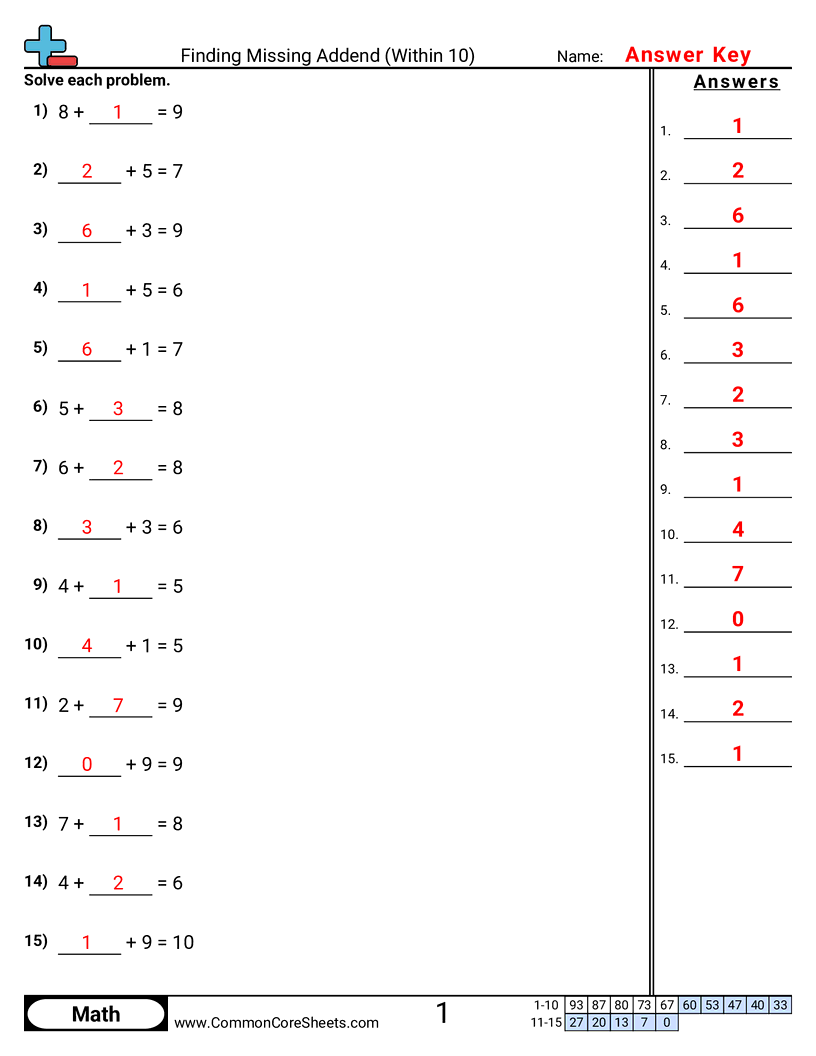
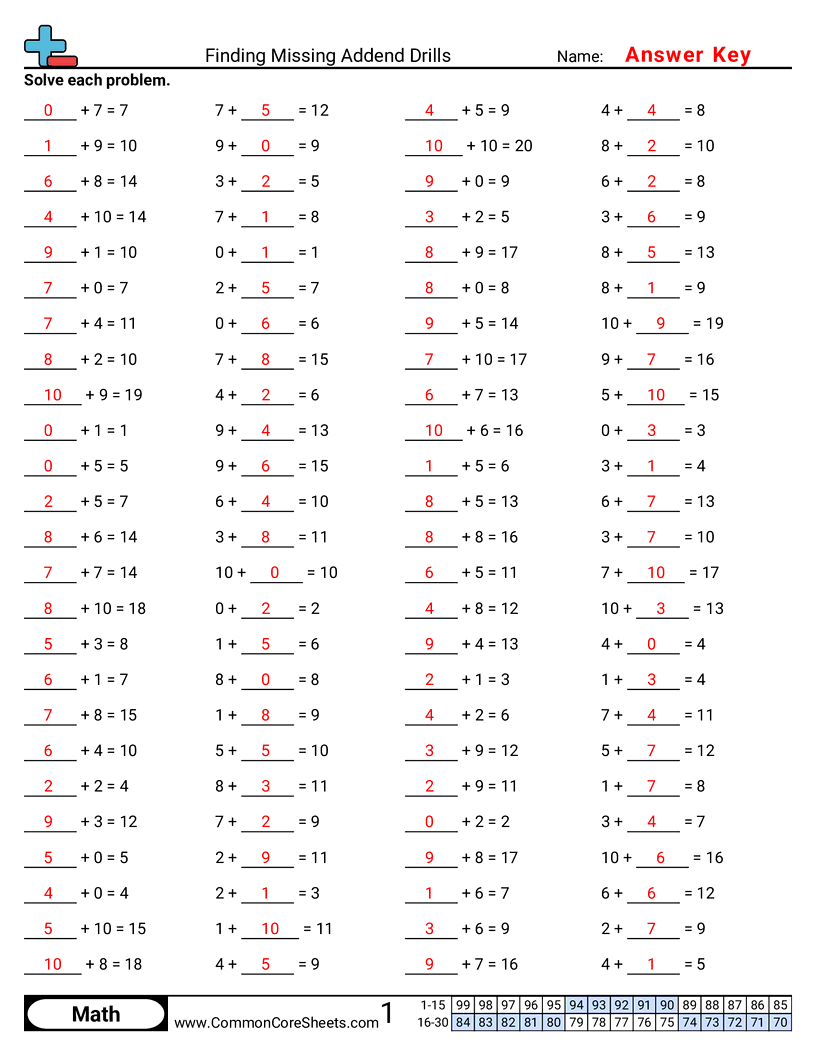
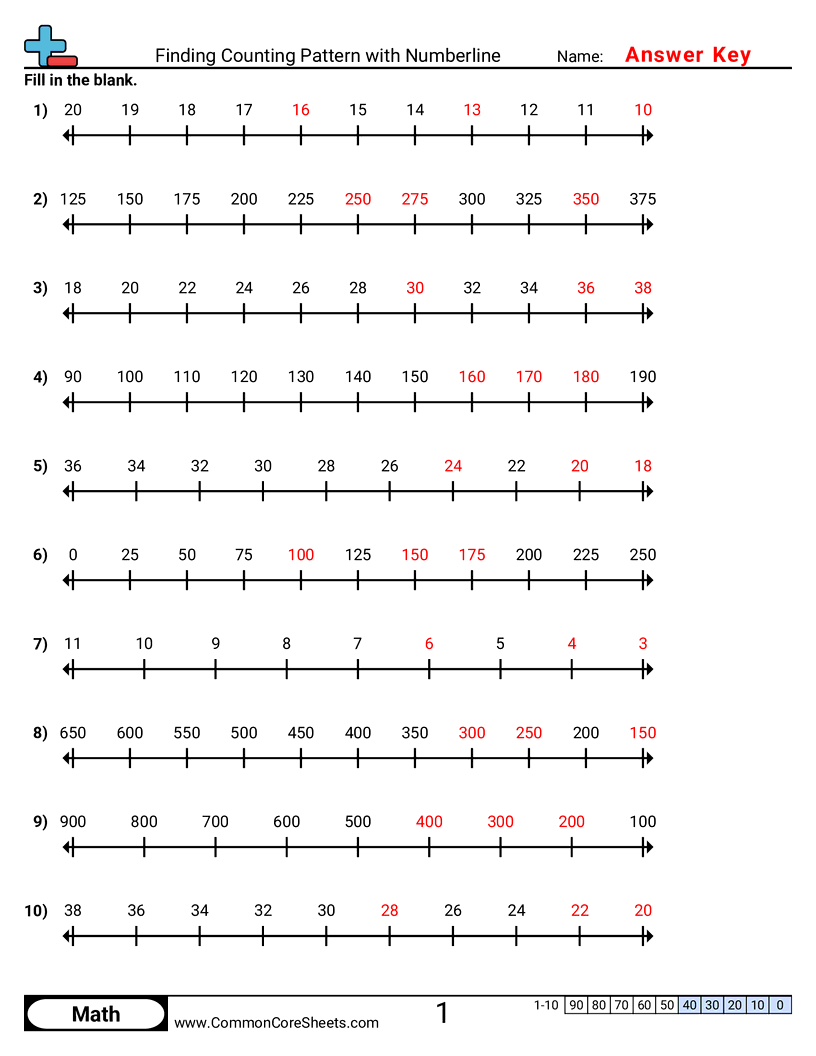
These worksheets introduce students to the foundational concepts of addition. Activities include matching pictures to addition sentences, identifying number pairs that make 10, breaking apart two-digit numbers into tens and ones, and counting up and down within 20. Designed primarily for kindergarten and first grade, these resources help young learners connect visual representations to number sentences and build early number sense before moving on to traditional addition problems.
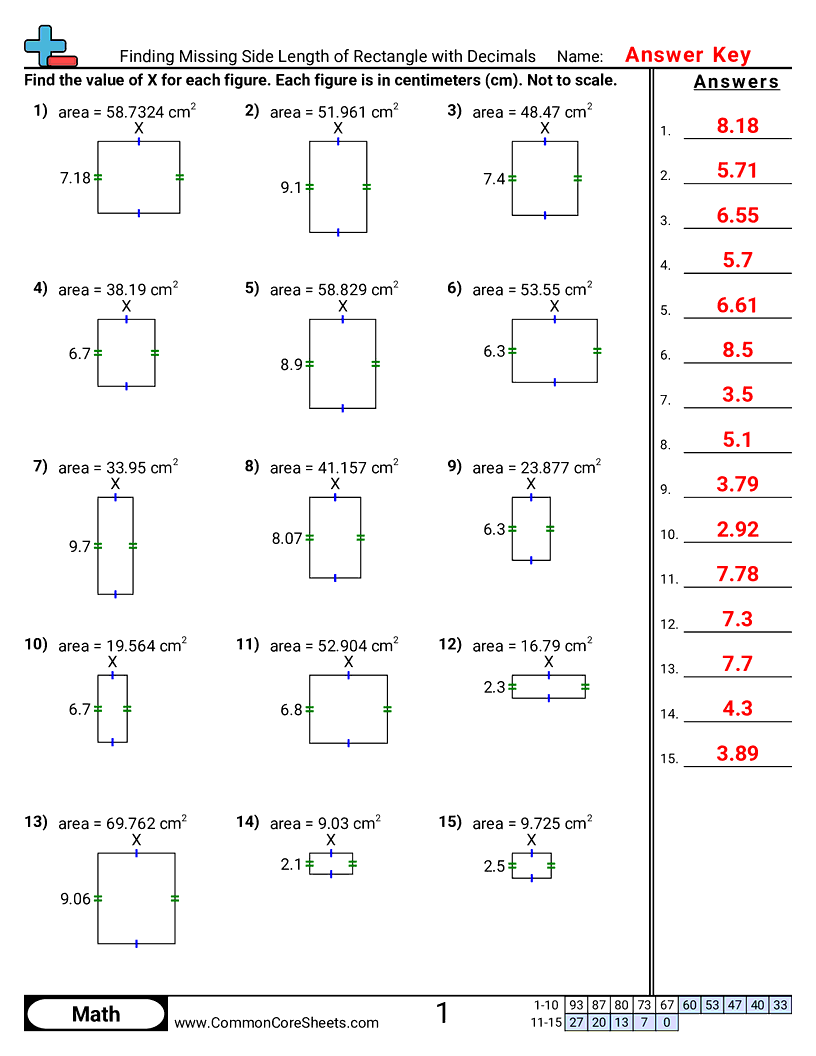
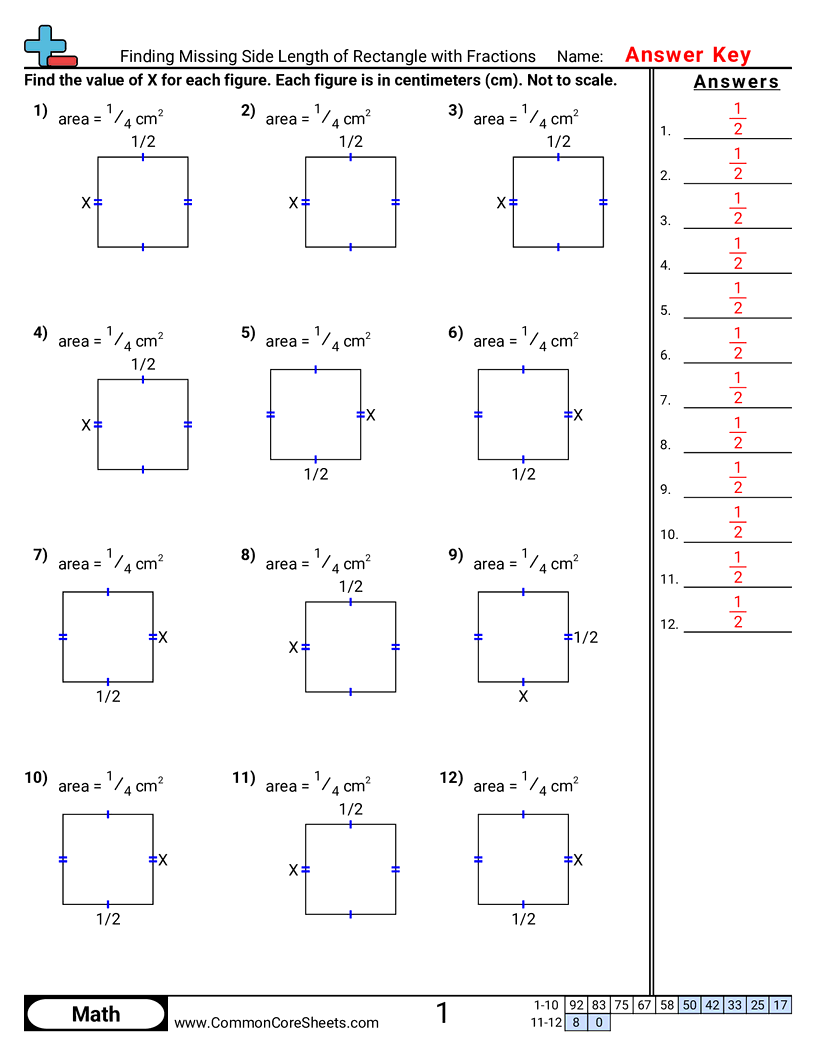
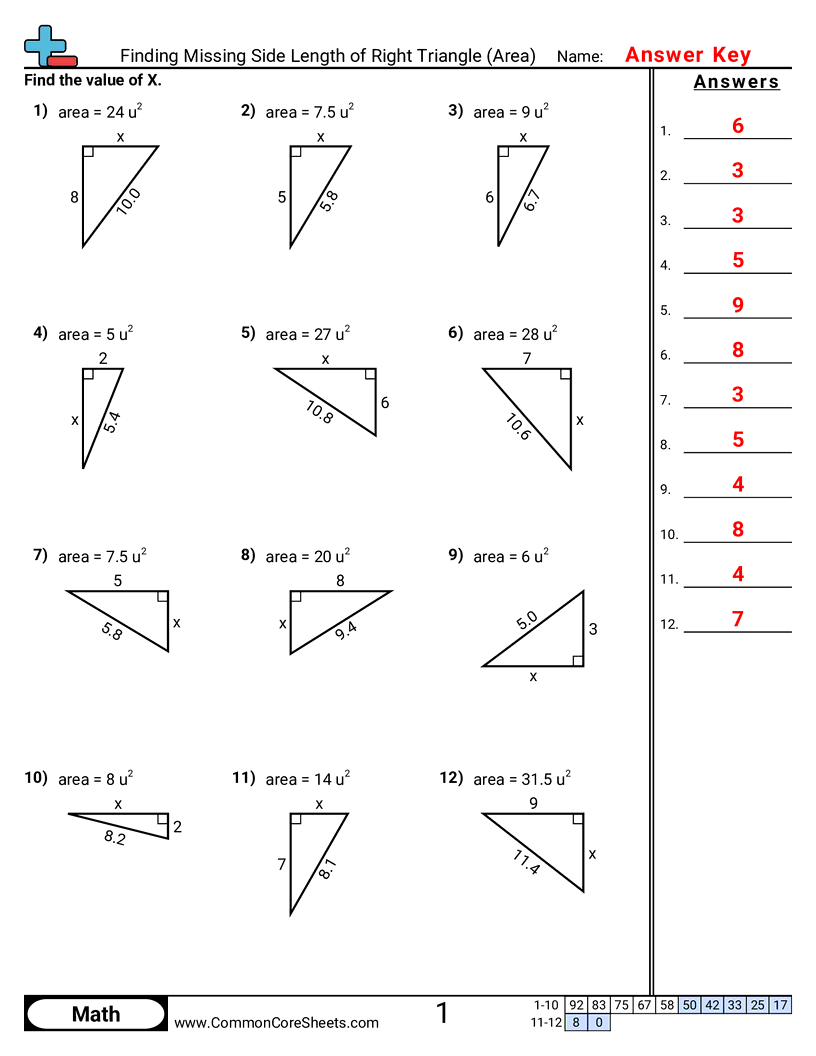
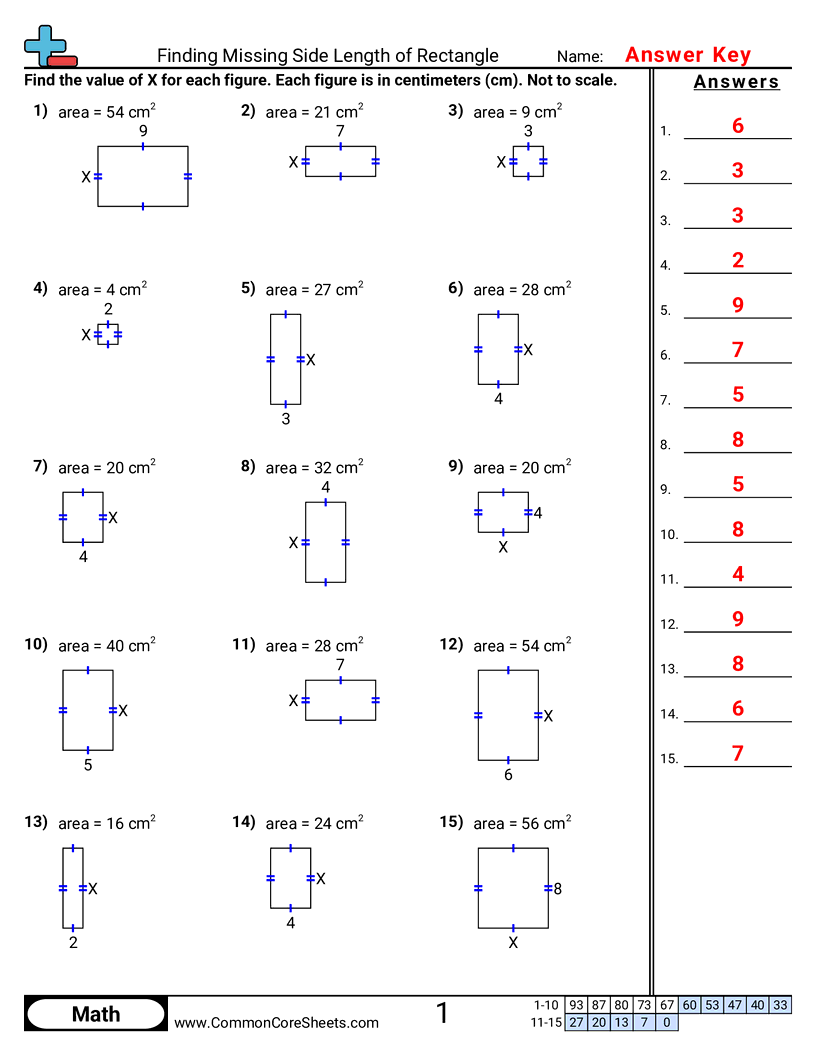
Missing Side (Area) E
- Use the area of a rectangle to figure out a missing side length.
- Divide the area by the known side to find the unknown side.
- Check that the side lengths you found make the correct area when multiplied.
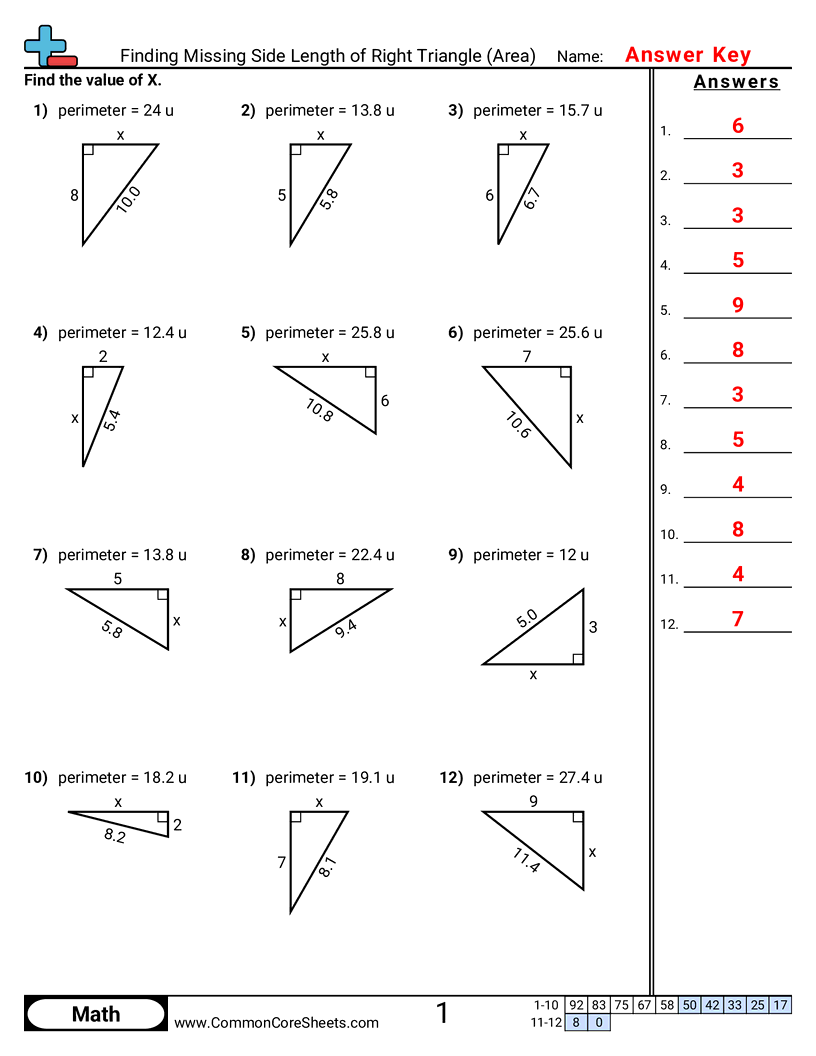
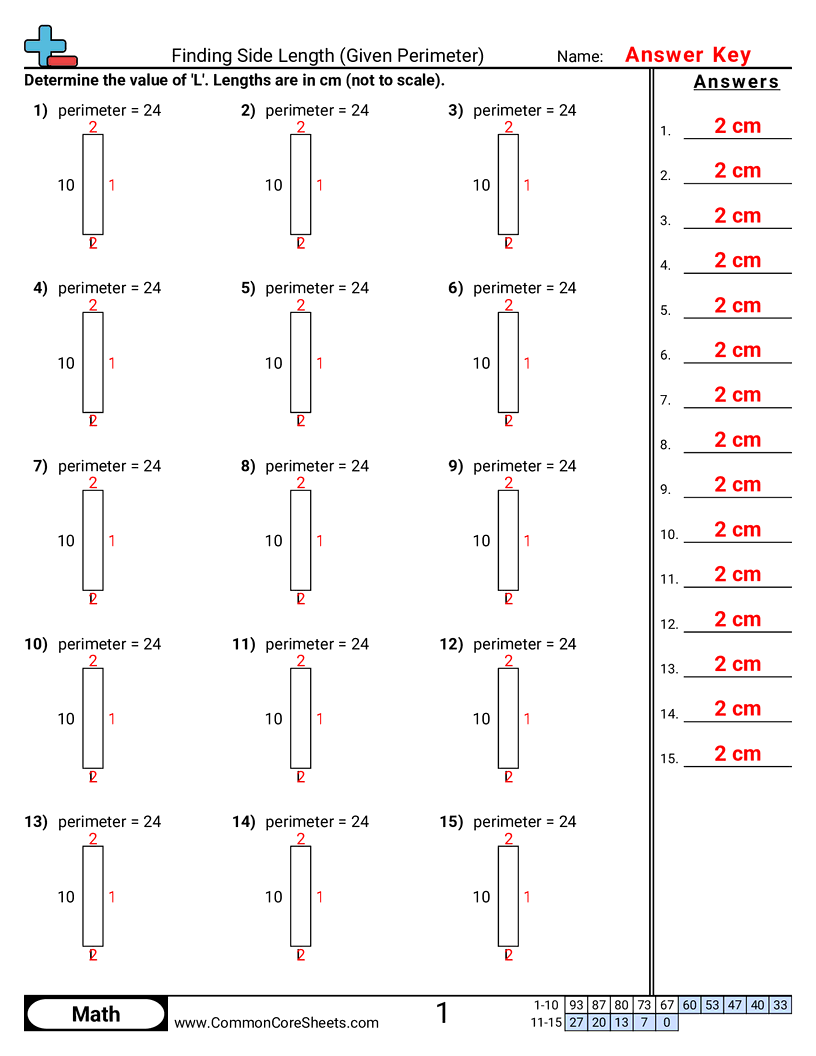
Missing Side (Perimeter) E
- Use the perimeter of a rectangle to figure out one missing side length.
- Add the known side lengths and subtract from the total perimeter to find what is left.
- Use the fact that opposite sides of a rectangle are equal to solve for the unknown side.
- Write the answer with the correct measurement units.
Quadrilaterals (Area and Perimeter)
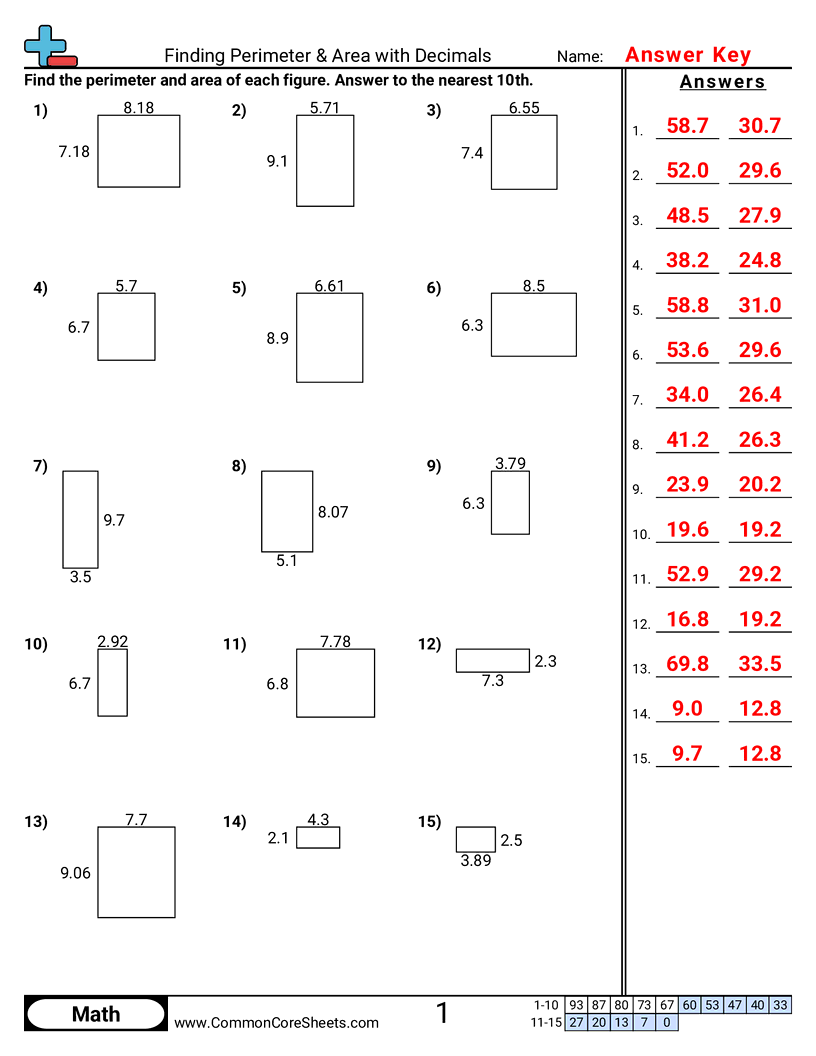
- Find the area of a rectangle by using its length and width.
- Find the perimeter of a rectangle by adding the lengths of all four sides.
- Tell the difference between area (square units) and perimeter (units around the edge).
Finding Missing Angle
- Practice finding a missing angle when a larger angle is split into two smaller angles
- Subtract a known part from the total angle to find the unknown part
- Read angle diagrams that show how two angles combine to form a bigger angle
Finding Missing Angles
- Find an unknown angle when you know the other angle in a straight line (they add to 180°).
- Use vertical angles and adjacent angles in intersecting lines to figure out missing measures.
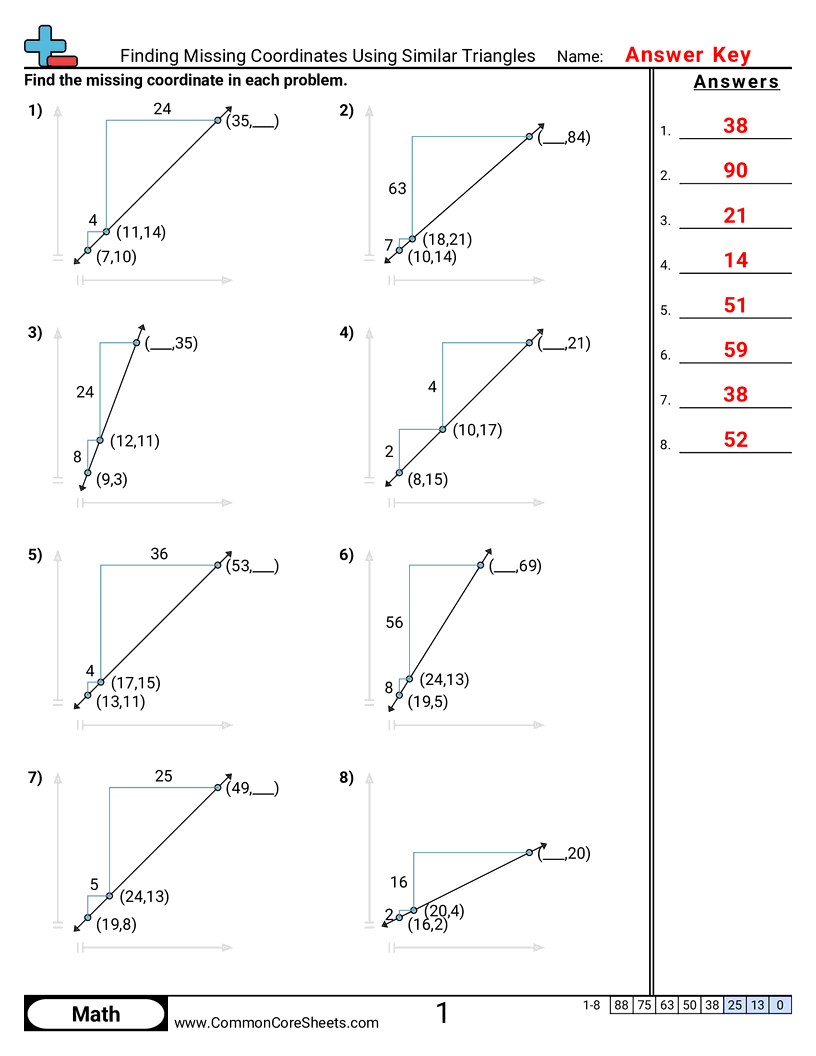
Finding Missing Coordinates Using Similar Triangles
- Find a missing x- or y-coordinate on a graph by using similar triangles.
- Set up and solve a proportion from matching side lengths in two similar triangles.
Finding Width, Height and Area of Scale Rectangles
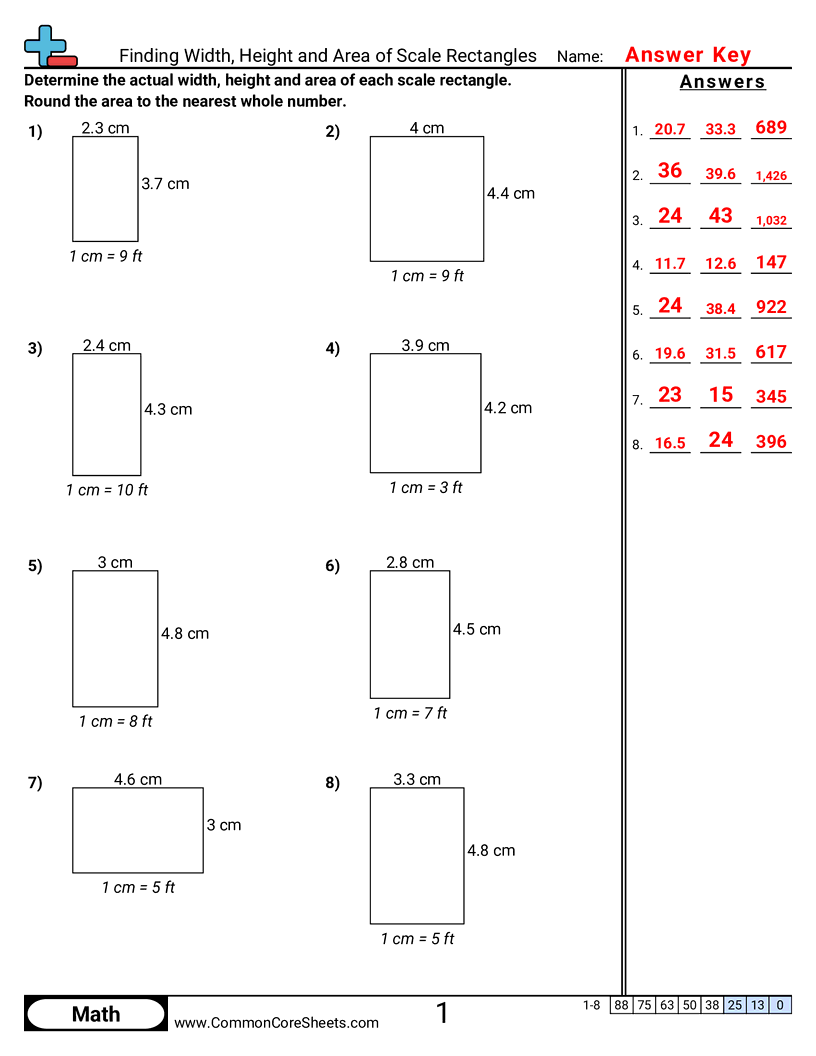
- Use a scale factor to find a missing width or height of a rectangle.
- Keep side lengths in the same ratio when a rectangle is enlarged or reduced.
- Calculate the area of a rectangle after its dimensions have been scaled.
Creating Area and Perimeter Rectangles
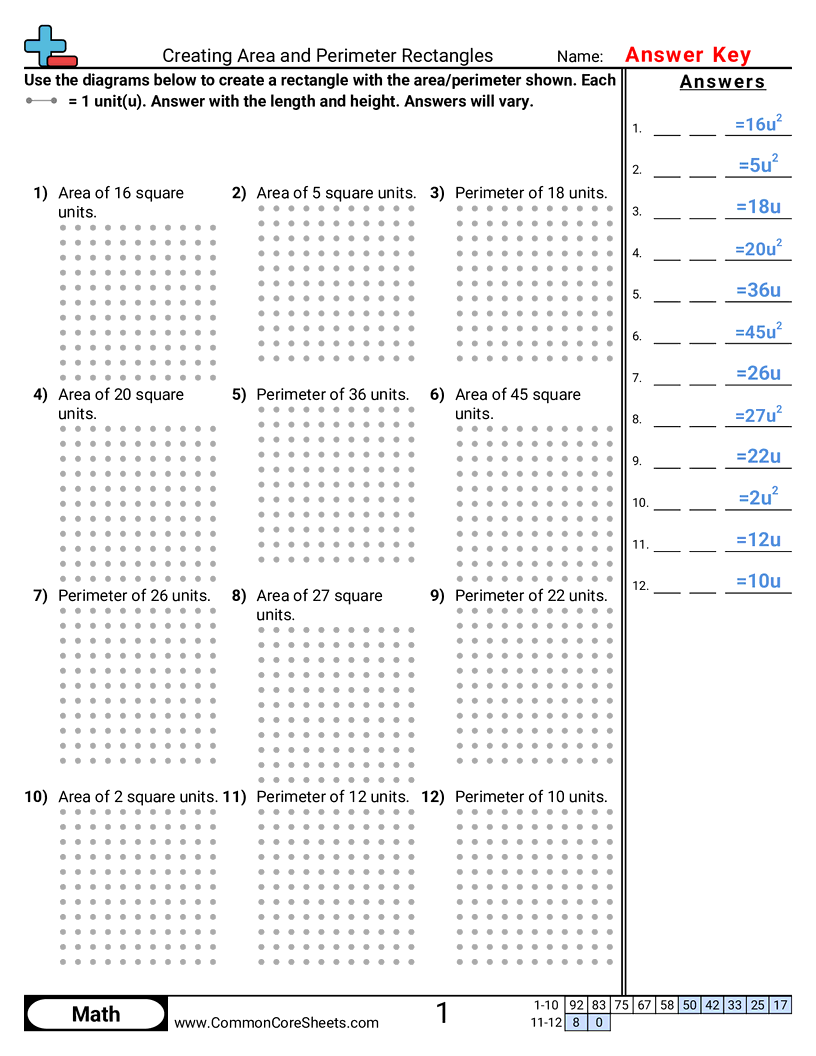
- Find different length-and-width pairs that make a rectangle with a given area.
- Find different rectangles that have a given perimeter by choosing side lengths that add up correctly.
- Tell the difference between area (square units inside) and perimeter (units around the edge).
- Use multiplication and addition to check that a rectangle’s dimensions match the area or perimeter given.
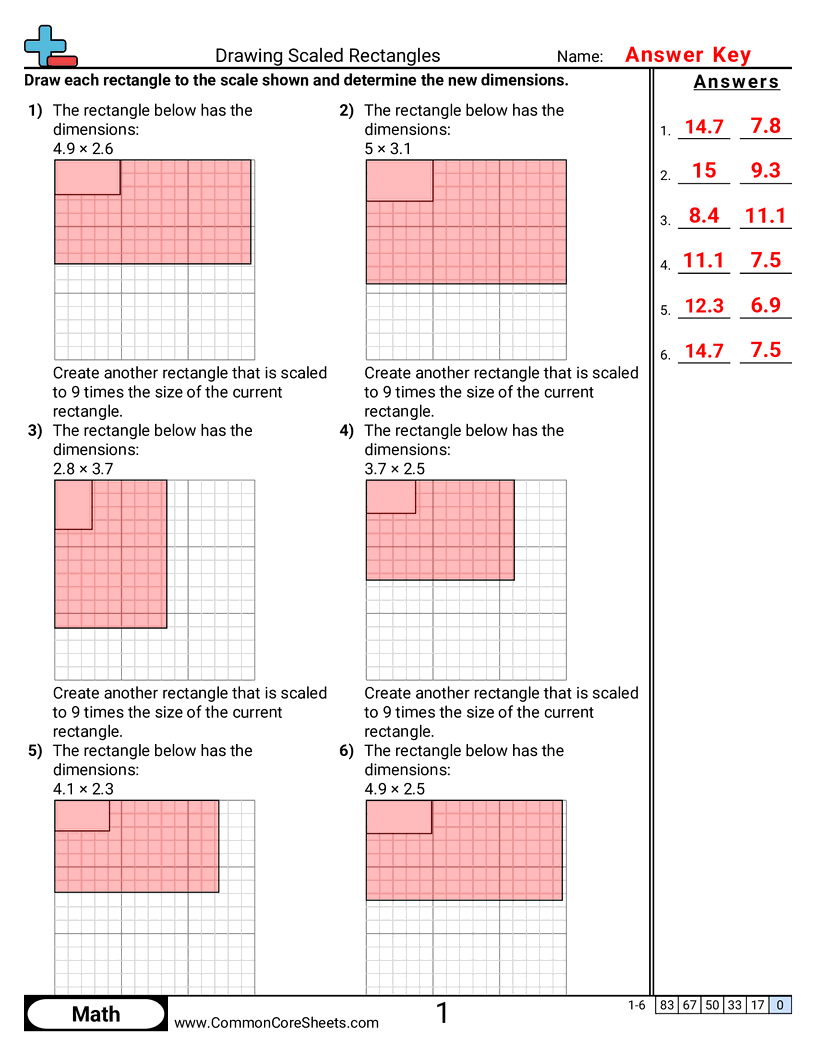
Drawing Scaled Rectangles
- Practice using a scale factor to make a rectangle larger or smaller.
- Multiply a rectangle’s width and height by the same number to keep the shape similar.
- Check that the new rectangle’s side lengths stay in the same ratio as the original.
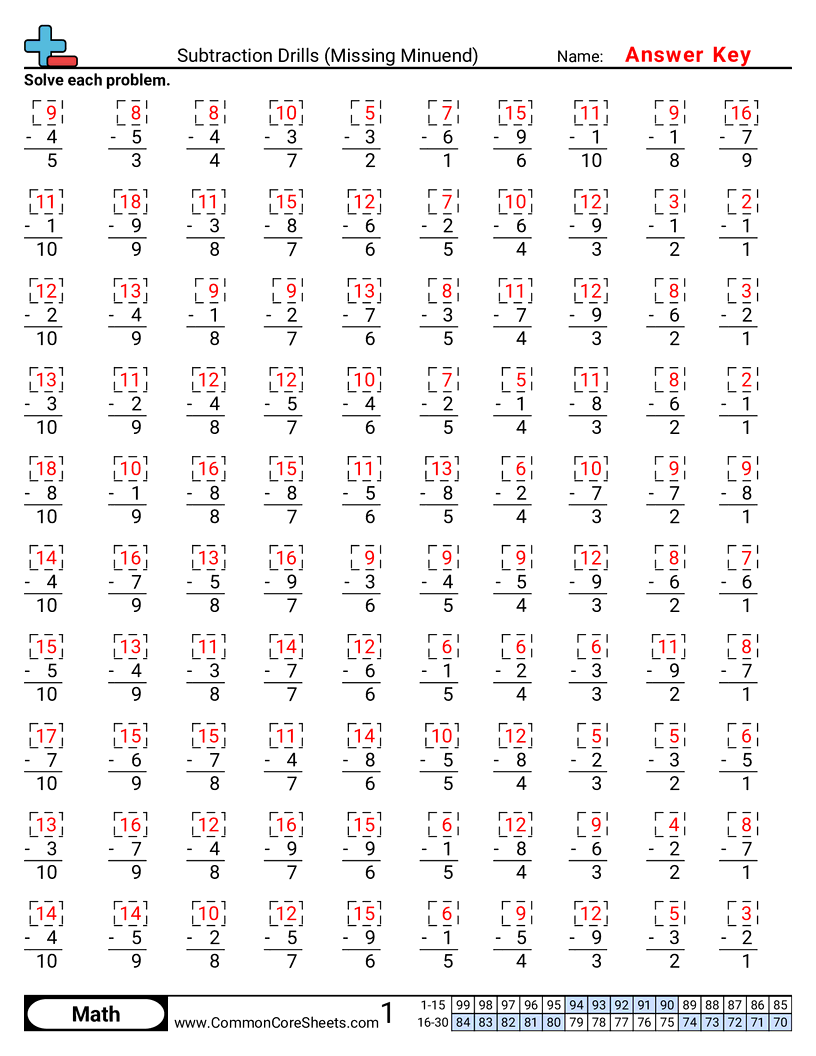
Subtraction Drills (Missing Minuend) Horizontal
- Figure out the starting number when you know what was taken away and what’s left.
- Write and solve subtraction equations with a blank in the first spot (___ − number = number).
- Use the relationship between subtraction and addition to find the missing number.
- Build speed and accuracy with basic subtraction facts and mental math.
American Ruler
- Read a metric ruler to find how long a bar is in centimeters.
- Write the length using the correct decimal location.
Metric Ruler
- Practice reading a centimeter ruler to find the length of a bar, including half-centimeter measurements
- Subtract the starting point from the ending point when the bar doesn't begin at zero
- Measure to the nearest half centimeter using the smaller tick marks on the ruler
Equivalent Fractions (Missing Number)
- Find the missing numerator or denominator that makes two fractions equal.
- Use multiplication to scale a fraction up to an equivalent fraction.
- Use division to scale a fraction down to an equivalent fraction.
- Spot the pattern that the numerator and denominator must change by the same factor.
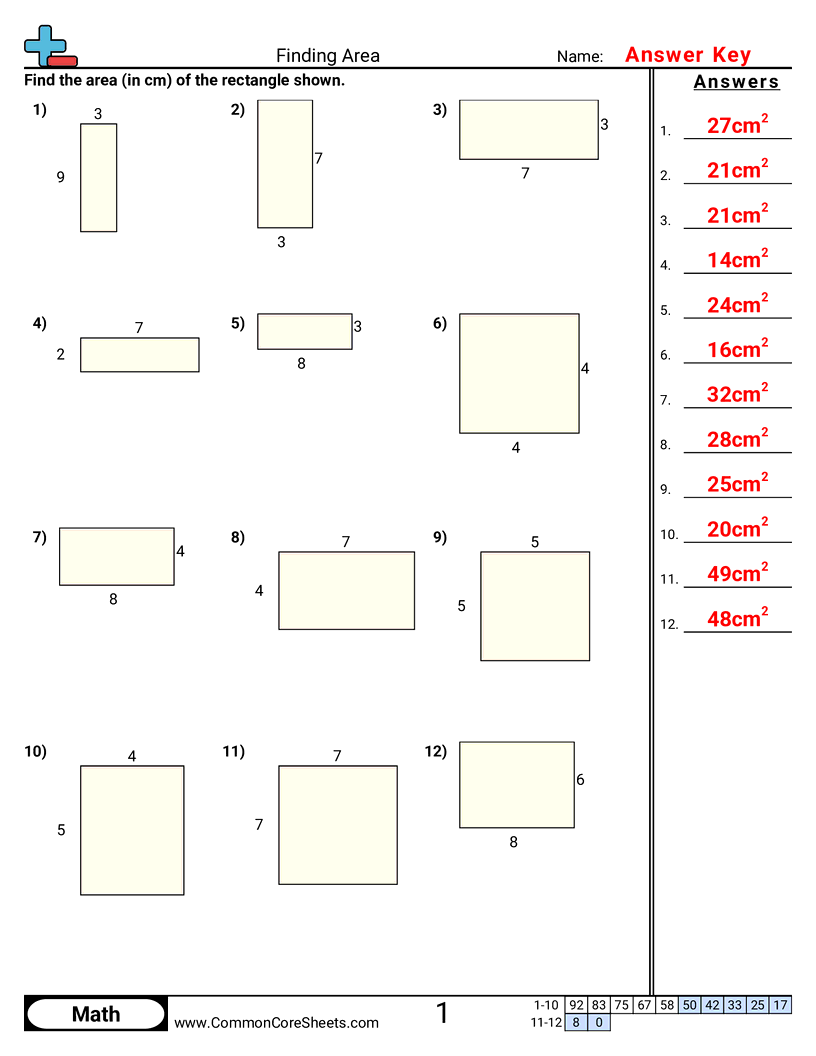
Finding Area
- Find the area of a rectangle by multiplying its length and width.
- Use the correct square units (like cm² or m²) when writing an area answer.
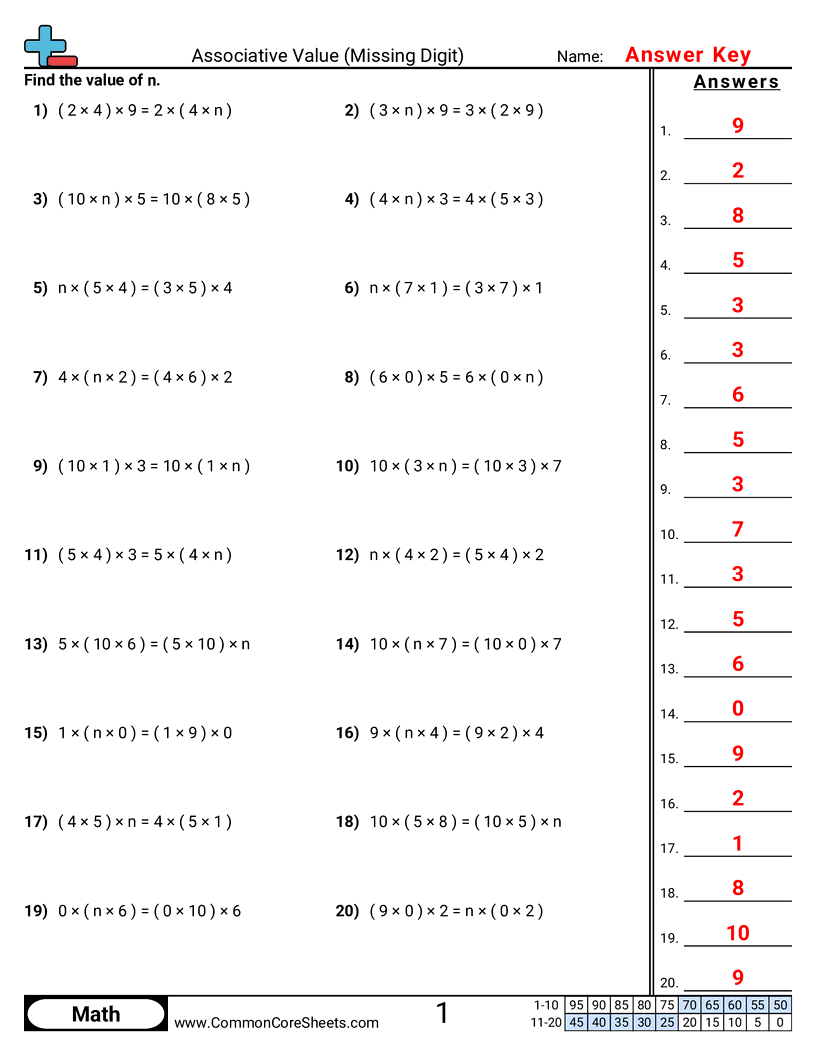
Associative Property - Missing Value
- Find the missing number that makes a multiplication equation true.
- Rewrite a multiplication problem by regrouping the factors without changing the product.
- Explain why changing the grouping in multiplication does not change the answer.
Filling in Missing Place Value over 10.
- Practice finding missing place-value entries when some columns can hold numbers greater than 9
- Figure out what value is needed in a blank column so that all the parts add up to the given number
- Understand that a number can be broken down into non-standard place-value combinations (like 12 tens instead of 1 hundred and 2 tens)
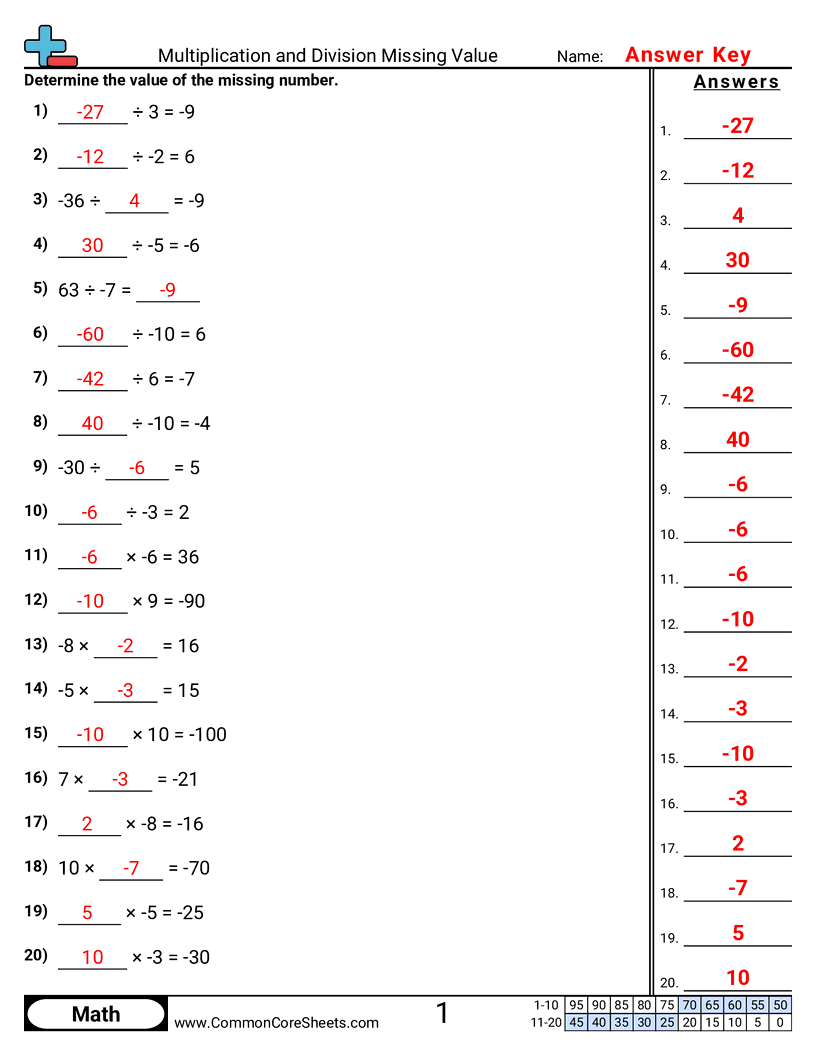
Multiplication and Division Missing Value
- Find the missing number in multiplication equations, including when negatives are involved.
- Find the missing number in division equations, including when negatives are involved.
- Use the relationship between multiplication and division to solve for an unknown value.
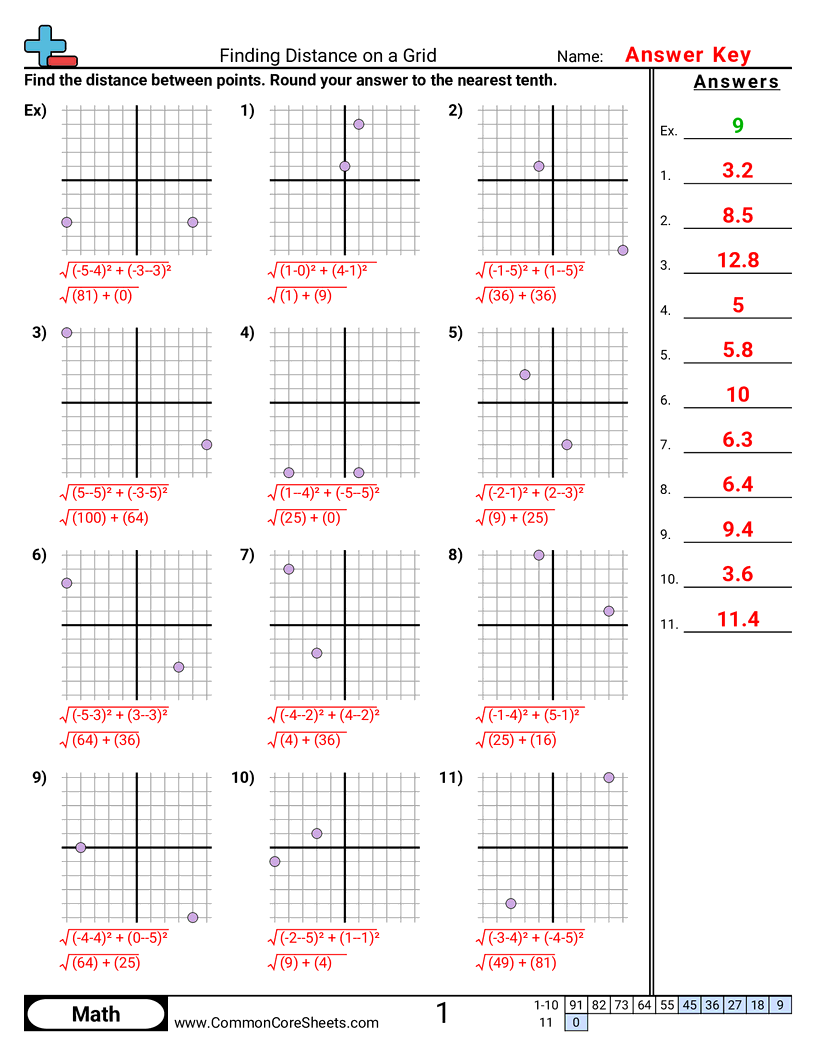
Finding Distance (Same X or Y)
- Find the distance between two points on a coordinate grid when they line up straight across or straight up-and-down.
- Use subtraction and absolute value to get a positive distance between two x-values or two y-values.
- Decide whether to compare x-coordinates or y-coordinates based on whether the move is horizontal or vertical.
- Count grid units correctly to measure length on the coordinate plane.
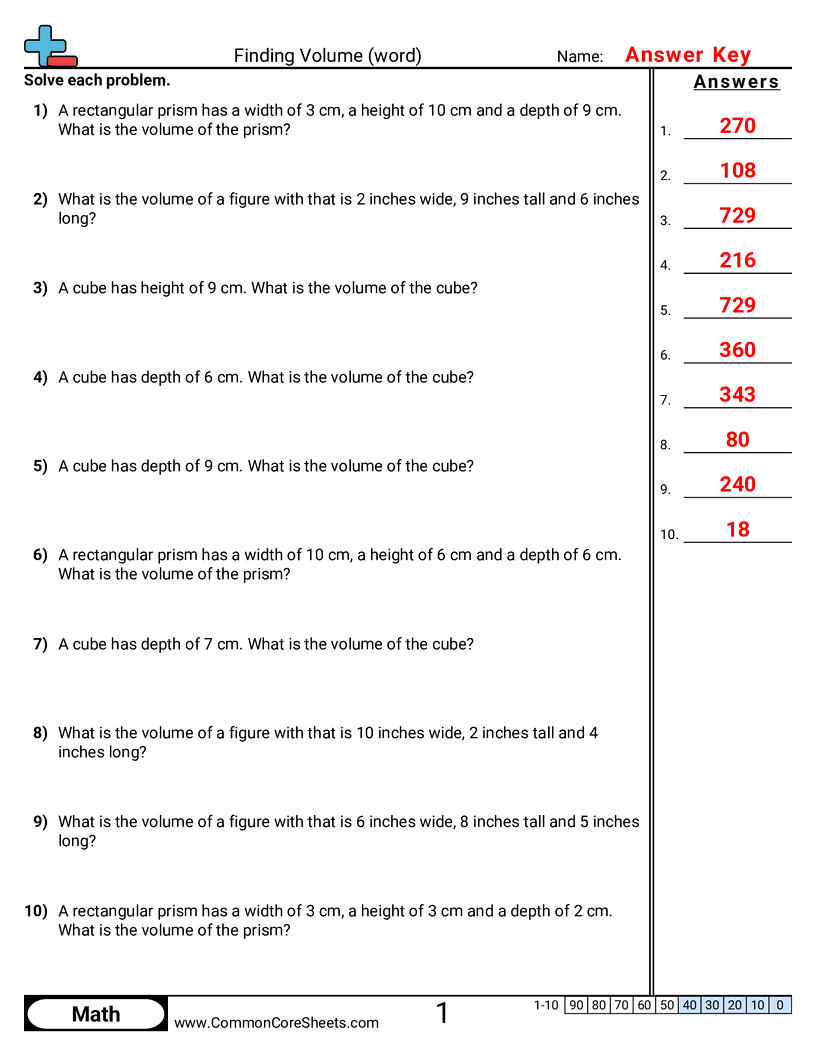
Finding Volume of Rectangular Prisms
- Practice finding the volume of a rectangular prism by multiplying length × width × height
- Read the three dimensions from a 3D drawing and multiply them together
- Work with whole number measurements in centimeters
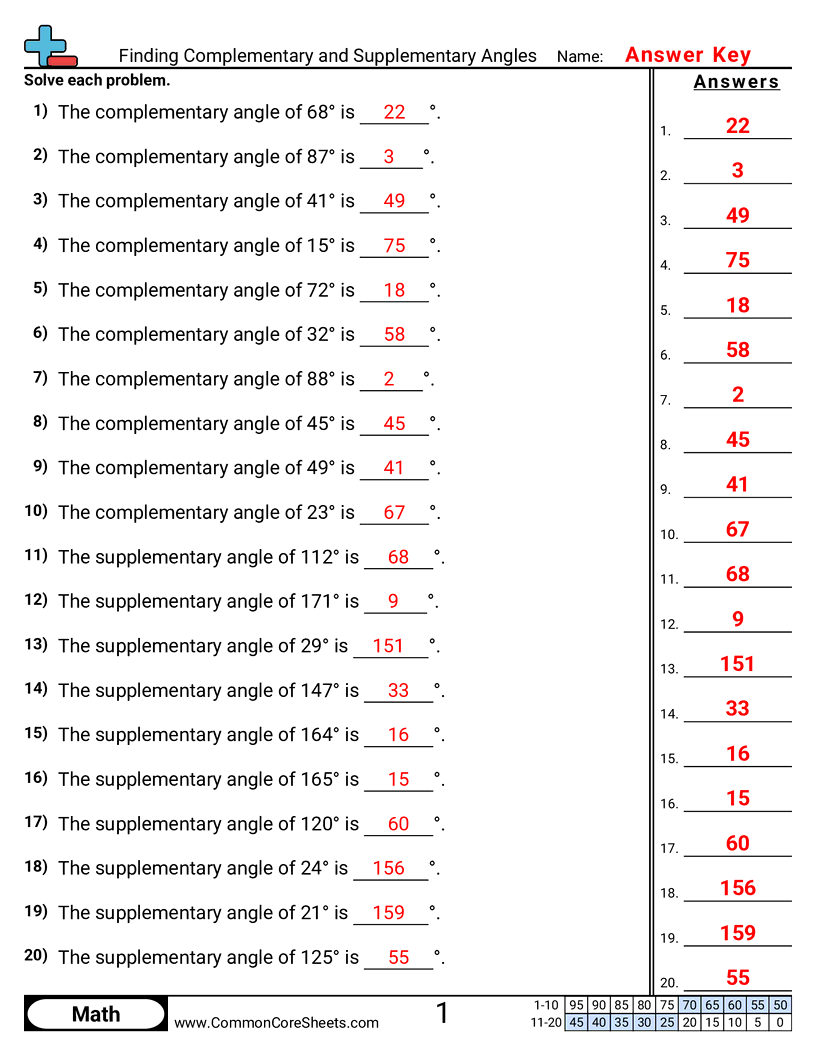
Finding Complementary and Supplementary Angles
- Practice finding complementary angles by subtracting from 90°
- Practice finding supplementary angles by subtracting from 180°
- Learn the difference between complementary (add to 90°) and supplementary (add to 180°) angle pairs
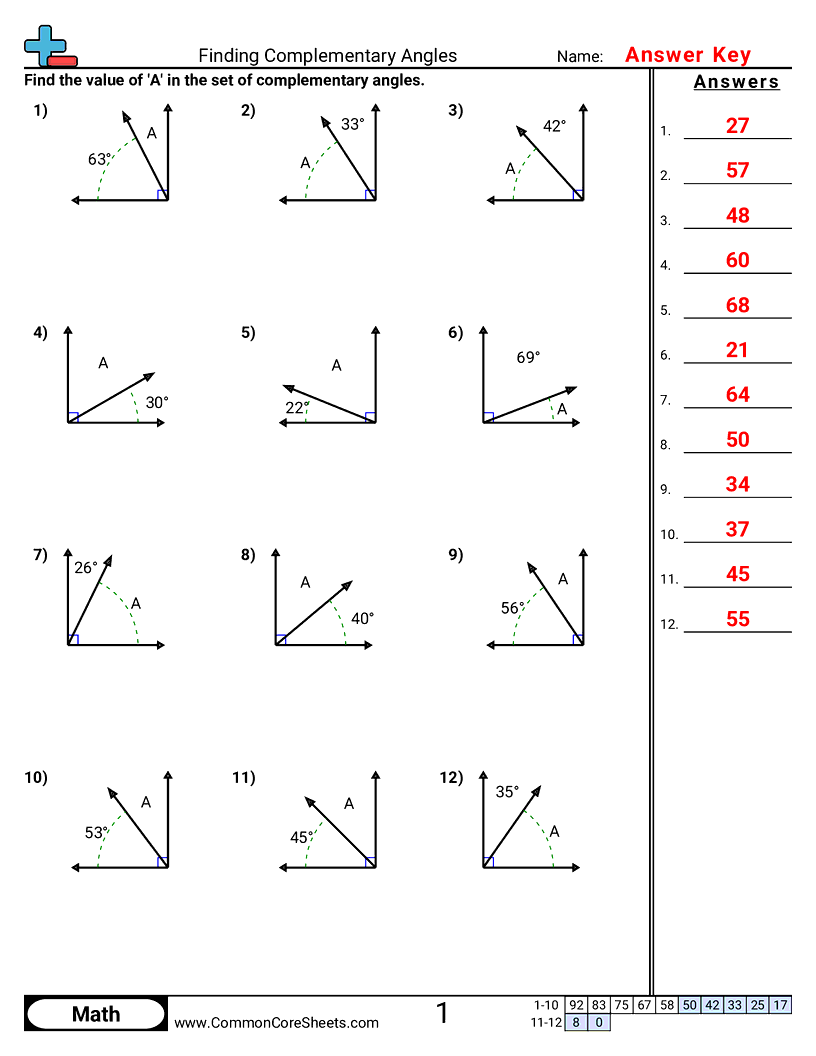
Finding Complementary Angles
- Understand that complementary angles add up to 90°.
- Find a missing angle measure by subtracting from 90°.
- Check whether two angles are complementary by adding their measures.
Finding Supplementary Angles
- Understand that supplementary angles add up to 180°.
- Find a missing angle measure when you know the other angle in a supplementary pair.
- Use subtraction from 180° to solve for an unknown angle.
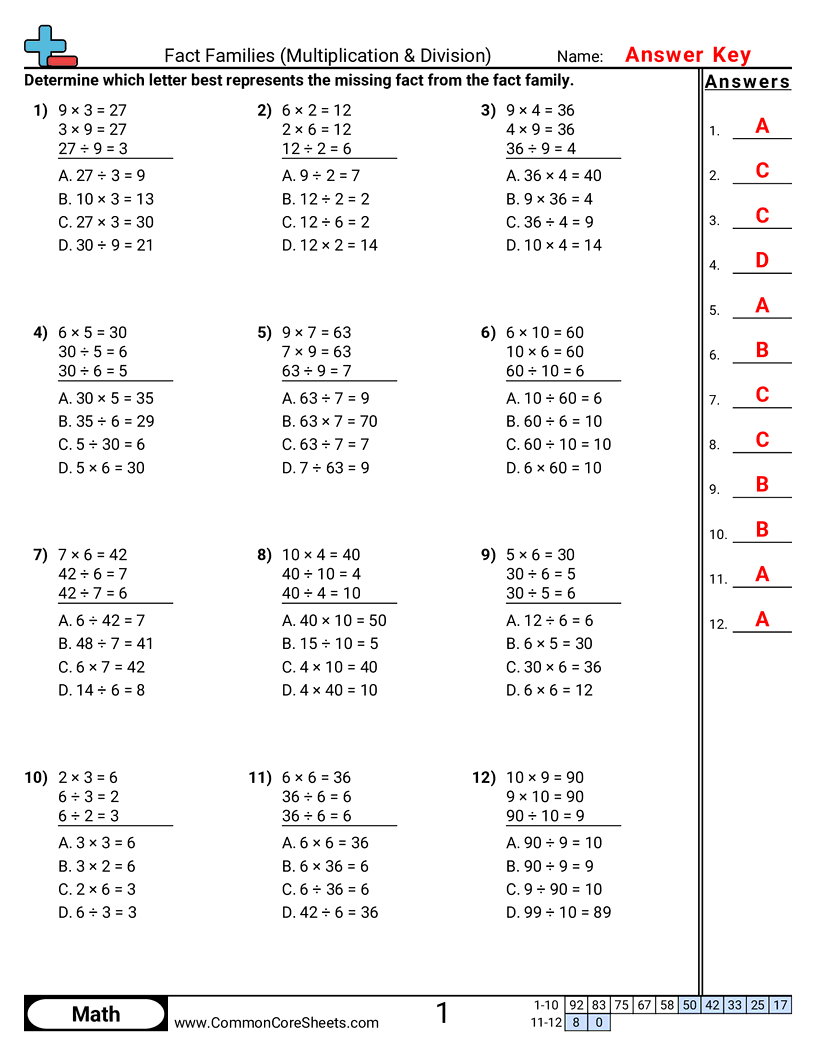
Find Missing Fact (Multiple Choice)
- Use a fact family to see how multiplication and division facts are related.
- Decide which equation belongs with the other facts in the same family.
- Check that a multiplication and a division fact match the same three numbers.
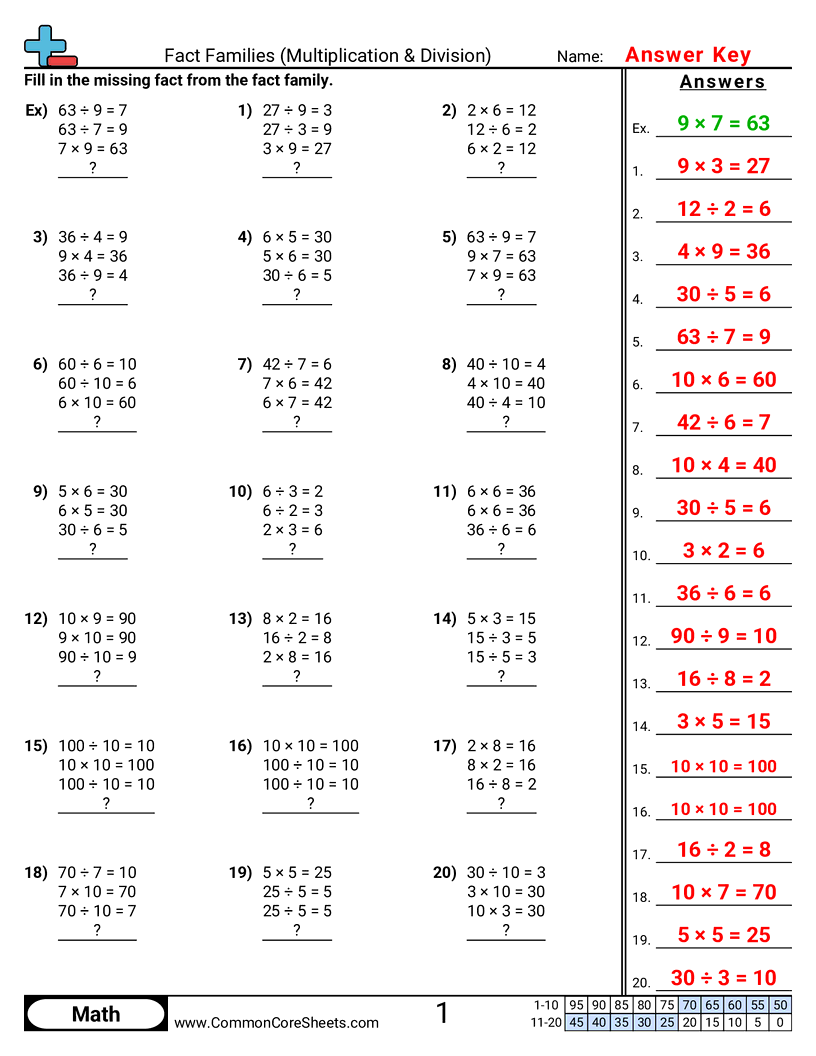
Find Missing Fact
- Find the missing fact in a multiplication and division fact family.
- Use a fact family to see how multiplication and division facts are related.
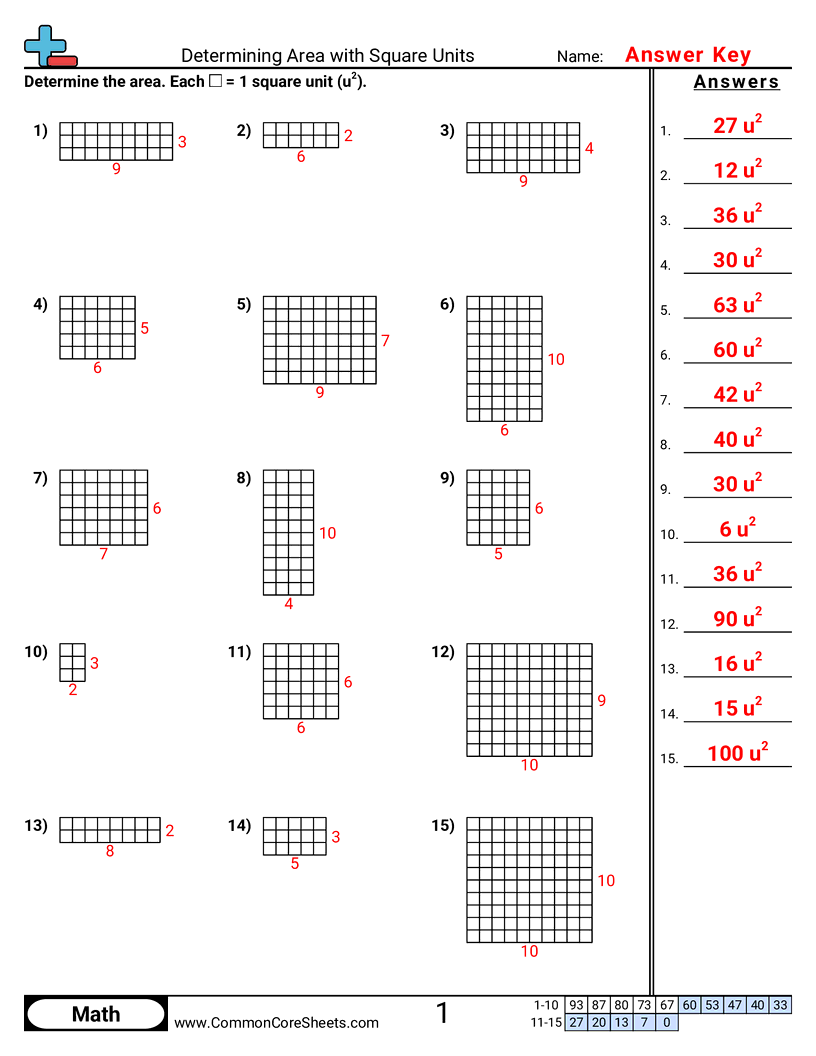
Finding Area
- Find the area of a rectangle by counting square units in a grid.
- Use rows and columns to figure out area without counting every square one by one.
- Write the area using the correct square units (square units).
- Connect area to multiplication by using length × width for rectangles.
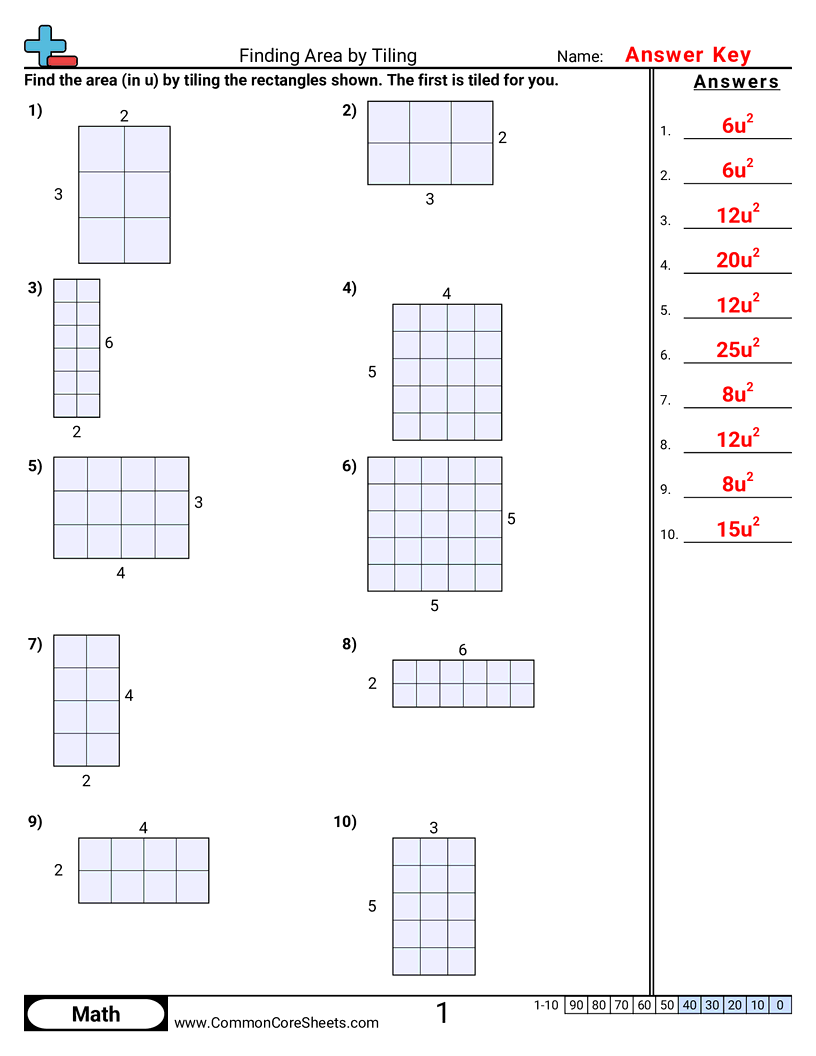
Finding Area by Tiling
- Cover a rectangle with equal-size square tiles without gaps or overlaps.
- Count the tiles to find the area in square units.
- Use rows and columns to keep track of tiles and avoid miscounting.
- Explain that area means how much flat space a shape covers.
Perimeter - Area (Words)
- Read a word problem and decide whether it is asking for perimeter or area.
- Find the perimeter of rectangles by adding side lengths.
- Find the area of rectangles using length × width and square units.
- Use the correct units when writing answers (units for perimeter and square units for area).
- Solve real-world measurement situations like fencing, borders, tiling, or covering a surface.
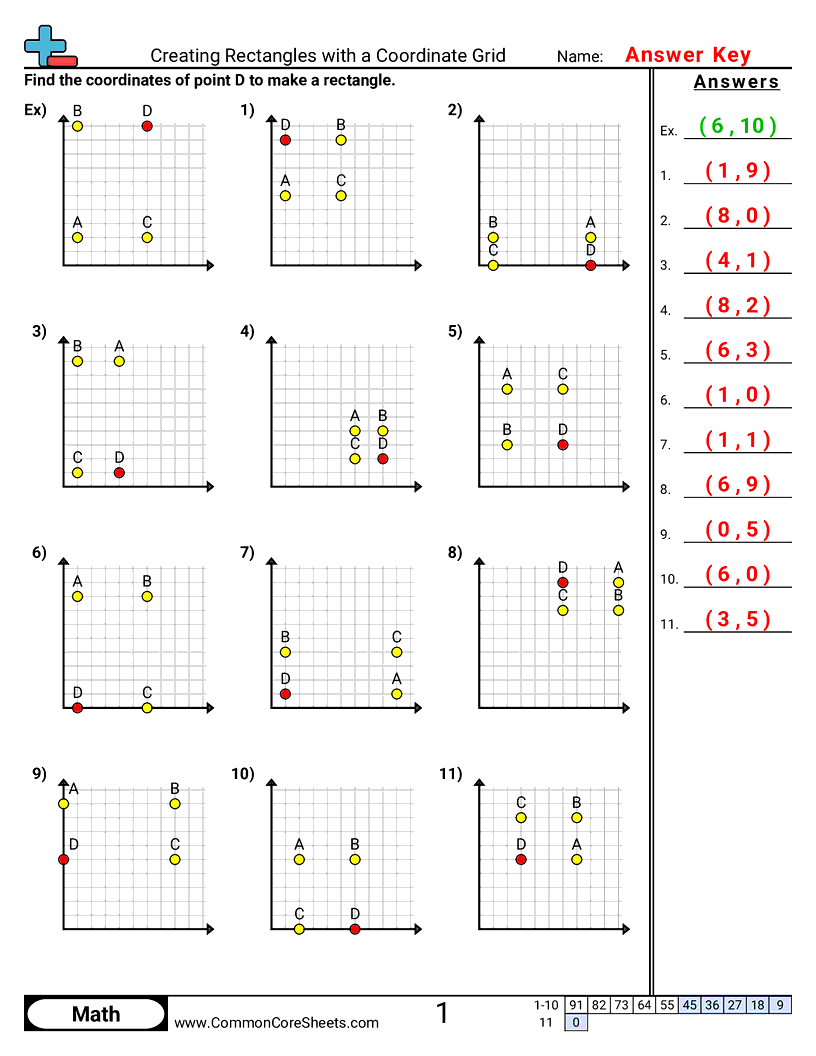
Creating Rectangles with a Coordinate Grid
- Plot points on a coordinate grid using x- and y-values.
- Use given vertices to draw a rectangle on the grid.
- Find missing rectangle corners by using the same x- or y-coordinate for points that line up.
- Check that a shape is a rectangle by making sure sides are horizontal and vertical and corners line up.
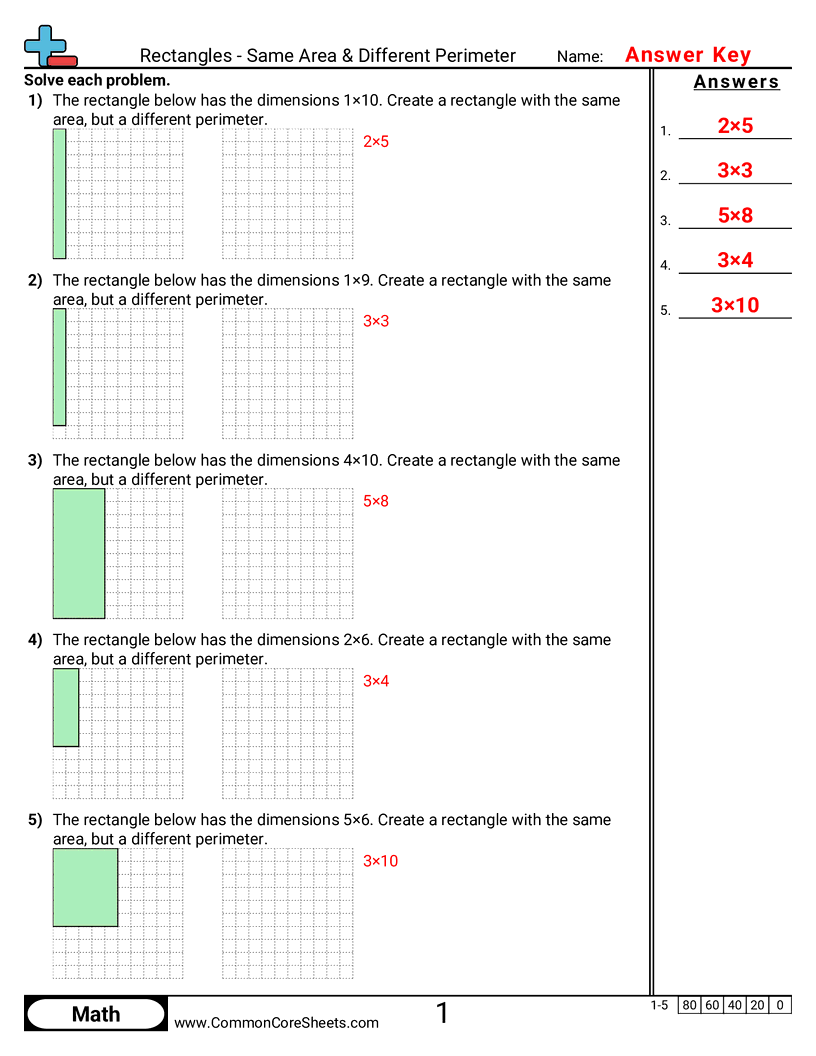
Rectangles - Same Area & Different Perimeter
- Find the area of a rectangle by multiplying length × width.
- Find the perimeter of a rectangle by adding all the side lengths.
- Use factor pairs to make different rectangles that still have the same area.
- Compare rectangles to see how changing the side lengths can change the perimeter even when the area stays the same.
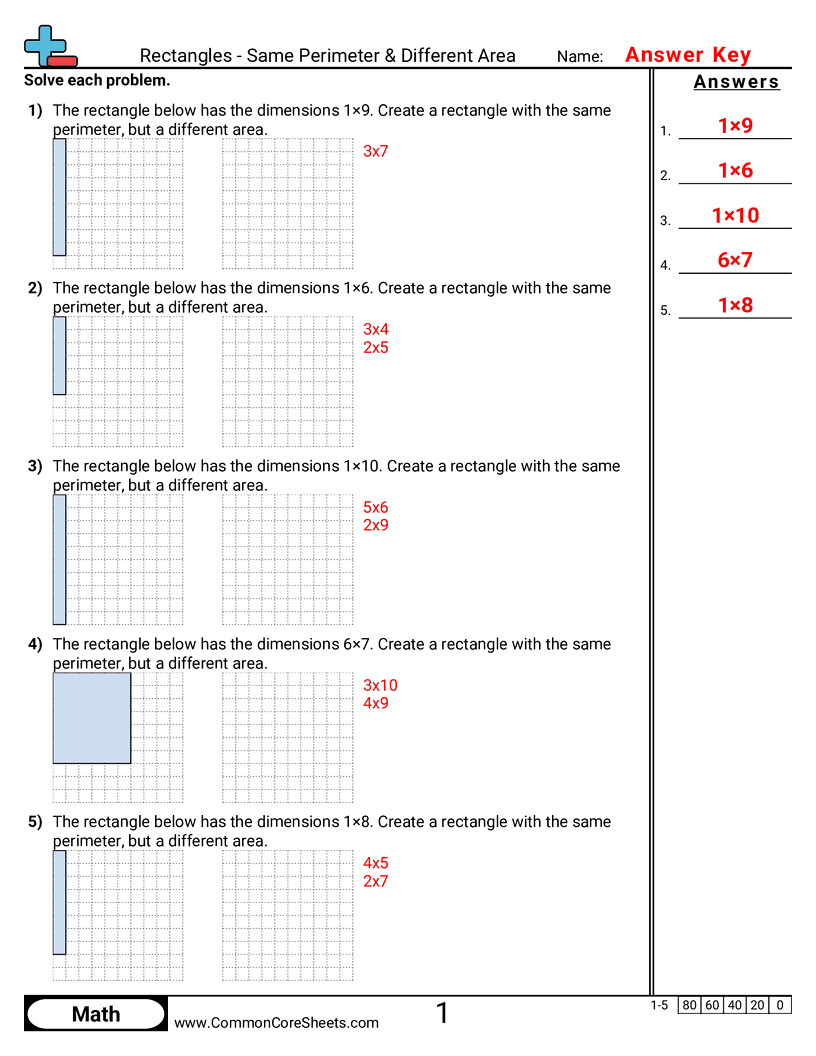
Rectangles - Same Perimeter & Different Area
- Find the area of a rectangle by multiplying length × width.
- Find the perimeter of a rectangle by adding all the side lengths.
- Create different rectangles that have the same area by using different factor pairs.
- Compare rectangles to see how changing the side lengths can change the perimeter even when the area stays the same.
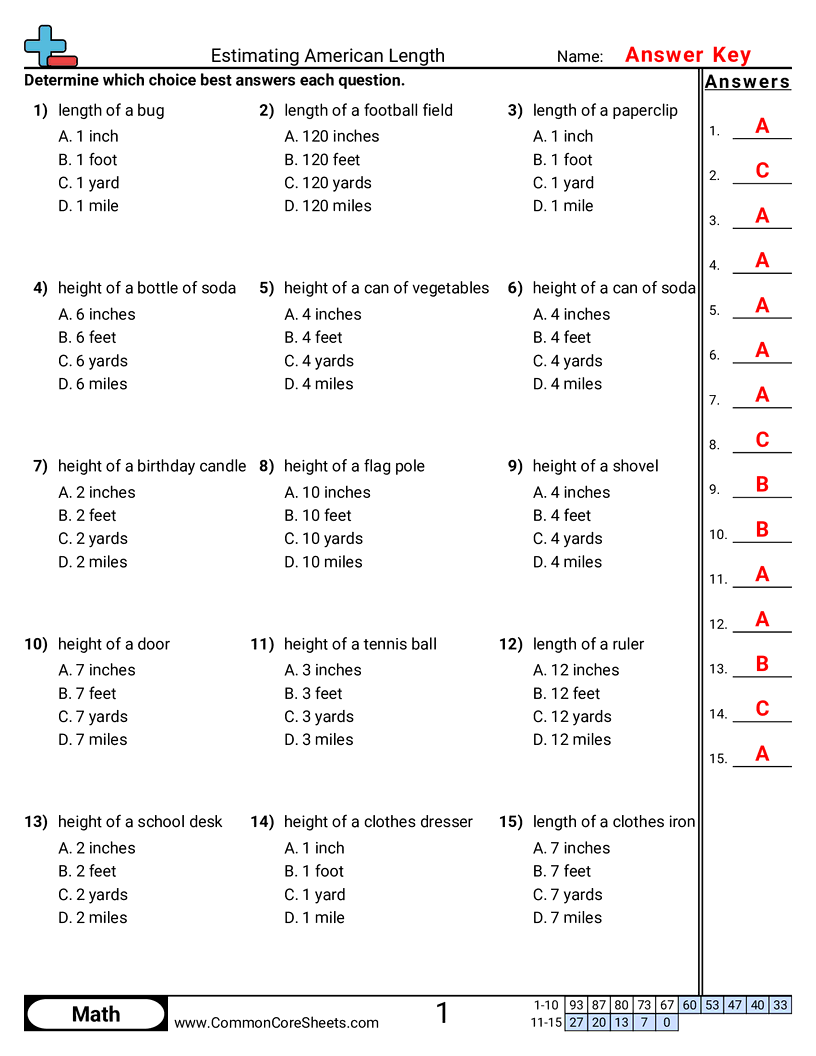
Determining Appropriate Measurement (American)
- Choose whether inches, feet, yards, or miles makes the most sense for a given distance.
- Use what you know about common objects and places to make a reasonable estimate of a length.
- Explain why one unit is more appropriate than another for measuring a specific distance.
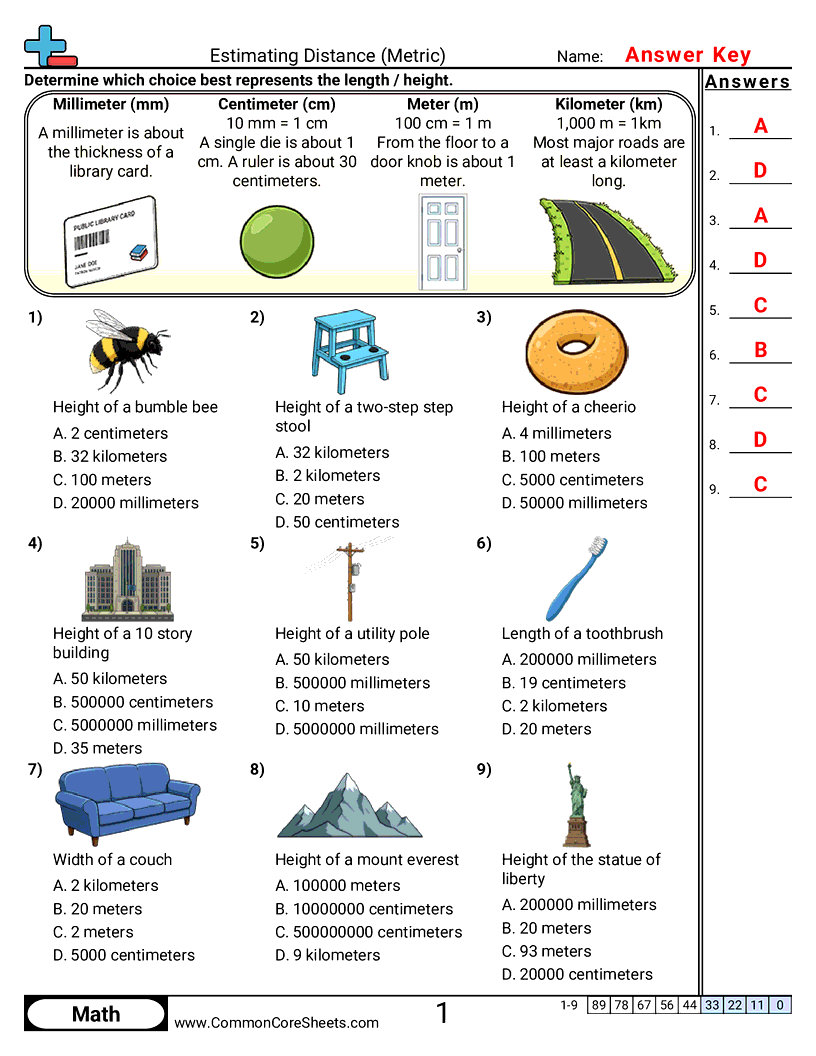
Estimating Length (Metric)
- Practice making a reasonable guess about how long something is using metric units.
- Learn to choose the best unit for a length (millimeters, centimeters, meters, or kilometers).
- Compare a few possible lengths and pick the one that makes the most sense for the object shown.
- Use what you know about common objects to judge about how long something is without measuring.
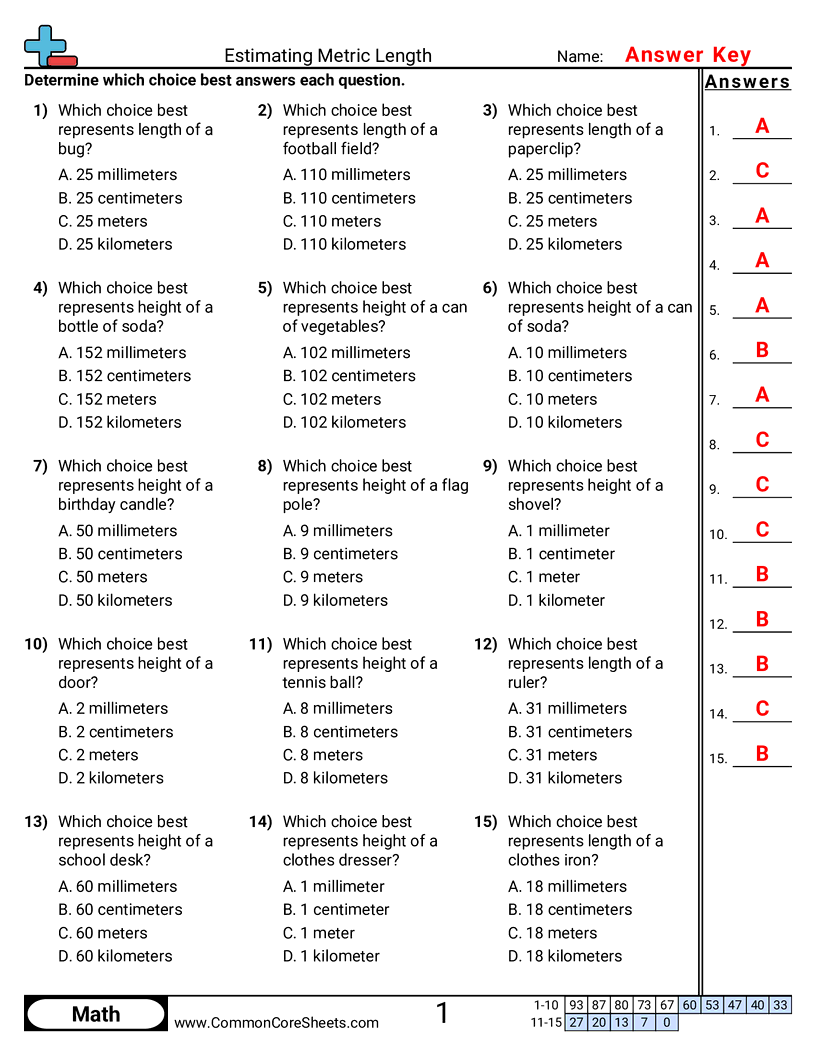
Determining Appropriate Measurement (Metric)
- Choose the best metric unit to describe how long something is.
- Tell when millimeters, centimeters, meters, or kilometers make the most sense for an item.
- Compare a few unit choices and pick the one that matches a reasonable real-world size.
- Read a short description of an object and decide which metric measurement fits.
Determining Angles By Degree
- Look at an angle and decide if it is acute, right, obtuse, or straight.
- Use the degree measure of an angle to help classify it correctly.
- Recognize benchmark angles like 90° and 180° and compare other angles to them.