7g5×Description:
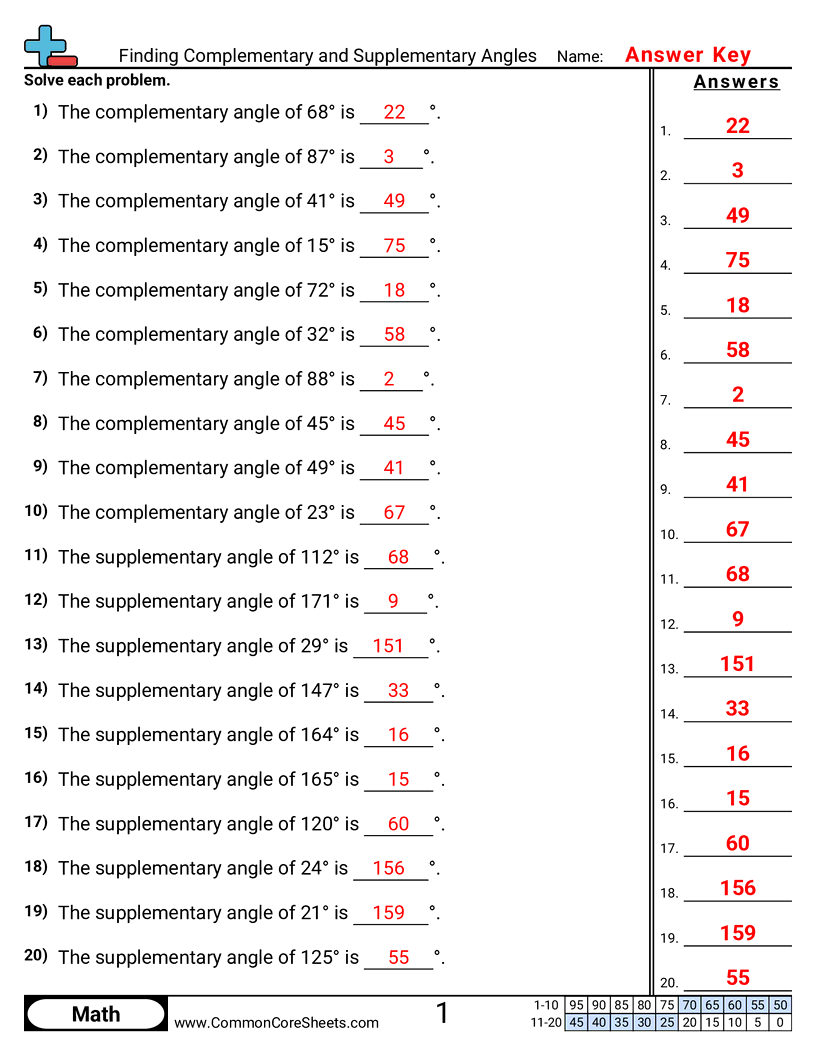
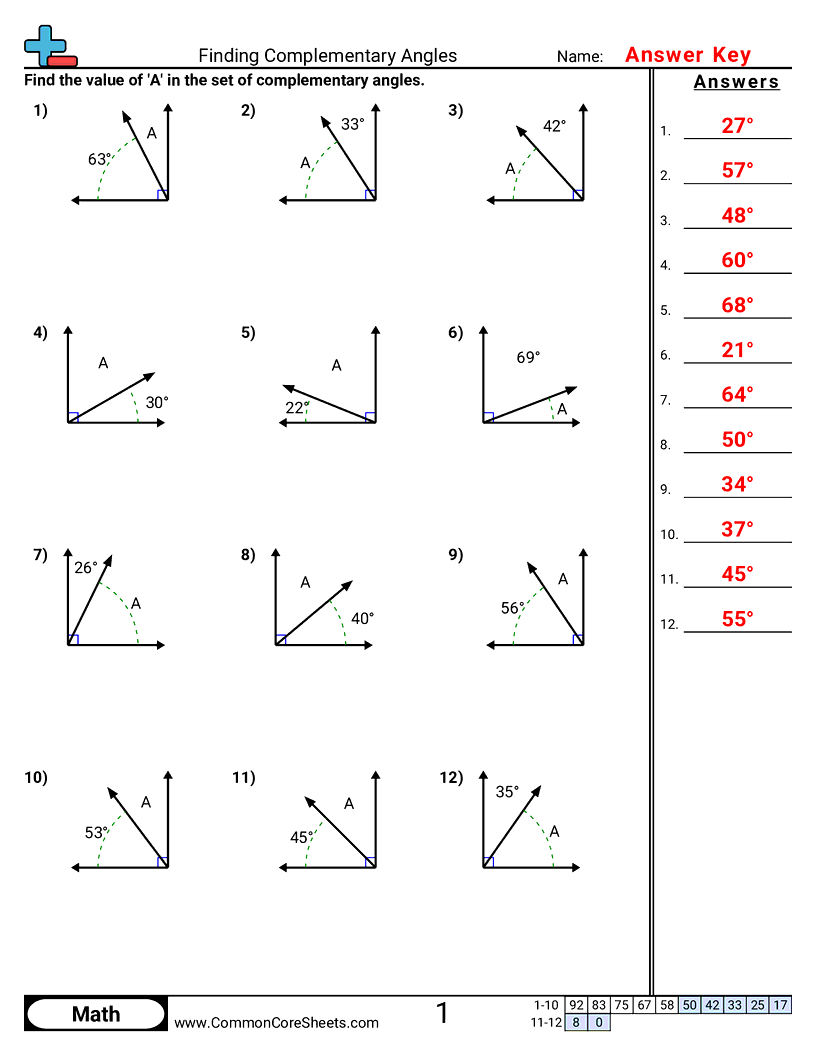
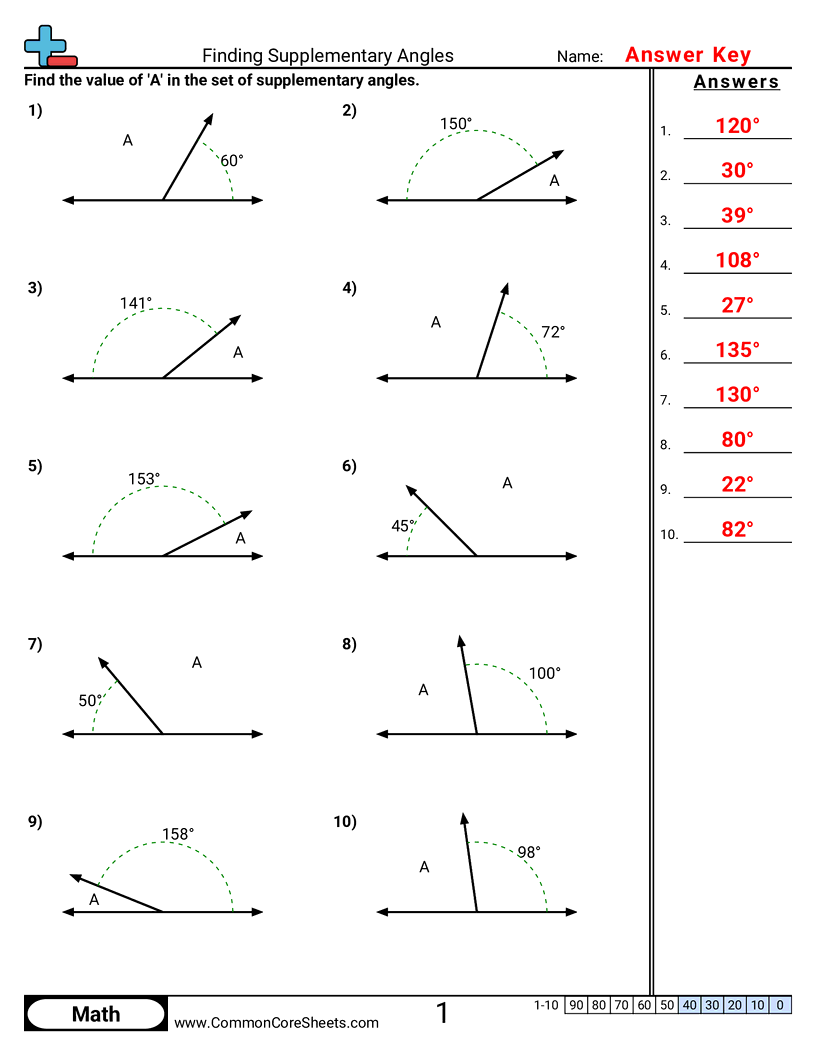
"This worksheet is designed to enhance children's understanding of complementary and supplementary angles through 20 engaging math problems. It simplifies the fundamental concepts into manageable tasks, exploring how to find complementary angles such as 41° for 49°. This versatile worksheet can be customized according to individual learning preferences, converted into flash cards for practical application, or employed in a distance learning scenario for a flexible, interactive math learning experience."
×Student Goals: Understanding of Complementary and Supplementary AnglesUpon successful completion of this worksheet, students should have a well-rounded understanding of complementary and supplementary angles. They should be able to clearly define what these terms mean and differentiate between them. Students should be competent in identifying these types of angles in various theoretical contexts, enhancing their practical understanding of the subject matter.Problem-Solving SkillsThis worksheet should help students develop improved problem-solving skills, particularly in geometric contexts. After completion, students should be able to analyze problems, apply appropriate techniques to find the complementary angle. This skill is not restricted to mathematics alone but applicable in other subjects and real-life scenarios that require problem-solving.Accuracy and PrecisionStudents will learn value of precision and accuracy through this worksheet. Through repeated practice of identifying and calculating angles, students will become more accurate in their approach. This precision is a crucial lesson in maths as an error could lead to a significant change in the final result.Application in Real-World ContextsBy practicing with this worksheet, students should be able to understand the practical applicability of these mathematical concepts. They will see where such calculations would be relevant in the real world scenarios, such as in construction, design, navigation, etc. This would encourage them to appreciate the subject’s practical relevance.Boost Confidence in MathematicsRegular practice with such worksheets assists in boosting the students' confidence in their mathematical abilities. By working through and solving each problem, students will be able to validate their understanding and reinforce abilities. Being confident in their mathematical skills can have a beneficial impact on their academic performance overall.