Subtraction Worksheets
Master subtraction with more than 50 free subtraction worksheets, from simple take-away problems to multi-digit subtraction with regrouping. The collection starts with understanding subtraction, then builds through traditional vertical problems, word problems, and strategy pages before finishing with timed subtraction drills for fact fluency. Every page prints as a PDF with a matching answer key and can be used as a digital assignment - no login or account needed. A grading column runs down the side of each worksheet so you can score work quickly, and modified versions with fewer problems help students who need extra support or a gentler introduction. Whether you teach kindergartners just learning to take away or 4th graders borrowing across zeros, these subtraction worksheets are ready for classrooms, tutoring, and homeschool.
More about these worksheets ▾ Show less ▴
×
About these worksheets
These worksheets introduce the concept of subtraction and build foundational understanding. Activities include relating subtraction to addition as inverse operations, solving subtraction problems with visual models within 20, and practicing the concept of regrouping (borrowing). Designed for kindergarten and first grade.
1oa4
Use a known addition fact to figure out a related subtraction fact. See how addition and subtraction undo each other in the same set of numbers. Fill in the missing number in an addition or subtraction equation. Write the matching addition sentence for a subtraction sentence (and vice versa).
1oa6
Match a subtraction sentence (like 14 − 6) to a visual model. Count the remaining objects to write the correct difference. Explain subtraction as “taking away” by crossing out or removing items in a drawing.
2nbt5
Get comfortable rewriting a number by trading a ten for 10 ones during subtraction.
About these worksheets
These worksheets provide structured practice with traditional subtraction methods. Topics include subtracting multiples of ten, subtracting within 20 and 100, subtracting across zeros, two- through four-digit subtraction with and without regrouping, vertical and horizontal formats, subtracting from a specific value, and solving mixed addition and subtraction problems. Resources span first through fourth grade Common Core standards.
1nbt6
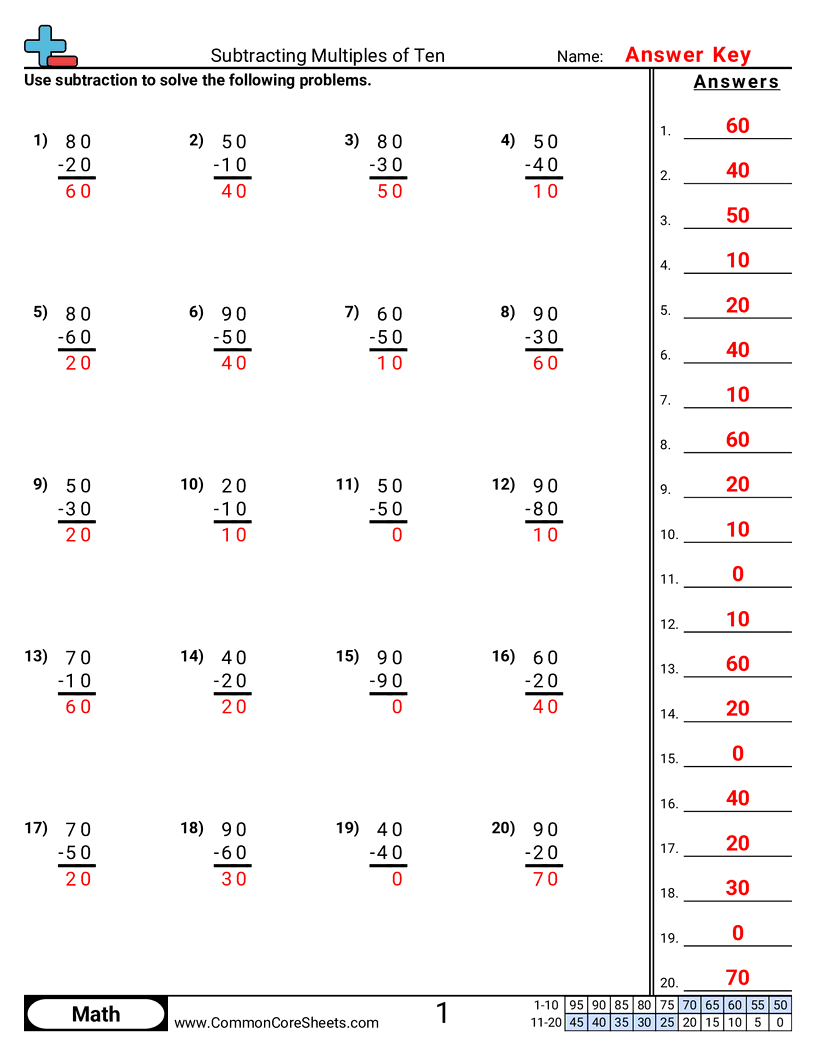
Subtract tens (like 30, 40, or 70) from a number to find the difference. Notice how subtracting a multiple of 10 changes the tens digit while the ones digit stays the same.
1nbt6
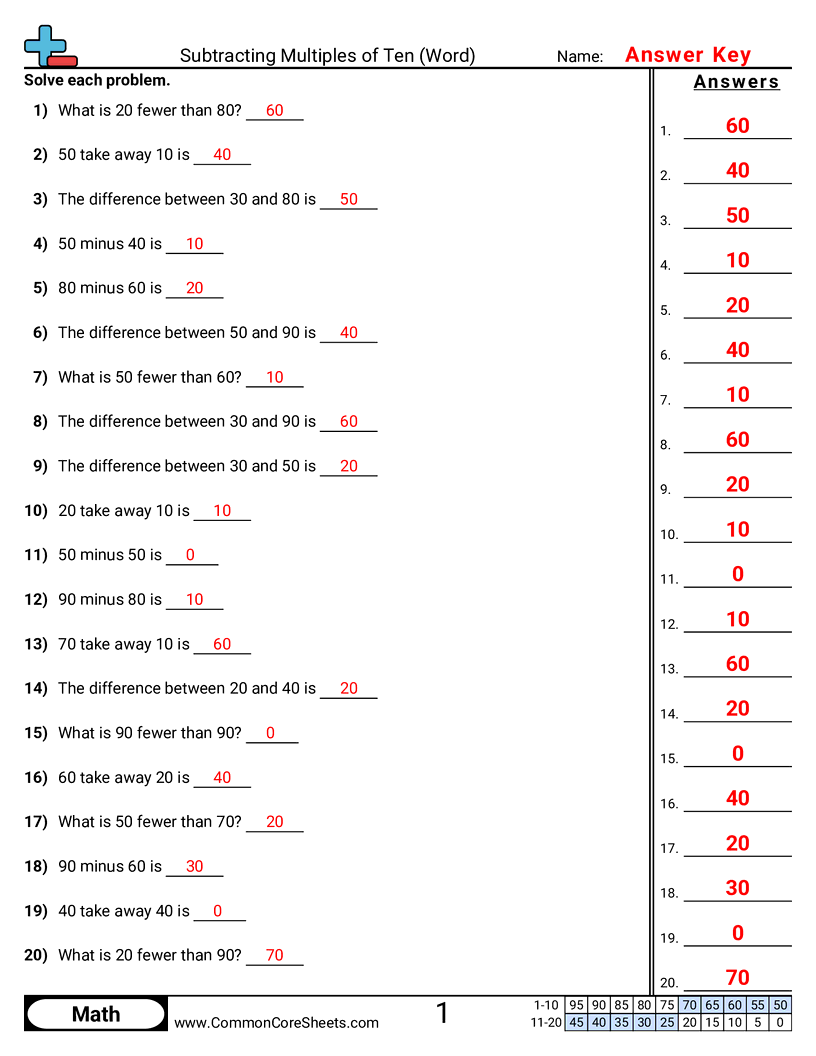
Subtract tens from tens to find how many are left. Solve short word problems where the numbers are multiples of ten.
1oa6
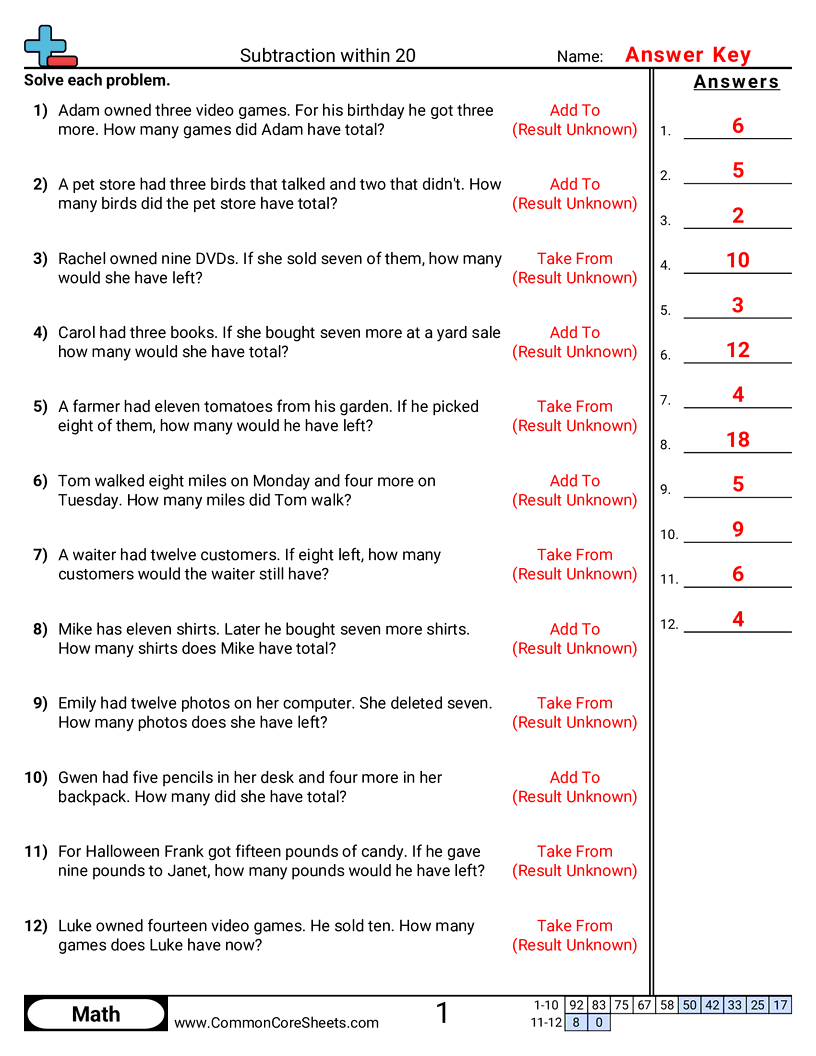
Subtract one number from another when both numbers are 20 or less. Use subtraction facts to find the difference quickly and accurately. Understand subtraction as taking away from a starting number.
2nbt5
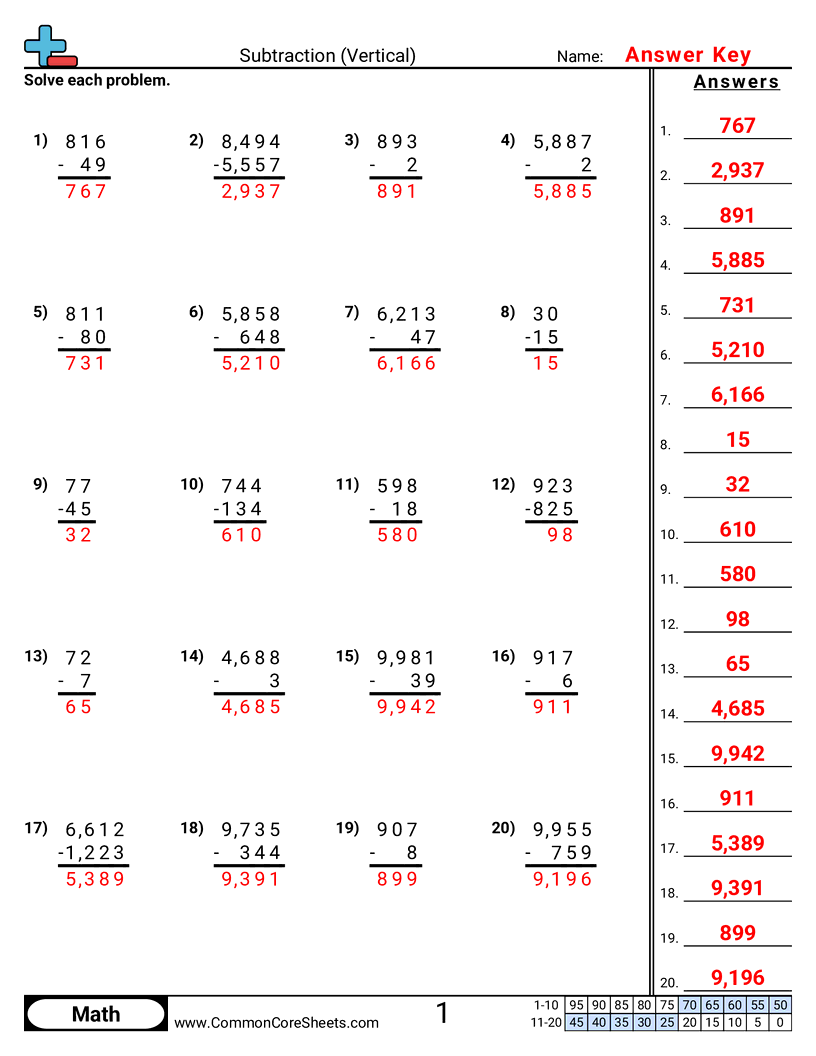
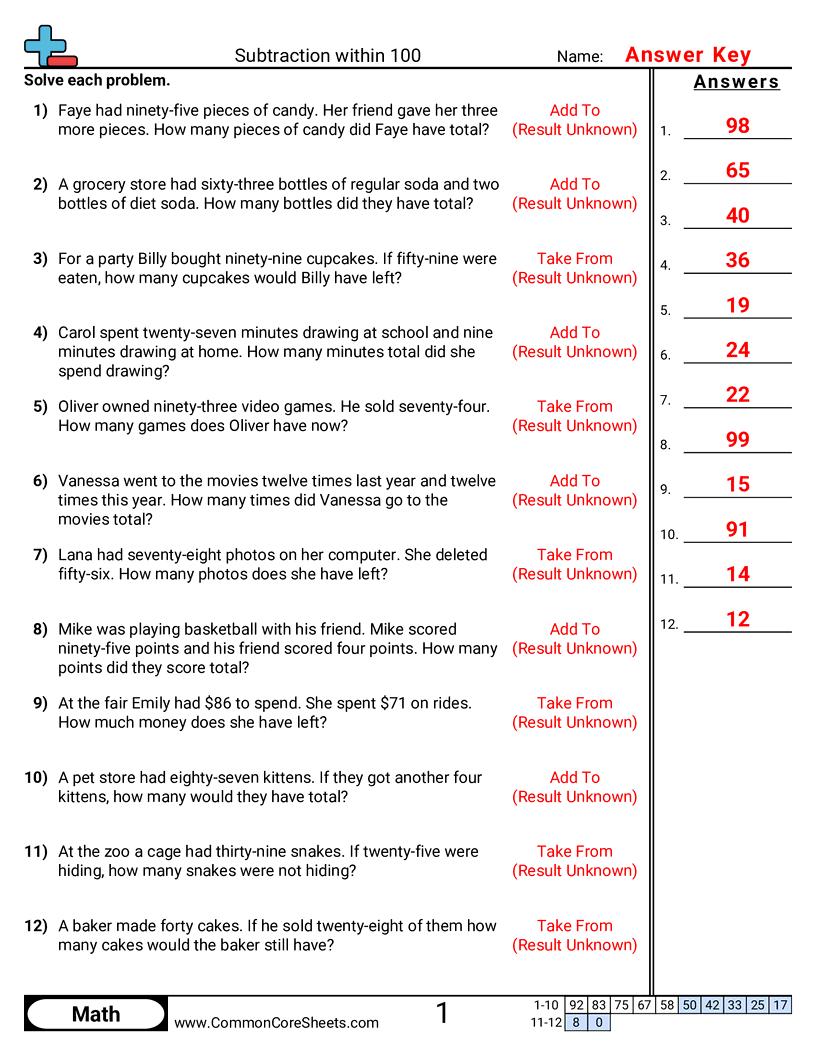
Subtract one 2-digit number from another to find the difference. Line up tens and ones correctly before subtracting. Use borrowing (regrouping) when the top ones digit is smaller than the bottom ones digit.
2oa1
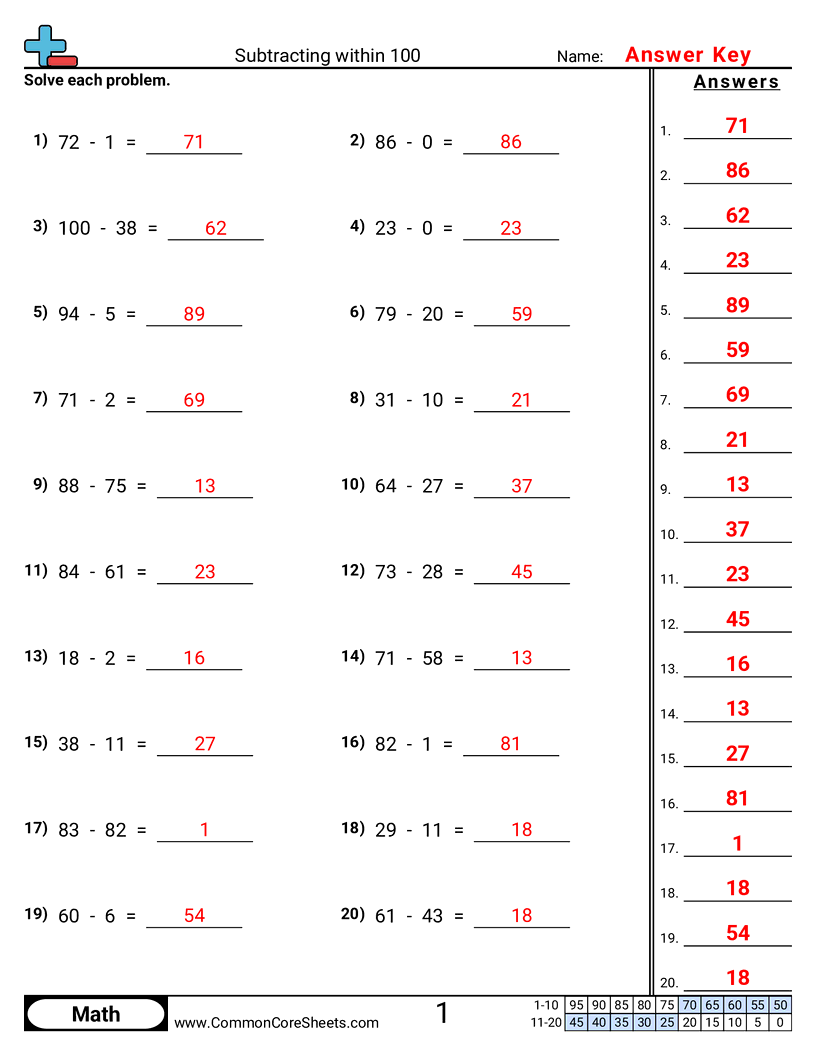
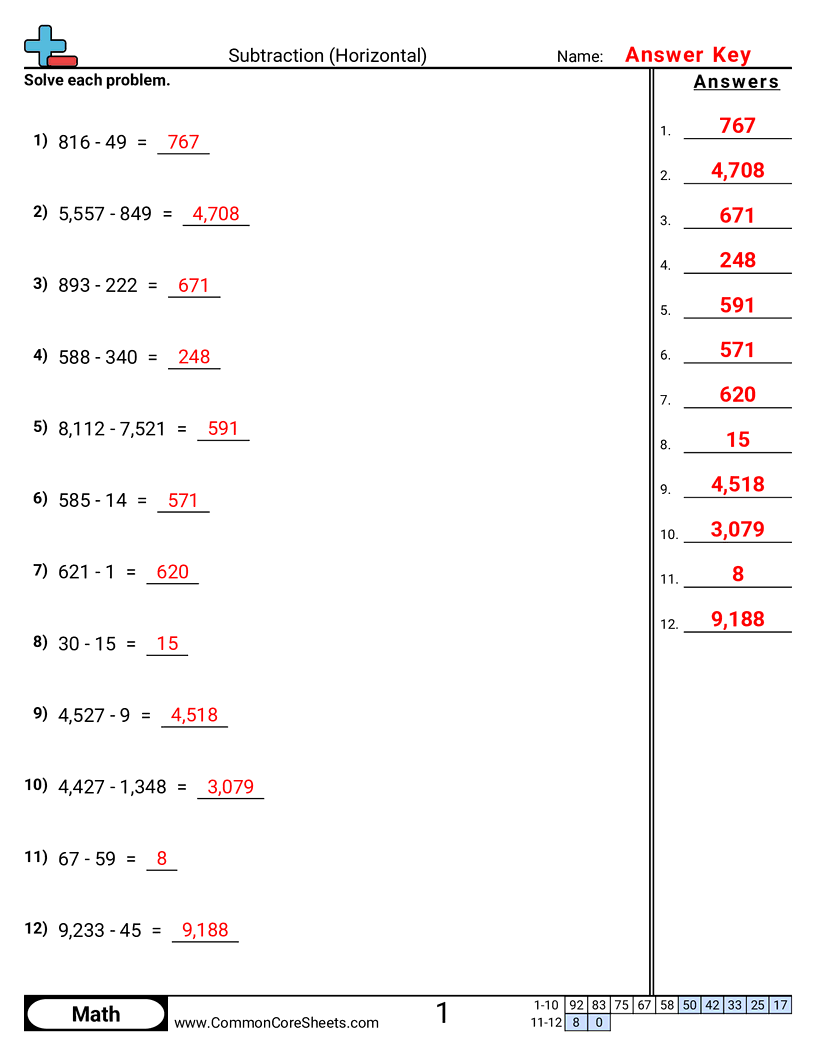
Subtract two-digit numbers to find how much is left or how much less. Use tens and ones place value to subtract more accurately. Decide when you need to borrow (regroup) to subtract from a smaller ones digit. Read and solve subtraction equations written in a single line.
2nbt5
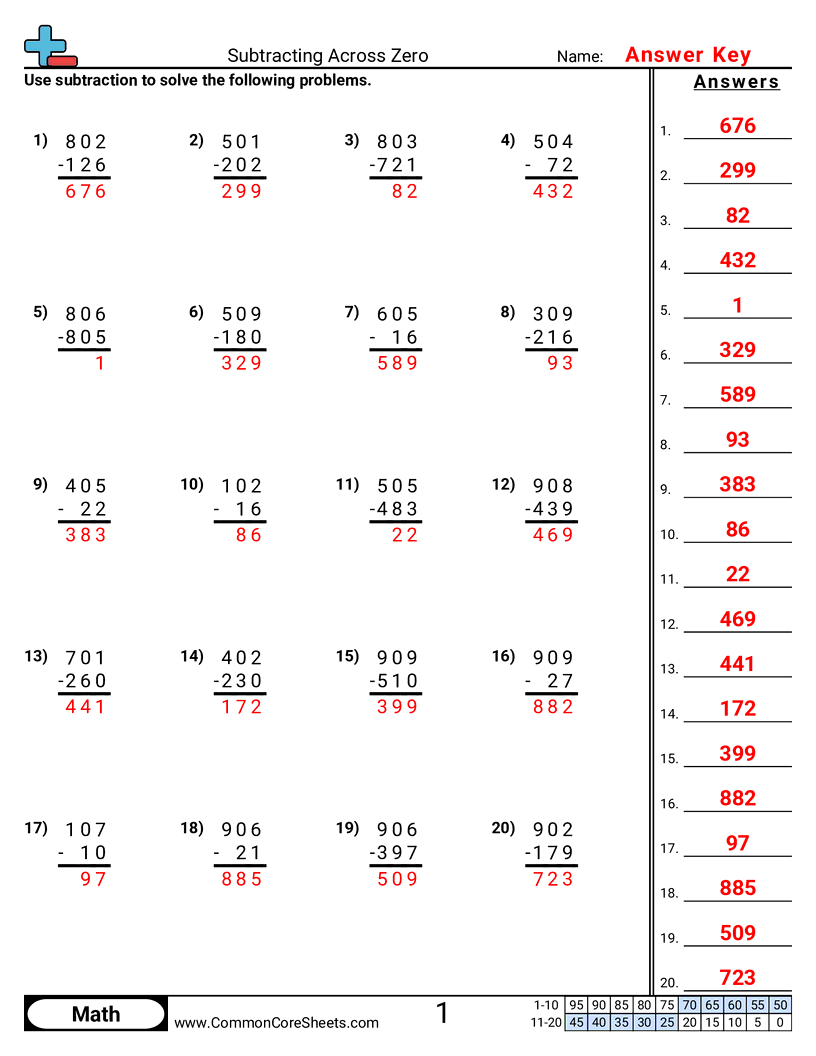
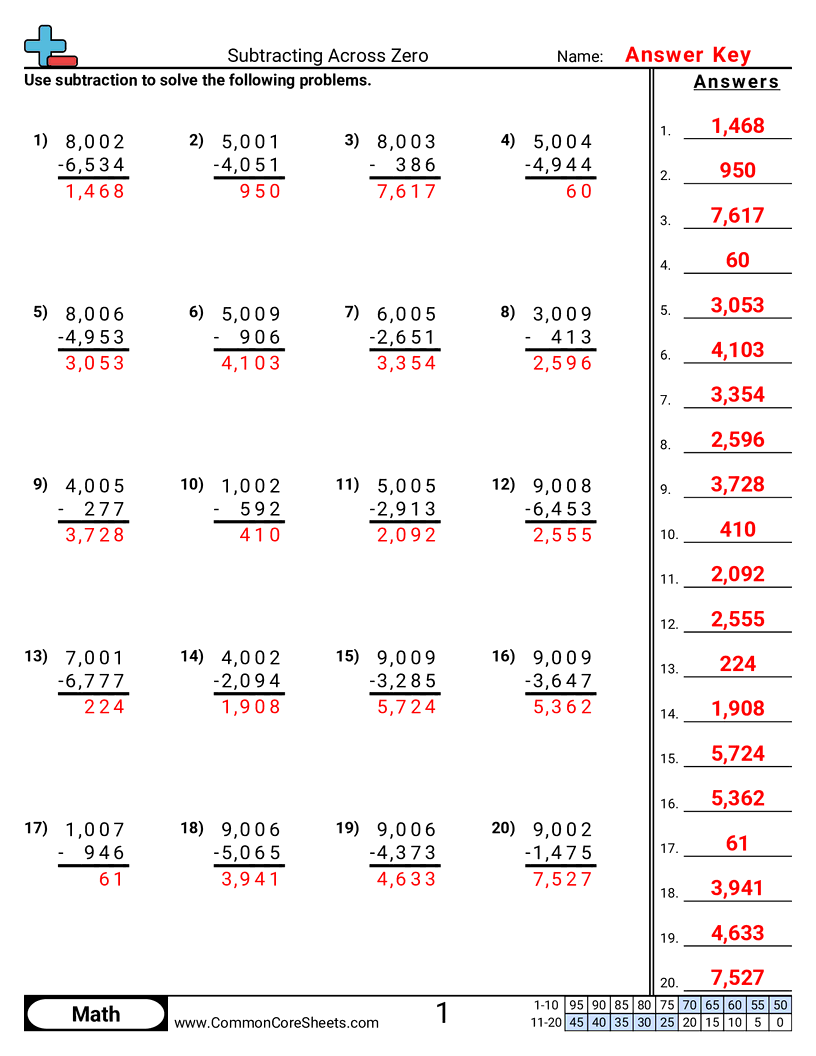
Subtract two- and three-digit numbers when the top number has a zero in the middle. Use borrowing (regrouping) to subtract across a zero without getting stuck. Keep digits lined up by hundreds, tens, and ones when subtracting.
3nbt2
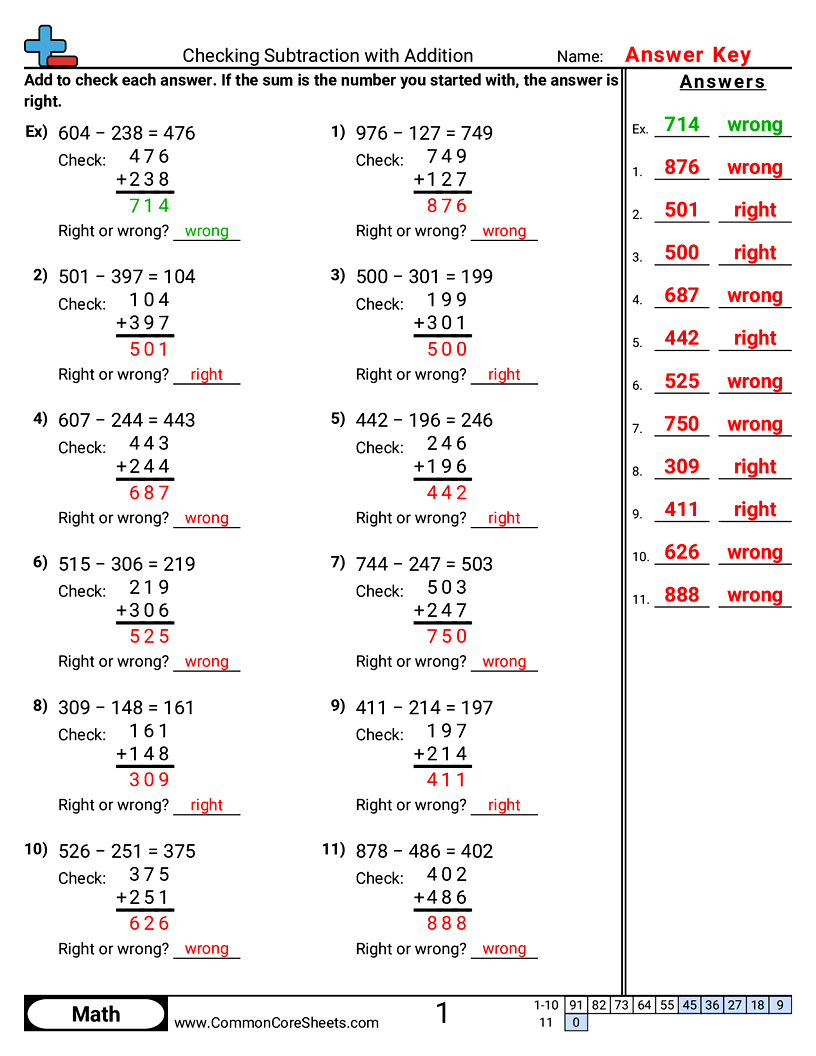
Check a subtraction answer by adding Use addition and subtraction as inverse operations Recognize common regrouping mistakes
3nbt2
Subtract larger numbers where the top number has zeros in it. Use regrouping to subtract when you need to borrow across a zero. Line up digits by place value so each column is subtracted correctly.
4nbt4
Subtract multi-digit numbers when you have to borrow across several zeros. Use regrouping to turn a zero in the top number into a number you can subtract from.
4nbt4
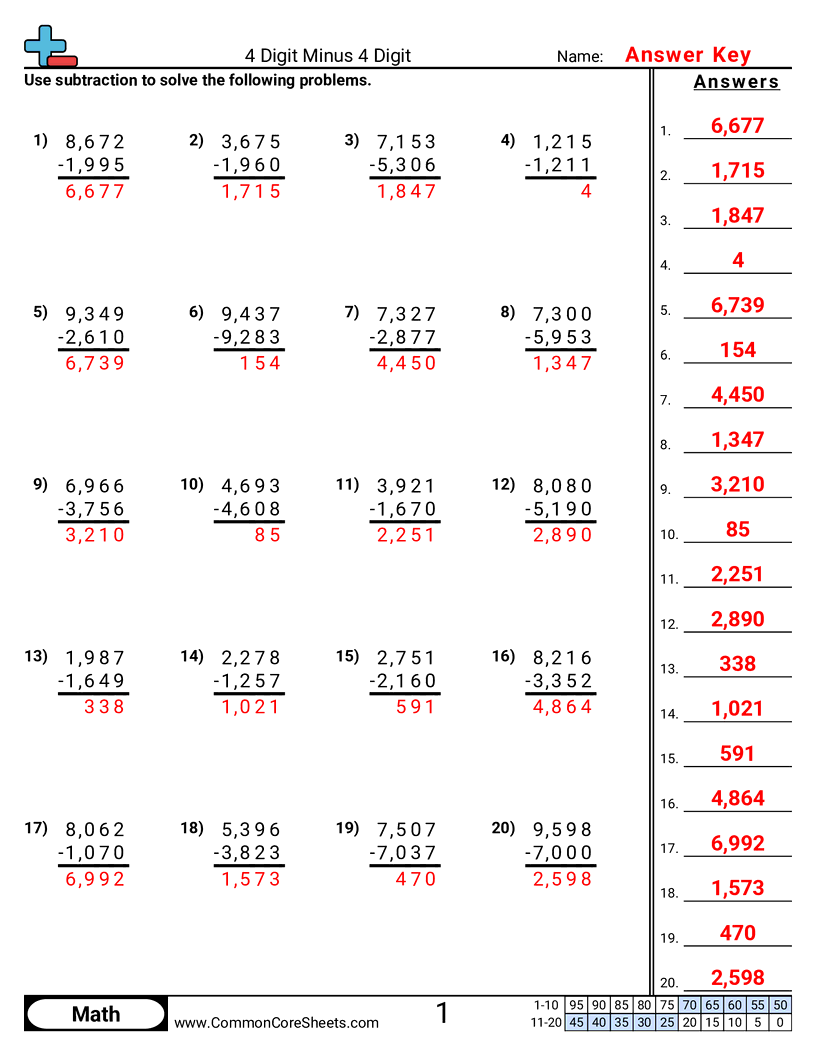
Subtract one 4-digit number from another accurately. Line up thousands, hundreds, tens, and ones so each digit is subtracted in the right place. Use borrowing (regrouping) when the top digit is smaller than the bottom digit in a place.
2nbt7
Subtract one 3-digit number from another to find the difference. Line up hundreds, tens, and ones correctly before subtracting. Use borrowing (regrouping) when the top digit is smaller than the bottom digit in a place. Subtract accurately across zeros when borrowing is needed.
3nbt2
Subtract multi-digit numbers using borrowing when you need to trade from a higher place value. Handle subtraction problems where you have to regroup more than once in the same problem.
2nbt5 4nbt4
Subtract two numbers when each top digit is big enough so you don’t need to borrow. Line up ones and tens correctly before subtracting. Subtract in vertical form, working from the ones place to the tens place.
2nbt7
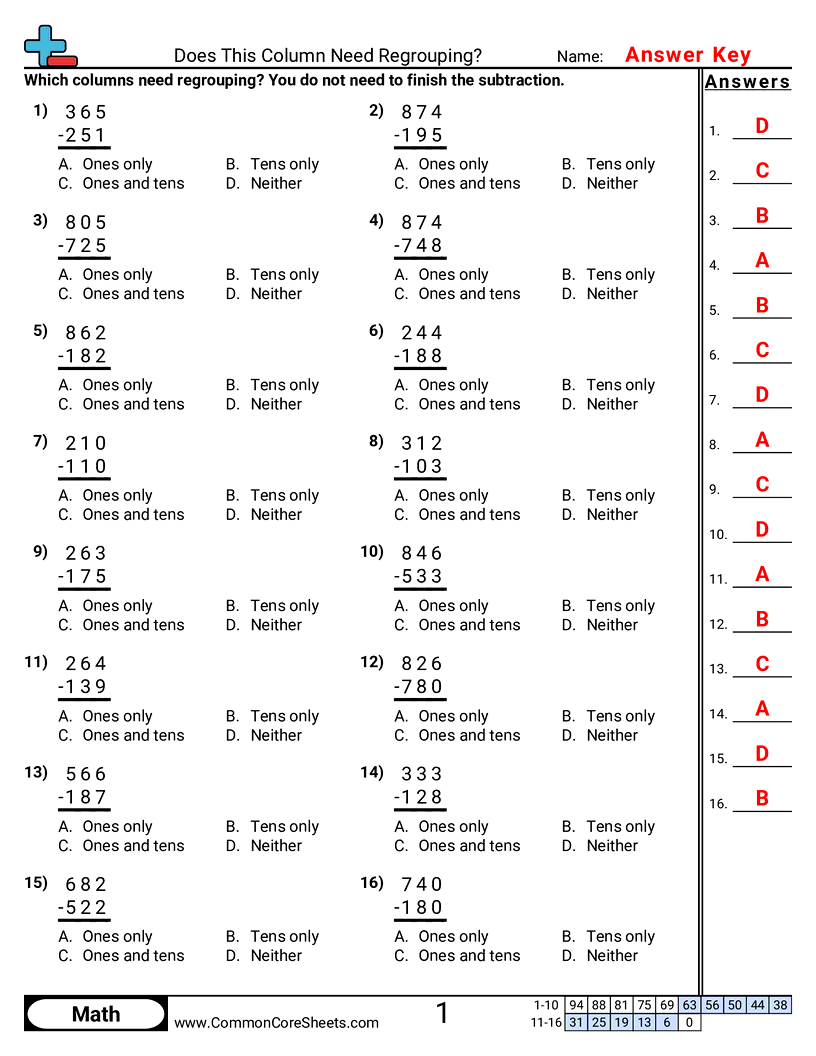
Tell when a column needs regrouping in subtraction Compare the top and bottom digits in each column Recognize problems that need no regrouping
4nbt4
Subtract numbers written in columns by lining up ones, tens, and hundreds correctly. Use borrowing (regrouping) when the top digit is smaller than the bottom digit in a place value.
4nbt4
Subtract one number from another to find how much is left or how much smaller it is. Use borrowing (regrouping) when the top digit is smaller than the bottom digit in a place.
4nbt4
Subtract one number from another to find how much is left or how much smaller it is. Use borrowing (regrouping) when the top digit is smaller than the bottom digit in a place.
2oa2
Practice subtracting different numbers from the same starting number. Get faster and more accurate with basic subtraction facts and mental math.
2nbt7 3nbt2
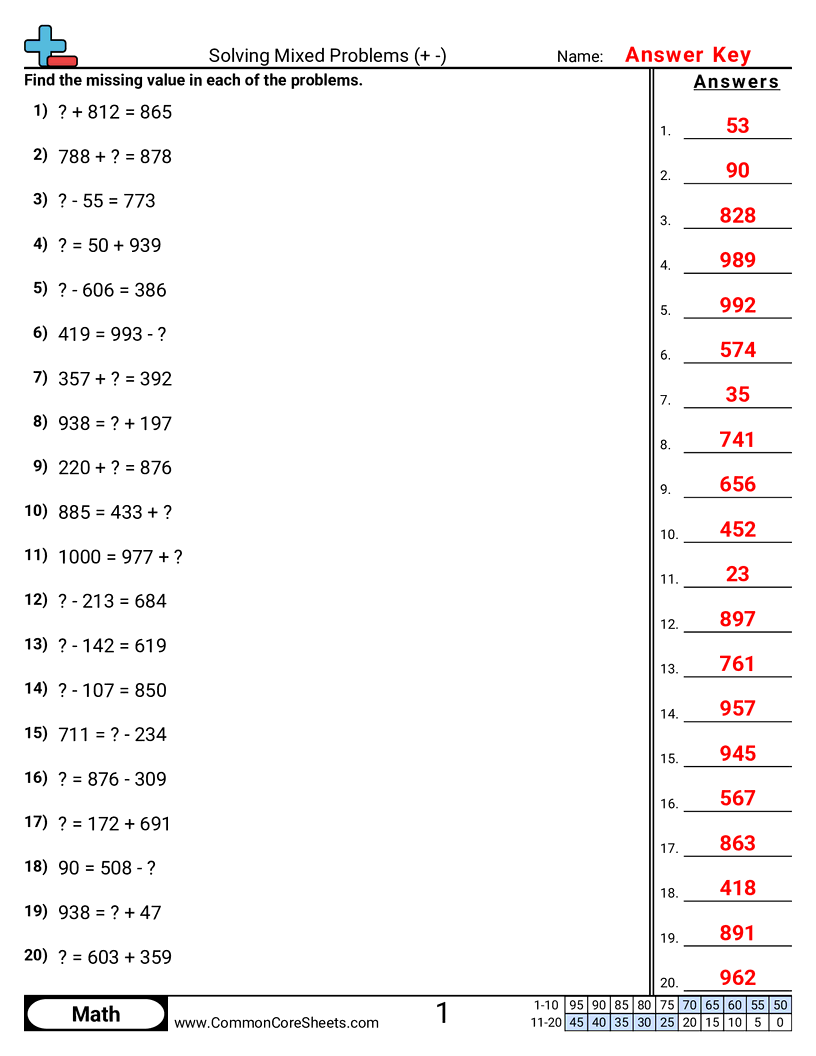
Practice adding and subtracting numbers up to 1,000 accurately. Decide whether to add or subtract based on the symbols in the problem. Use regrouping when needed to solve multi-digit addition and subtraction. Keep digits lined up by place value so the answer makes sense. Practice finding a missing number in addition and subtraction equations Get comfortable seeing the unknown in different spots — at the beginning, middle, or end of an equation
1oa6
Subtract one number from another using stacked (vertical) subtraction. Line up ones and tens so you subtract the correct place values. Use borrowing (regrouping) when the top digit is smaller than the bottom digit.
2nbt5
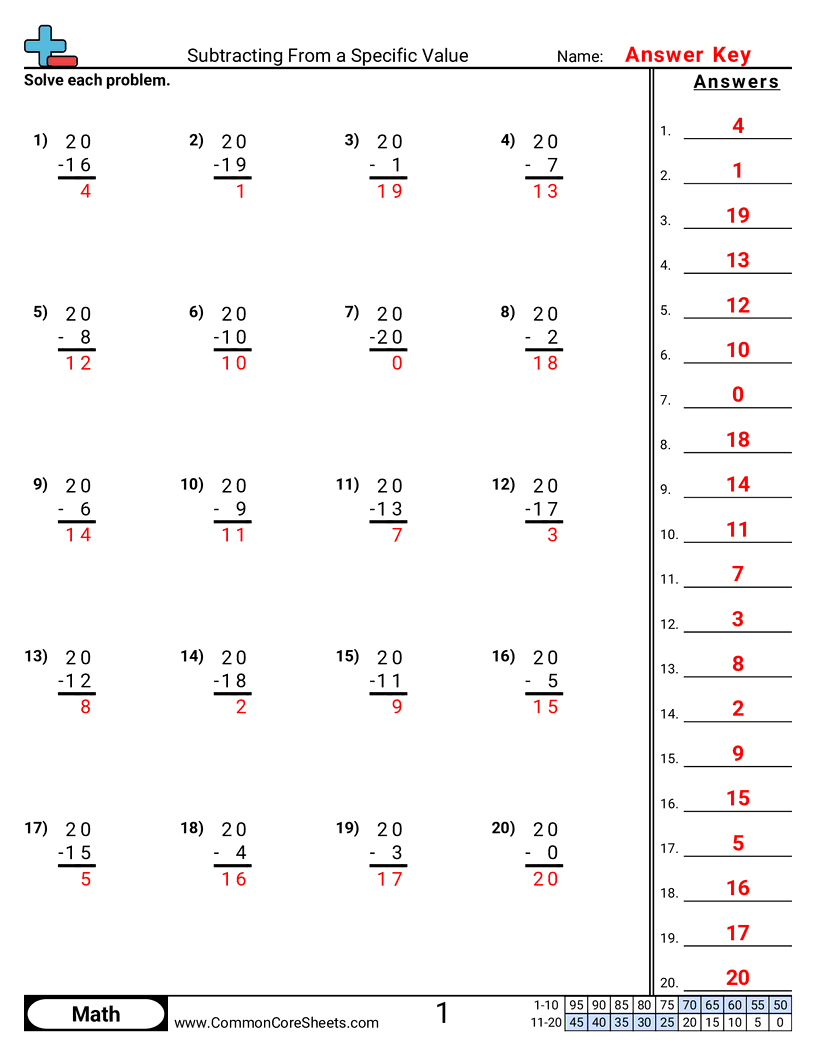
Subtract a one- or two-digit number from a multiple of ten. Use place value to keep tens and ones lined up while subtracting. Regroup a ten into ones when the ones digit is too small to subtract.
About these worksheets
Subtraction word problems help students apply subtraction skills to real-world situations. Problem sets are available at three difficulty levels — within 10, within 20, and within 100 — plus problems with multiple subtrahends. Students read story problems, identify key numbers and operations, and write number sentences to find the answer. Spanning kindergarten through second grade.
koa2
Solve simple subtraction stories by figuring out how many are left after some are taken away. Pick out the important numbers and words in a word problem to decide what subtraction to do. Write a subtraction equation that matches a short story.
1oa1
Solve subtraction word problems where the numbers are 20 or less. Figure out what “how many are left” or “how many more” means in a story problem. Pick out the important numbers and ignore extra details in a short word problem.
2oa1
Read a short story problem and figure out what is being taken away. Use subtraction words like minus, difference, left, and remaining to understand what the question is asking.
2nbt7
Subtract two or more numbers from a starting number to find what is left. Keep track of the running total when subtracting in a sequence of steps. Solve subtraction word problems that have more than one amount being taken away.
About these worksheets
These worksheets teach subtraction strategies that build number sense and mental math skills. Students practice making a ten to subtract within 20 and using open number lines to break subtraction into easier steps by place value. Aligned with kindergarten through fourth grade standards.
koa5
Subtract within 20 by making a ten first. Break apart a number to subtract in two easier steps (to 10, then the rest). Use the idea of “take away to the next ten” to solve subtraction problems more quickly. Explain or show how you split the number you’re subtracting to make the problem easier.
4nbt4
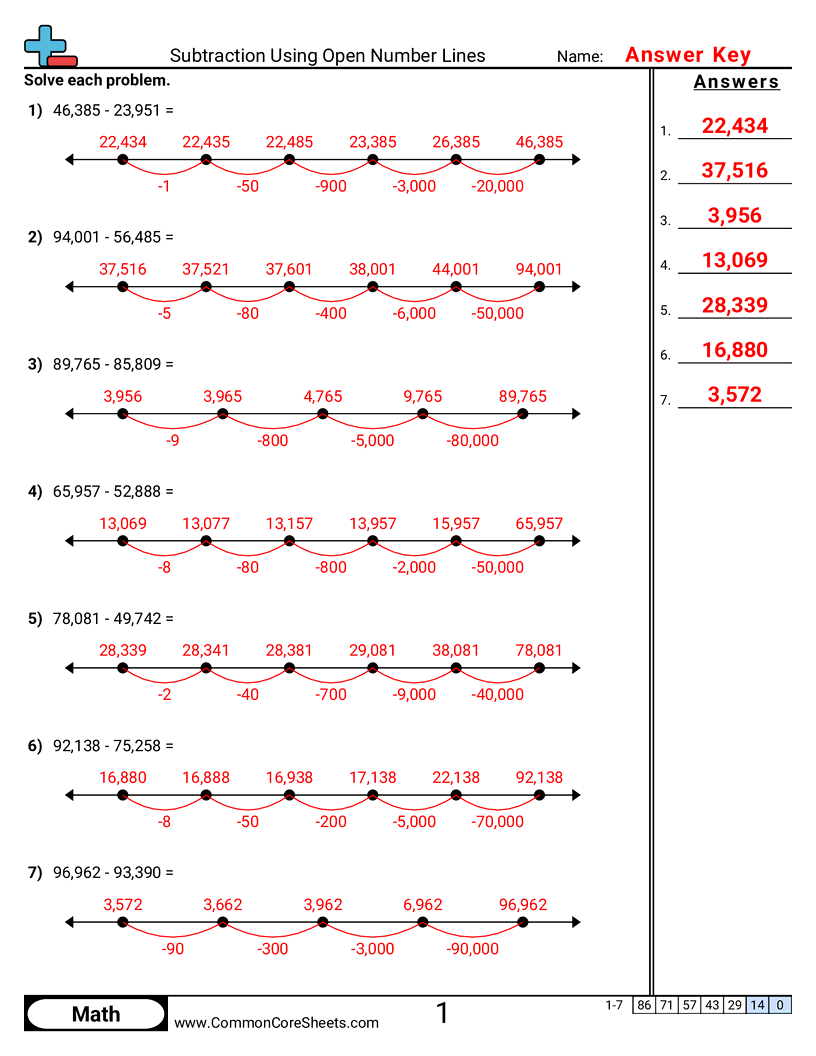
Use an open number line to subtract by making jumps back from the starting number. Break a subtraction problem into easier steps (like subtracting tens, then ones) and keep track of each jump. Explain your subtraction thinking by showing the jumps you made on the number line.
About these worksheets
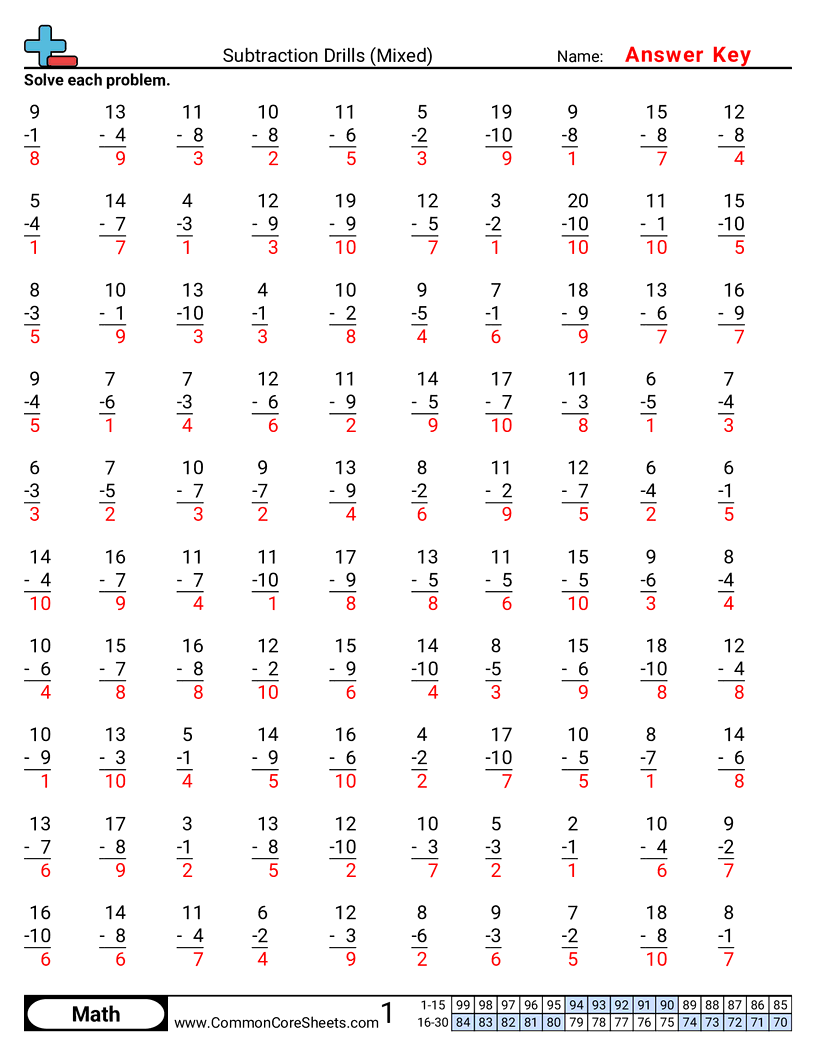
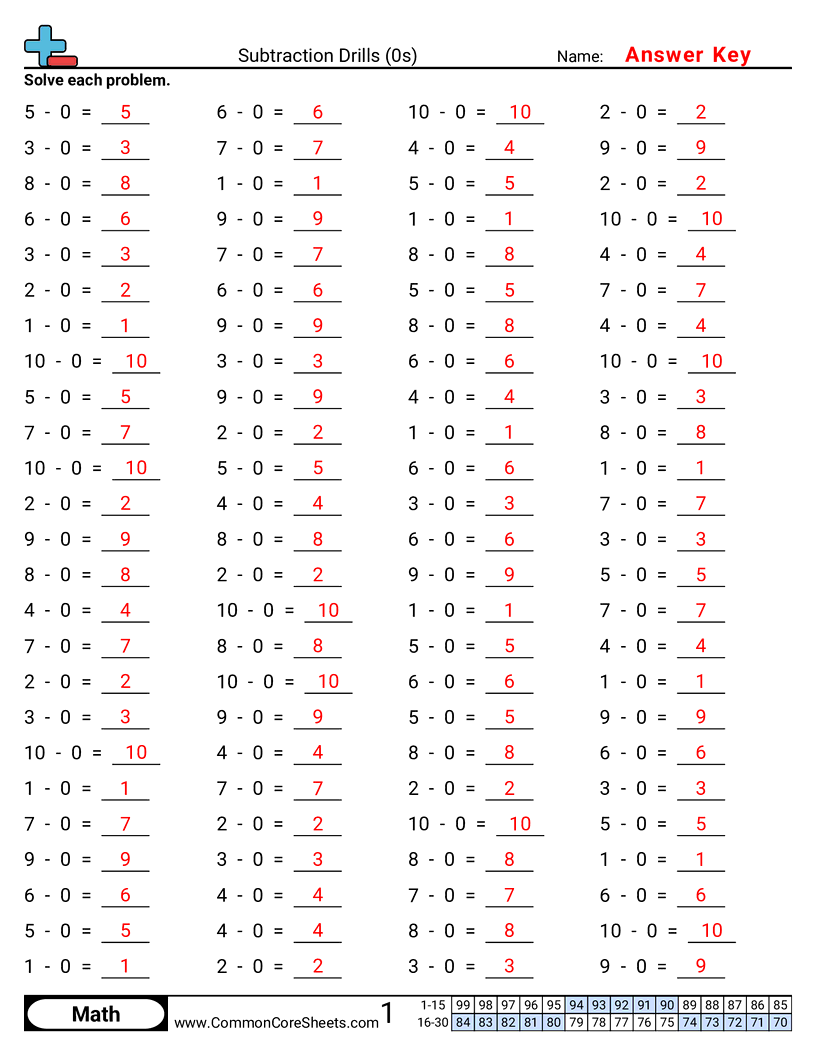
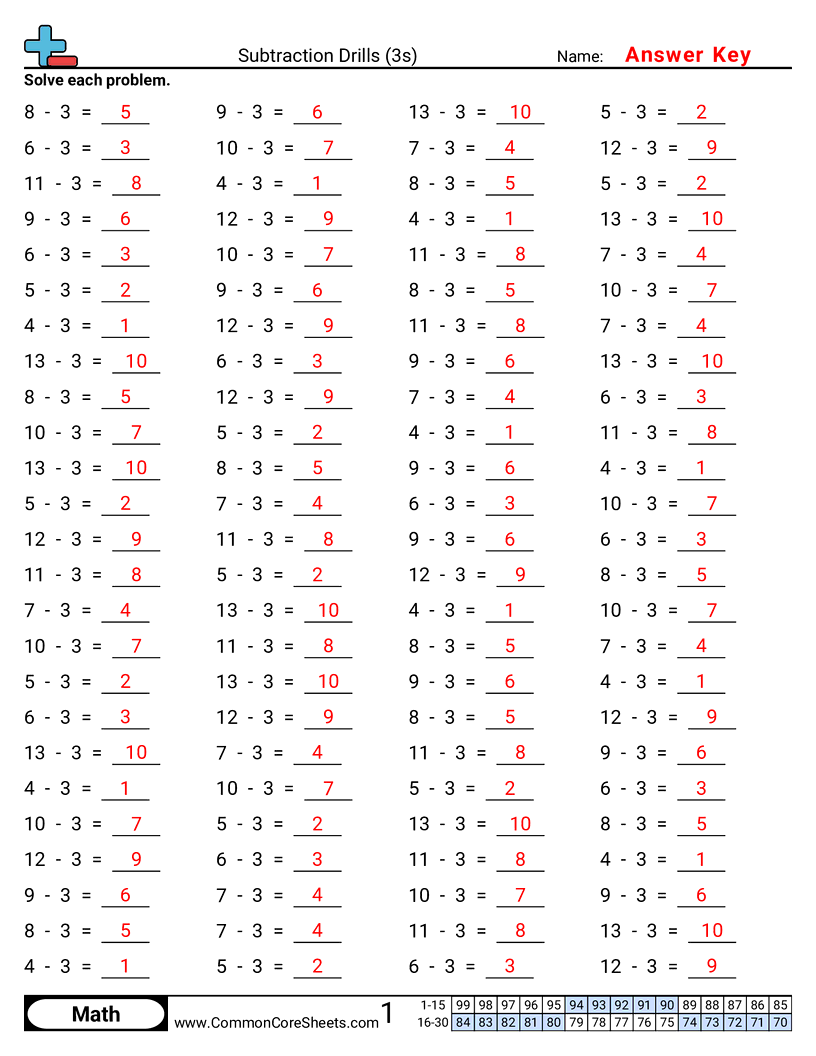
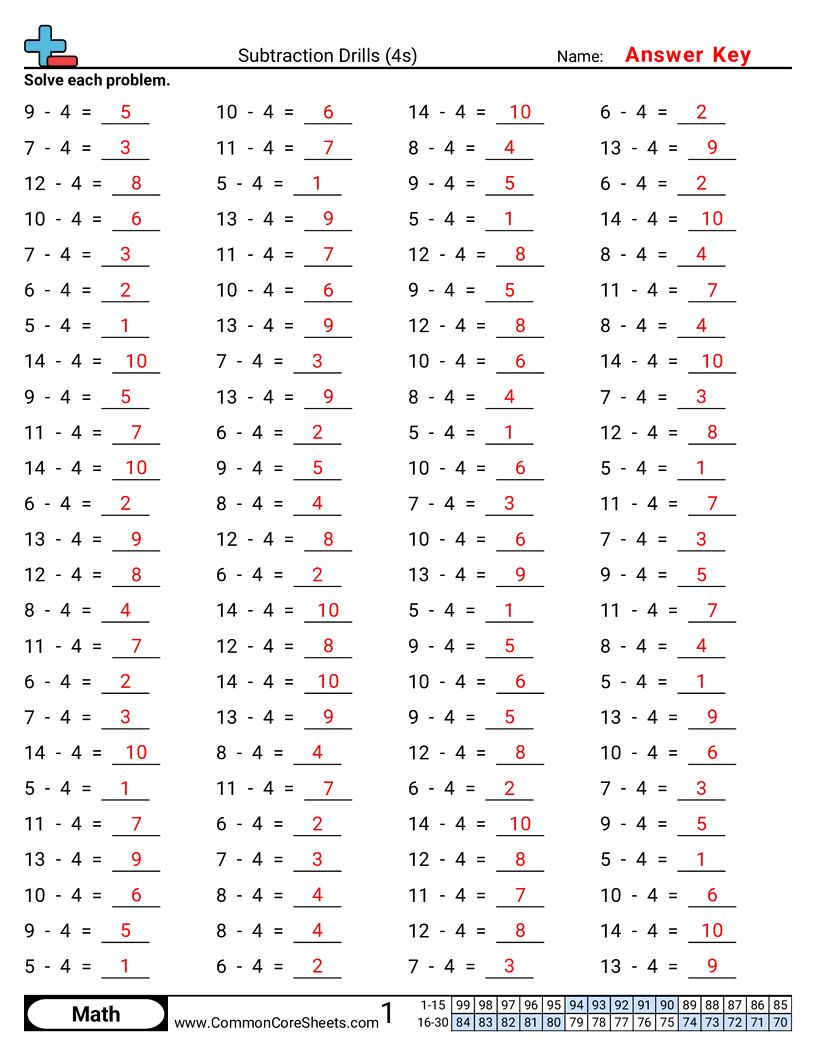
Subtraction drill worksheets build speed and accuracy with basic subtraction facts. Problem sets cover individual fact families from 0s through 10s in both vertical and horizontal formats, plus mixed drill sets combining all subtraction facts. Each worksheet contains 100 problems, making them ideal for timed practice, daily warm-ups, or fact fluency assessments.
1oa6 koa5
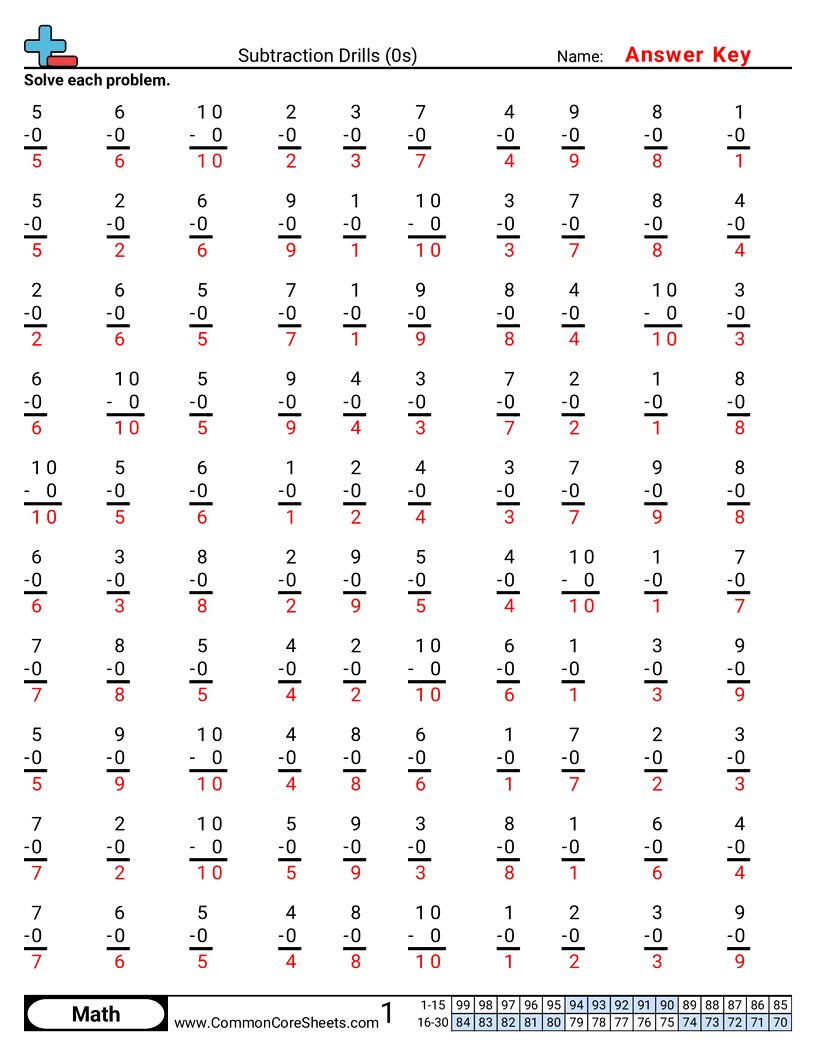
Practice subtracting 0 from a number and seeing that the number stays the same. Get faster at basic subtraction facts by recognizing the zero rule right away. Build confidence reading subtraction expressions with a minus sign and a 0.
1oa6 2oa2
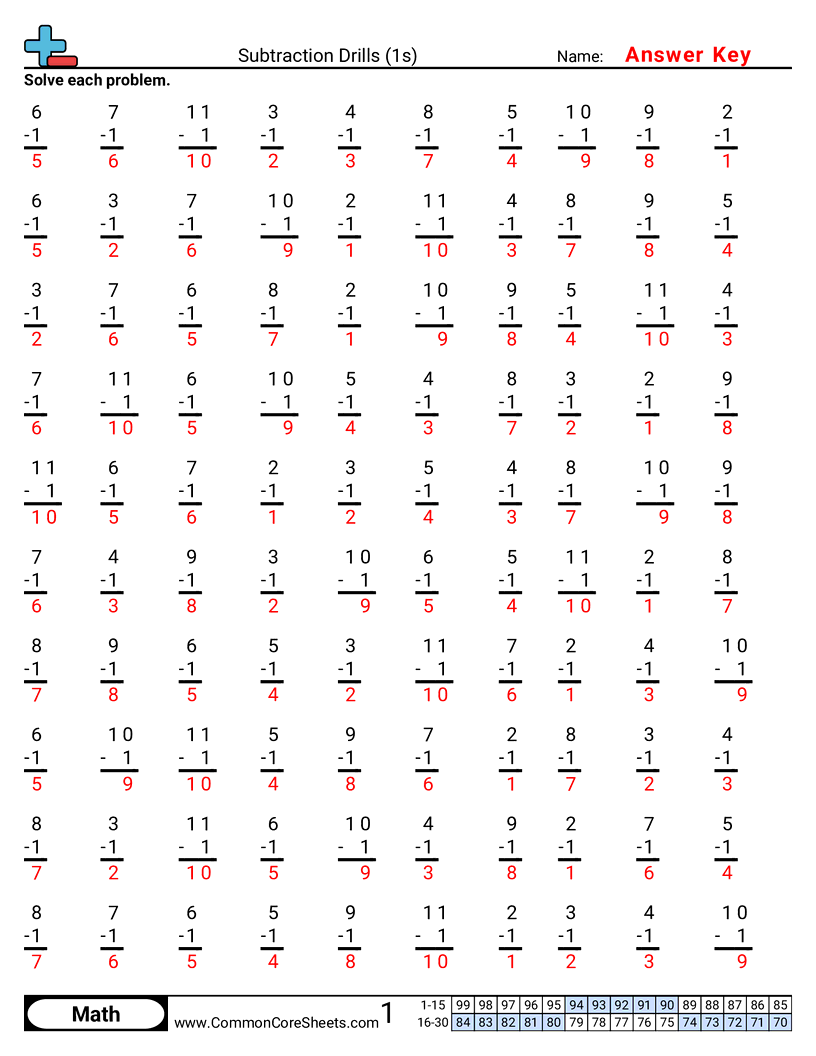
Practice subtracting 1 from a number quickly and accurately. Notice that subtracting 1 means finding the number right before it in counting order. Build speed and confidence with simple subtraction you can do in your head.
1oa6 2oa2
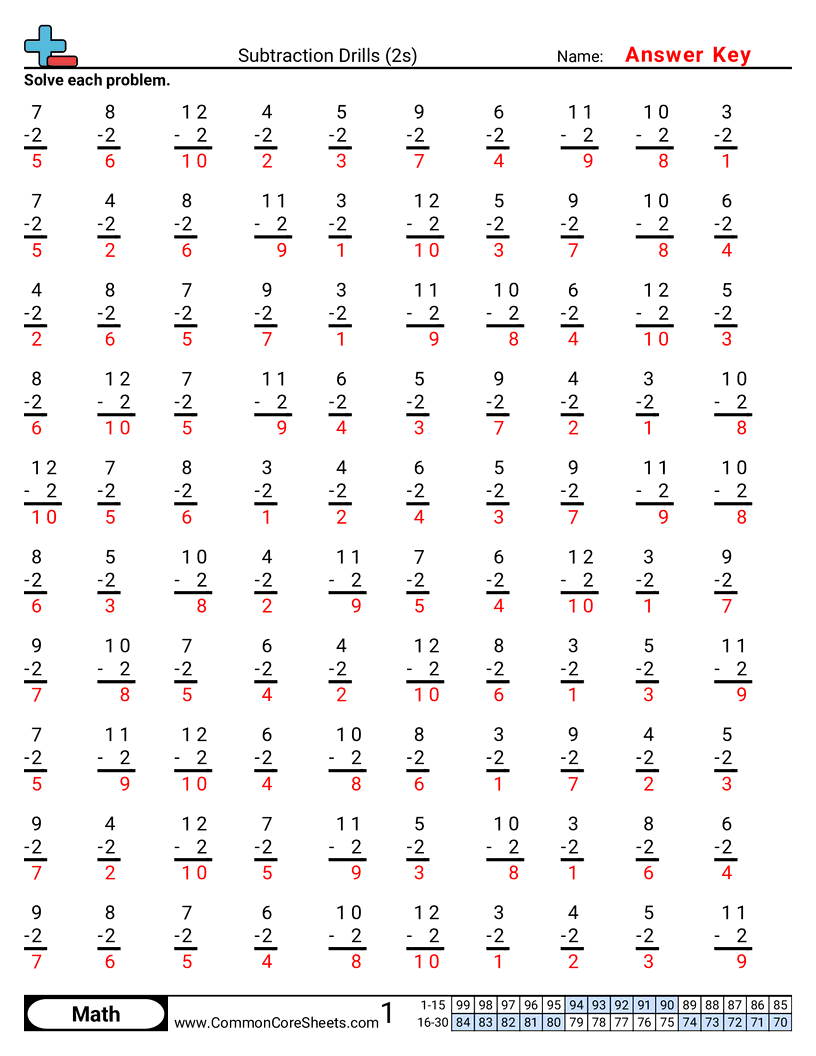
Practice subtracting 2 from a number quickly and accurately Get comfortable counting back by 2s to find a difference Build confidence with basic subtraction facts and mental math speed Notice patterns when numbers go down by 2 each time
1oa6 2oa2
Practice subtracting 3 from a number quickly and accurately. Get comfortable counting back three steps to find the difference. Build fluency with subtraction facts that use 3. Improve mental math speed when taking away a small number.
1oa6 2oa2
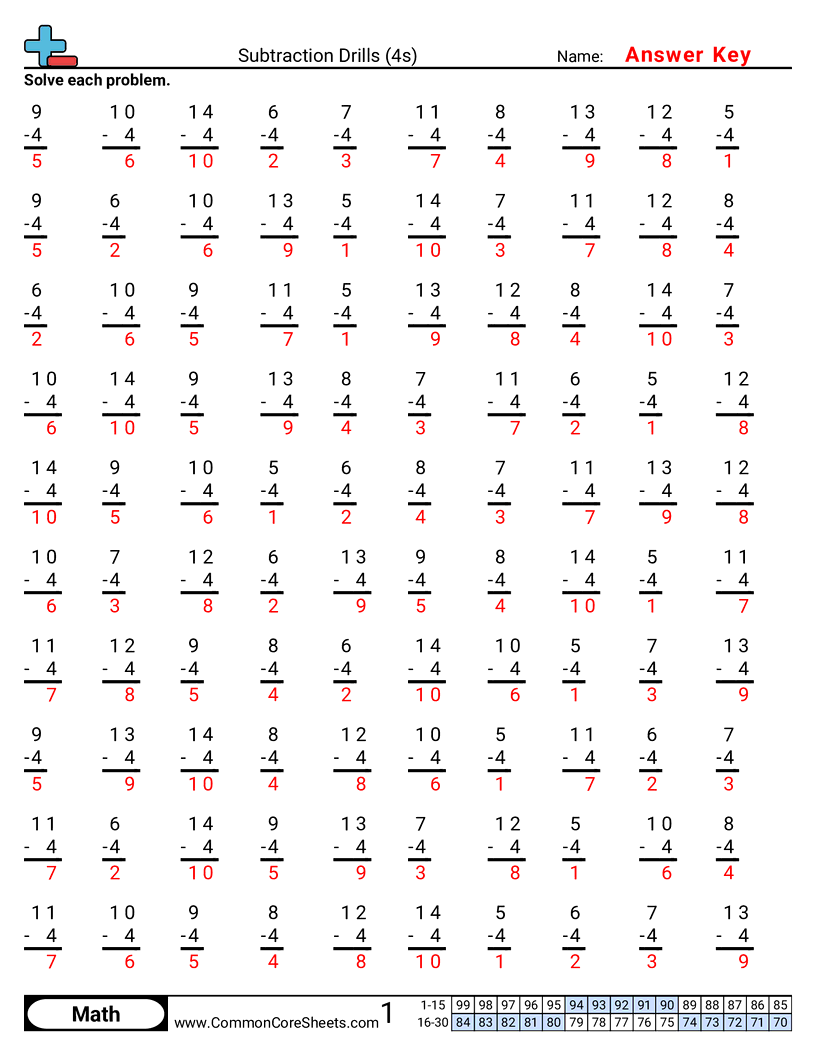
Practice subtracting 4 from a number quickly and accurately. Get comfortable finding the difference when taking away 4. Build speed with subtraction facts so answers come more easily in your head.
1oa6 2oa2
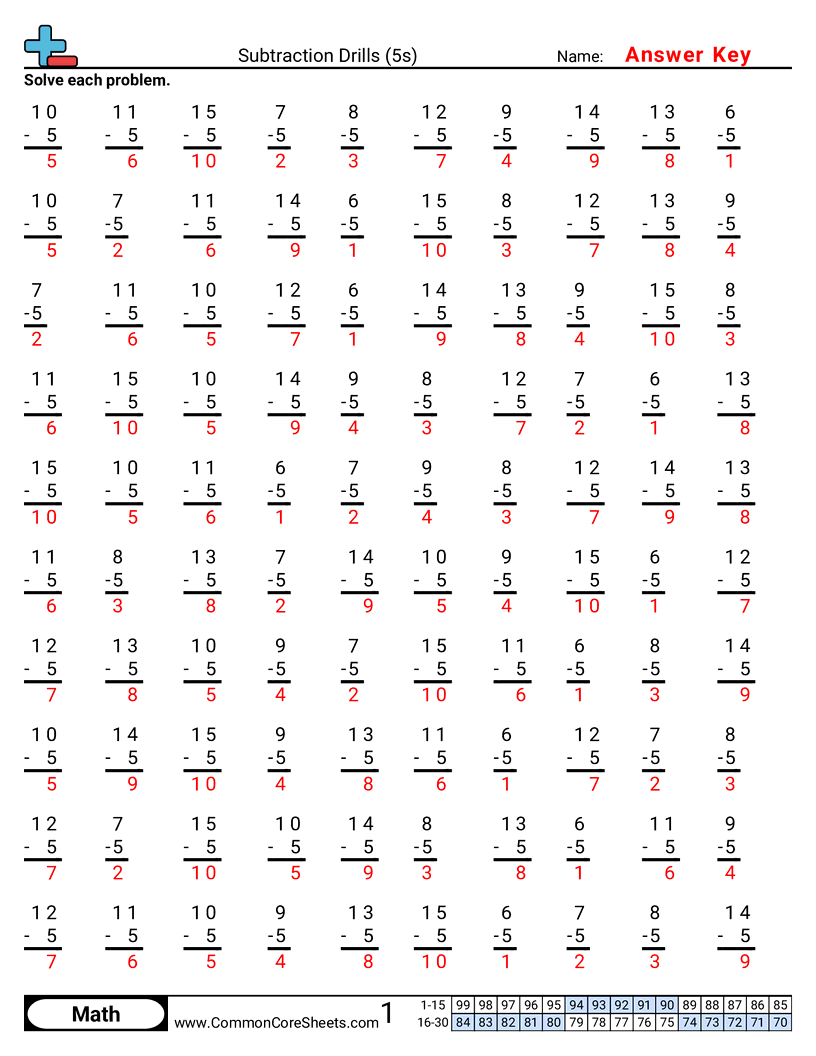
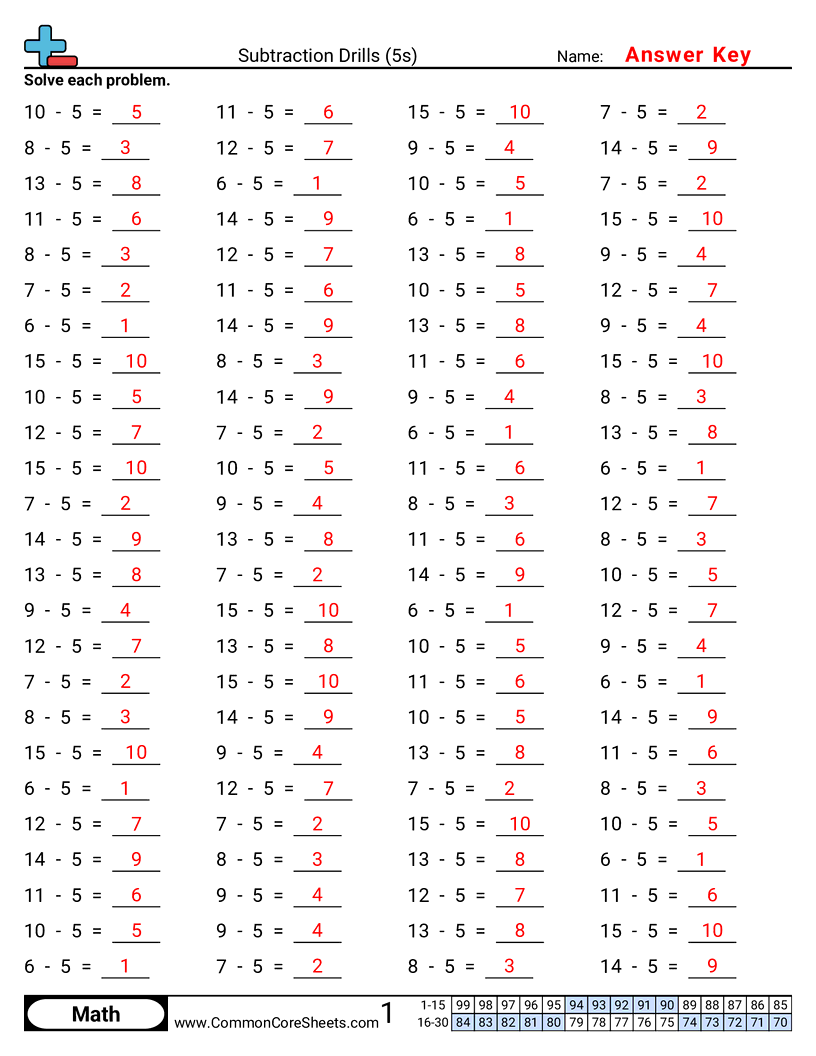
Practice subtracting 5 from a number quickly and accurately. Get comfortable counting back by fives to find the difference. Build subtraction fact fluency so answers come faster in your head. Notice patterns when you take away 5 (like the ones digit changing in predictable ways).
1oa6 2oa2
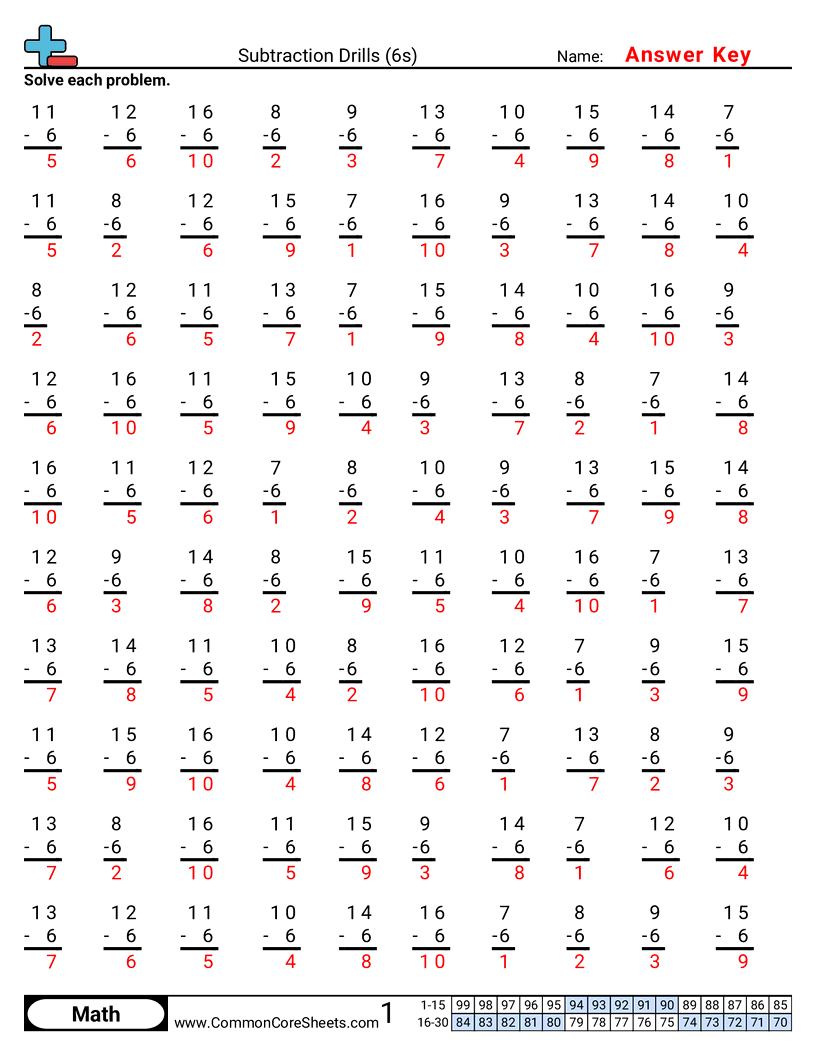
Practice subtracting 6 from a number quickly and accurately. Get comfortable using subtraction facts for 6 without counting every time. Build mental math speed when taking away 6 from different starting numbers. Notice patterns in the 6s subtraction facts to help you answer faster.
1oa6 2oa2
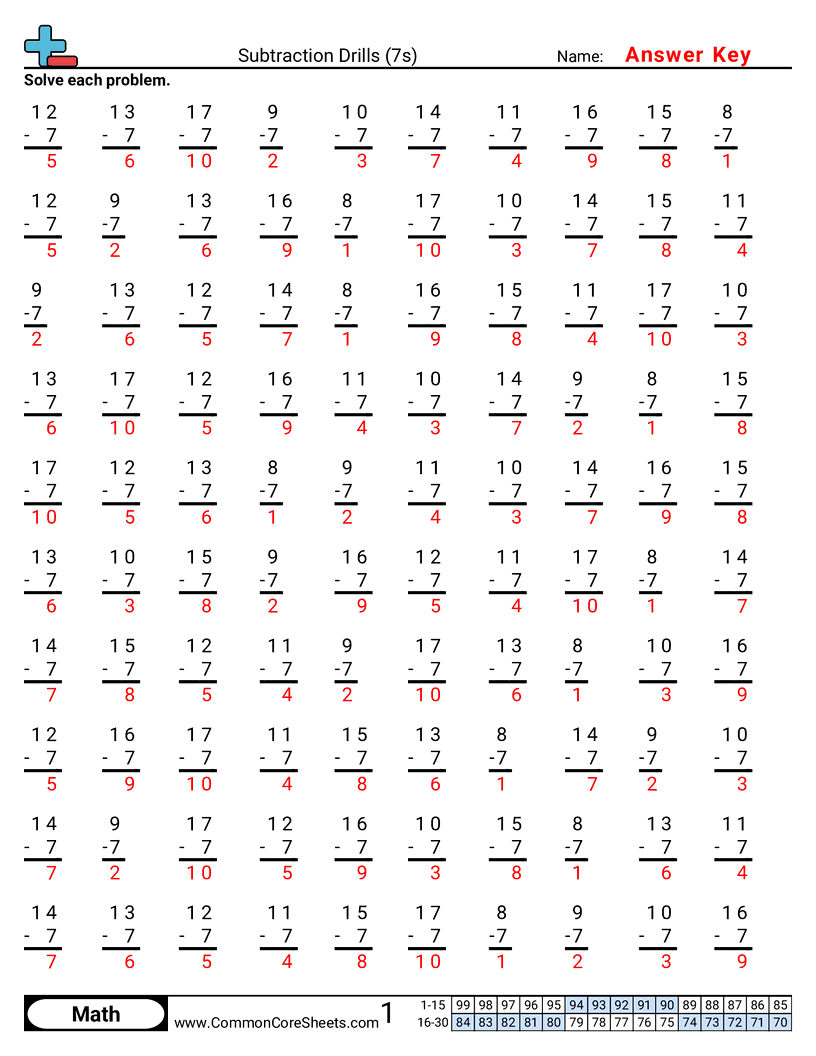
Subtract 7 from a number quickly and accurately. Use the idea of “take away 7” to find the difference between two numbers. Build speed and confidence with the 7 subtraction facts for mental math. Notice patterns when counting back by 7 to help solve problems faster.
1oa6 2oa2
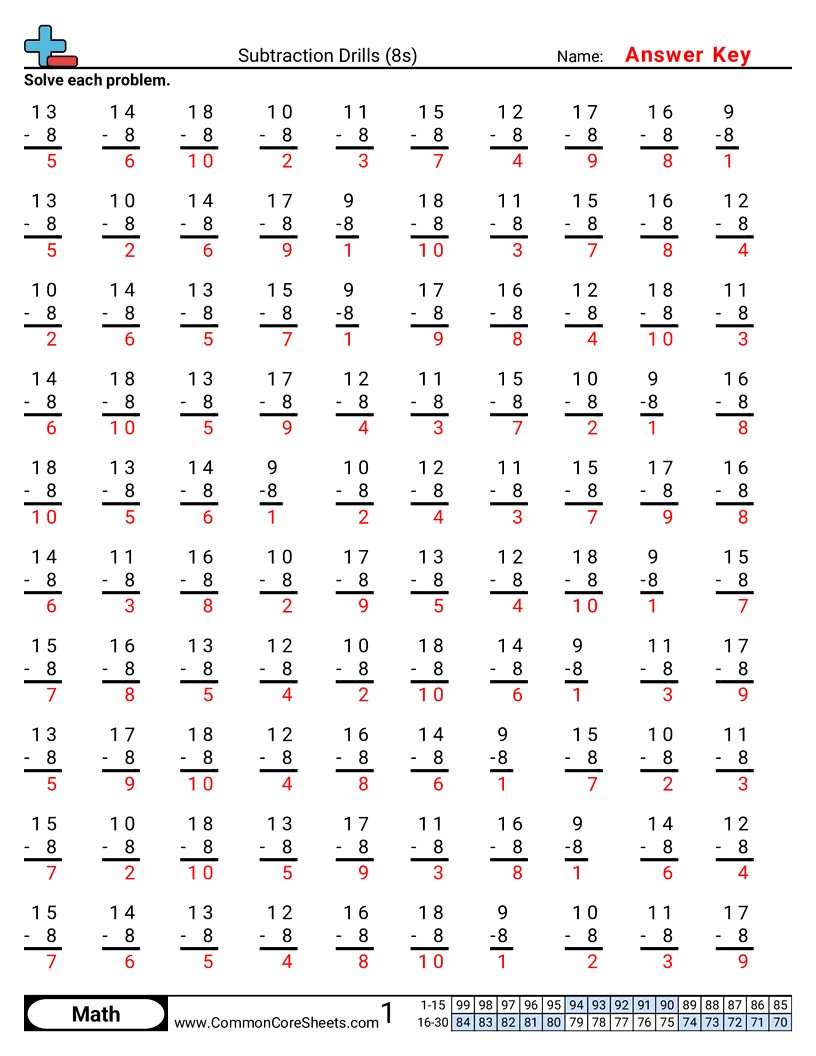
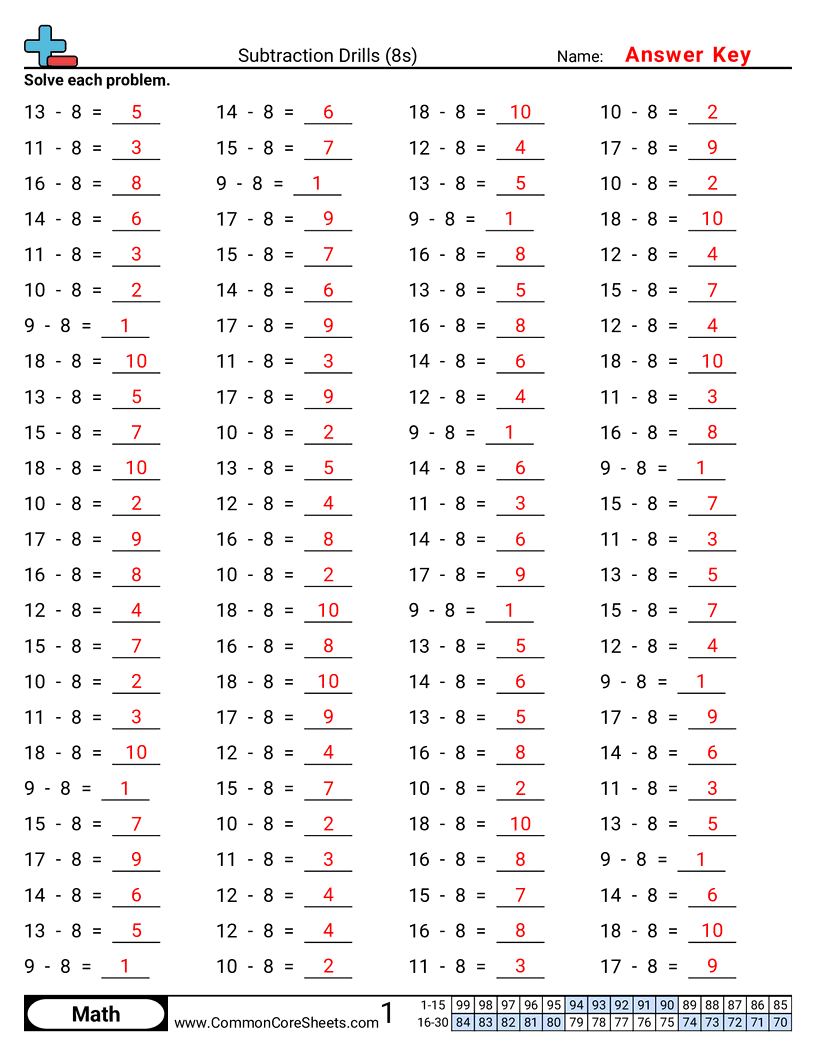
Subtract 8 from a number quickly and accurately. Use subtraction facts to find the difference without counting one by one. Notice patterns when taking away 8 to help solve problems faster. Build speed and confidence with mental subtraction.
1oa6 2oa2
Get quick and accurate at subtracting 9 from a number. Use mental math shortcuts for minus 9, like subtract 10 and add 1 back. Pay attention to place value when subtracting 9 across tens (like 40 − 9). Build subtraction fact fluency so answers come without counting.
1nbt5
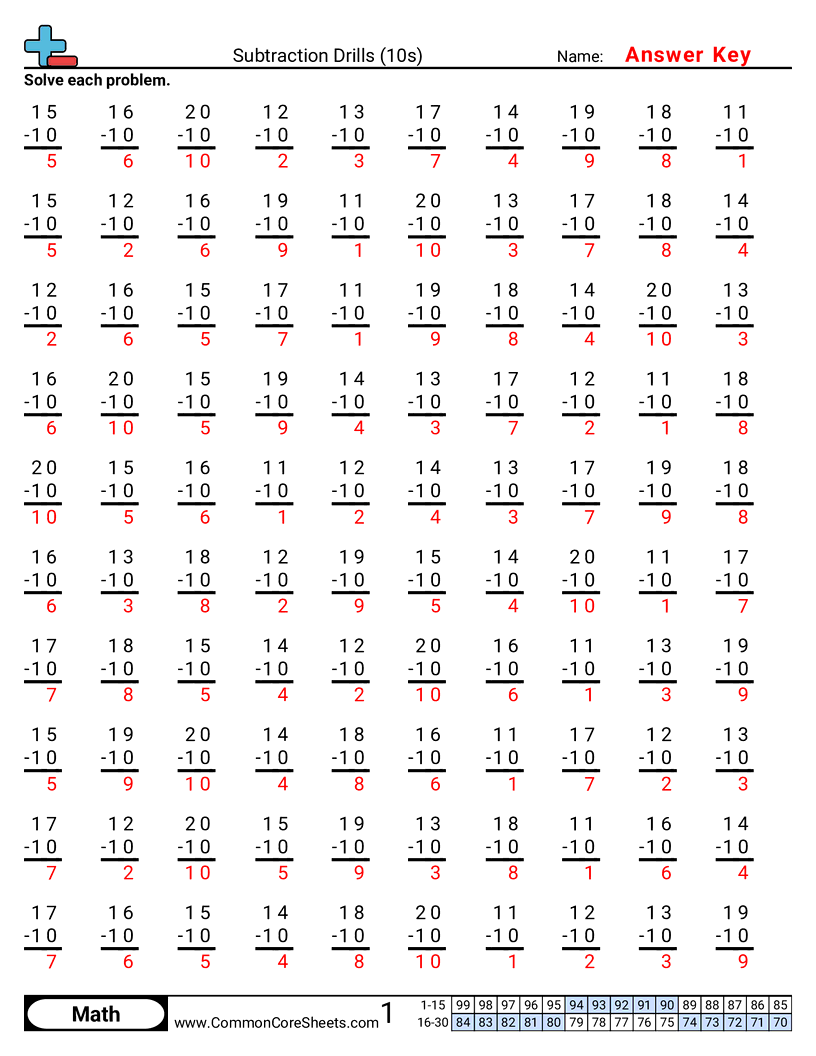
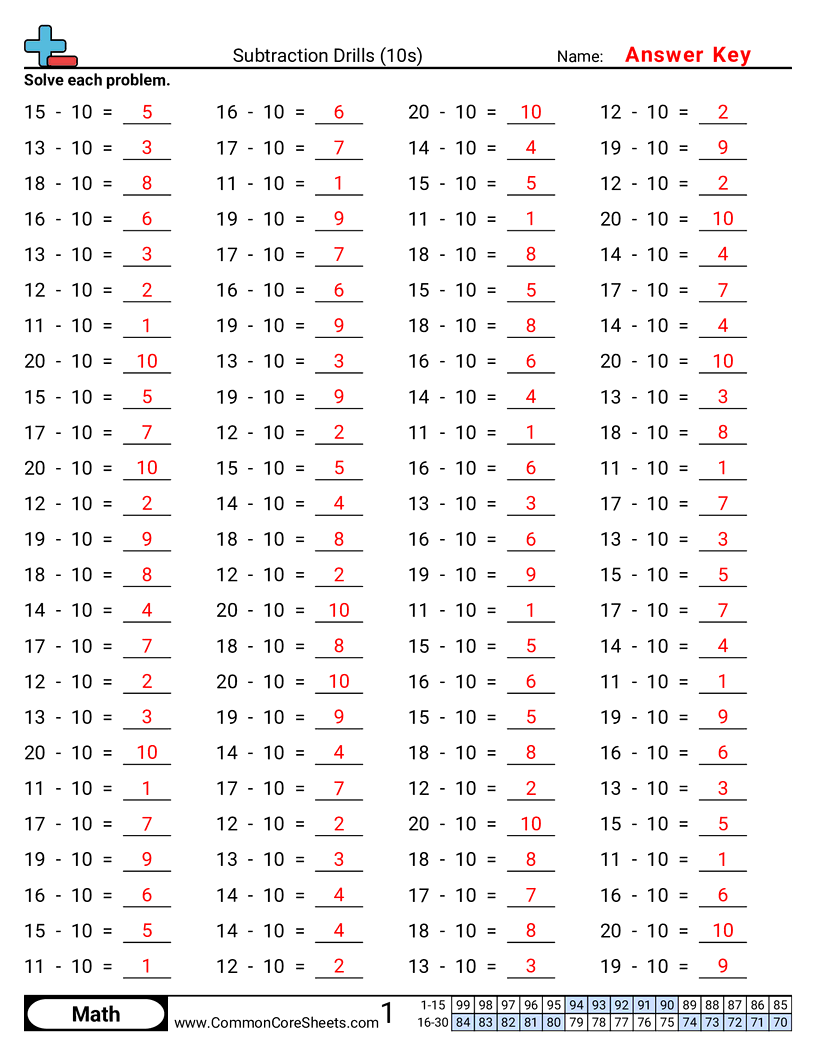
Practice subtracting 10 from a number quickly and accurately. Notice how taking away 10 changes only the tens digit while the ones digit stays the same. Build speed and confidence with basic subtraction facts involving tens.
2oa2
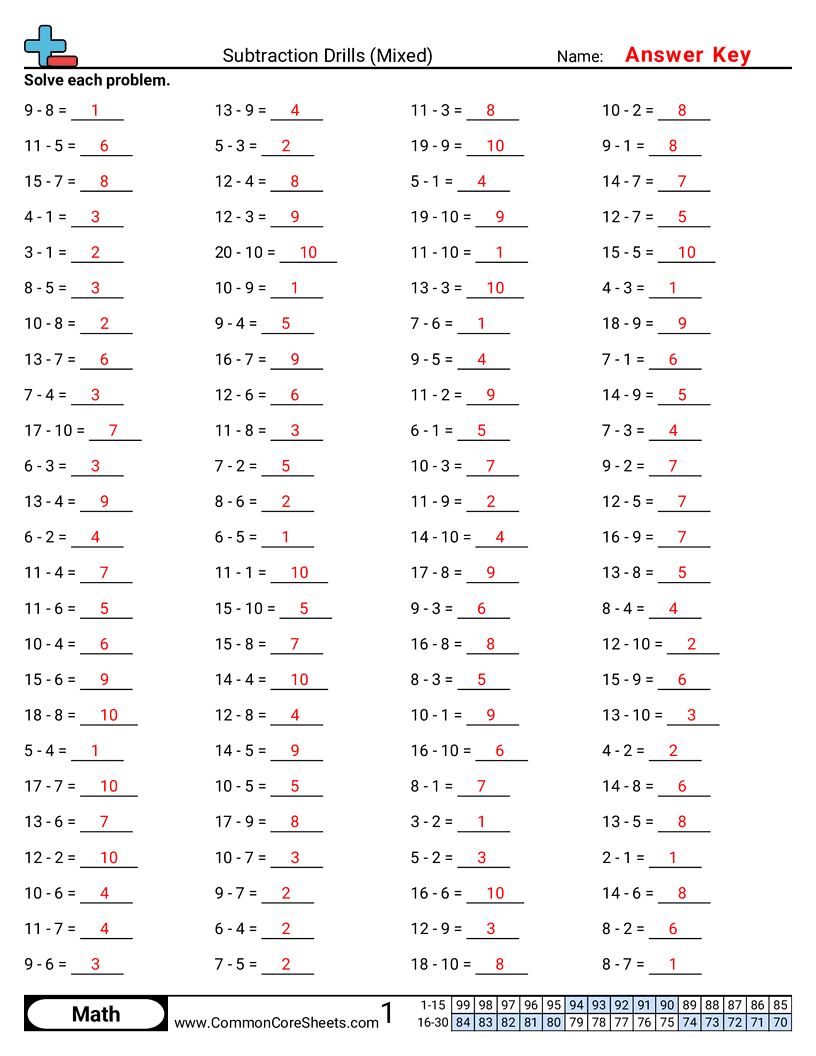
Practice subtracting one number from another to find the difference Get faster and more accurate with mixed subtraction facts Build confidence solving subtraction problems without needing a calculator
1oa6
Practice subtracting 0 from a number and seeing that the number stays the same. Get faster at basic subtraction facts using mental math. Read and solve subtraction expressions written in a horizontal line (like 8 - 0). Build confidence with the meaning of the minus sign and the idea of “take away zero.”
1oa6 2oa2
Practice subtracting 1 from a number quickly and accurately. Notice that subtracting 1 makes a number one less and changes only the last digit most of the time. Build speed with basic subtraction facts for mental math.
1oa6 2oa2
Practice subtracting 2 from a number quickly and accurately. Get comfortable counting back by 2s to find the difference. Build subtraction fact fluency so answers come more automatically.
1oa6 2oa2
Practice subtracting 3 from a number quickly and accurately. Get comfortable counting back by 3s to find the difference. Build speed with basic subtraction facts that use 3.
1oa6 2oa2
Practice subtracting 4 from a number quickly and accurately. Get comfortable using subtraction facts with 4 to find the difference. Build mental math speed by counting back 4 in one step.
1oa6 2oa2
Practice subtracting 5 from different numbers quickly and accurately. Get comfortable counting back by fives to find a difference. Build speed with basic subtraction facts that use 5. Strengthen mental math by doing subtraction without using objects or a number line.
1oa6 2oa2
Subtract 6 from a number quickly and accurately. Use subtraction facts with 6 to find differences without counting every time. Build speed and confidence with mental subtraction. Notice patterns when taking away 6 (like the answer going down by 6 each time).
1oa6 2oa2
Practice subtracting 7 from a number quickly and accurately. Get comfortable using subtraction facts to find the difference without counting one by one. Build speed and confidence with mental subtraction. Notice patterns when you keep taking away 7 from different numbers.
1oa6 2oa2
Subtract 8 from a number quickly and accurately. Use the idea of “take away 8” to find the difference between two numbers. Build speed and confidence with subtraction facts involving 8. Do subtraction in your head by counting back 8 or using a known fact.
1oa6 2oa2
Practice subtracting 9 from a number quickly and accurately. Get comfortable using mental math tricks for minus 9 (like subtract 10, then add 1). Build speed and confidence with subtraction facts to improve overall math fluency. Pay attention to accuracy when subtracting across different starting numbers.
1nbt5
Practice subtracting 10 from a number quickly and accurately. Use place-value patterns to see how the tens digit changes when you take away 10. Build mental math speed by counting back by tens.
2oa2
Practice subtracting one number from another to find the difference. Get faster and more accurate with basic subtraction facts. Solve subtraction problems with mixed numbers without relying on a pattern.
koa5
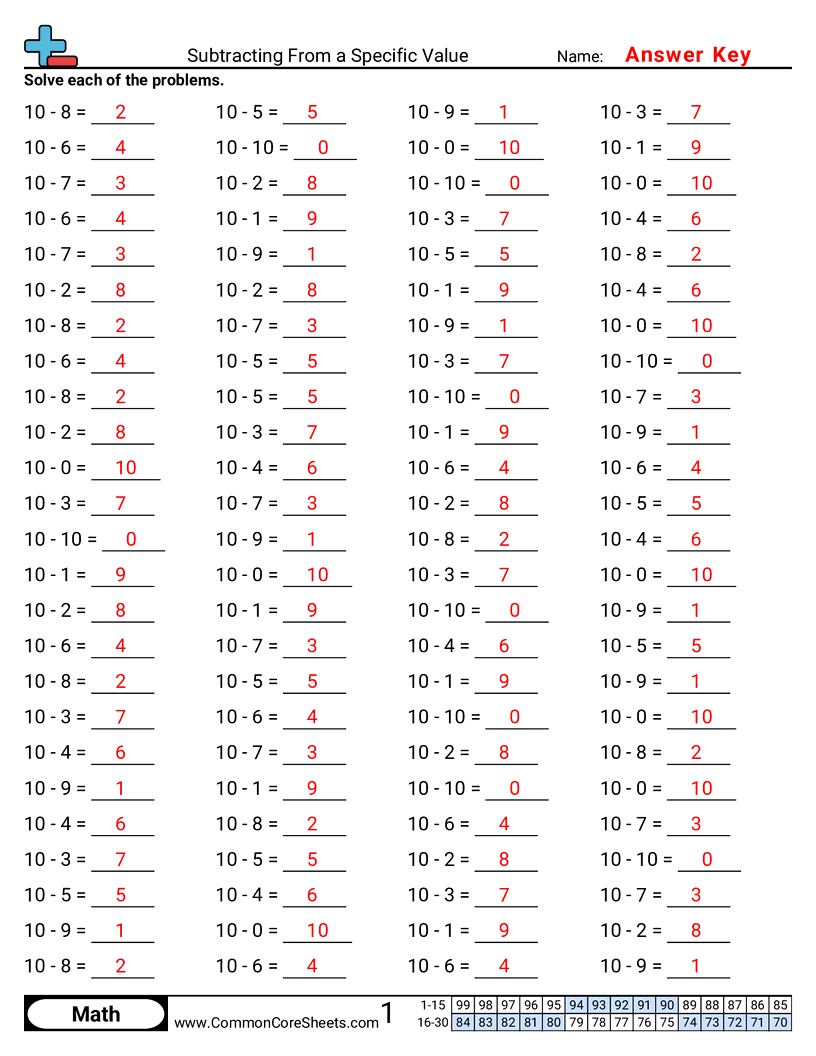
Practice subtracting a number from a set target number (like 10) to find the difference. Get faster at basic subtraction facts and mental math.
1oa6
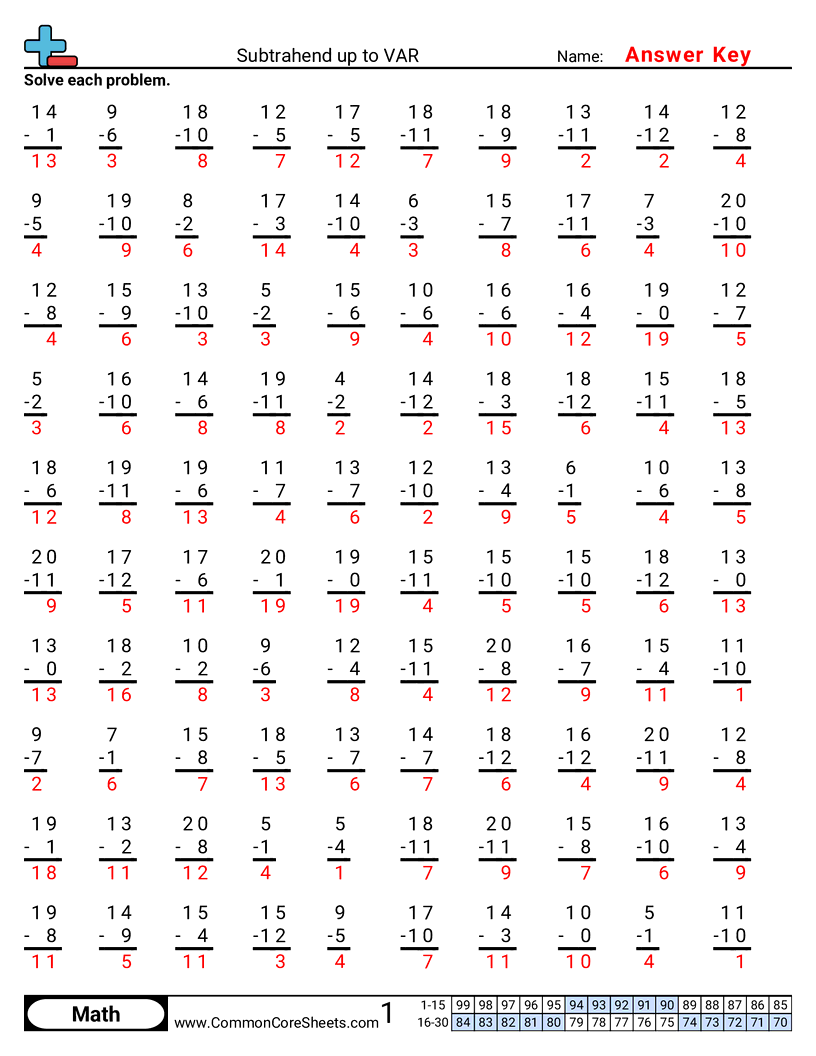
Subtract a number up to 12 from another number to find the difference. Solve subtraction problems written in vertical form by lining up the numbers correctly. Use subtraction facts up to 12 quickly and accurately.
Subtraction worksheets by grade
Playwire Advertisement