Free box and whisker plot worksheets with answer key. No login or account needed. From creating box plots to interpreting the different parts of a box plot, we've got you covered. A grading column and quick grade scale make grading a breeze, and modified pages help with lower level learners or when just introducing a topic. Great for teachers or for homeschool.
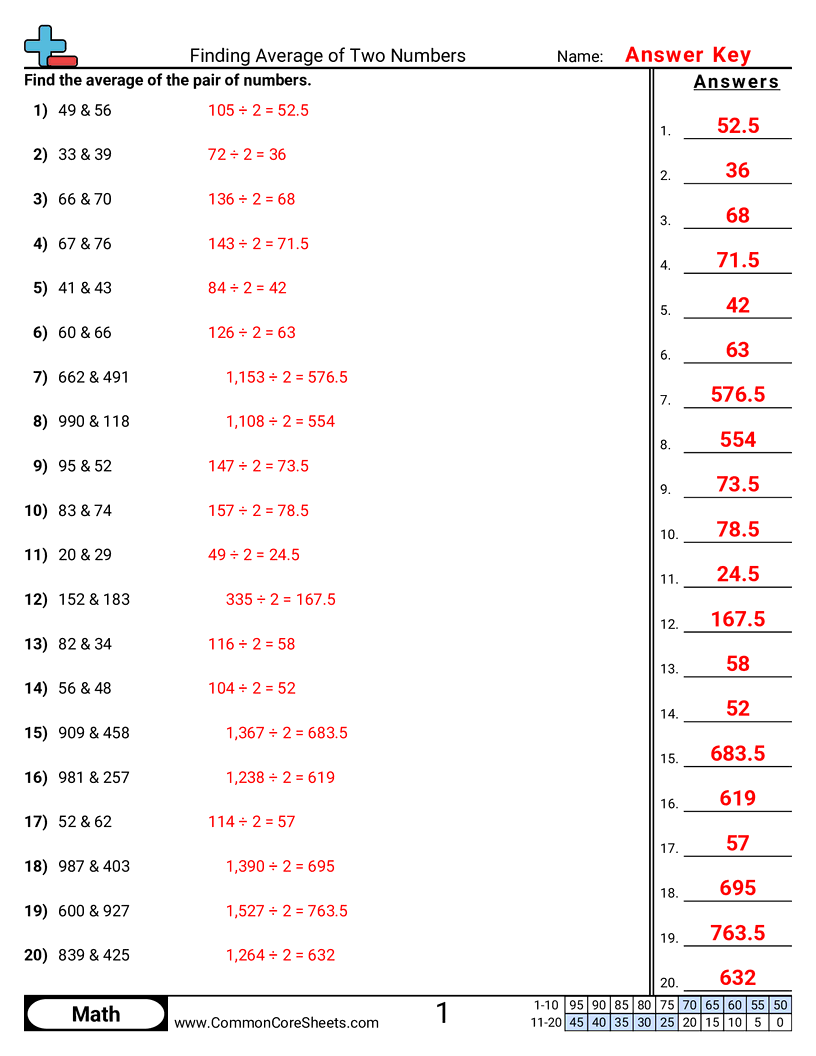
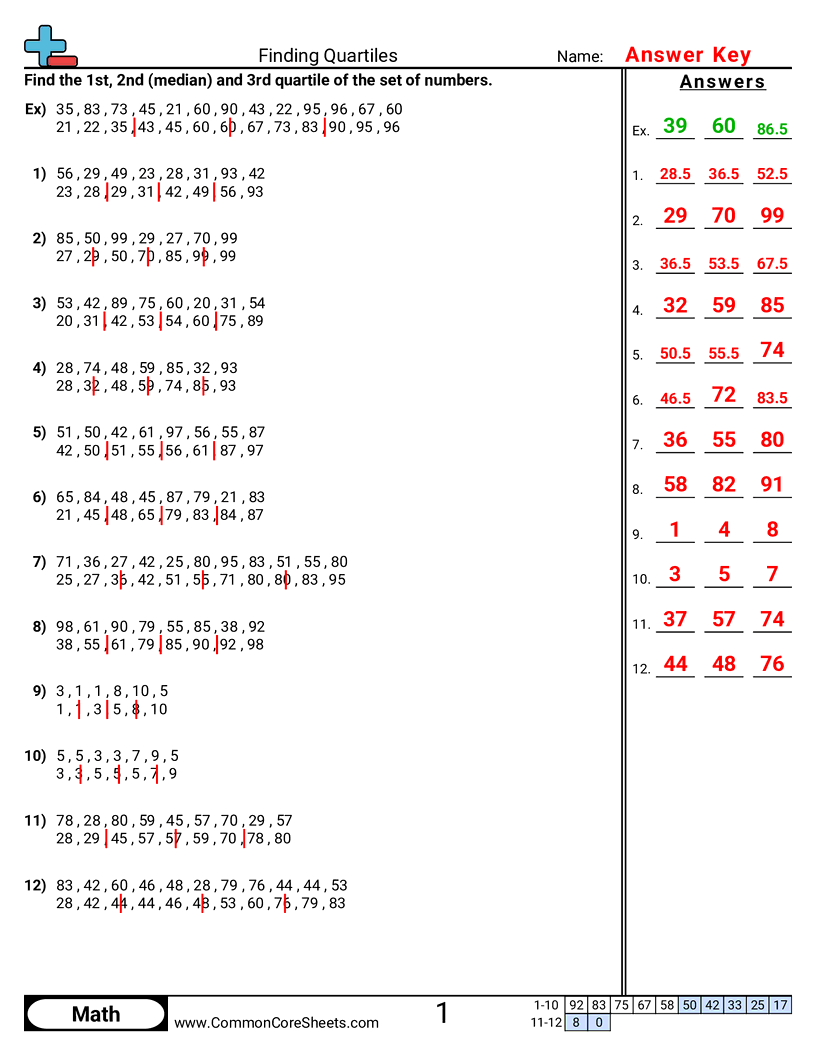
These worksheets cover the statistical concepts needed to create and interpret box plots. Students practice finding the average of two numbers, splitting data sets into quartiles, and constructing box plots on a number line using the five-number summary (minimum, Q1, median, Q3, maximum). Aligned with sixth grade statistics and probability standards.
Put a set of numbers in order so you can find the middle and the quartiles.
Find the five-number summary (minimum, Q1, median, Q3, maximum) for a data set.
Draw a box plot on a number line using the five-number summary.
Use a box plot to describe how spread out the data is and where most values fall.
Box and Whisker Plot worksheets by grade
6th Grade Box and Whisker Plot Worksheets(3 worksheets) These 6th grade box and whisker plot worksheets help students master data analysis skills through three essential problem types.