×Description:
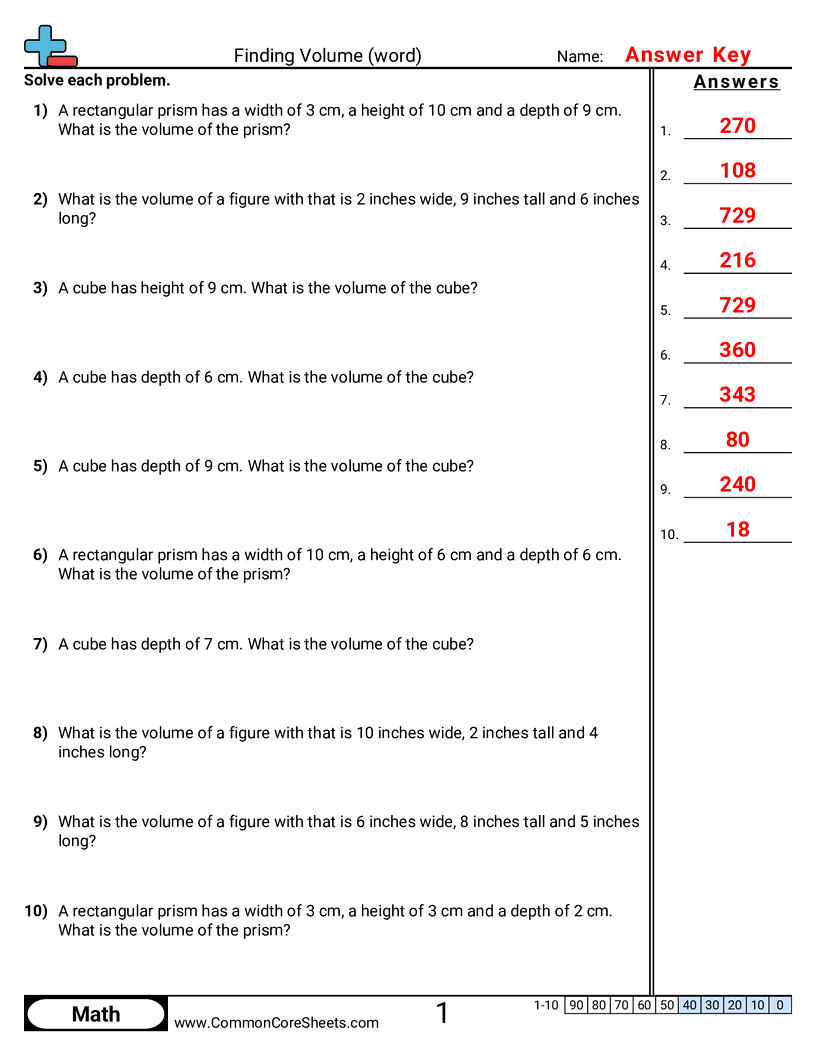
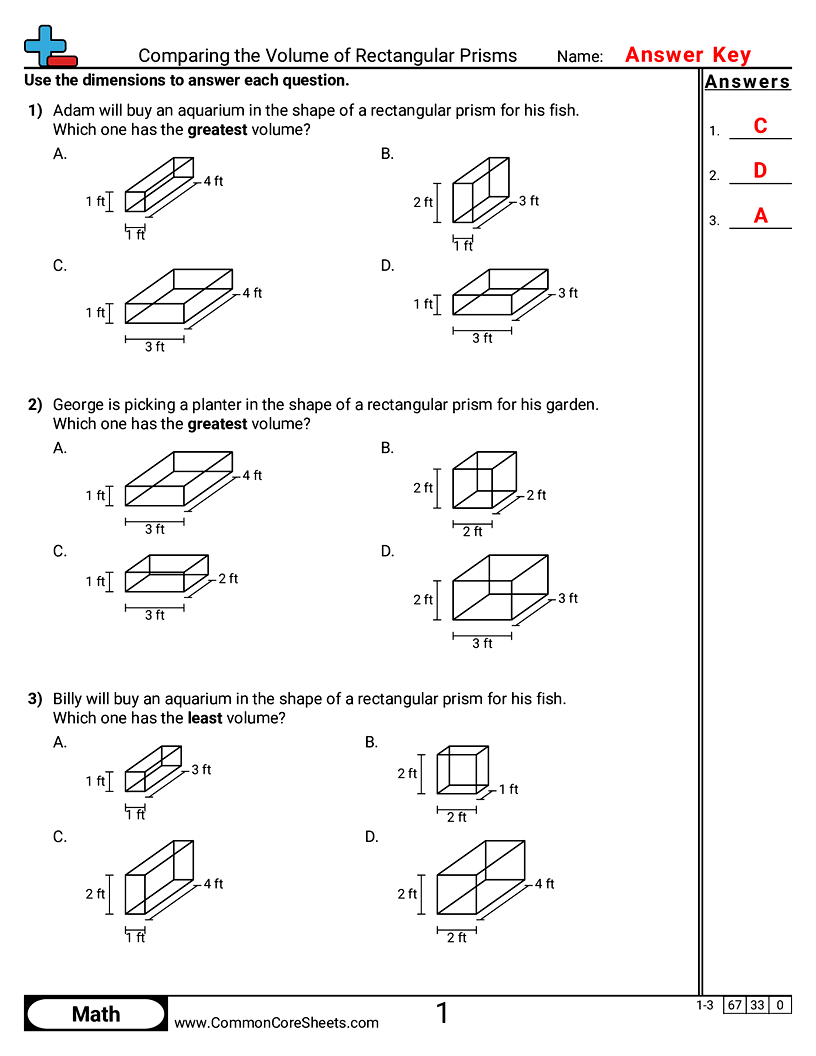
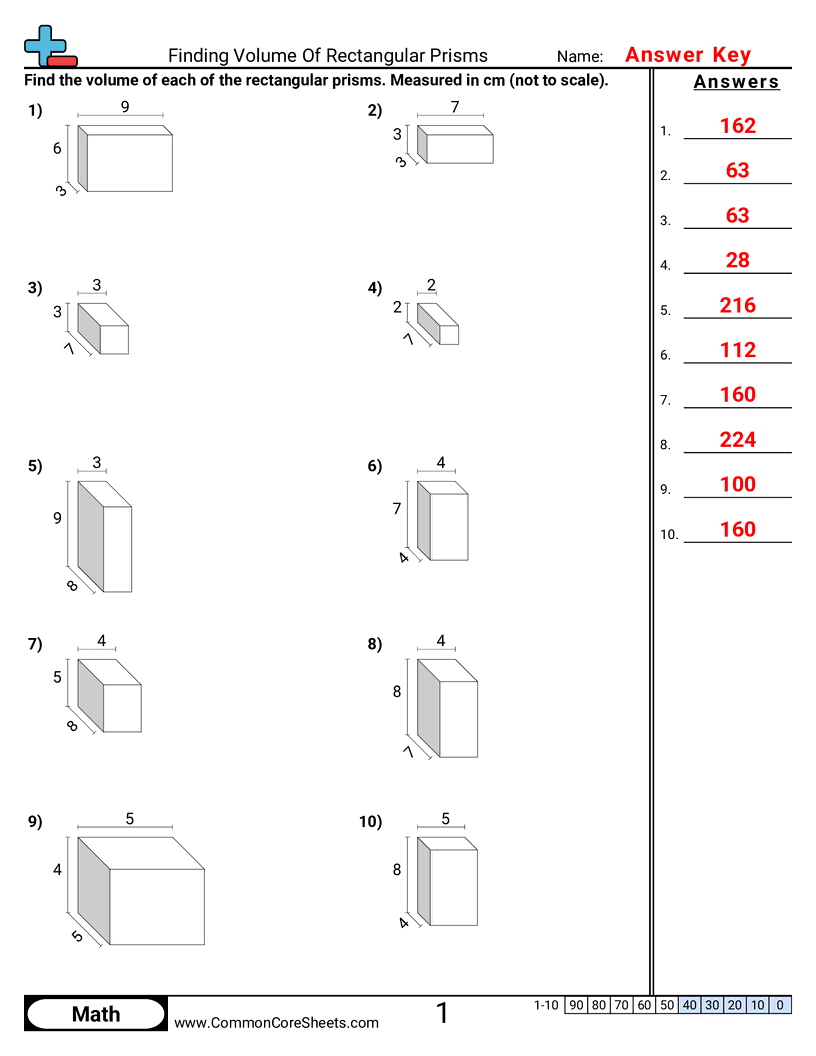
"This worksheet is designed to improve children's knowledge of finding volume in mathematics. It consists of 10 problems involving the calculation of volume for prisms and cubes and can be customized for difficulty levels. With versatility for use in distance learning environments, these problems can also be converted to flashcards for an engaging, hands-on experience for learners."
×Student Goals: Understanding Volume ConceptsAfter completing the worksheet, students should have a clear understanding of volume as a three-dimensional measure of space. Through the application of both cube and rectangular prism volume formulas, students will grasp the concept fundamentally, learning how to apply it to different real-world shapes. They would understand the relationship between the length, width, and height of a shape and its volume.Problem-Solving SkillsThe students should develop the ability to solve various volume problems effectively. The wide range of questions in this worksheet ensures that the students can tackle problems that require different problem-solving skills, which can extend to other math topics and real-life scenarios. They would also improve their comprehension of word problems and their translation into mathematical terms.Application of Mathematical FormulasStudents would be proficient in using specific mathematical formulas such as those for finding the volume of a cube and a rectangular prism. This proficiency includes substituting correct values into these formulas to solve real-world and mathematical problems. Students will learn to use these equations to solve for unknown values, facilitating mathematical thinking.Units of MeasurementBy practicing a range of volume problems in different units (cm, inches), students will improve their proficiency in measurements, including the conversion from one unit to another. They would understand the practical importance of units and the necessity of correctly using and interpreting them.Enhanced Mathematical VocabularyUpon completion, students will be able to verbalize mathematical observations and findings accurately. They would solidify their understanding of key terms related to volume, such as depth, width, and height. When describing the process or the solution, they would be able to use the appropriate terminology, enhancing their mathematical vocabulary.Real-world Applications of MathematicsBy figuring out the volume of various shapes, students will realize the relevance of what they've learned to their everyday lives. They would appreciate how volume calculations can be beneficial in numerous real-world situations such as packaging, construction, and many more. This practical outlook could further motivate them to engage with and understand mathematical concepts.