About these worksheets
These worksheets build the prerequisite skills students need before formal multiplication. Activities include writing arrays as addition and multiplication equations, doubling and halving numbers, partitioning rectangles into rows and columns, multiplying by multiples of ten, rewriting repeated addition as multiplication, using number lines, reading multiplication tables for patterns, estimating reasonable products, and interpreting multiplication in word problems. Resources span second through fourth grade.


- Practice finding doubles of a number (2 times as many).
- Practice finding half of a number by dividing by 2.
3nbt3
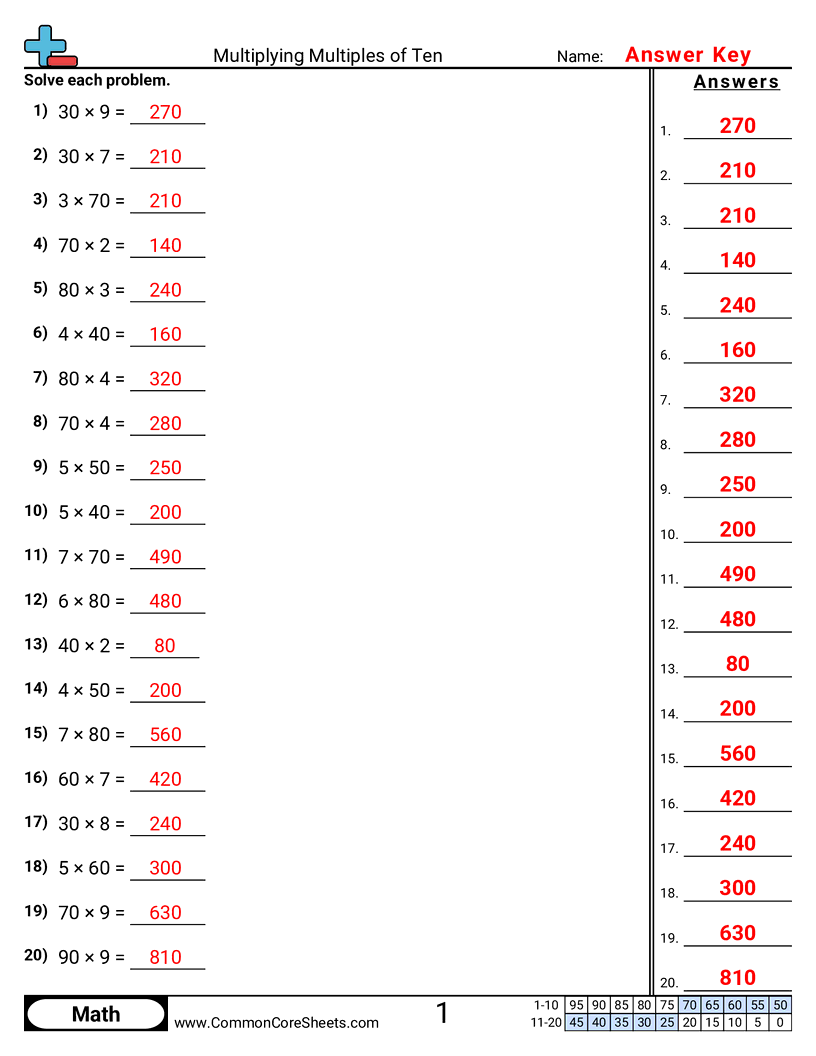
- Multiply a one-digit number by 10, 20, 30, and other multiples of ten.
- Use place value patterns to multiply by tens by adding a zero to the end of the number.
3oa1
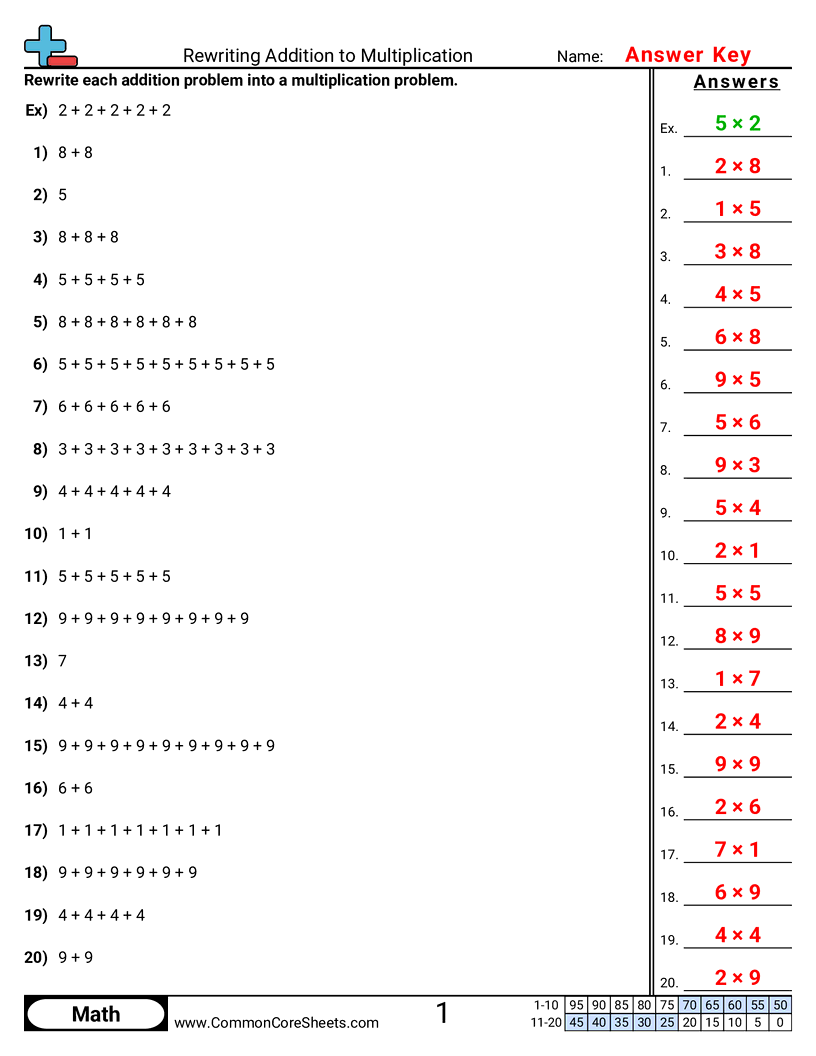
- Turn repeated addition (like 4 + 4 + 4) into a multiplication fact (3 × 4).
- Count how many equal addends there are and use that number as one factor.
- Identify the number being repeated and use it as the other factor.
3oa1
- Turn repeated addition (like 4 + 4 + 4) into a multiplication fact (3 × 4).
- Count how many equal addends there are and use that number as one factor.
- Identify the number being repeated and use it as the other factor.
3oa1
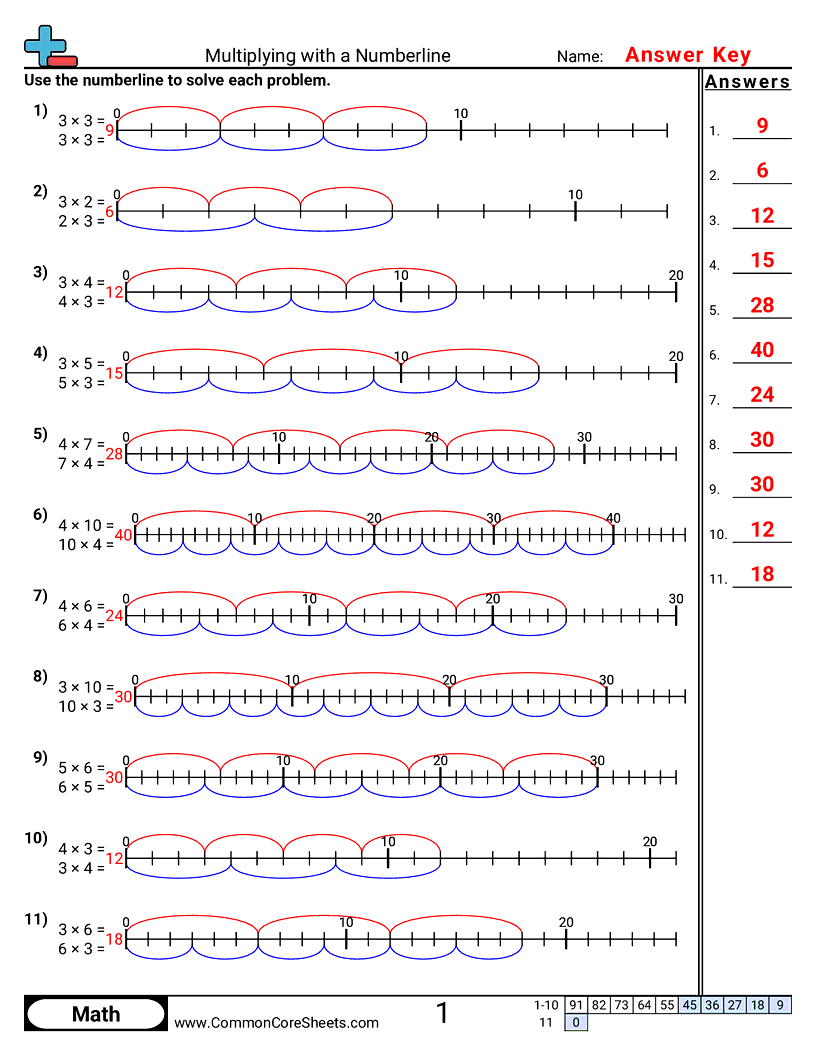
- Use a number line to show multiplication as equal jumps.
- Count the jumps to find the total product.
- Connect repeated addition on a number line to a multiplication fact.
4nbt5
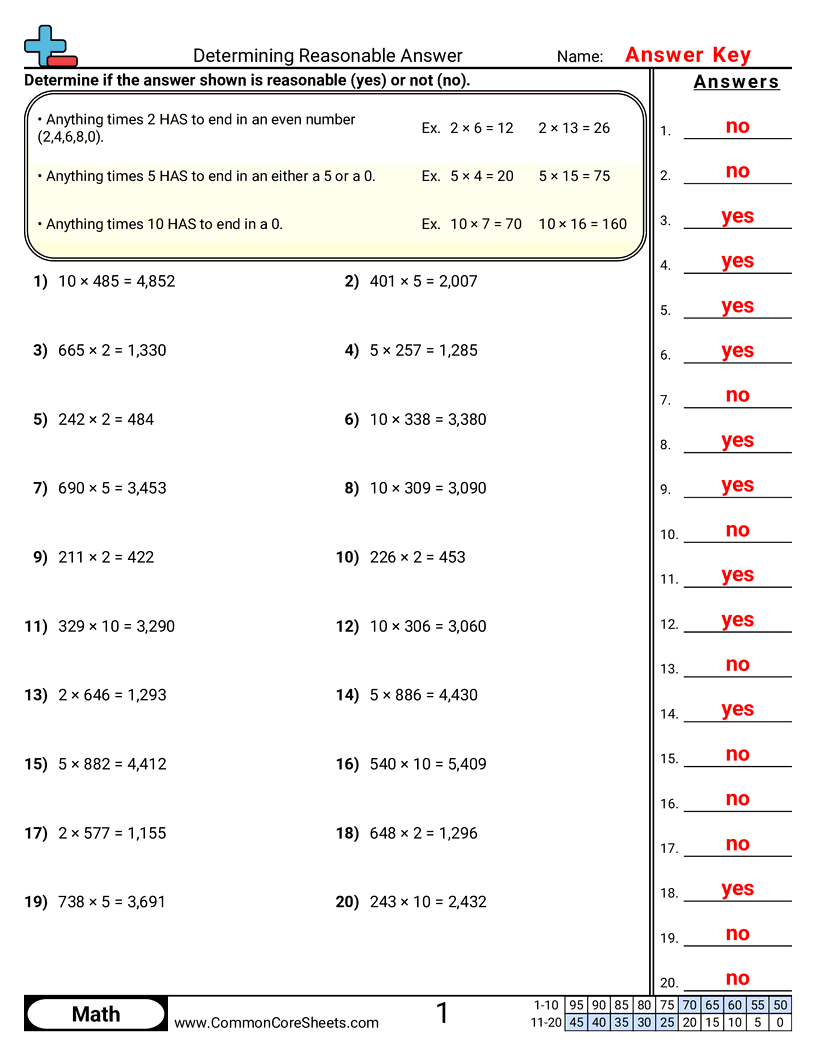
- Decide whether a multiplication answer makes sense before accepting it.
- Use rounding to 2, 5, and 10 as quick benchmarks to estimate a product.
- Compare an exact-looking product to an estimated range to spot answers that are too big or too small.
About these worksheets
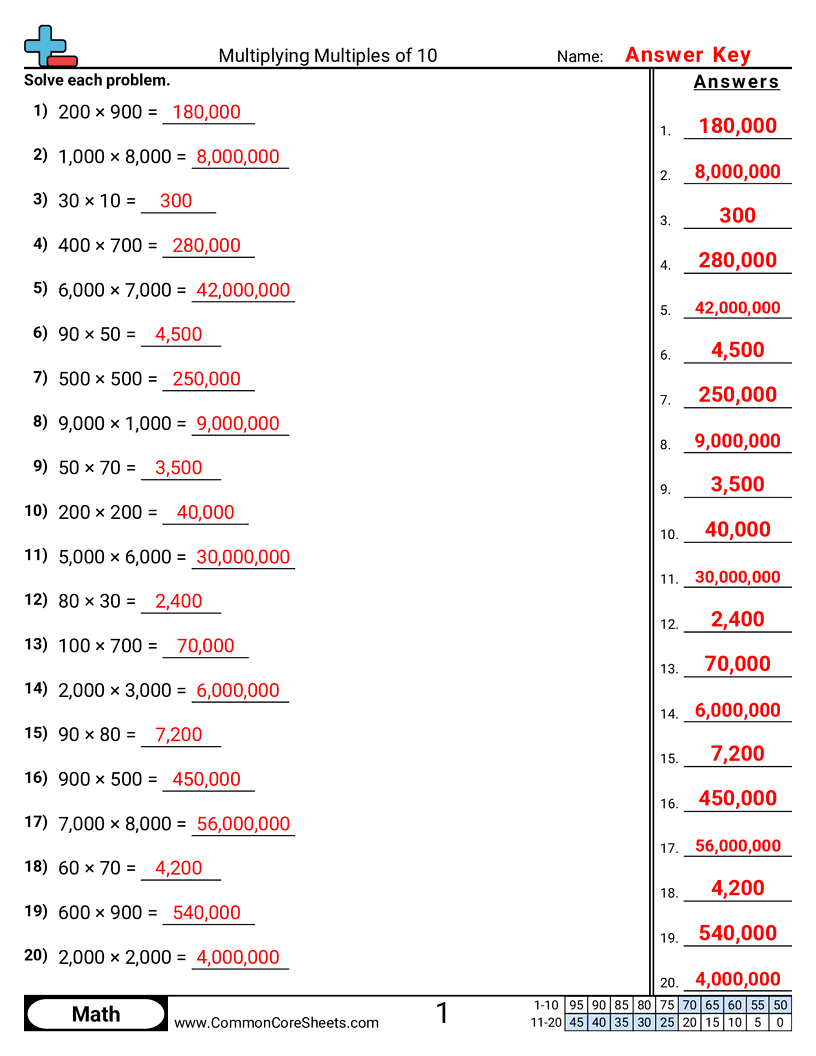
Students practice multiplying with multiples of ten across increasing complexity levels. Worksheets cover single-digit times multiples of ten, two-digit times multiples of ten, multiplying by 10s and 100s, and multiplying when both factors are multiples of ten. These activities reinforce place value patterns in multiplication. Aligned with third through fifth grade.
4nbt1
- Multiply numbers when one or both factors end in zero.
- Use place value to add the right number of zeros to the product.
- Spot and use patterns when counting by tens, hundreds, or thousands to multiply faster.
- Multiply a basic fact first and then scale it up by 10, 100, or 1,000.
About these worksheets
These worksheets cover traditional multiplication methods from basic facts through multi-digit computation. Students practice mixed multiplication and division within 100, vertical multiplication with varying digit lengths (2×1, 3×1, 4×1, 2×2, 3×2, 4×2), using helper grids, and international-style multiplication. Resources span third through fifth grade standards.
3oa4
- Practice finding a missing number in multiplication and division equations
- Use the relationship between multiplication and division to solve for the unknown (if 3 × ? = 27, think "what times 3 equals 27?")
- Get comfortable seeing the missing number in different positions — at the beginning, middle, or end of the equation
3oa4
- Practice multiplying numbers up to 10 to find the product
- Figure out a missing factor when the product is given
- Solve equations with the unknown on either side of the equals sign
- Build quick recall of multiplication facts
3oa7
- Recall multiplication facts from 1×1 to 10×10 quickly and accurately.
- Use division facts within 100 to find how many groups or how many in each group.
- See how multiplication and division are related (like 6×7 and 42÷7).
- Solve basic multiplication and division problems in your head without counting.
4nbt5
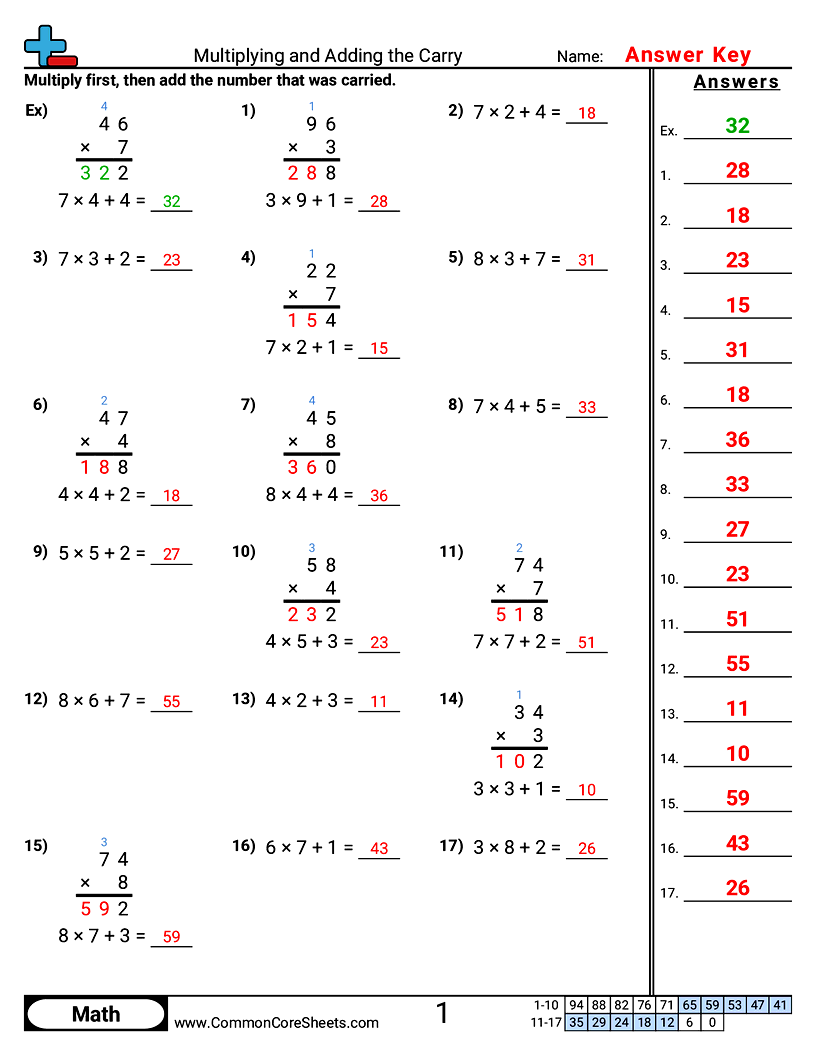
- Multiply first, then add the carried number
- Find the next digits of a product after carrying
- Avoid adding the carry before multiplying
About these worksheets
Students learn the lattice method as an alternative multiplication strategy. Worksheets provide pre-drawn lattice grids for multiplying two-digit by two-digit and three-digit by two-digit numbers. This visual approach helps students organize partial products and reduce errors during multi-digit multiplication.
4nbt5
- Multiply two 2-digit numbers using the lattice (grid) method.
- Break each number into tens and ones to find the smaller partial products.
- Add the diagonal sums in the lattice to get the final product.
5nbt5
- Multiply a 3-digit number by a 2-digit number to find the total product.
- Use a lattice grid to break multiplication into smaller partial products and combine them correctly.
- Keep track of place value (hundreds, tens, ones) so the digits end up in the right spots in the final answer.
- Add along the diagonals and carry when needed to finish the multiplication.
About these worksheets
These worksheets develop students' understanding of multiples, factors, and prime numbers. Activities include identifying multiples of a number, using divisibility rules for 2, 3, 5, 6, 9, and 10, finding the least common multiple of two numbers, and determining prime factorizations. Aligned with fourth and sixth grade standards.
4oa4
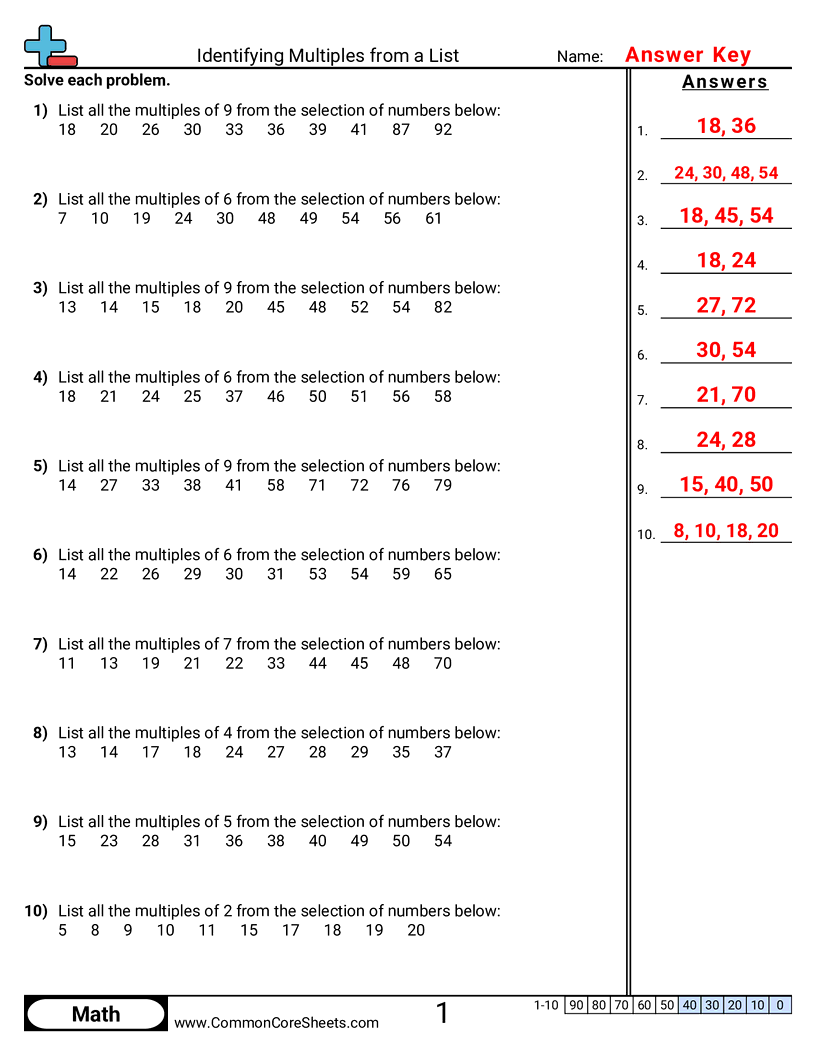
- Pick out which numbers in a group are multiples of a given number.
- Use skip-counting to check whether a number is a multiple.
- Decide if one number is divisible by another without doing long division.
- Connect multiples to multiplication facts you already know.
4oa4
- Find two numbers that multiply to make a given number.
6ns4
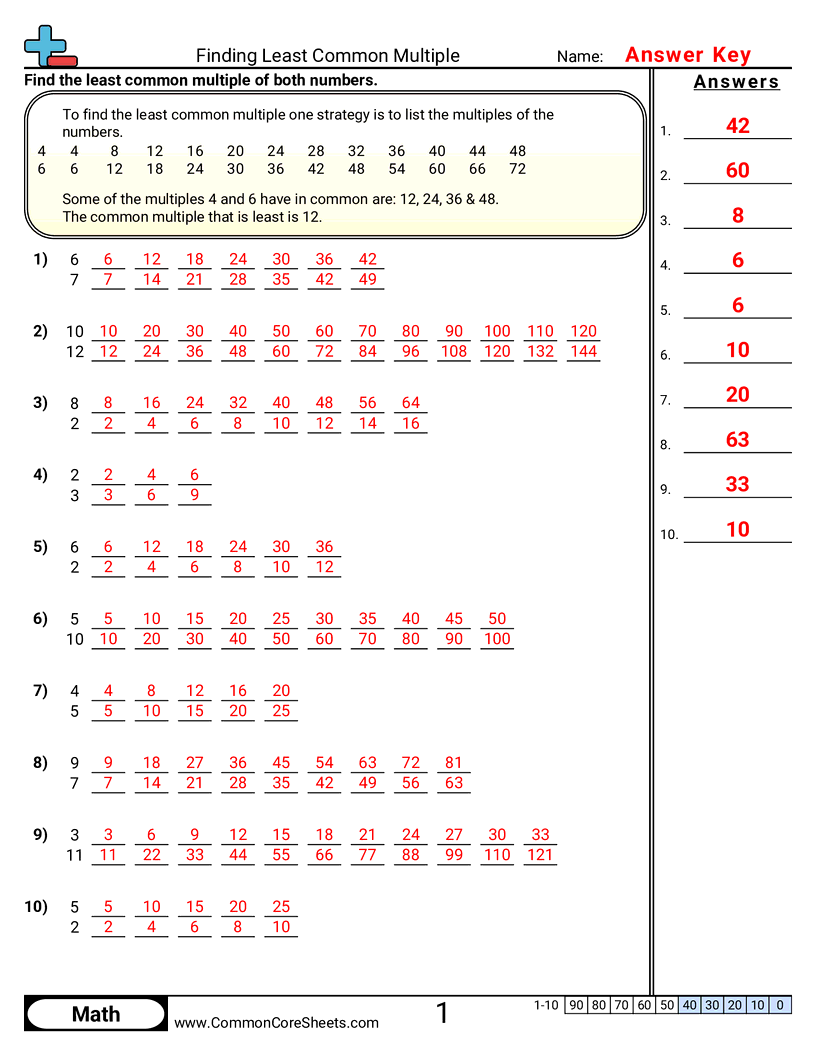
- Find the least common multiple (LCM) of two whole numbers.
- List multiples of a number and spot the first multiple two numbers share.
- Check that your LCM is a number both original numbers divide into evenly.
4oa4
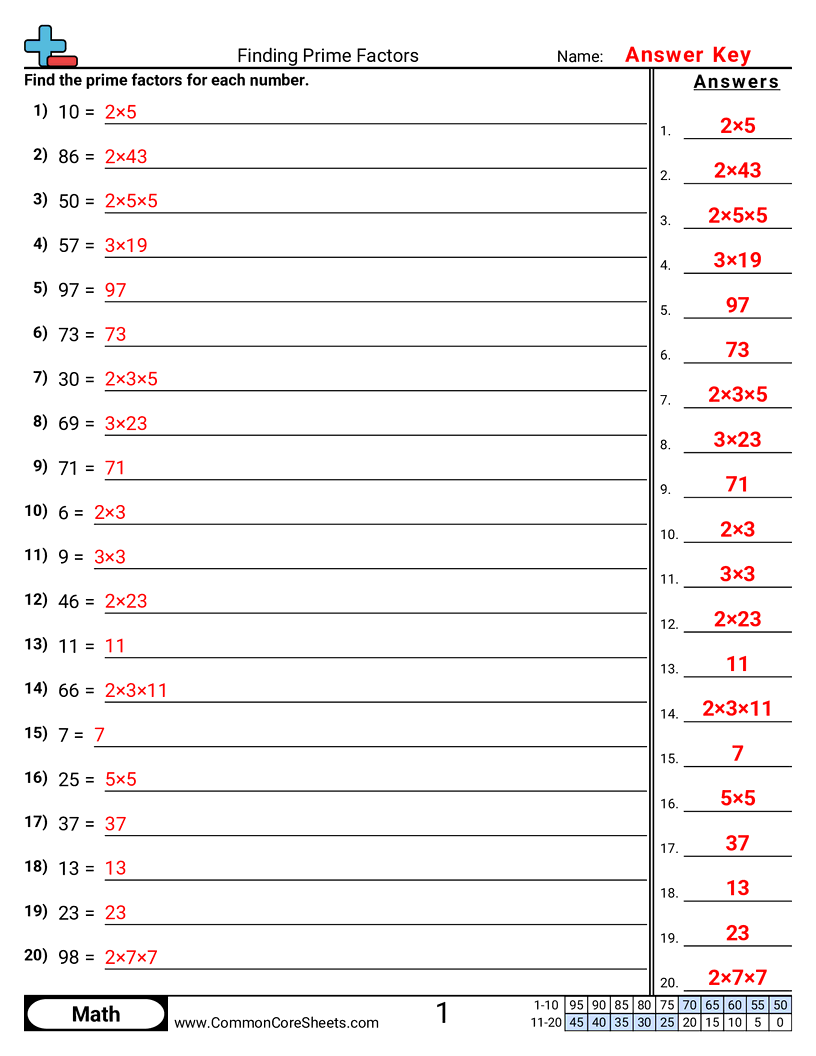
- Break a number into its prime factors using division by small primes.
- Write a number as a product of prime numbers (prime factorization).
- Use factor pairs to help find all the prime factors of a number.
About these worksheets
Students use arrays — arrangements of rows and columns — to visualize and solve multiplication problems. Worksheets include basic array multiplication, arrays with factors of 10, and blank arrays for students to fill in. These concrete models connect the concept of equal groups to multiplication equations. Aligned with fourth grade.
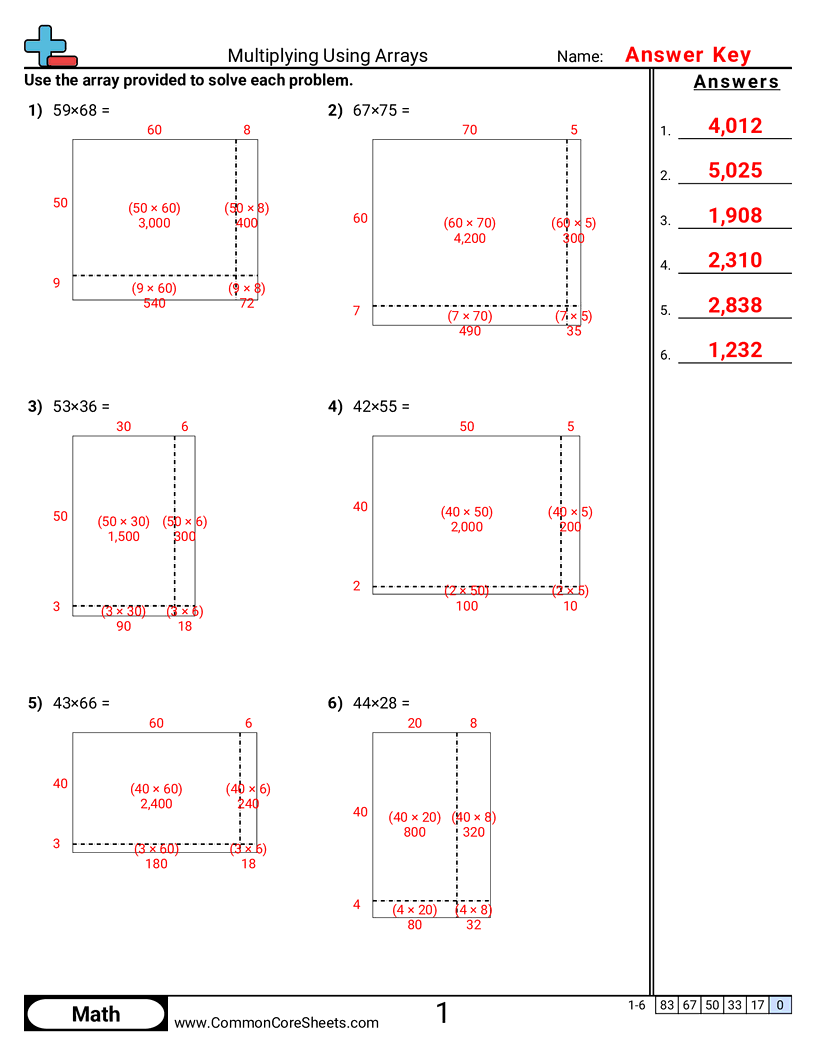
4nbt5
- Use rows and columns in an array to understand what a multiplication problem means.
- Find a product by counting or building an array model.
- Break a multiplication problem into multiples of ten to solve.
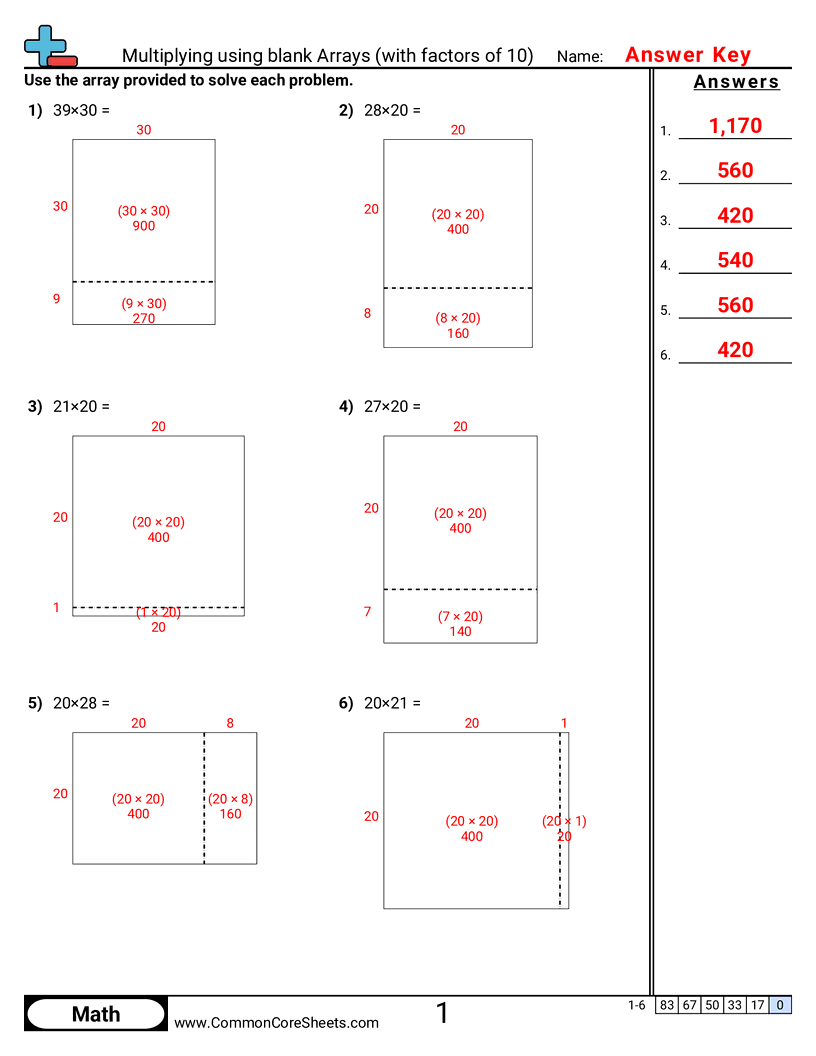
4nbt5
- Use rows and columns in an array to understand what a multiplication problem means.
- Multiply a number by 10 and explain how the digits shift in place value.
- Break a multiplication problem into multiples of ten to solve.
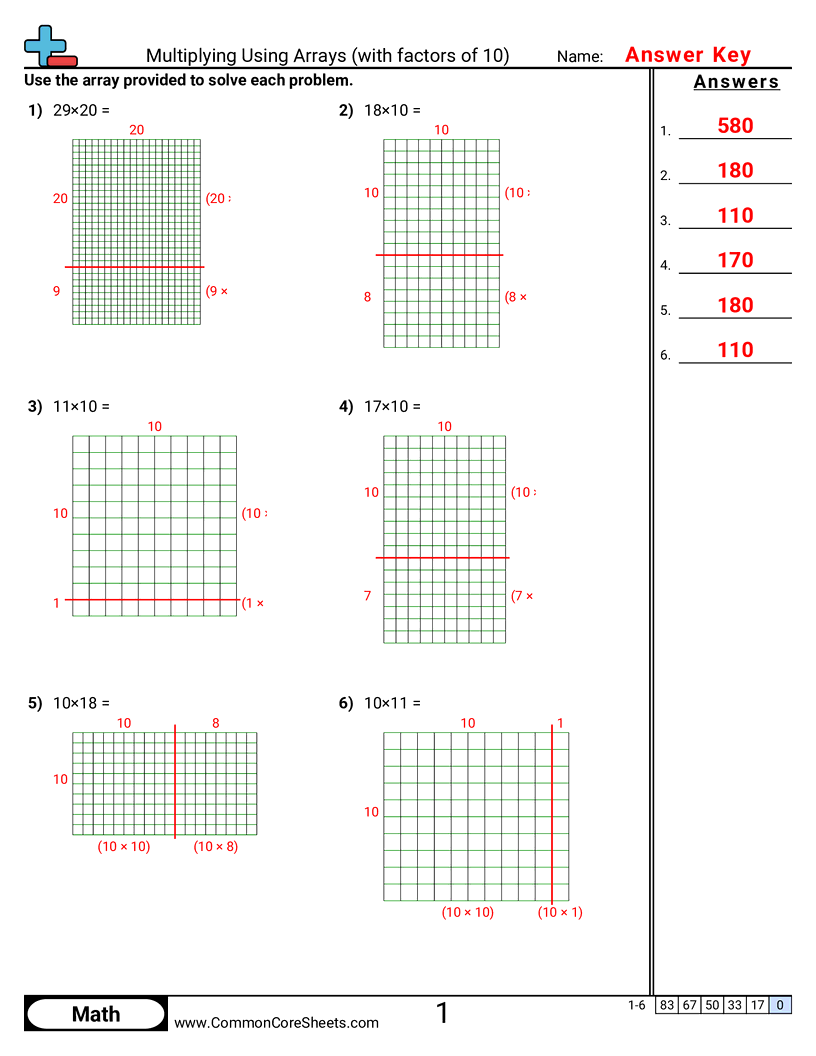
4nbt5
- Use an array (rows and columns) to understand what a multiplication problem means.
- Multiply a number by 10 using place value patterns.
About these worksheets
These worksheets introduce exponents and powers of ten. Students practice multiplying and dividing by powers of ten, examining what happens to digits when multiplying by 10, 100, or 1,000, filling in equations with the correct power of ten, and using doubling and halving strategies. Aligned with fifth grade standards.
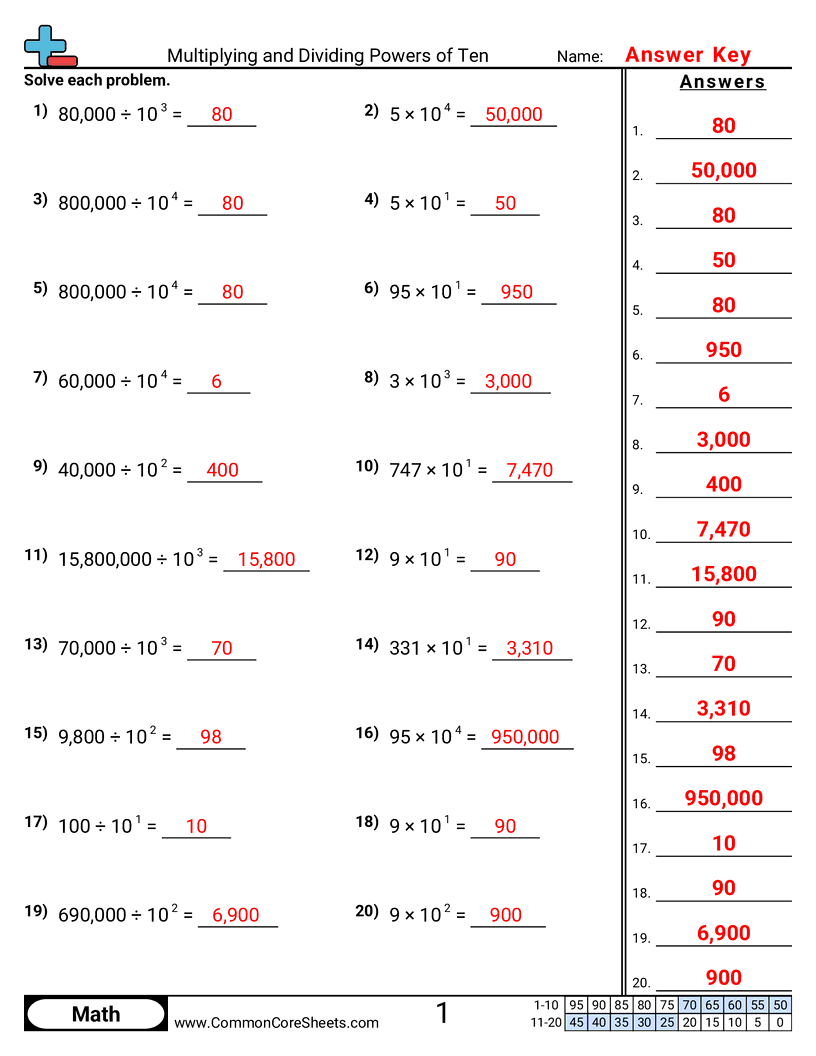
5nbt2
- Multiply a number by 10, 100, 1,000 (and other powers of ten) by shifting the digits to the left.
- Divide a number by 10, 100, 1,000 (and other powers of ten) by shifting the digits to the right.
- Use place value to keep track of zeros and decimal points when multiplying or dividing by powers of ten.
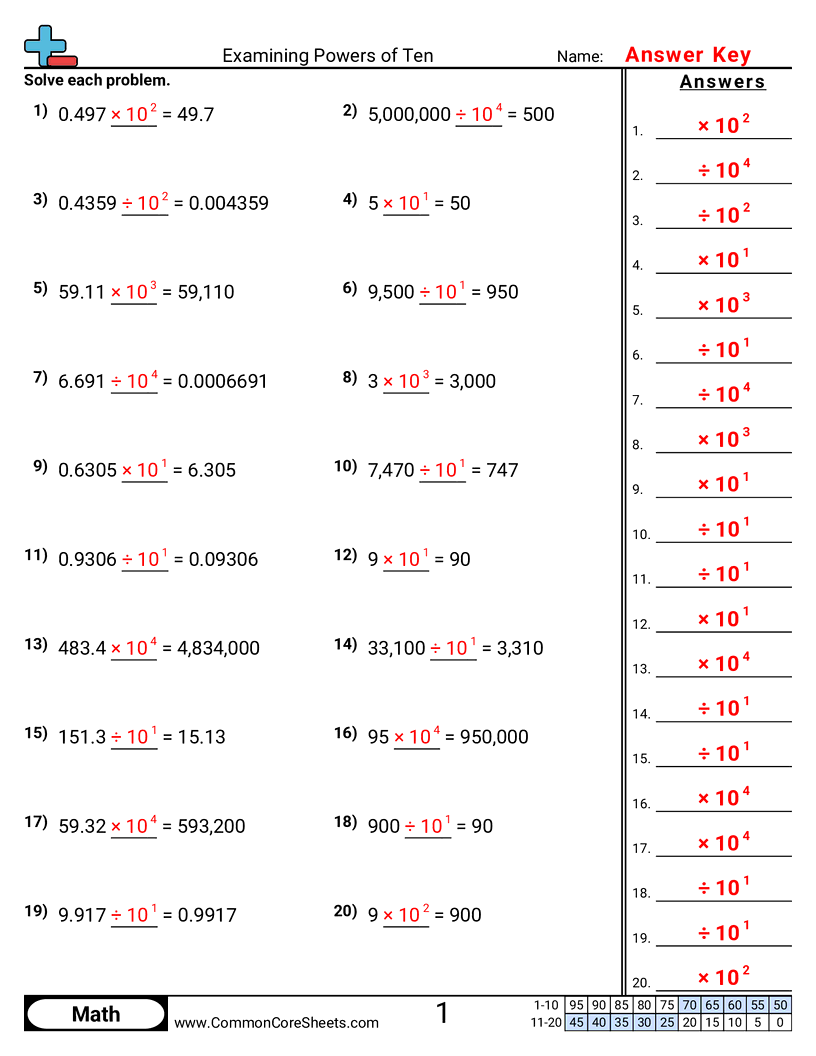
5nbt2
- Multiply a number by 10, 100, 1,000 (and other powers of ten) by shifting the digits to the left.
- Divide a number by 10, 100, 1,000 (and other powers of ten) by shifting the digits to the right.
- Use place value to keep track of zeros and decimal points when multiplying or dividing by powers of ten.
5nbt2
- Recognize and write powers of ten using exponents (like 10^3).
- Multiply by powers of ten by shifting digits and adding the right number of zeros.
- Match an equation to the correct power of ten that makes it true.
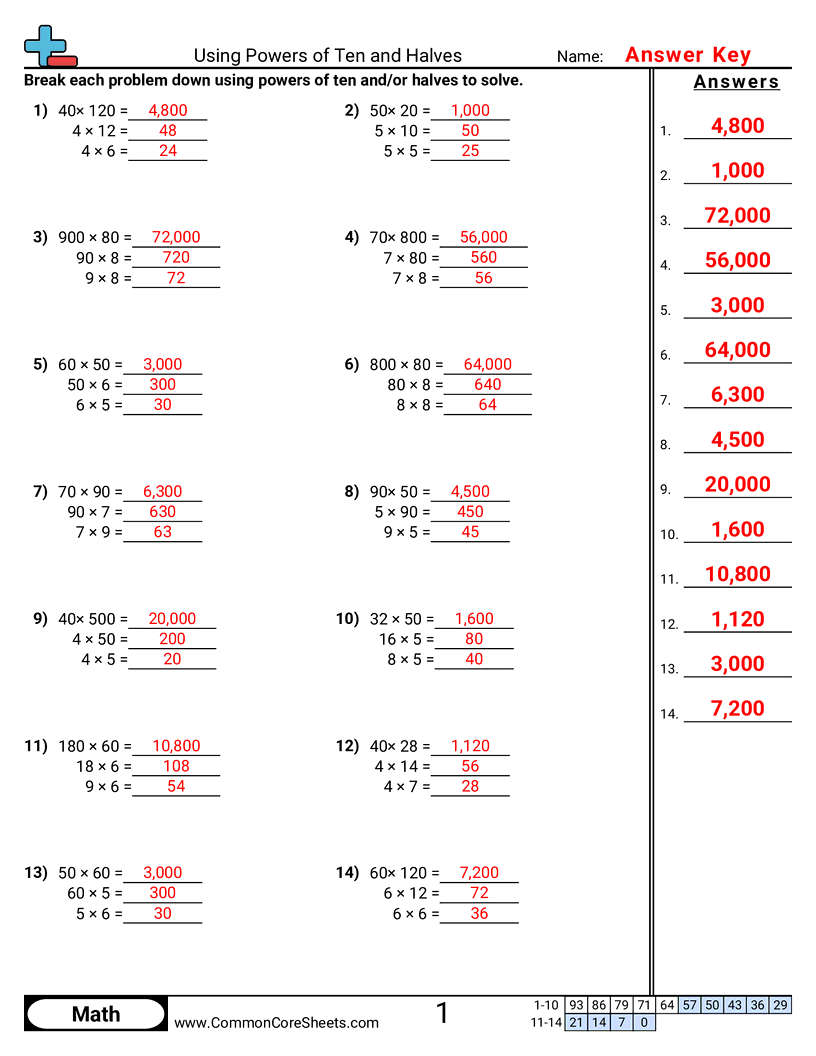
5nbt2
- Use doubling and halving to make multiplication easier (like halving one factor and doubling the other).
- Solve multi-step multiplication equations by breaking them into simpler parts you can do mentally.
6ee1
- Read exponent notation and say what the base and exponent mean.
- Rewrite powers as repeated multiplication (expanded form).
- Evaluate simple powers to find the value of an expression.
- Convert between exponent form and expanded multiplication form.
About these worksheets
Multiplication drill worksheets help students build speed and automatic recall of times table facts. Problem sets cover individual fact families from 2s through 12s, plus mixed sets combining all facts from 1×1 to 10×10. Both vertical and horizontal formats are available, with each worksheet containing 100 problems for timed practice.
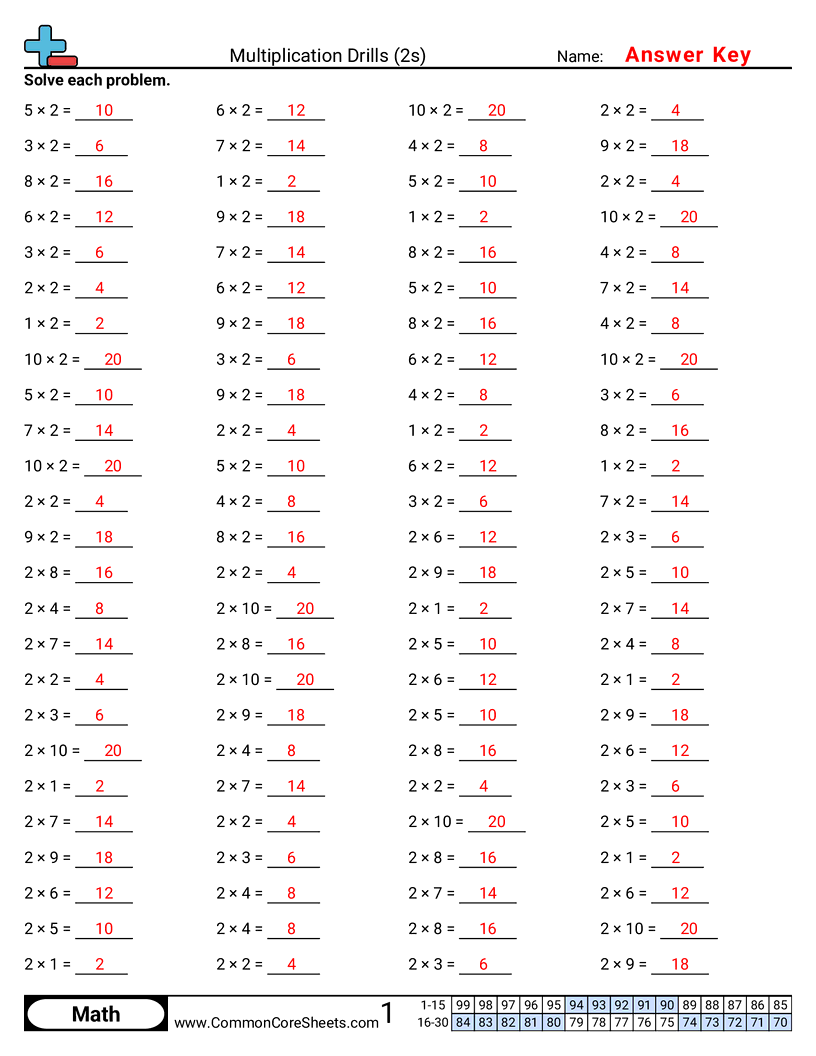
3oa7
- Practice multiplying by 2 to find totals quickly.
- Memorize the 2 times table facts from 2×1 through 2×10.
- Get faster and more accurate with basic multiplication facts.
- Recognize that multiplying by 2 is the same as doubling a number.
3oa7
- Memorize and recall the 3 times table facts from 3×1 to 3×10.
- Multiply 3 by a whole number quickly and accurately.
- Use skip-counting by 3s to find products.
3oa7
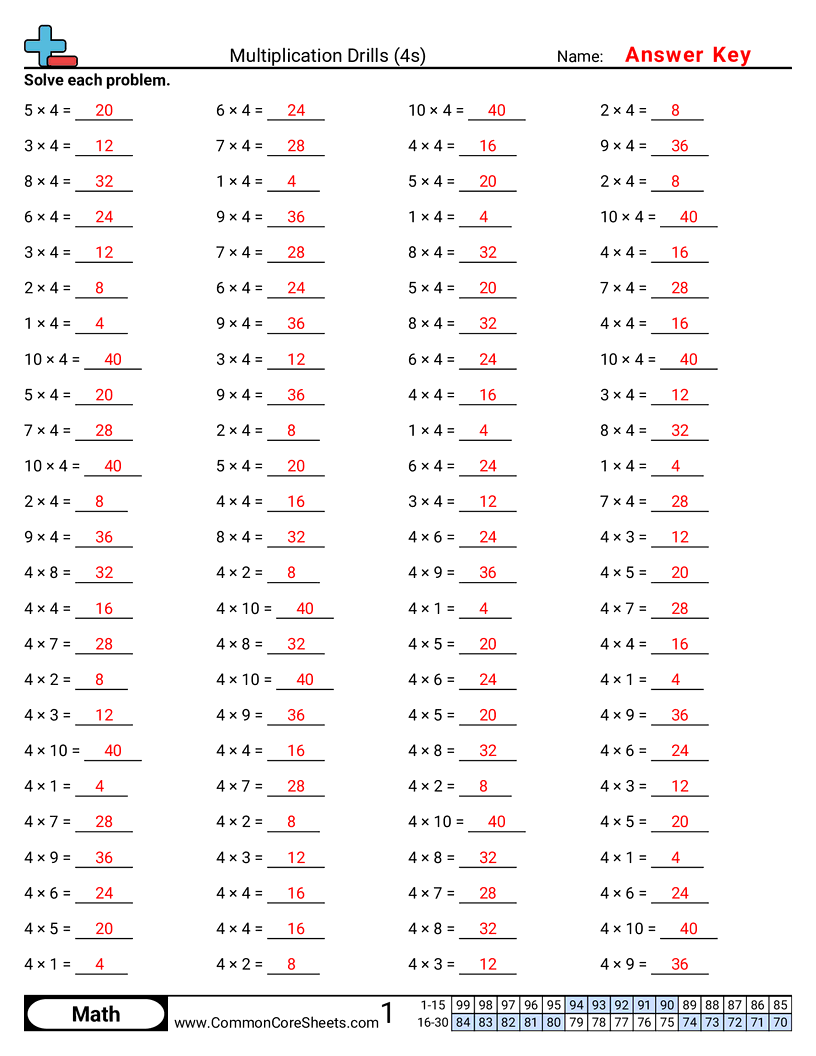
- Memorize and recall the 4 times table facts.
- Multiply 4 by numbers 1 through 10 quickly and accurately.
- Build speed and confidence with basic multiplication facts.
3oa7
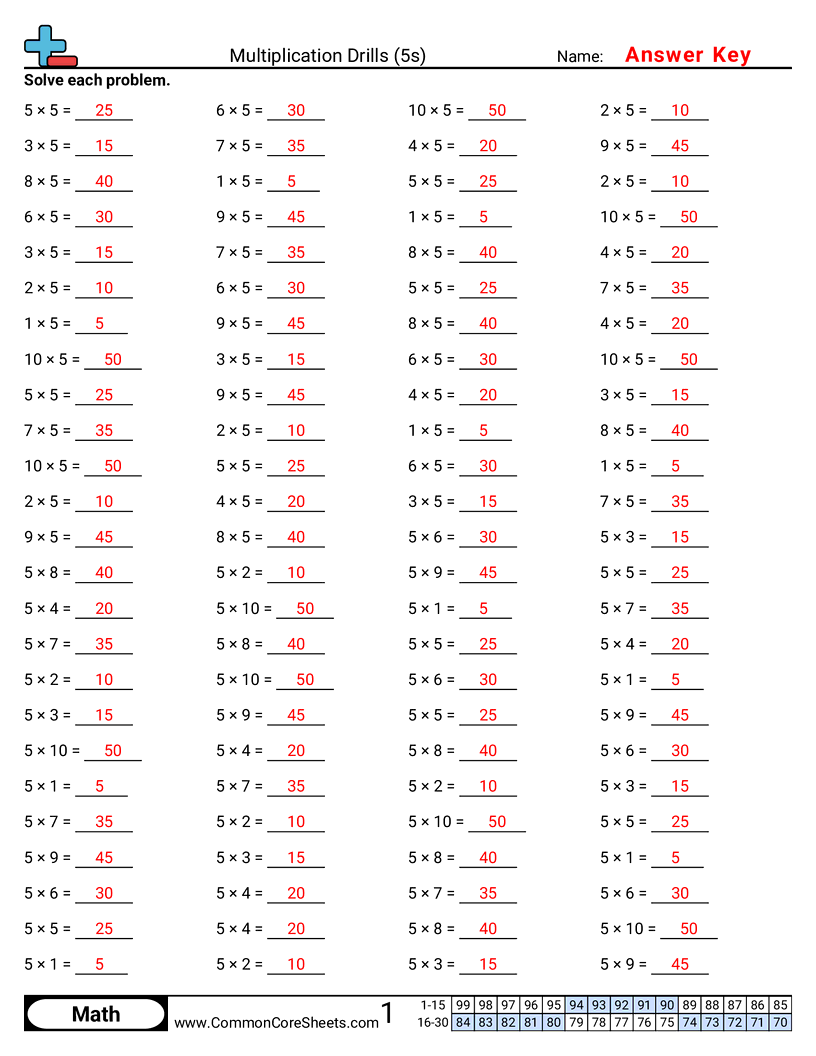
- Memorize and recall the 5 times table facts.
- Multiply 5 by numbers 1 through 10 quickly and accurately.
- Use patterns in the 5s facts (like counting by 5s and answers ending in 0 or 5) to solve problems faster.
- Build speed and confidence with basic multiplication facts for mental math.
3oa7
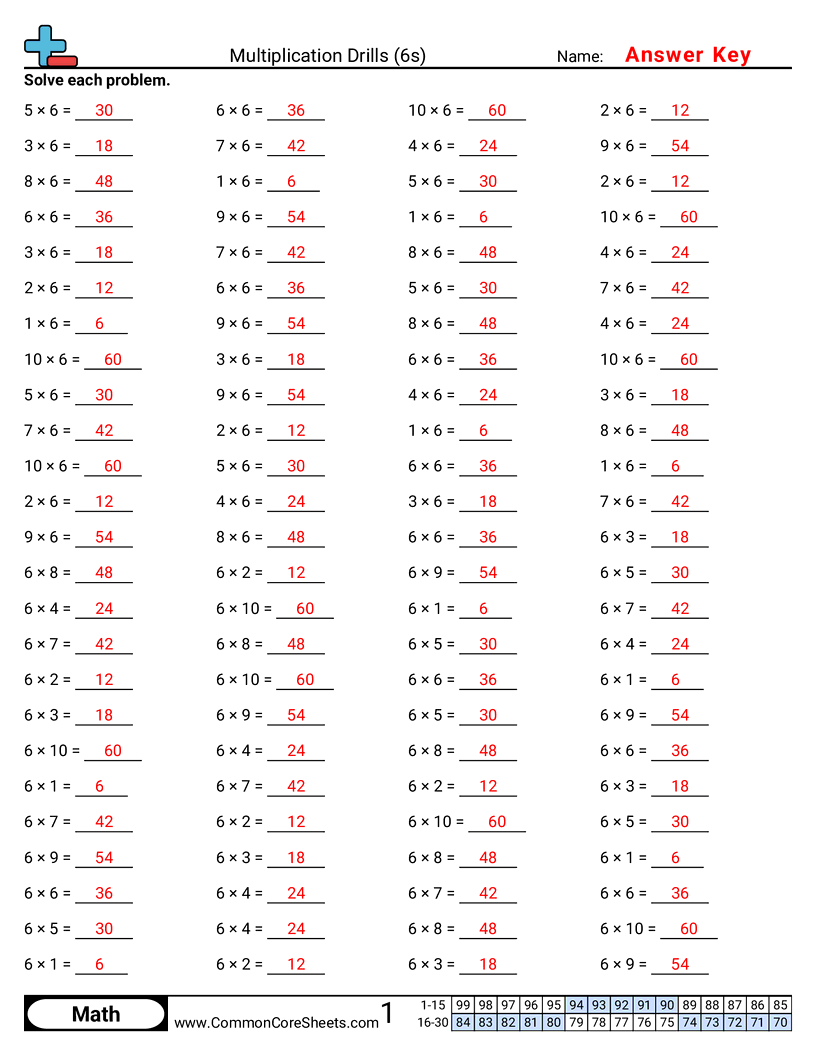
- Memorize and recall the 6 times table facts.
- Multiply 6 by a whole number from 1 to 10 quickly and accurately.
- Build speed and confidence with basic multiplication facts.
3oa7
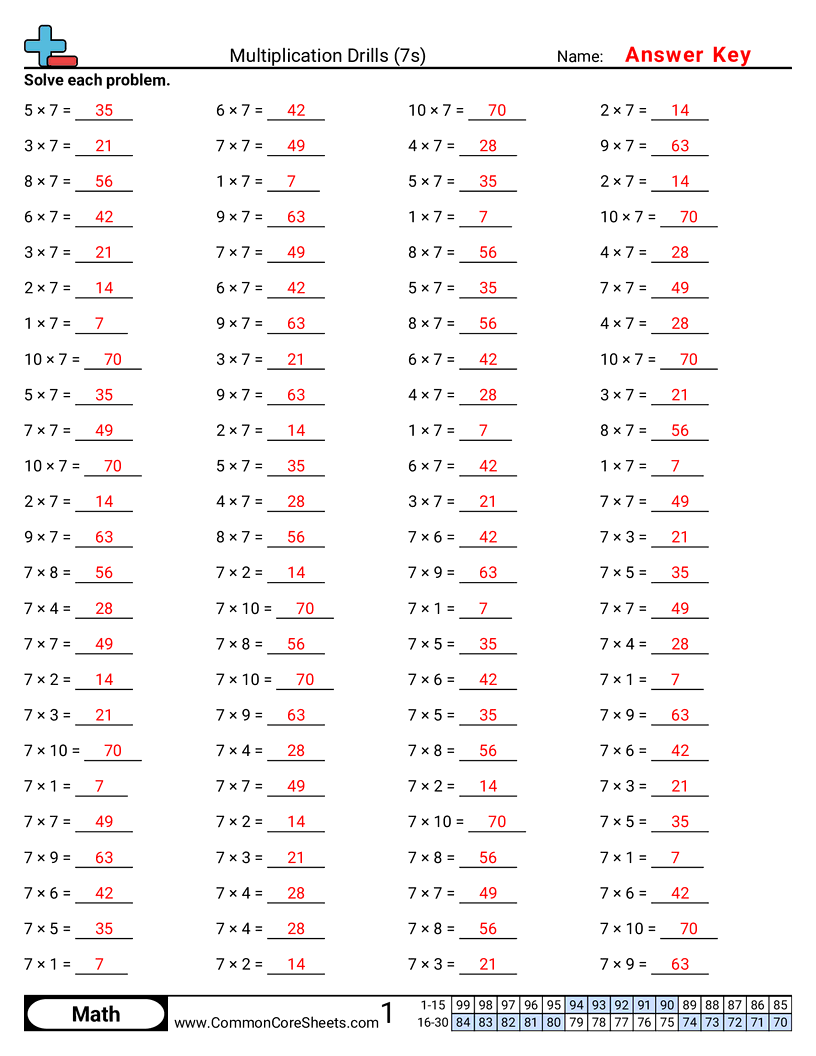
- Practice the 7 times table facts from 7×1 to 7×10.
- Get faster at multiplying by 7 in your head.
3oa7
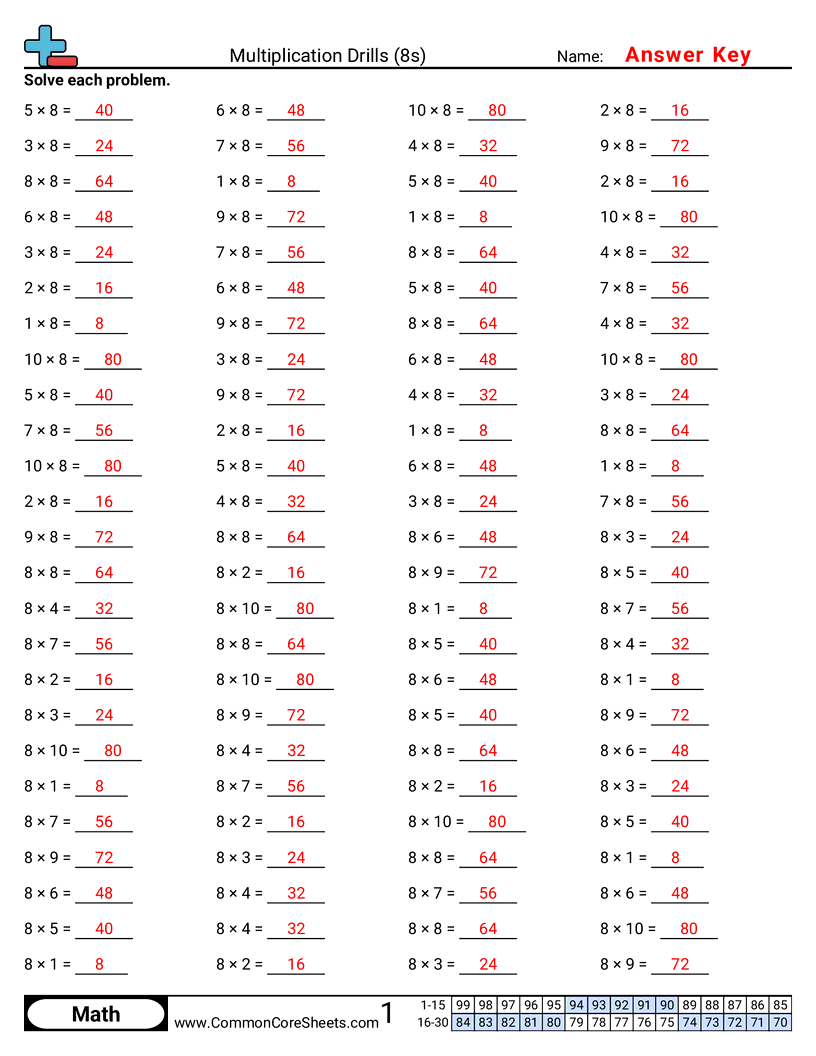
- Memorize and recall the 8 times table facts.
- Multiply 8 by a whole number from 1 to 10 quickly and accurately.
- Build speed and confidence with mental multiplication using 8s.
3oa7
- Memorize and recall the 9 times table facts.
- Multiply 9 by numbers 1 through 10 quickly and accurately.
- Use patterns in the 9s facts to solve problems mentally.
- Build speed and confidence with basic multiplication facts.
3oa7
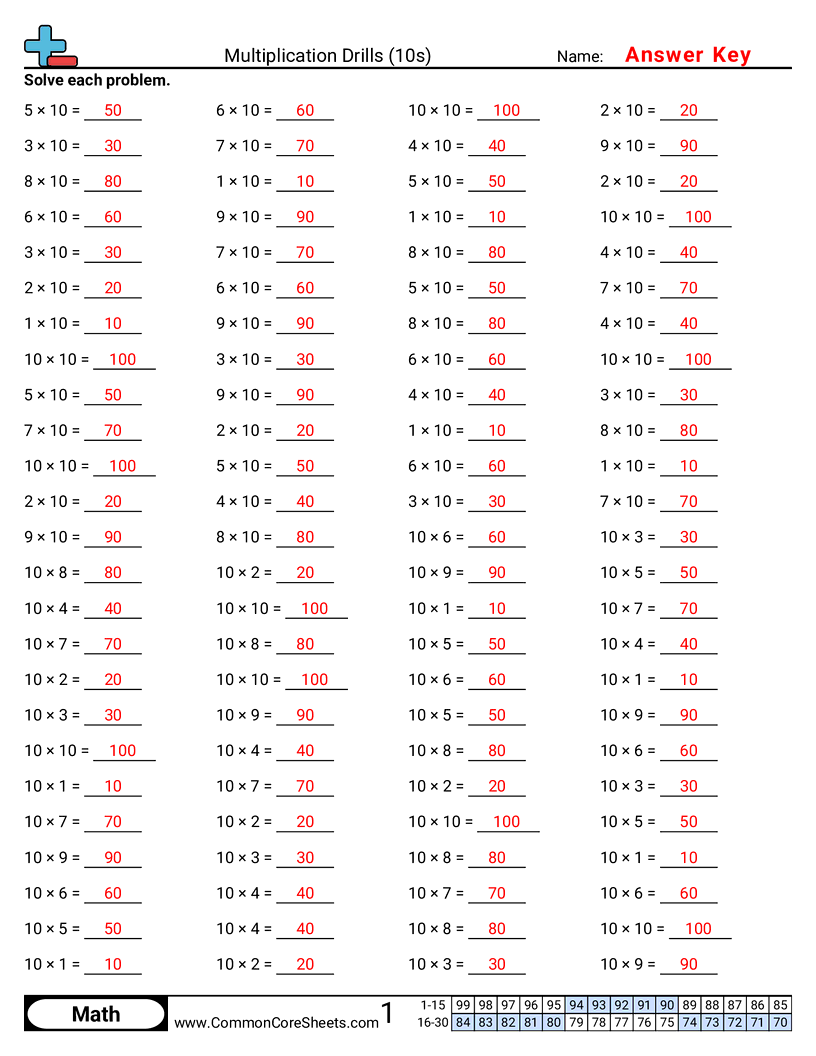
- Memorize and recall the 10 times table quickly.
- Multiply 10 by a whole number from 1 to 10 accurately.
- Use the pattern that multiplying by 10 makes the number ten times bigger (adds a zero).
- Build speed and confidence with basic multiplication facts.
3oa7
- Memorize and recall the 11 times table quickly.
- Multiply 11 by a whole number from 1 to 10 accurately.
- Use mental math patterns to find 11s facts without counting.
- Build speed and confidence with basic multiplication facts.
3oa7
- Memorize and recall the 12 times table facts.
- Multiply 12 by a whole number from 1 to 10 quickly and accurately.
- Use mental math patterns to find 12s facts (like 10× plus 2×).
- Build speed and confidence with multiplication facts for better overall fluency.
3oa7
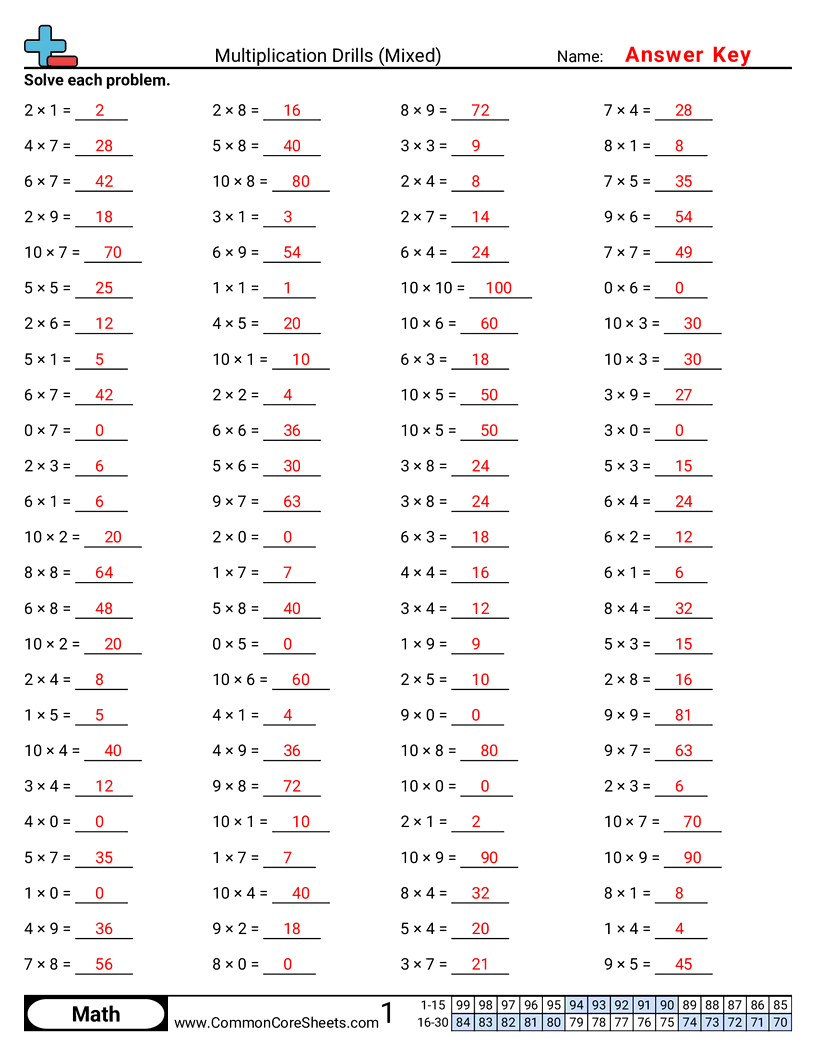
- Practice quick recall of multiplication facts from 1×1 through 10×10.
- Multiply single-digit numbers accurately to find the product.
- Get faster at solving mixed multiplication facts without relying on a pattern or order.
- Build confidence doing multiplication in your head.