Determining Reasonable Answers (2, 5, 10) Worksheet Download
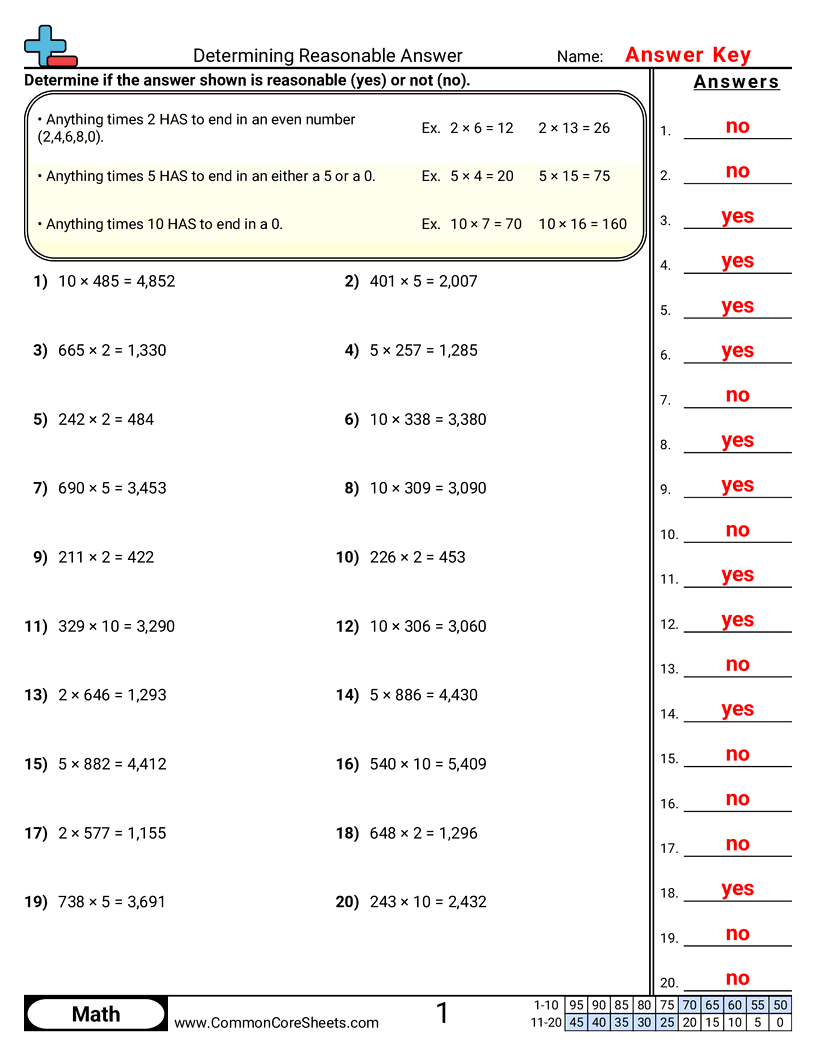
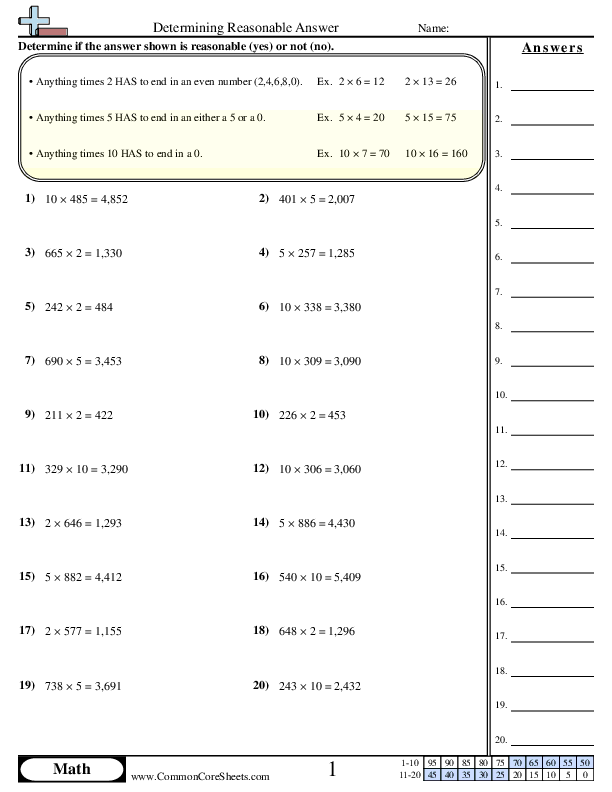
Free 4th Grade (4nbt5) math worksheets on Determining Reasonable Answer . Each worksheet has 20 problems with an answer key and are ideal for teachers and homeschooling. You can download the PDF, create a set of flash cards or set it up for online learning.
Select a Different Activity
>


Sheet Information >
About this worksheet
Each worksheet has 20 problems identifying if the answer listed is a reasonable answer.
This worksheet is designed to enhance children's math skills by focusing on determining reasonable answers to multiplication problems. It presents 20 dynamic problems, ranging from multiplying two to three-digit numbers by single or double ones. The exercise can be customized to fit individual student's needs and can also be converted into flash cards. It's compatible with distance learning, making it a versatile tool for improving children's understanding of multiplication.
Student objectives
- Decide whether a multiplication answer makes sense before accepting it.
- Use rounding to 2, 5, and 10 as quick benchmarks to estimate a product.
- Compare an exact-looking product to an estimated range to spot answers that are too big or too small.
Everyday practice
- While shopping, decide if the total cost makes sense when you buy several of the same item (like 6 snacks at about $3 each).
- When planning a party, estimate if you have enough plates or cups by multiplying guests by items per person.
- When comparing deals, judge whether a “total price” for a bundle seems reasonable based on the price per item.
- When tracking screen time or reading time, estimate a weekly total by multiplying a daily amount by the number of days.