These Tables Multiplication Worksheets help students visualize and understand multiplication concepts through organized formats. The collection includes multiplication tables, lattice method problems, array exercises, and pattern recognition activities that make learning multiplication more structured and accessible.
These worksheets build the prerequisite skills students need before formal multiplication. Activities include writing arrays as addition and multiplication equations, doubling and halving numbers, partitioning rectangles into rows and columns, multiplying by multiples of ten, rewriting repeated addition as multiplication, using number lines, reading multiplication tables for patterns, estimating reasonable products, and interpreting multiplication in word problems. Resources span second through fourth grade.
Students learn the lattice method as an alternative multiplication strategy. Worksheets provide pre-drawn lattice grids for multiplying two-digit by two-digit and three-digit by two-digit numbers. This visual approach helps students organize partial products and reduce errors during multi-digit multiplication.
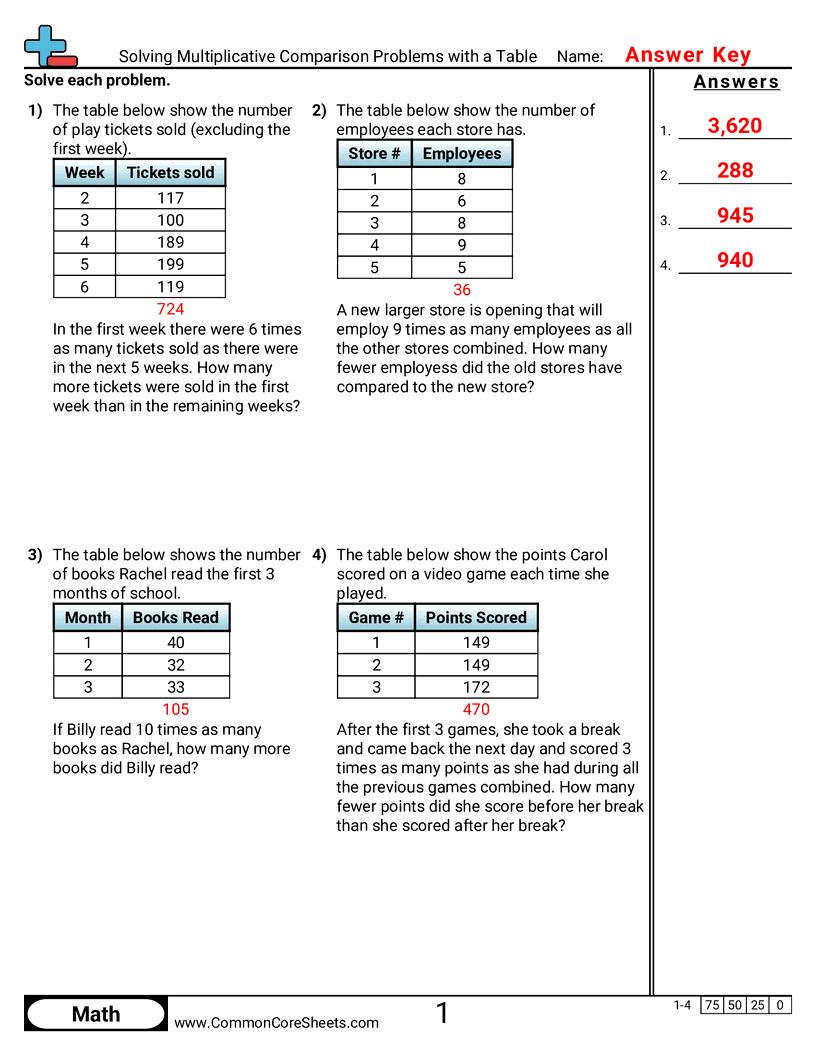
Multiplication word problems help students apply their computation skills to real-world situations. Worksheets progress from basic facts within 100 to multiplying three-digit by three-digit numbers, including multiplicative comparison problems and table-based problem solving. Aligned with third through fifth grade standards.
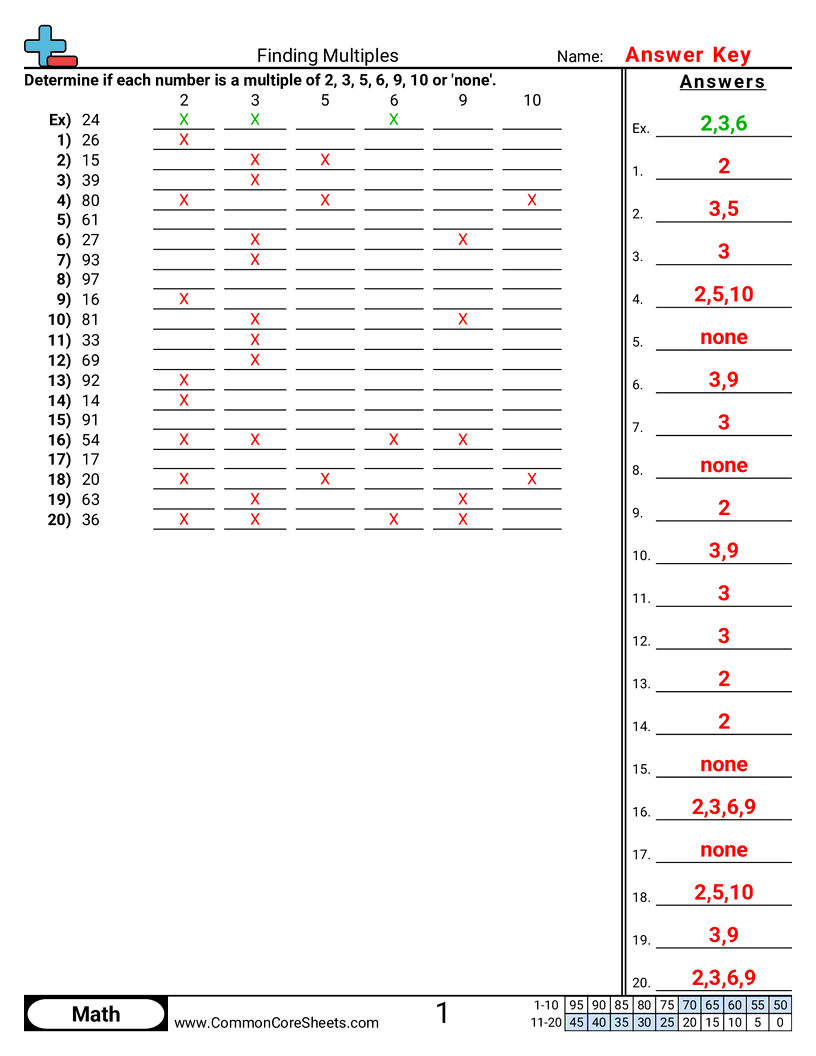
These worksheets develop students' understanding of multiples, factors, and prime numbers. Activities include identifying multiples of a number, using divisibility rules for 2, 3, 5, 6, 9, and 10, finding the least common multiple of two numbers, and determining prime factorizations. Aligned with fourth and sixth grade standards.
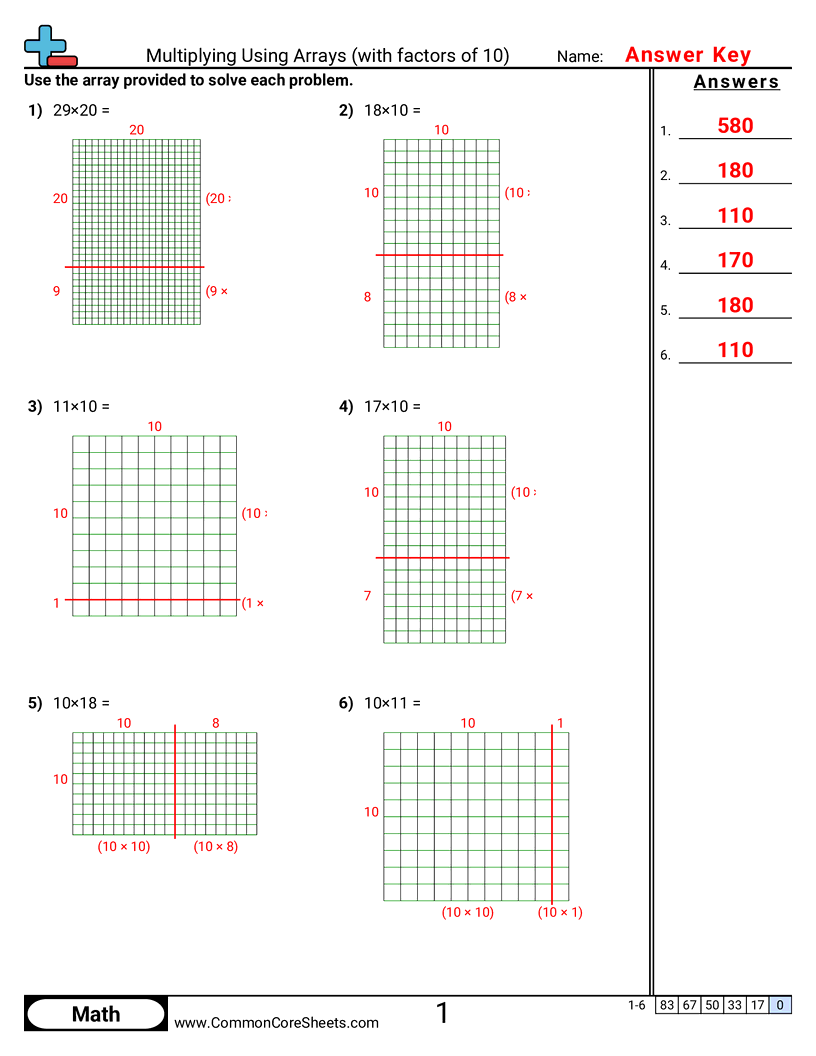
Students use arrays — arrangements of rows and columns — to visualize and solve multiplication problems. Worksheets include basic array multiplication, arrays with factors of 10, and blank arrays for students to fill in. These concrete models connect the concept of equal groups to multiplication equations. Aligned with fourth grade.