5th Grade Decimals: Place Value & Powers Of Ten Worksheets
5th Grade Decimals: Place Value & Powers of Ten: read and write decimals to thousandths, expanded form, and multiplying or dividing by 10, 100 and 1,000. Every worksheet is free, prints as a PDF with an answer key, and can be assigned online. The ones teachers open most are first.
More about these worksheets ▾ Show less ▴
5nbt2
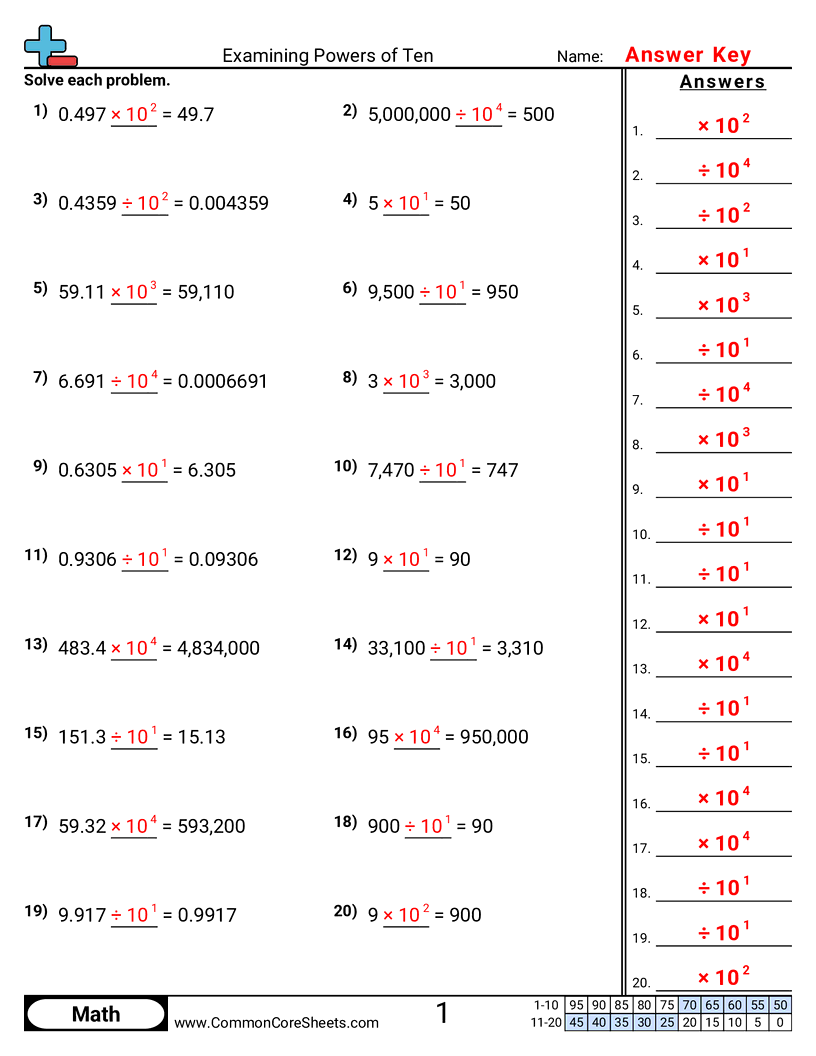
Multiply decimals by 10, 100, and 1,000 by moving the decimal point the right number of places. Divide decimals by 10, 100, and 1,000 by moving the decimal point the right number of places. Use exponents like 10^2 and 10^3 to recognize how many places to shift the decimal. Write answers with the decimal point and any needed zeros in the correct place.
5nbt1
Find the value of an underlined digit in a decimal number. Use place value to tell how much a digit is worth (like tens, ones, tenths, or hundredths).
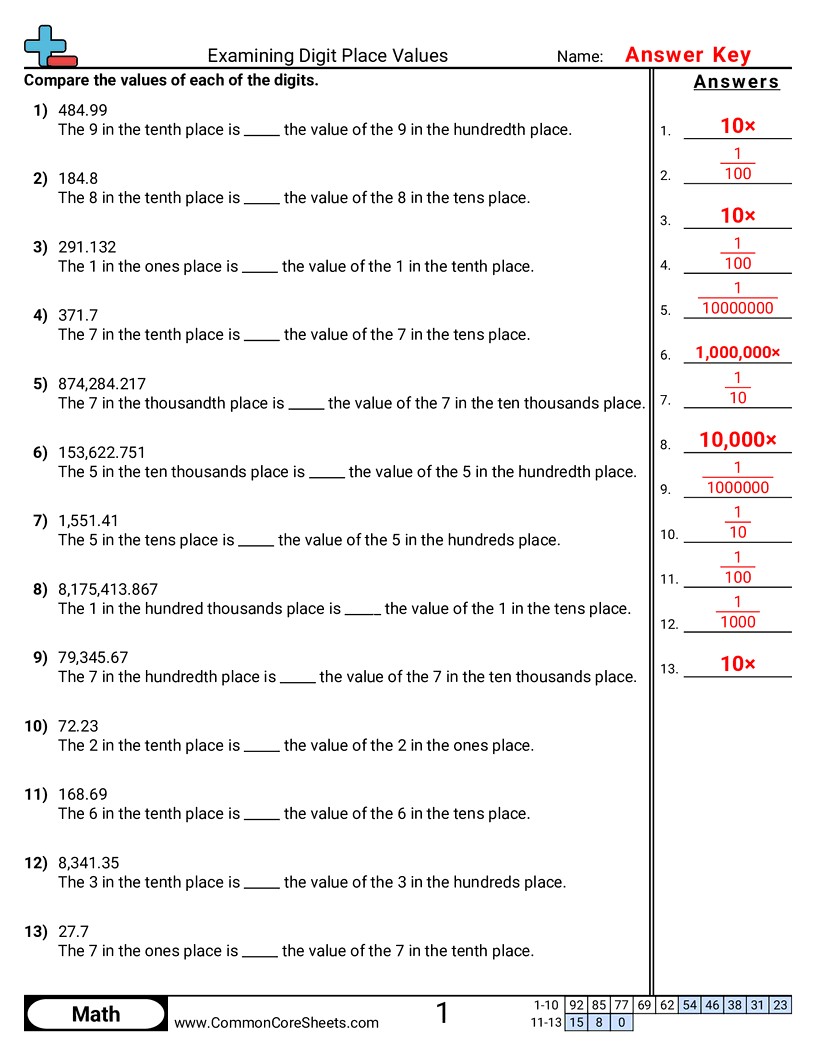
5nbt1
Practice comparing the value of the same digit in two different place-value positions within a number Figure out how many times greater or smaller a digit's value is when it moves to a different place Express the relationship between two place values as a multiplication (like 10×) or a fraction (like 1/100) Work with place values that span both whole numbers and decimals
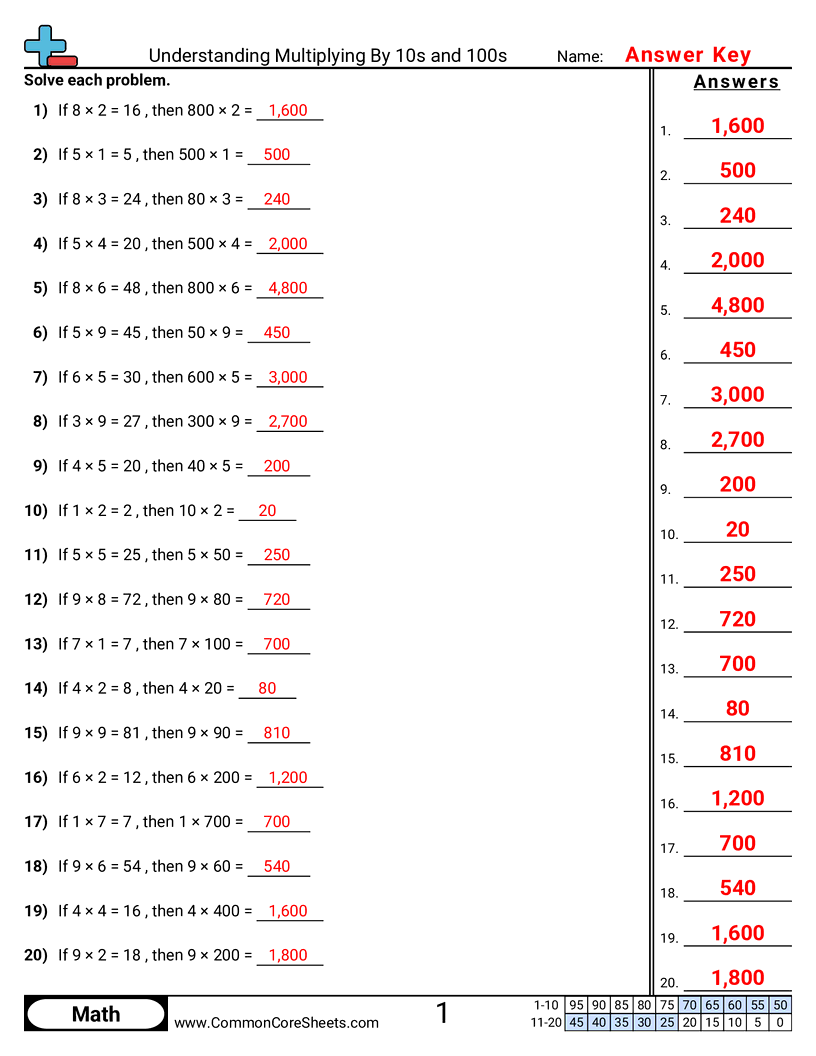
5nbt2
Multiply a one-digit number by tens and hundreds. Use place value to see how multiplying by 10 or 100 changes the digits. Write products correctly with the right number of zeros.
5nbt2
Multiply a one-digit number by 10, 100, or 1,000. Use place value patterns to see how the digits shift when you multiply by powers of 10. Spot and use patterns in a set of related multiplication facts (like 6×10, 6×100, 6×1,000).
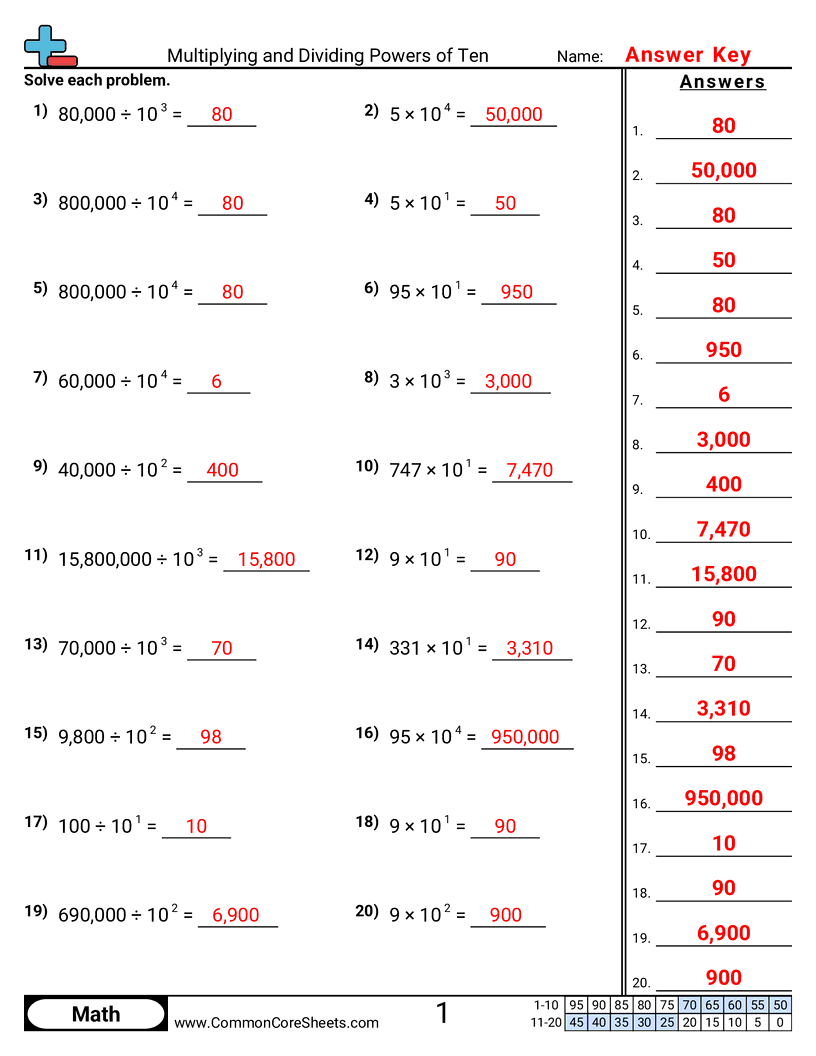
5nbt2
Multiply a number by 10, 100, 1,000 (and other powers of ten) by shifting the digits to the left. Divide a number by 10, 100, 1,000 (and other powers of ten) by shifting the digits to the right. Use place value to keep track of zeros and decimal points when multiplying or dividing by powers of ten.
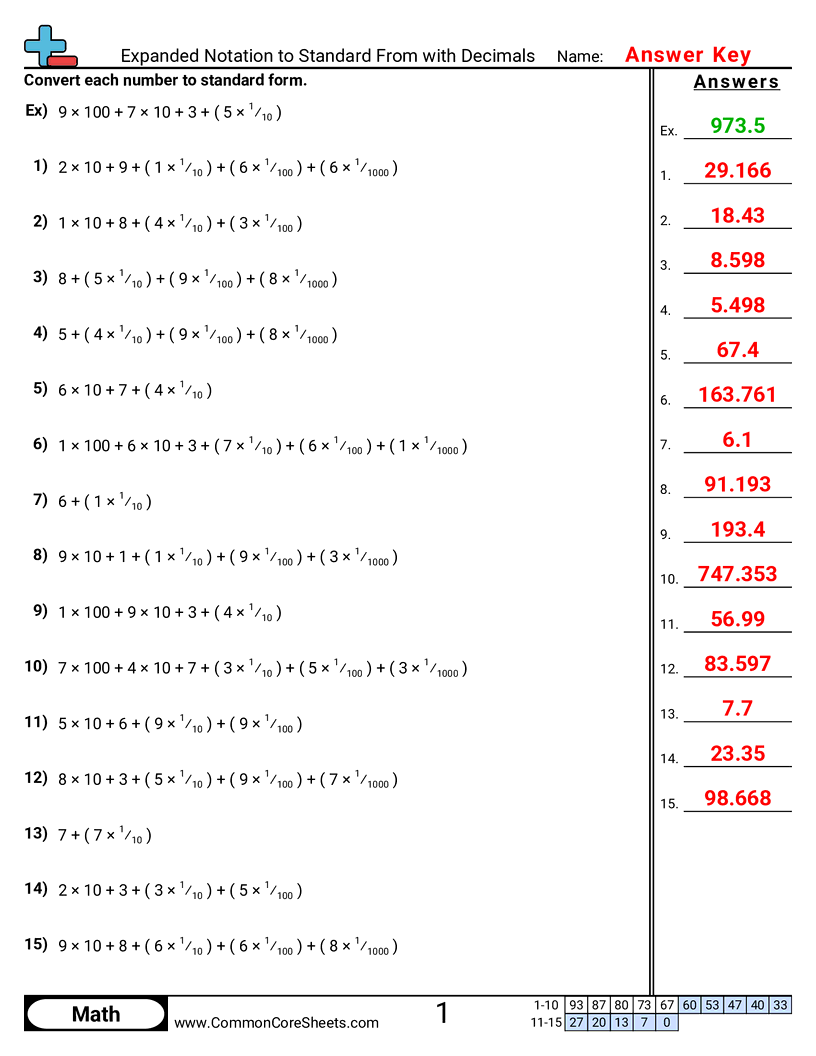
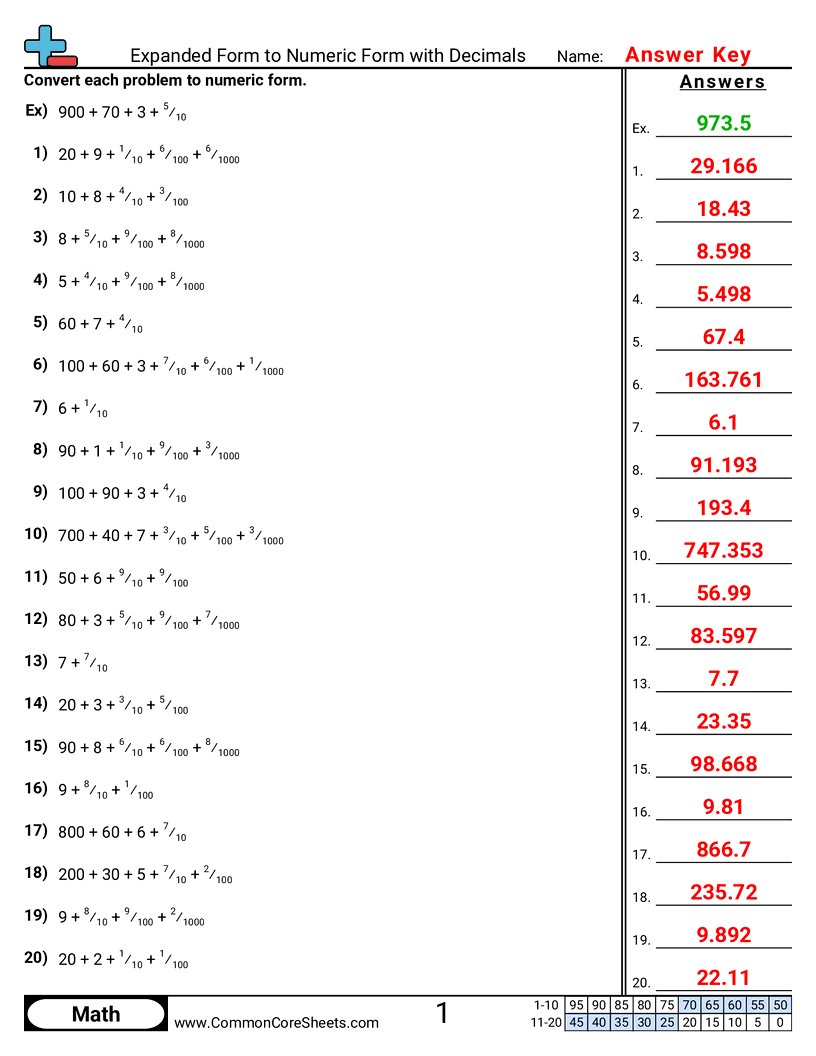
5nbt3a
Turn an expanded notation expression into one decimal number. Use place value to decide which digits go in the ones, tenths, hundredths, and thousandths places. Combine whole-number parts and decimal parts correctly when writing the number in standard form. Write decimals with zeros in the right places when a place value is missing.
5nbt3a
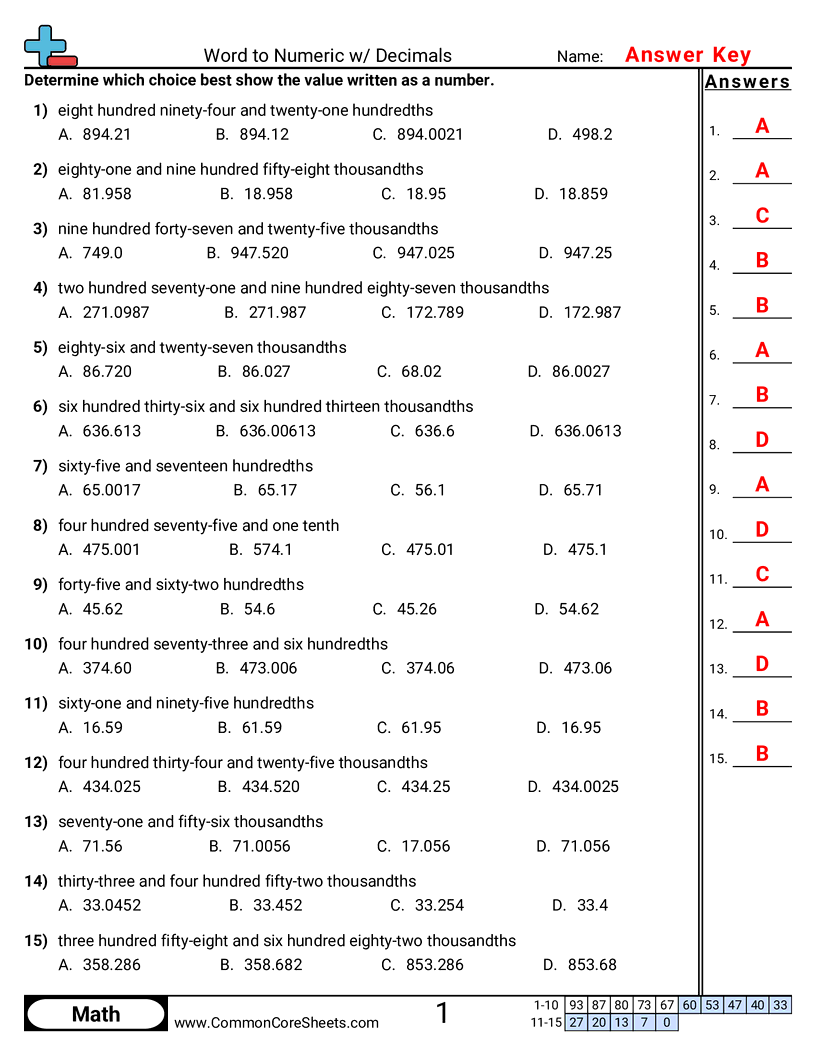
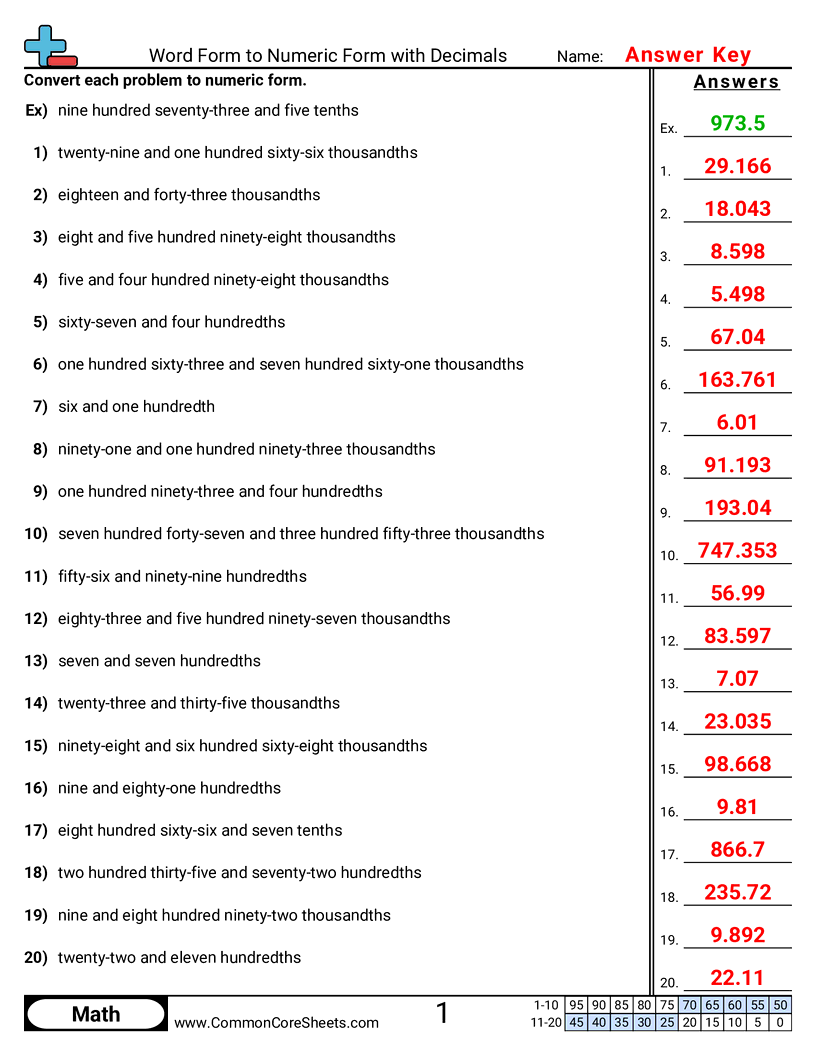
Use place value to decide which digit belongs in the ones, tenths, hundredths, and thousandths places. Translate between word form and standard numeric form for decimals. Write decimals correctly using zeros when a place value is missing.
5nbt3a
Turn a decimal written in words into the correct number with a decimal point. Use place value words like tenths, hundredths, and thousandths to decide which digits go where. Write decimals correctly when the words include zeros, like “three and five thousandths.” Read the word “and” as the decimal point when writing the number.
5nbt2
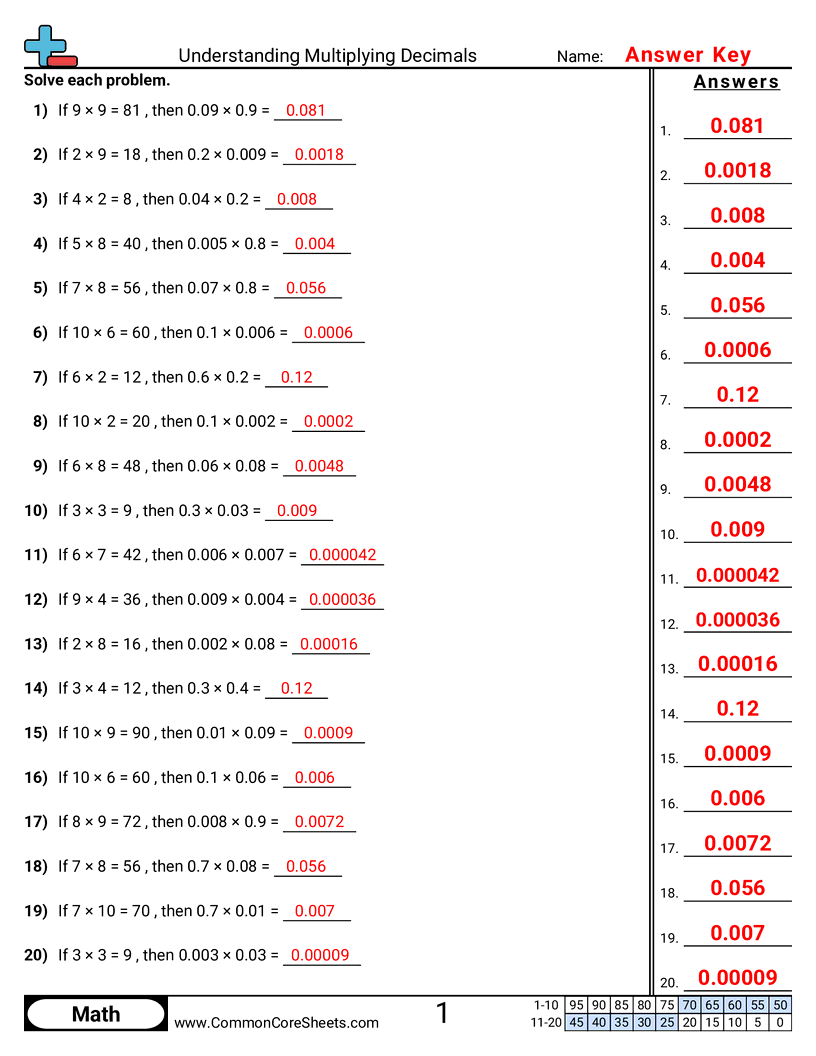
Multiply two decimal numbers to find the product. Place the decimal point correctly in the answer. Use place value to understand how multiplying by tenths and hundredths changes a number. Multiply decimals by multiplying as whole numbers first, then adjusting for the decimal places.
5nbt2
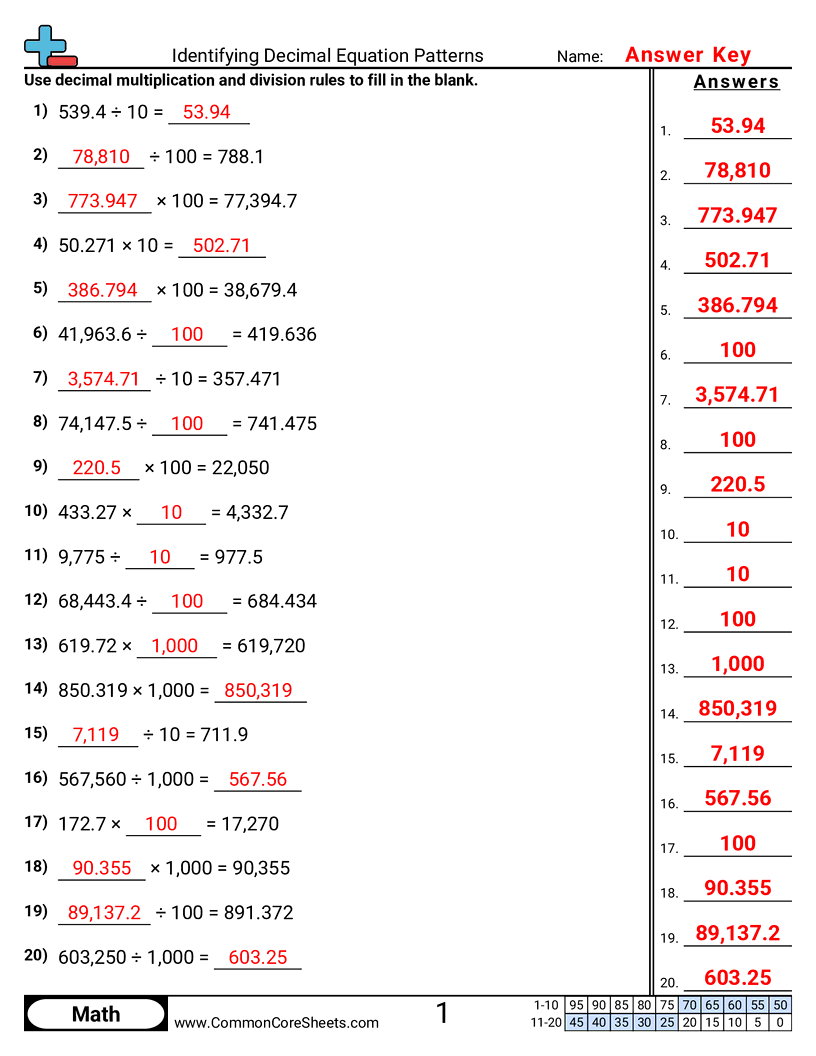
Multiply decimals by 10, 100, and 1,000 by shifting the decimal point the right way. Divide decimals by 10, 100, and 1,000 by shifting the decimal point the right way. Spot patterns in how the digits and decimal point change when you multiply or divide by powers of 10.
5nbt3a
Use place value to decide which digits belong in the ones, tenths, hundredths, and thousandths places. Write decimals correctly with a decimal point and zeros when a place value is missing. Combine the parts of an expanded form by adding them to make a single decimal number.
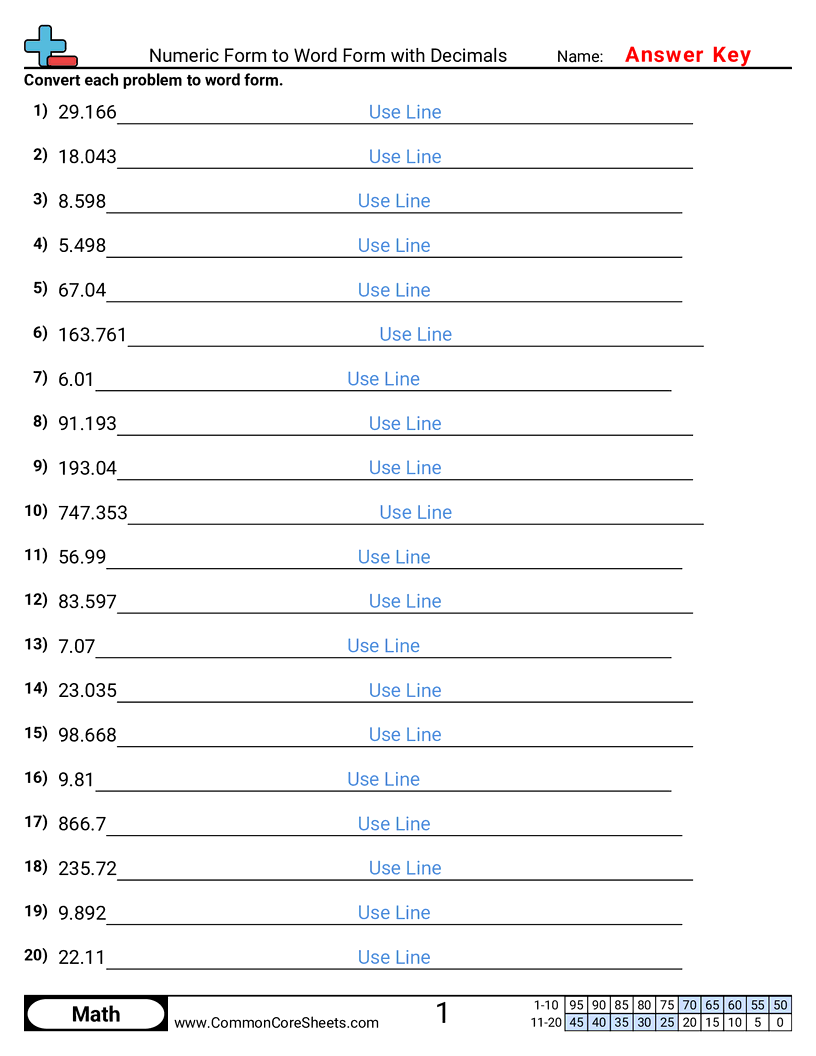
5nbt3a
Read decimal numbers and say them correctly using place-value words like tenths, hundredths, and thousandths. Write a decimal number in word form using the word "and" for the decimal point. Spell number words correctly when writing decimals in words. Match each digit in a decimal to its correct place value so the word form says the right amount.
5nbt2
Use place value to make division with tens, hundreds, and thousands quicker. Keep track of zeros correctly when dividing by 10, 100, or 1,000. Solve division facts mentally when the numbers are multiples of ten.
5nbt3a
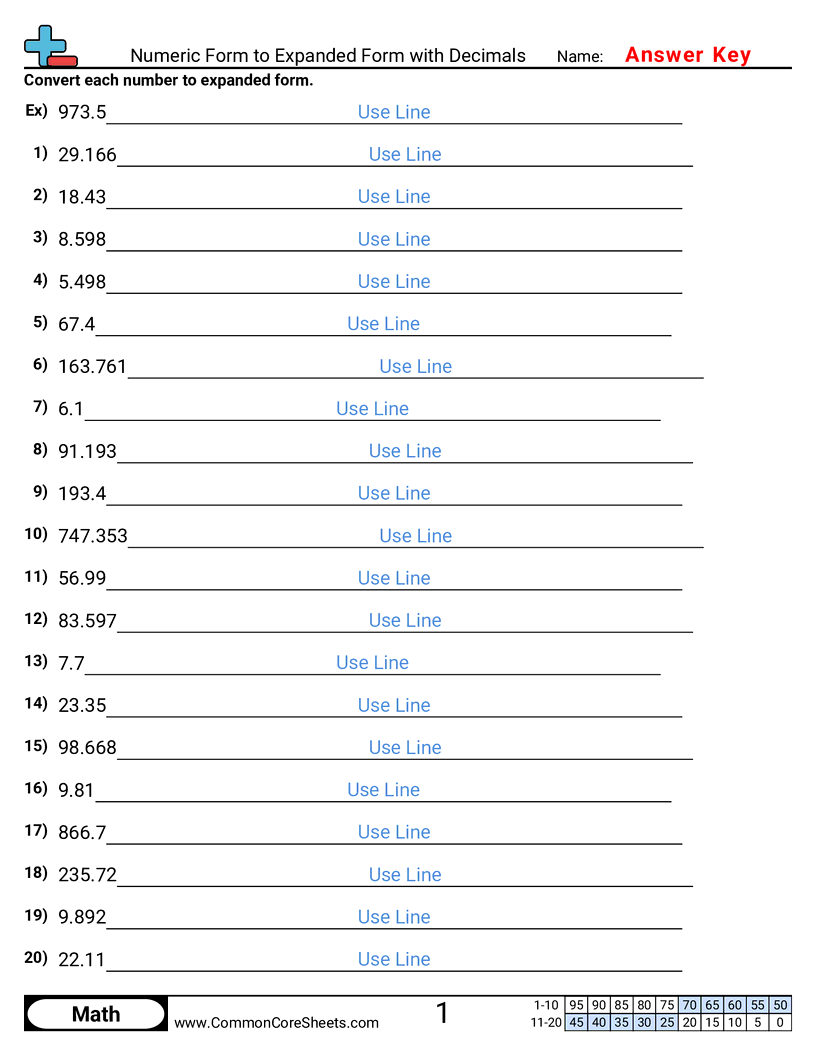
Break a decimal number into the value of each digit and write it as a sum. Match each digit to its correct place value, including tenths, hundredths, and thousandths. Use zeros as placeholders so the expanded notation still shows the correct value. Read a decimal number and explain what each part is worth in expanded form.
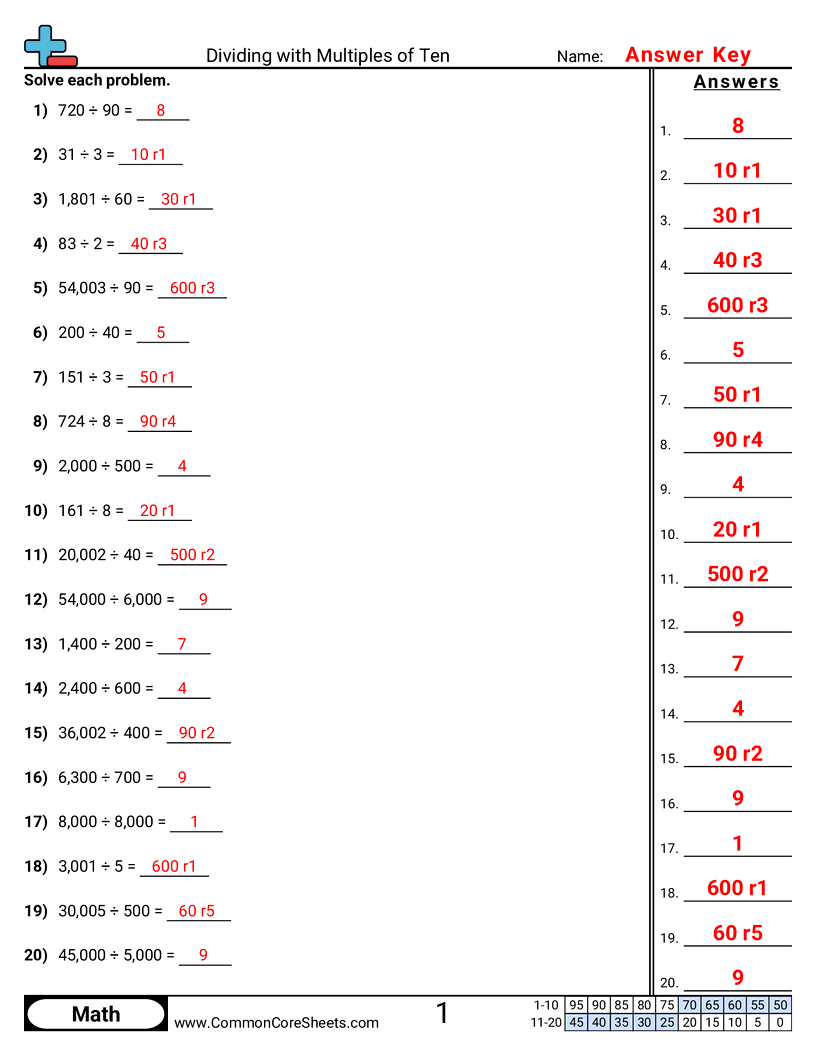
5nbt2
Divide numbers that end in zeros by 10, 100, or 1,000. Use place value to move digits to the right when dividing by powers of ten. Solve division facts with multiples of ten quickly in your head.
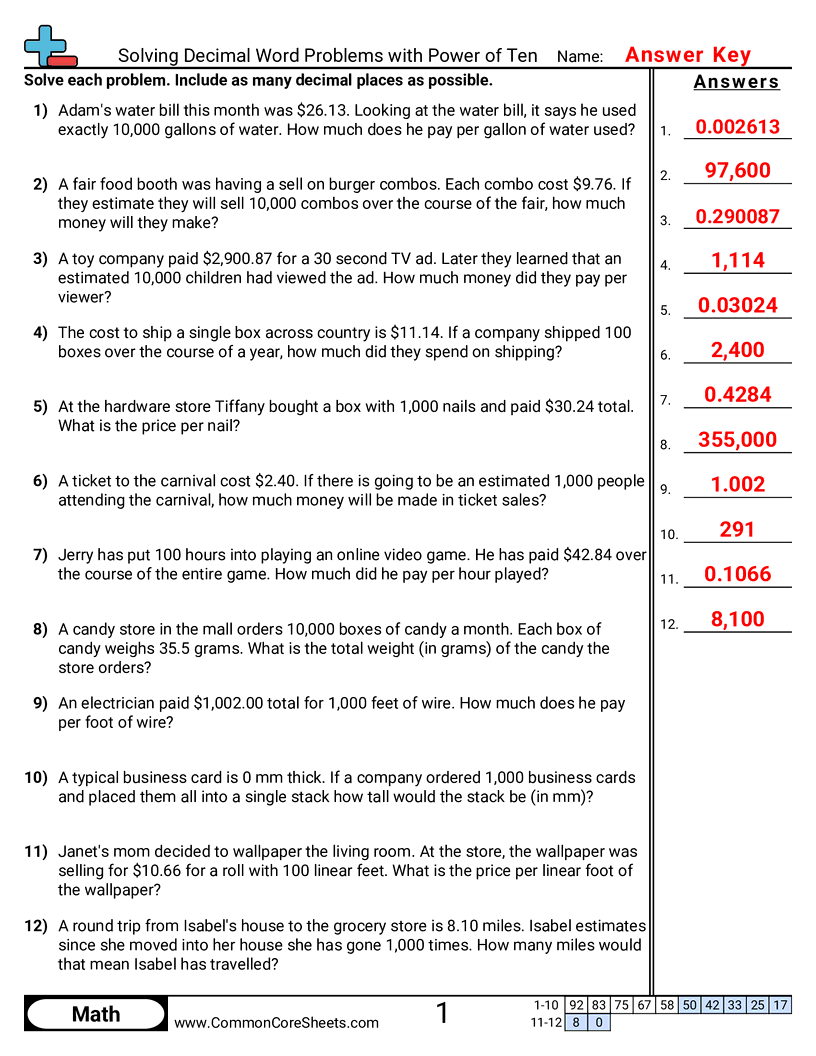
5nbt2
Multiply decimals by 10, 100, and 1,000 by shifting the digits to the left. Divide decimals by 10, 100, and 1,000 by shifting the digits to the right. Read a word problem and decide whether it needs multiplying or dividing by a power of ten.
5nbt2
Recognize and write powers of ten using exponents (like 10^3). Multiply by powers of ten by shifting digits and adding the right number of zeros. Match an equation to the correct power of ten that makes it true.
5nbt3a
Break a decimal number into the value of each digit using place value. Write a number in expanded form using addition to show how the parts make the whole. Read and interpret digits in tenths, hundredths, and thousandths places. Include zero place values correctly when writing expanded form.
5nbt3a
Read a decimal fraction off a 10 by 10 grid. Write the same amount as a fraction and as a decimal. Recognize that hundredths on a grid and a decimal are the same number.
5nbt2
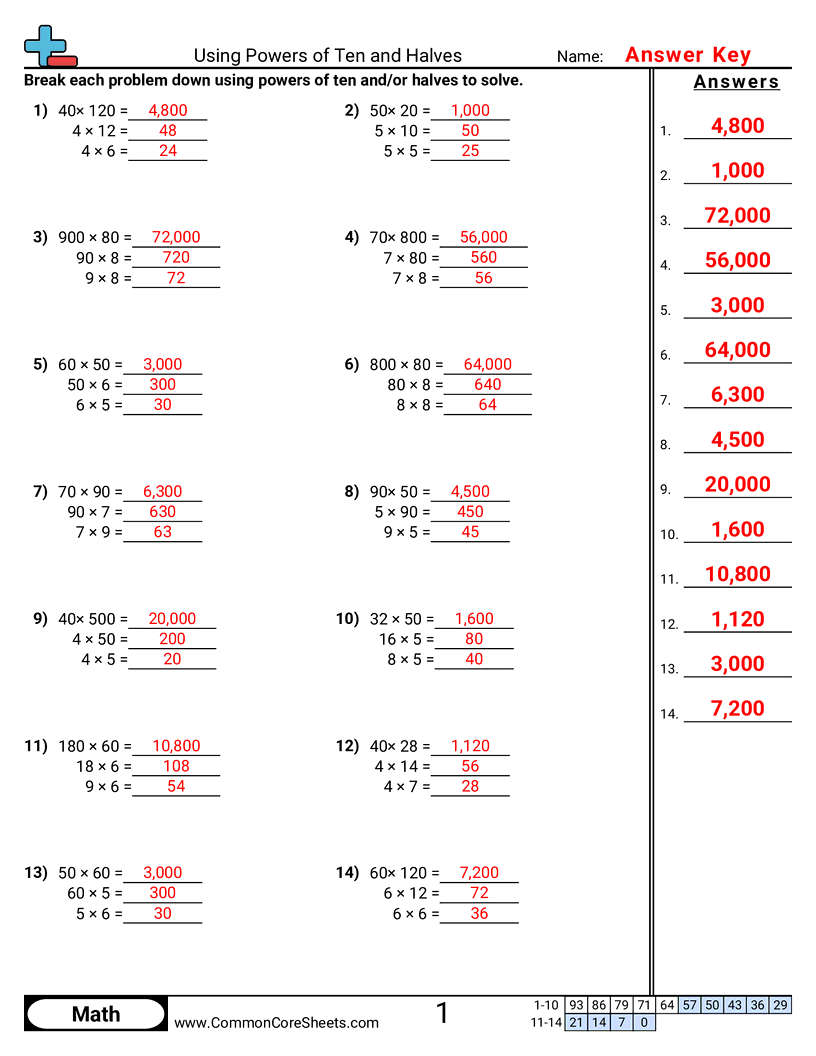
Use doubling and halving to make multiplication easier (like halving one factor and doubling the other). Solve multi-step multiplication equations by breaking them into simpler parts you can do mentally.
5nbt3a
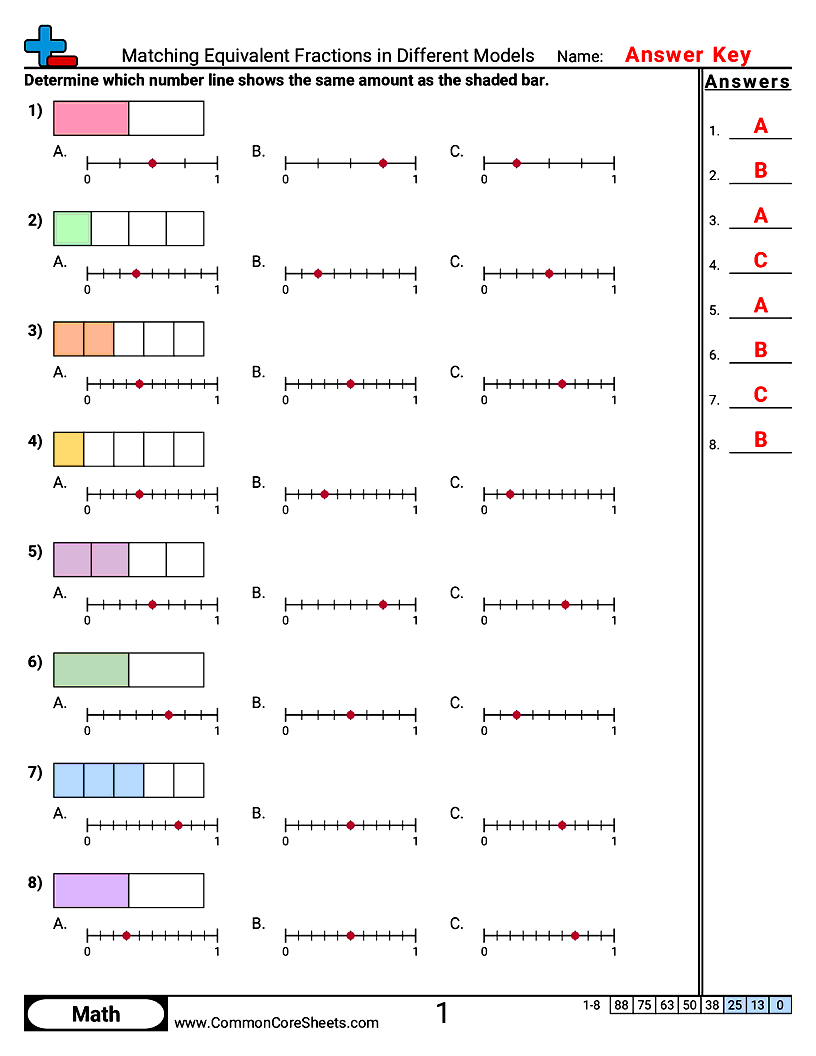
Recognize the same fraction in two different models. Match a bar model to a number line. Compare fractions with different denominators.
5nbt2
Multiply a whole number by 10, 100 or 1,000 without writing out the computation. Explain that multiplying by 10 shifts every digit one place to the left. Predict how many zeros the product will have before working it out.
5nbt3a
Write the same amount as tenths and as hundredths. See that one tenth is ten hundredths. Recognize ten tenths as one whole.
5nbt3a
Shade a 10 by 10 grid to show a decimal. Turn tenths and hundredths into a number of squares. Represent a decimal with a model.
5nbt3a
Work out what each base ten block is worth once one of them is named the whole Write the value of a set of blocks as a fraction Use a denominator of tenths, hundredths or thousandths depending on the smallest block shown See how the same block changes value when a different block is the whole
5nbt3a
Read a fraction from a point on a number line. Write the equivalent decimal for that point. Recognize a number line as a model for a fraction.
5nbt2
Divide a whole number by 10, 100 or 1,000 without writing out the computation. Explain that dividing by 10 shifts every digit one place to the right. Predict how many zeros the quotient will have before working it out.
5nbt3a
Write a fraction in thousandths as a decimal. Place digits correctly after the decimal point. Use leading zeros where the numerator is small.
5nbt3a
Read a length in meters as a decimal. See a mark as tenths and hundredths at the same time. Connect centimeters to hundredths of a meter.
5nbt3a
Write a decimal in thousandths as a fraction. Name the place value that gives the denominator. Read a decimal with two leading zeros.
5nbt3a
Write a mixed number as a terminating decimal. Divide a numerator by a denominator. Recognize the same amount written two ways.
5nbt3a
Write a mixed number as a terminating decimal. Write a decimal as a mixed number in simplest form. Recognize the same amount written two ways.
5nbt3a
Write a decimal as a fraction in lowest terms. Reduce a fraction over 100 or 1000. Recognize a decimal and a reduced fraction as the same number.
More 5th grade topics
Playwire Advertisement