Animals and Life Cycles Worksheets
Free life cycle and animal worksheets with answer key. No login or account needed. Students put the stages of butterfly, frog and bean plant life cycles in order, sort living and nonliving things, tell inherited traits from learned behaviors, and read how adaptations help animals survive. A grading column and quick grade scale make grading a breeze. Great for teachers or for homeschool.
More about these worksheets ▾ Show less ▴
×
Explain that living things grow, need food, water, and air, and make more of their own kind Explain that nonliving things do not grow and do not need food, water, or air Sort everyday things into living and nonliving
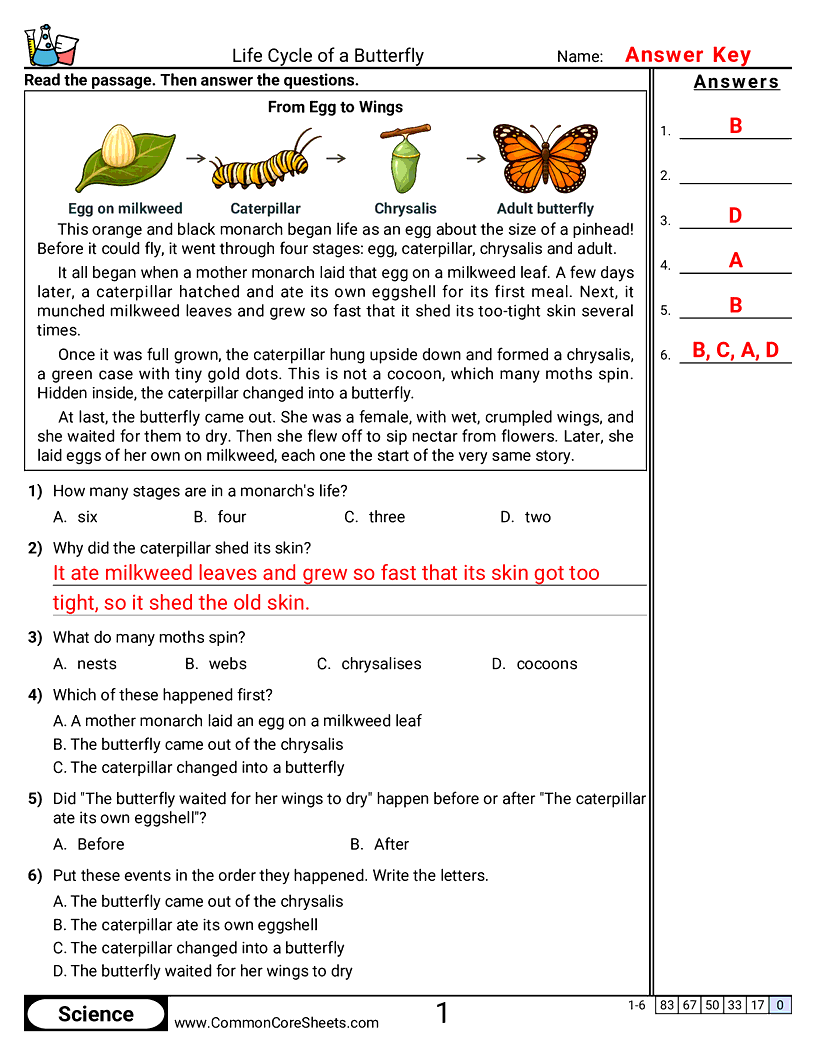
Put the stages of a butterfly's life cycle in the order they happen Tell whether one event in a butterfly's life happened before or after another Describe how a caterpillar grows and changes into a butterfly
Put the stages of a frog's life cycle in the order they happen Tell whether one event in a frog's life happened before or after another Describe how a tadpole's body changes as it grows into a frog
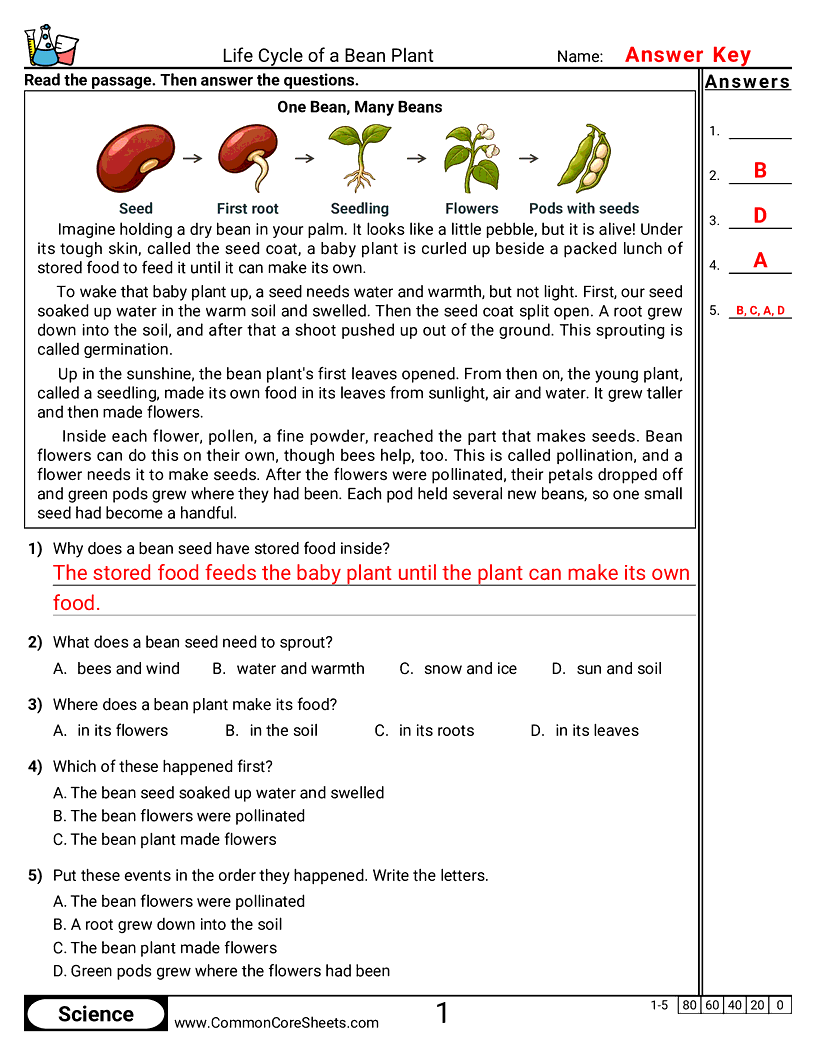
Put the stages of a bean plant's life cycle in the order they happen Tell whether one event in a plant's life happened before or after another Describe what a seed needs to sprout and how a young plant gets its food
Read a table of traits for parents and their young Find ways young animals are like their parents Explain that young animals are not exactly like their parents
Explain that inherited traits are passed down from parents to their young Explain that learned behaviors come from practice, watching others, or being taught Sort the traits and behaviors of people, animals, and plants
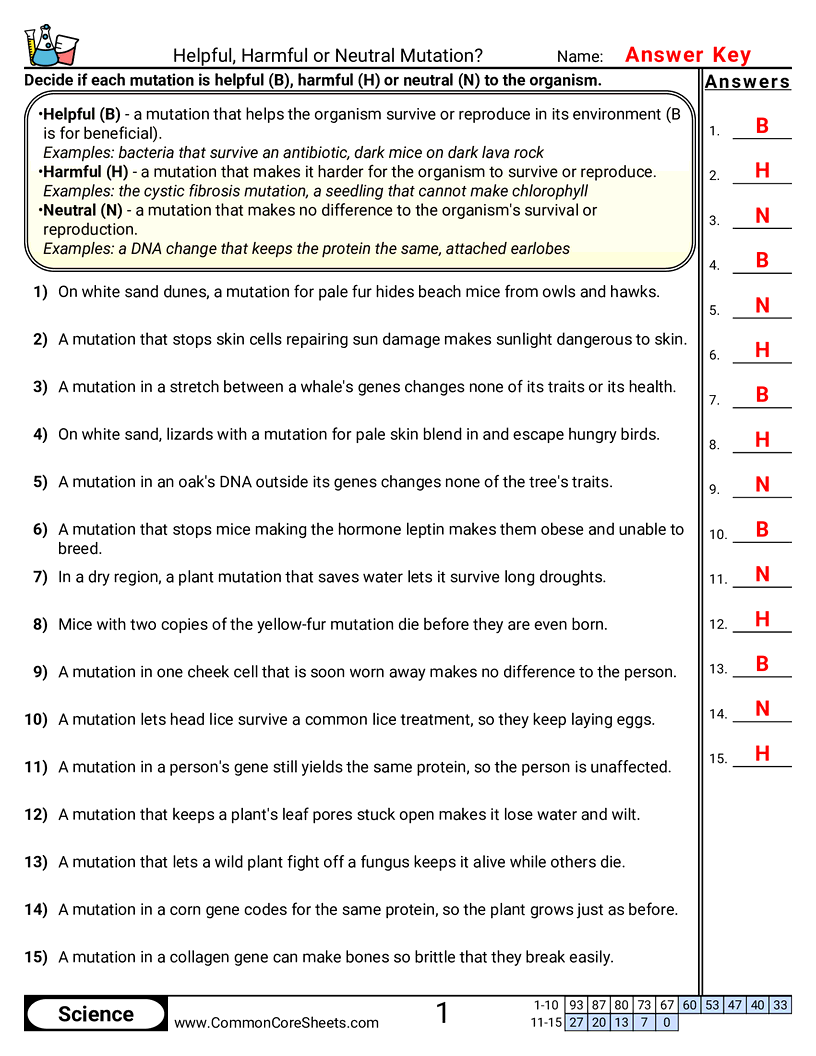
Explain that a mutation is a change in a gene, and that its effect depends on the trait it changes and often on the environment Explain that a helpful (beneficial) mutation helps an organism survive or reproduce in its environment Explain that a harmful mutation makes it harder for an organism to survive or reproduce Explain that a neutral mutation makes no difference to survival or reproduction, such as a DNA change that leaves the protein the same Sort descriptions of mutations as helpful, harmful or neutral to the organism
Determine the central idea of a science article Use a diagram of chromosomes together with the text Explain why sexual reproduction makes offspring that differ
Determine the central idea of a science article Use a diagram together with the text to explain selective breeding Describe technologies that change the traits of living things
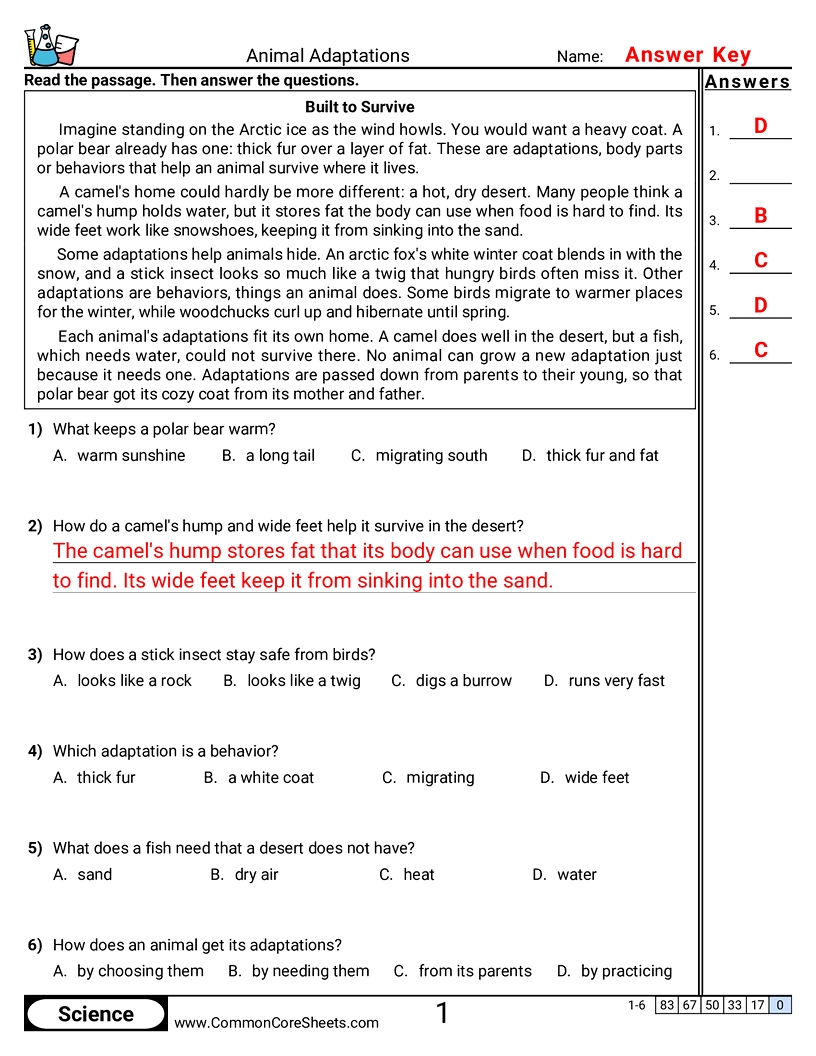
Explain that an adaptation is a body part or a behavior that helps an animal survive where it lives Tell body part adaptations, like thick fur, from behaviors, like migrating Explain that in a habitat some animals survive well and others cannot survive at all
Read the results of a camouflage test Compare how many beetles of each color were found Explain how a difference in color can help an animal survive and have young
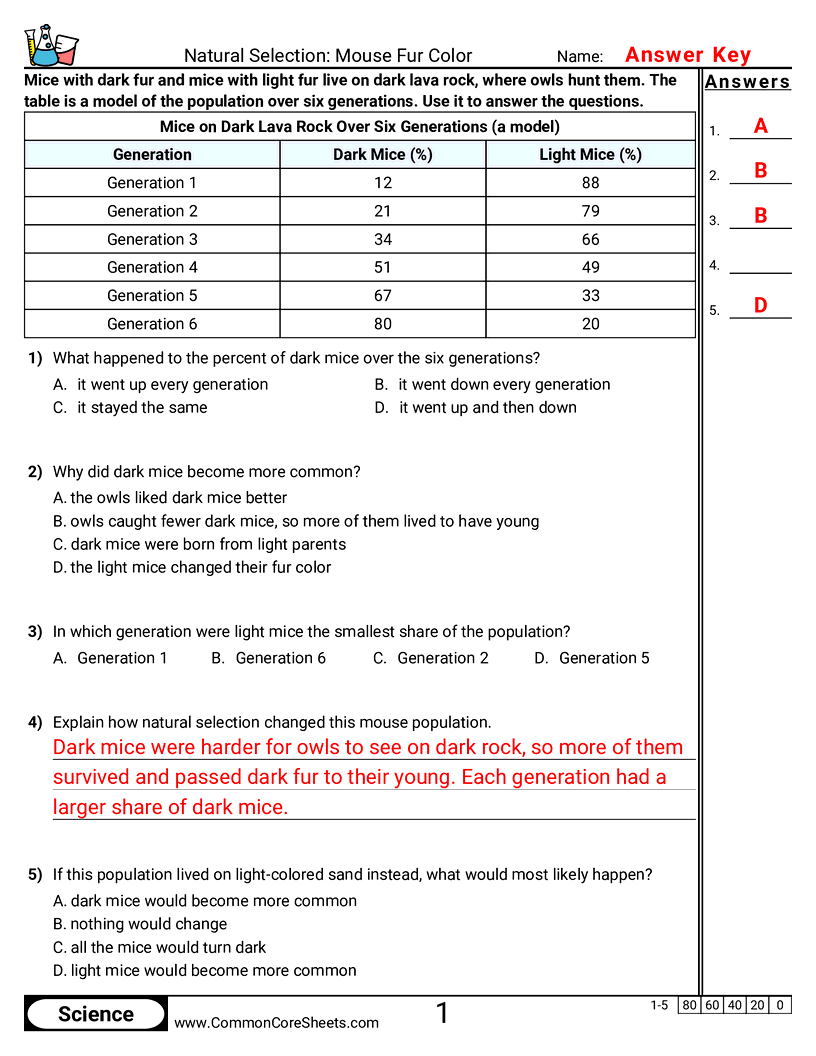
Analyze data on a trait in a population over several generations Explain how a trait that helps survival becomes more common Predict how the population would change in a different environment
Compare the bones in the front limbs of different animals Describe how the same bones are shaped for different jobs Explain how shared structures are evidence of common ancestry
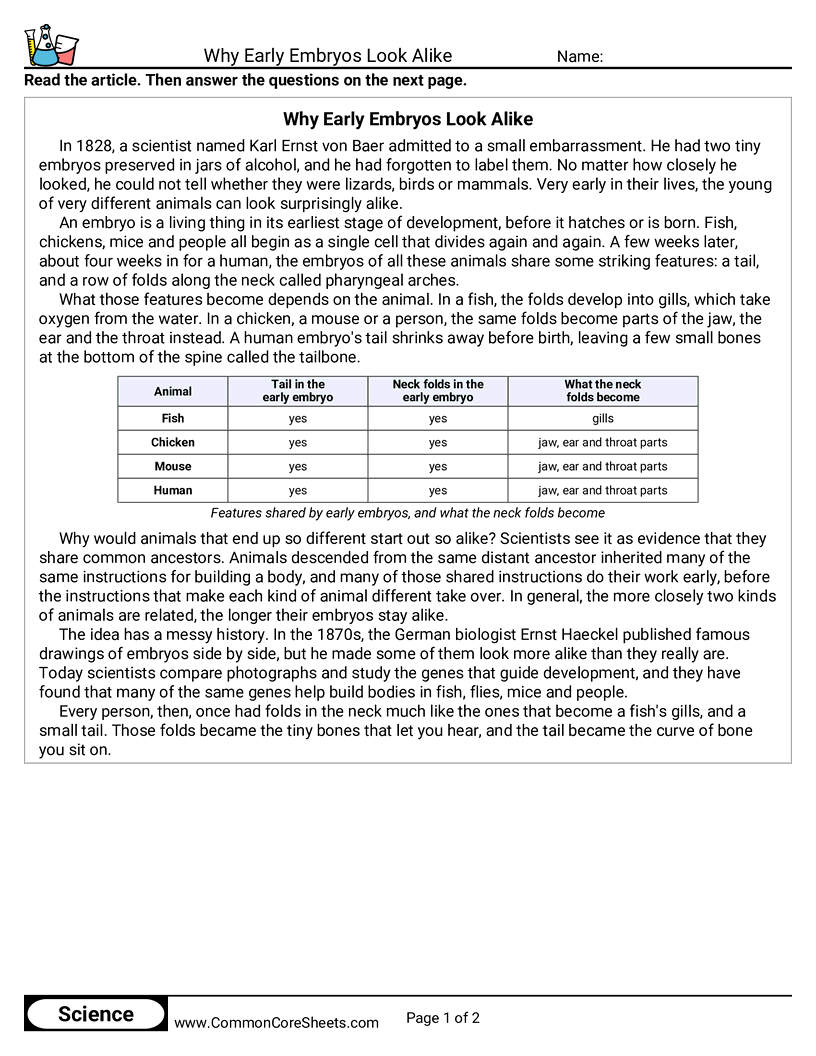
Determine the central idea of a science article Use a chart of embryo features together with the text Explain why similar embryos are evidence of common ancestry
Determine the central idea of a science article Use a diagram of a population over time together with the text Explain how natural selection changes a population
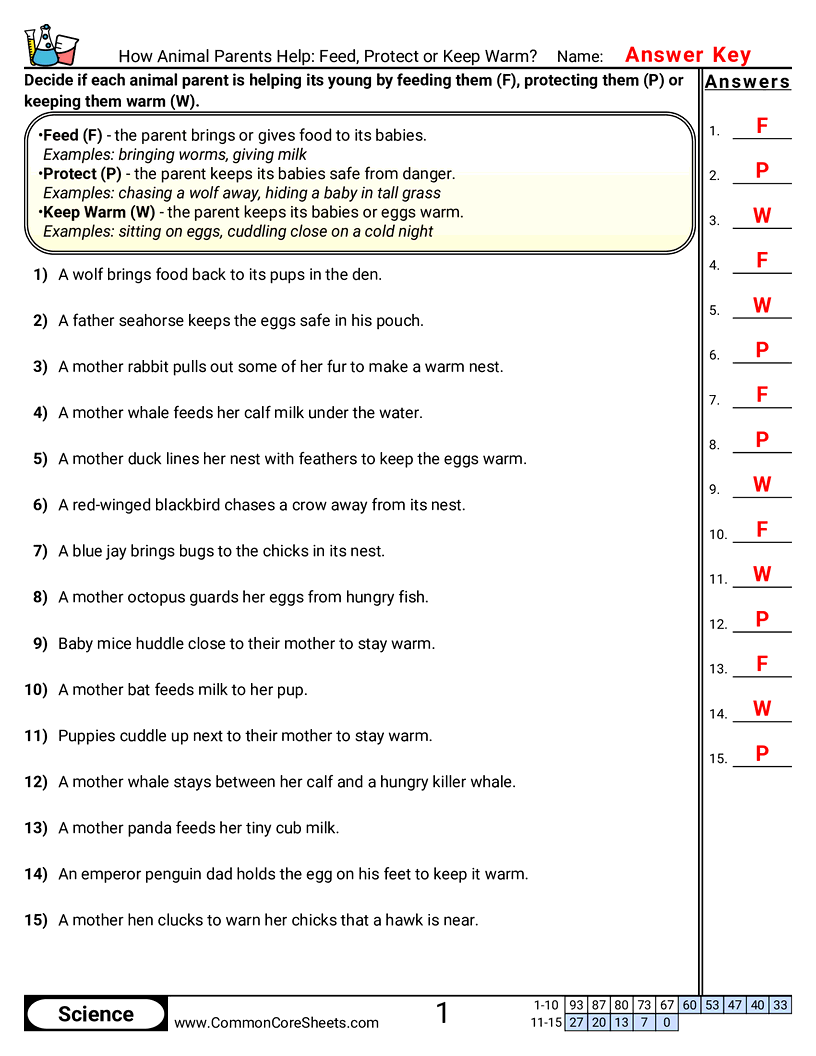
Explain that animal parents help their young survive by feeding them, protecting them and keeping them warm Tell that some parents feed their babies by bringing them food or giving them milk Tell that some parents protect their babies by hiding them, guarding them or chasing danger away Tell that some parents keep their babies or eggs warm by sitting on them or cuddling close Sort sentences by how an animal parent helps its young
Explain that some animals live in groups that help the members survive Tell that some groups work together to hunt or find food Tell that some groups keep their members safe from predators by watching for danger, warning others or confusing an attacker Tell that some animals huddle together to keep warm in cold weather Sort sentences by how living in a group helps an animal
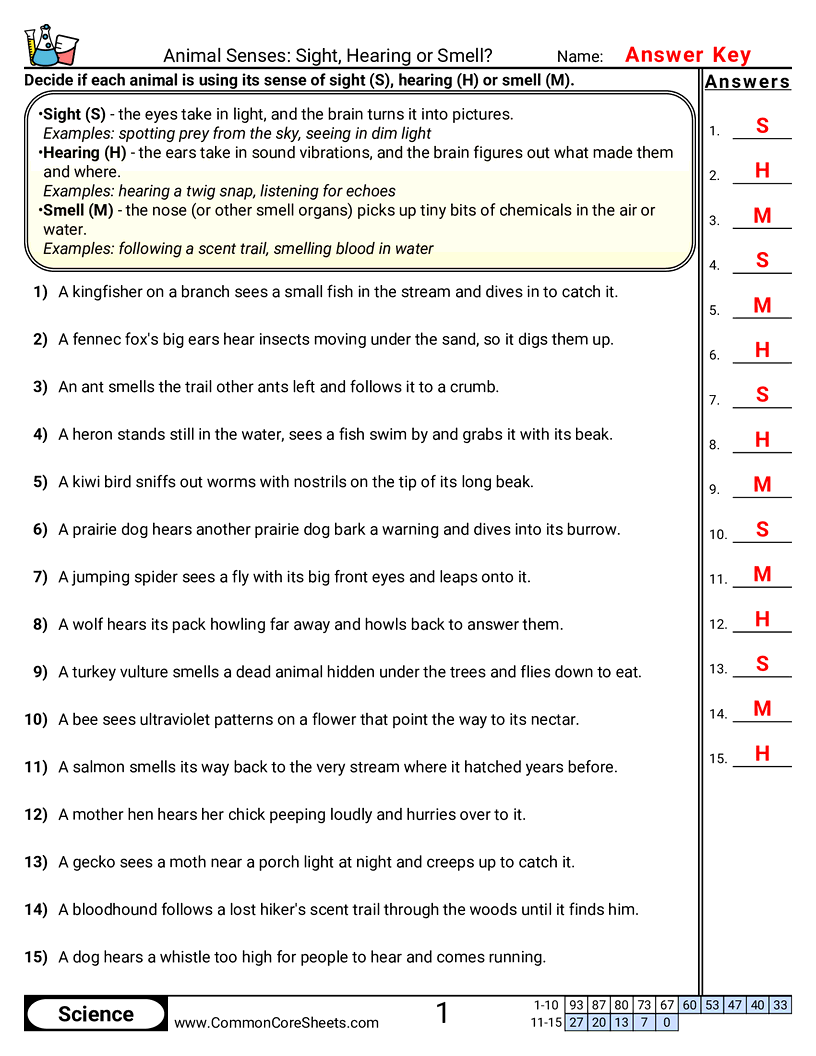
Explain that animals take in different kinds of information through their senses Tell that the eyes take in light and the brain turns it into pictures Tell that the ears take in sound vibrations and the brain figures out what made them and where Tell that the nose or other smell organs pick up tiny bits of chemicals in the air or water Explain that an animal's brain uses the information to decide how to respond Sort sentences by whether an animal is using sight, hearing or smell
Determine the central idea of a science article Use a diagram of pollination together with the text Explain how a behavior or structure helps a living thing reproduce
Advertisement