Matter Worksheets
Free matter worksheets with answer key. No login or account needed. Sort solids and liquids, read about how heating and cooling change matter, and tell physical changes from chemical changes. A grading column and quick grade scale make grading a breeze. Great for teachers or for homeschool.
More about these worksheets ▾ Show less ▴
×
Explain that a solid keeps its own shape Explain that a liquid flows and takes the shape of its container Sort everyday things into solids and liquids
Explain that a solid keeps its own shape Explain that a liquid flows and takes the shape of its container Explain that a gas spreads out to fill all the space it is in Sort everyday things into solids, liquids and gases
Explain that heating and cooling can change matter from one state to another Describe melting, freezing, evaporation, and condensation Connect a change in temperature to the change it causes
Read the results of a material test Compare materials by how well they keep water out Choose the best material for a job from test data
Read a table of the pieces used in each build Explain how the same pieces can make different objects Plan a new object from the same set of pieces
Read the results of property tests on mystery samples Use properties like magnetism, conductivity and dissolving to identify a material Explain how ruling out materials leads to an answer
Read a data table of times and distances Use data as evidence that matter is made of tiny particles Name other evidence of particles too small to see
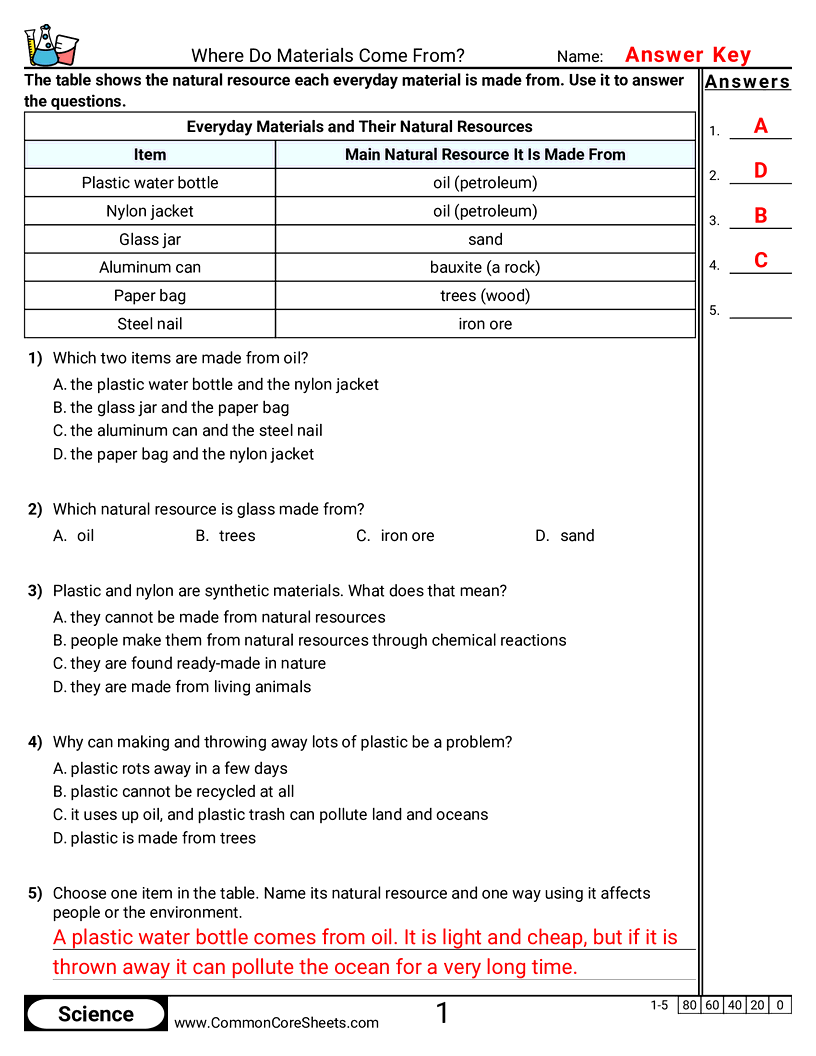
Read which natural resource each material comes from Explain that synthetic materials are made from natural resources by chemical processes Describe how making and using materials affects society and the environment
Explain that an element is a pure substance made of only one kind of atom Explain that a compound is a pure substance made of two or more elements chemically joined in a fixed ratio Explain that a mixture is two or more substances mixed together but not chemically joined, so it can be separated by physical means Sort substances as elements, compounds or mixtures
Determine the central idea of a science article Use molecule models together with the text to answer a question Explain the difference between a molecule and an extended structure
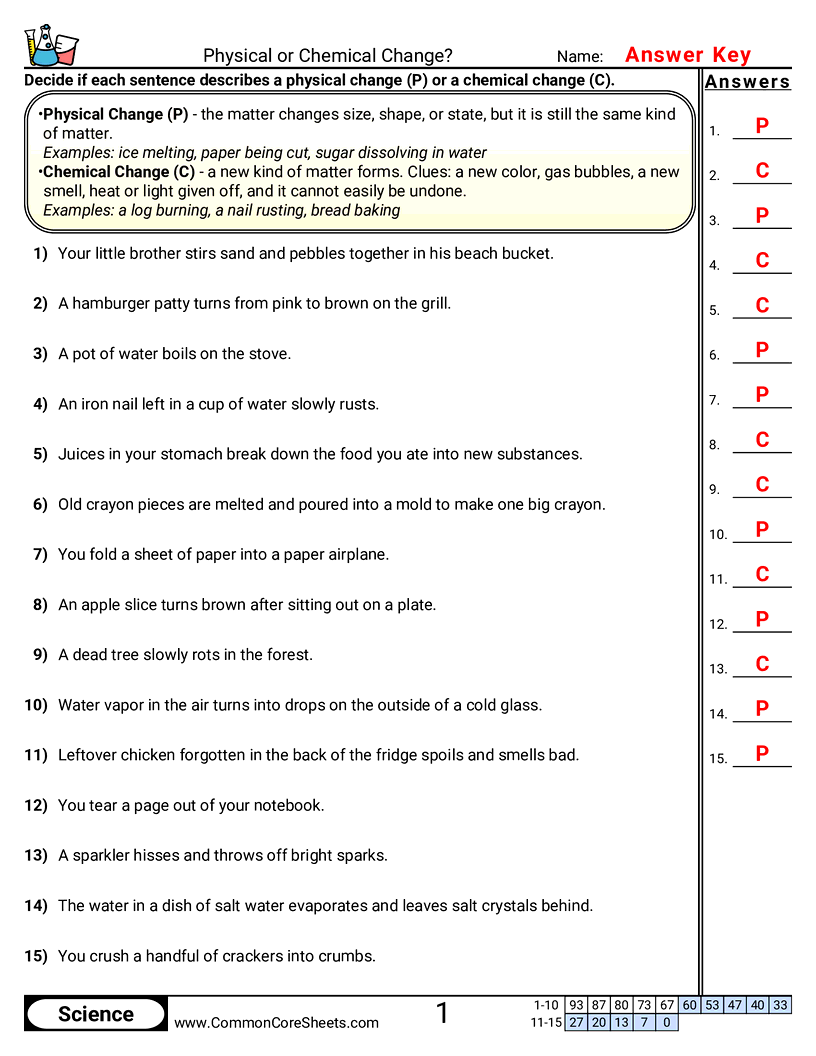
Explain that a physical change alters the size, shape, or state of matter but not what kind of matter it is Explain that a chemical change makes a new kind of matter Use clues like a new color, gas bubbles, or heat and light given off to spot a chemical change
Read a table of mass before and after a change Explain that the total mass stays the same when matter melts, dissolves or reacts Explain why the mass seems to go down when a gas escapes
Determine the central idea of a science article Use a diagram of an experiment together with the text Explain why mass is conserved in a chemical reaction
Count the atoms on each side of a balanced chemical equation Explain that atoms are rearranged, not created or destroyed, in a reaction Connect the number of atoms to the conservation of mass
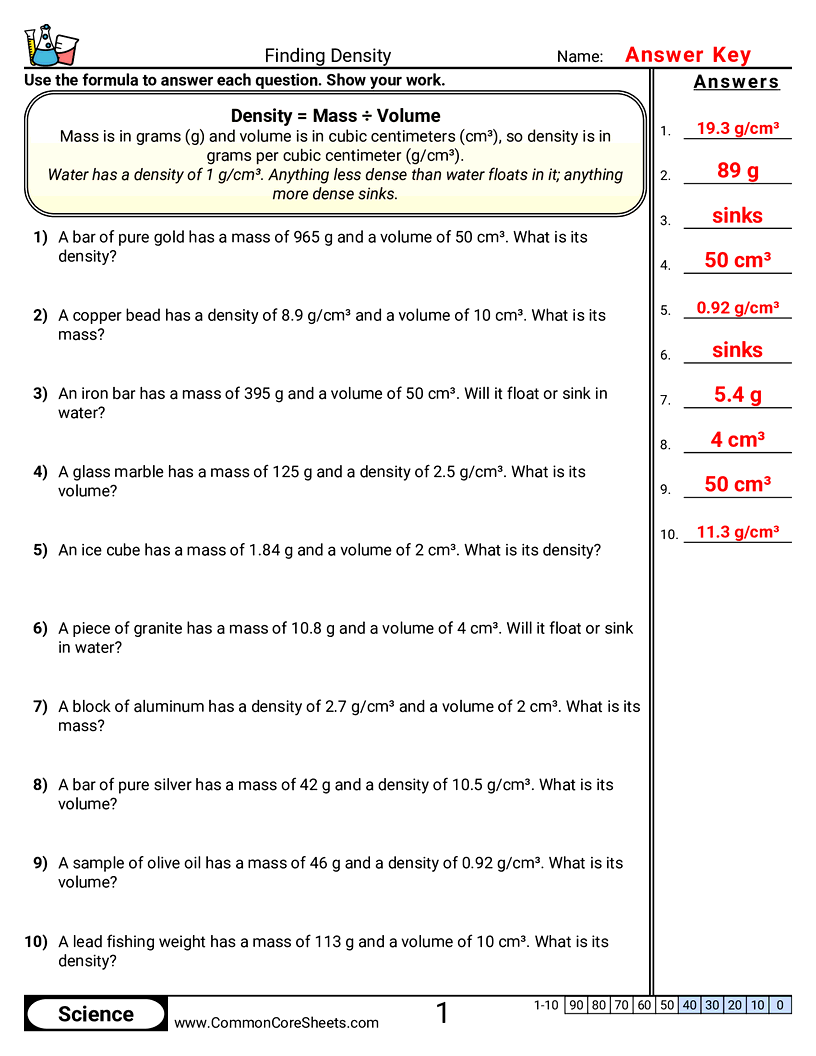
Calculate density from mass and volume Rearrange density = mass / volume to find mass or volume Use density to predict whether a material floats or sinks in water
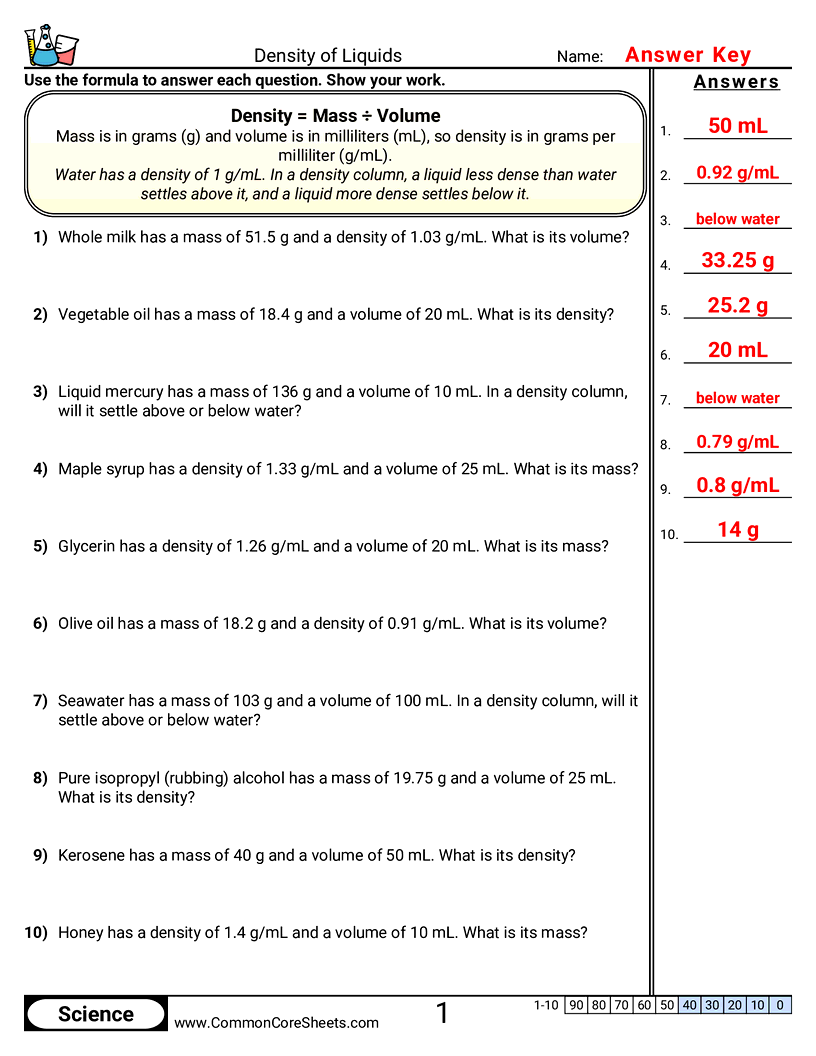
Calculate the density of a liquid from its mass and volume Rearrange the density formula to find a mass or a volume Predict whether a liquid settles above or below water from its density
Advertisement