Human Body and Cell Worksheets
Free human body and cell worksheets with answer key. No login or account needed. Students sort the jobs of the circulatory, respiratory and digestive systems and of the parts of a cell, and learn how they work together. A grading column and quick grade scale make grading a breeze. Great for teachers or for homeschool.
More about these worksheets ▾ Show less ▴
×
Explain that the circulatory system (heart, blood and blood vessels) carries oxygen, nutrients and wastes around the body Explain that the respiratory system (nose, windpipe and lungs) brings oxygen into the body and pushes carbon dioxide out Explain that the digestive system (mouth, esophagus, stomach and intestines) breaks food down into nutrients the body can absorb Sort descriptions of body parts and their jobs as belonging to the circulatory, respiratory or digestive system
Explain that a cell is the smallest unit of a living thing that can carry out life's activities, and that some living things are just one cell Explain that a tissue is a group of similar cells working together to do one job, such as muscle tissue, nerve tissue or xylem Explain that an organ is a structure made of different tissues working together to do a job, such as the heart, a kidney or a leaf Sort descriptions of the parts of animals and plants as a cell, a tissue or an organ
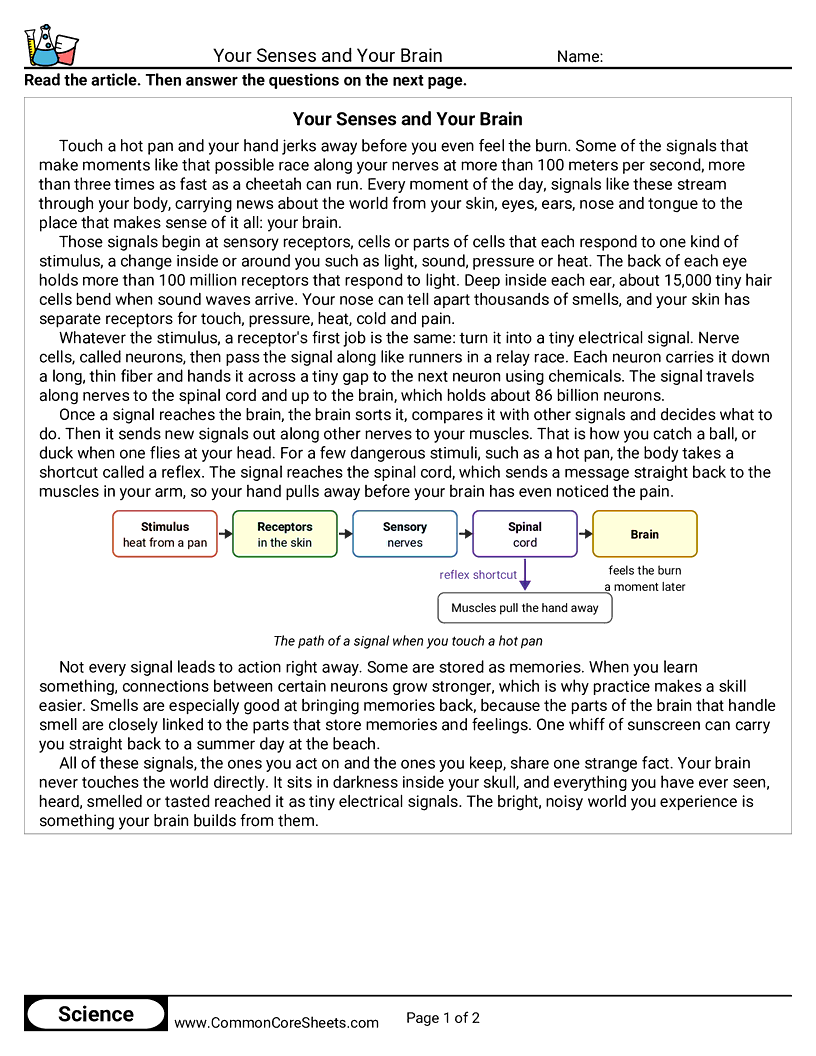
Determine the central idea of a science article Use a diagram of a reflex together with the text Describe the path of a signal from a receptor to the brain
About these worksheets
Identify each structure using the lettered diagram.
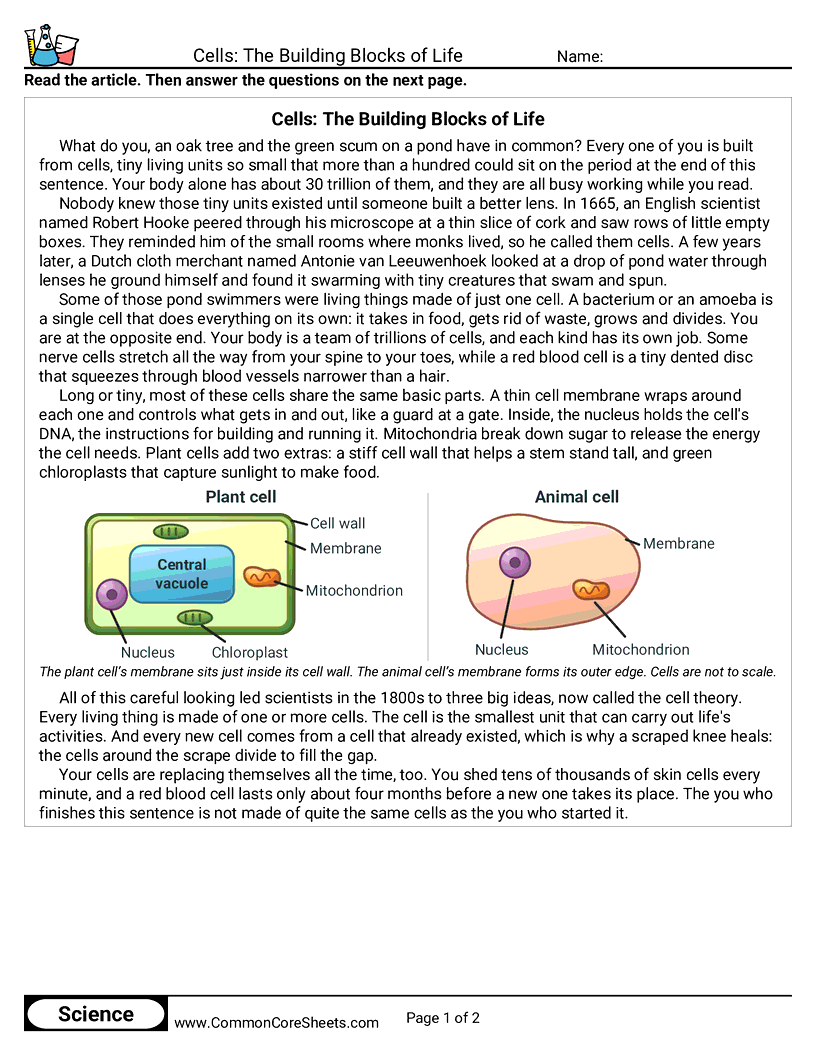
Determine the central idea of a science article Use a diagram together with the text to answer a question Cite evidence from the article to support an idea about cells
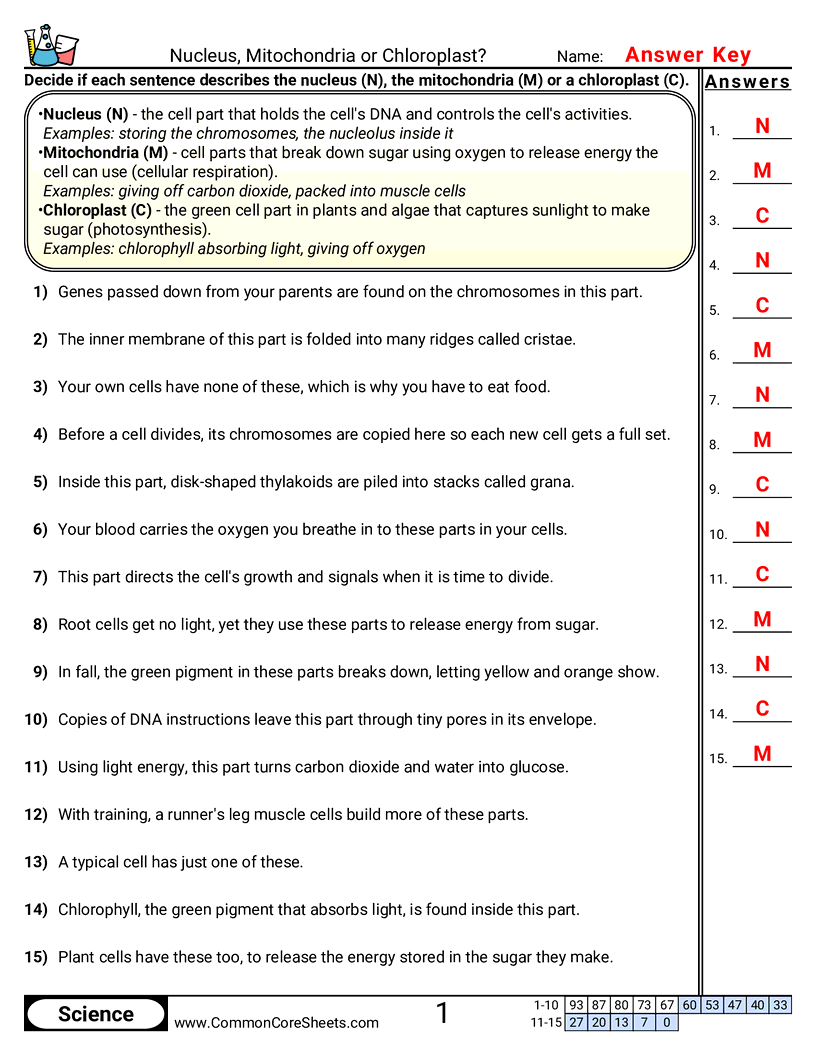
Explain that the nucleus holds the cell's DNA in chromosomes and controls the cell's activities Explain that mitochondria use oxygen to break down sugar and release energy the cell can use (cellular respiration) Explain that chloroplasts, found in plants and algae, use chlorophyll to capture light energy and store it in sugar (photosynthesis) Sort descriptions of cell parts and their jobs as belonging to the nucleus, the mitochondria or a chloroplast
Advertisement