Poetry Worksheets
Free poetry worksheets for grades 1-5. Students count lines and stanzas, find rhyming words and rhyme schemes, tell a poem from prose and drama, name haiku, limericks, acrostics, cinquains and free verse, find the theme of a poem and spot sound words like onomatopoeia and alliteration - every poem written for these sheets. Then they write their own haiku, acrostic poems, cinquains and limericks.
More about these worksheets ▾ Show less ▴
×
RL.3.5
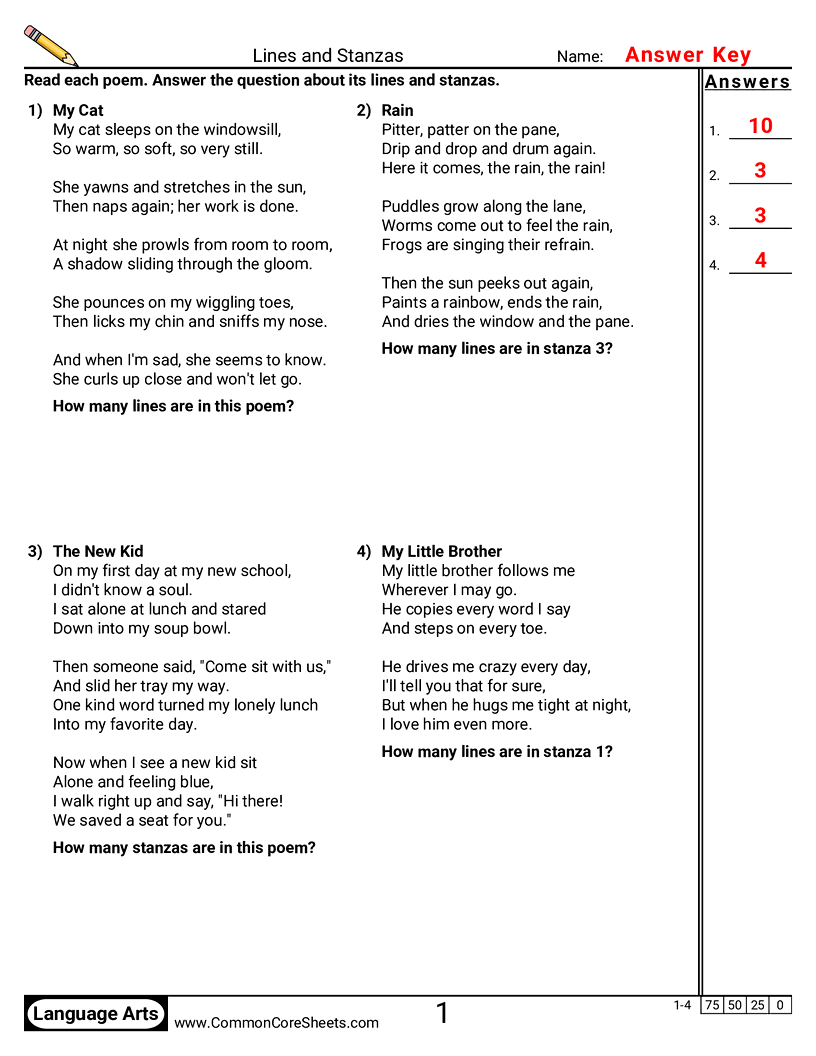
Know that a poem is written in lines Know that a stanza is a group of lines Count the lines and stanzas in a poem Use the words line and stanza to talk about a poem
RL.2.4
Hear words that rhyme Find rhyming words at the ends of lines Notice how rhyme gives a poem its sound Read poems aloud with rhythm
RL.4.5
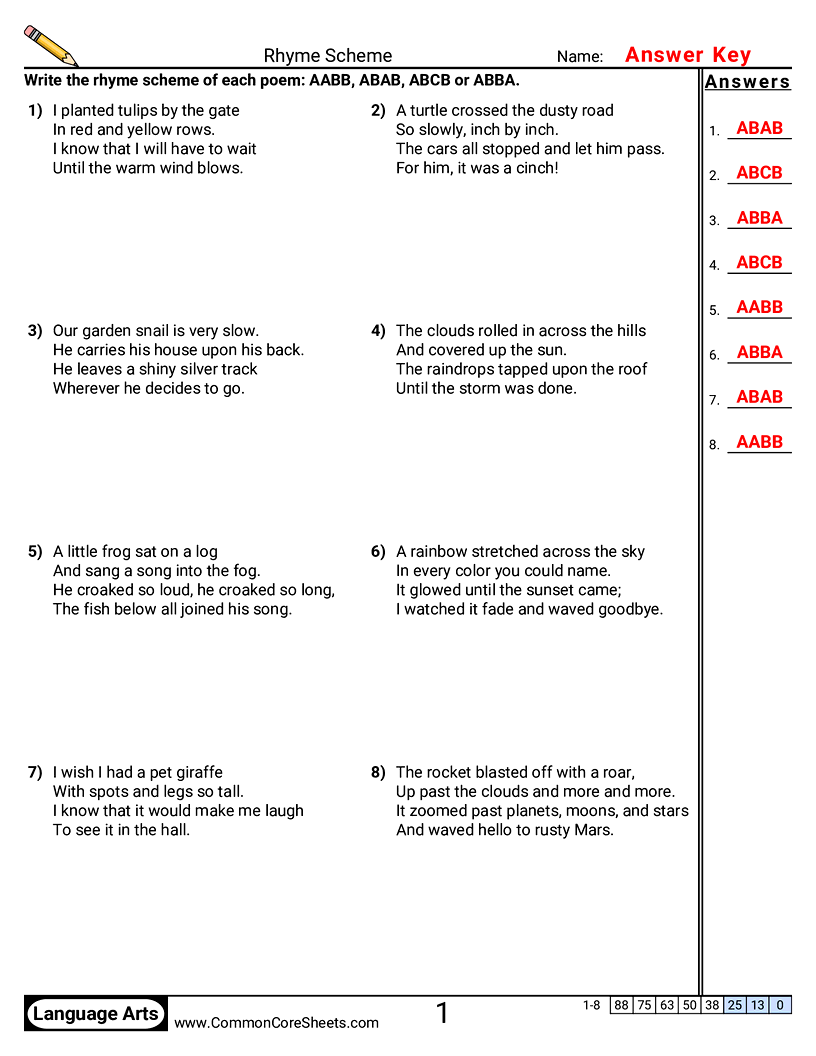
Know what a rhyme scheme is Label rhyming lines with letters Tell AABB, ABAB, ABCB and ABBA apart Describe the structure of a poem
RL.4.5
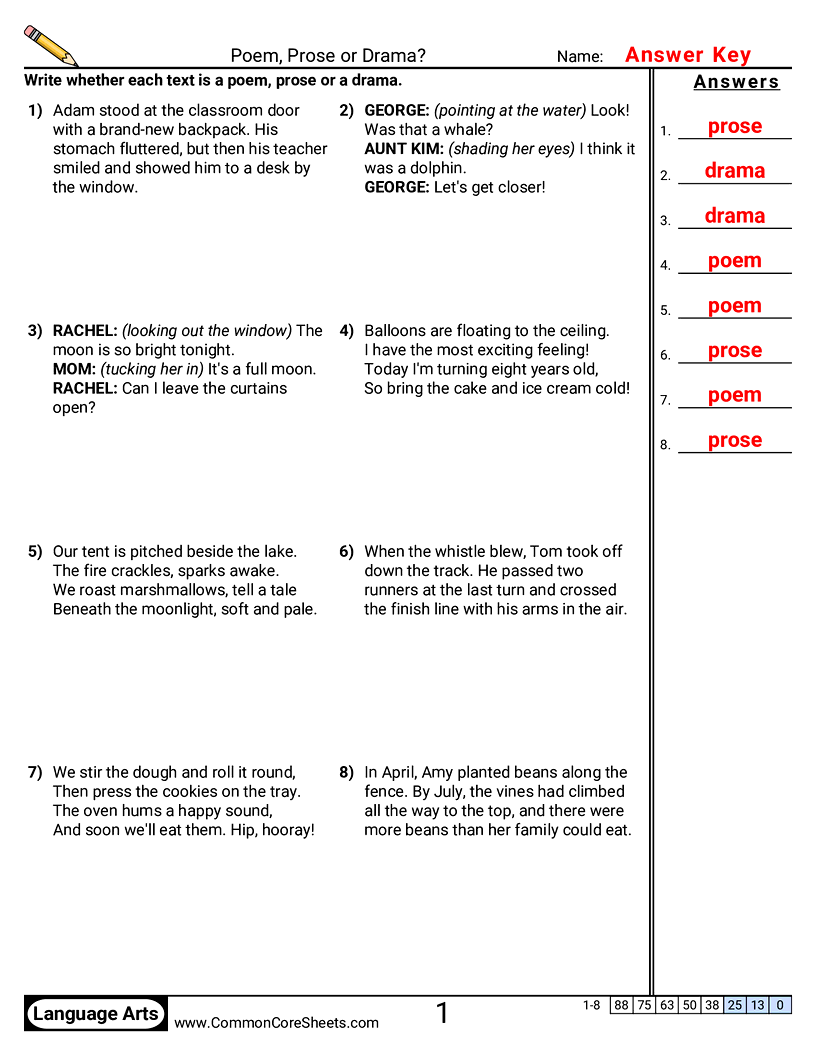
Tell a poem from prose and drama Know the features of a poem: lines, stanzas and rhyme Know the features of a drama: speakers and stage directions Explain the differences between the three
RL.4.5
Name five types of poems Tell a haiku by its syllables Tell a limerick by its rhyme and rhythm Tell an acrostic and a cinquain by their shapes
RL.4.2 RL.5.2
Know that a theme is the message of a poem Find the theme of a poem Tell a theme from a detail Explain how the poem shows its theme
RL.7.1 RL.7.4
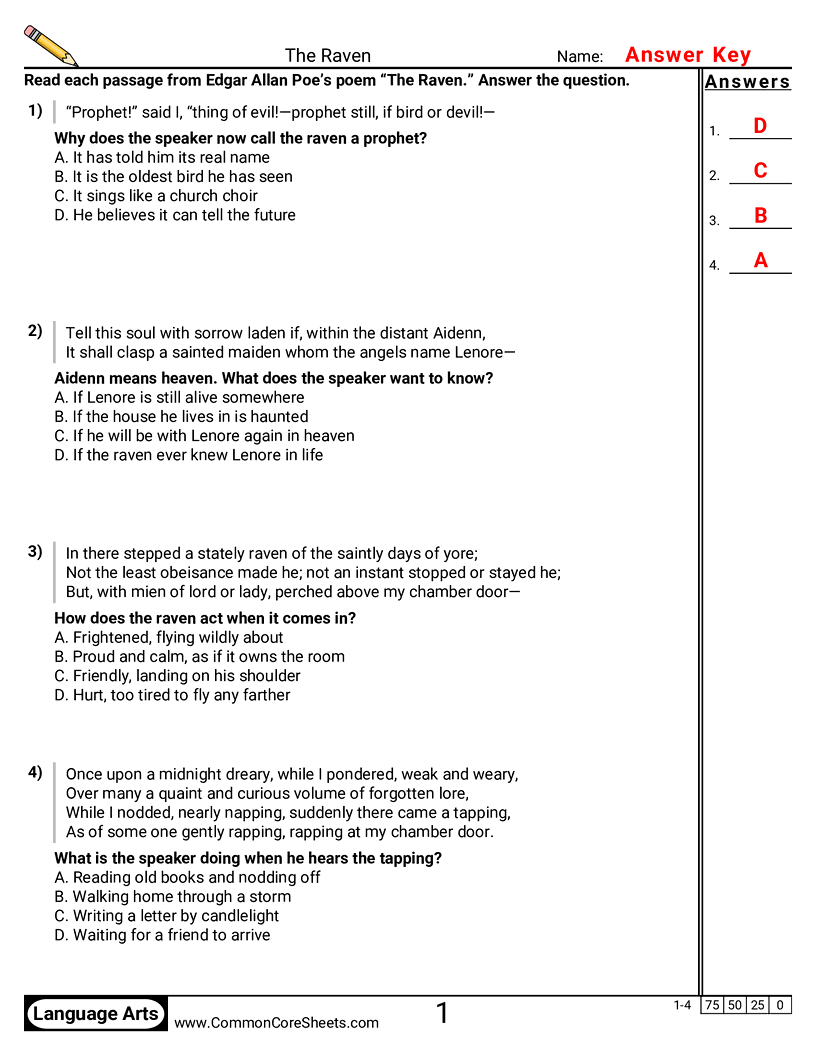
Follow the events of a narrative poem Work out the meaning of old or unusual words Explain how a refrain builds meaning Describe how the speaker’s feelings change
RL.7.2 RL.8.2
Explain what a stanza means Find the theme a poem supports Interpret symbols and figurative lines Describe how mood changes in a poem
RL.2.4
Know what onomatopoeia is Find sound words in a sentence Hear how sound words help a reader imagine Use onomatopoeia in writing
RL.2.4
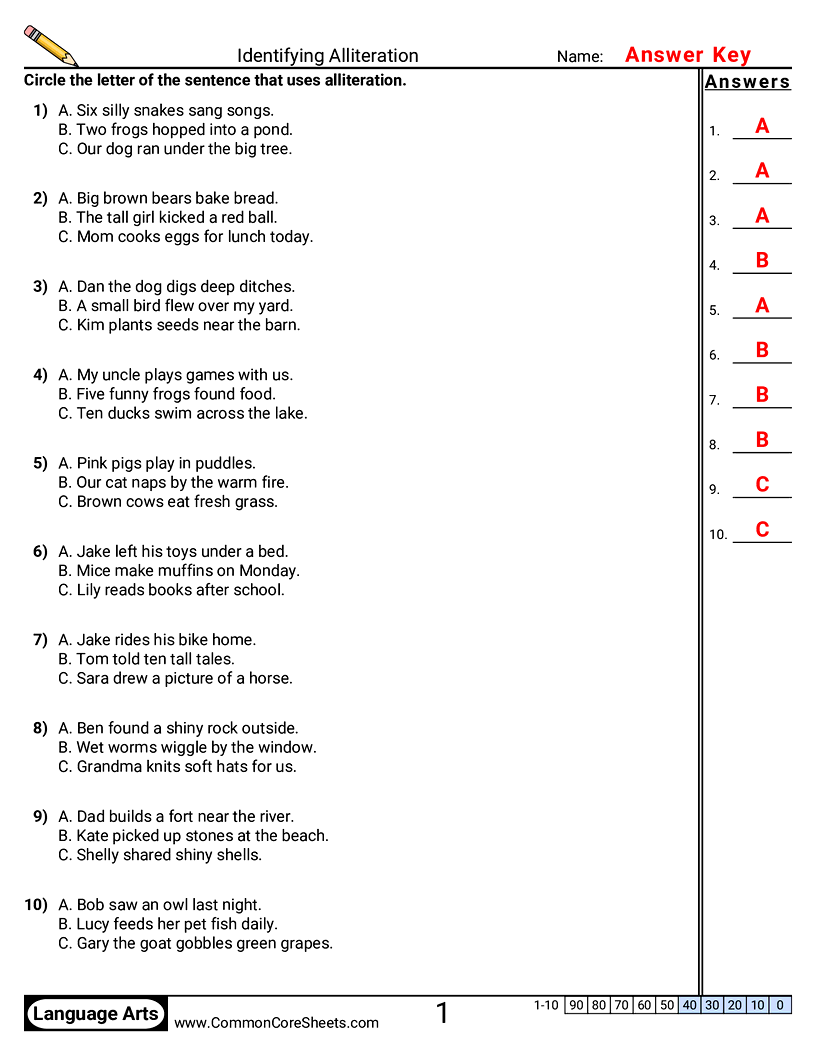
Recognize alliteration in a sentence Listen for words that begin with the same sound Tell a sentence with alliteration from one without Notice how alliteration makes writing fun to read aloud
RL.2.4
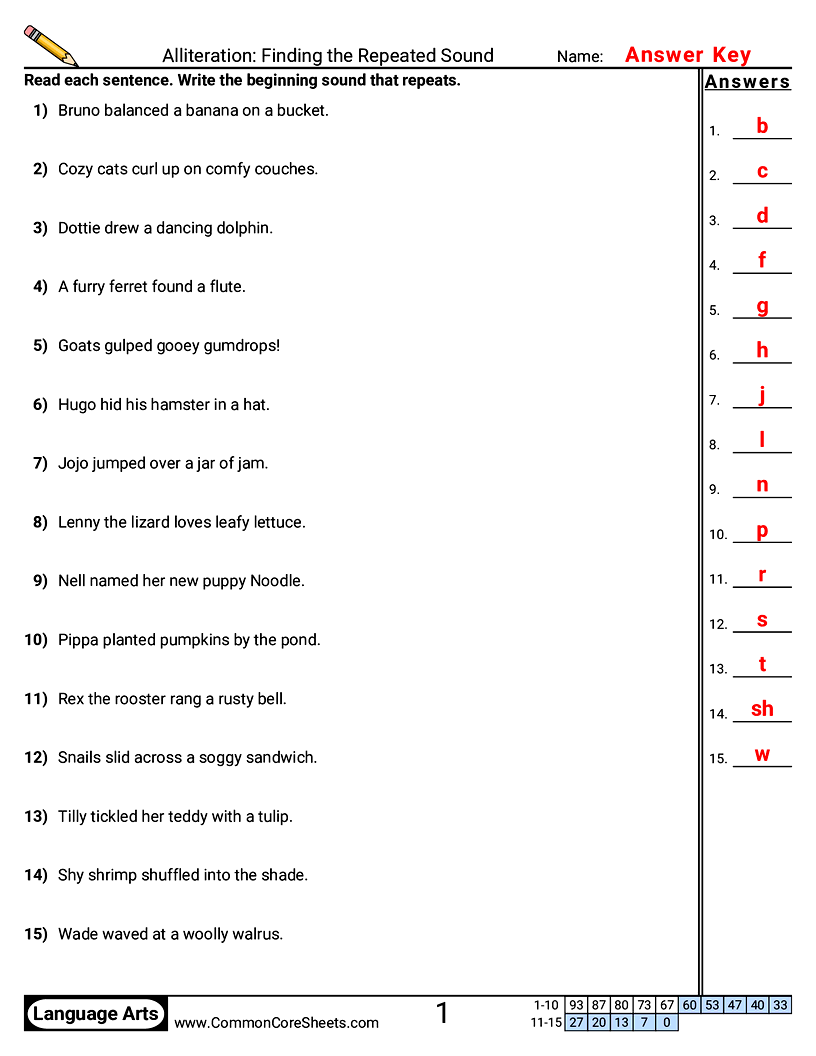
Hear the repeated beginning sound in alliteration Match a sound to its letter or letters Recognize alliteration in a sentence Enjoy the sound of words read aloud
L.5.5 L.6.5.a
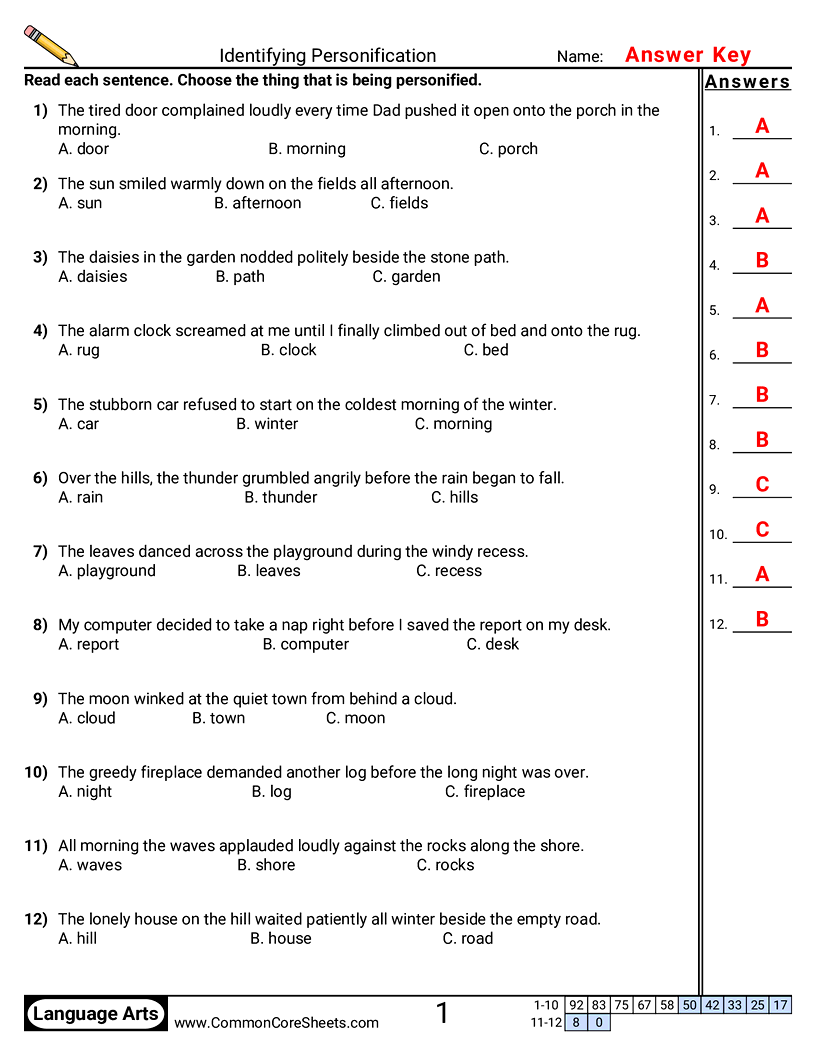
Recognize personification in a sentence Find the non-human thing that is given human actions Tell which words show the human action Understand how personification helps a reader picture a scene
L.4.5.a
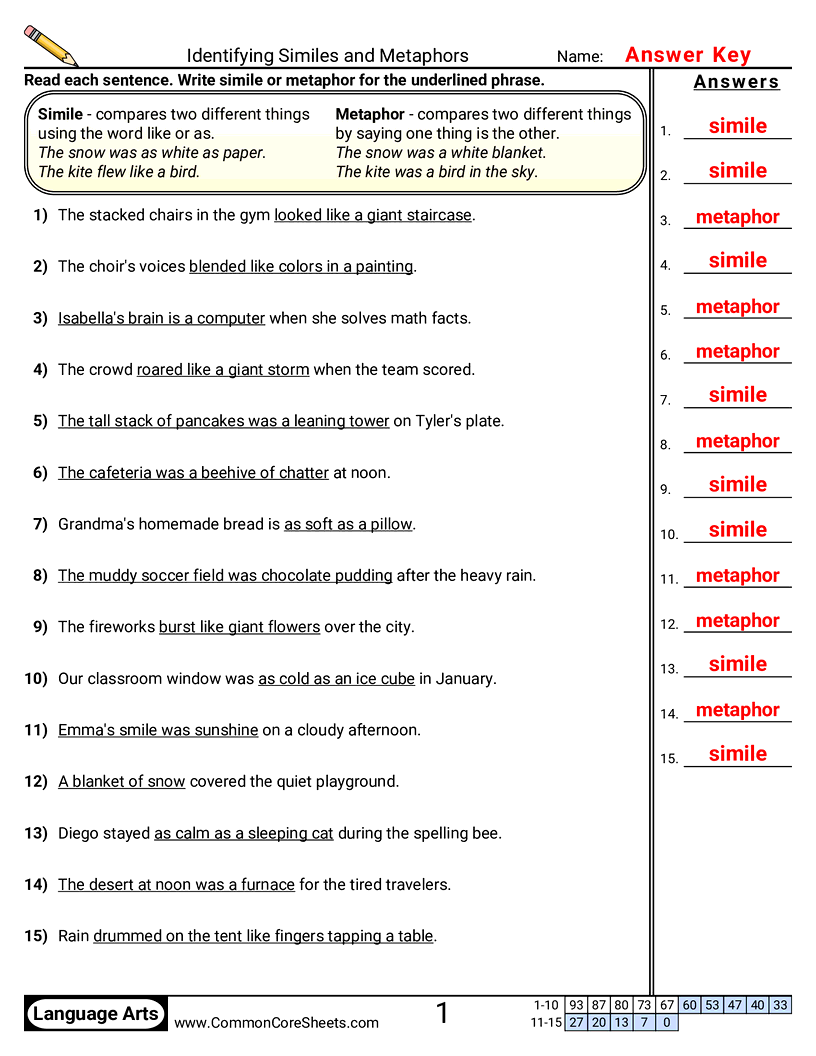
Recognize that a simile compares two things using like or as Recognize that a metaphor compares by saying one thing is another Tell a simile from a metaphor in a sentence Notice comparisons writers use to describe things
RL.6.4 RL.7.4
Recognize alliteration, internal rhyme, onomatopoeia and repetition Tell the devices apart in the same line Notice how sound adds to a poem
L.4.3.a
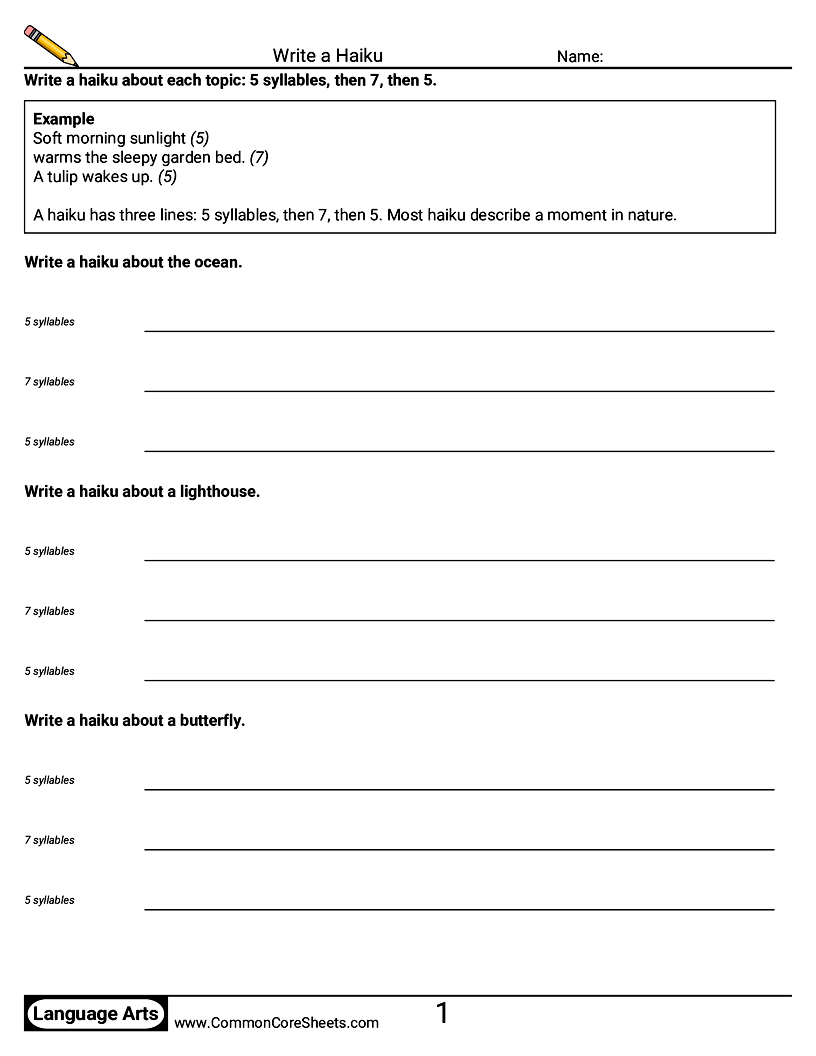
Know the 5-7-5 pattern of a haiku Count syllables Describe a moment in nature Choose words carefully
L.2.6
Know what an acrostic poem is Write lines that tell about a word Choose describing words Write a poem of your own
L.3.3.a
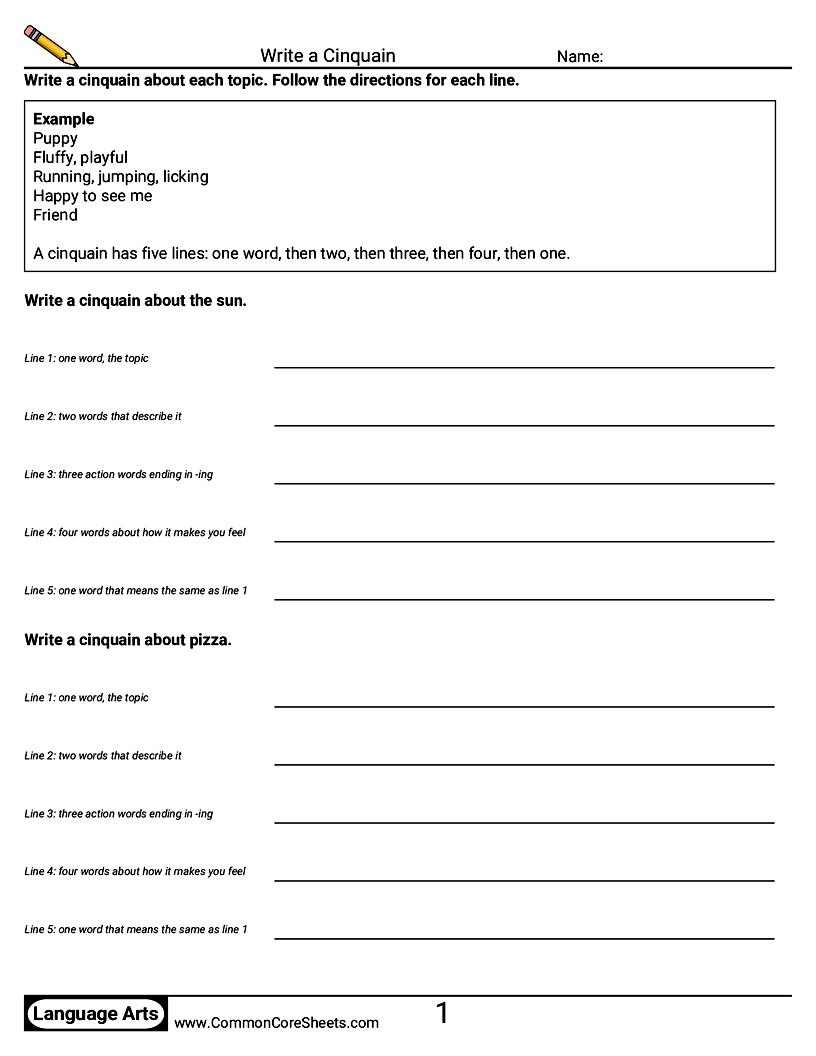
Know the pattern of a cinquain Choose describing words and action words Tell how a topic makes you feel Write a poem of your own
L.4.3.a
Know the AABBA pattern of a limerick Write lines that rhyme Keep a bouncy rhythm Write a funny poem
Advertisement