Graphic Organizers
Free printable graphic organizers for reading, writing, vocabulary and science. Each one is blank, so it works with any book, topic or experiment: story maps, main idea and details, sequence and cause and effect charts, the 5 W's and KWL charts, hamburger paragraph and opinion and narrative writing planners, Venn diagrams and T-charts, Frayer models and word webs, and a science experiment organizer.
More about these worksheets ▾ Show less ▴
×
RL.2.5 RL.3.3
Find the elements of a story Retell the main events in order Find the problem and the solution Use a graphic organizer while reading
RL.3.2
Summarize a story Find the main character, the goal and the problem Leave out small details Write a short summary in your own words
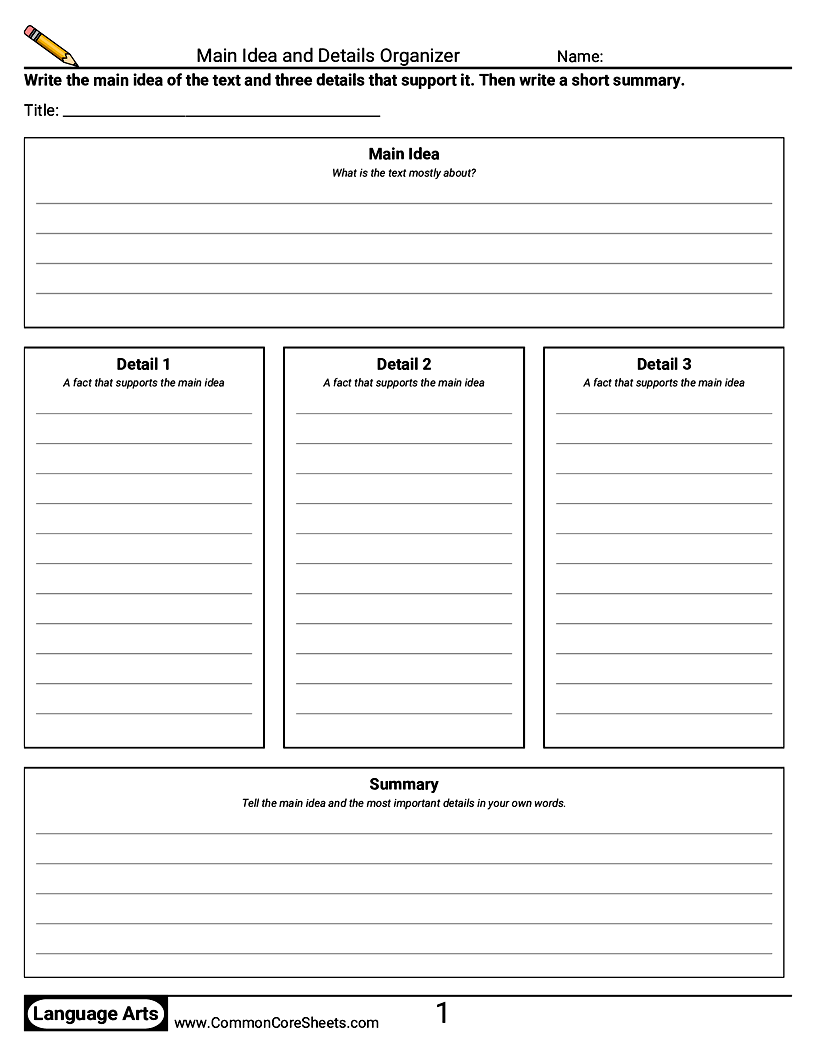
RI.3.2 RI.4.2
Find the main idea of a text Find details that support it Summarize a text Organize notes while reading
RI.3.3 RI.3.8
Put events in order Use time-order words Retell a story or process Plan a how-to paragraph
RI.3.8
Tell a cause from an effect Find causes and effects in a text Explain why things happen Organize ideas for writing
RL.5.5
Map the plot of a story Find the climax of a book Retell a story by its five plot parts Use a graphic organizer while reading
RI.2.1 RL.2.1
Ask and answer who, what, when, where, why and how Find the key details in a text Retell a story or event Get ready to write a summary or news report
W.3.8
Think about what you already know Ask questions before reading Record what you learned Read with a purpose
W.2.2 W.3.2
Plan a paragraph before writing Begin with a topic sentence Support it with three details End with a concluding sentence
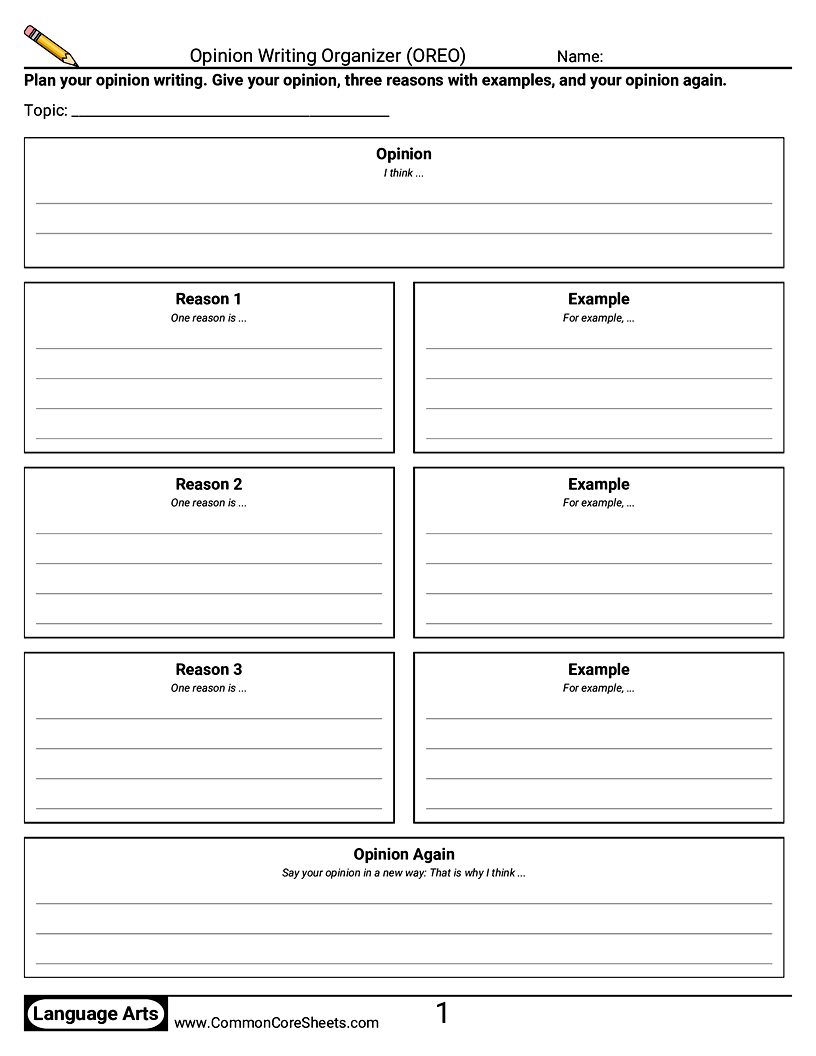
W.3.1
State a clear opinion Support it with reasons Back each reason with an example End by restating the opinion
W.3.3 W.4.3
Plan a story before writing Introduce characters, setting and a problem Tell events in order Give a story a clear ending
W.3.3.a W.5.3.a
Plan a story before writing it Build a problem up to a climax Give a story a clear ending Organize events so they unfold naturally
RI.3.9 RL.3.9
Compare two topics Tell how two things are alike and different Organize ideas before writing Compare two characters or texts
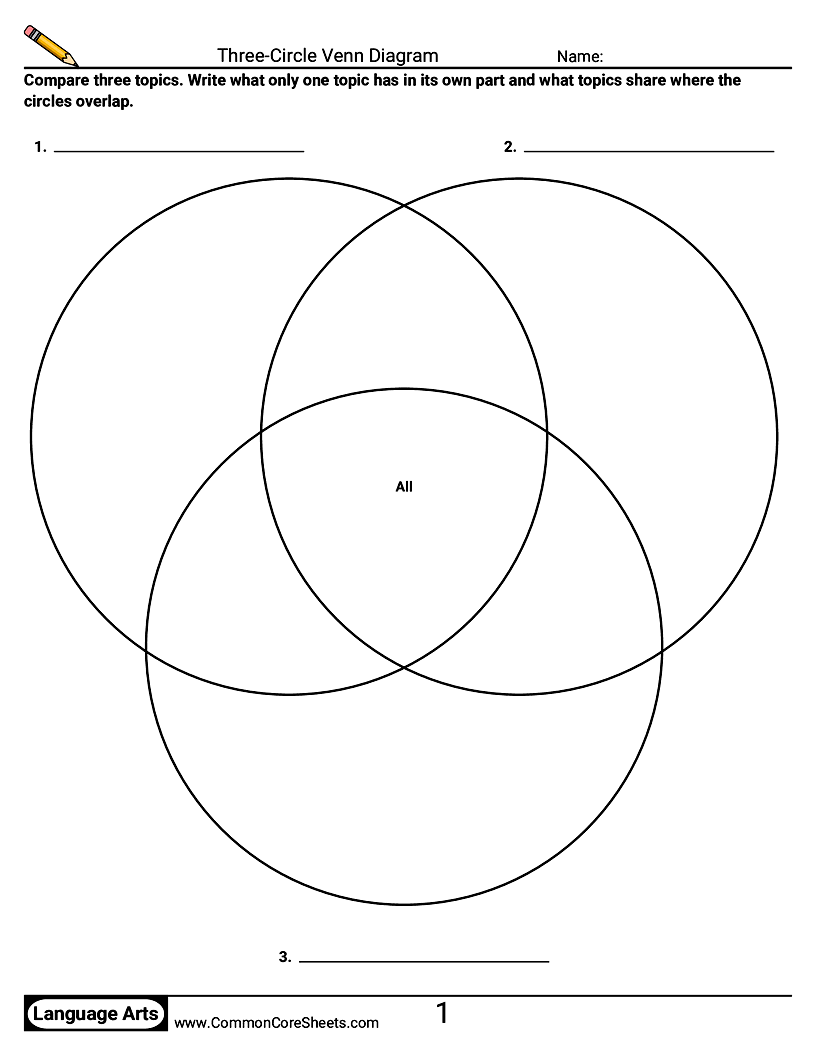
RI.4.9
Compare three topics at once Find what two or three things share Organize information from several texts Plan a comparison before writing
W.3.8
Sort ideas into two groups Compare two things List pros and cons Take two-column notes
L.4.4 L.5.6
Learn the meaning of a new word Tell what a word is and what it is not Give examples of a word Use new words in any subject
W.3.5
Brainstorm ideas about a topic Organize details around a main idea Collect describing words Plan before writing
W.4.7 W.4.8
Follow the steps of the scientific method Write a hypothesis Record observations and data Write a conclusion
Advertisement