4th Grade Equivalent & Comparing Fractions Worksheets
4th Grade Equivalent & Comparing Fractions: find equivalent fractions, simplify them, and compare fractions with unlike denominators. Every worksheet is free, prints as a PDF with an answer key, and can be assigned online. The ones teachers open most are first.
More about these worksheets ▾ Show less ▴
4nf1
Find the missing numerator or denominator that makes two fractions equal. Use multiplication to scale a fraction up to an equivalent fraction. Use division to scale a fraction down to an equivalent fraction. Spot the pattern that the numerator and denominator must change by the same factor.
4nf2
Compare two fractions that have different denominators and decide which one is greater or less. Use equivalent fractions (common denominators) to make unlike fractions easier to compare.
4nf1
Practice simplifying fractions to their smallest form. Find a common factor in the numerator and denominator and divide both by the same number. Use the greatest common factor to reduce a fraction in one step.
4nf2
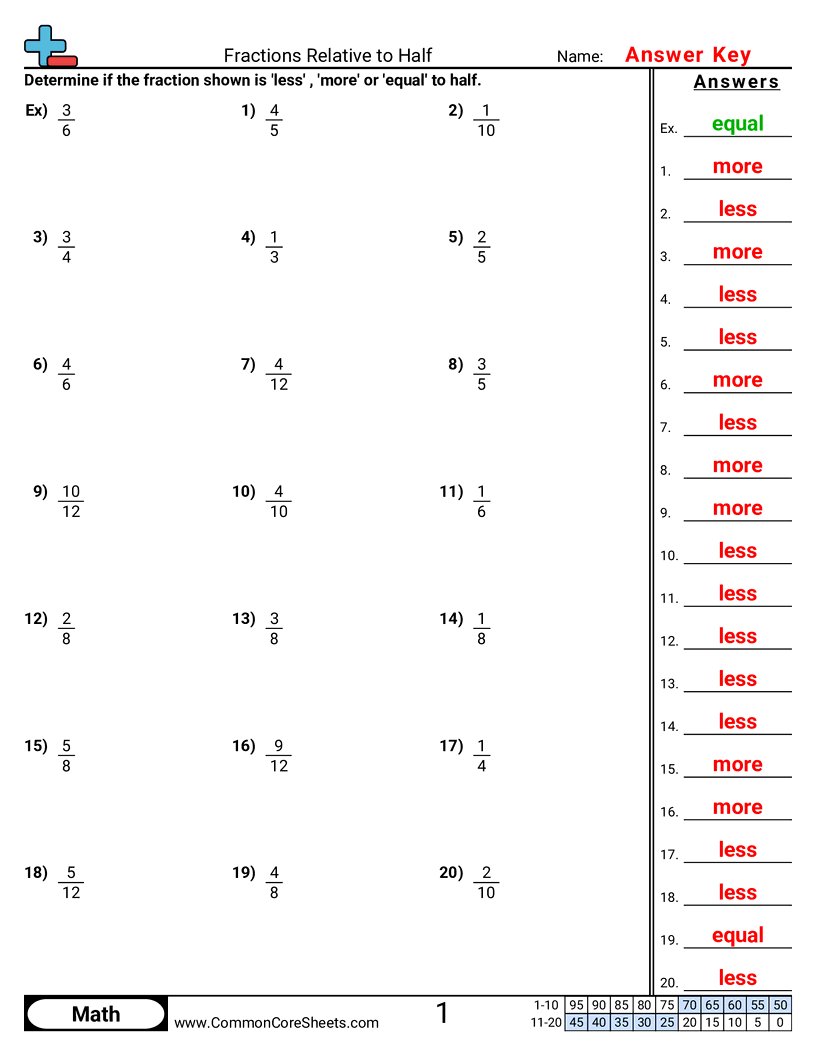
Decide whether a fraction is less than, equal to, or greater than one half. Use the numerator and denominator to tell if a fraction is exactly one half (evenly divisible). Compare fractions to the benchmark fraction 1/2 without converting to decimals. Recognize equivalent fractions that are equal to 1/2 (like 2/4 or 5/10).
4nf1
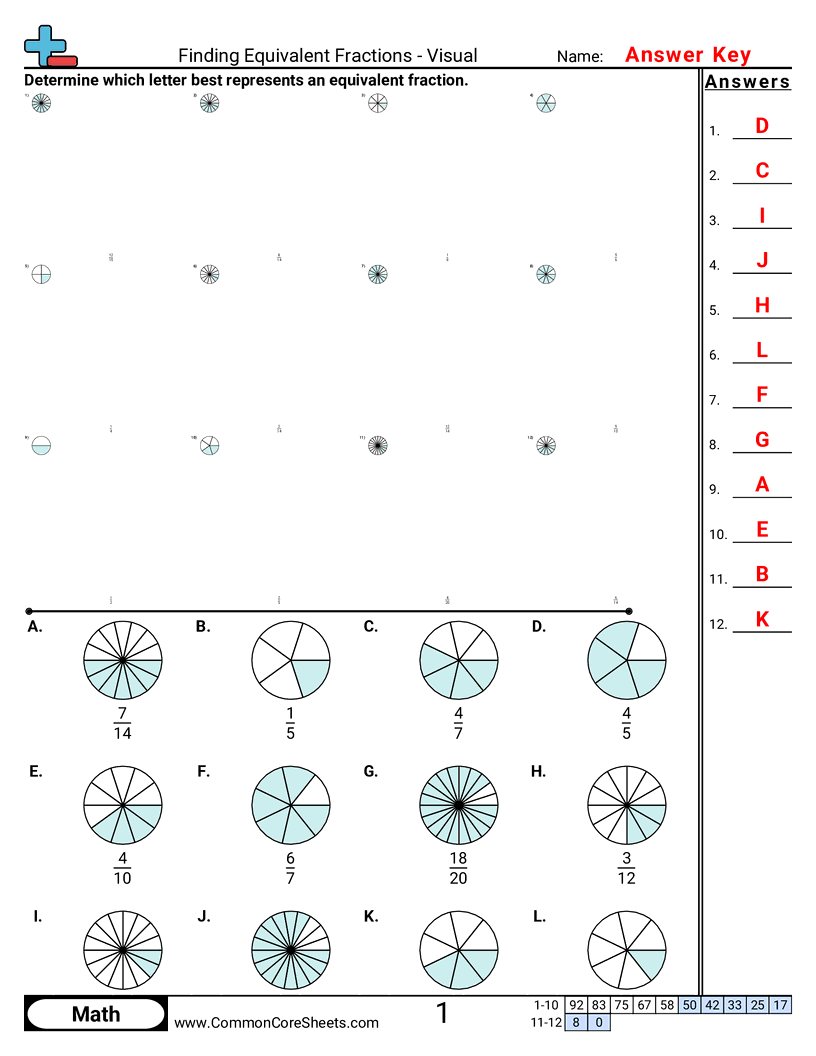
Use shaded pictures to see what fraction of a whole is shown. Match two pictures that show the same amount shaded, even if they are split into different numbers of parts. Write an equivalent fraction by multiplying the numerator and denominator by the same number. Explain why two fractions are equal by pointing to the same shaded area in the models.
4nf1
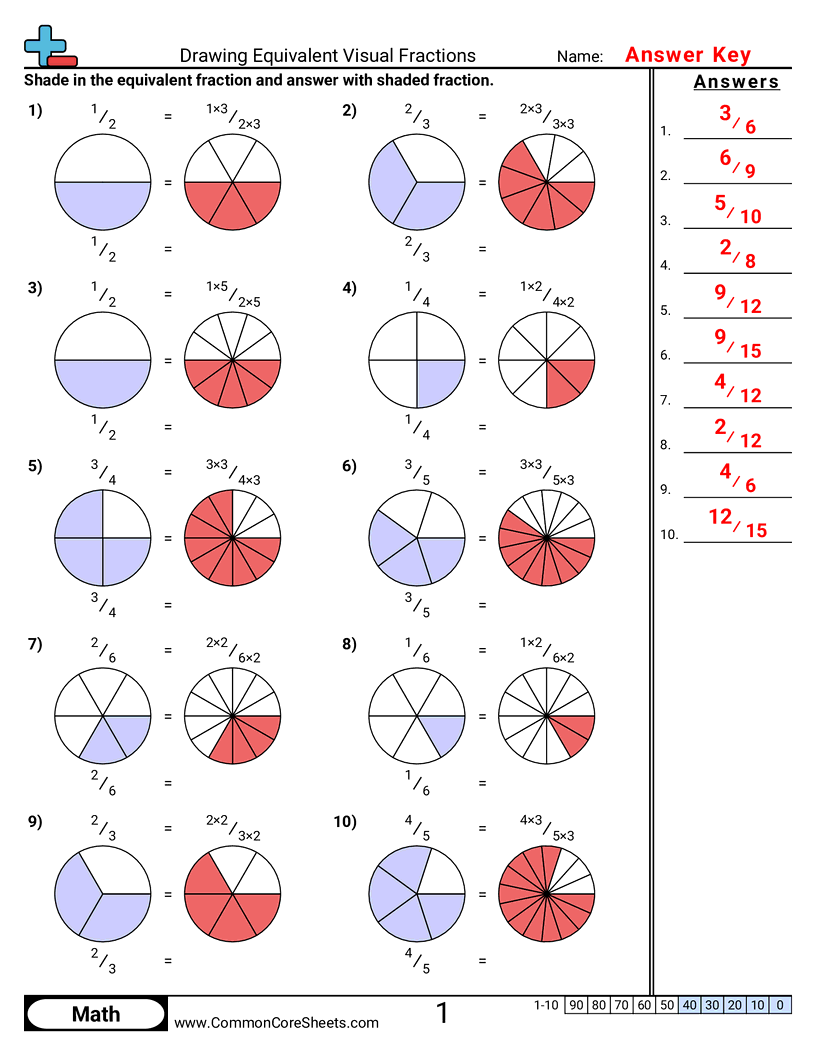
Recognize when two fractions are equal even if they use different numbers. Shade fraction models to show the same amount in different ways. Match a given fraction to an equivalent fraction by partitioning a shape into more equal parts. Explain how multiplying the top and bottom of a fraction by the same number keeps the value the same.
4nf2
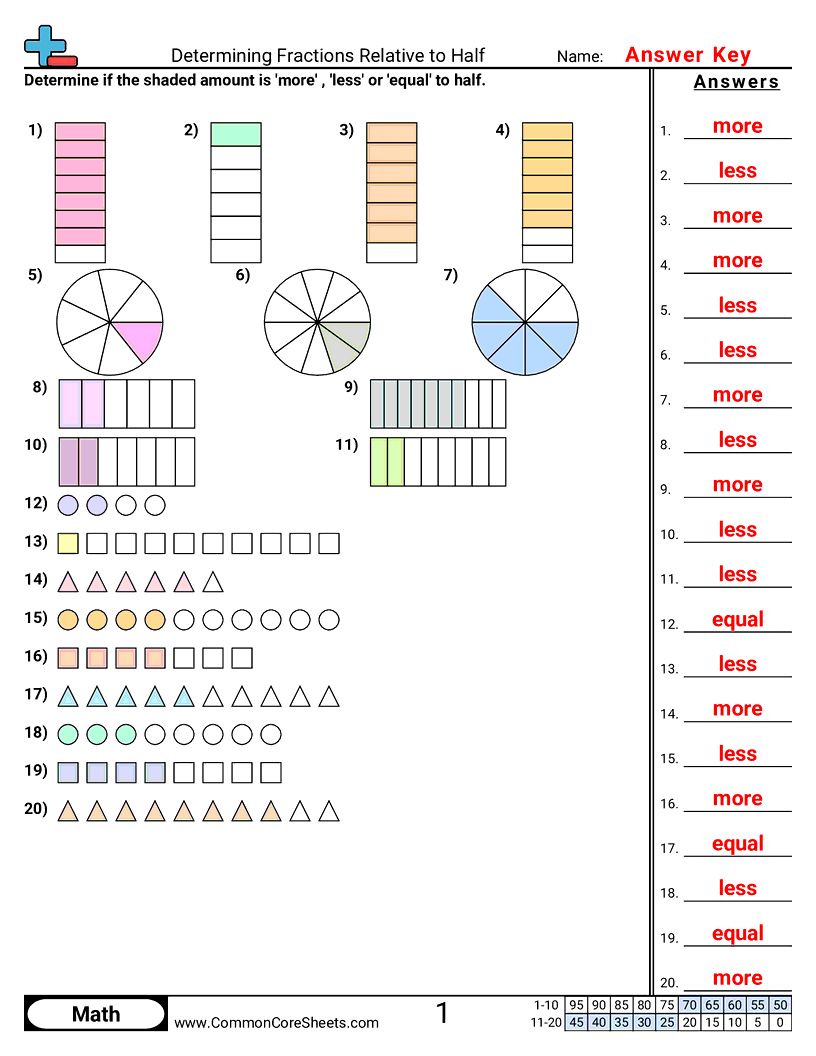
Decide whether a shaded fraction is less than, equal to, or greater than one-half. Compare a fraction to 1/2 by thinking about how many equal parts make a whole. Use pictures like fraction models or number lines to judge a fraction’s size compared to 1/2.
4nf2
Understand that the size a fraction represents, depends on the items it is comparing.
4nf2
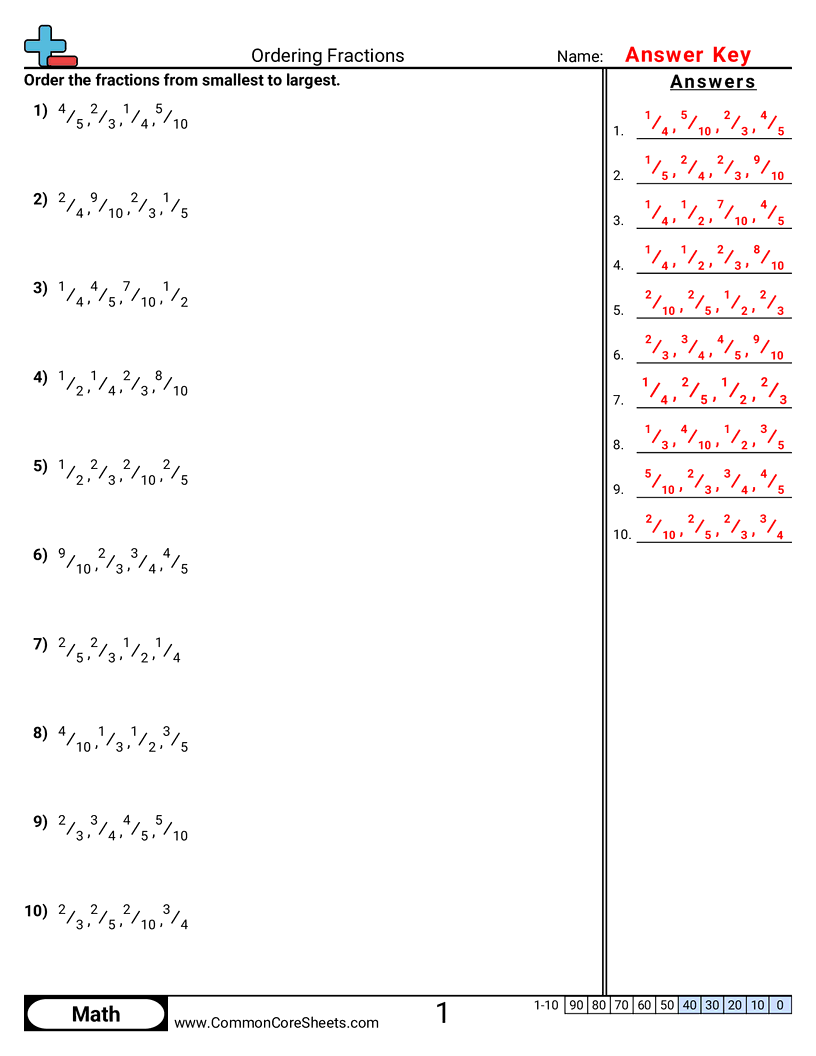
Put fractions in order from least to greatest. Compare fractions that have different denominators like 2, 3, 4, 5, and 10. Use equivalent fractions to make fair comparisons (like changing 1/2 into 5/10). Decide which fraction is bigger or smaller by thinking about the size of the pieces.
4nf1
Find the missing number that makes two fractions equivalent. Use a pattern or rule to see how the numerator and denominator are being scaled. Multiply or divide the numerator and denominator by the same number to keep a fraction’s value the same. Explain why two different-looking fractions can represent the same amount.
4nf2 5nf2
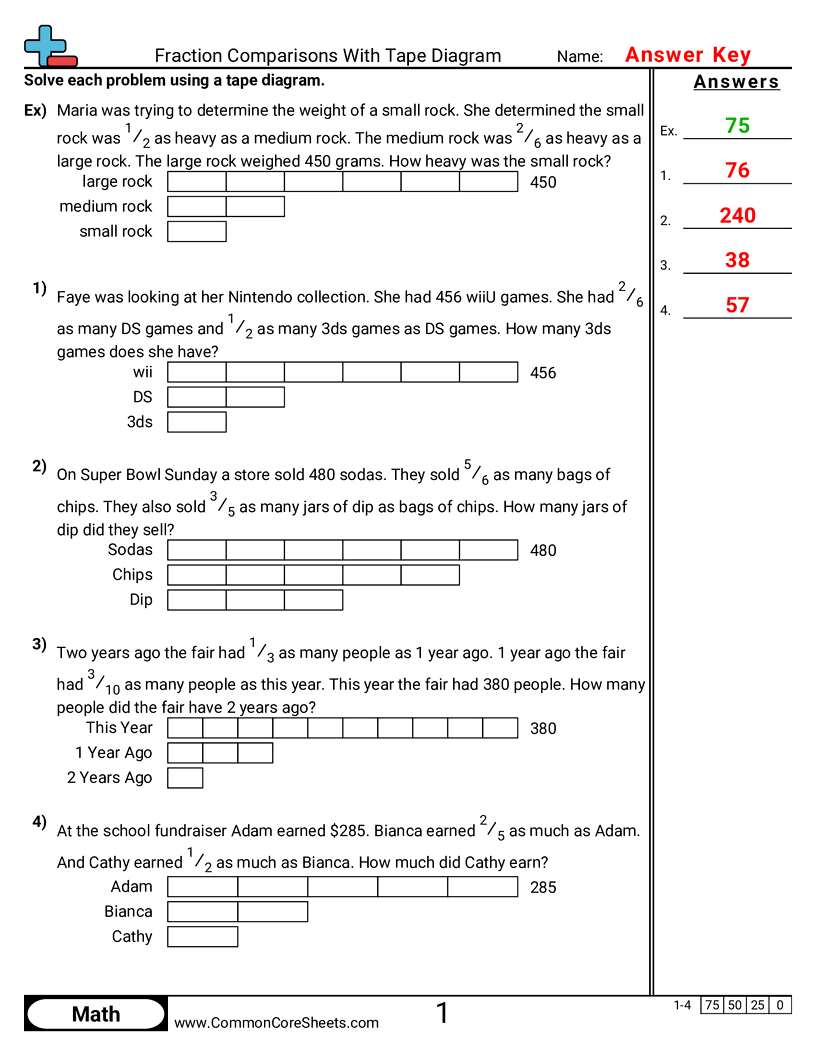
Use a tape diagram (bar model) to show what a fraction means as equal parts of a whole. Compare two fractions by looking at the size of the shaded parts in the tape diagrams.
3nf3d 4nf2
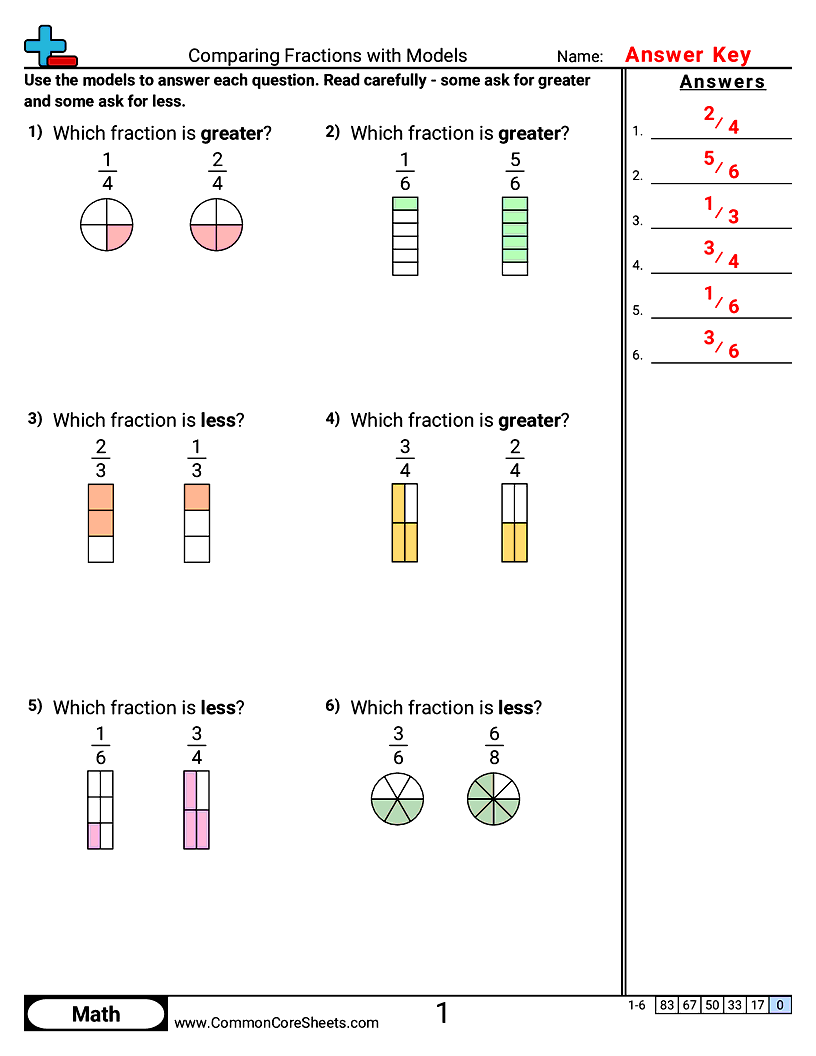
Use a fraction model to decide which of two fractions is greater or less. Read the question carefully, since some ask for greater and some for less. Compare fractions with different denominators using a picture rather than a rule.
4nf1
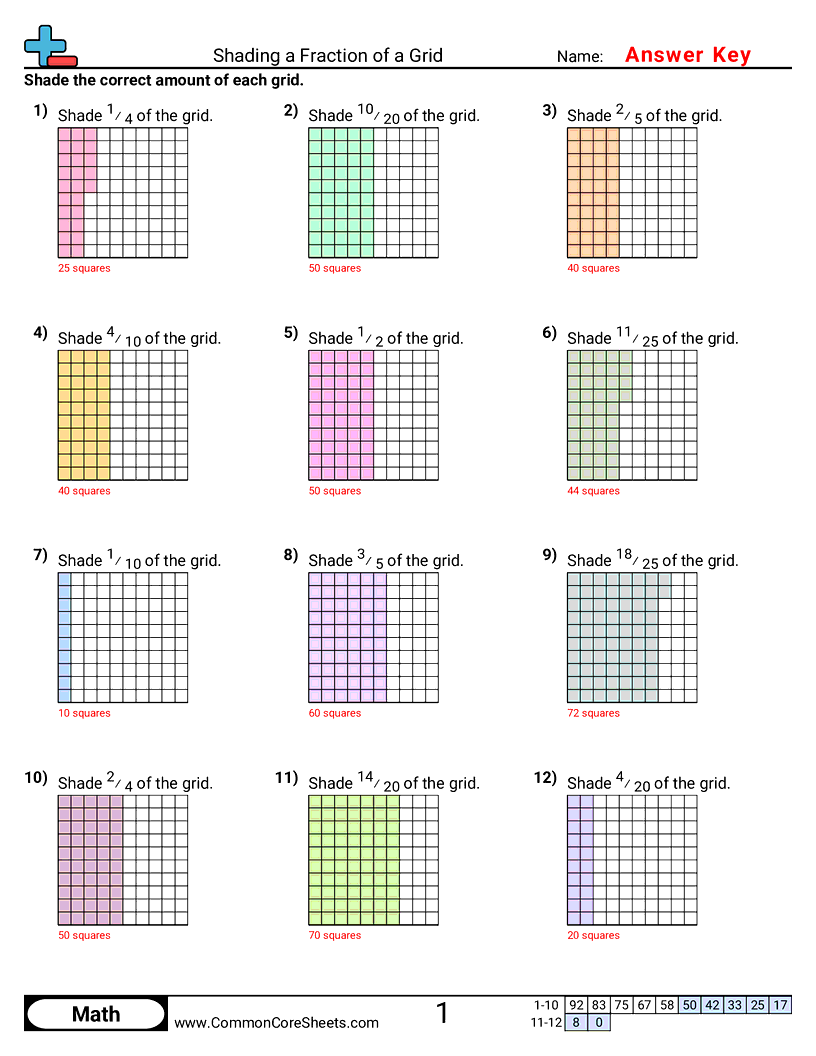
Find an equivalent fraction with a denominator of 100 Shade a given fraction of an area model Work out how many of a hundred squares a fraction is Understand that the same amount can be shaded in more than one arrangement
4nf1
Find an equivalent fraction with a denominator of 100 Match a fraction to an area model Recognize that two fifths and forty hundredths are the same amount Tell the numerator of a fraction from the number of parts shaded
4nf1
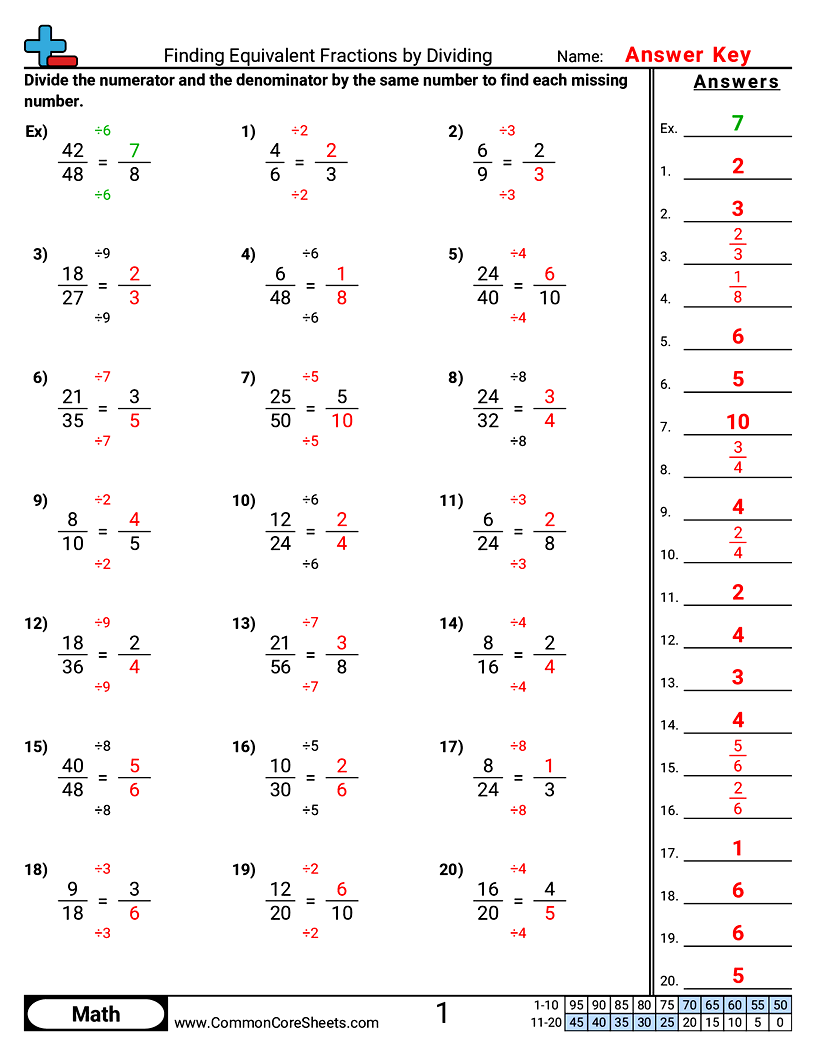
Divide the numerator and denominator by the same number to make an equivalent fraction Work out what a fraction was divided by from its numerator or denominator Find a missing numerator or denominator in a smaller equivalent fraction
4nf1 4oa4
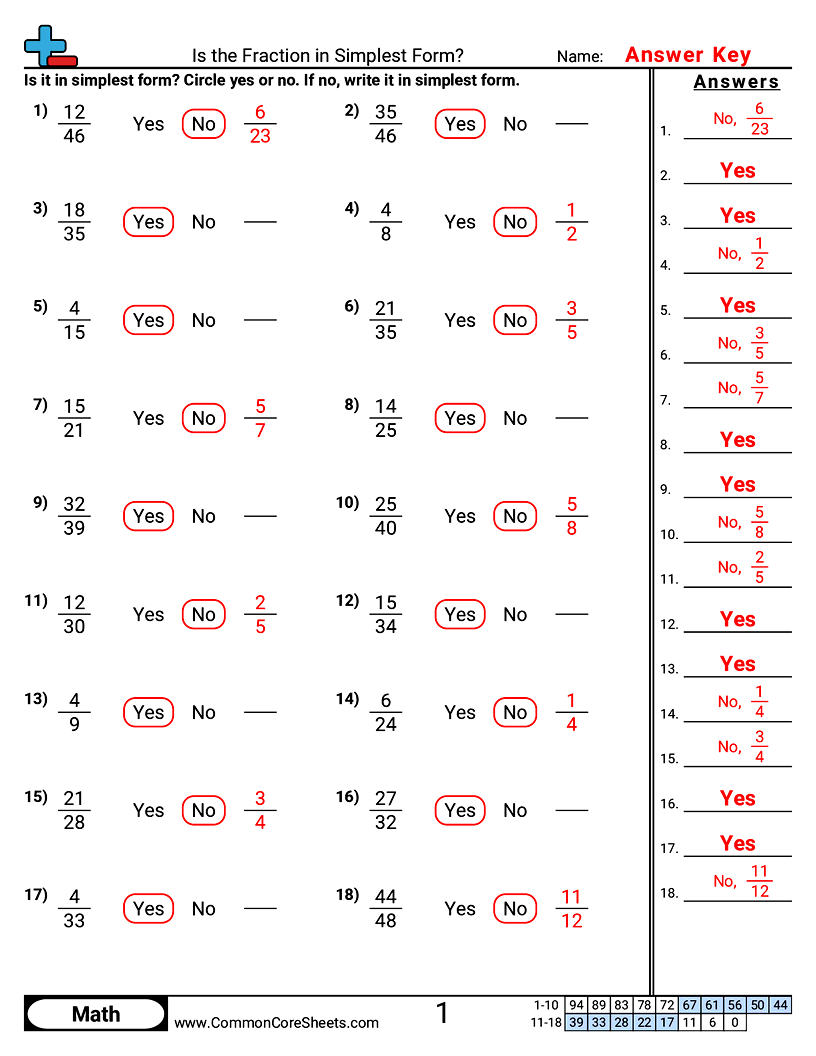
Decide whether a fraction is in simplest form Look for a common factor of the numerator and denominator Write a fraction in simplest form
More 4th grade topics
Advertisement