4th Grade Place Value & Rounding Worksheets
4th Grade Place Value & Rounding: read, write, compare and round whole numbers to a million, including expanded form. Every worksheet is free, prints as a PDF with an answer key, and can be assigned online. The ones teachers open most are first.
More about these worksheets ▾ Show less ▴
4nbt3
Round large numbers to the nearest place value (like hundreds, thousands, or millions). Use the digit to the right of the rounding place to decide whether to round up or down. Write the rounded number correctly by changing the digits after the rounding place to zeros.
4nbt2
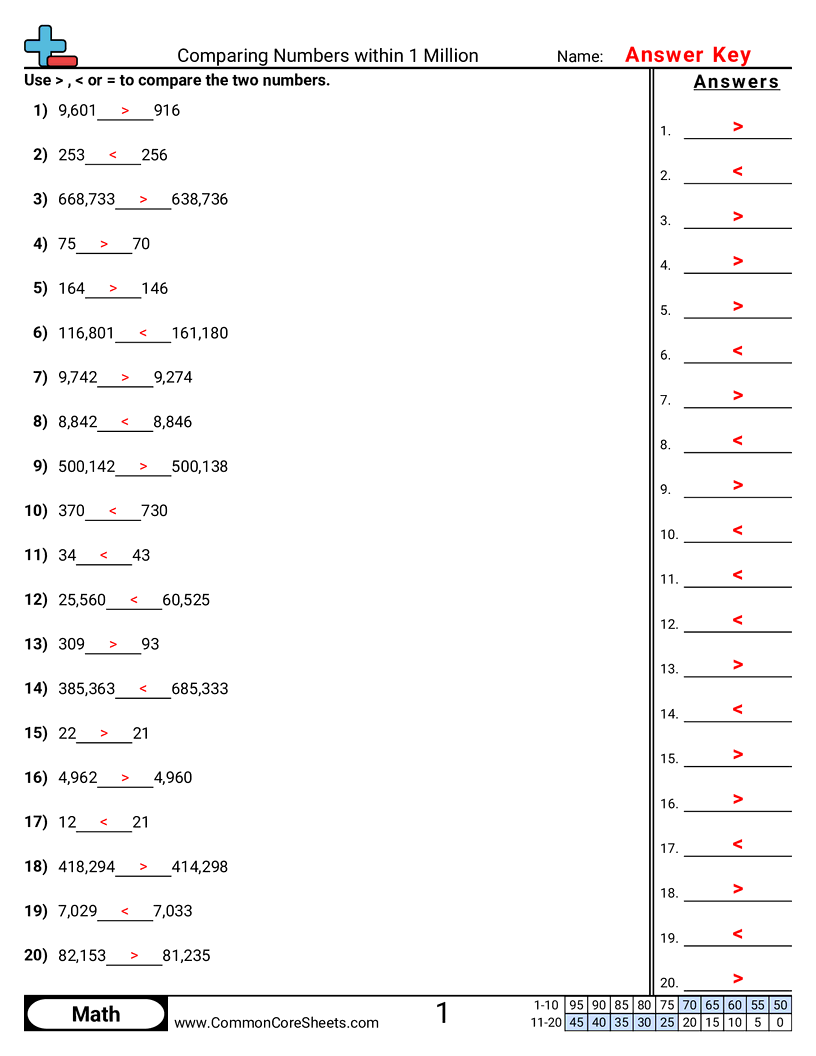
Compare two large numbers and decide which one is greater, less, or equal. Use place value (hundred-thousands, ten-thousands, thousands, etc.) to explain why one number is bigger than another. Use the symbols >, <, and = correctly when comparing numbers.
4nbt1
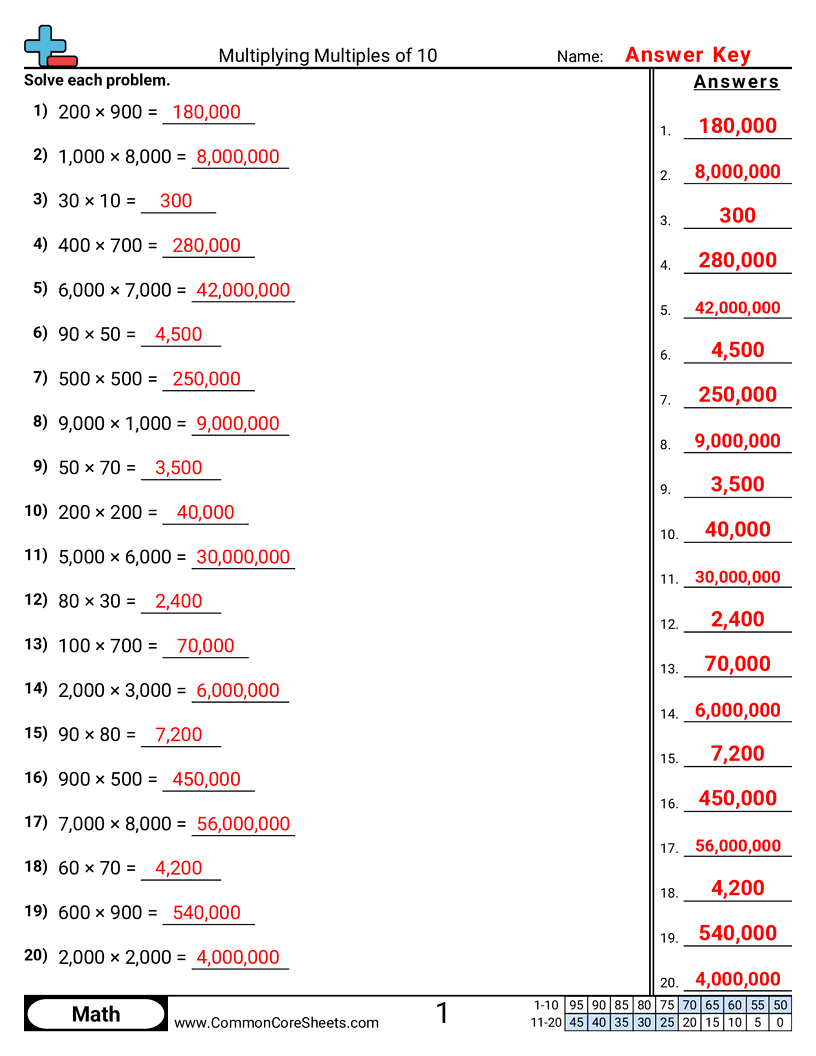
Multiply numbers when one or both factors end in zero. Use place value to add the right number of zeros to the product. Spot and use patterns when counting by tens, hundreds, or thousands to multiply faster. Multiply a basic fact first and then scale it up by 10, 100, or 1,000.
4nbt1
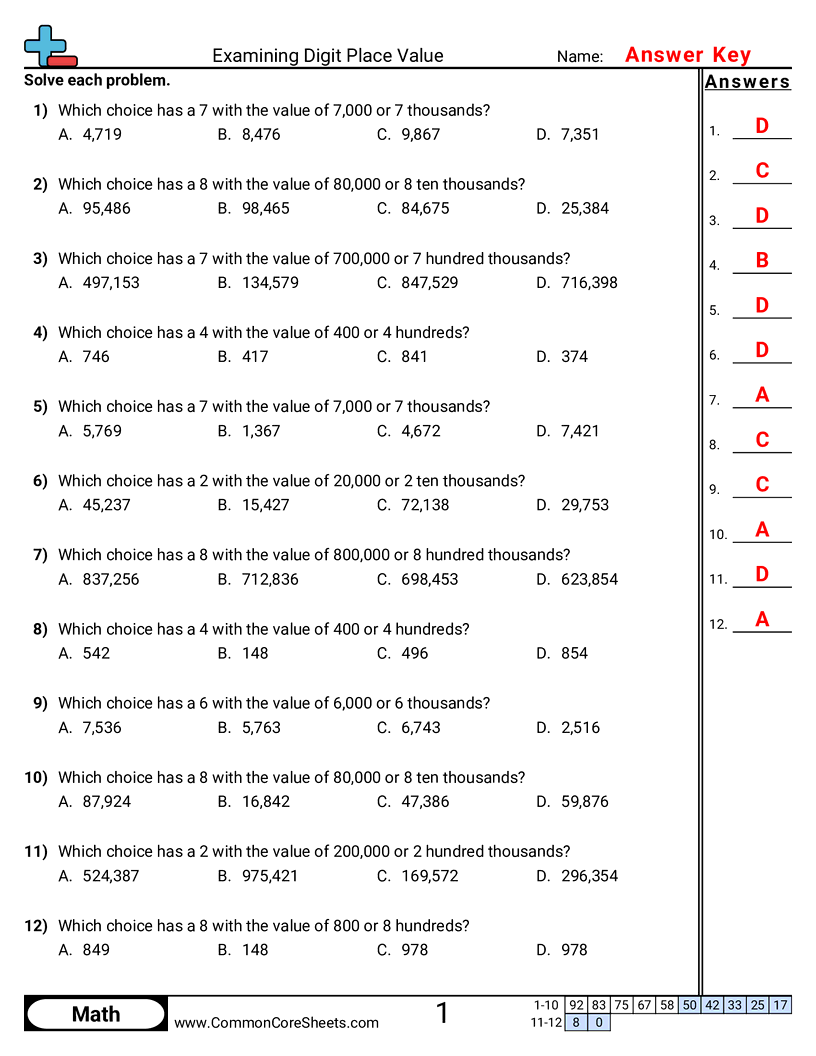
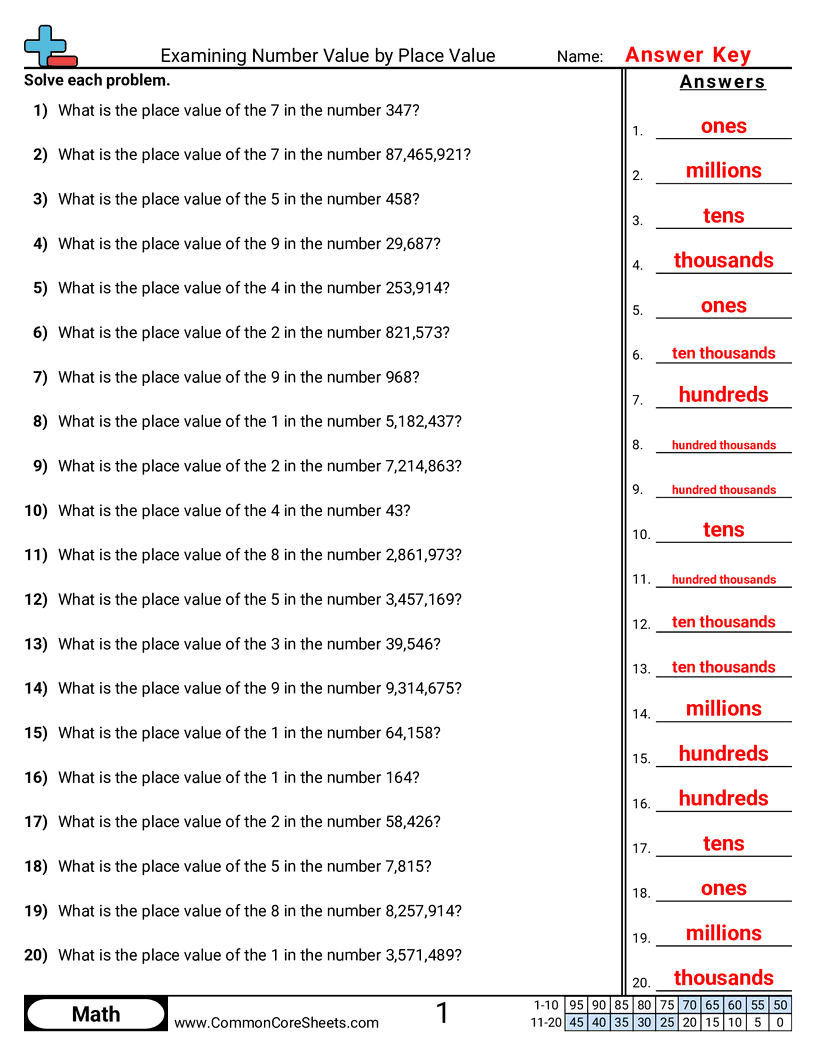
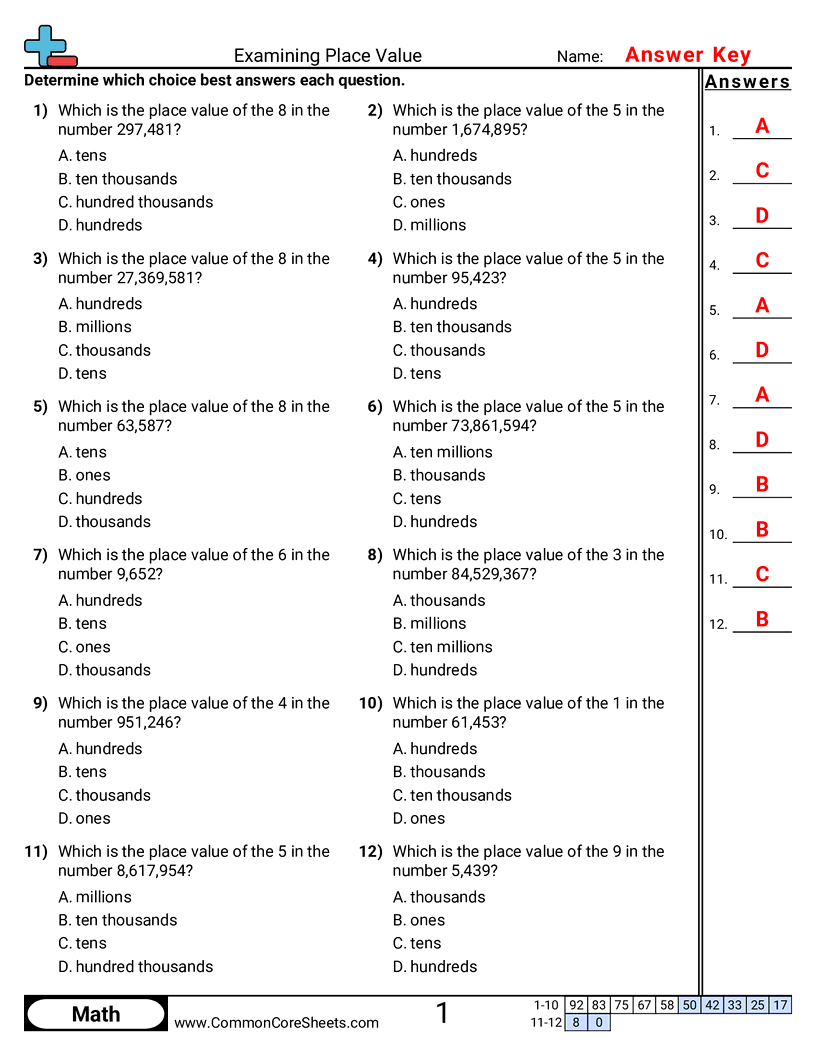
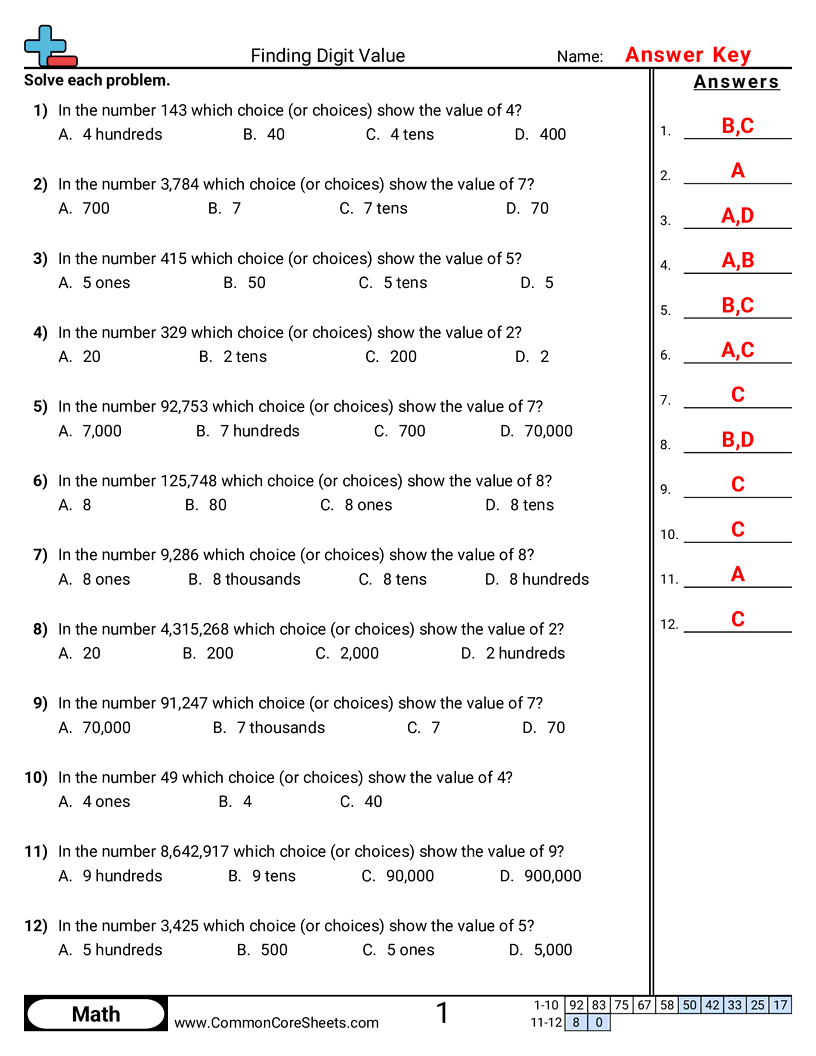
Find what a digit is really worth based on where it sits in a number. Match a digit to its place name (ones, tens, hundreds, thousands, millions). Read a multi-digit number and pick out the value of a specific digit. Tell the difference between a digit’s face value and its place value.
4nbt1
Multiply a two-digit number by 10, 20, 30, and other tens numbers. Use place value patterns to multiply by tens (shifting digits and adding zeros). Solve multi-digit multiplication problems accurately without a calculator.
4nbt1
Identify the value of a digit based on its place in a whole number. Explain how multiplying or dividing by 10 changes a number’s digits and their values.
4nbt2
Turn an expanded form like 400,000 + 30,000 + 200 + 5 into one number. Use place value to decide which digits belong in each spot from ones up to hundred-thousands. Combine the addends in expanded form to write the correct standard (numeric) form.
4nbt1
Find the value of a digit by looking at its place in the number. Tell the difference between a digit and the value it represents in a number. Write the value of a digit in standard form (like 300 or 40) based on its position.
4nbt1
Find what a specific digit is worth based on where it sits in a number. Name the place of a digit (ones, tens, hundreds, thousands, and beyond). Use place value to tell which digits make the biggest and smallest parts of a number.
4nbt1
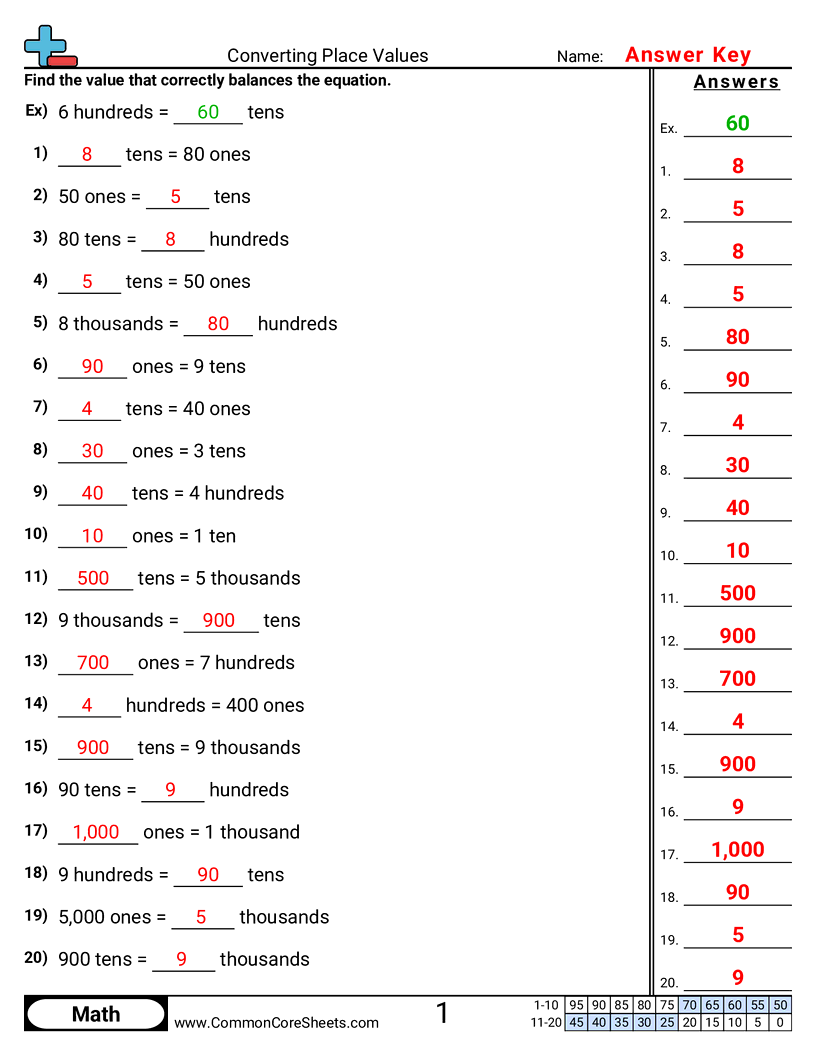
Practice breaking a number into its place value parts and writing it in expanded form. Practice turning expanded form back into a standard number. Practice renaming a number by trading between place values (like 1 ten = 10 ones) without changing the total. Practice using place value to make both sides of an equation equal.
4nbt2
Turn a number written in words into digits correctly. Keep zeros in the right spots when a place value is skipped in the wording.
4nbt3
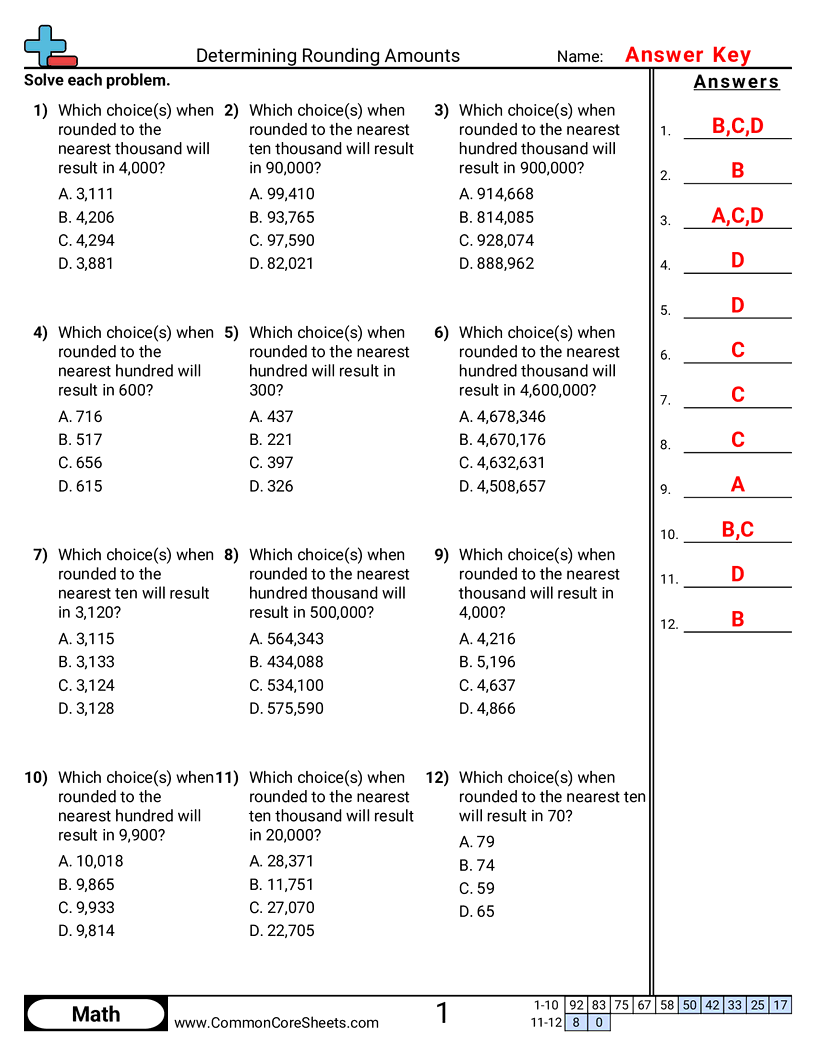
Decide which numbers round to a given target number. Use the digit to the right of a place to tell whether a number rounds up or down.
4nbt1
ractice finding the total value of a number when some place-value columns hold a number bigger than 9 Regroup values that spill over into the next place (like 46 tens becoming 4 hundreds and 6 tens) Work with numbers of different sizes, from hundreds up to ten thousands
4nbt1
Multiply a whole number by 10, 100, or 1,000 by shifting digits to the left. Divide a whole number by 10, 100, or 1,000 by shifting digits to the right.
4nbt2
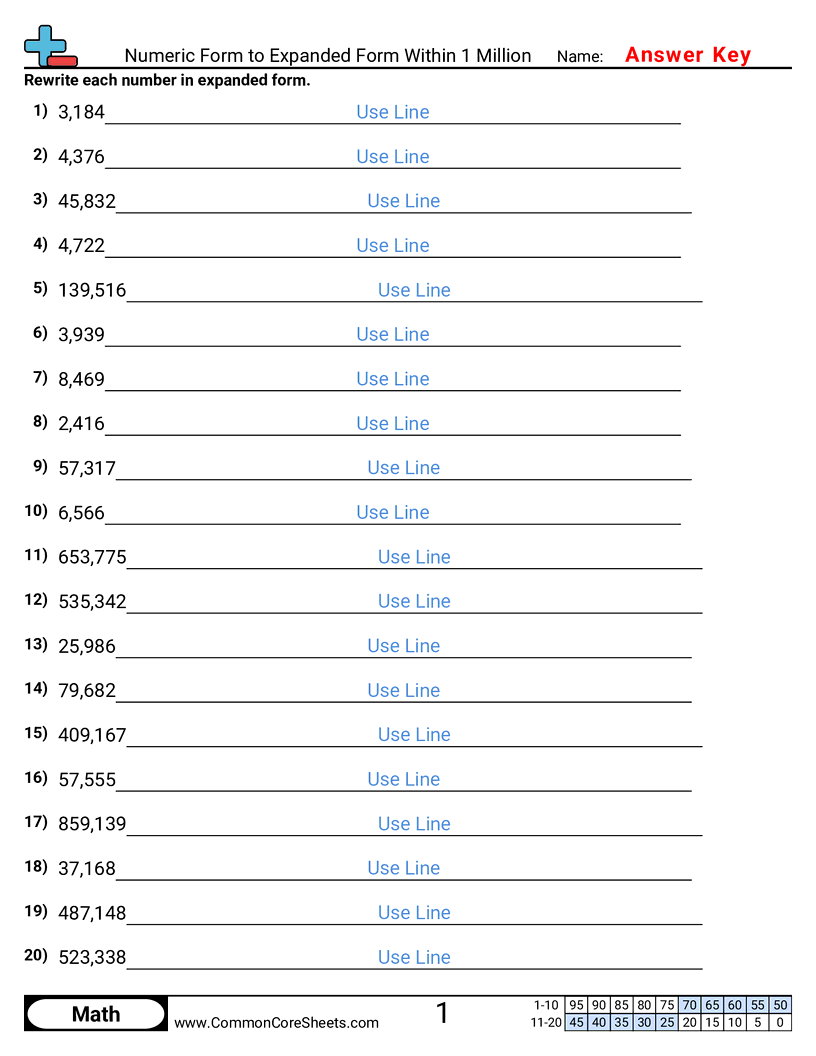
Break a number up into the value of each digit using place value. Write a number in expanded form as a sum of hundreds-thousands, ten-thousands, thousands, hundreds, tens, and ones. Use zeros as placeholders so missing place values are handled correctly in expanded form.
4nbt2
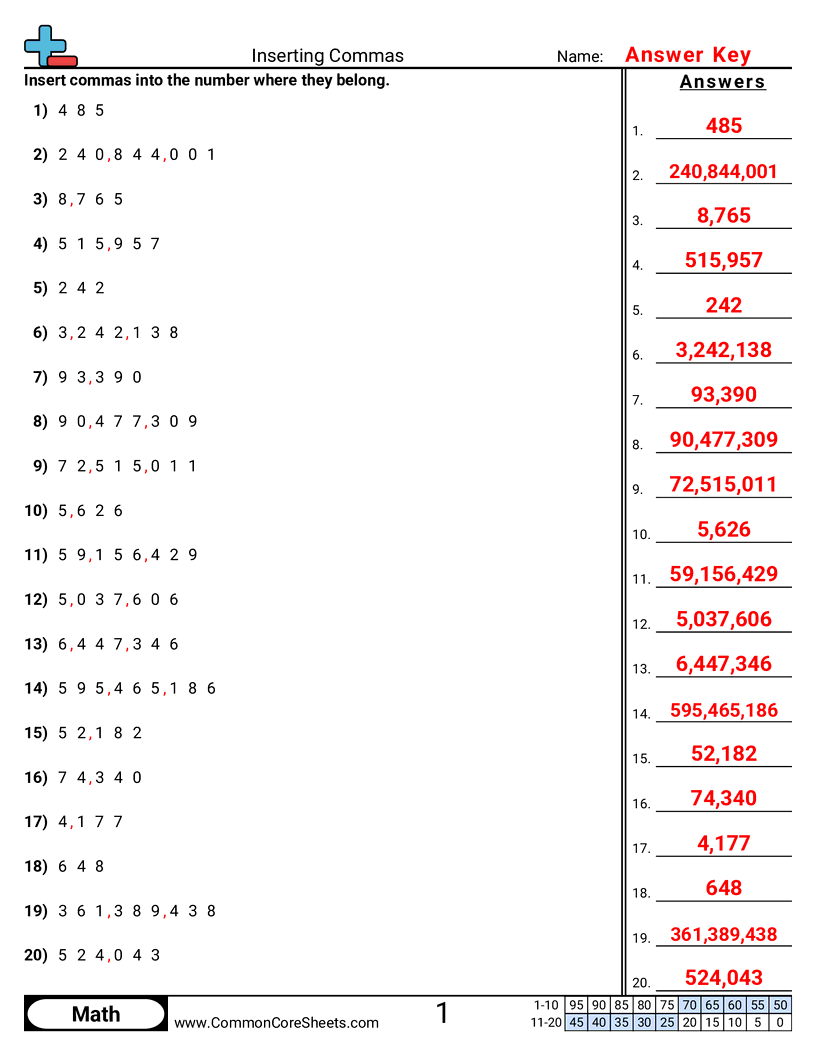
Practice adding commas to large numbers so they are easier to read. Learn to group digits in sets of three from the right to find where commas go. Tell the difference between thousands, millions, and billions by looking at comma groups. Rewrite numbers in a standard, readable format without changing their value.
4nbt2
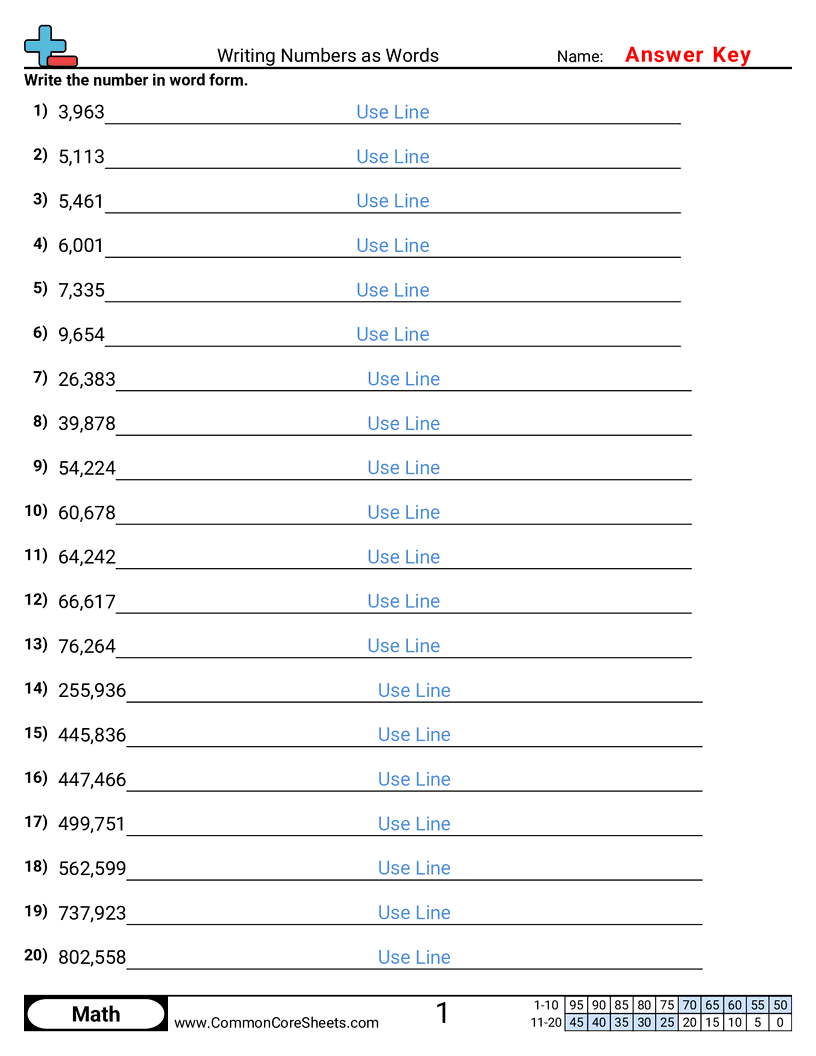
Read a number up to 1,000,000 and say it correctly out loud. Write a number in words using the right place-value names like thousand and hundred. Spell number words correctly and avoid common mistakes like mixing up teen and tens numbers.
4nbt3
Use a number line to see which two benchmark numbers a value falls between. Find the midpoint on a number line to decide which benchmark a number is closer to. Explain rounding choices by comparing distances on the number line.
4nbt2
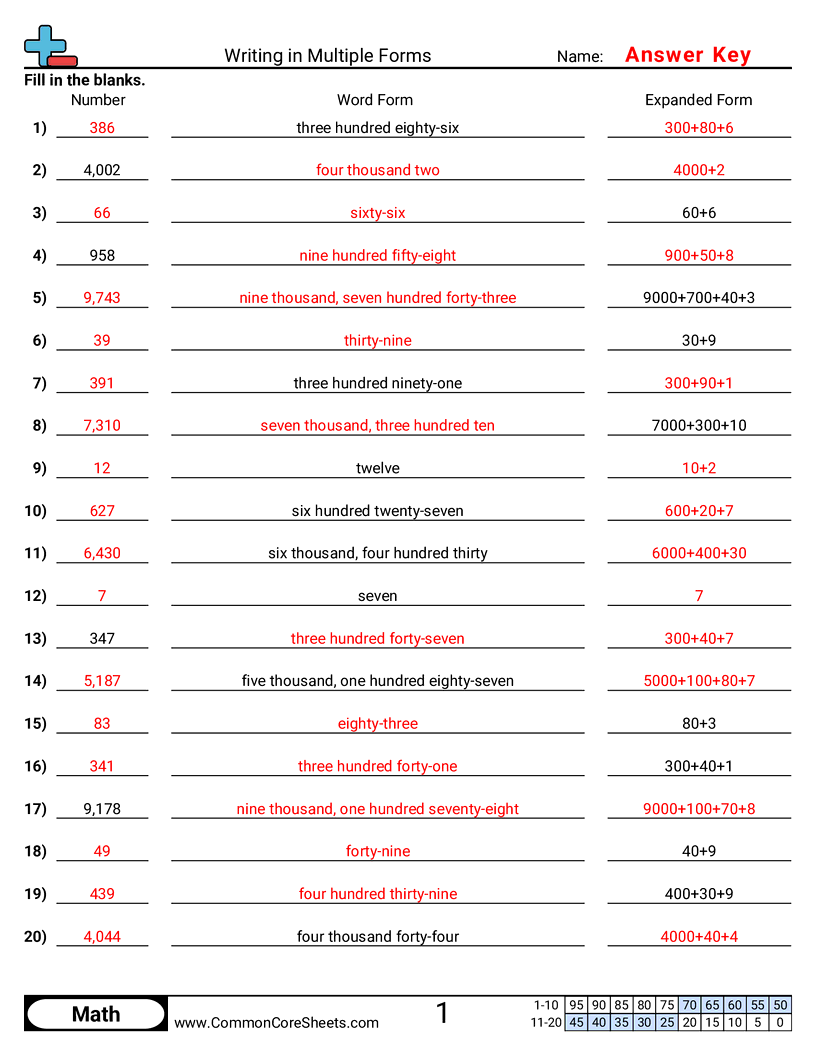
Write a number in standard (normal) form, word form, and expanded form. Switch between the three forms and recognize that they all name the same number. Use place value to break a number into the value of each digit. Read number words carefully and turn them into the correct digits.
4nbt1
Find the value of a specific digit in a number (like knowing the 7 in 3,742 means 700). Use place value names to explain what each digit stands for in a whole number. Compare digits in different places to see how the same digit can mean different amounts.
4nbt2
Compare whole numbers under 100,000 using place value. Work through a number place by place instead of judging it by length. Recognize that a question may have more than one correct answer.
4nbt1
Practice finding missing place-value entries when some columns can hold numbers greater than 9 Figure out what value is needed in a blank column so that all the parts add up to the given number Understand that a number can be broken down into non-standard place-value combinations (like 12 tens instead of 1 hundred and 2 tens)
4nbt2
Turn a written number into the correct word form. Use place value to decide which words to include (like hundreds and thousands). Spell number words correctly, including tricky ones like teens and multiples of ten. Write number words with the right spacing and hyphens when needed.
4nbt2
Choose a number that makes a comparison sentence true Use place value to compare numbers that share their leading digits Notice whether the blank sits on the left or the right of the symbol Compare whole numbers up to 100,000
4nbt1
Practice multiplying numbers by 10 and 100 Understand how a number gets bigger when multiplied by 10 or 100 Compare equations to find the one that is correct Recognize the pattern of adding zeros when multiplying by 10 and 100
4nbt2
Compare two multi-digit numbers to see which is bigger Use the greater than, less than, and equal signs correctly Line up numbers by place value to compare them Tell when two numbers are equal
4nbt2
Work out the value of a multiplication expression before comparing it. Choose the sign that makes a statement true. Recognize when two expressions have the same value.
4nbt2
Find the greatest whole number less than a given number up to 1,000,000. Find the least whole number greater than a given number up to 1,000,000. Subtract one across several zeros, as in 400,000 to 399,999.
4nbt2
Read a number written in words within a real-world problem and write it using numerals. Use place value to determine the value of each digit up to the hundred thousands place. Correctly handle numbers with zeros in any place.
4nbt2
Read a number written in words within a real-world problem and write it using numerals. Use place value to determine the value of each digit up to the ten thousands place. Correctly handle numbers with a zero in the ones, tens, hundreds, or thousands place.
4nbt2
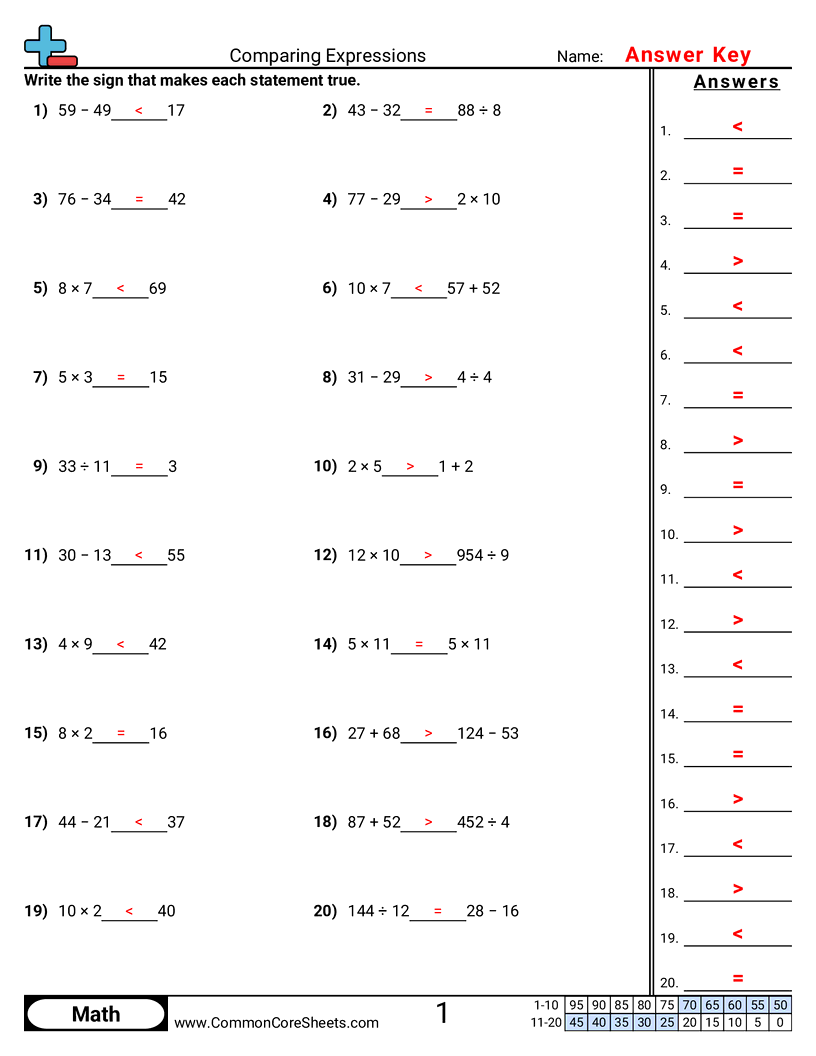
Work out the value of an expression before comparing it. Choose the sign that makes a statement true. Recognize when two different expressions have the same value.
4nbt2
Work out the value of a addition expression before comparing it. Choose the sign that makes a statement true. Recognize when two expressions have the same value.
4nbt2
Work out the value of a subtraction expression before comparing it. Choose the sign that makes a statement true. Recognize when two expressions have the same value.
4nbt2
Work out the value of a division expression before comparing it. Choose the sign that makes a statement true. Recognize when two expressions have the same value.
4nbt2
Use place value to compare whole numbers up to 100,000. Interpret the greater than (>) and less than (<) symbols. Find the greatest or least whole number that makes a comparison true.
3nbt1 4nbt3
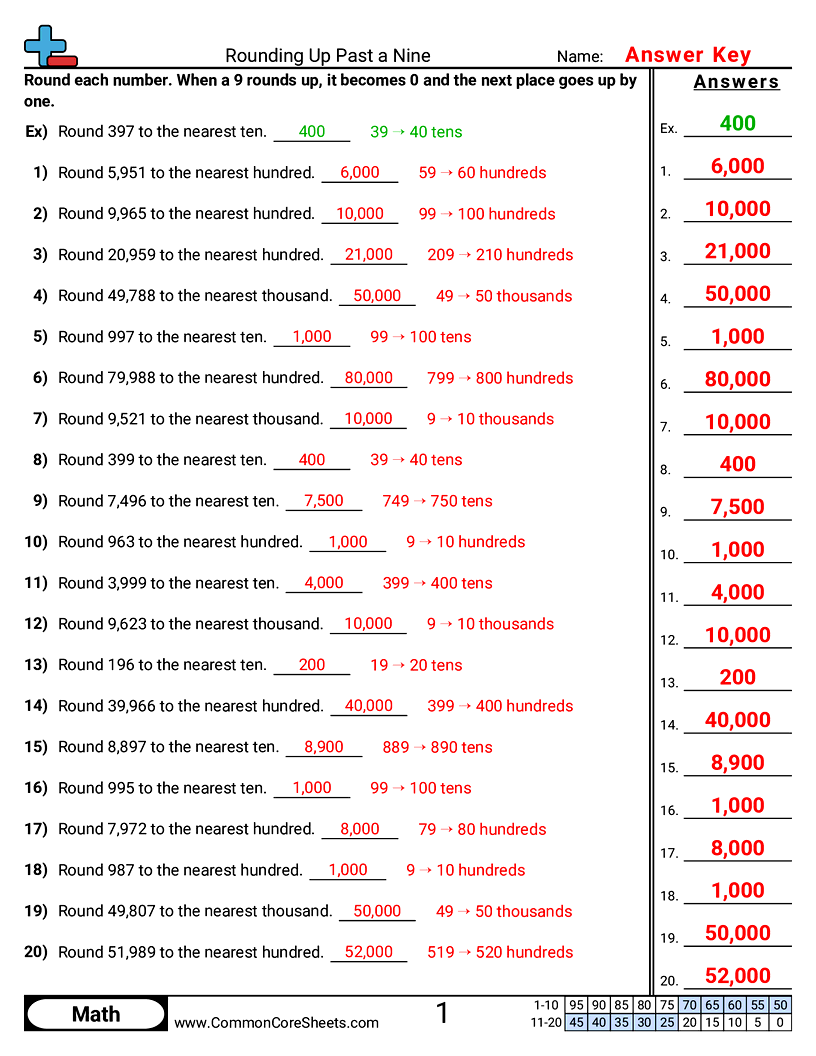
Round up when the digit in the rounding place is 9 Carry into the next place when rounding up Round to the nearest ten, hundred and thousand
More 4th grade topics
Advertisement