4th Grade Multi Digit Multiplication (Oklahoma) Worksheets
4th Grade Multi-Digit Multiplication: multiply by 10, 100 and 1,000, then 3-digit × 1-digit and 2-digit × 2-digit, and estimate. Every worksheet is free, prints as a PDF with an answer key, and can be assigned online. The ones teachers open most are first.
More about these worksheets ▾ Show less ▴
4nbt5
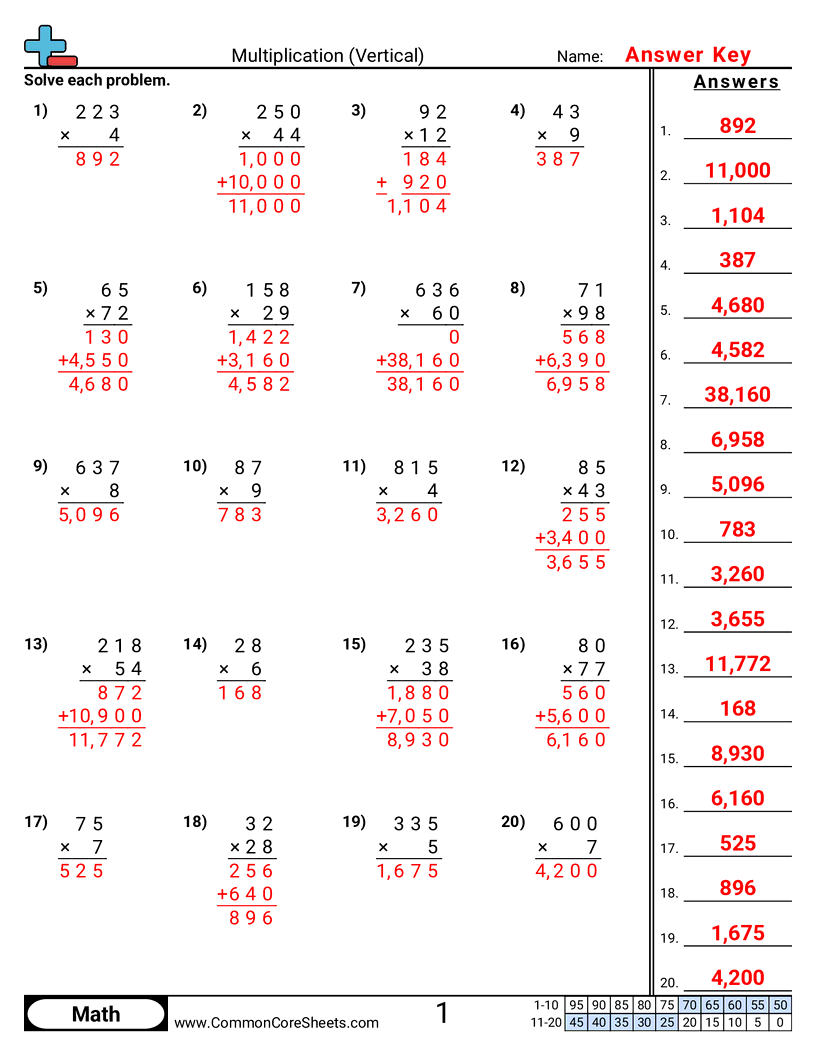
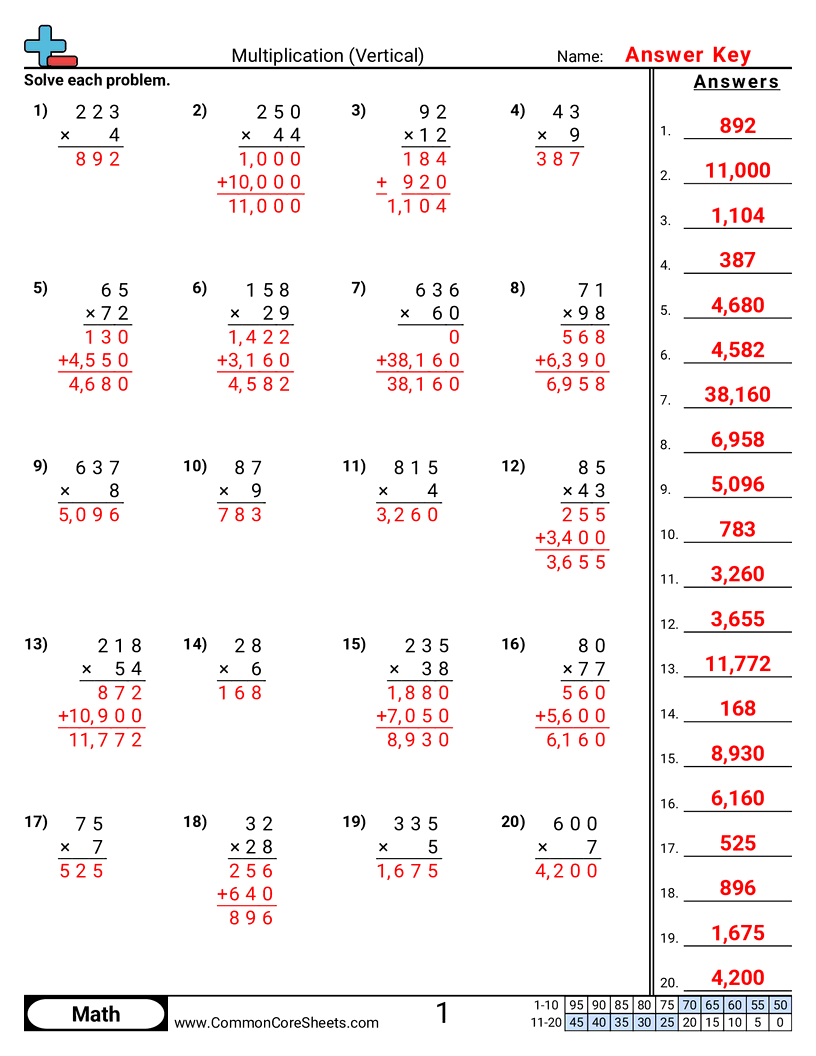
Multiply a 2-digit number by a 2-digit number to find the product. Line up digits in columns so the ones and tens places stay organized while you work. Find and add partial products to get the final product. Use carrying when a column adds up to 10 or more.
4nbt5
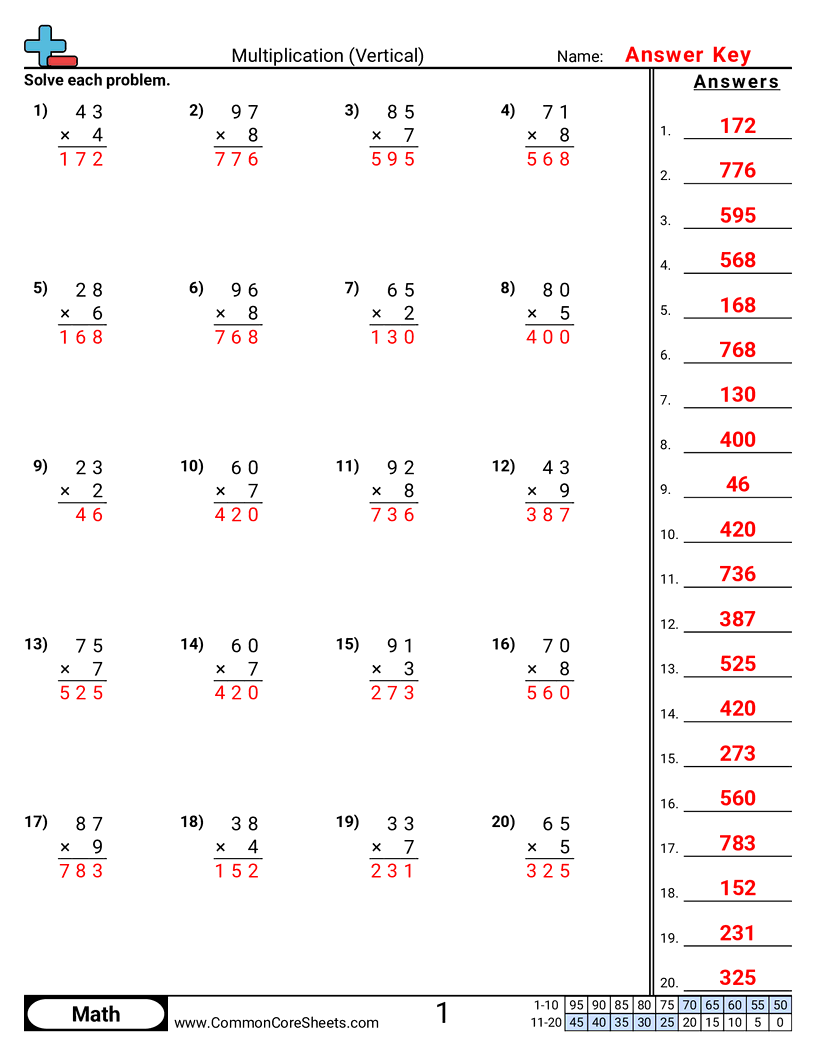
Multiply numbers with varies number of digits to find the product. Use the vertical (stacked) method to keep ones and tens lined up correctly. Carry to the next place value when the ones place makes 10 or more.
4nbt5
Multiply a 3-digit number by a 1-digit number to find the product. Regroup (carry) when a place value multiplies to 10 or more.
3oa1
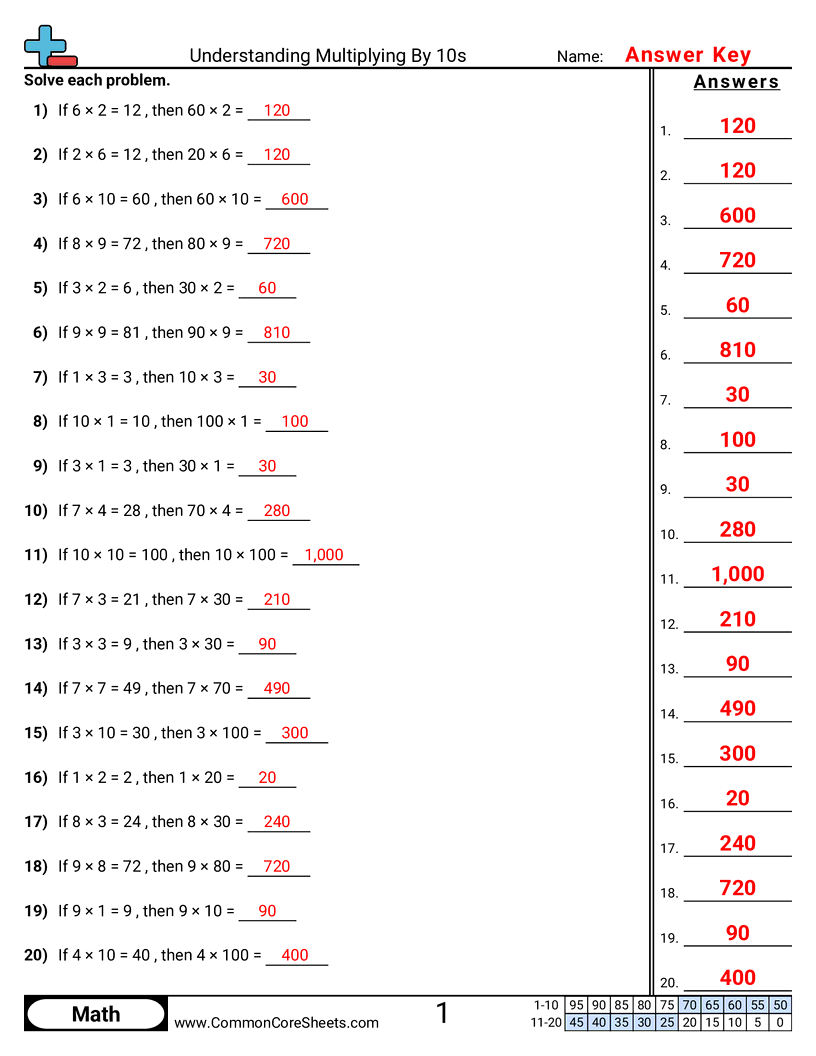
Multiply a one-digit number by 10, 20, 30, and other tens numbers. Use place value to see why multiplying by a multiple of 10 makes the number bigger in a predictable way. Use the pattern of adding a zero (or shifting digits left) to solve these problems quickly in your head.
4nbt5
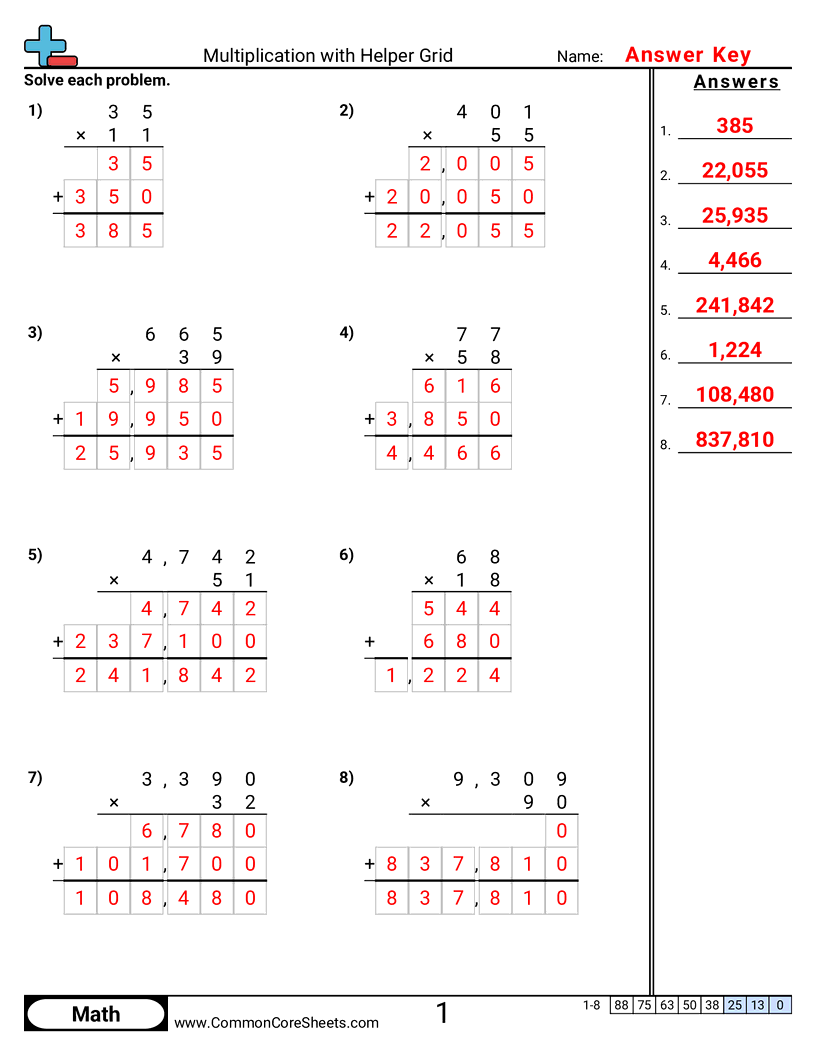
Multiply a multi-digit number by a multi-digit number using a helper grid to align items.
4nbt5
Multiply a two-digit number by a two-digit number to find the product. Use place value to keep tens and ones lined up correctly while multiplying. Solve word problems that involve multiplying two two-digit numbers.
5nbt2
Multiply a one-digit number by 10, 100, or 1,000. Use place value patterns to see how the digits shift when you multiply by powers of 10. Spot and use patterns in a set of related multiplication facts (like 6×10, 6×100, 6×1,000).
4nbt5
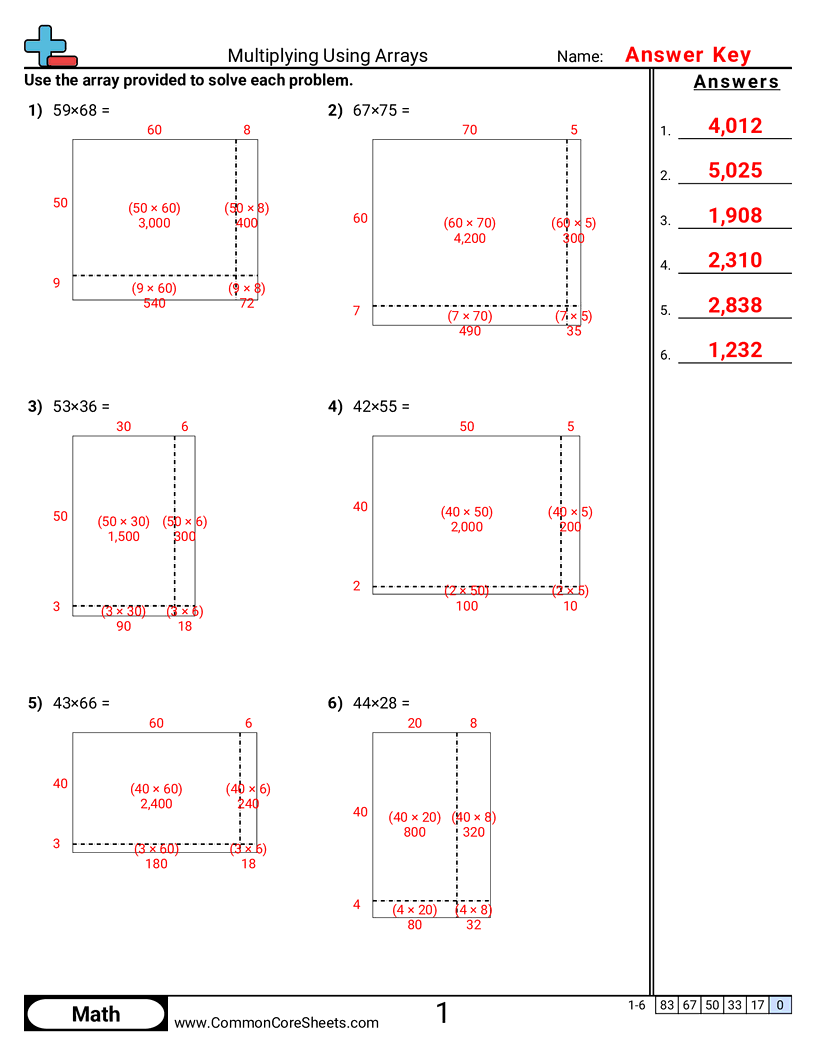
Use rows and columns in an array to understand what a multiplication problem means. Find a product by counting or building an array model. Break a multiplication problem into multiples of ten to solve.
4nbt5
Multiply two 2-digit numbers using the lattice (grid) method. Break each number into tens and ones to find the smaller partial products. Add the diagonal sums in the lattice to get the final product.
4nbt5
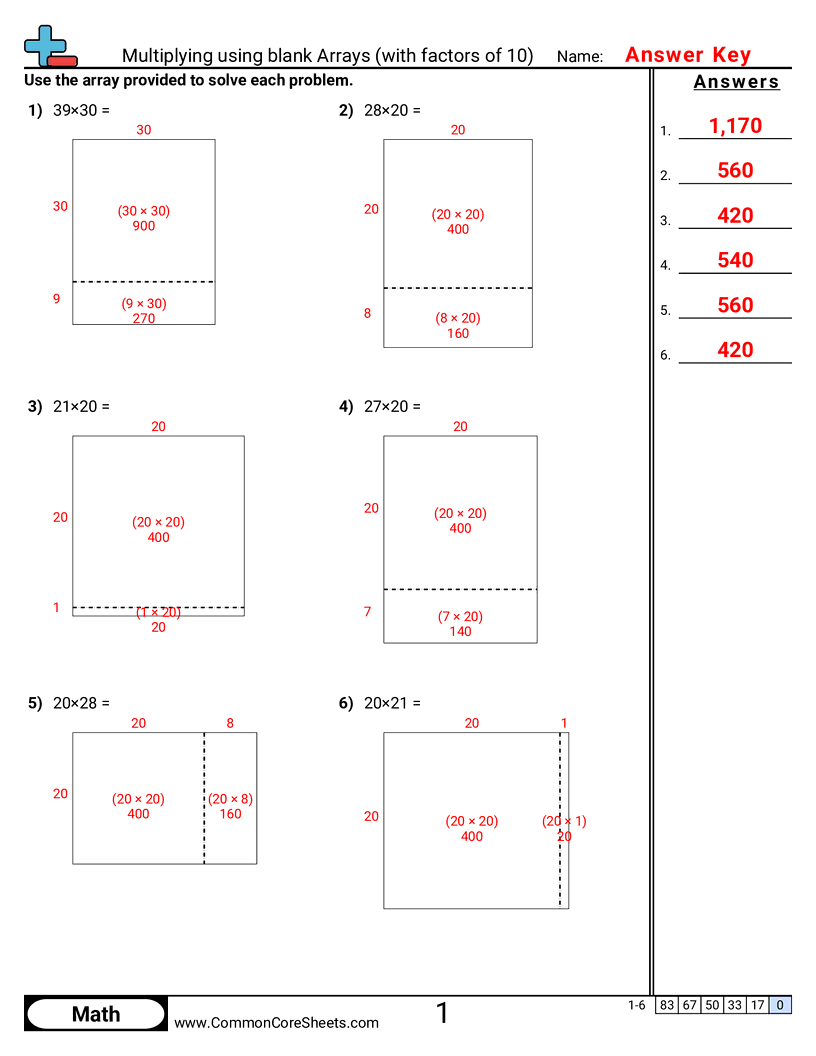
Use rows and columns in an array to understand what a multiplication problem means. Multiply a number by 10 and explain how the digits shift in place value. Break a multiplication problem into multiples of ten to solve.
4nbt5
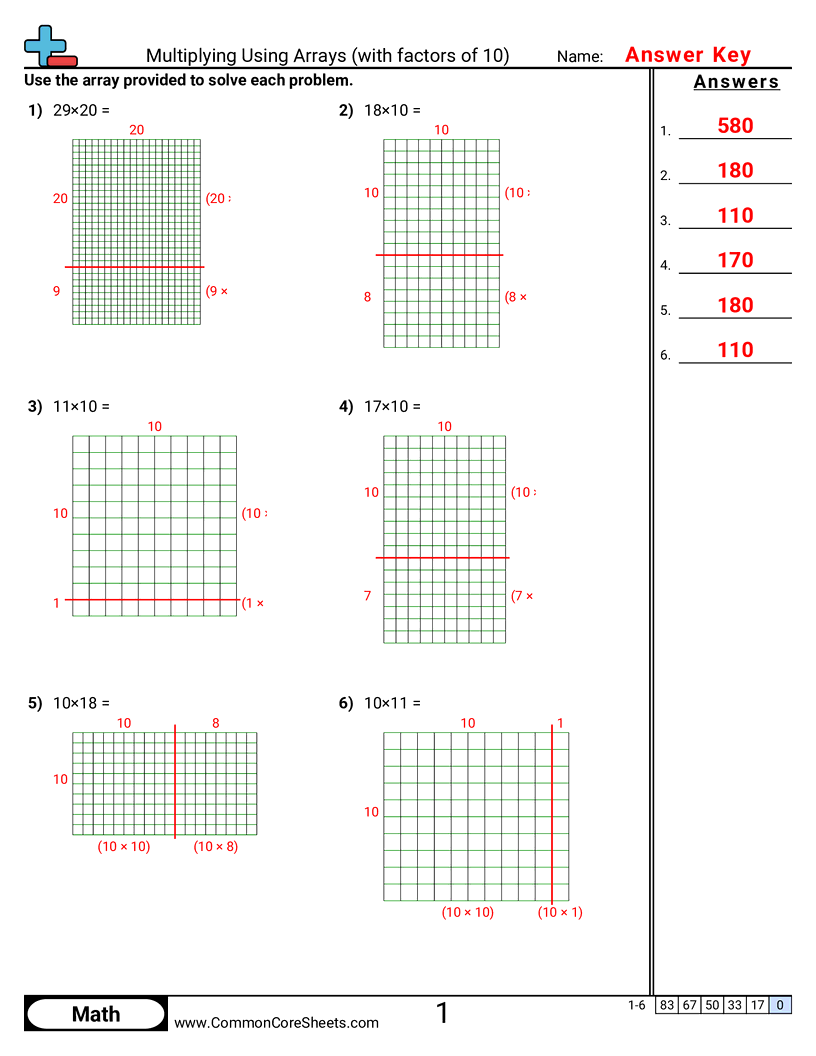
Use an array (rows and columns) to understand what a multiplication problem means. Multiply a number by 10 using place value patterns.
5nbt2
Multiply a whole number by 10, 100 or 1,000 without writing out the computation. Explain that multiplying by 10 shifts every digit one place to the left. Predict how many zeros the product will have before working it out.
4nbt1
Practice multiplying numbers by 10 and 100 Understand how a number gets bigger when multiplied by 10 or 100 Compare equations to find the one that is correct Recognize the pattern of adding zeros when multiplying by 10 and 100
4nbt5
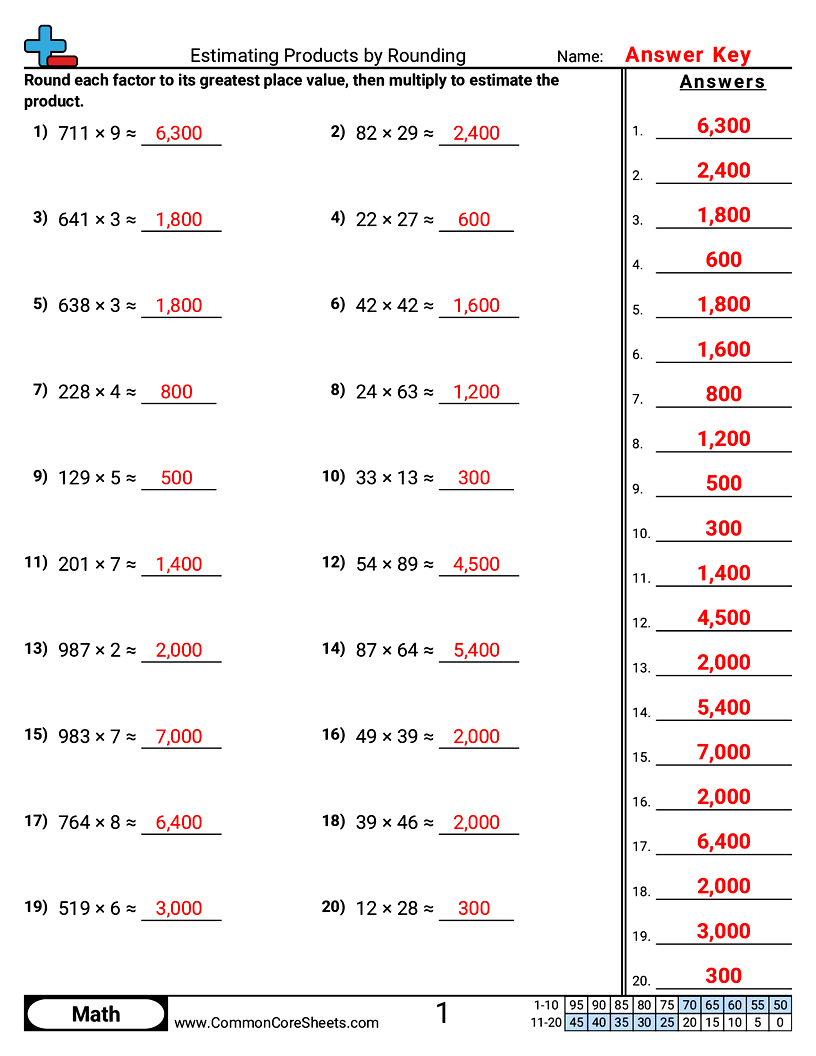
Round each factor to its greatest place value before multiplying. Estimate the product of a 3-digit and a 1-digit number. Estimate the product of two 2-digit numbers.
5nbt2
Divide a whole number by 10, 100 or 1,000 without writing out the computation. Explain that dividing by 10 shifts every digit one place to the right. Predict how many zeros the quotient will have before working it out.
4nbt5
Judge whether an estimate is the right size for a product. Round both factors to decide roughly how large a product should be. Notice when an answer is off by a place value or came from adding instead of multiplying.
More 4th grade topics
Advertisement