Reading A Clock Time Worksheets
Our Reading a Clock worksheets help 1st and 2nd grade students master time-telling skills through progressive difficulty levels. Students practice identifying clock hands, reading analog clocks from half-hour to one-minute increments, matching analog to digital times, and drawing clock hands to show specific times.
More about these worksheets ▾ Show less ▴
×
About these worksheets
These worksheets build clock-reading skills across multiple levels. Students progress from identifying hour and minute hands and reading half-hour times, to reading clocks in 15-minute and 5-minute increments, and finally to reading exact times to the nearest minute. Each level includes reading analog clocks, matching analog to digital times, and drawing hands on clock faces. Aligned with first and second grade standards.
2md7
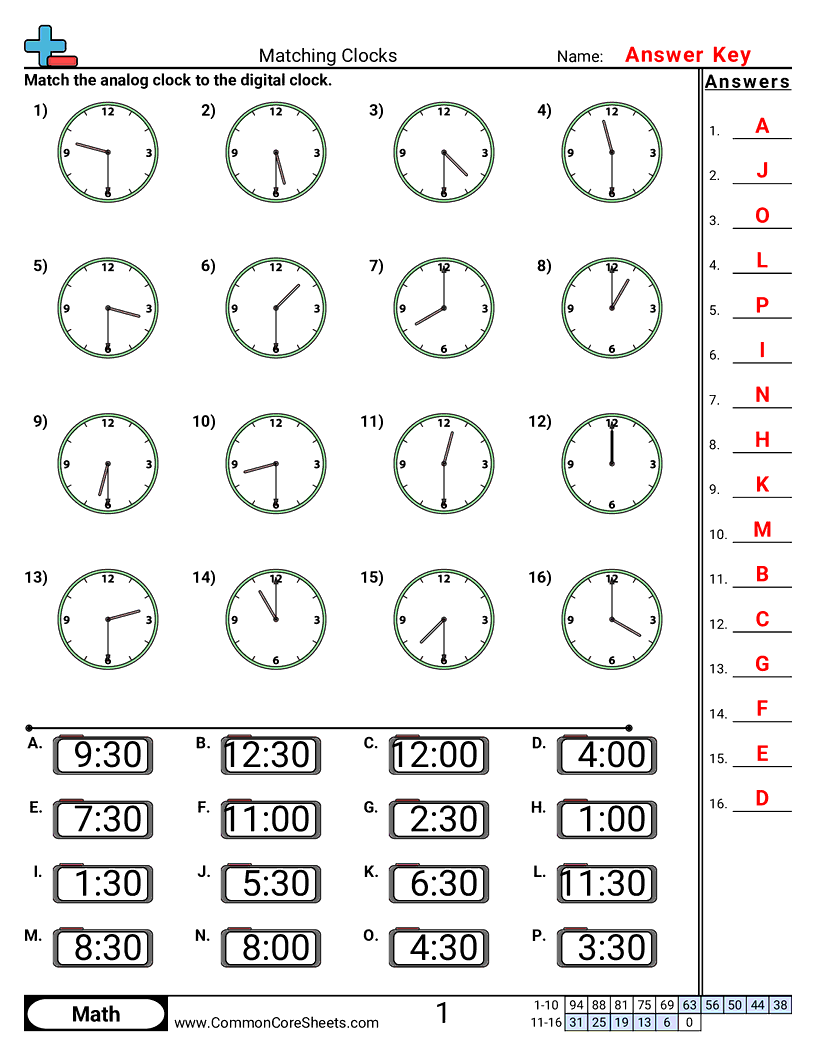
Tell which hand is the hour hand and which is the minute hand on an analog clock. Use the hour hand to choose the correct hour on a digital time. Use the minute hand to choose the correct minutes on a digital time. Match an analog clock face to the digital time that shows the same moment.
1md3
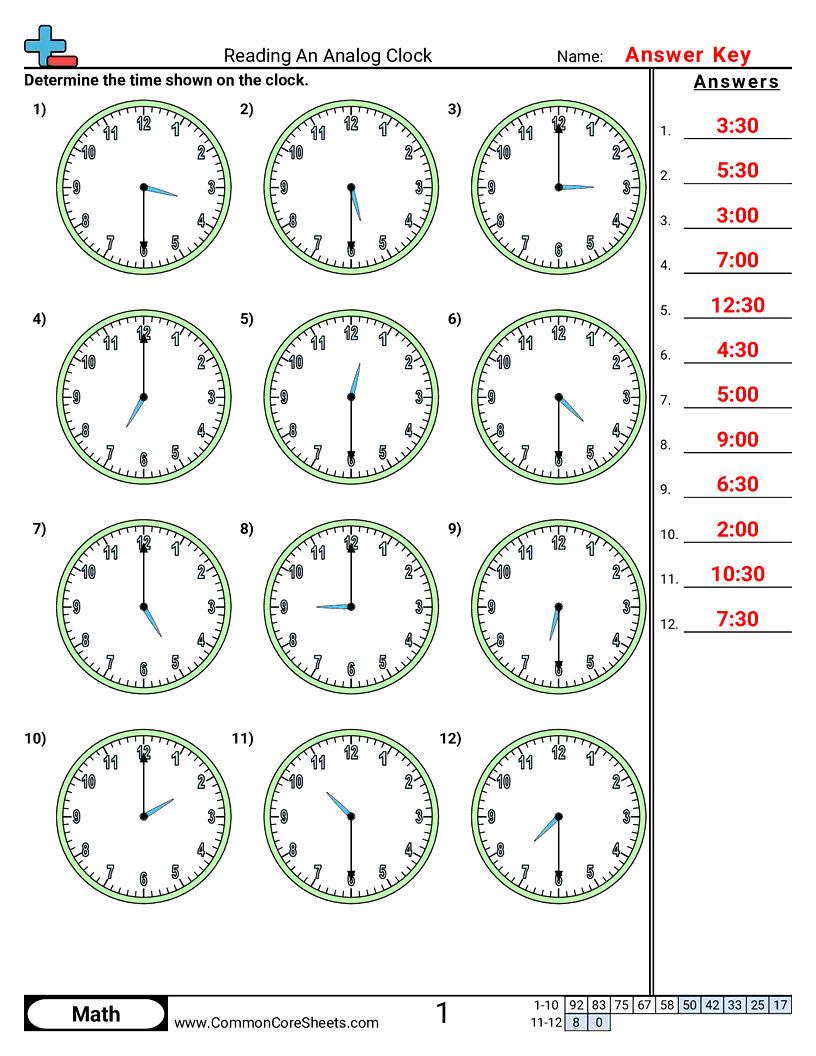
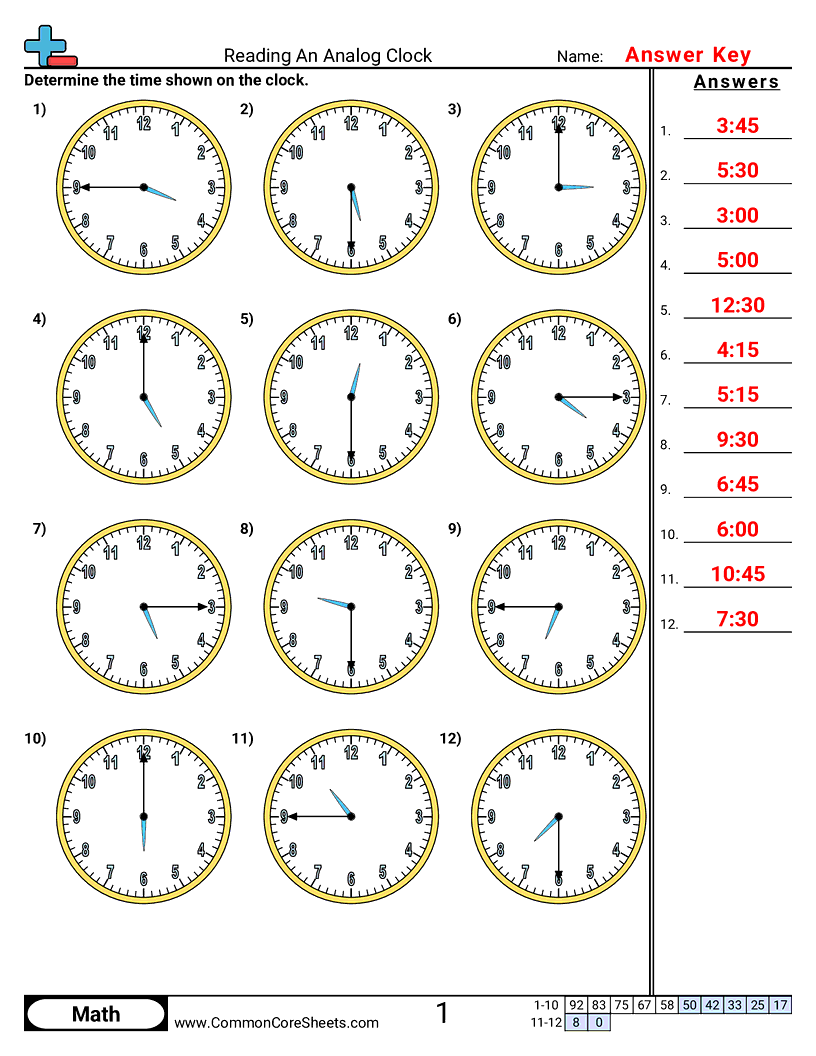
Read an analog clock to tell what time it is to the nearest half hour. Use the hour hand and minute hand together to decide whether the time is on the hour (:00) or half past (:30). Write the time shown on a clock using numbers and a colon (like 6:00 or 6:30). Notice that when the minute hand points to 6, it means 30 minutes past the hour.
1md3
Read an analog clock when the minute hand is on the 6 to tell the half hour. Match an analog clock time to the correct digital time. Notice the difference between times like 3:00 and 3:30 by looking at the hands. Use the hour hand’s position to decide which hour comes with the :30 time.
1md3
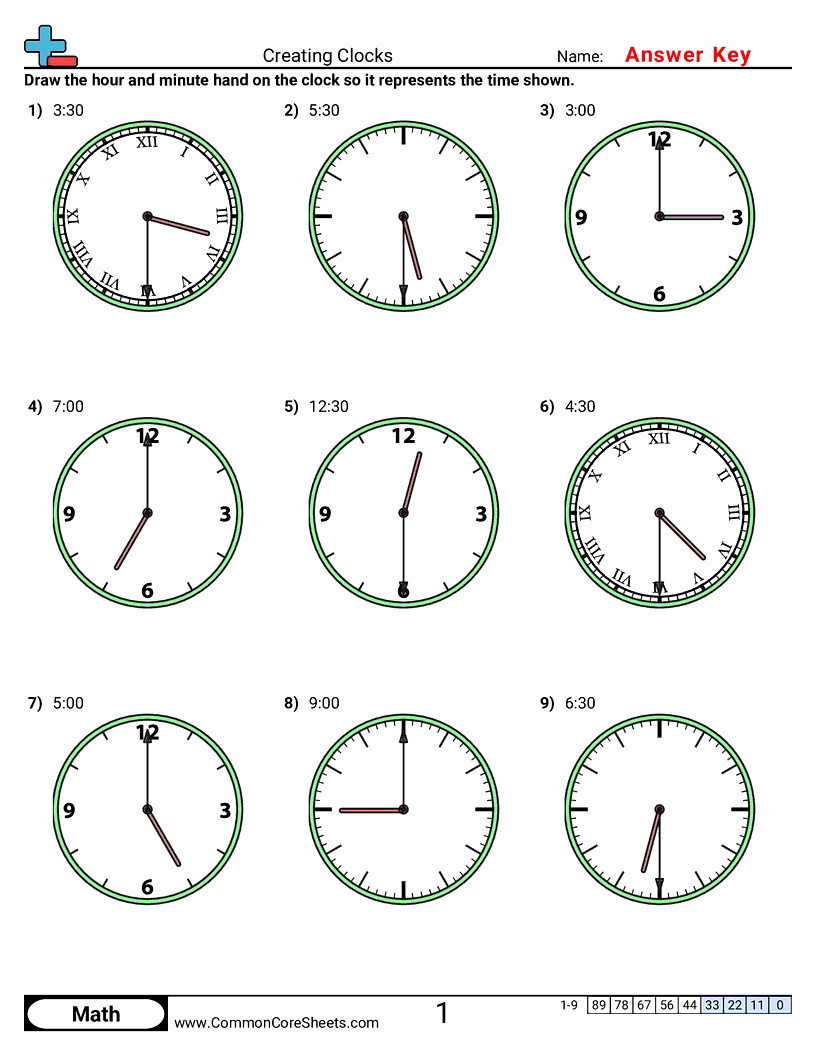
Practice showing a given time on an analog clock by drawing the hour and minute hands. Learn what the minute hand looks like at :30 and place it correctly on the 6. Decide where the hour hand should be when it is halfway between two numbers.
2md7
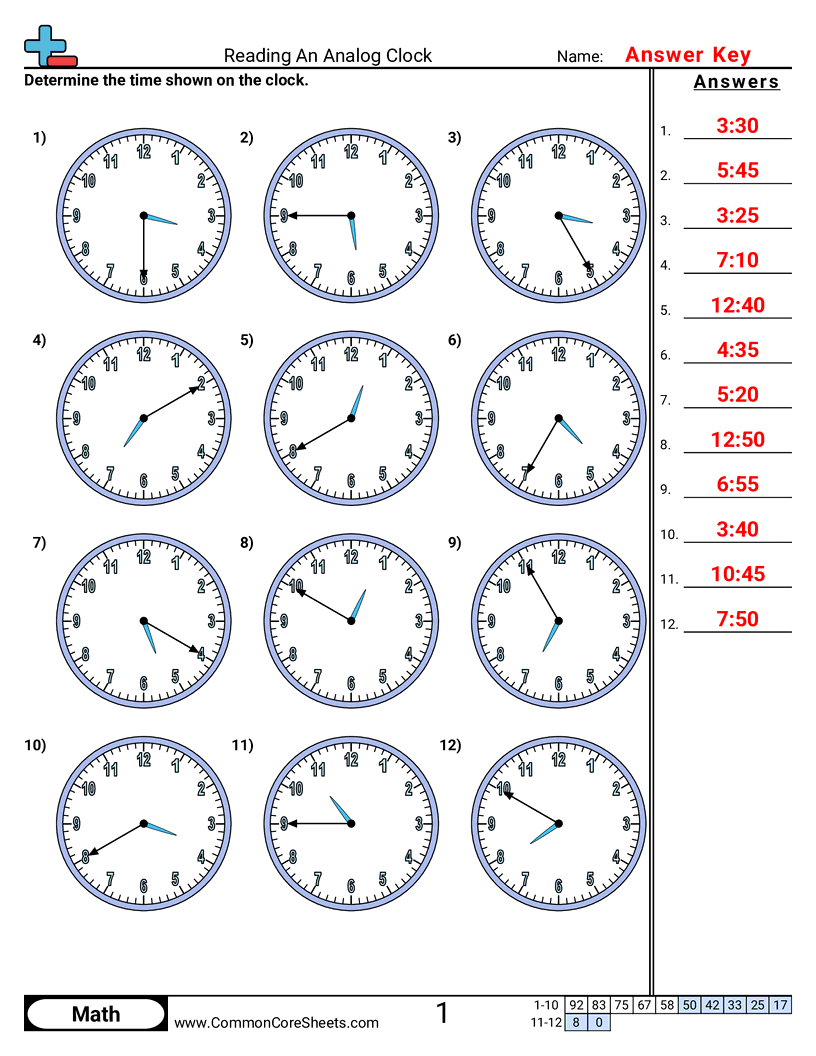
Read the time on an analog clock when the minute hand is on a 5-minute mark. Use the minute hand to count minutes by fives around the clock face. Use the hour hand’s position to decide which hour to say, especially when it’s between two numbers. Write the time using numbers with a colon (like 6:05 or 8:40).
2md7
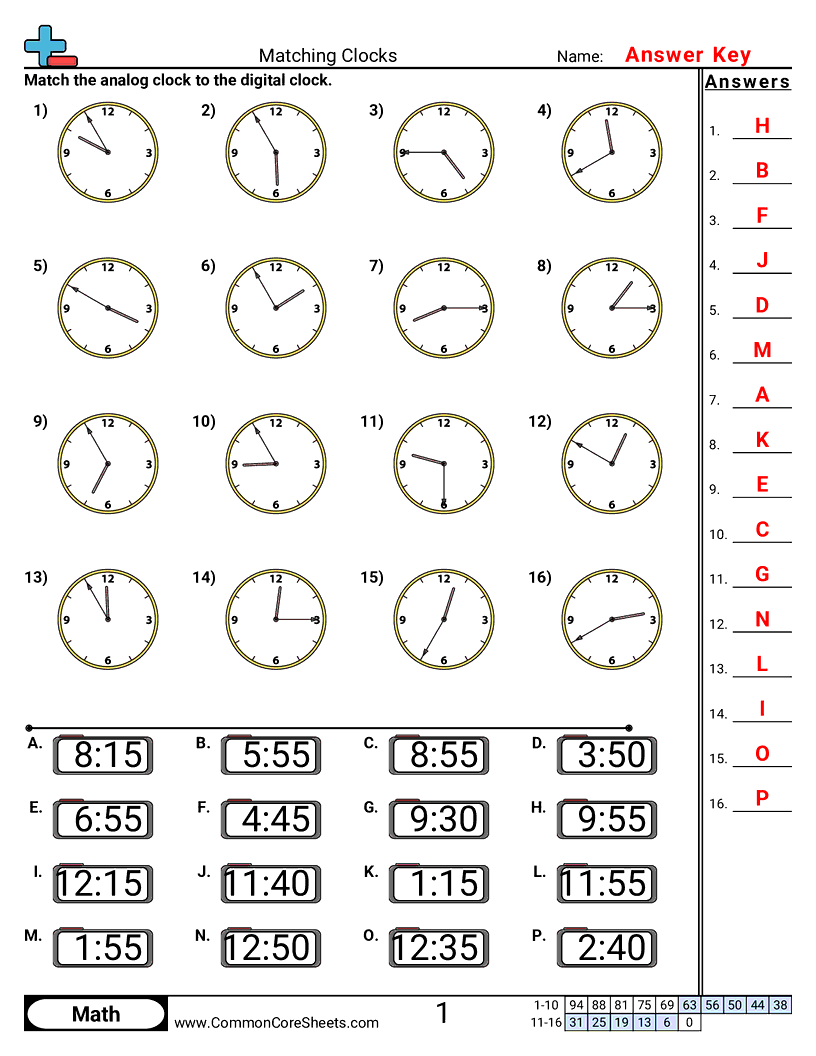
Read an analog clock to tell time to the nearest 5 minutes. Match the minute hand position to the correct minutes past the hour (5, 10, 15, and so on). Match an analog clock to the correct digital time.
2md7
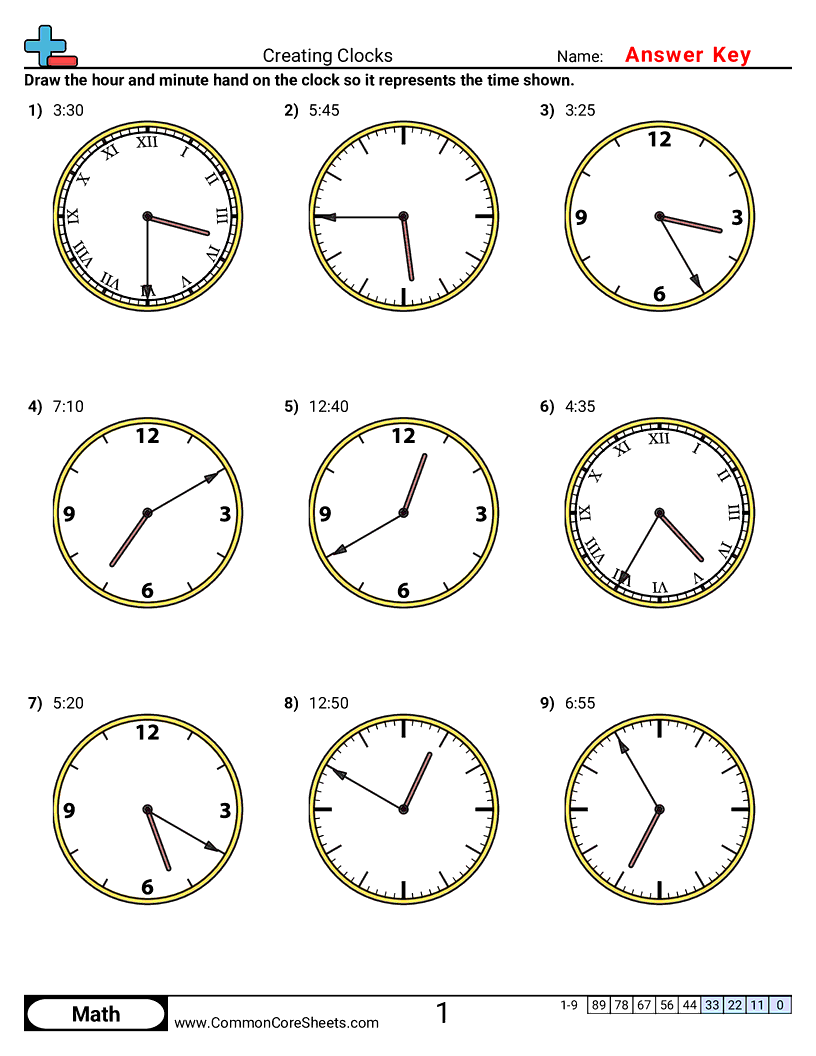
Practice showing a given time on an analog clock by drawing the hour and minute hands. Learn to place the minute hand correctly for times that land on 5-minute marks (like :05, :10, :15, and so on). Practice putting the hour hand in the right spot between numbers when it’s not exactly on the hour.
2md7
Read an analog clock to tell what time it is to the nearest 15 minutes. Use the hour hand’s position to decide which hour to say when the time is past the hour.
2md7
Read an analog clock to tell time to the nearest 15 minutes. Match a clock face to the correct digital time. Use the minute hand position to decide if the time is :00, :15, :30, or :45. Notice how the hour hand moves between numbers when it is quarter past, half past, or quarter to.
2md7
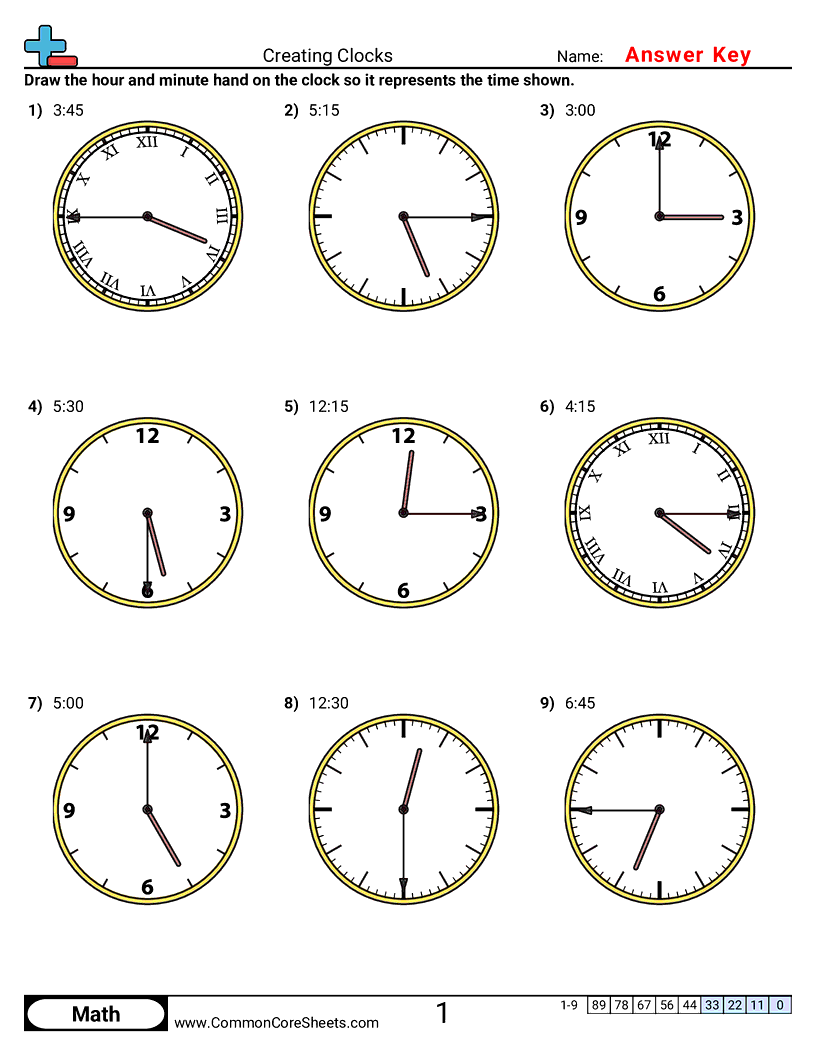
Practice drawing the hour and minute hands to match a given time on an analog clock. Learn how the minute hand points to 0, 15, 30, and 45 minutes around the clock face. Tell the difference between the hour hand and the minute hand and place each one correctly.
3md1
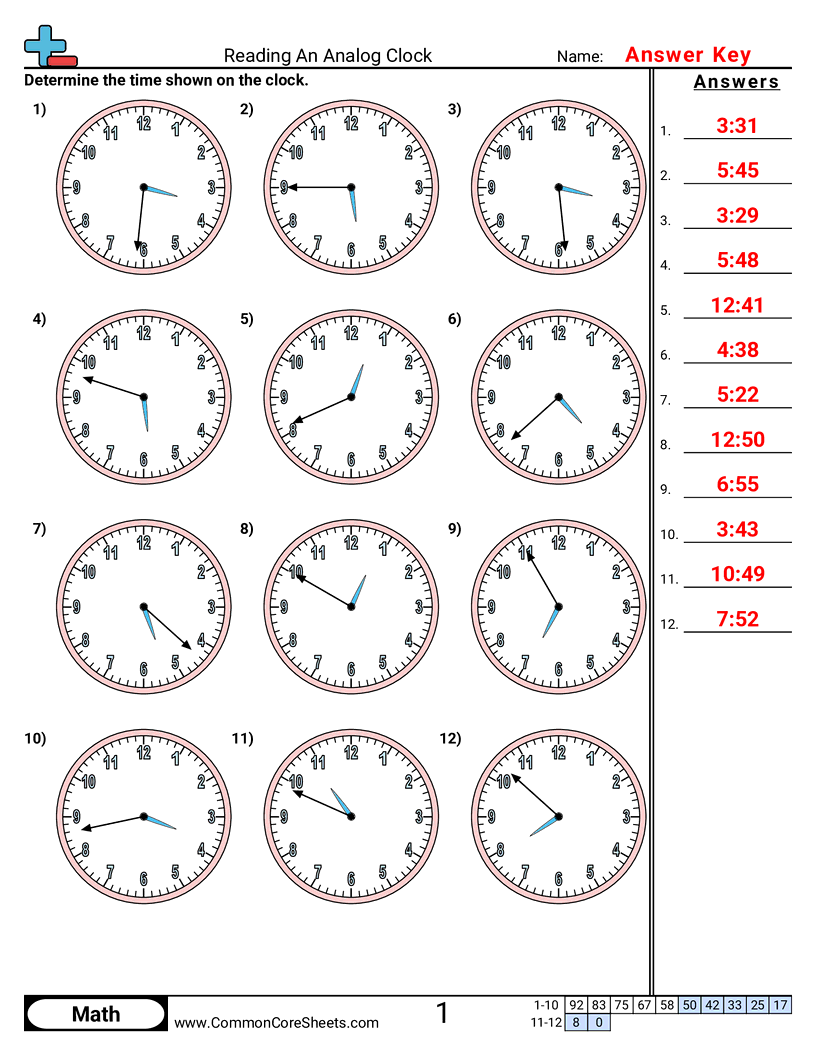
Read an analog clock to tell the exact time to the nearest minute. Use the minute hand to count minutes around the clock face, including times that are not on the 5-minute marks. Use the hour hand position to choose the correct hour when the minute hand is between numbers. Write the time correctly using hours and minutes (like 6:11).
3md1
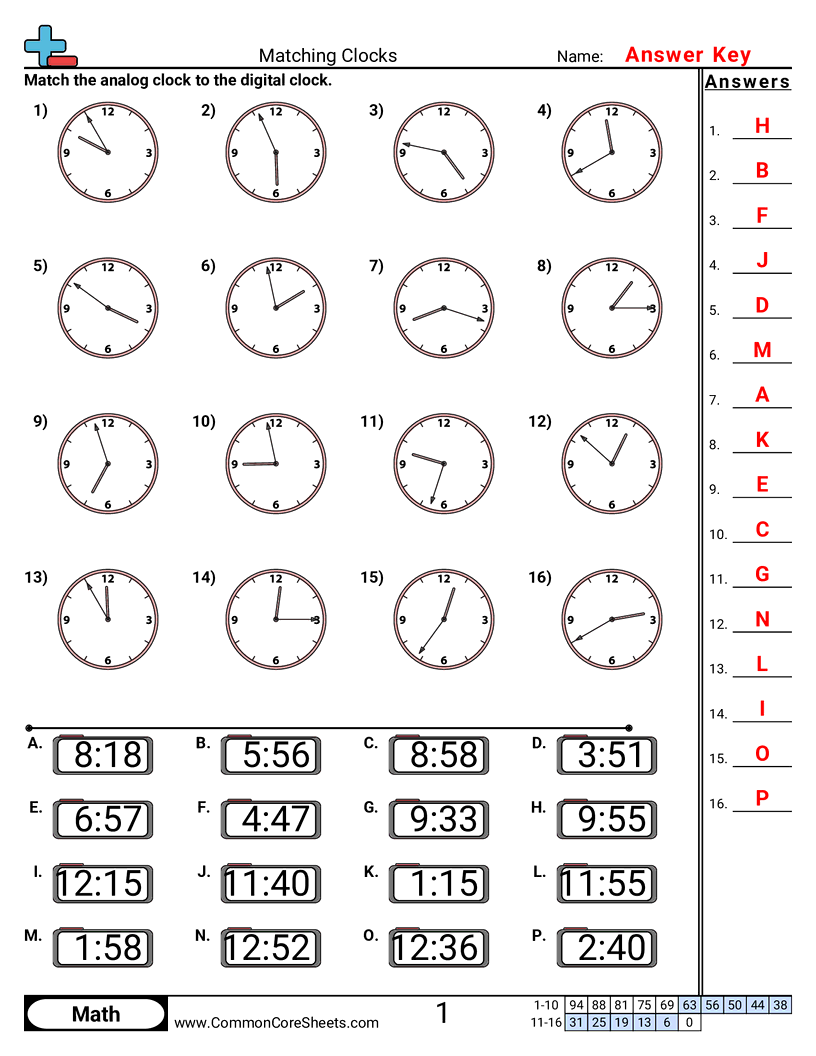
Read an analog clock and say the exact time to the minute. Match the hour and minute hands to the correct digital time. Count minutes around the clock face using the minute marks. Notice when the hour hand is between numbers and choose the correct hour.
3md1
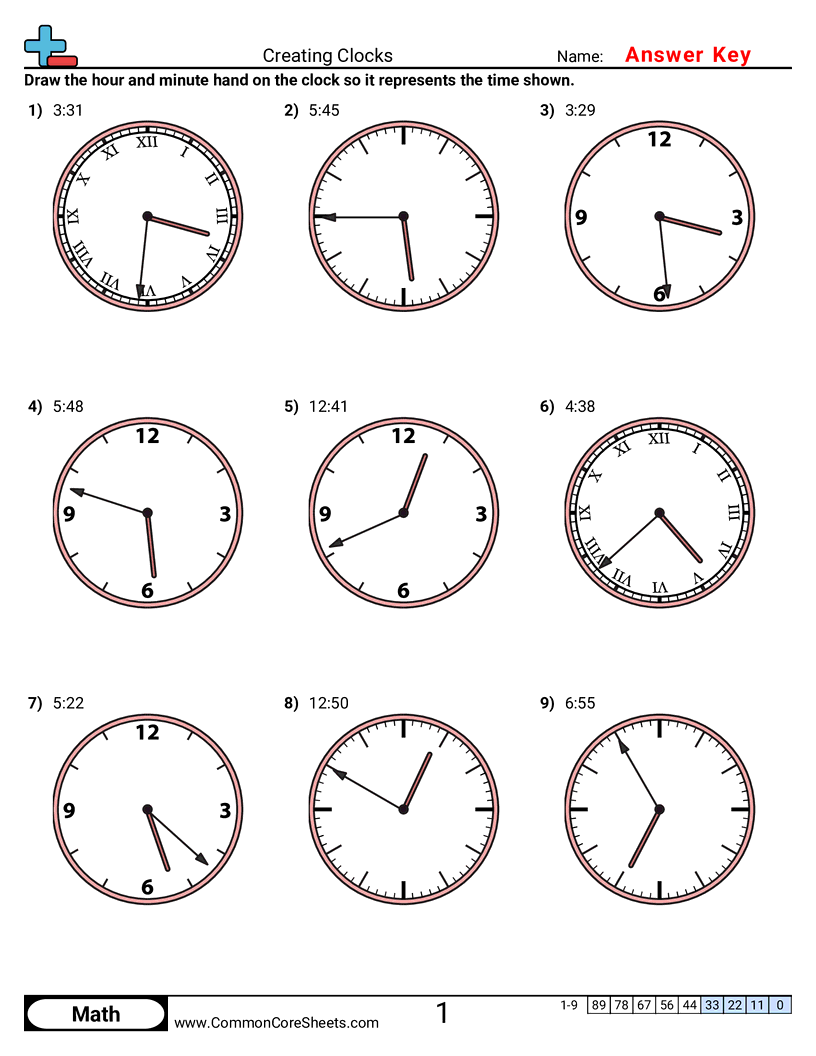
Practice showing an exact time on an analog clock by drawing the hour and minute hands. Learn to place the minute hand correctly for any minute from 00 to 59. Practice putting the hour hand in the right spot between numbers when it’s not exactly on the hour.
3md1
Practice reading the hour and minute hands on an analog clock Write the time you see using words like 'quarter past' or 'half past' Tell time to the minute and describe it in words Connect the position of the clock hands to how we say the time out loud
Playwire Advertisement