Adding & Subtracting Fractions
Link
About these worksheets
These worksheets provide comprehensive practice with fraction addition and subtraction. Topics include adding and subtracting with same and different denominators, working with mixed numbers and improper fractions, using visual models, regrouping when subtracting mixed numbers, adding tenths and hundredths, and solving fraction word problems. Resources span fourth through fifth grade and beyond.
4nf3c


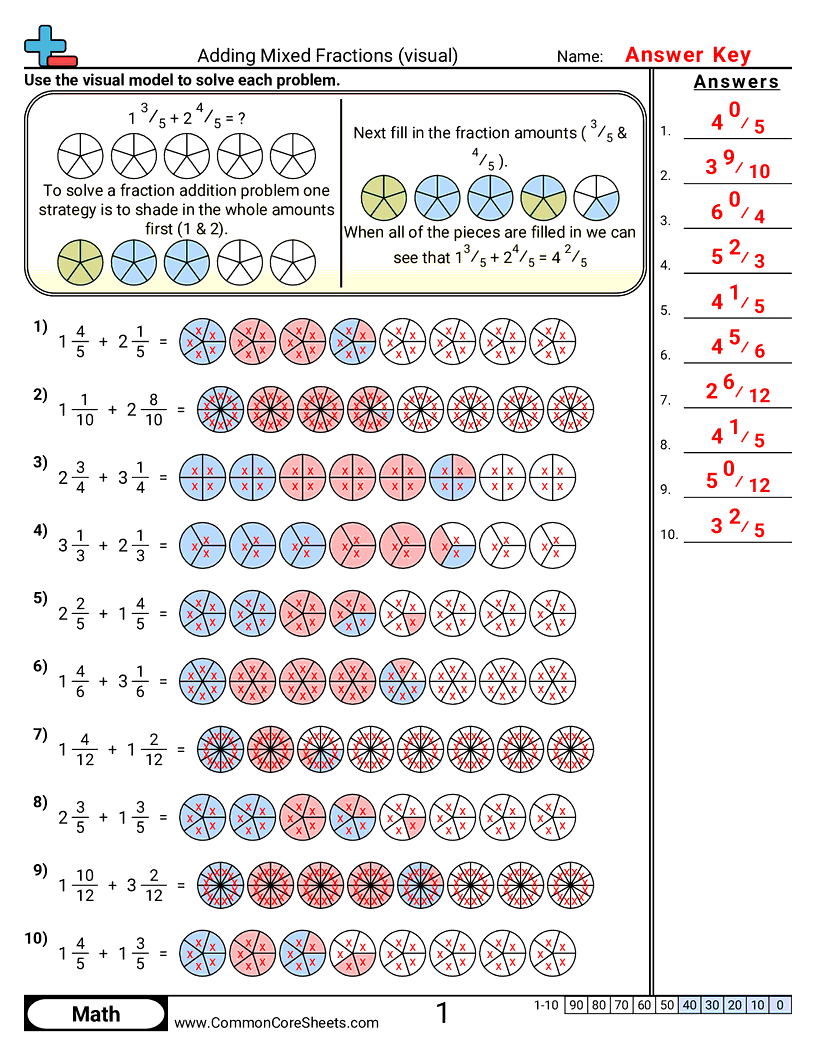
- Add mixed numbers by combining the whole-number parts and the fraction parts.
- Use pictures or fraction models to see what the fractions add up to.
4nf3c
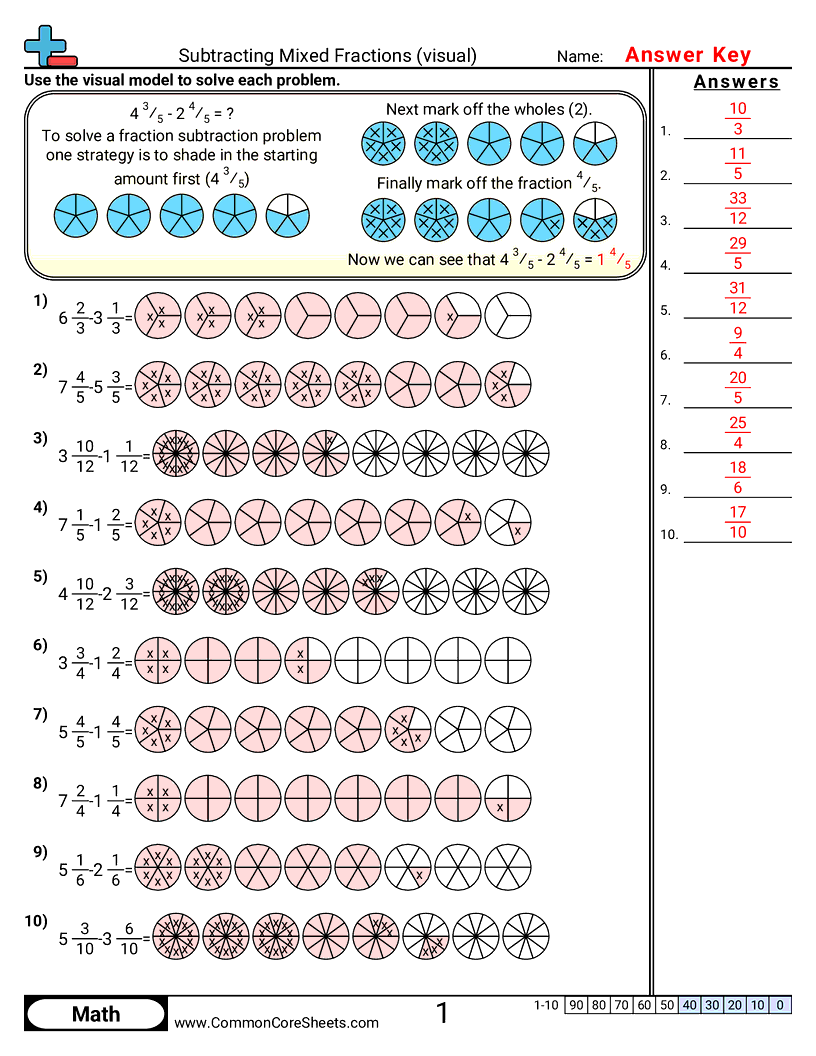
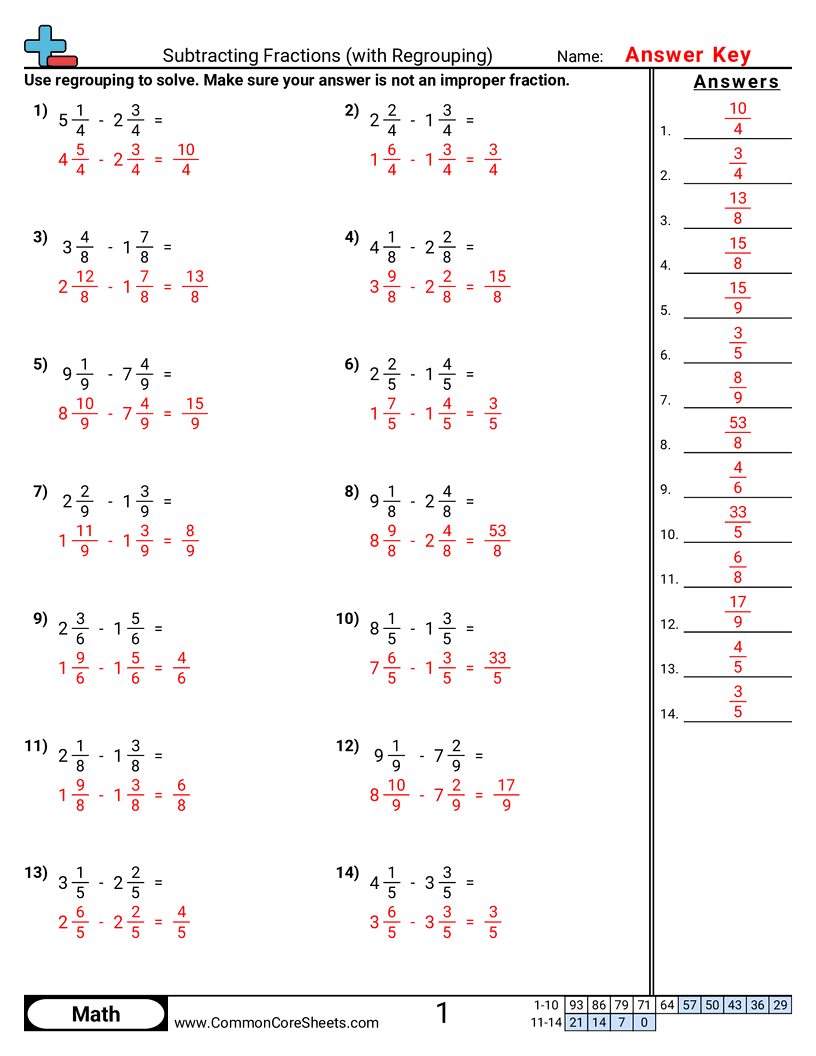
- Subtract mixed fractions to find the difference between two amounts.
- Use fraction pictures to see how the wholes and parts change when you subtract.
4nf3c
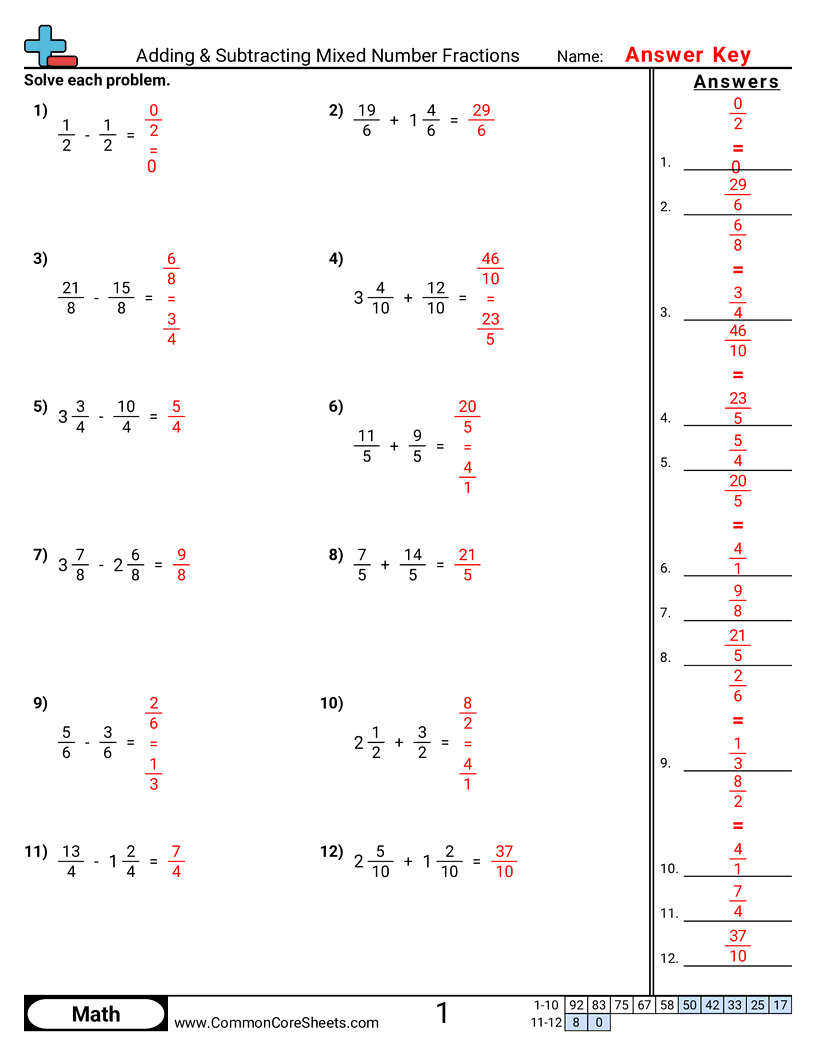
- Add mixed numbers when the fractions have the same denominator.
- Subtract mixed numbers when the fractions have the same denominator.
- Regroup when subtracting by borrowing 1 whole and turning it into fractional parts.
4nf3c
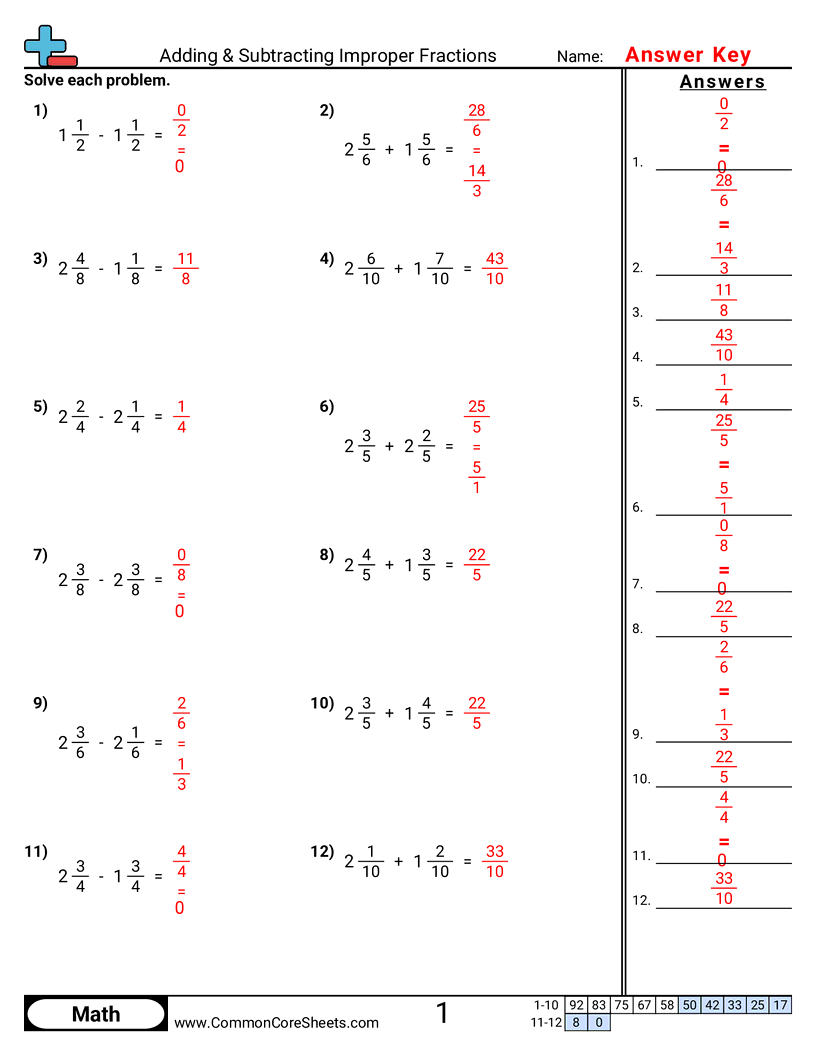
- Add improper fractions when the bottom number is the same.
- Subtract improper fractions when the bottom number is the same.
- Rename an improper fraction as a mixed number after you add or subtract.
- Simplify the final answer when the fraction can be reduced.
4nf3c
- Subtract mixed numbers when the fraction part is too small and you need to borrow 1 whole to keep subtracting.
4nf3d
- Add fractions that already have the same denominator.
- Subtract fractions that already have the same denominator.
- Read a word problem and decide whether to add or subtract the fractions.
4nf5
- Add a fraction with tenths to a fraction with hundredths and write the correct sum.
4nf3b
- Add two or more fractions that have the same denominator.
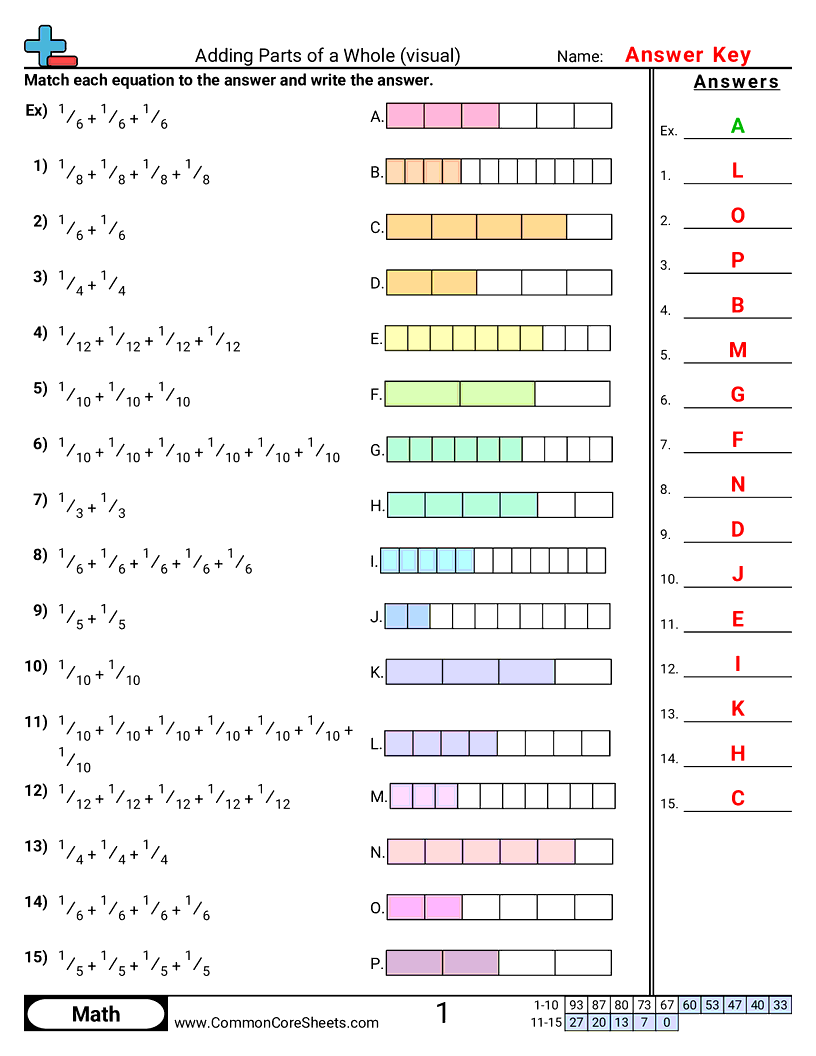
- Use fraction pictures to see how parts combine to make a total.
- Match a visual model to the correct fraction value.
4nf3a
- Add two fractions by combining their parts to make a total amount.
- Use pictures or fraction models to see what each fraction means before adding.
4nf3c
- Add two fractions to find the total amount.
- Add fractions with the same denominator.
- Match a fraction sum to the correct picture model.
Multiplying & Dividing Fractions
Link
About these worksheets
Students build fluency with fraction multiplication and division through a wide range of activities. Worksheets cover multiplying fractions by whole numbers and by other fractions, using visual models and number lines, estimating fraction products, cross-cancelling, dividing unit fractions, interpreting fractions as division, distributing fractional amounts, and solving word problems. Topics span fourth through sixth grade Common Core standards.
4nf4a
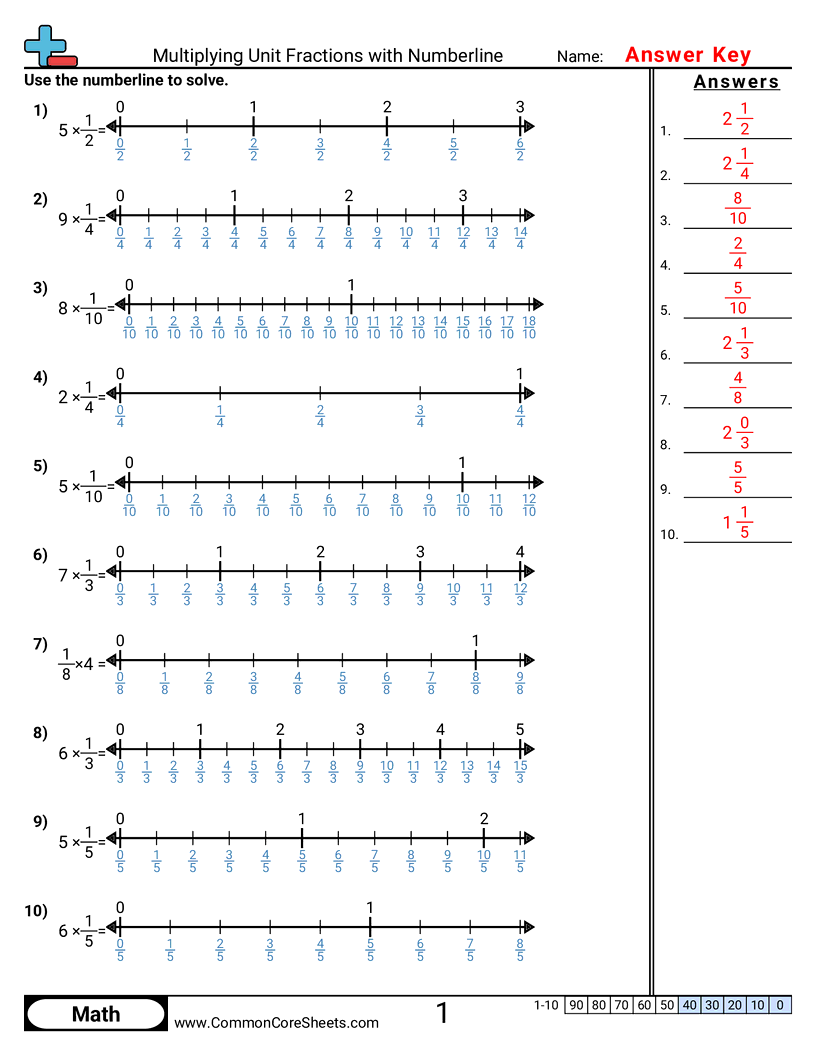
- Understand that multiplying a unit fraction means taking that fraction of a whole number.
- Use a number line to show equal jumps of a unit fraction and find the total distance.
4nf4b
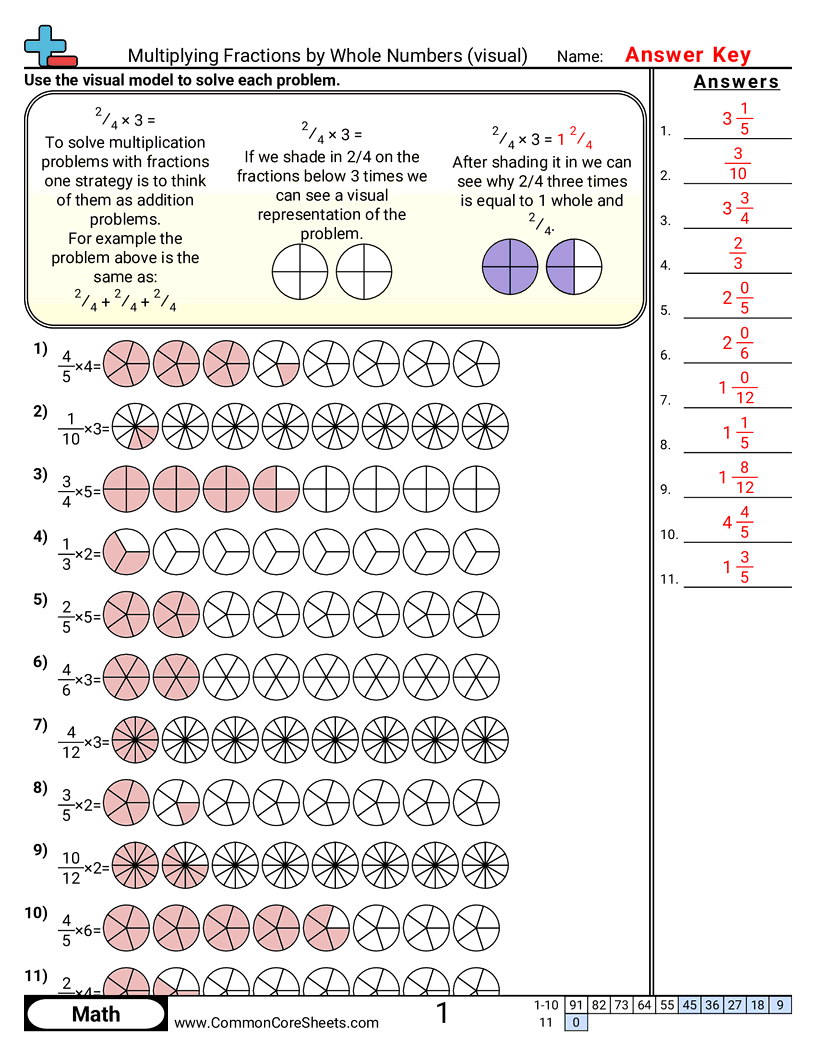
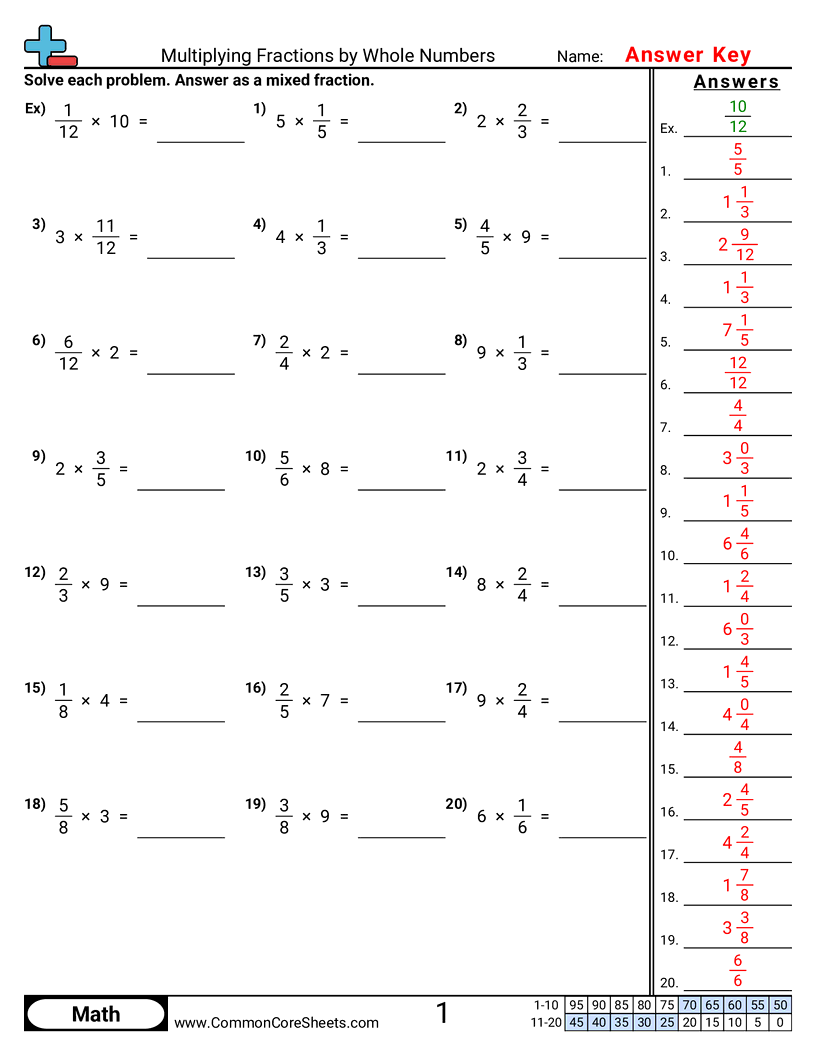
- Multiply a fraction by a whole number to find a product.
- Use a picture model to show repeated groups of the same fraction.
4nf4a
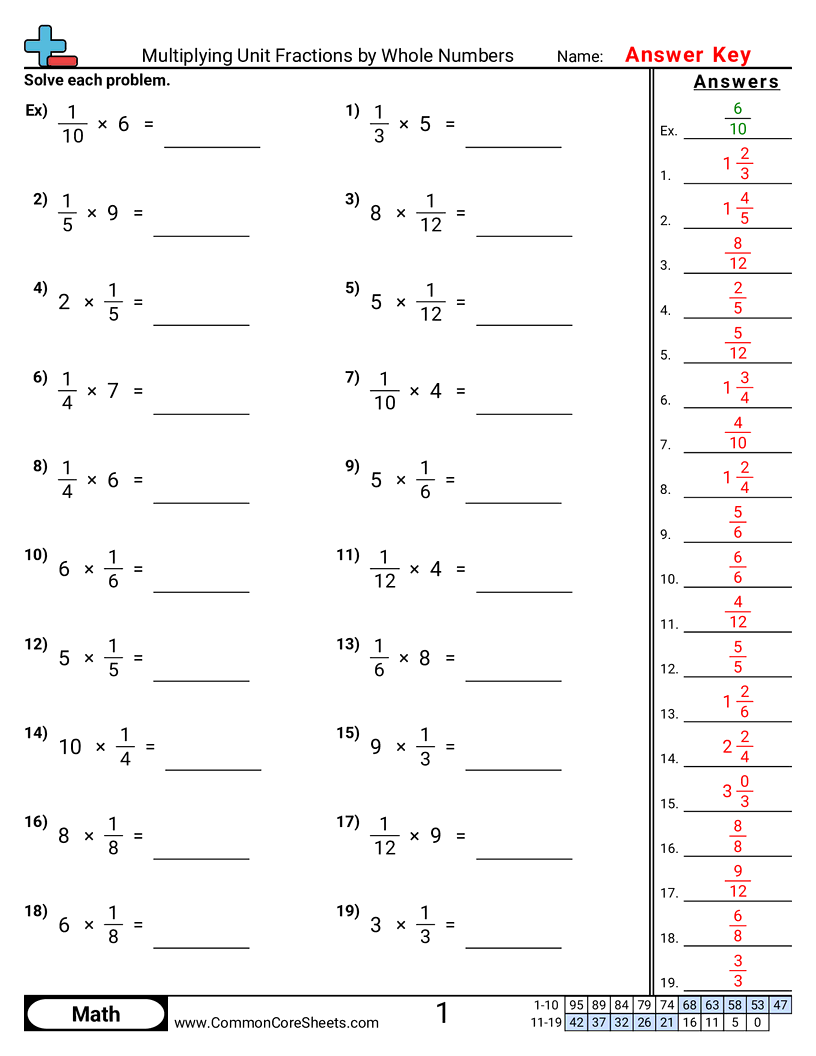
- Multiply a unit fraction by a whole number to find the product.
- Use repeated addition to understand what it means to multiply a fraction by a whole number.
- Explain the result as “that many copies of the fraction” (for example, 3 × 1/4 means three one-fourths).
4nf4b
- Multiply a fraction by a whole number to find the total amount.
- Use pictures or models to show what it means to take a fraction several times.
- Connect repeated addition of the same fraction to multiplication.
4nf4a
- Multiply a fraction by a whole number to find the total amount in several equal groups.
- Use repeated addition to understand what it means to multiply a fraction by a whole number.
4nf4c
- Figure out what it means to take a fraction of a whole number in a story problem.
- Multiply a fraction by a whole number to find how much you have in all.
About these worksheets
These worksheets develop fraction comparison skills using multiple strategies. Students compare fractions with same numerators or denominators, compare fractions with different denominators using common denominators, determine whether fractions are greater than, less than, or equal to one-half, order sets of fractions, and use visual models for comparison. Resources span third through fourth grade.
- Decide which of two fractions is greater, less, or if they are equal by looking at pictures or models.
4nf2
- Compare two fractions that have different denominators and decide which one is greater or less.
- Use equivalent fractions (common denominators) to make unlike fractions easier to compare.
4nf2
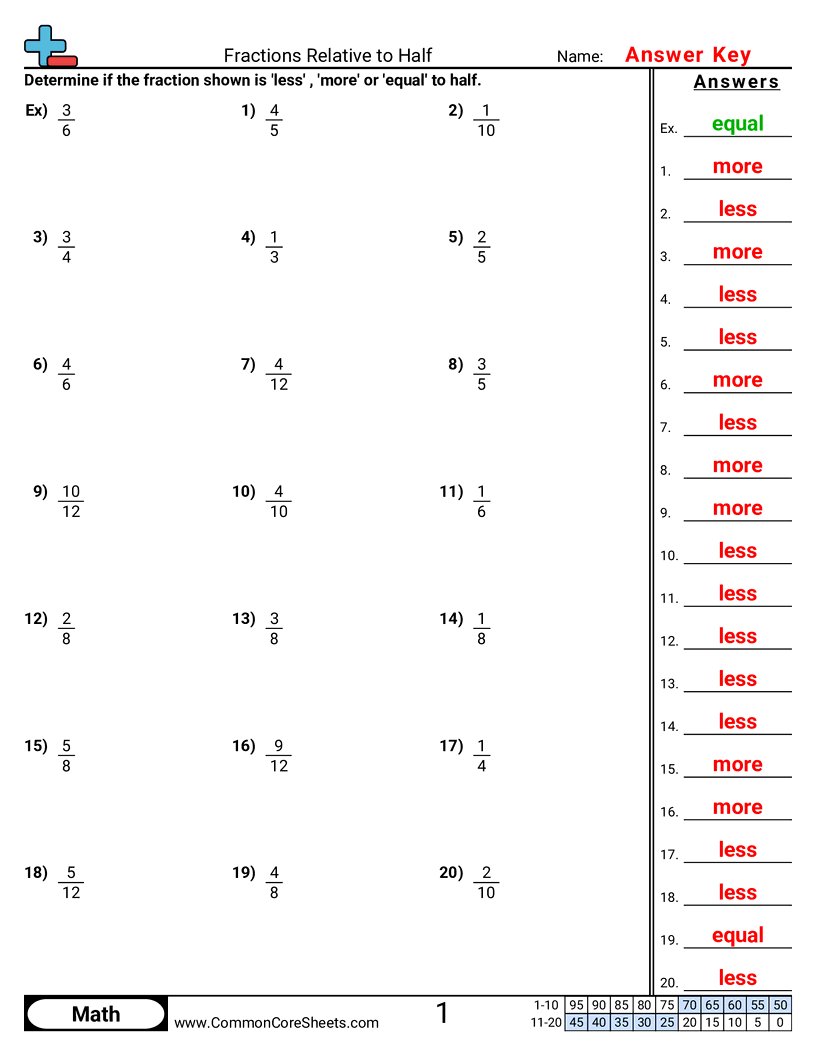
- Decide whether a fraction is less than, equal to, or greater than one half.
- Use the numerator and denominator to tell if a fraction is exactly one half (evenly divisible).
- Compare fractions to the benchmark fraction 1/2 without converting to decimals.
- Recognize equivalent fractions that are equal to 1/2 (like 2/4 or 5/10).
4nf3d
- Add and subtract fractions to find a sum or difference.
- Compare two fraction results to decide which is greater, less, or equal.
- Use common denominators or equivalent fractions to make comparisons easier.
4nf2
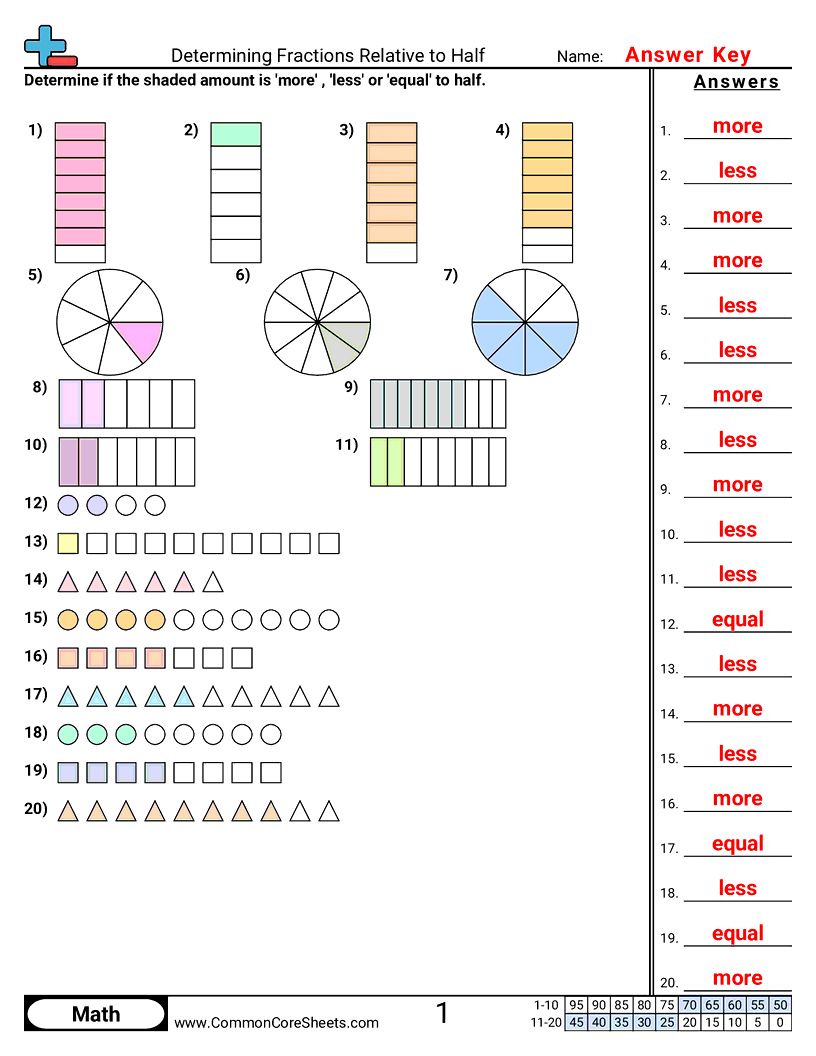
- Decide whether a shaded fraction is less than, equal to, or greater than one-half.
- Compare a fraction to 1/2 by thinking about how many equal parts make a whole.
- Use pictures like fraction models or number lines to judge a fraction’s size compared to 1/2.
Equivalent Fractions
Link
About these worksheets
Students learn to create, identify, and work with equivalent fractions. Activities include using visual models and number lines to find equivalent fractions, reducing fractions to simplest form, finding missing numerators or denominators, recognizing equivalent fraction patterns, writing whole numbers as fractions, and simplifying mixed numbers with improper fraction parts. Aligned with third through fourth grade standards.
4nf1
- Practice simplifying fractions to their smallest form.
- Find a common factor in the numerator and denominator and divide both by the same number.
- Use the greatest common factor to reduce a fraction in one step.
4nf1
- Find the missing numerator or denominator that makes two fractions equal.
- Use multiplication to scale a fraction up to an equivalent fraction.
- Use division to scale a fraction down to an equivalent fraction.
- Spot the pattern that the numerator and denominator must change by the same factor.
4nf1
- Find the missing number that makes two fractions equivalent.
- Use a pattern or rule to see how the numerator and denominator are being scaled.
- Multiply or divide the numerator and denominator by the same number to keep a fraction’s value the same.
- Explain why two different-looking fractions can represent the same amount.
4nf1
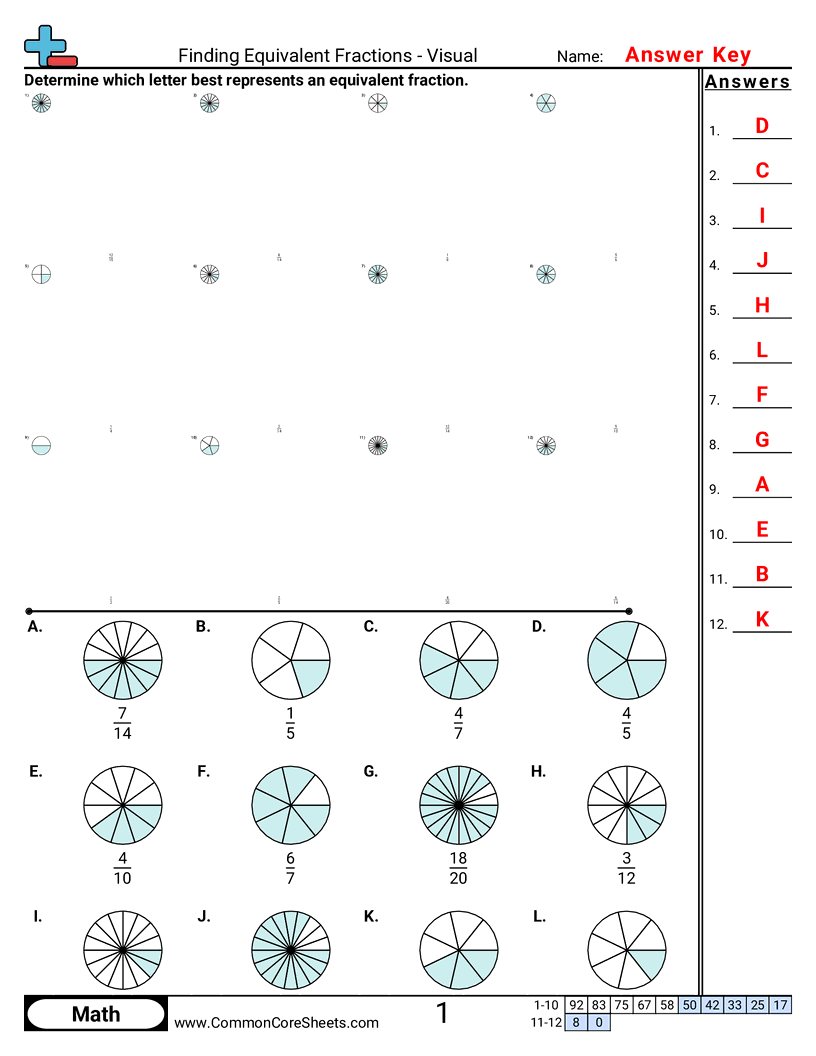
- Use shaded pictures to see what fraction of a whole is shown.
- Match two pictures that show the same amount shaded, even if they are split into different numbers of parts.
- Write an equivalent fraction by multiplying the numerator and denominator by the same number.
- Explain why two fractions are equal by pointing to the same shaded area in the models.
4nf4b
- [object Object]
- [object Object]
- [object Object]
- [object Object]
- [object Object]
- [object Object]
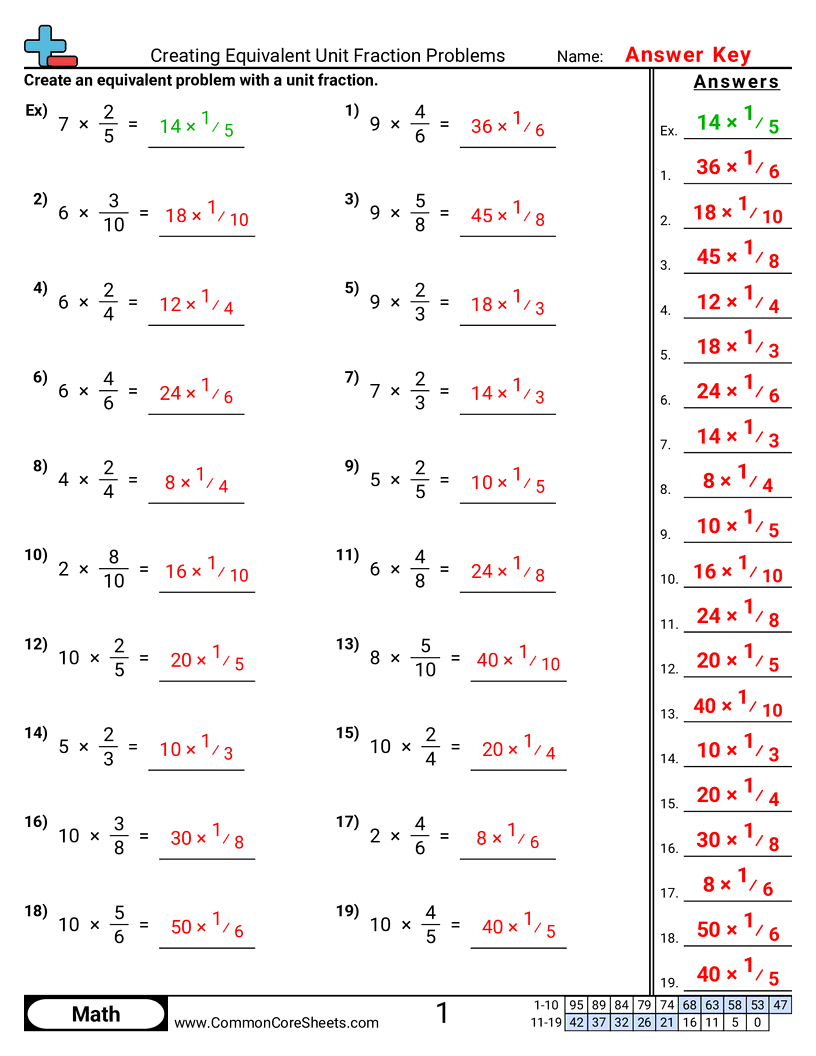
- Practice rewriting a whole number times a fraction as an equivalent expression with a unit fraction (e.g., 7 × 2/5 = 14 × 1/5)
- Multiply the whole number by the numerator to create the new whole number in the expression
- Understand that multiplying by a fraction like 2/5 is the same as multiplying by 2 and then by 1/5
4nf1
- Recognize when two fractions are equal even if they use different numbers.
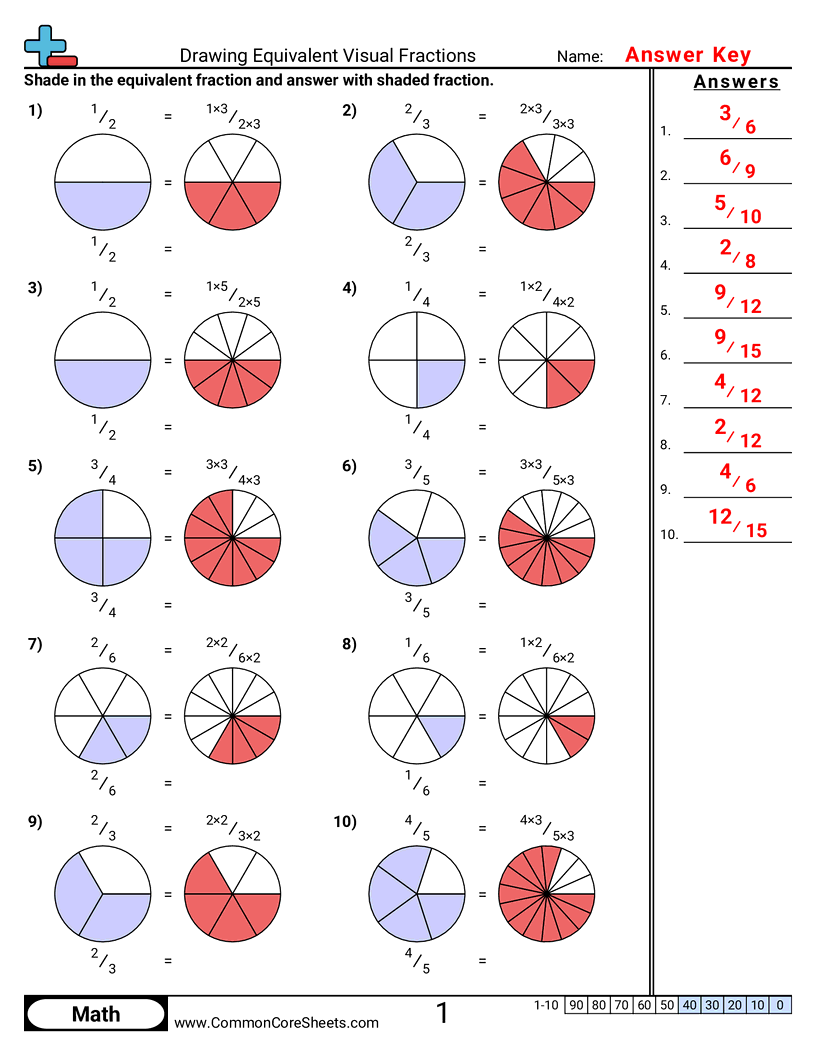
- Shade fraction models to show the same amount in different ways.
- Match a given fraction to an equivalent fraction by partitioning a shape into more equal parts.
- Explain how multiplying the top and bottom of a fraction by the same number keeps the value the same.
- Practice understanding that any whole number can be written as a fraction (like 6 = 6/1)
- Find the missing value in a fraction that makes it equal to a whole number
- Learn that dividing a number by itself equals 1 and dividing a number by 1 equals itself
Converting Fractions
Link
About these worksheets
These worksheets focus on converting between different fraction forms. Students practice converting fractions to whole numbers, changing improper fractions to mixed numbers, converting mixed numbers to improper fractions, and matching visual models to both forms. Aligned with third and fourth grade standards.
4nf3c
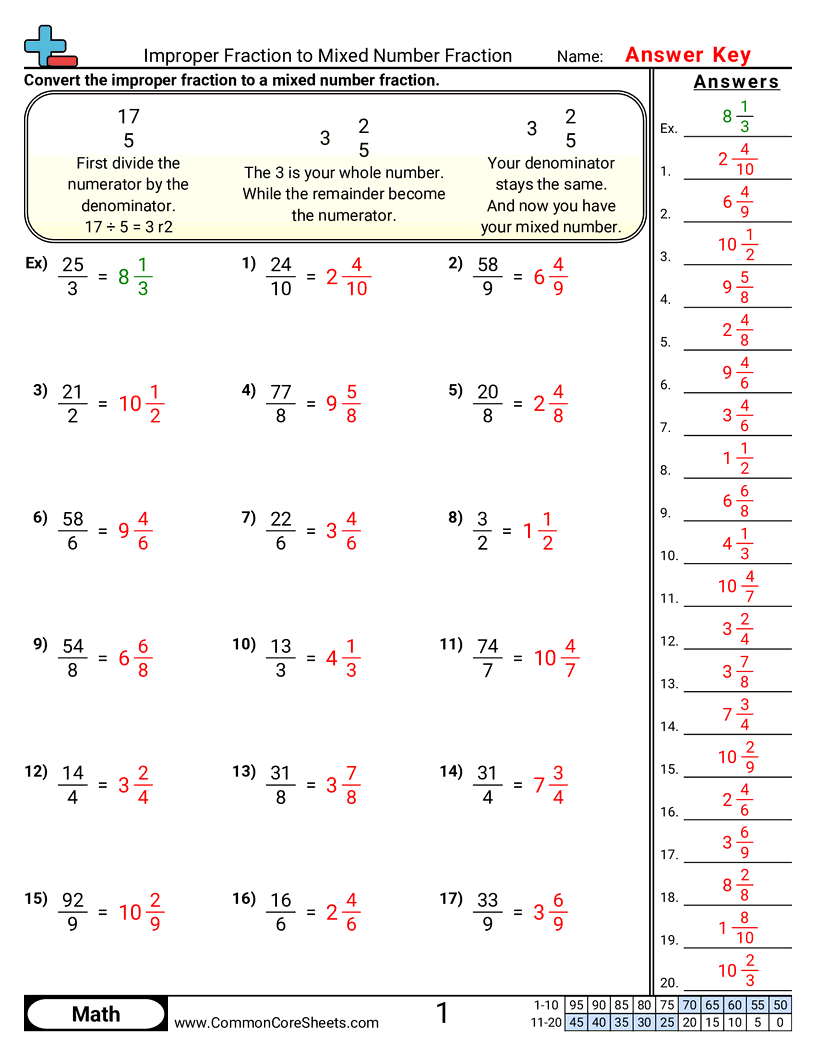
- Turn an improper fraction into a mixed number by finding how many whole groups it makes and what part is left over.
- Use division to connect the numerator and denominator when rewriting a fraction as a whole number plus a fraction.
- Write the remainder as the fractional part with the same denominator.
4nf3c
- Convert a mixed number into an improper fraction.
- Multiply the whole number by the denominator to find how many fractional parts are in the whole part.
- Add the extra numerator to get the new numerator while keeping the same denominator.
Comparing Fractions, Decimals & Percents
Link
About these worksheets
Students develop fluency in comparing and converting between fractions, decimals, and percents. Worksheets include numeric fraction comparison, finding equivalent values across all three forms, using visual models and number lines, and working with number wheels. These resources help students see fractions, decimals, and percents as different representations of the same quantity. Aligned with fourth grade and above.
4nf6
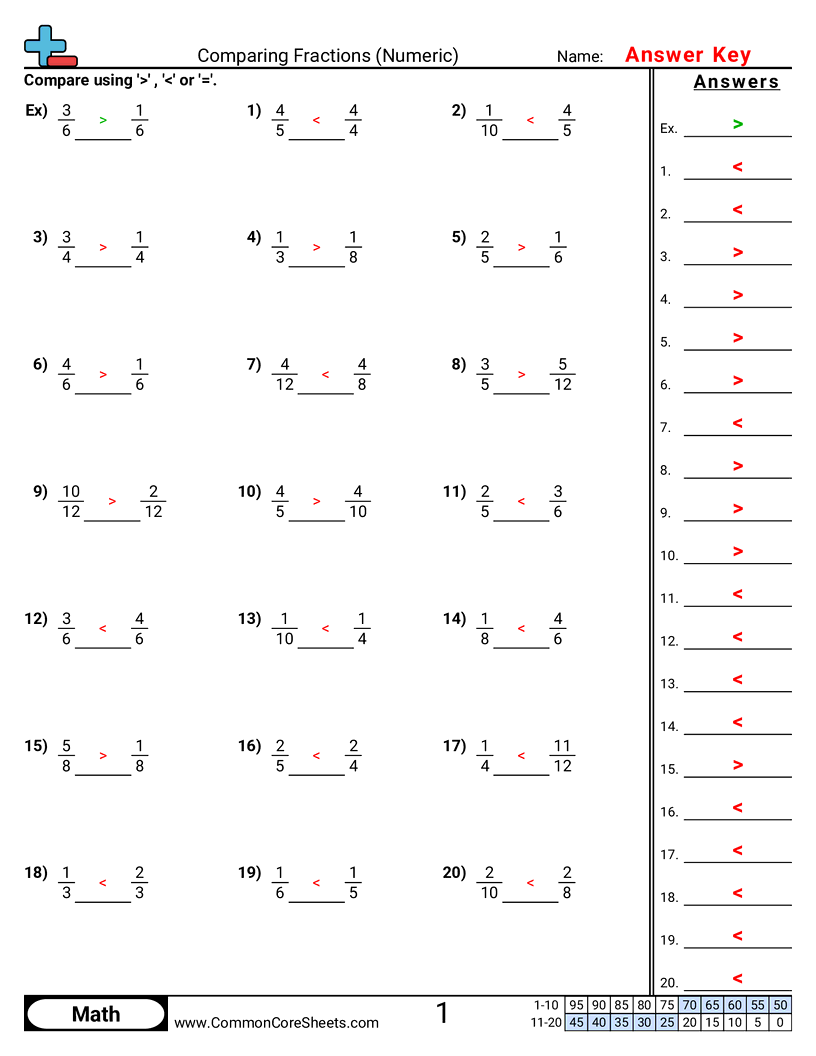
- Decide which of two fractions is greater, less, or if they are equal.
- Compare fractions even when they have different denominators.
- Use equivalent fractions or common denominators to make comparisons easier.
4nf6
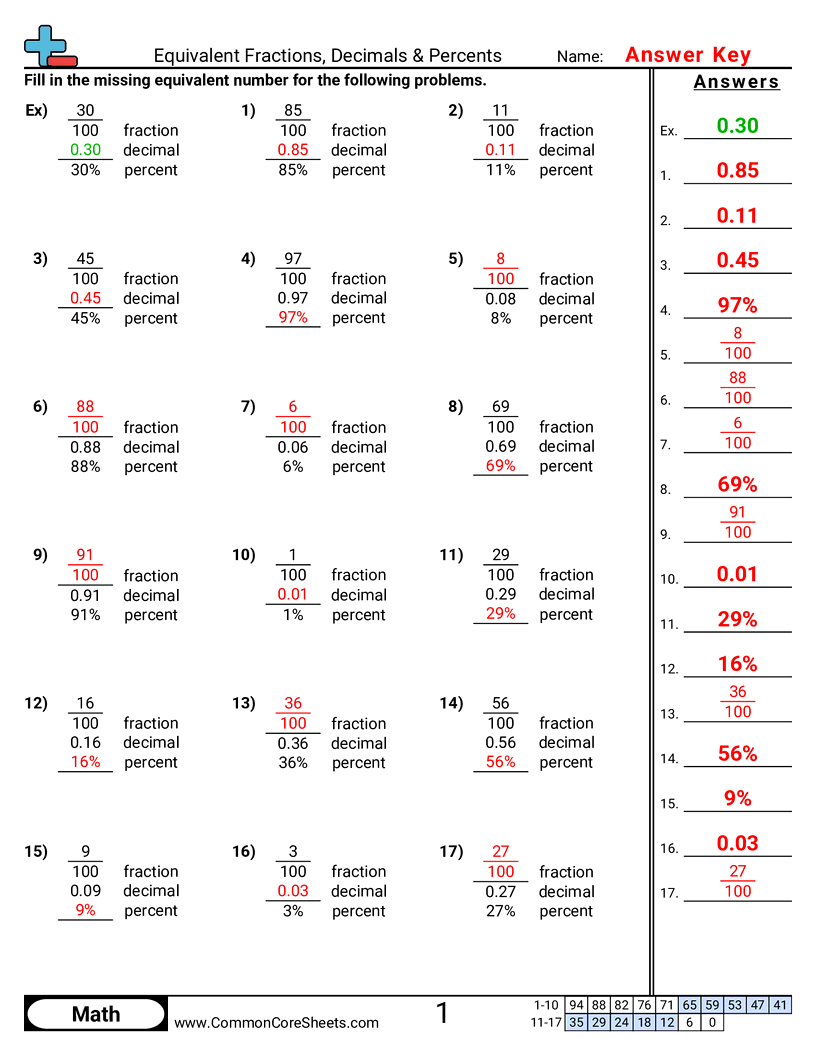
- Convert between fractions, decimals, and percents that represent the same amount.
- Find a missing fraction, decimal, or percent by using equivalent values.
4nf6
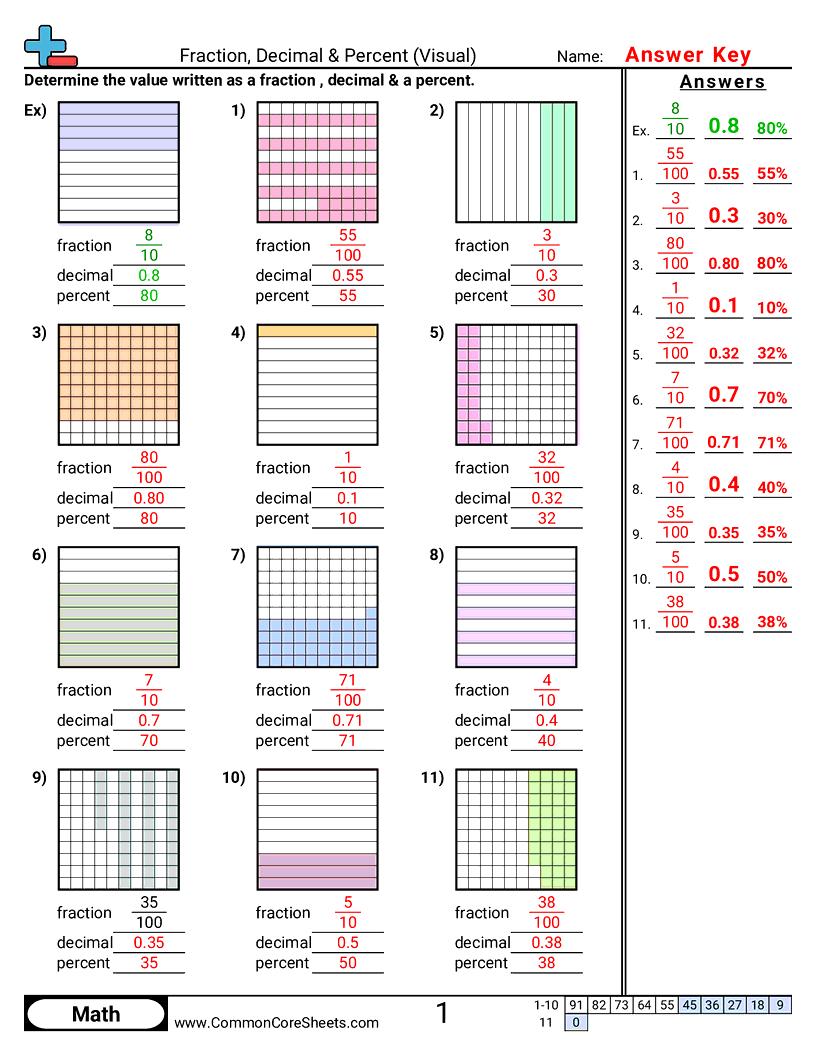
- Read a shaded picture model and name the fraction that is shaded.
- Write the shaded amount as a decimal.
- Write the shaded amount as a percent.
- Convert between fraction, decimal, and percent to show the same amount in different ways.
4nf6
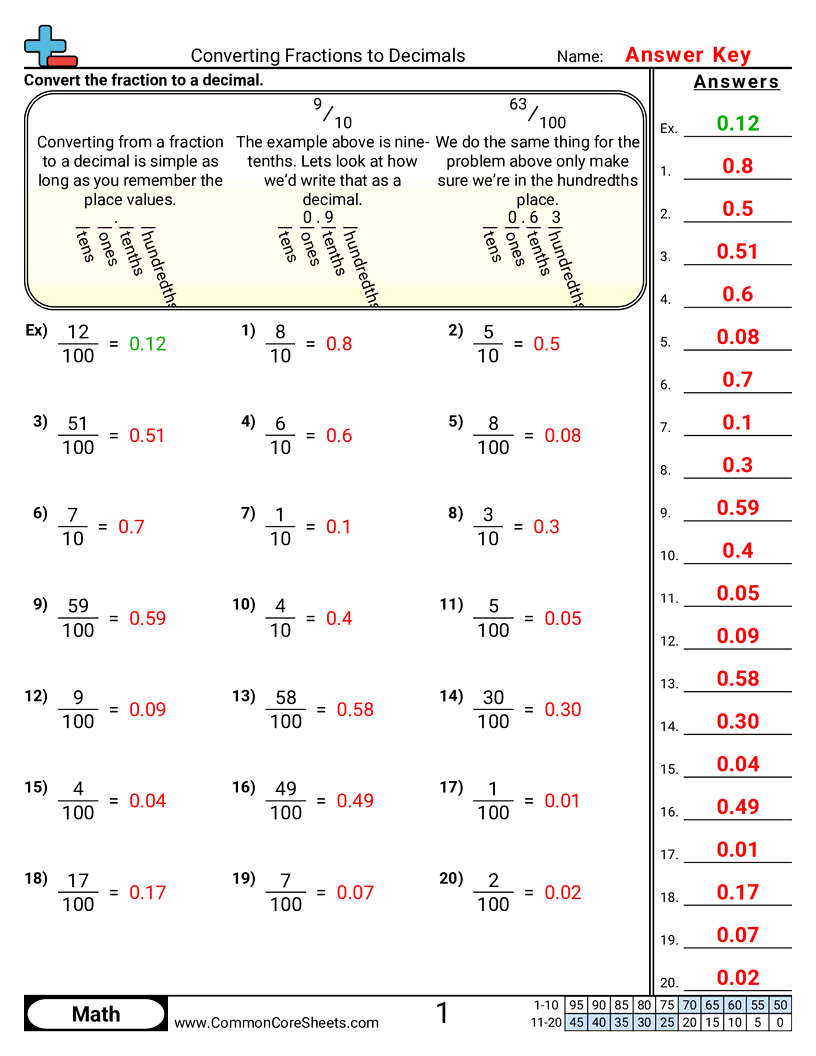
- Turn a fraction into a decimal by dividing the numerator by the denominator.
- Write decimals correctly using tenths and hundredths place value.
4nf6
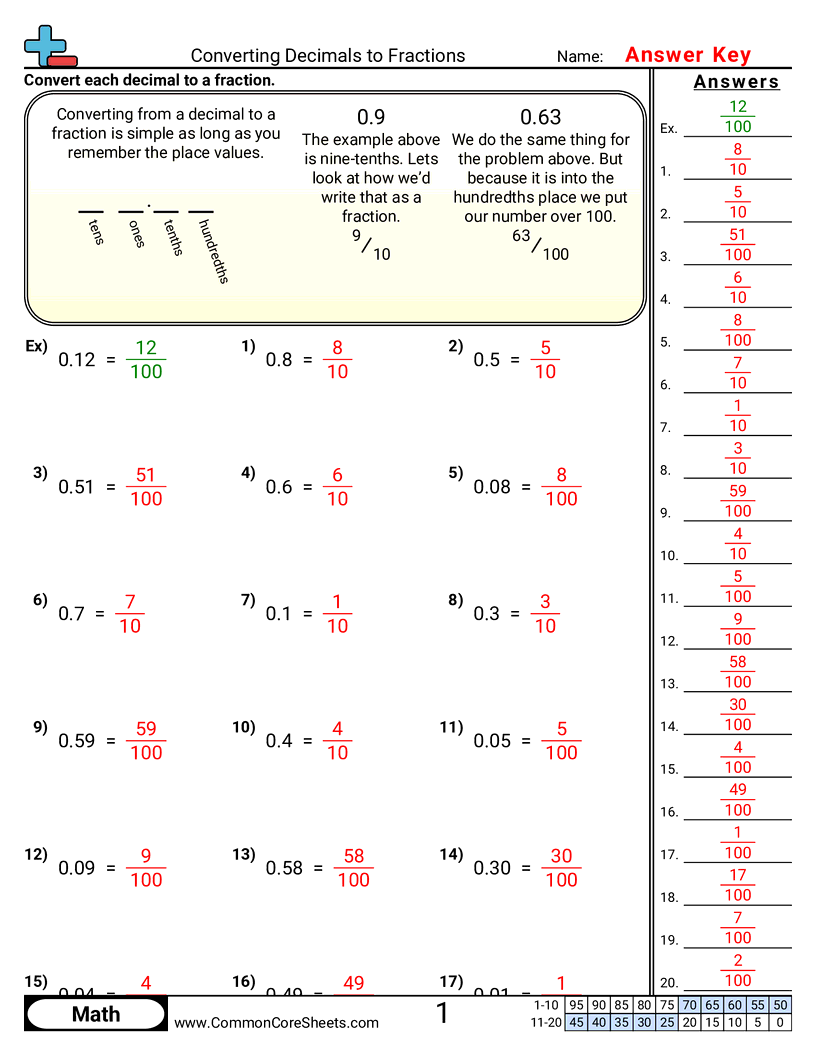
- Turn a decimal into a fraction by using the place value to choose the denominator.
- Connect the decimal and fraction as two ways to show the same amount.