4nf6×Description:
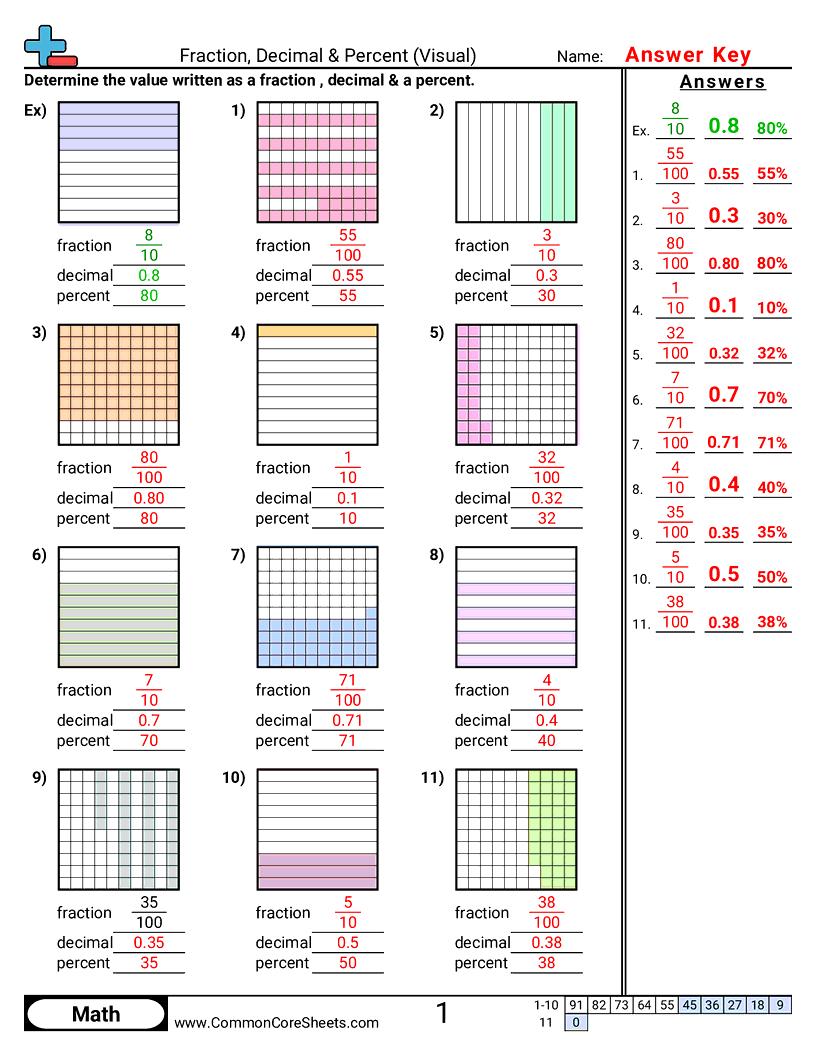
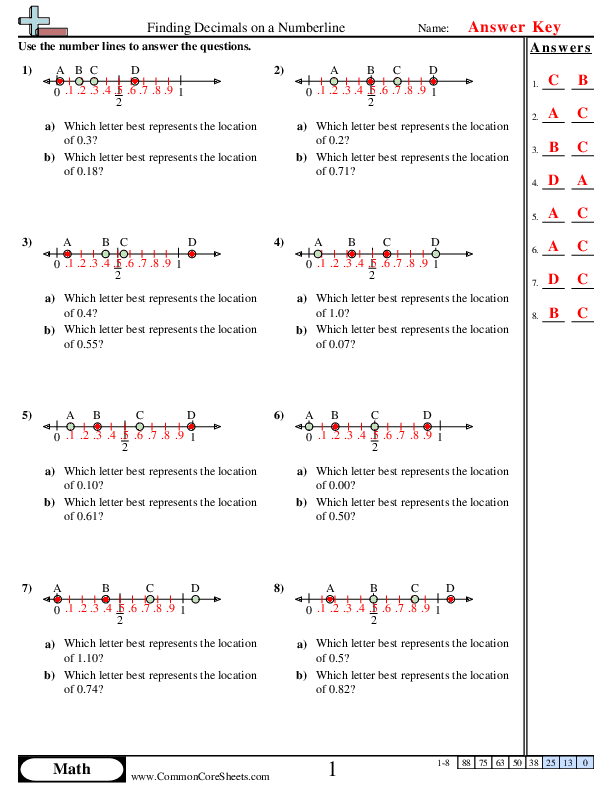
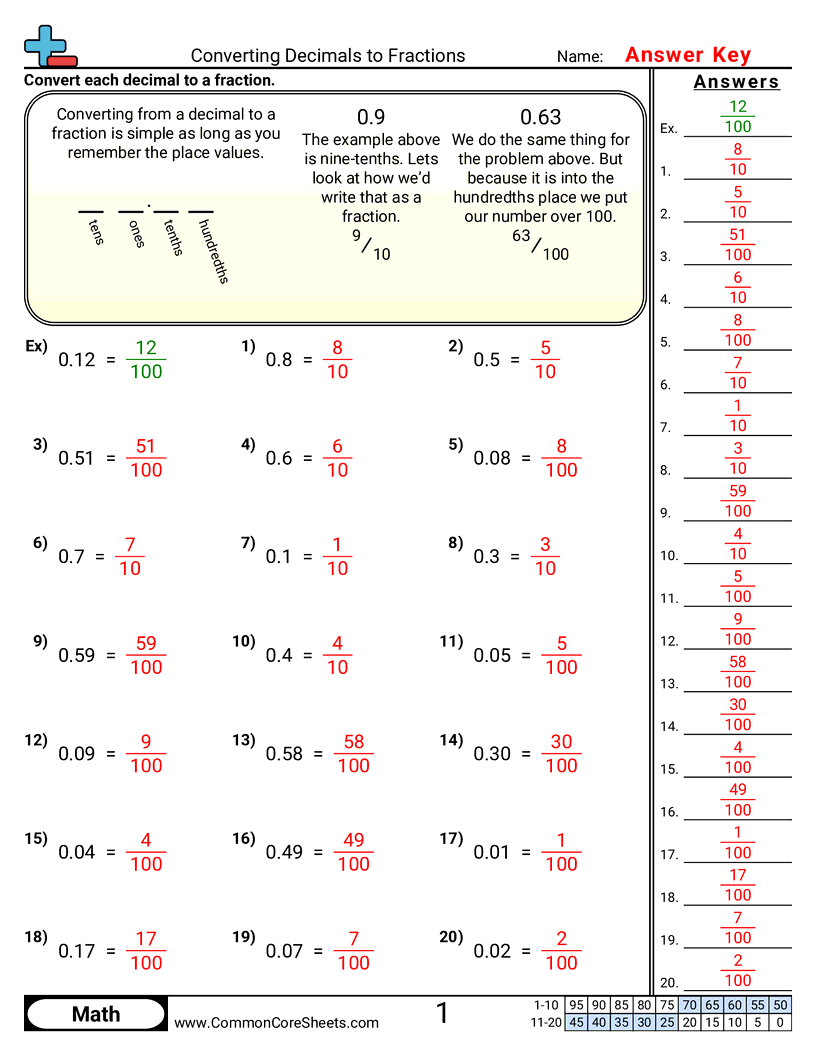
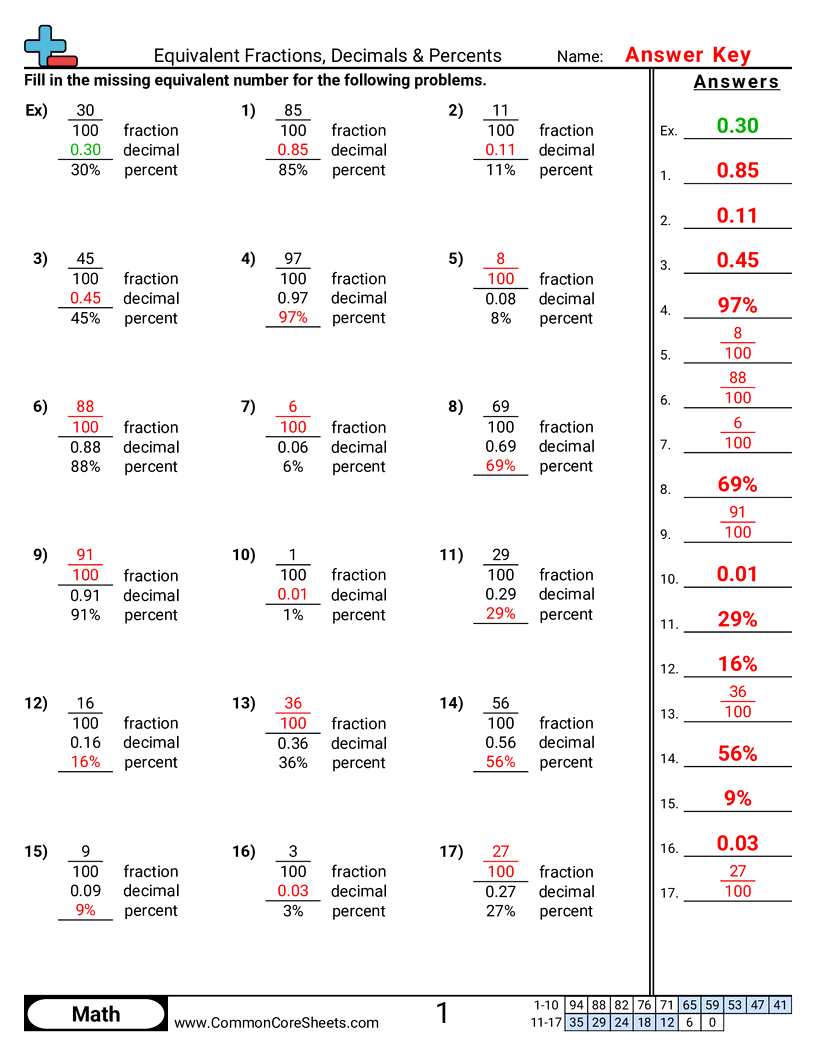
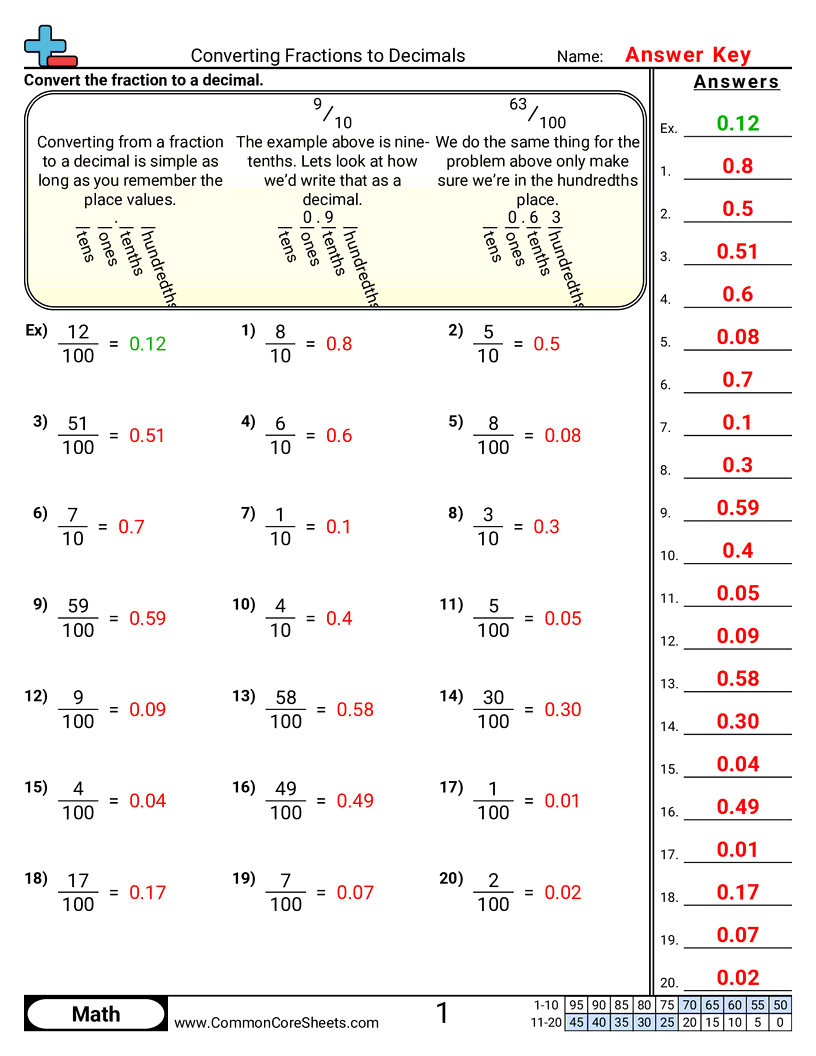
"This worksheet is designed to enhance children's understanding of the correlation between fractions, decimals, and percentages using clear visual aids. It offers 11 unique problems, enabling students to apply their learned concepts practically. Educators can customize this versatile resource, creating flashcards for a more interactive experience or integrating it into distance learning curricula. This focused approach aids in building a solid foundation for more complex mathematical concepts."
×Student Goals: Understanding of Basic Mathematical RepresentationStudents should demonstrate a solid grasp of basic mathematical representation by successfully completing each problem in the worksheet. This includes understanding fractions, decimals, and percentages, and their relations. They should be able to confidently convert fractions to decimals and percentages, and vice versa, thus displaying proficiency in manipulating different mathematical forms.Mathematical Literacy DevelopmentBy the completion of the worksheet, students should have improved their mathematical literacy. They're set to have deepened their understanding of mathematical concepts and terminology, especially those pertaining to fractions, decimals, and percentages. A boosted level of mathematical literacy will make them better at quickly recognizing and processing mathematical patterns, which is a key skill that will benefit them in future advanced mathematical endeavors.Analytical Skills EnhancementAfter engaging with the worksheet, students are expected to have enhanced their analytical skills. By navigating from fractions to decimals to percentages, and correlating their common value, students will have strengthened their analytical thinking. This is a critical skill not just in mathematics but in problem-solving in other academic spheres and real-life situations. It helps develop an independent thinking process that is essential to make them successful learners.Comprehension of Practical ApplicationsUpon completion, students are projected to appreciate the practical applications of what they have learnt. Fractions, decimals, and percentages are not just theoretical mathematical concepts; they come to life in many everyday scenarios. Whether it's managing personal finances, planning baking recipes, or analyzing sports statistics, these concepts are widely used. Understanding them can thus empower students to navigate their everyday life more effectively.Confidence in Mathematical AbilitiesFinally, students should gain enhanced confidence in their mathematical abilities. Successfully solving these exercises will give them a strong sense of achievement and boost their academic confidence. This belief in their own capabilities will motivate them to approach more challenging mathematical problems in the future with less fear and more determination. In learning, confidence is key, and through mastering this worksheet, students are setting up a positive foundation for all future learning.