6th Grade 25 Days of Christmas Reading
A free nonfiction reading passage for every day of December up to Christmas, from the first Advent calendars to Saint Lucia Day and the Christmas Truce. Each one comes at several reading levels, K to 8, with questions, an answer key and a coloring page.
More about these worksheets ▾ Show less ▴
1 2 3 4 5 6 7 8 9 10 11 12 13 14 15 16 17 18 19 20 21 22 23 24 25
Grade & filters: 6th Grade ▾
Read-along: Every passage on this page reads itself aloud, word by word, when you assign it online.▶ Hear an example
EXAMPLE
A sample passage. Students hear the passage you assign the same way.
■ Stop
✕ Close
Loading…
The bar at the bottom of the screen is what students get: pause, slow it down, or tap a word to hear it again.
×
RI.1 RI.2 RI.3 RI.4 RI.5 RI.6 RI.7 RI.8 RI.K
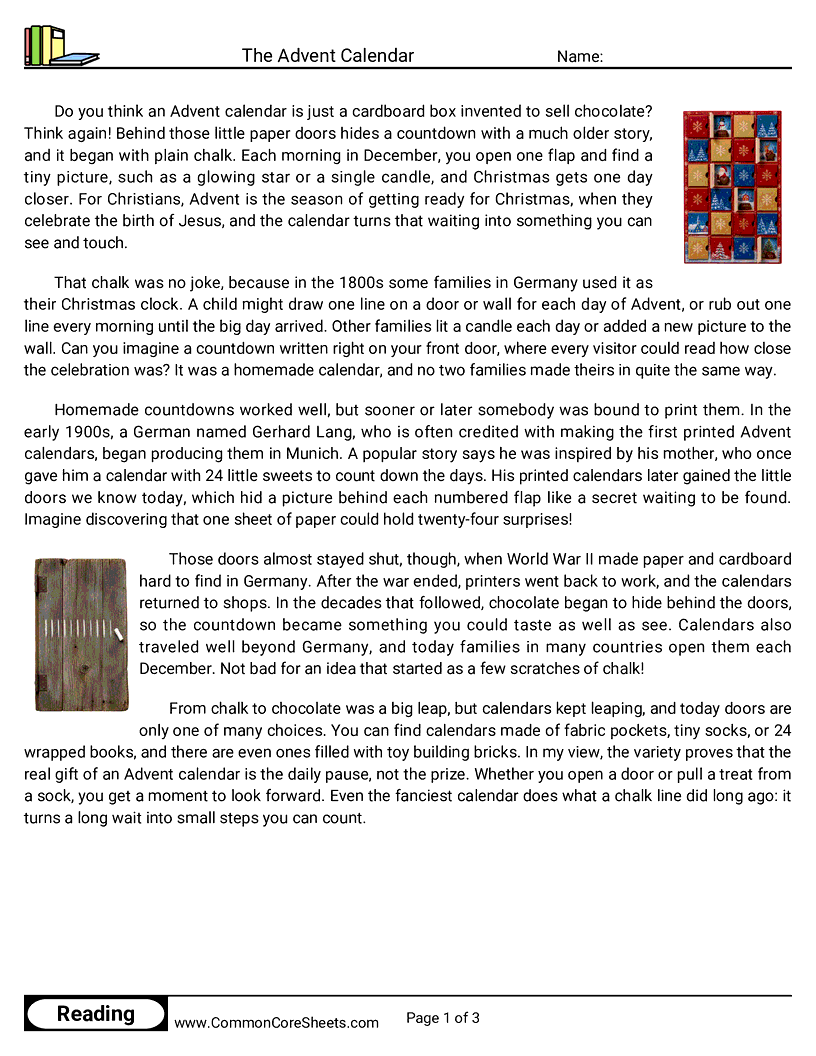
Read a nonfiction passage and find the order in which Advent countdown customs changed over time. Find details that explain how families in Germany counted the days before Christmas. Explain the meaning of a word such as "credited" using clues from the text. Explain the main idea of the passage using key details.
RI.1 RI.2 RI.3 RI.4 RI.5 RI.6 RI.7 RI.8
Read a nonfiction passage and find details about how Christmas customs began. Explain how older winter festivals blended into Christmas over time. Determine the meaning of the word evergreen from context. Describe how the passage is organized in time order.
RI.1 RI.2 RI.3 RI.4 RI.5 RI.6 RI.7 RI.8 RI.K
Read a nonfiction passage about how the Christmas tree custom began and spread. Find details that show how trees were decorated and lit at different times. Explain why evergreens and a famous 1848 picture mattered to the tradition. Identify how a passage is organized in time order.
RI.1 RI.2 RI.3 RI.4 RI.5 RI.6 RI.7 RI.8
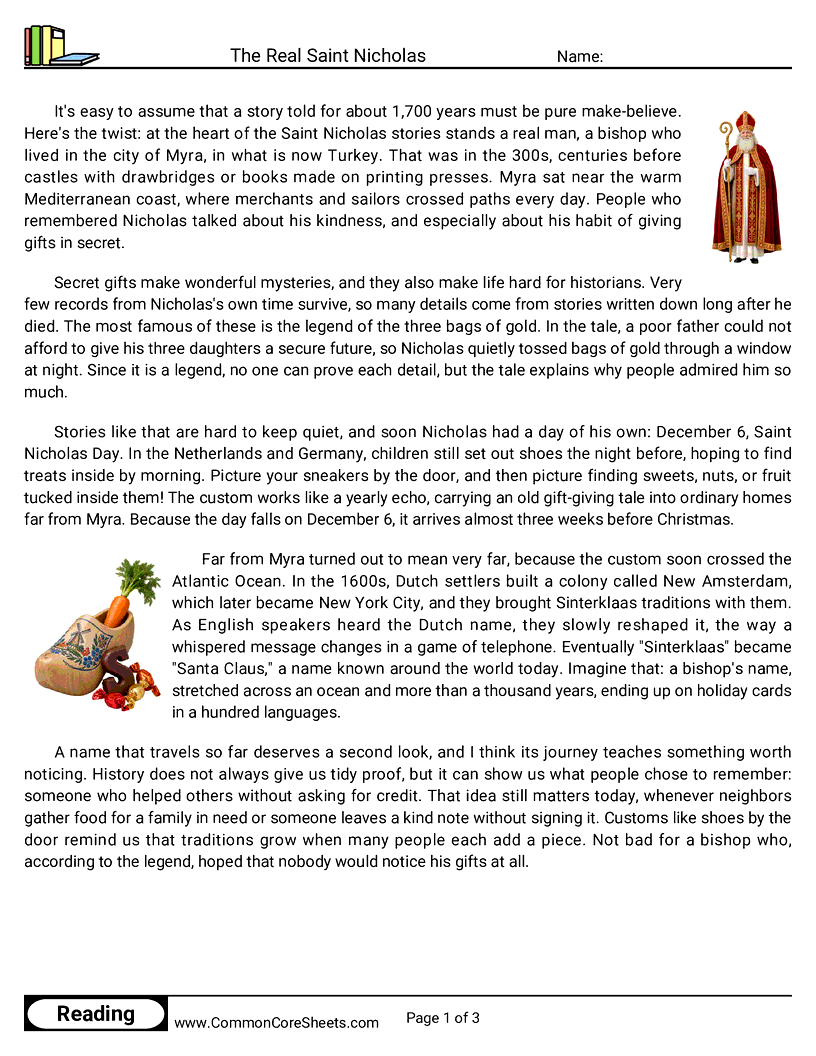
Read a nonfiction passage about the history of Saint Nicholas and the customs connected to him. Find details that show how a legend and a custom spread from Myra to the Netherlands, Germany, and America. Explain the cause and effect between stories of secret gifts and the tradition of leaving out shoes. Determine the meaning of words such as bishop and legend using context clues.
RI.1 RI.2 RI.3 RI.4 RI.5 RI.6 RI.7 RI.8
Read a nonfiction passage and identify the order in which Santa's look developed. Find details that show what the poem, Thomas Nast, and 1930s paintings each added. Explain the meaning of a phrase from the text using context clues. Explain how a detail from the text supports a point about the poem's popularity.
RI.1 RI.2 RI.3 RI.4 RI.5 RI.6 RI.7 RI.8
Read a nonfiction passage about how Christmas tree lights changed over time. Find details that explain why candles were replaced by electric bulbs. Explain the meaning of a new word using clues in the text. Describe how an author organizes a passage in time order.
RI.1 RI.2 RI.3 RI.4 RI.5 RI.6 RI.7 RI.8 RI.K
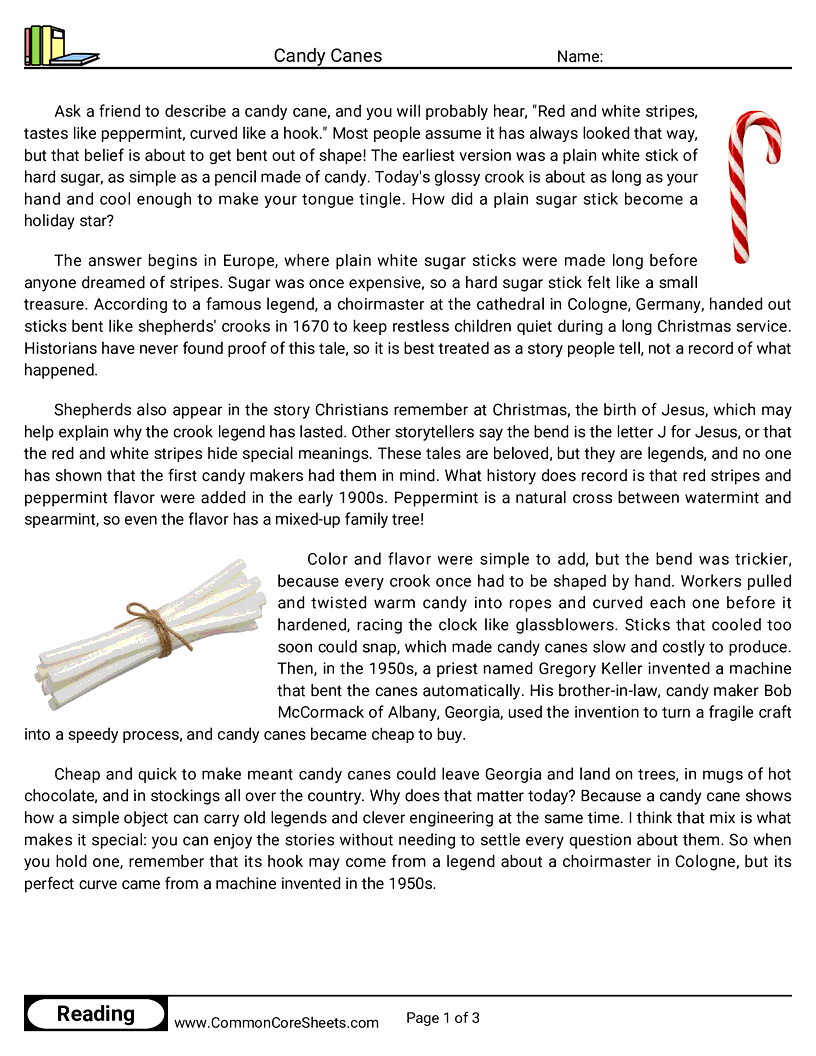
Read a nonfiction passage about how candy canes changed over time. Find details that tell what happened and why, such as how a machine made candy canes cheaper. Explain the meaning of the word legend using clues from the text. Describe how the author organizes the passage from a 1920s kitchen to Europe long ago and back to today.
RI.1 RI.2 RI.3 RI.4 RI.5 RI.6 RI.7 RI.8 RI.K
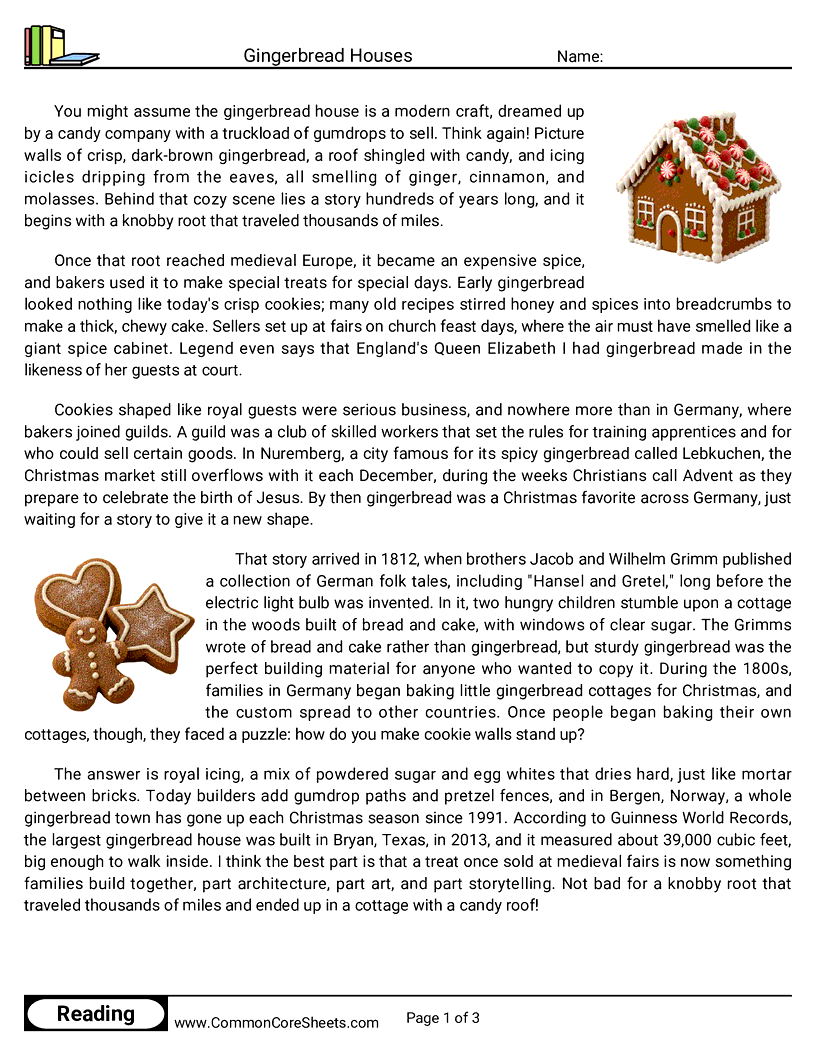
Read a nonfiction passage and find details about where and when gingerbread began. Explain the meaning of the word guild using clues in the text. Explain how the fairy tale Hansel and Gretel led to gingerbread houses. Describe how the passage is organized in time order.
RI.2 RI.3 RI.4 RI.5 RI.6 RI.7 RI.8
Read a passage about the first Christmas cards and find key details about who made them and when. Explain how cheap postage and better printing helped cards spread to more families. Determine the meaning of the word afford using context clues. Identify the main idea of the passage and the details that support it.
RI.1 RI.2 RI.3 RI.4 RI.5 RI.6 RI.7 RI.8 RI.K
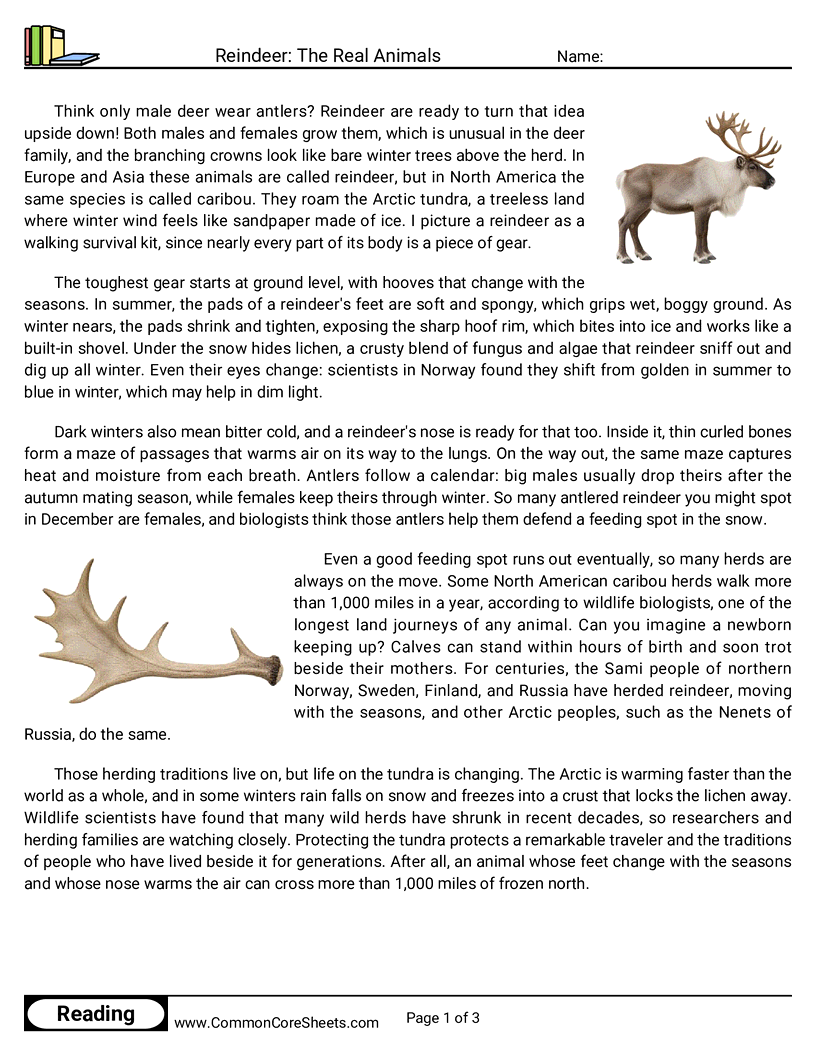
Read a nonfiction passage about reindeer and find details about their antlers, hooves, and noses. Explain how reindeer bodies help them survive cold winters. Determine the meaning of the word tundra from context. Describe how a paragraph compares summer and winter hooves.
RI.1 RI.2 RI.3 RI.4 RI.5 RI.6 RI.7 RI.8
Read a passage about the history of a famous Christmas poem and find key details. Find the sentences that tell where, when, and how the poem first appeared. Explain how the poem helped shape the way people picture Santa and his reindeer. Use context to work out the meaning of a word such as reprinting.
RI.1 RI.2 RI.3 RI.4 RI.5 RI.6 RI.7 RI.8 RI.K
Read a passage about Christmas customs in four different countries. Find details that show how each tradition looks, sounds, or tastes. Explain why some places celebrate with candles and others with beach days. Use context clues to figure out the meaning of words like posada and procession.
RI.1 RI.2 RI.3 RI.4 RI.5 RI.6 RI.7 RI.8
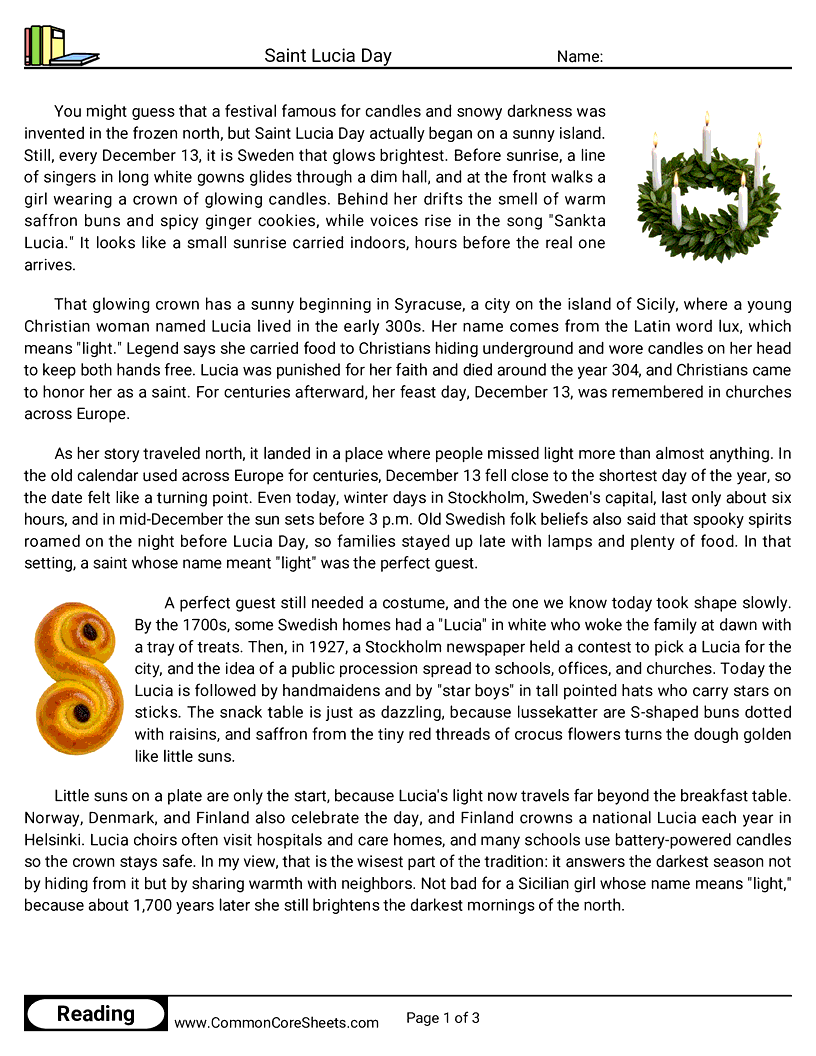
Read a nonfiction passage and find details about how Saint Lucia Day is celebrated. Explain why lights matter so much in Sweden in December. Find the meaning of words such as lux and lussekatter from clues in the text. Identify the main idea of a passage and the details that support it.
RI.1 RI.2 RI.3 RI.4 RI.5 RI.6 RI.7 RI.8
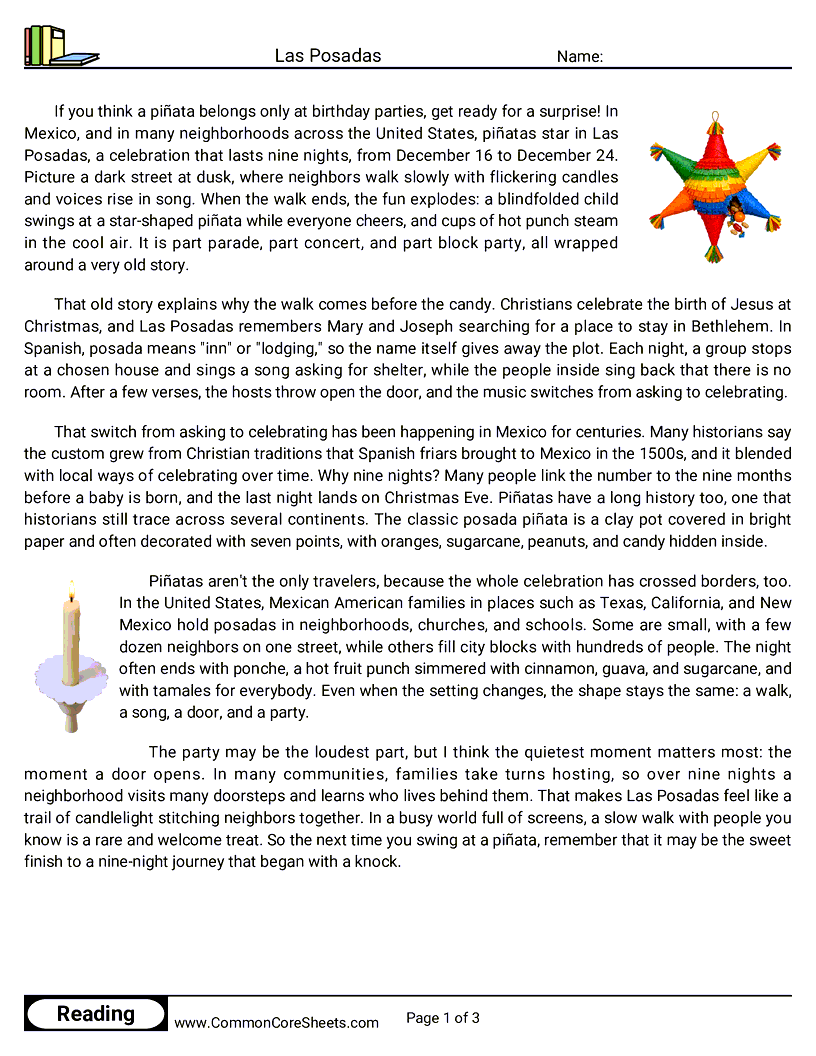
Read a nonfiction passage about Las Posadas and find key details about how it is celebrated. Explain why the celebration lasts nine nights and where its name comes from. Identify how a paragraph is organized by describing how a custom changed over time. Use context to work out the meaning of words such as posada and ponche.
RI.1 RI.2 RI.3 RI.4 RI.5 RI.6 RI.7 RI.8 RI.K
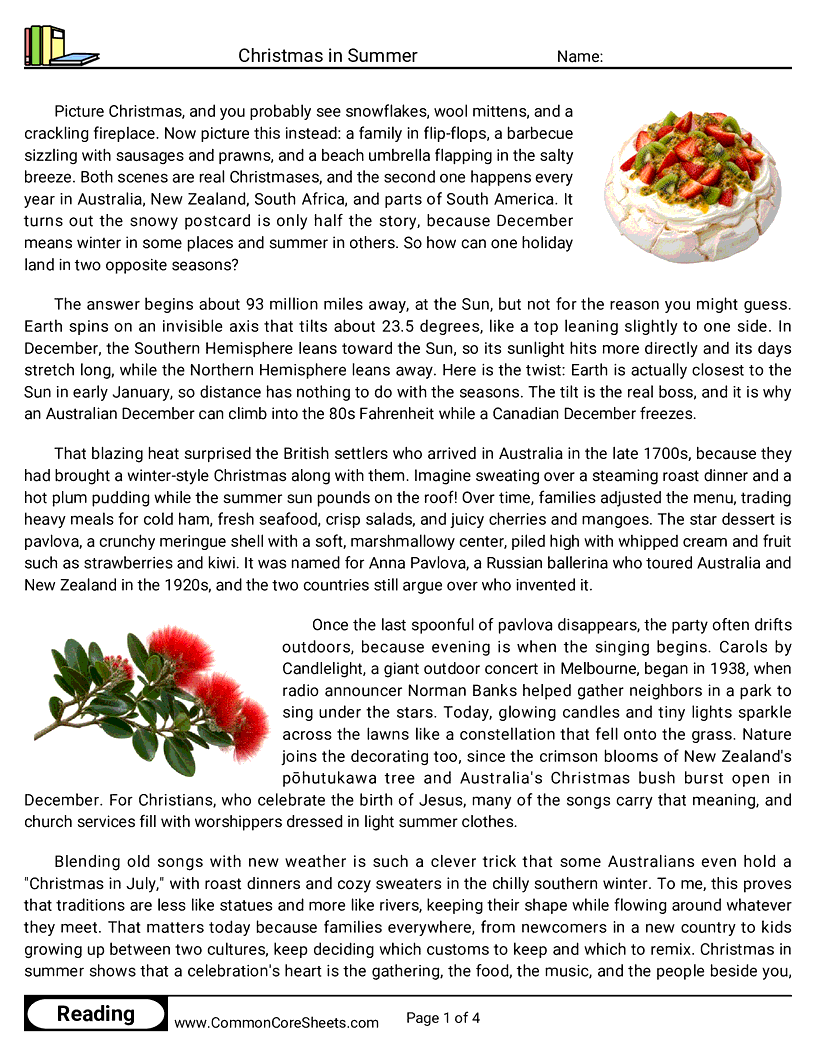
Read a nonfiction passage and explain why December is summer in the southern half of the world. Find details that show how Australians and New Zealanders celebrate Christmas outdoors. Explain how the author uses cause and effect to organize ideas. Determine the meaning of words such as tilt and sweltering from context.
RI.1 RI.2 RI.3 RI.4 RI.5 RI.6 RI.7 RI.8 RI.K
Read a nonfiction passage about the poinsettia and its journey from Mexico to the United States. Find details that explain why the red bracts appear in December. Explain the meaning of domain words such as bracts and flor de Nochebuena using context. Explain how the author uses a named source to support a claim.
RI.2 RI.3 RI.4 RI.5 RI.6 RI.7 RI.8
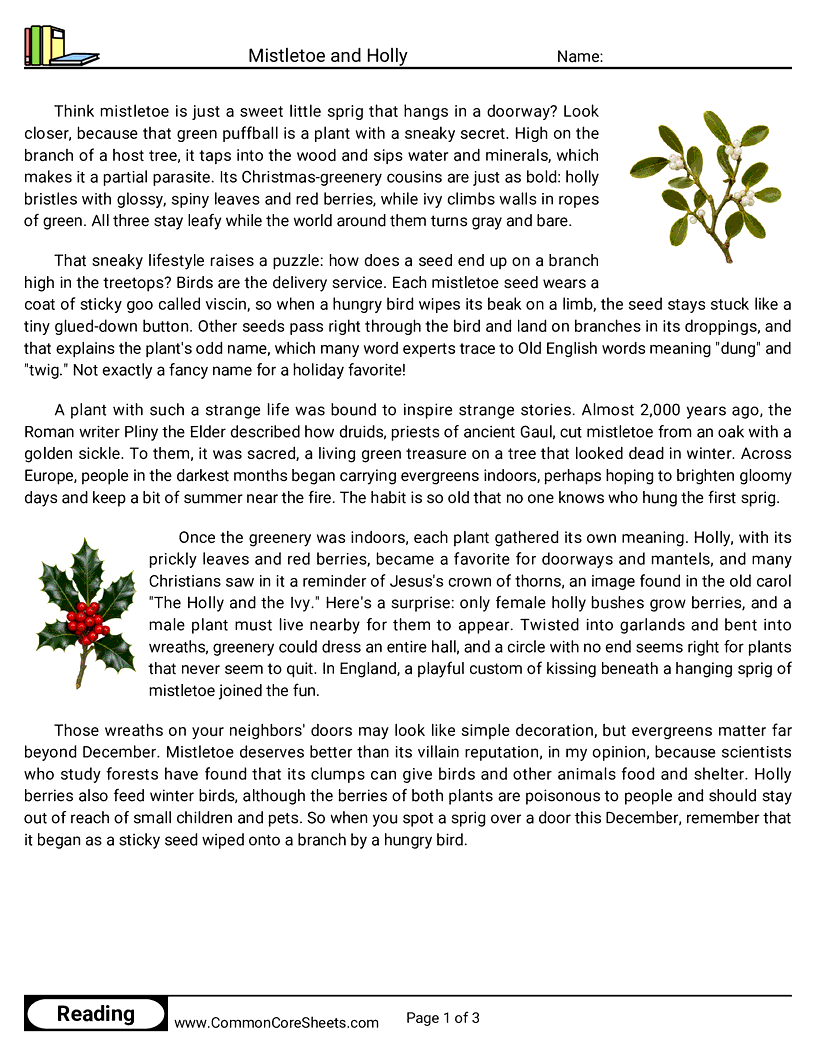
Read a nonfiction passage about mistletoe, holly and ivy and explain how birds spread mistletoe seeds. Find details that show why holly leaves are prickly and which holly plants make berries. Explain the meaning of a word such as ivy from the way it is used in the text. Identify the main idea and use evidence to show how people have used greenery for a very long time.
RI.1 RI.2 RI.3 RI.4 RI.5 RI.6 RI.7 RI.8 RI.K
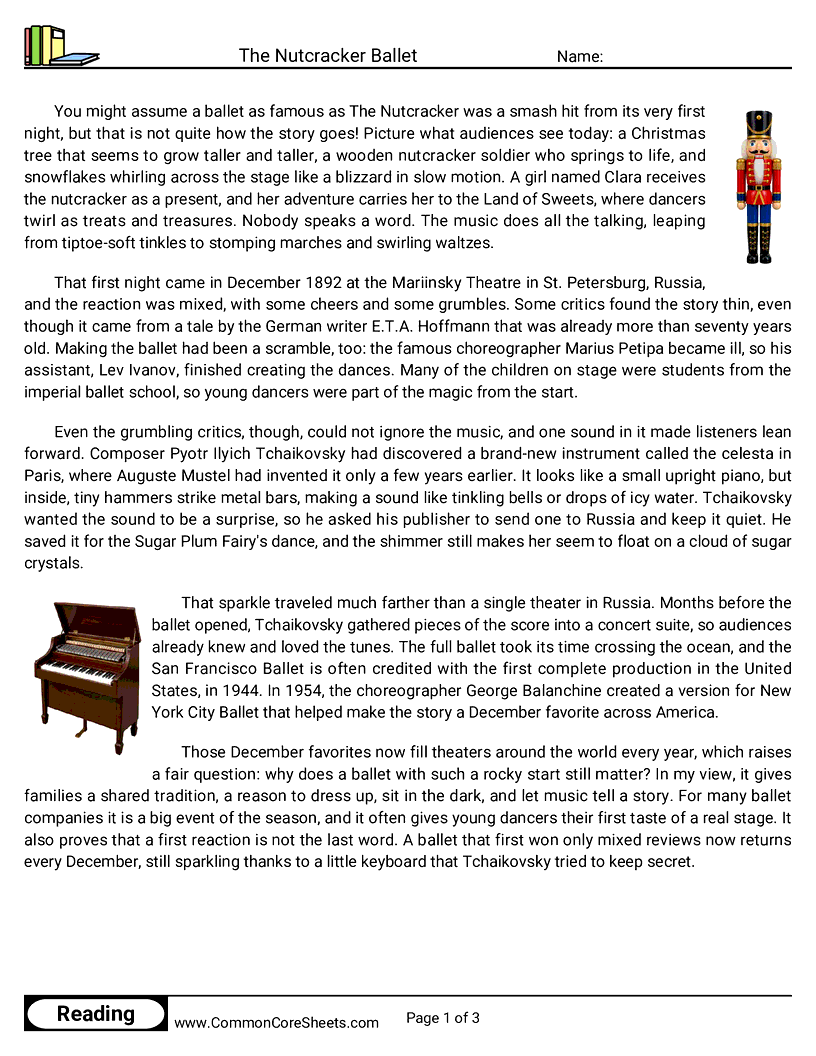
Read a passage about the history of The Nutcracker and find details that answer questions. Explain why Tchaikovsky wanted the celesta kept secret. Identify how a paragraph is organized in order of time. Use context to explain the meaning of the word celesta.
RI.3 RI.4 RI.5 RI.6 RI.7 RI.8
Read a nonfiction passage about Charles Dickens and find key details about how and when he wrote his famous story. Explain what "humbug" and "change of heart" mean using clues in the text. Find details that show why Dickens cared about families who were struggling. Explain the main idea of the passage and how the details support it.
RI.1 RI.2 RI.3 RI.4 RI.5 RI.6 RI.7 RI.8
Read a nonfiction passage about the history of a Christmas carol and find key details. Find the people, place, and year connected to the first singing of the song. Explain how the song spread and why it was translated into many languages. Use context to work out the meaning of the word unusual.
RI.4 RI.5 RI.6 RI.7 RI.8
Read a nonfiction passage about the Christmas Truce of 1914 and find key details. Explain why the truce began with the soldiers instead of their leaders. Find the meaning of words such as trenches and no man's land using context clues. Identify the main idea of the passage and the details that support it.
RI.1 RI.2 RI.3 RI.4 RI.5 RI.6 RI.7 RI.8 RI.K
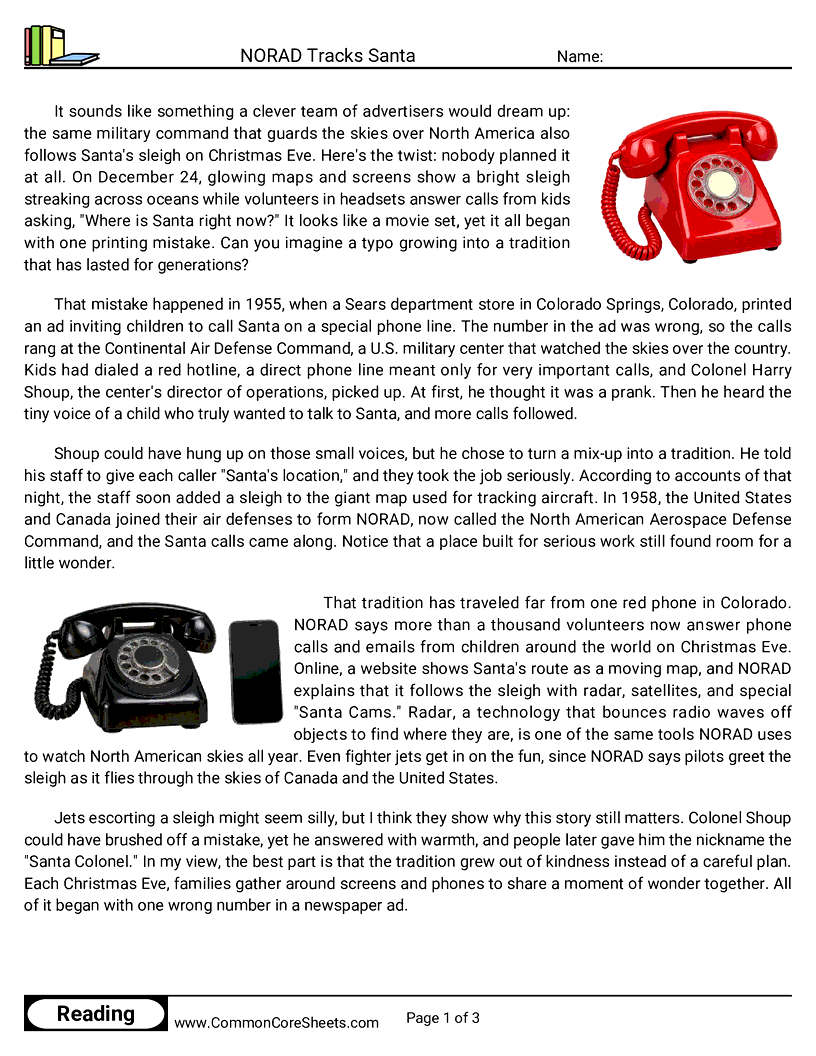
Read a passage about how a printing mistake started the NORAD Tracks Santa tradition. Find details that show the cause of the children's calls and what happened next. Explain how the author uses time order to tell the story from 1955 to today. Use context to figure out the meaning of the word mix-up.
RI.1 RI.2 RI.3 RI.4 RI.5 RI.6 RI.7 RI.8
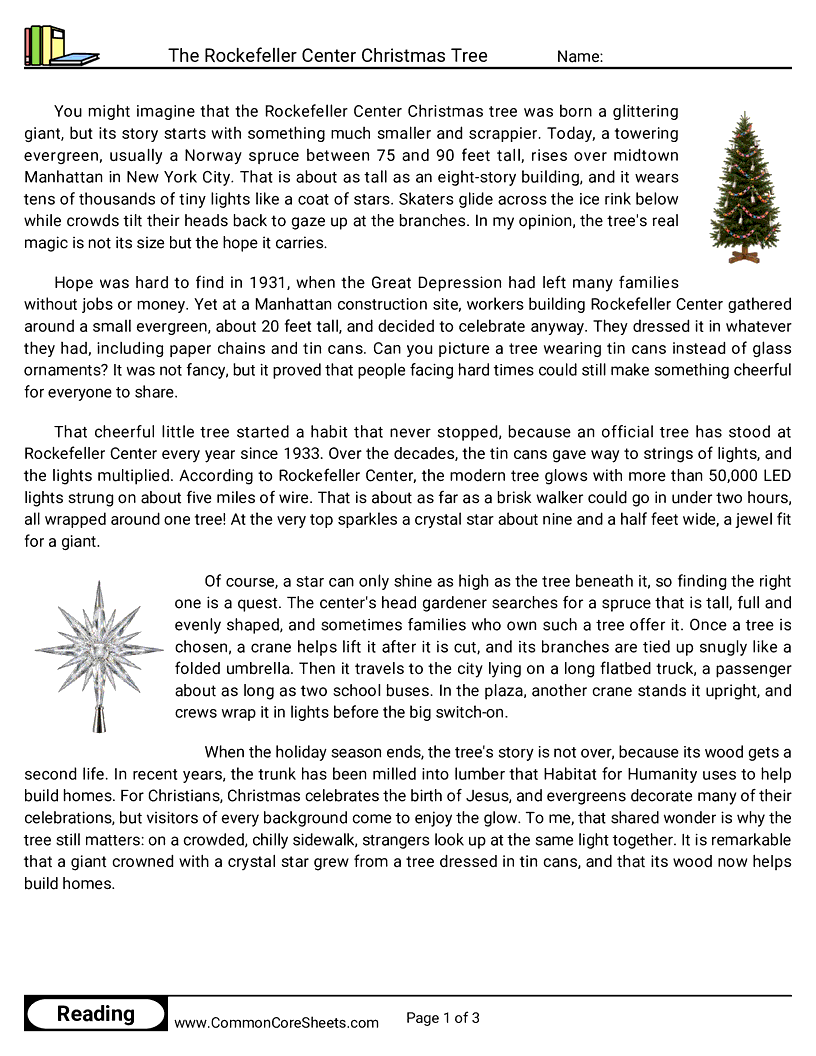
Read a nonfiction passage about the history of the Rockefeller Center Christmas tree. Find details that tell how the tree is chosen, moved, and decorated. Explain why the workers in 1931 decorated their tree with paper chains and tin cans. Use context clues to work out the meaning of the word lumber.
RI.1 RI.2 RI.3 RI.4 RI.5 RI.6 RI.7 RI.8
Read a passage about Christmas Eve customs in different countries and find key details. Explain why families in Poland watch for the first star and how the Santa-tracking custom began. Determine the meaning of words such as Nochebuena, Réveillon, and misprinted from context. Explain the main idea of the passage and how the details support it.
RI.1 RI.2 RI.3 RI.4 RI.5 RI.6 RI.7 RI.8
Read a nonfiction passage about the history of Christmas gifts and find key details. Explain how the Victorian era changed the way families gave presents. Find the meaning of a new word, such as resins, from the sentences around it. Explain how the author organizes ideas in time order from long ago to today.
RI.1 RI.2 RI.3 RI.4 RI.5 RI.6
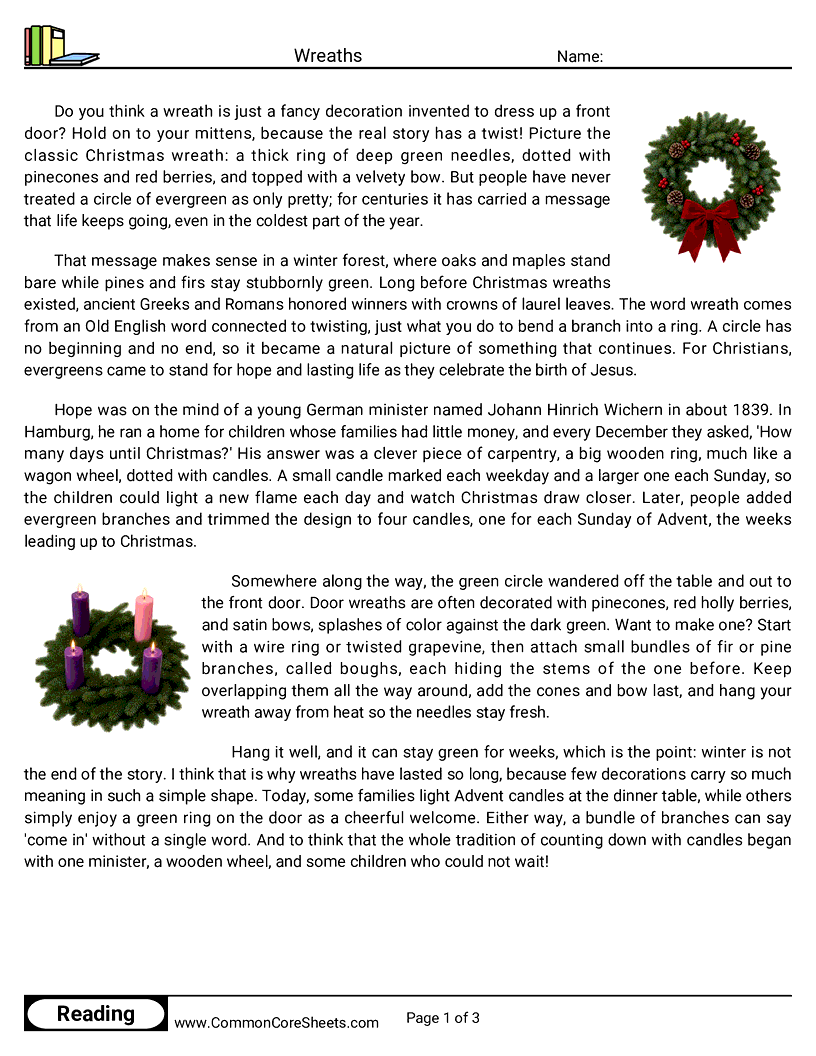
Read a passage about how the Advent wreath began and spread. Find details that explain why evergreens and circles were chosen for wreaths. Explain how the Advent wreath changed from a wooden wheel to a ring with four candles. Use context to work out the meaning of words such as Advent.
RI.2 RI.3 RI.4 RI.5 RI.6 RI.7 RI.8
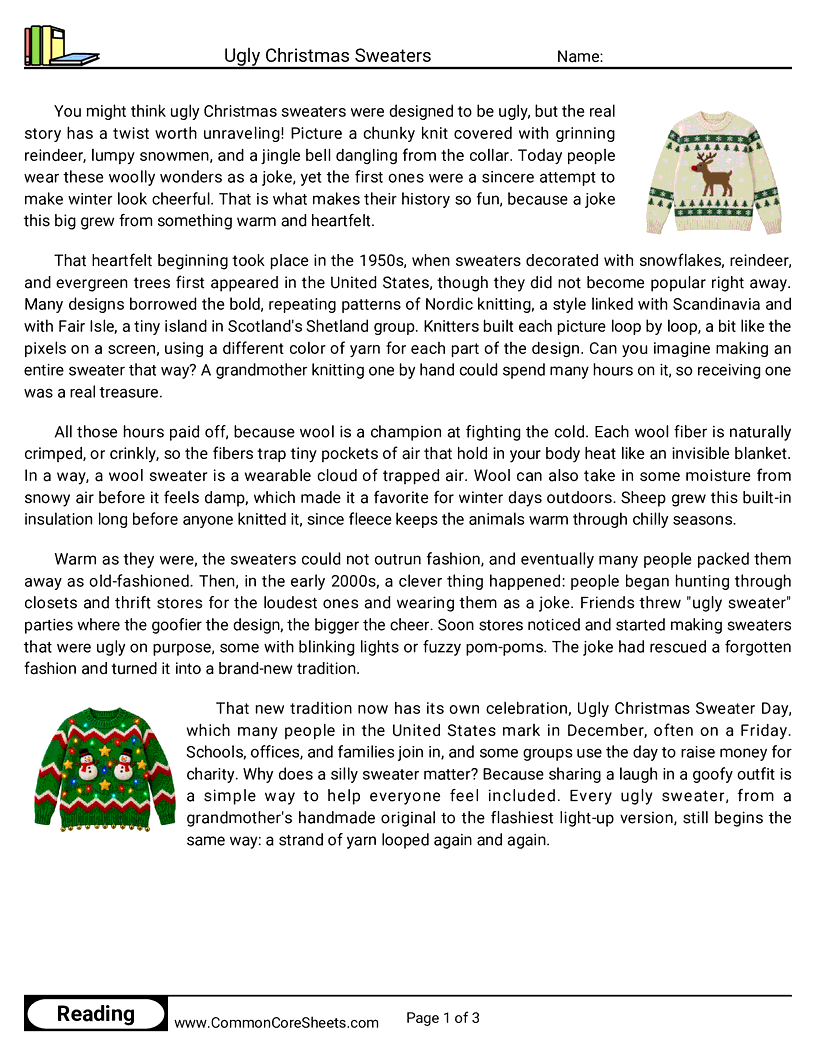
Read a nonfiction passage and identify its time-order structure. Find details that explain why wool keeps people warm. Explain how and why holiday sweaters went out of style and came back. Use context to work out the meaning of a vocabulary word such as bulky.
RI.1 RI.2 RI.3 RI.4 RI.5 RI.6 RI.7 RI.8
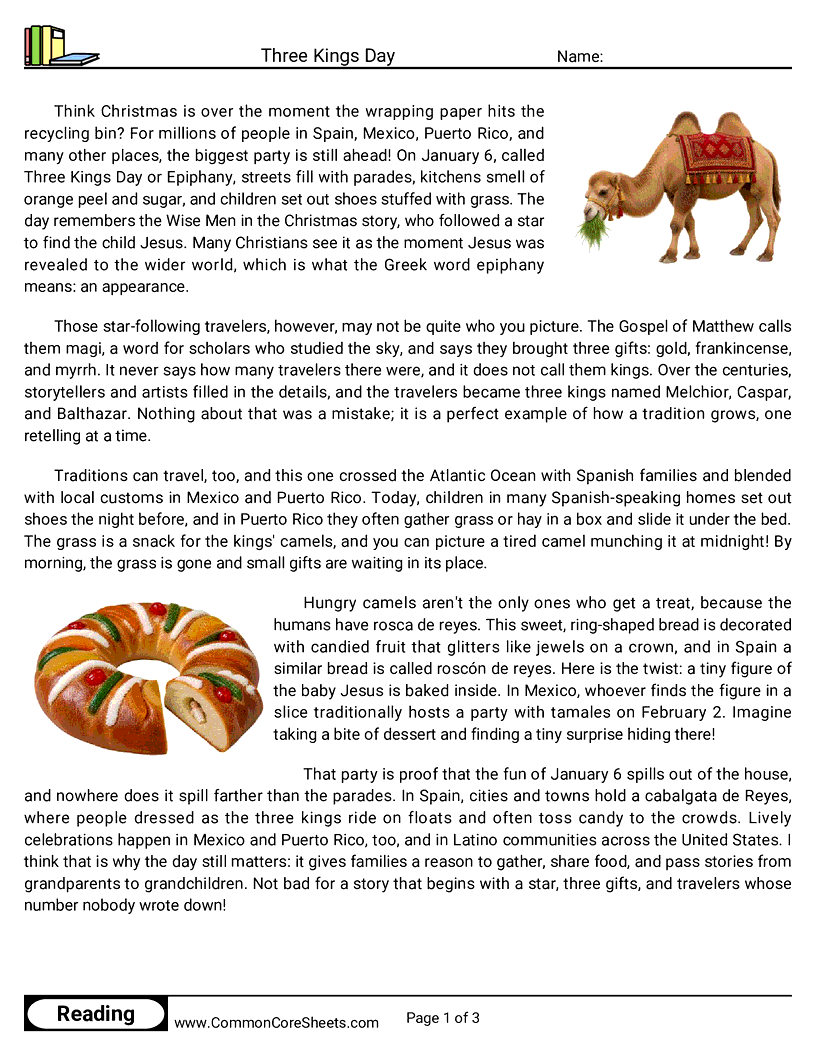
Read a passage about Three Kings Day and find details about how it is celebrated. Explain why many families open presents on January 6. Find the meaning of frankincense and myrrh from clues in the text. Explain the main idea of the passage using key details.
RI.2 RI.3 RI.4 RI.5 RI.6 RI.7 RI.8
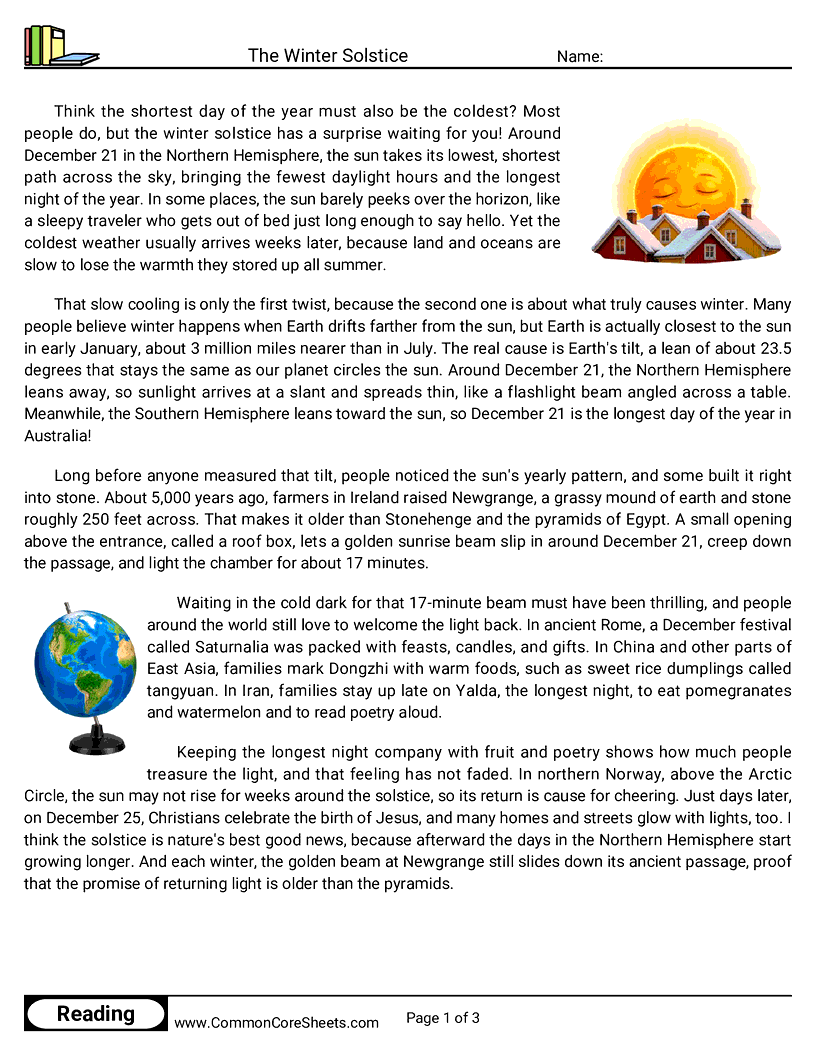
Read a nonfiction passage and explain how Earth's tilt causes the shortest day of the year. Find details that show how ancient builders at Newgrange used the sun. Explain how the author organizes ideas using cause and effect. Determine the meaning of the word solstice from its context.
RI.2 RI.3 RI.4 RI.5 RI.6 RI.7 RI.8
Read a nonfiction passage about the twelve days of Christmas and the counting song. Find the sentences that tell when the twelve days begin and end. Explain why some gifts in the song are repeated many times. Use context to work out the meaning of words like forfeit and colly.
RI.3 RI.4 RI.5 RI.6 RI.7 RI.8
Read a history passage and identify events in the order they happened. Find the cause behind each new kind of artificial Christmas tree. Explain the meaning of a vocabulary word using clues in the text. Explain how the author uses reasons to show why people debate real and artificial trees.
RI.1 RI.2 RI.3 RI.4 RI.5 RI.6 RI.7 RI.8
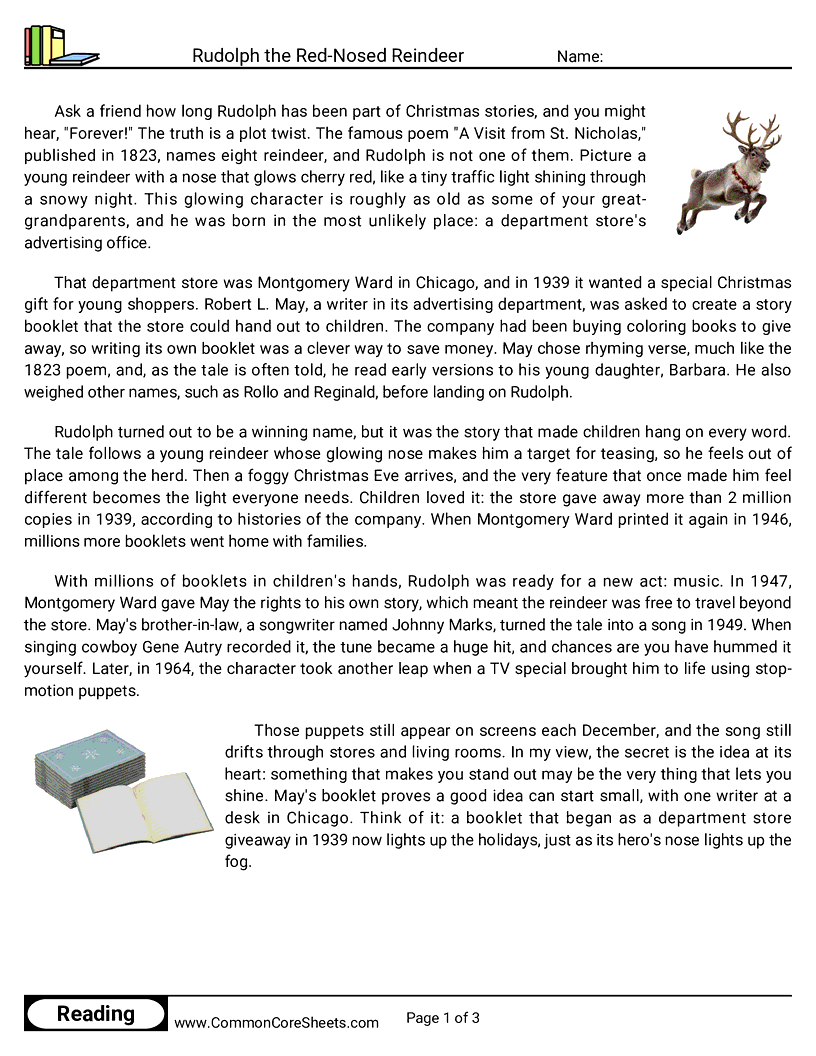
Read a nonfiction passage about the history of the Rudolph story and find key details. Find the sentences that tell who wrote the booklet, when, and why. Explain how the story grew from a booklet into a song using the order of events. Use context to explain the meaning of the word rhyme.
RI.1 RI.2 RI.3 RI.4 RI.5 RI.6 RI.7 RI.8
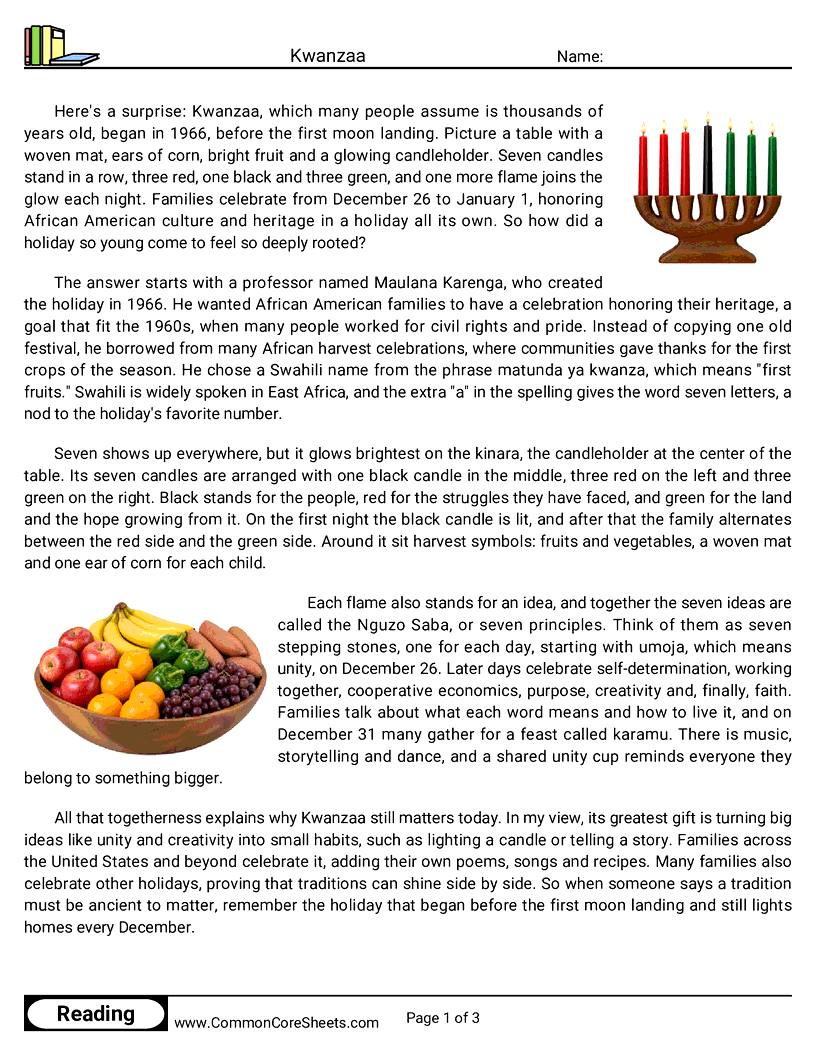
Read a nonfiction passage about Kwanzaa and identify key details about its symbols and traditions. Find the meanings of Swahili words by using context clues in the text. Explain the order in which the Kwanzaa candles are lit and what the colors stand for. Explain why certain Kwanzaa customs, such as the ear of corn and the Karamu feast, are part of the holiday.
RI.1 RI.2 RI.3 RI.4 RI.5 RI.6 RI.7 RI.8 RI.K
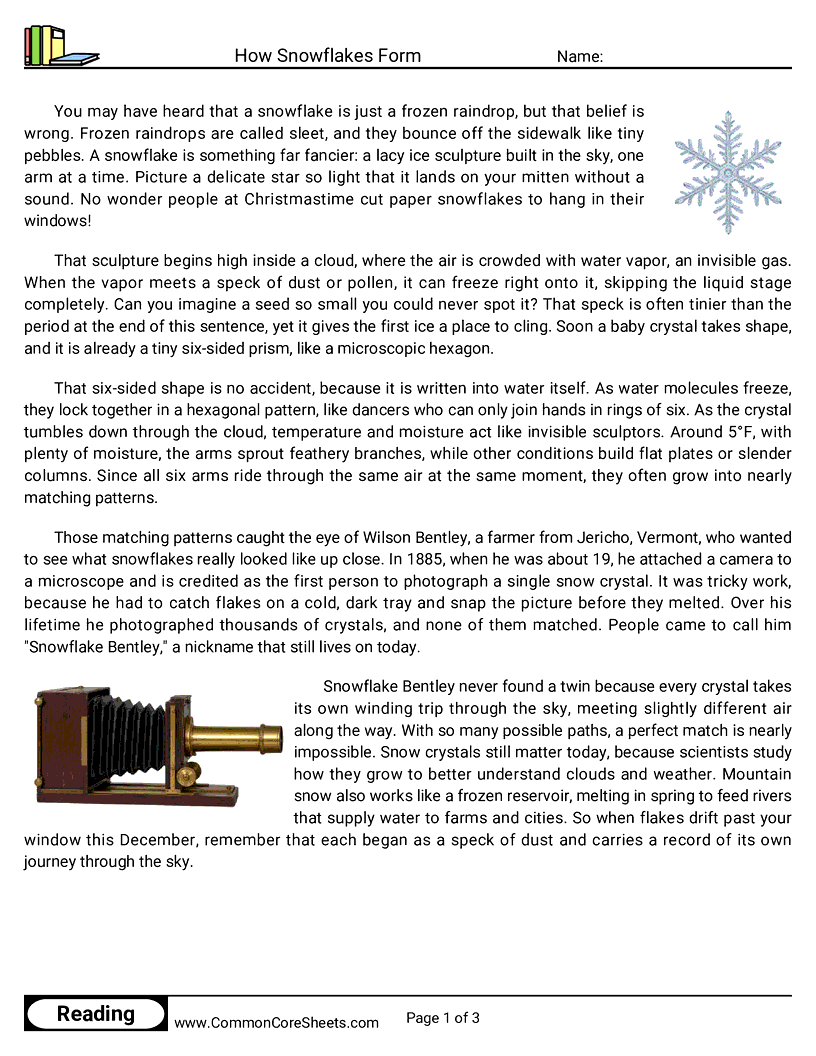
Read a nonfiction passage about how snowflakes form and grow. Explain why snowflakes have six sides and why their shapes can differ. Find the meaning of science words like water vapor and molecules from context. Identify cause-and-effect structure and use details as evidence to answer questions.
RI.1 RI.2 RI.3 RI.4 RI.5 RI.6 RI.7 RI.8 RI.K
Read a nonfiction passage about Hanukkah and identify key details about its history and customs. Explain why the menorah has nine branches and what the shamash does. Find the cause-and-effect link between the story of the Temple oil and Hanukkah traditions. Use context to work out the meaning of words such as rededication and shamash.
RI.3 RI.4 RI.5 RI.6 RI.7 RI.8
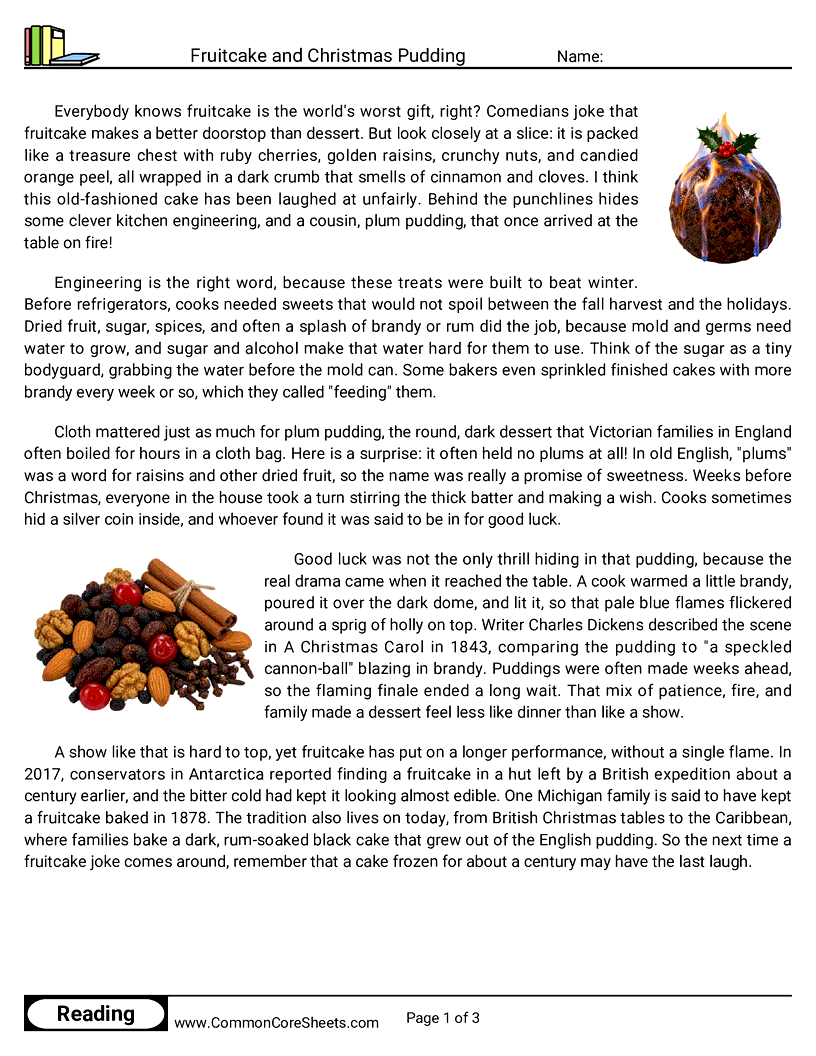
Read a passage about fruitcake and Christmas pudding and find details that answer questions. Explain why dried fruit, sugar, and spices helped food last through winter. Find the meaning of the word "plums" from its use in the passage. Describe how a paragraph is organized as a problem and its solution.
RI.1 RI.2 RI.3 RI.4 RI.5 RI.6 RI.7 RI.8 RI.K
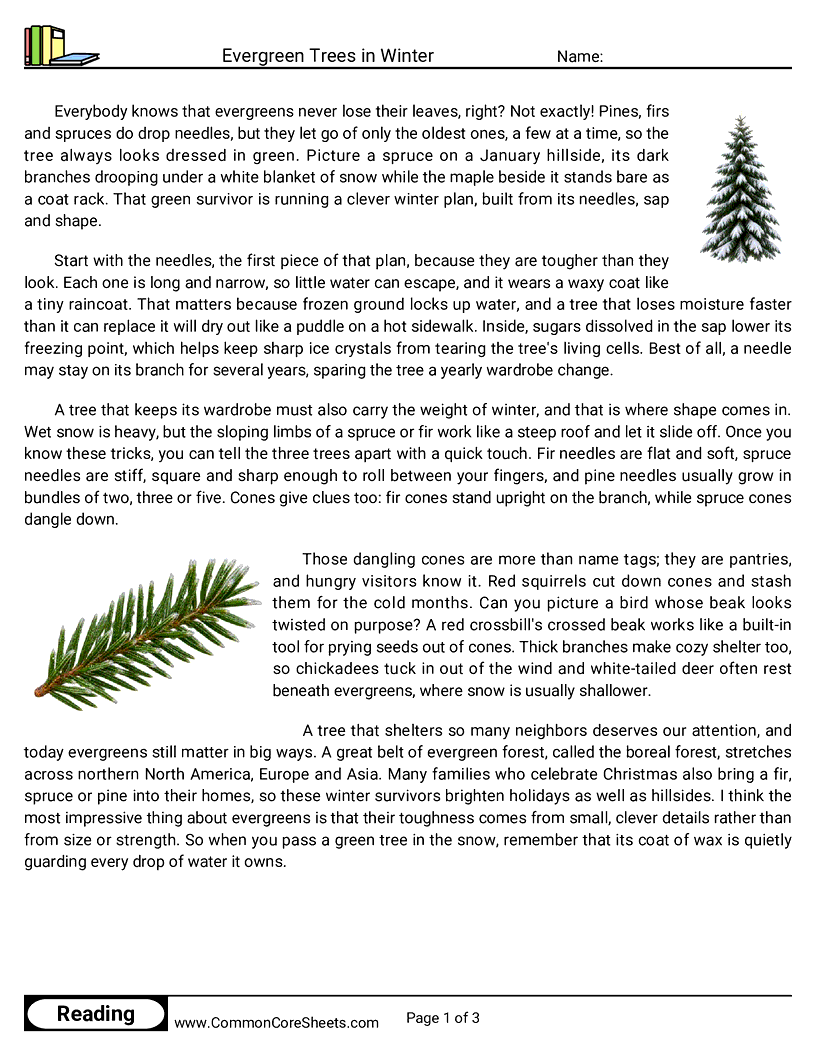
Read a nonfiction passage and find the three ways evergreens survive winter. Explain why waxy needles, special sap, and sloping branches help a tree in the cold. Compare pine, spruce, and fir trees using details about needles and cones. Find the sentence that supports an answer and name the text structure of a paragraph.
RI.4 RI.5 RI.6 RI.7 RI.8
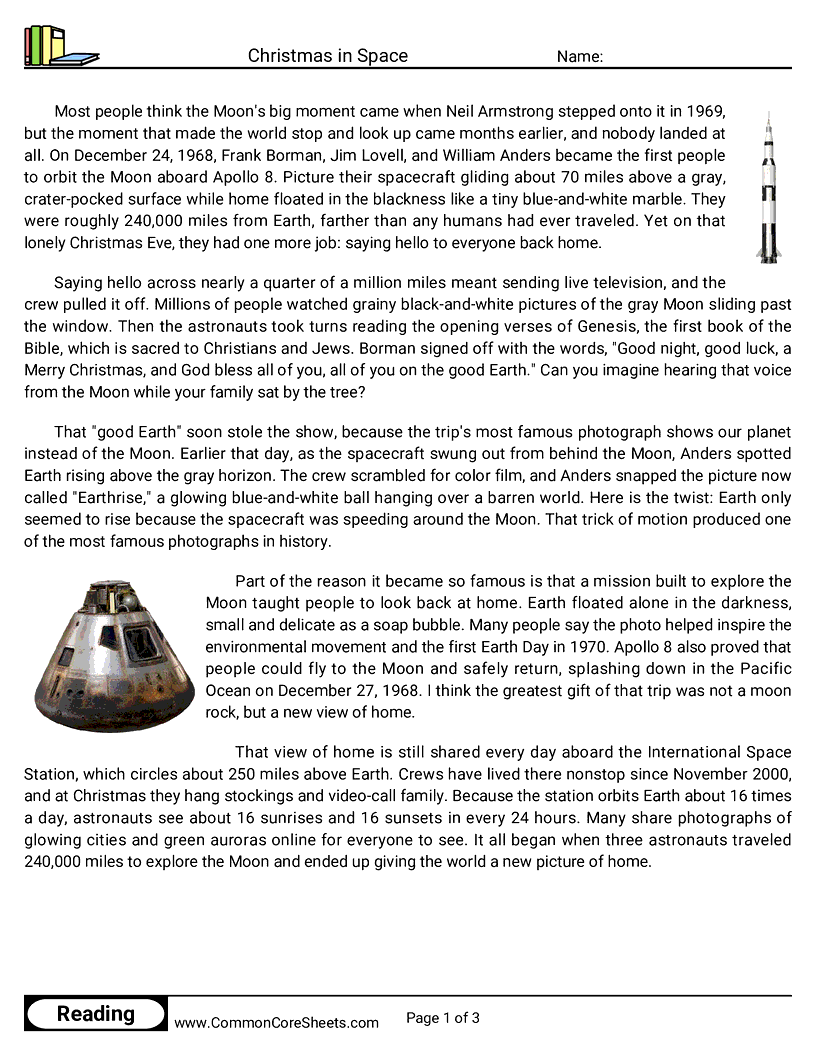
Read a nonfiction passage about the Apollo 8 Christmas Eve broadcast and find key details. Explain the order of events in the Apollo 8 mission using clues from the text. Determine the meaning of the word gravity from context. Explain how details in the passage support the main idea.
RI.1 RI.2 RI.3 RI.4 RI.5 RI.6 RI.7 RI.8 RI.K
Read a nonfiction passage about the history of Christmas stockings and find key details. Explain the cause and effect that made stockings by the chimney a familiar picture. Determine the meaning of the word rare from context. Describe how the author organizes the passage and state its main idea.
RI.2 RI.3 RI.4 RI.5 RI.6 RI.7 RI.8
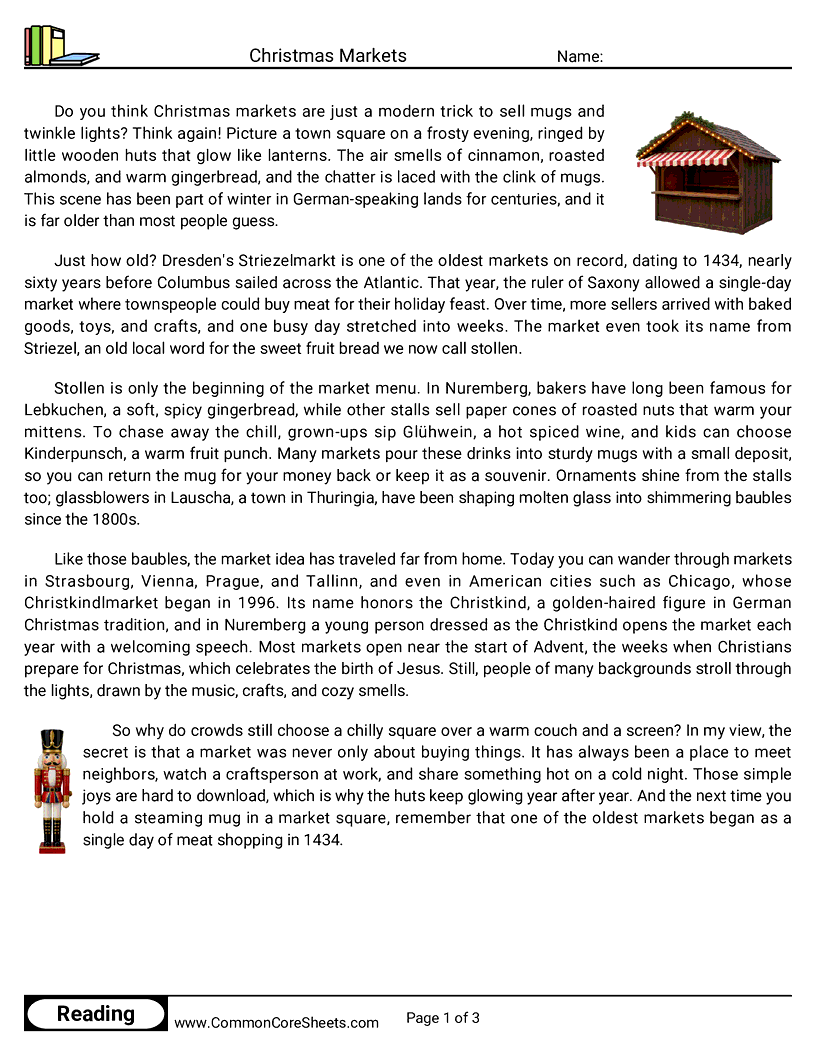
Read a nonfiction passage about the history of Christmas markets and find key details about how one began. Explain how the author organizes information about a market's history over time. Find the meaning of words such as striezel and stalls using clues in the text. Explain how details about Vienna and Chicago support the idea that markets have spread.
RI.3 RI.4 RI.5 RI.6 RI.7 RI.8
Read a nonfiction passage about Boxing Day and find key details about its customs. Explain the two main ideas historians suggest for where the name came from. Determine the meaning of the word alms from context. Explain why stores began holding Boxing Day sales.
Playwire Advertisement