4th Grade Parts of Speech Worksheets
Free parts of speech worksheets with answer key. No login or account needed. From nouns to verbs and everything in between, we've got you covered. A grading column and quick grade scale make grading a breeze, and modified pages help with lower level learners or when just introducing a topic. Great for teachers or for homeschool.
More about these worksheets ▾ Show less ▴
Grade & filters: 4th Grade ▾
×
L.4.1.b
Recognize verbs that show an action happening right now Spot the helping verb paired with an -ing verb Tell the difference between present progressive and simple present verbs Understand how 'is,' 'am,' and 'are' combine with -ing verbs
L.4.1.b
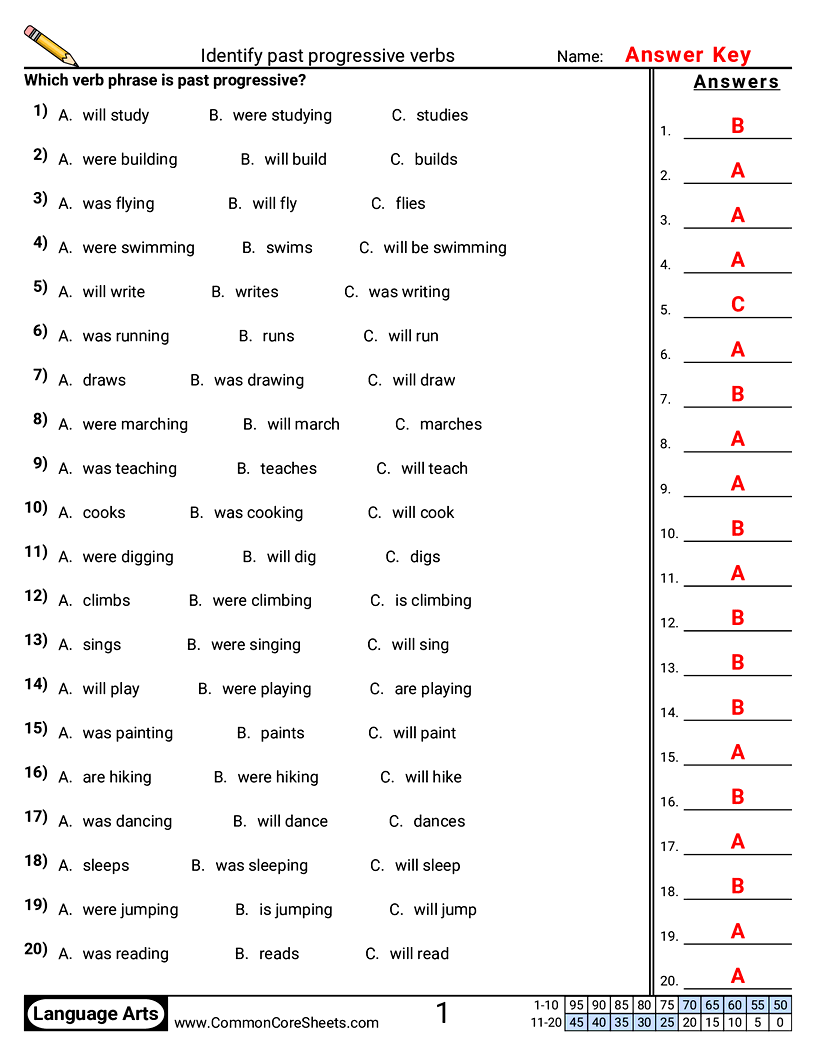
Recognize verbs that show an action was happening in the past Spot the helping words "was" and "were" paired with an -ing verb Tell the difference between simple past and past progressive verbs Point out past progressive verb phrases within a sentence
L.4.1.b
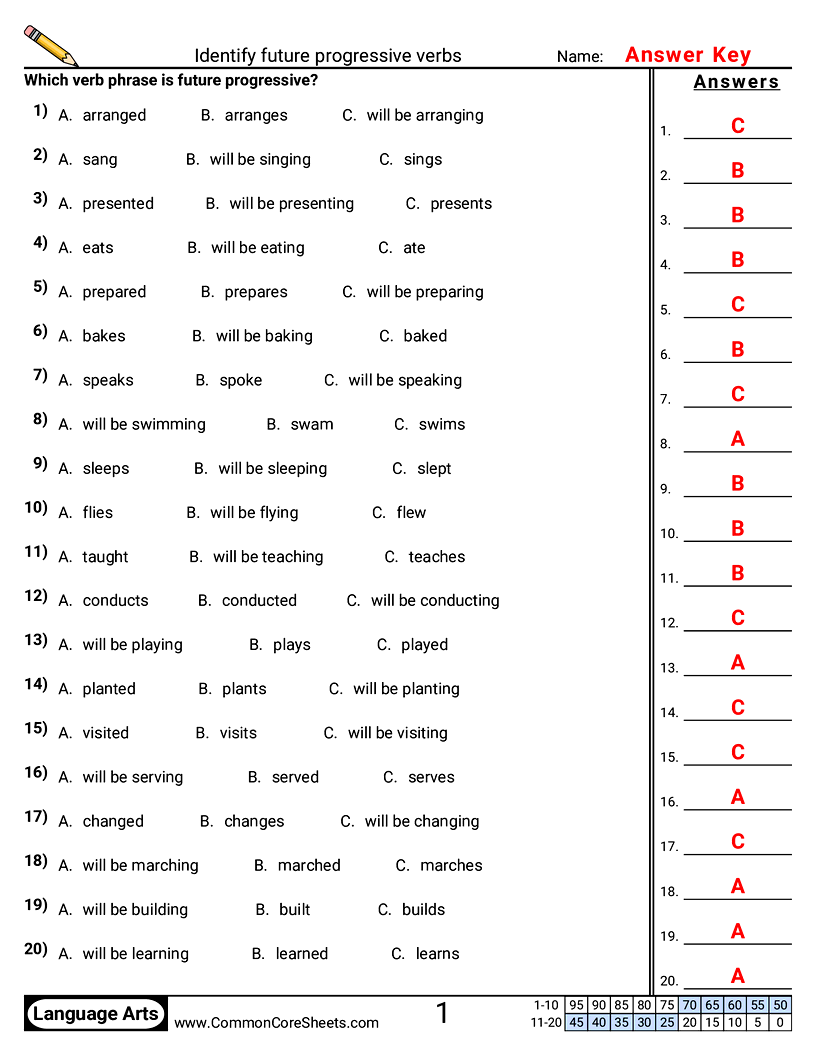
Recognize verbs in the future progressive tense Spot the 'will be' plus -ing pattern in a sentence Tell the difference between future progressive and other verb tenses Practice picking out verb phrases within a full sentence
L.4.1.b
Practice forming verbs that end in -ing to show an action happening now Choose the correct helping verb: am, is, or are Match the verb form to the subject of the sentence Read a sentence and complete it so it makes sense
L.4.1.b
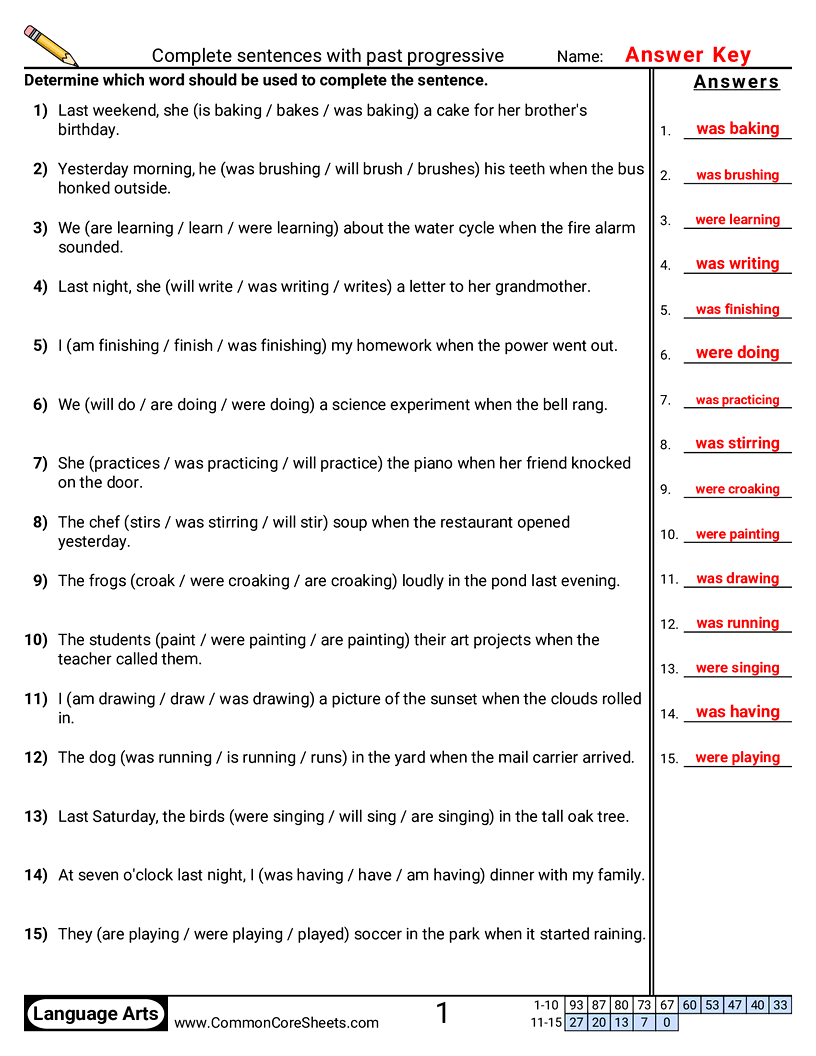
Practice forming the past progressive with was or were and an -ing verb Choose the correct verb form to fit the meaning of a sentence Match was or were to singular and plural subjects Understand how to describe actions that were happening in the past
L.4.1.b
Practice forming the future progressive tense using 'will be' plus an '-ing' verb Choose the correct verb ending to describe an action happening in the future Complete sentences so they read correctly and make sense Recognize when to use future progressive instead of other tenses
L.4.1.b
Practice changing verbs into past, present, and future progressive forms Learn to use the correct helping verb with -ing words Understand how progressive tenses show ongoing actions Rewrite sentences to match a requested tense
L.4.1.b
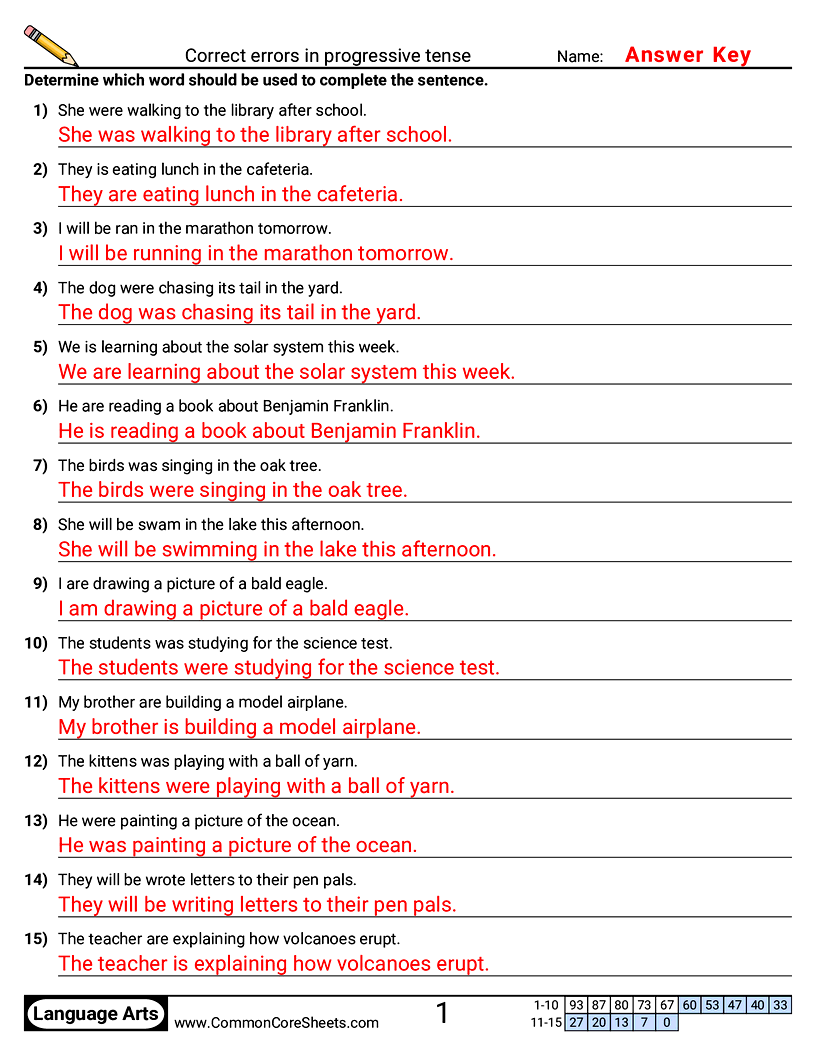
Spot mistakes in verbs that use -ing endings Fix sentences using the correct 'was/were/is/are/will be' plus verb form Tell the difference between past, present, and future progressive tenses Rewrite sentences so the verb tense matches the rest of the sentence
L.4.1.b
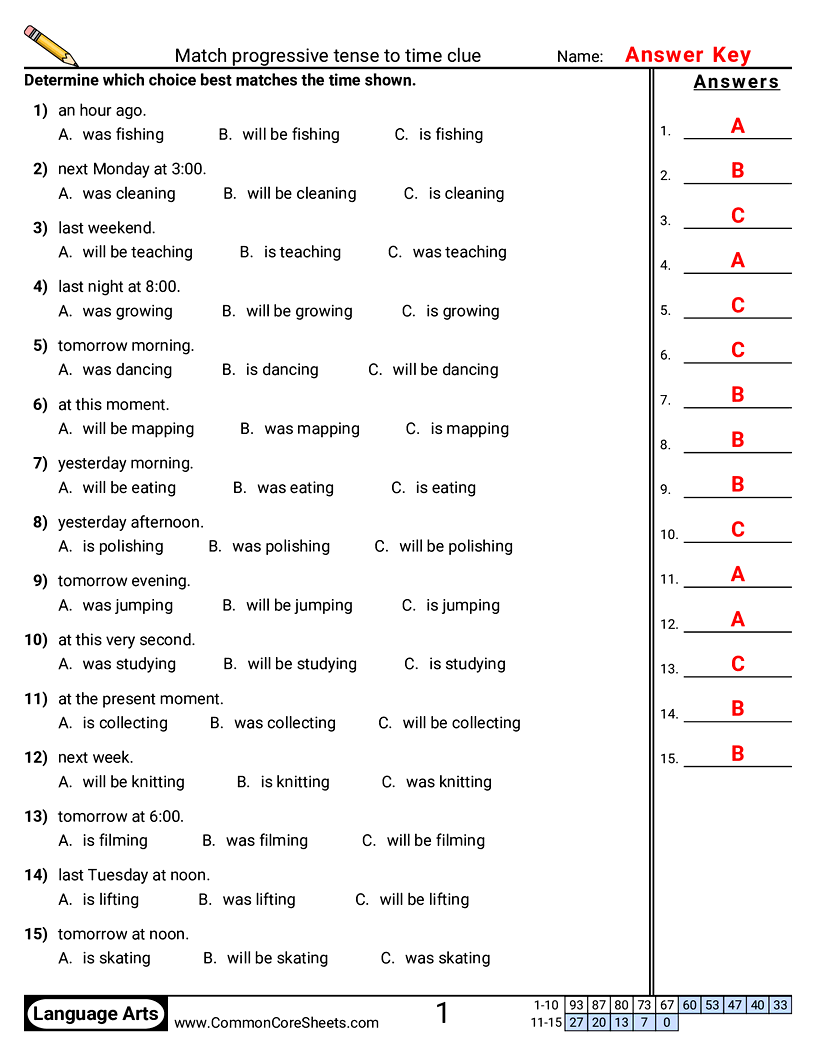
Recognize progressive verb tenses like 'was walking,' 'is walking,' and 'will be walking' Use time clue words to decide if an action is happening in the past, present, or future Match the correct progressive verb form to the time given in a sentence Understand how helping verbs change the meaning of a progressive verb
L.4.1.b
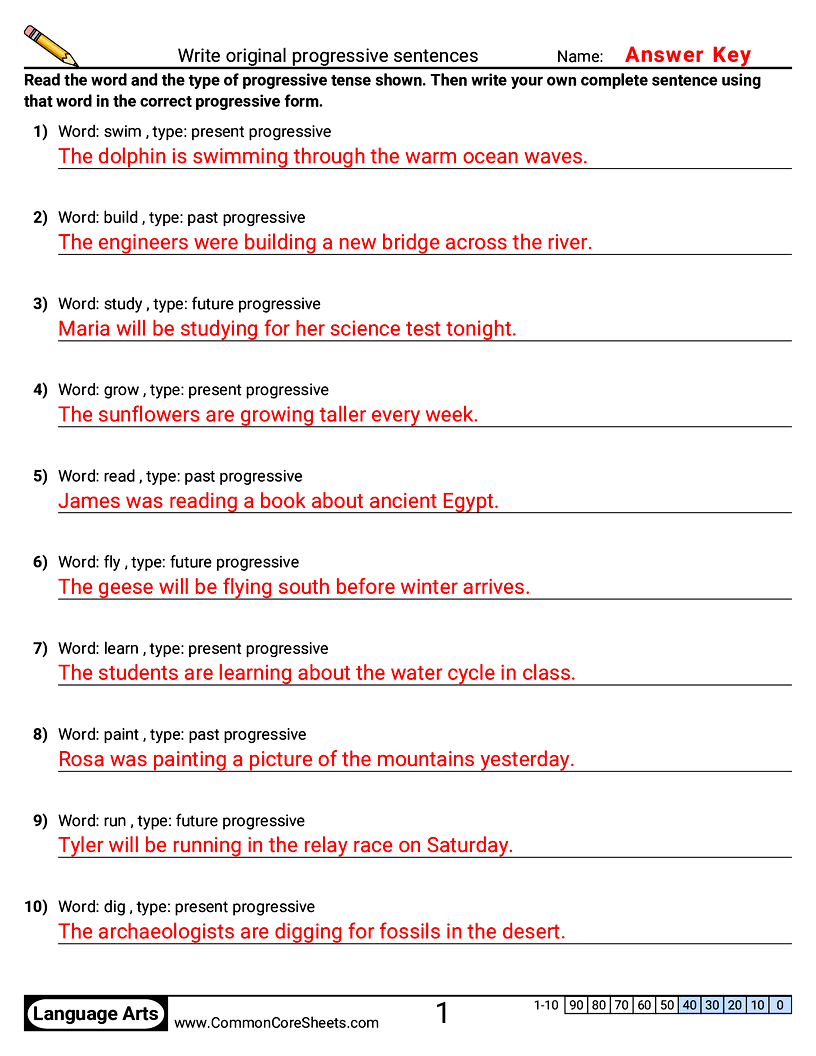
Write sentences that show an action is happening right now Use 'was' or 'were' with -ing verbs to show past ongoing actions Use 'will be' with -ing verbs to show future ongoing actions Choose the correct helping verb to match the subject Form complete sentences that clearly describe continuing action
L.4.1.c
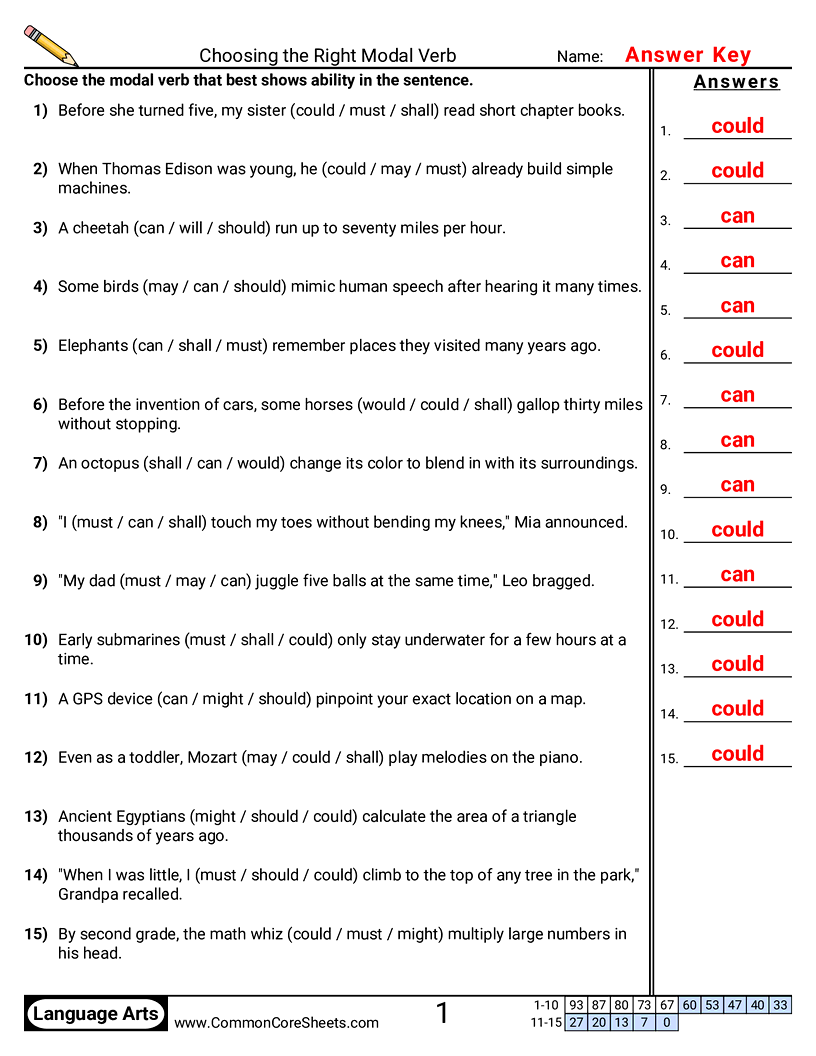
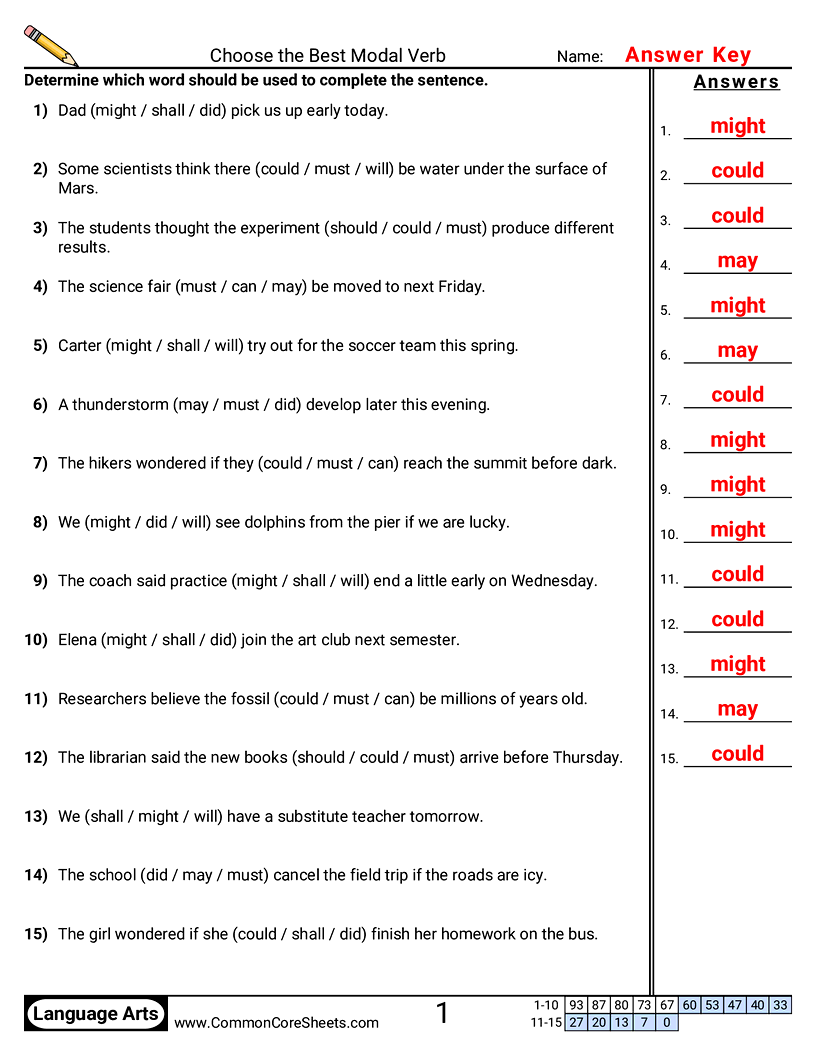
Pick the modal verb that fits the meaning of a sentence Understand how words like should, could, and must change a sentence Show ability, permission, or obligation using the right modal verb Tell the difference between similar modal verbs like can and may
L.4.1.c
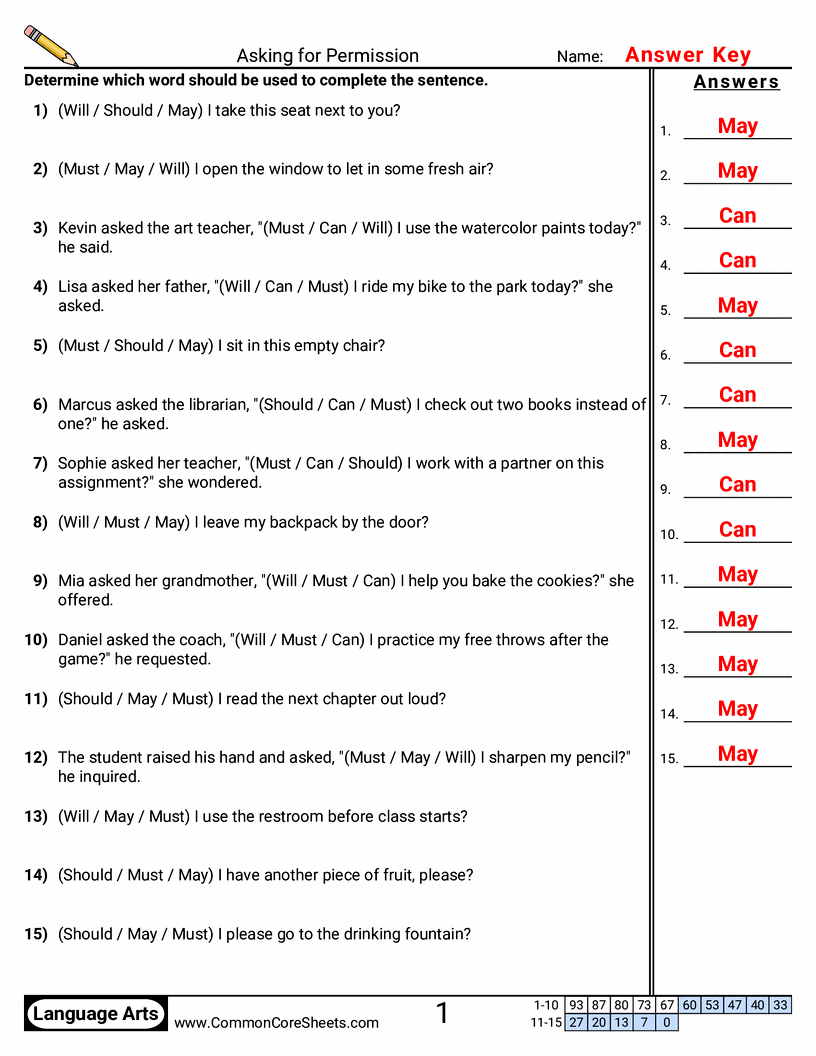
Learn to use words like can, may, could, and would to ask for permission Choose the most polite word to make a request Understand how modal verbs change the tone of a question Complete sentences that ask permission correctly
L.4.1.c
Learn what modal verbs like can, could, may, might, must, should, and would mean Choose the modal verb that fits the meaning of a sentence Understand how modal verbs show ability, permission, or possibility Practice using modal verbs correctly in complete sentences
L.4.1.c
Pick the modal verb that best fits a sentence Understand how modals like can, must, and should change meaning Tell the difference between modals showing ability, permission, and obligation Practice using modal verbs correctly in complete sentences
L.4.1.c
Recognize modal verbs like can, could, may, might, must, should, and will Understand what each modal verb tells you about a sentence Tell the difference between ability, permission, possibility, and obligation Choose the right modal to match a meaning in a sentence
L.4.1.c
Practice using 'can' and 'could' to show ability Rewrite sentences to say what someone is able to do Choose the correct modal verb for present and past ability Understand how modals like 'be able to' express ability
L.4.1.a
Pick the right relative pronoun to fill in a sentence Know when to use who, whom, and whose Choose between which and that when describing things Connect two parts of a sentence with the correct pronoun
L.4.1.a
Learn to use the words where, when, and why to connect ideas in a sentence Practice picking the right relative adverb based on whether a sentence talks about a place, time, or reason Understand how relative adverbs join two parts of a sentence together Build sentences that sound correct and make sense
L.4.1.a
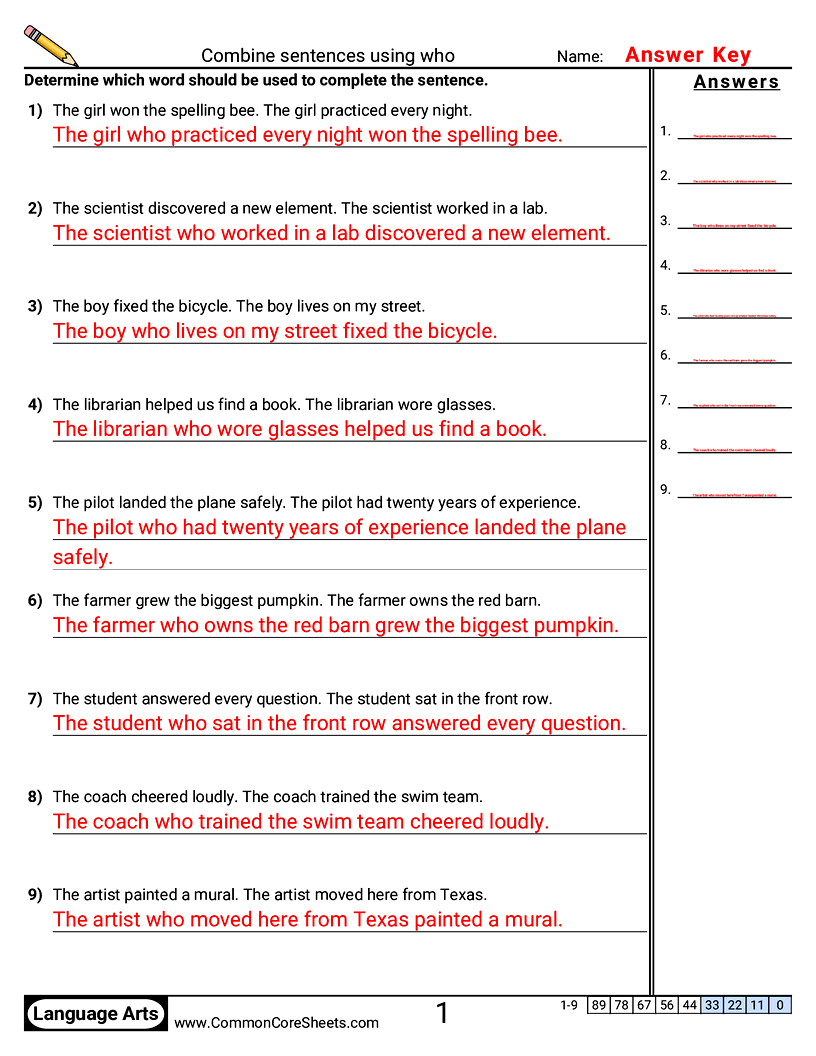
Join two short sentences about a person into one longer sentence Use the word "who" to connect information about people Practice writing clearer sentences without repeating words Understand how relative pronouns link ideas together
L.4.1.a
Practice joining two sentences into one using 'which' or 'that' Learn when to use 'which' versus 'that' in a sentence Practice adding extra detail to a sentence with a relative clause Write smoother sentences by avoiding short, choppy ones
L.4.1.a
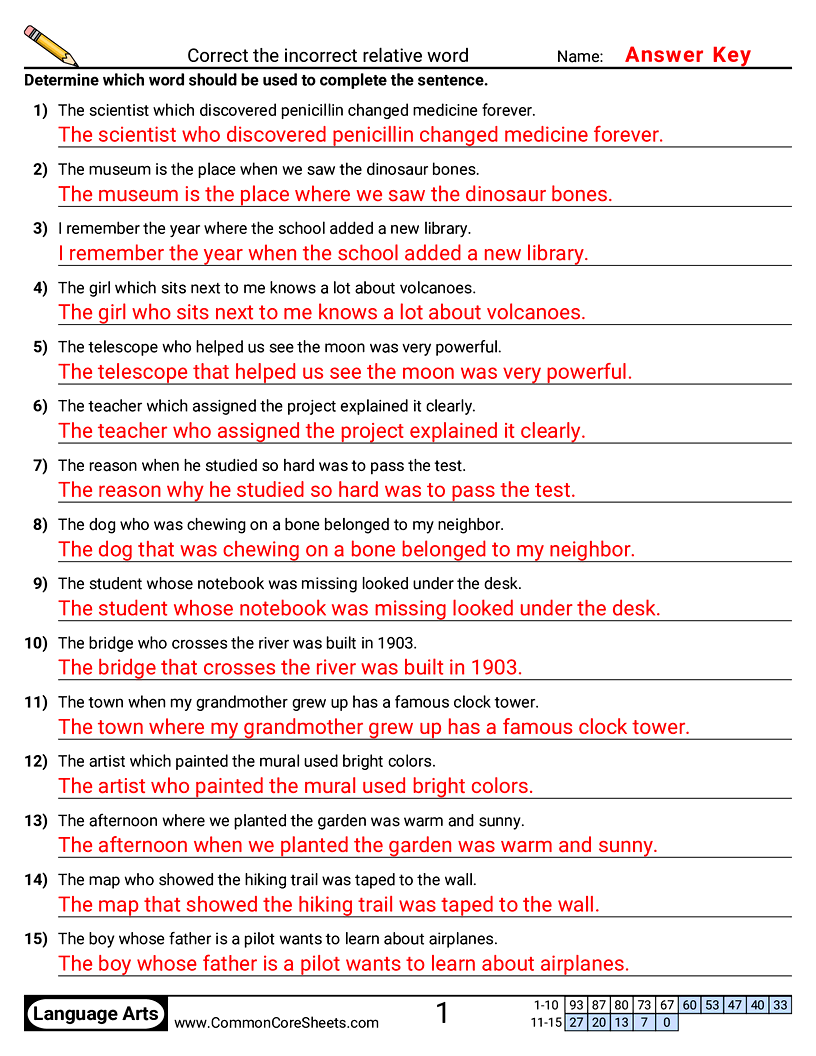
Choose the right relative word like who, which, or that for a sentence Fix sentences that use the wrong relative pronoun Tell the difference between words that refer to people and words that refer to things Rewrite sentences so they read correctly and make sense
L.4.1.a
Spot relative words like who, which, that, whose, where, and when in a sentence Tell whether a relative word acts as a pronoun or an adverb Understand how a relative word connects two parts of a sentence Match each relative word to the noun or idea it refers to
L.4.1
Spot two negative words used together in a sentence Rewrite a sentence to remove the double negative Understand how two negatives can change a sentence's meaning Choose the correct positive wording to fix a sentence
L.4.1
Practice identifying correct grammar and word usage Build vocabulary through reading and word activities Practice writing clear and complete sentences Improve reading comprehension by answering questions
L.4.1.g
Know the difference between the words "of" and "have" Fix common mistakes like writing "should of" instead of "should have" Pick the right word to complete a sentence correctly Understand why "have" follows words like could, would, and should
You are only seeing4th Grade
See all grades
1 more worksheet in this section
Advertisement