3rd Grade Parts of Speech Worksheets
Free parts of speech worksheets with answer key. No login or account needed. From nouns to verbs and everything in between, we've got you covered. A grading column and quick grade scale make grading a breeze, and modified pages help with lower level learners or when just introducing a topic. Great for teachers or for homeschool.
More about these worksheets ▾ Show less ▴
Grade & filters: 3rd Grade ▾
×
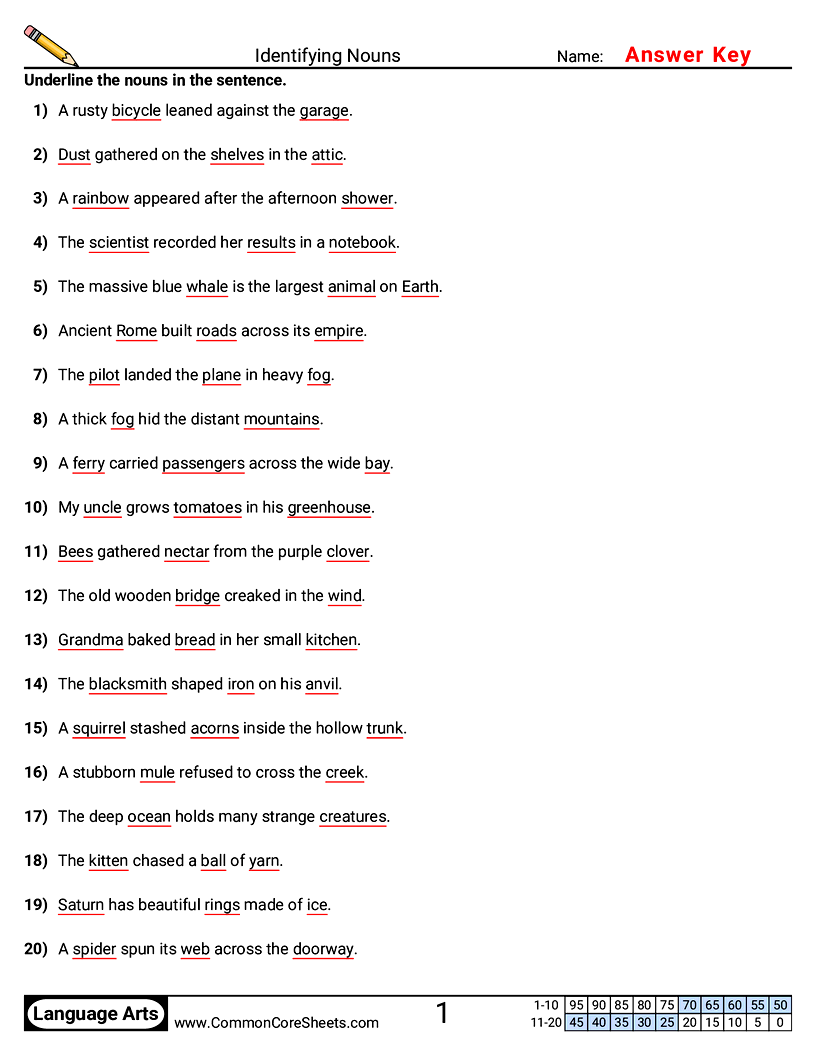
L.3.1.a
Learn what a noun is and how to spot one Find words that name people, places, or things in a sentence Tell the difference between nouns and other words like verbs or adjectives Practice picking out nouns from complete sentences
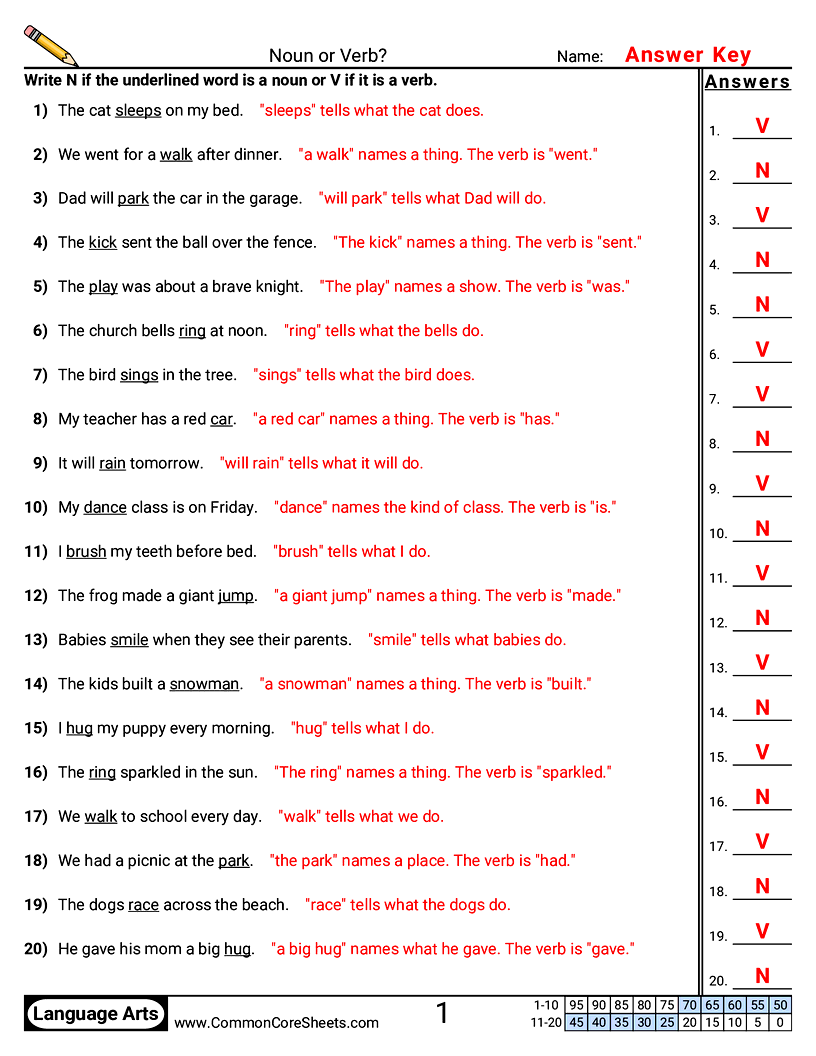
L.3.1.a L.K.1.b
Know that a noun names a person, place or thing Know that a verb shows an action Tell nouns from verbs in a sentence Understand that some words can be a noun or a verb depending on how they are used
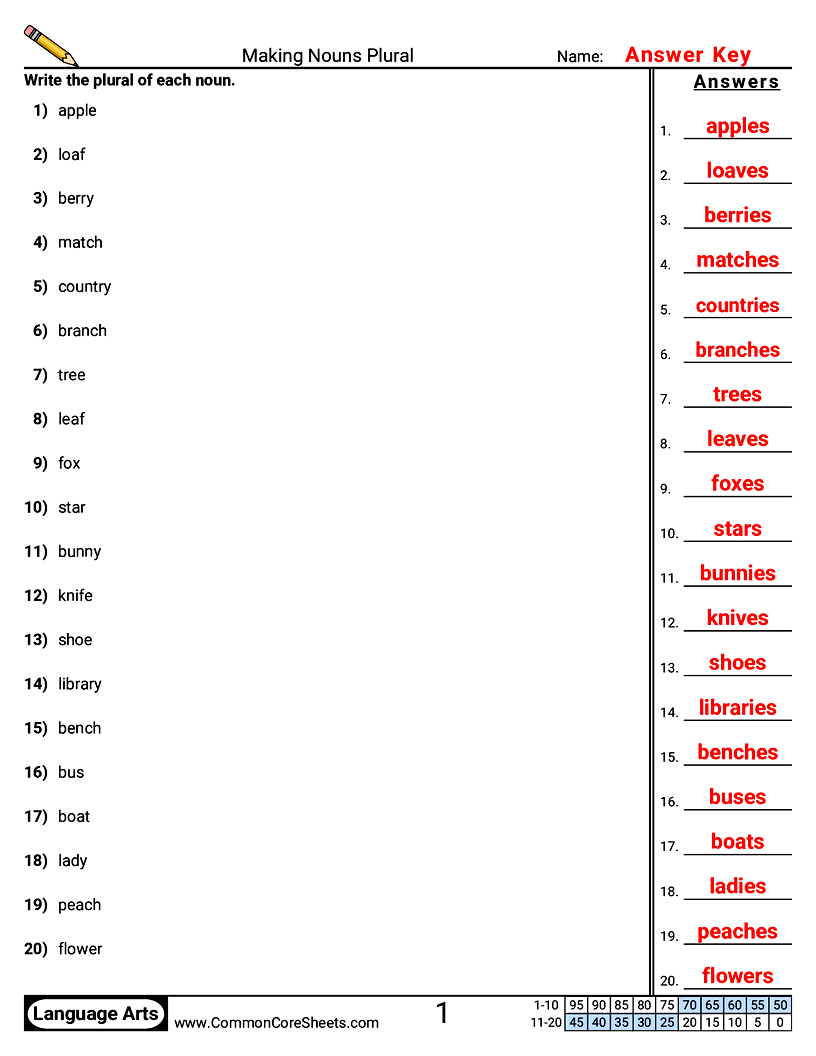
L.3.1.b
Form the plural of a noun by adding -s or -es Add -es to nouns ending in s, x, ch or sh Change y to i and add -es when a consonant comes before the y Change f to v and add -es for nouns like leaf and wolf
L.3.1.b
Learn when a word needs -es instead of just -s to become plural Practice adding -es to words that end in s, x, ch, sh, or z Recognize the difference between one item and more than one Spell plural nouns correctly when talking about groups of things
L.3.1.c
Know that a concrete noun names something you can sense Know that an abstract noun names an idea, feeling or quality Tell abstract nouns from concrete nouns in a sentence Use abstract nouns to describe feelings and qualities
L.3.1.a
Recognize pronouns like he, she, it, they, and we in a sentence Tell the difference between a pronoun and a regular noun Understand that pronouns take the place of a person, place, or thing Point out the correct pronoun within a full sentence
You are only seeing3rd Grade
See all grades
5 more worksheets in this section
L.2.1.e L.3.1.a
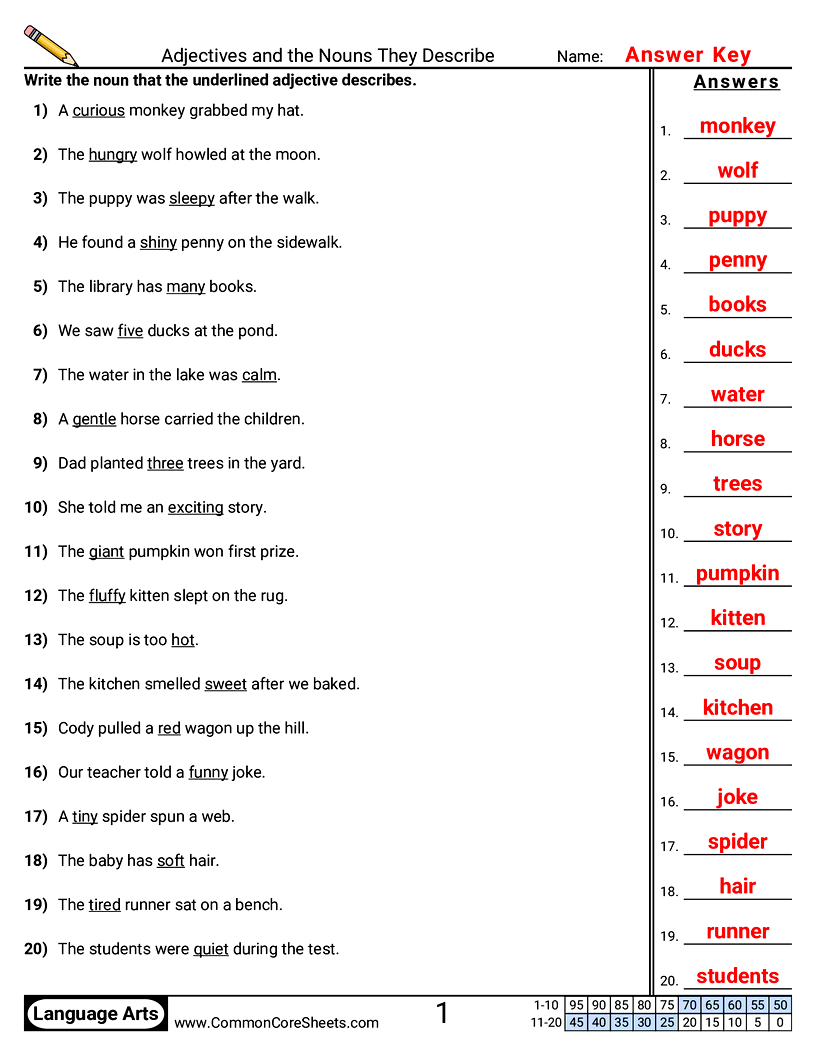
Find the adjective in a sentence Recognize words that describe how something looks, feels, or sounds Tell the difference between adjectives and other words like nouns or verbs Match adjectives to the noun they describe
L.3.1.a
Learn to recognize adjectives in a sentence Understand how adjectives describe nouns Tell the difference between adjectives and other words Practice spotting words that show size, color, or shape
L.1.1.f L.3.1.a
Know that an adjective describes a noun Find the noun an adjective describes Recognize adjectives that come after the noun they describe Use adjectives to add detail to writing
L.3.1.g
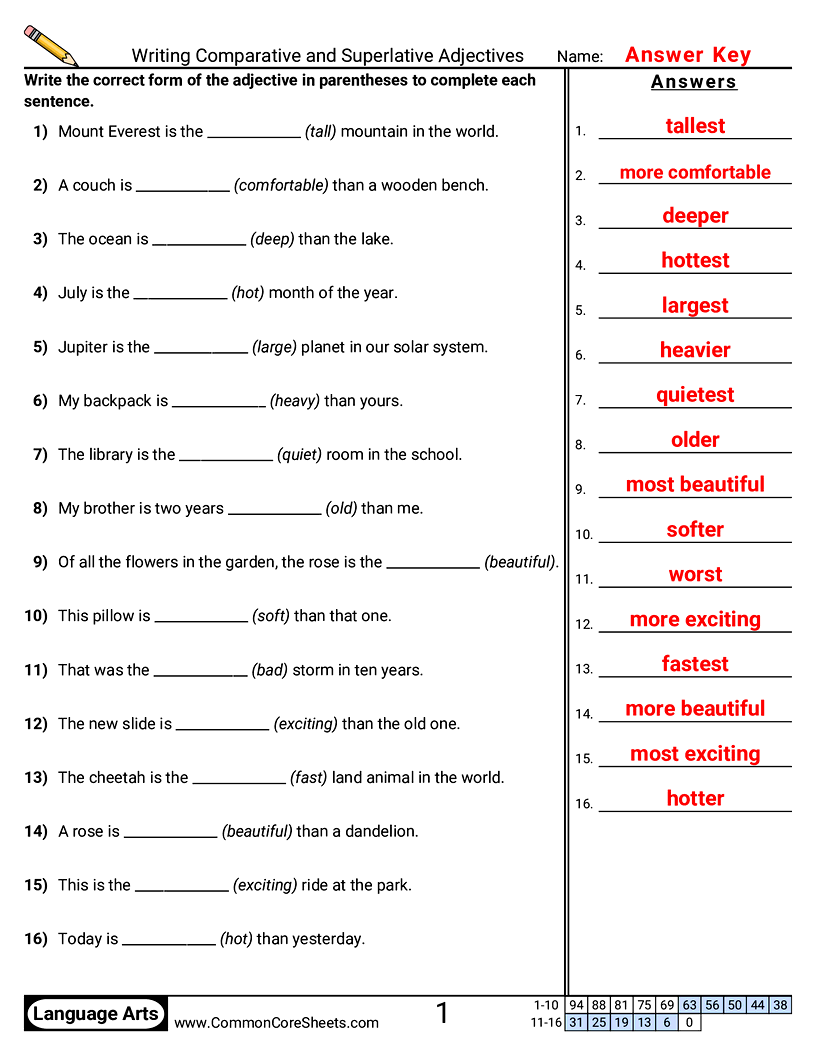
Tell when a sentence compares two things Tell when a sentence compares three or more things Choose between comparative and superlative forms Notice clue words like than and the ... of all
L.3.1.g
Use the comparative form to compare two things Use the superlative form to compare three or more Spell comparatives and superlatives with -er and -est Use more and most with longer adjectives, and know the irregular forms
You are only seeing3rd Grade
See all grades
2 more worksheets in this section
L.3.1.a
Recognize words that tell when something happens, like yesterday, soon, or later Pick out the adverb of time in a sentence Understand the difference between when an action happens and how it happens Use time words correctly when describing events
L.3.1.a
Identify adverbs that describe how an action happens Understand that many adverbs of manner end in -ly Choose the right adverb to complete a sentence Tell the difference between adjectives and adverbs
L.3.1.a
Identify adverbs of place in a sentence Understand that adverbs of place tell where something happens Recognize common location words like here, there, everywhere, and outside Tell the difference between adverbs of place and other kinds of words
L.3.1.a
Recognize words like very, too, quite, and almost in sentences Understand how adverbs of degree change the strength of a word Choose the right adverb of degree to complete a sentence Use adverbs of degree correctly in your own writing
L.3.1.a
Recognize words that tell how often something happens like always, often, and never Choose the correct frequency adverb to complete a sentence Place adverbs of frequency correctly in a sentence Understand the difference in meaning between words like usually and rarely
L.3.1.a
Find the action word in a sentence Tell the difference between verbs and other words Recognize verbs that show what someone is doing Practice spotting verbs in everyday sentences
L.3.1.e
Practice putting verbs into the future tense Learn to use 'will' and 'going to' correctly in sentences Recognize when a sentence is talking about something that hasn't happened yet Complete sentences with the right future tense verb form
L.3.1.f
Recognize when a verb does not match a plural subject in a sentence Correct verbs so they agree with plural subjects Practice using the right verb tense with words like 'they' and 'the dogs' Rewrite sentences to sound correct out loud
You are only seeing3rd Grade
See all grades
1 more worksheet in this section
L.1.1.c L.3.1.f
Use am, is and are correctly Use was and were, has and have, and does and do correctly Match verbs to pronouns
L.3.1.f
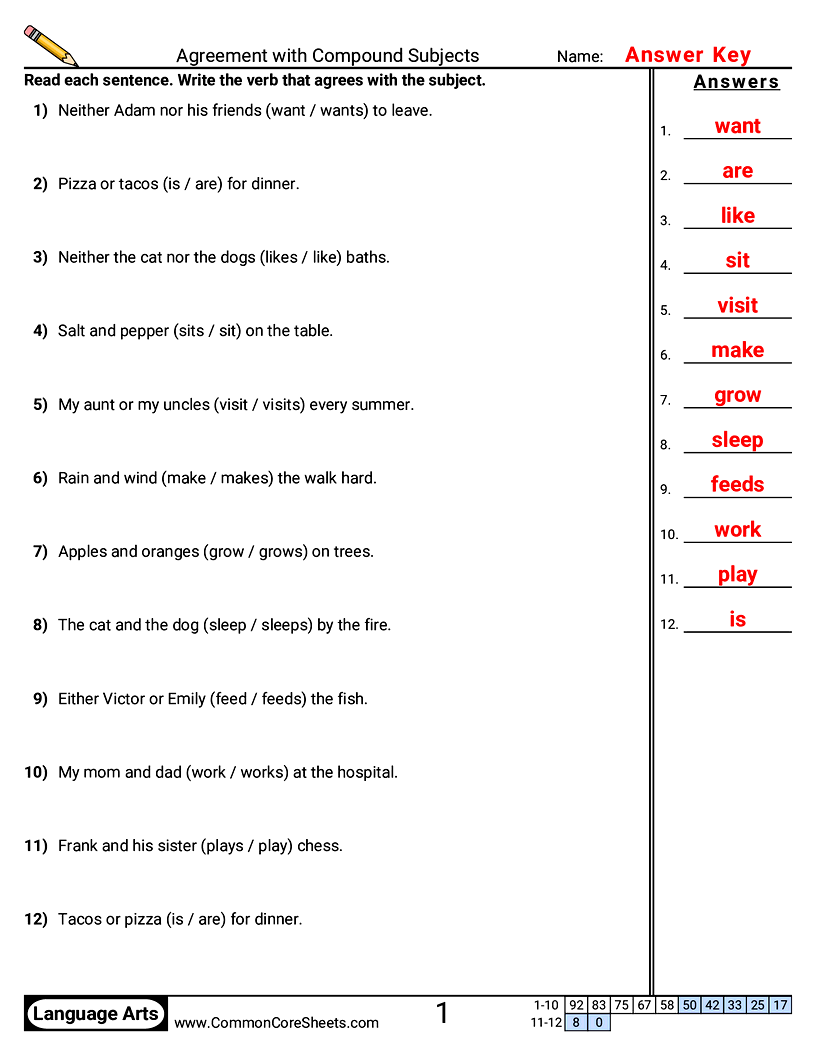
Use a plural verb with subjects joined by and Make the verb agree with the nearer subject after or and nor Find all the parts of a compound subject
L.3.1.f
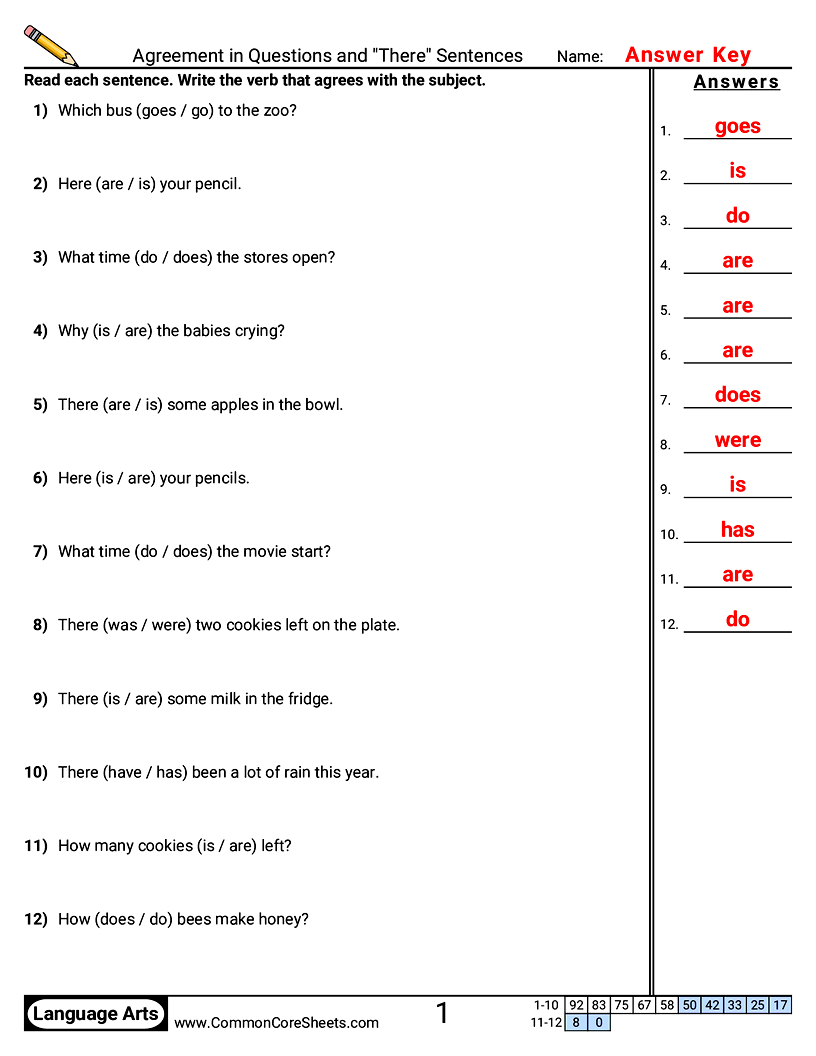
Find the subject when it comes after the verb Choose is or are after there and here Make verbs agree in questions
L.3.1.f
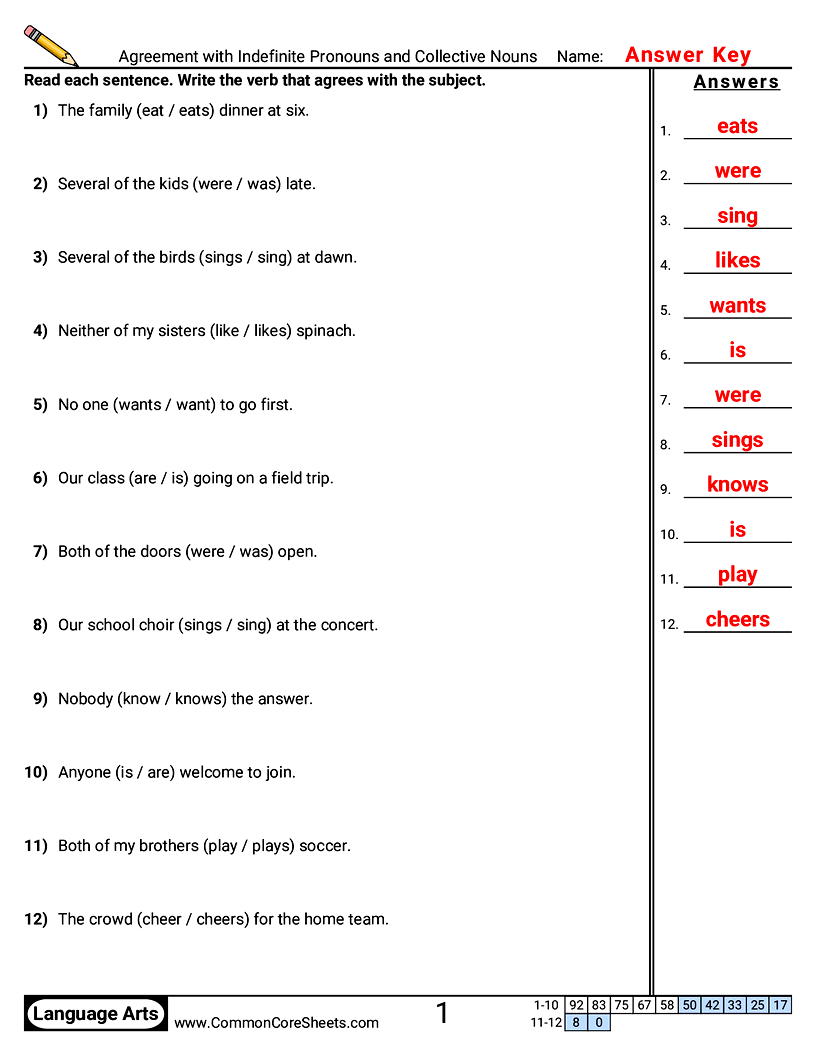
Use singular verbs with everyone, each and nobody Use plural verbs with both, many and several Use singular verbs with collective nouns like team and class
L.3.1.f
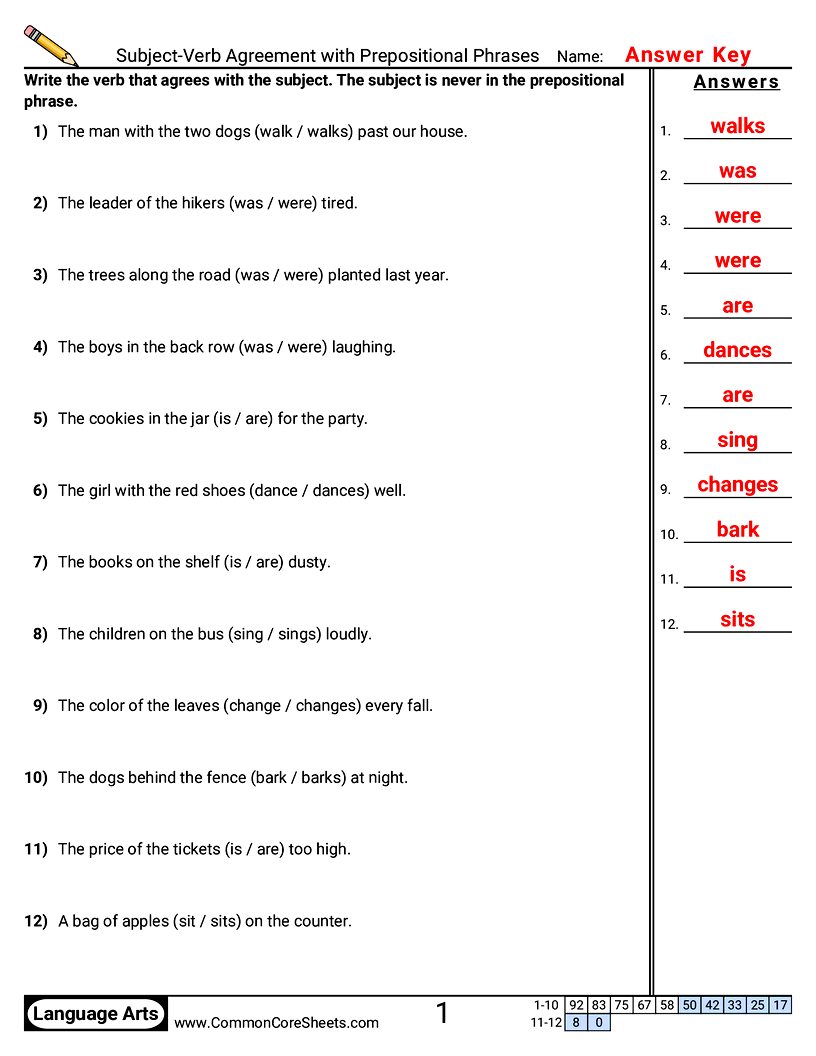
Find subject-verb agreement errors Correct verbs to agree with their subjects Proofread sentences for agreement
You are only seeing3rd Grade
See all grades
1 more worksheet in this section
L.1.1.e L.3.1.e
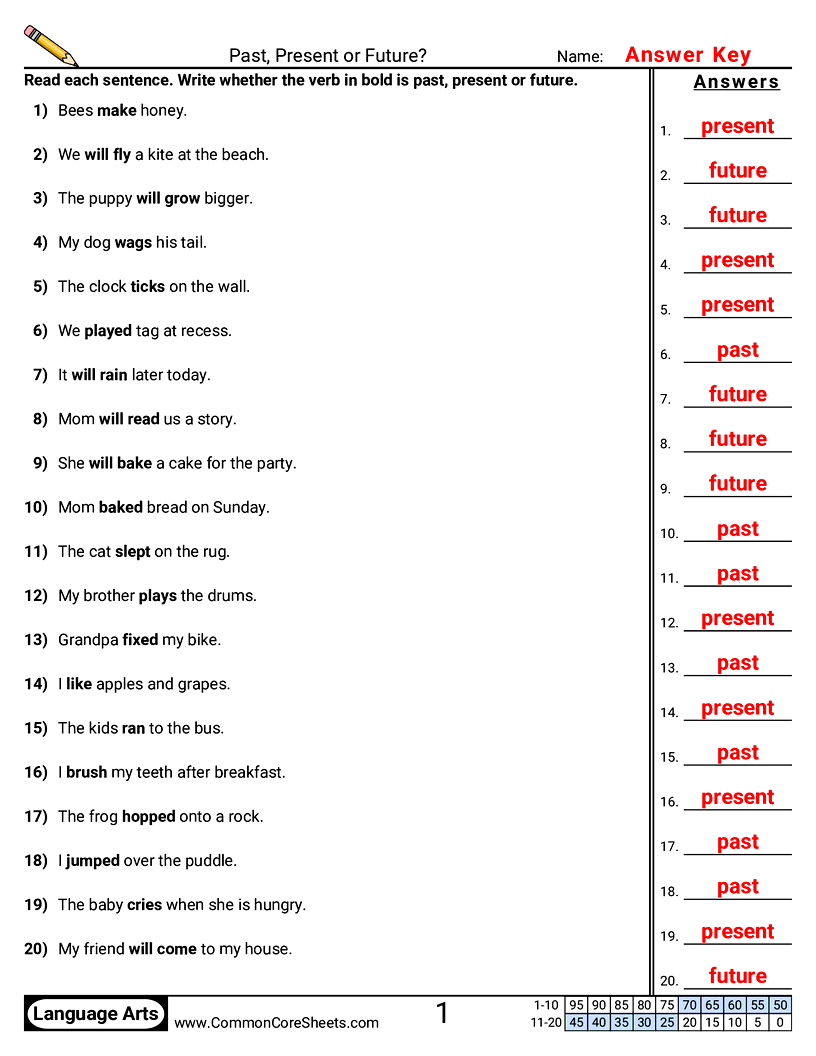
Know that verbs show when something happens Tell past, present and future verbs apart Notice that future verbs use will
L.1.1.e L.3.1.e
Find the time clue in a sentence Choose the past, present or future form of a verb Use will for the future
L.3.1.e
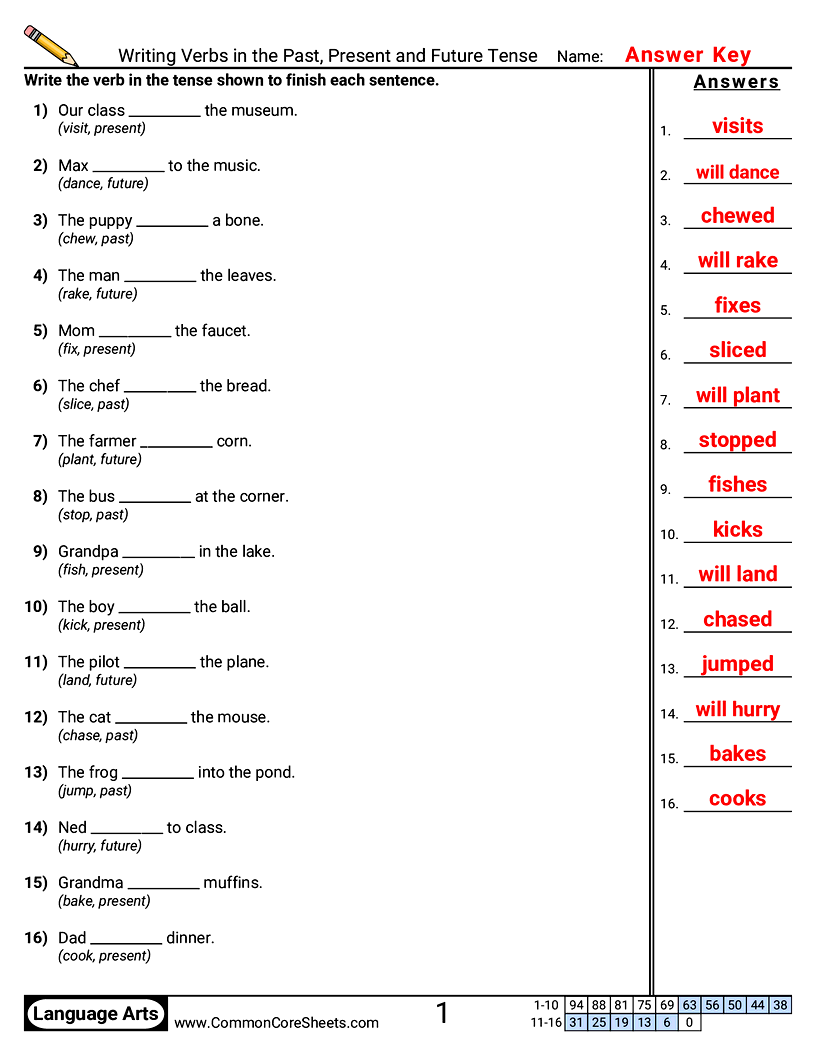
Form the past, present and future tense of a verb Make present tense verbs agree with their subject Spell past tense verbs that end in -ed
L.3.1.d L.3.2.e
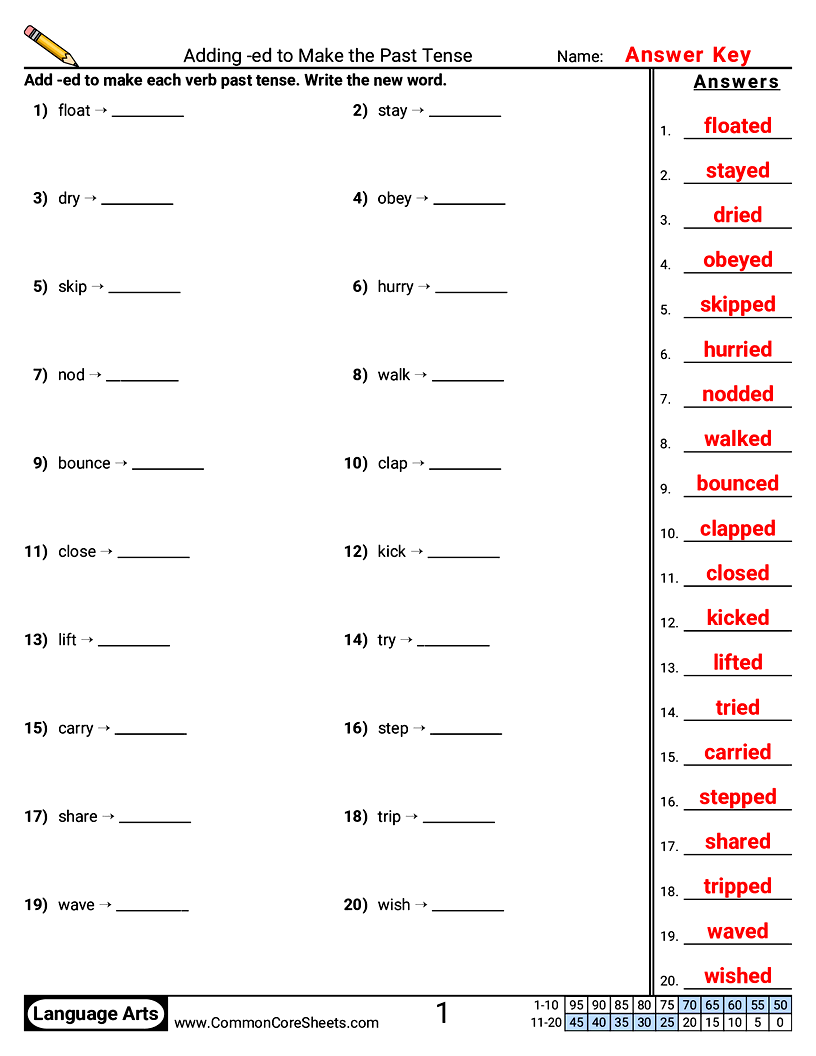
Form the past tense of regular verbs Double the final consonant when needed Drop the e or change y to i before -ed
L.2.1.d L.3.1.d
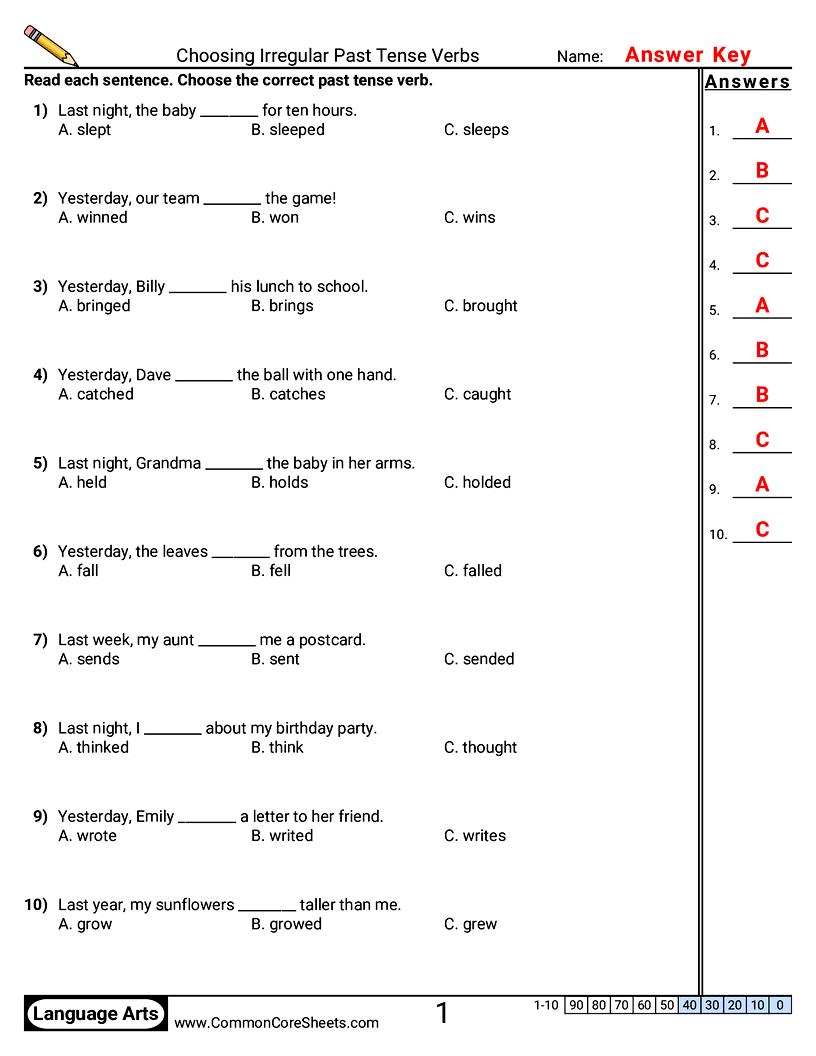
Use the past tense of common irregular verbs Know that irregular verbs do not add -ed Use a time clue to choose the past tense
L.2.1.d L.3.1.d
Write the past tense of common irregular verbs Spell irregular past tense verbs correctly Know which verbs do not add -ed
L.3.1.d L.5.1.b
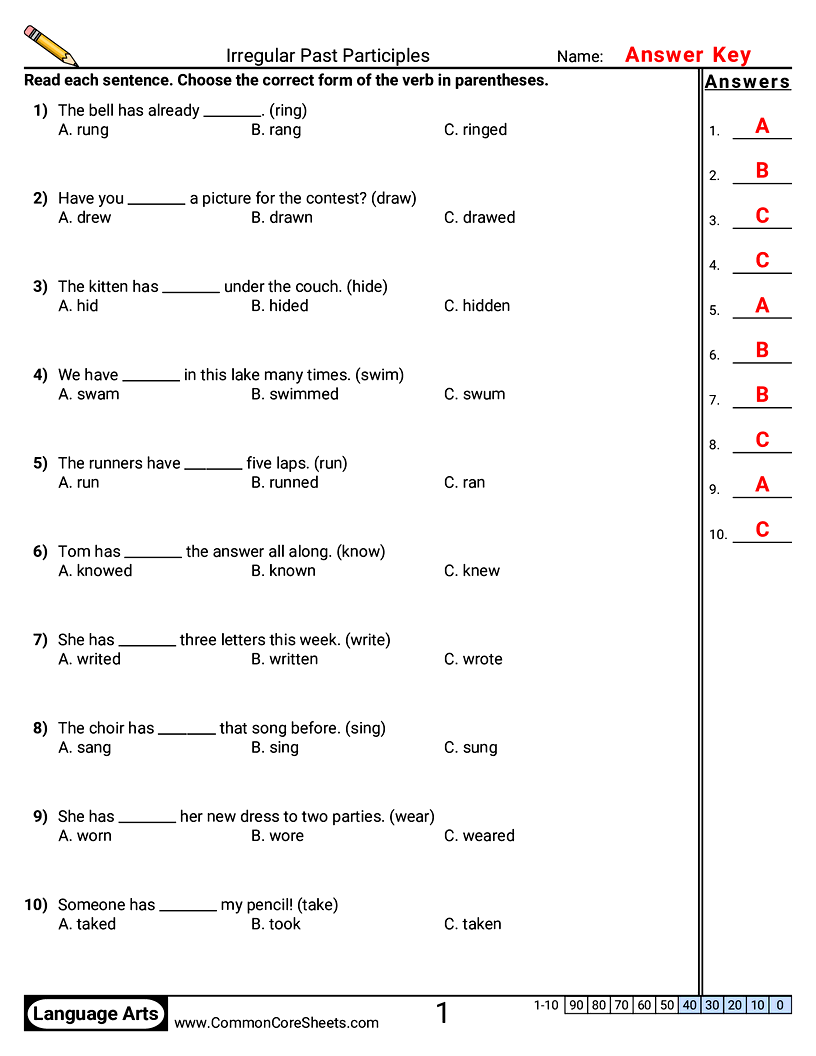
Use the past participles of irregular verbs Tell the past participle from the simple past Use has, have and had with the participle
L.1.1.g L.3.1.h
Use and to add an idea Use but to show a difference Use or to give a choice Use so to tell a result
L.3.1.h
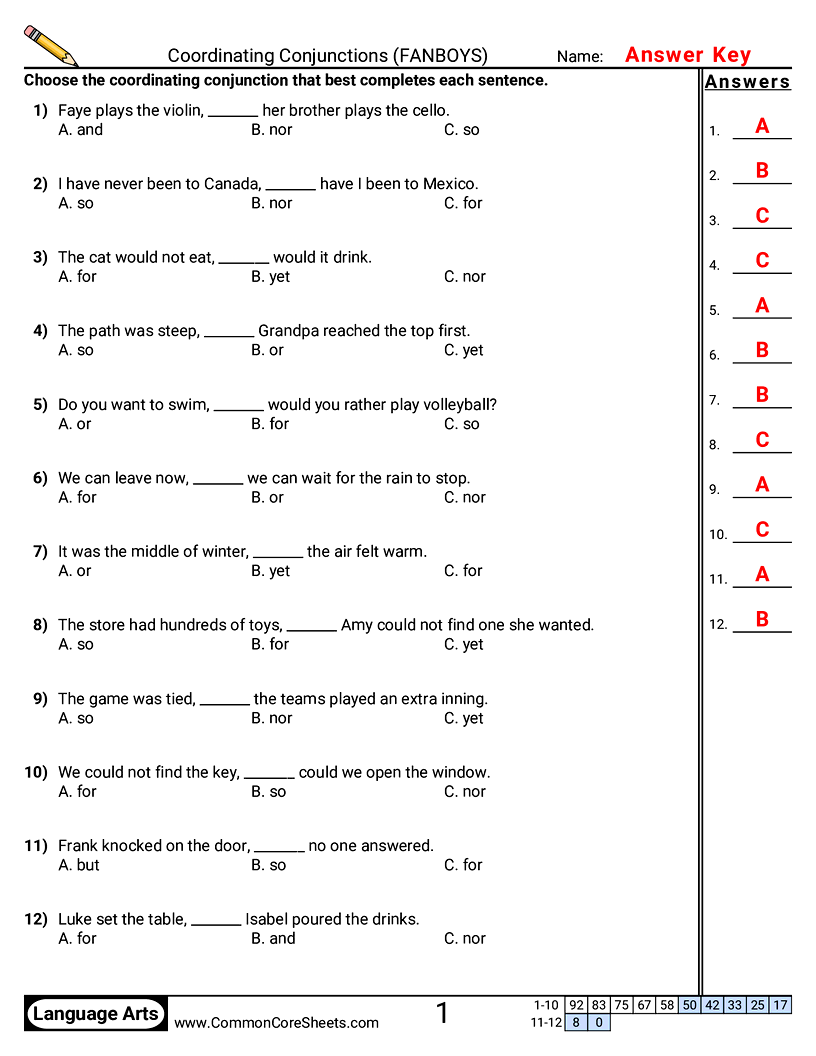
Name the seven coordinating conjunctions Choose a conjunction that shows how two ideas connect Use nor after a negative idea Tell for (because) from so (as a result)
L.3.1.h
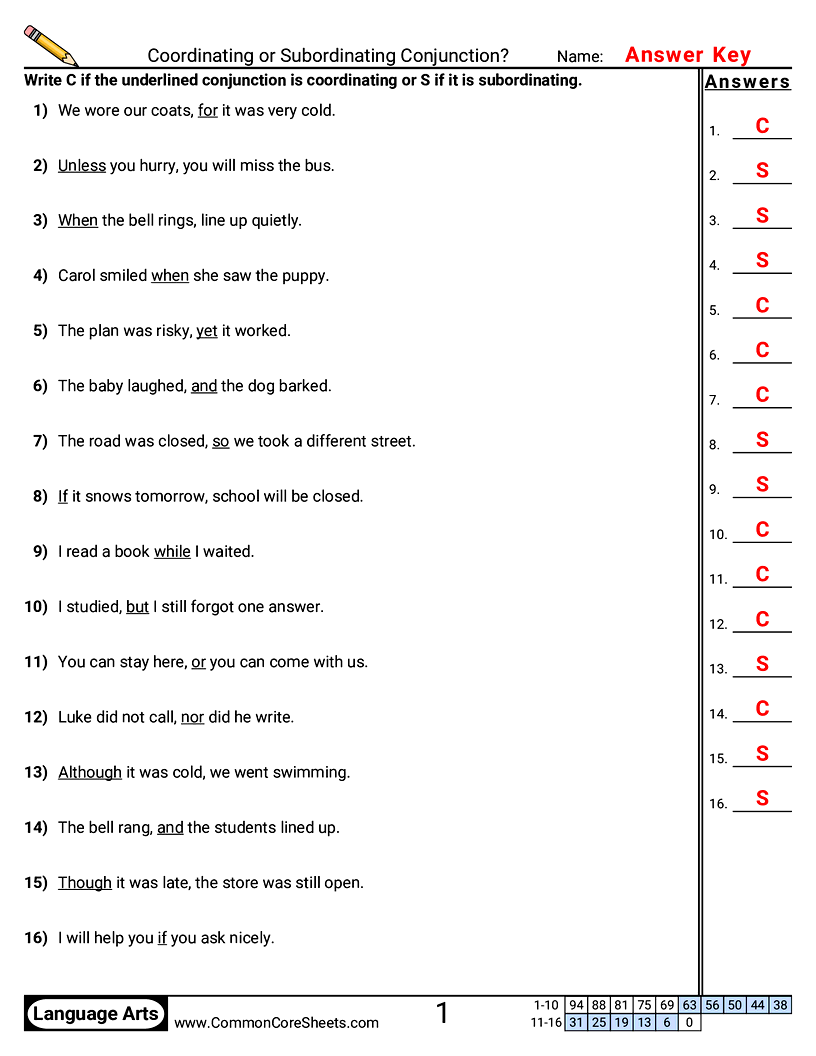
Tell coordinating from subordinating conjunctions Remember the FANBOYS conjunctions Recognize common subordinating conjunctions Notice that a subordinating conjunction can start a sentence
L.3.1.h
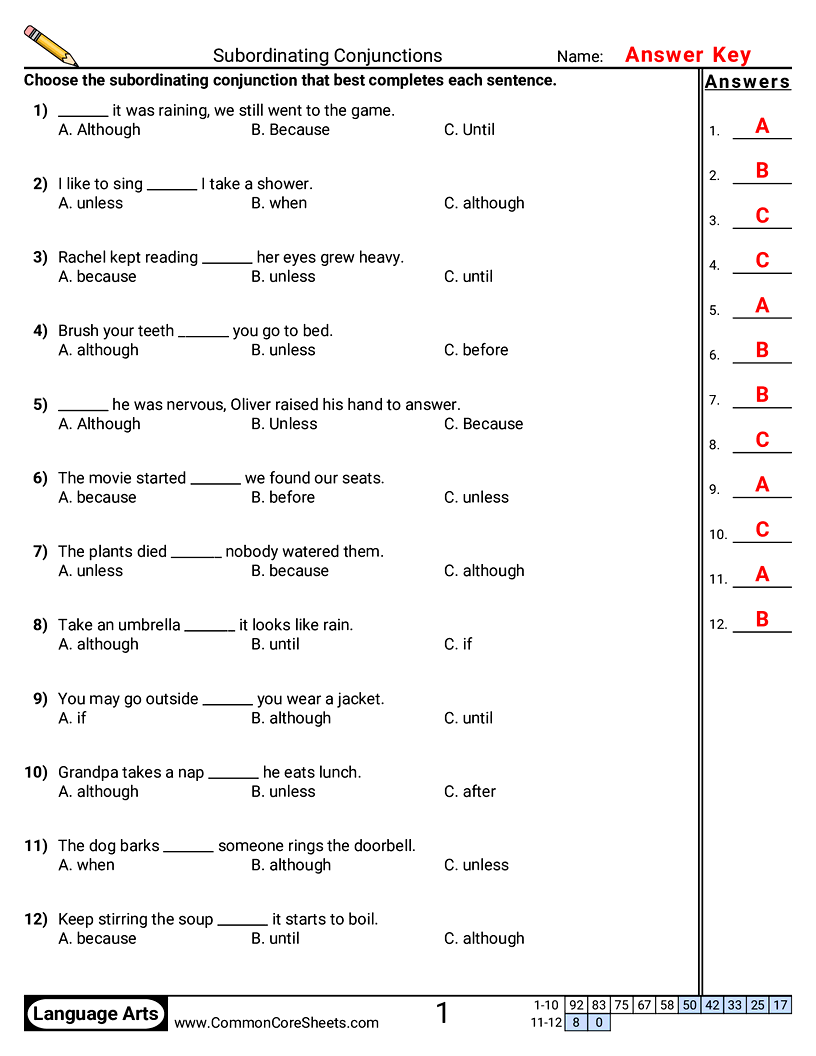
Know common subordinating conjunctions Choose a conjunction that shows time, reason or condition Use although to show a surprise Use unless and until correctly
You are only seeing3rd Grade
See all grades
2 more worksheets in this section
L.3.1
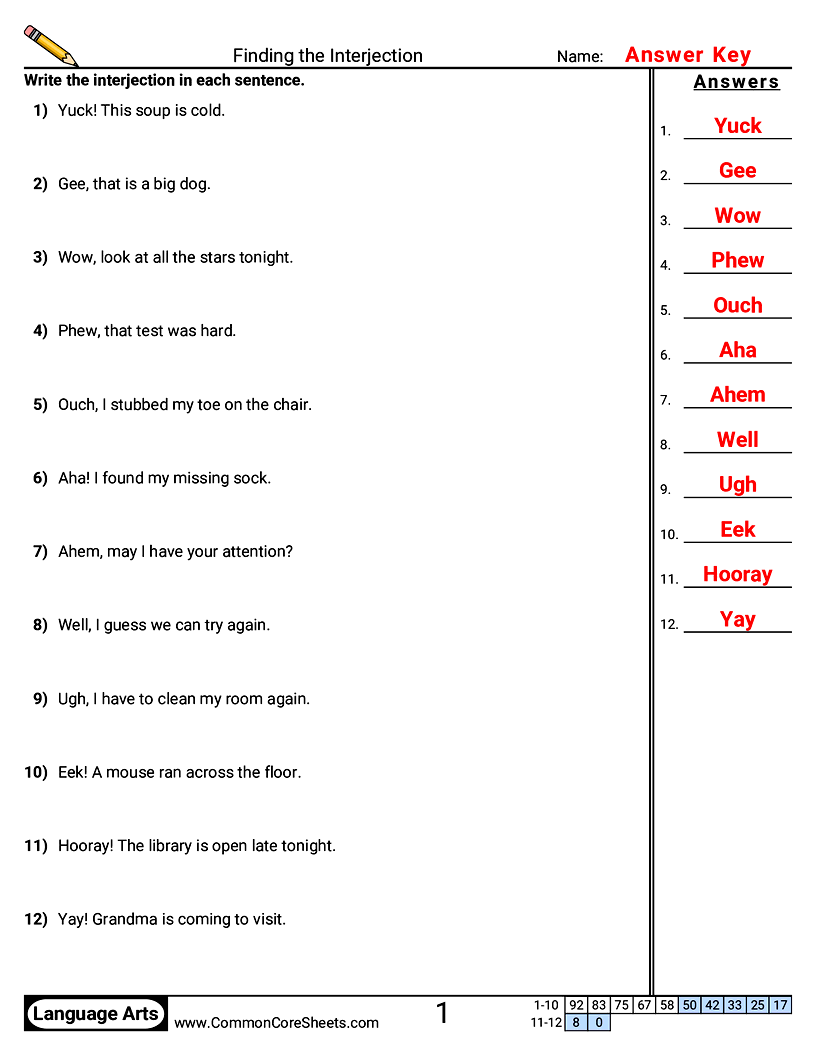
Know that an interjection shows a sudden feeling Find the interjection in a sentence Notice the punctuation after an interjection Use interjections in your own writing
L.3.1
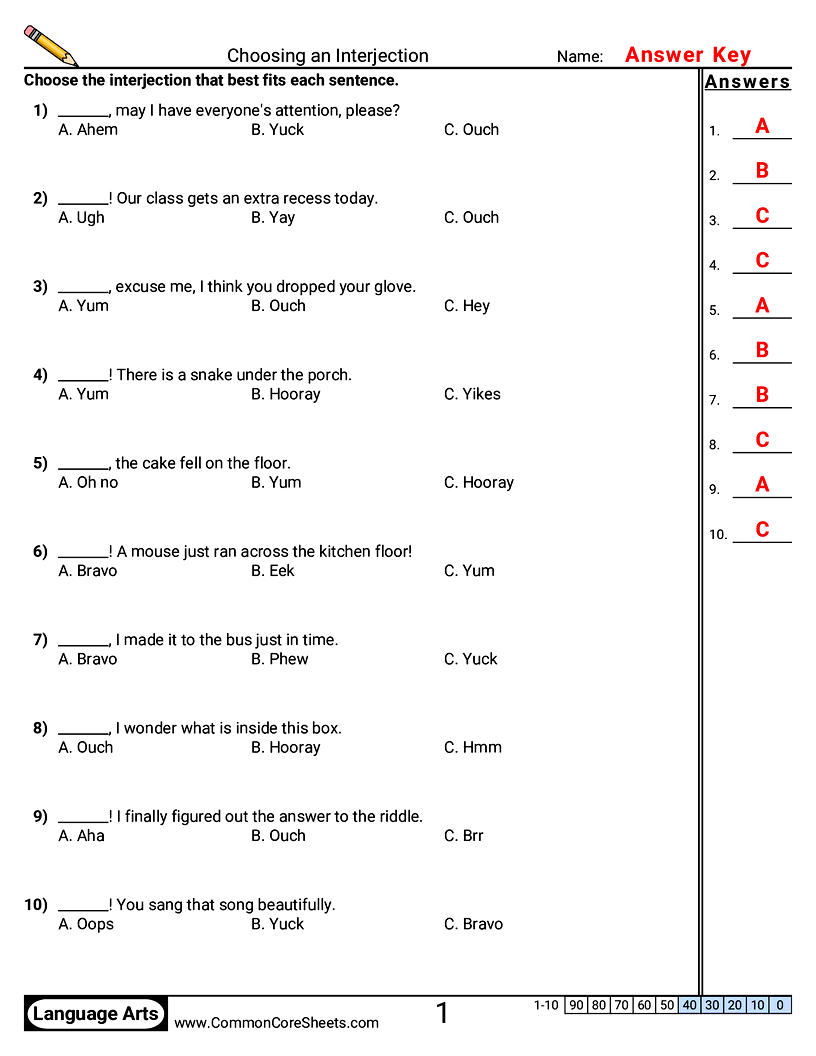
Match an interjection to a feeling Use interjections to make writing lively Read a sentence for clues about feeling Punctuate interjections correctly
L.3.1
Tell when a word is used as an interjection Know that one word can be different parts of speech Use punctuation as a clue to an interjection Read words in context
Advertisement