Grid Worksheets
Free grid worksheets with answer key. No login or account needed. From reading a coordinate plane to graphing positive and negative coordinates, we've got you covered. A grading column and quick grade scale maker grading a breeze and a modified pages help with lower level learners or when just introducing a topic. Great for teachers or for homeschool.
Browse Sheets By Problem Type
×
Determining Coordinates
Link
About these worksheets
These worksheets build coordinate plane skills from the basics up. Students practice reading and plotting ordered pairs, creating rectangles from coordinates, graphing number patterns, reading coordinate planes with shapes, marking locations on grids, using coordinates in real-world contexts, working with positive and negative coordinates, interpreting graphs, and finding points on a line. Resources span fifth through seventh grade.
5g2
Read a point on a coordinate grid and name its ordered pair (x, y). Plot a point when you are given its ordered pair (x, y). Use the x-axis and y-axis to decide how far to move right and up from the origin. Work only in the first quadrant where both coordinates are positive.
5g1
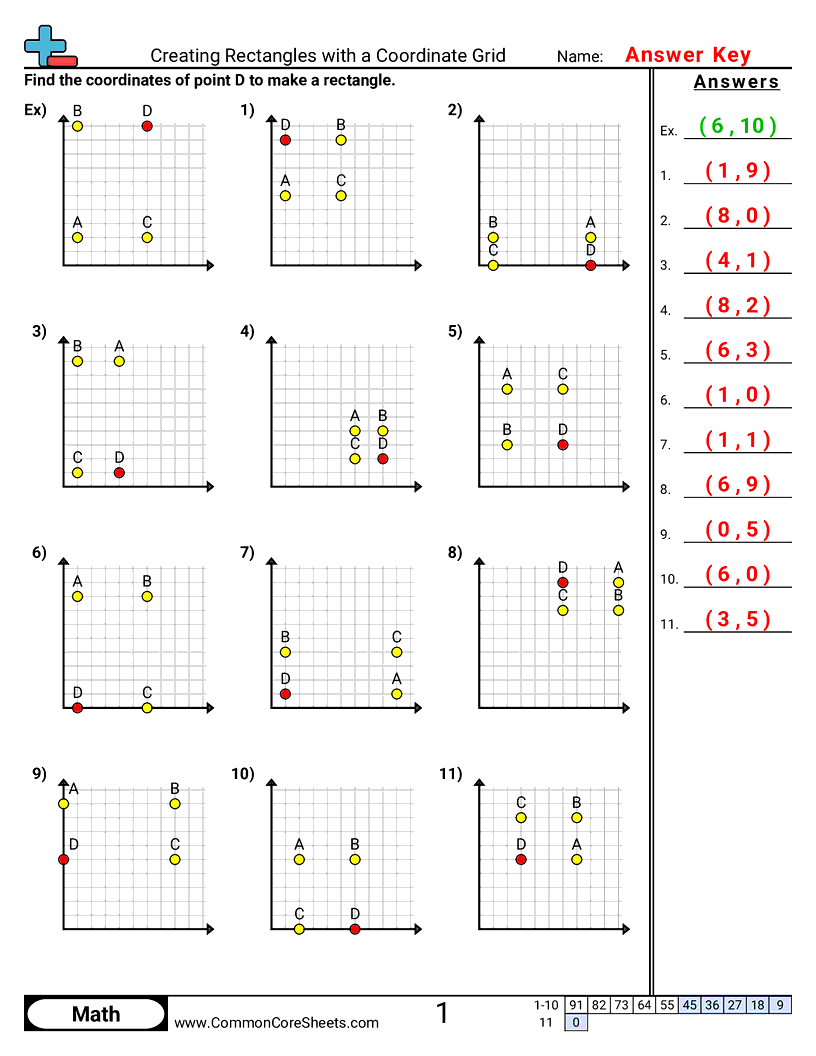
Plot points on a coordinate grid using x- and y-values. Use given vertices to draw a rectangle on the grid. Find missing rectangle corners by using the same x- or y-coordinate for points that line up. Check that a shape is a rectangle by making sure sides are horizontal and vertical and corners line up.
5oa3
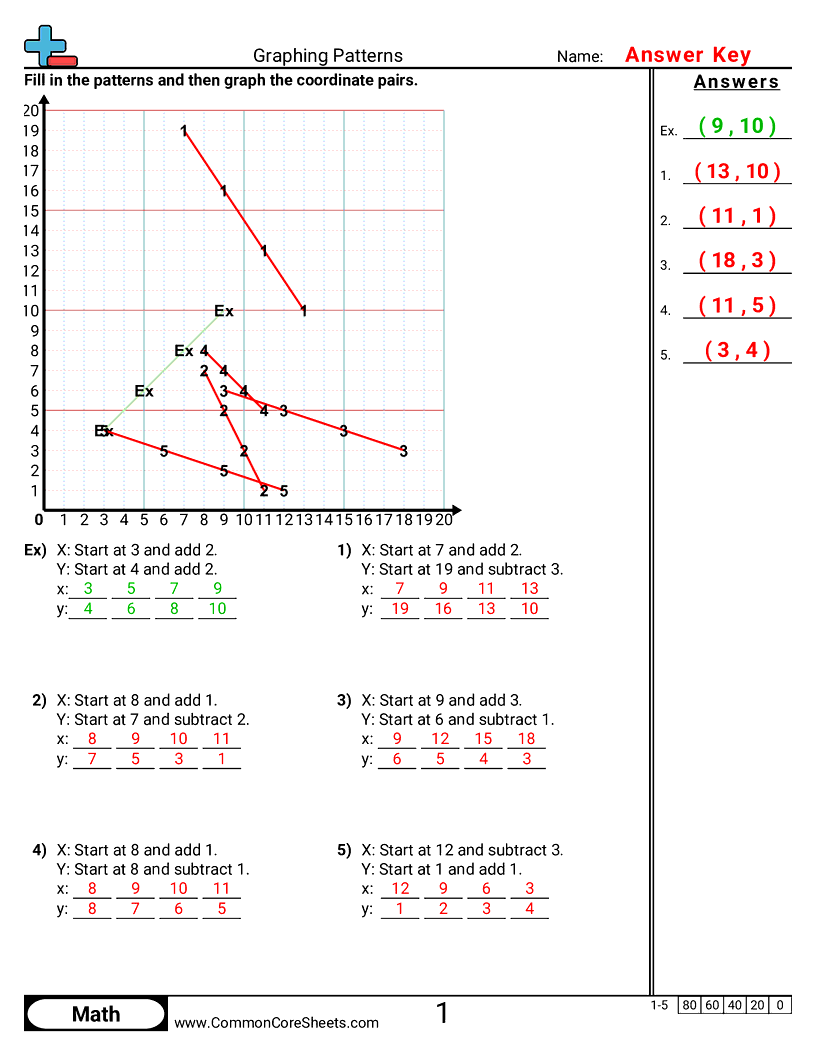
Practice generating number patterns for x and y using rules like "start at 7 and add 2" or "start at 19 and subtract 3" Pair up the x and y values to create coordinate points and plot them on a graph See how two different patterns combine to form a line when graphed together
5g1
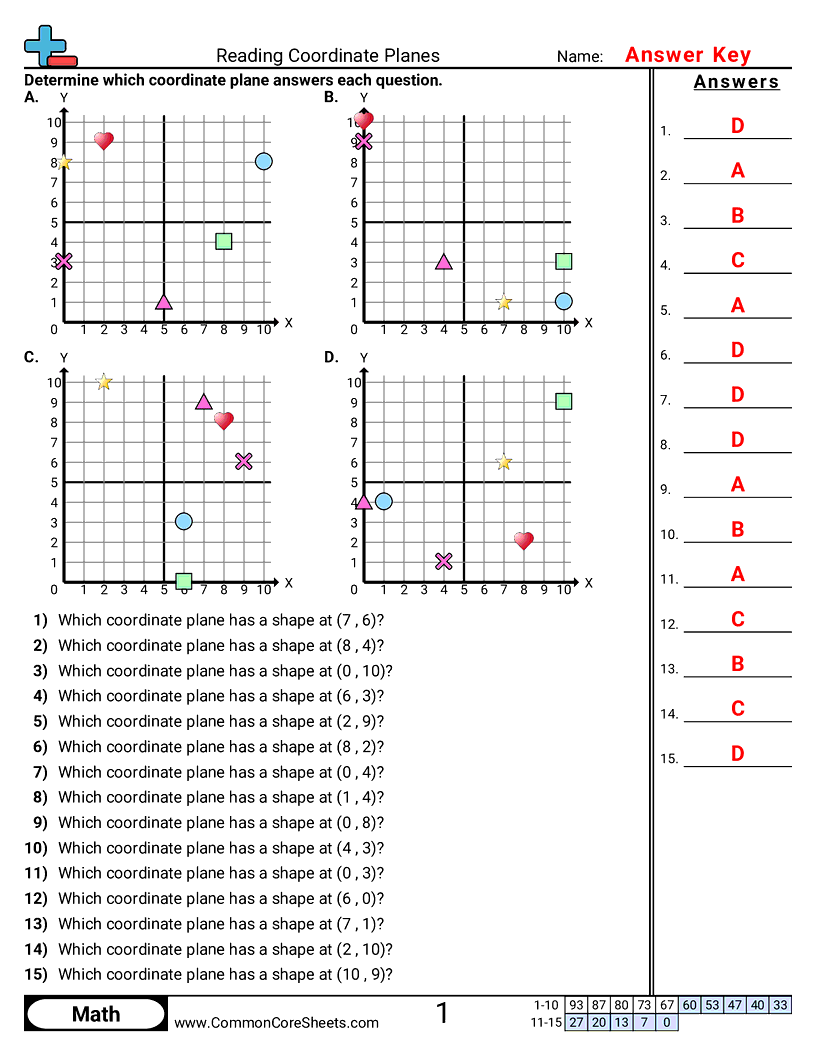
Practice reading ordered pairs and finding the matching point on a coordinate grid. Identify which graph shows a shape placed at the given coordinates. Pay attention to the order of the numbers in an ordered pair so the point lands in the correct spot.
5g1
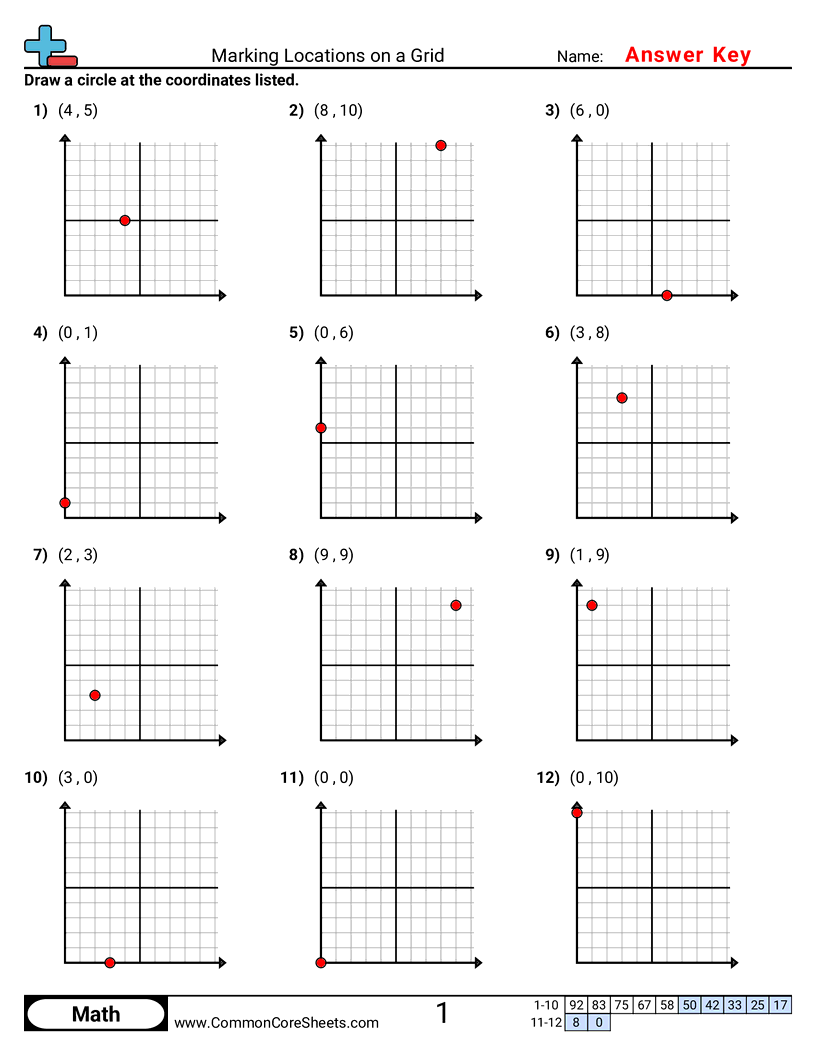
Read an ordered pair and find the matching point on a coordinate grid. Use the x-axis and y-axis to move the right amount left or right, then up or down from the origin. Plot points accurately by paying attention to the order of the coordinates (x first, then y).
5g2
Read and understand points shown on a coordinate grid using x- and y-values. Plot points on a coordinate grid when you are given ordered pairs like (x, y). Use a table or chart of x- and y-values to place points correctly on the grid. Answer questions about where points are located by using the horizontal and vertical axes.
5g2
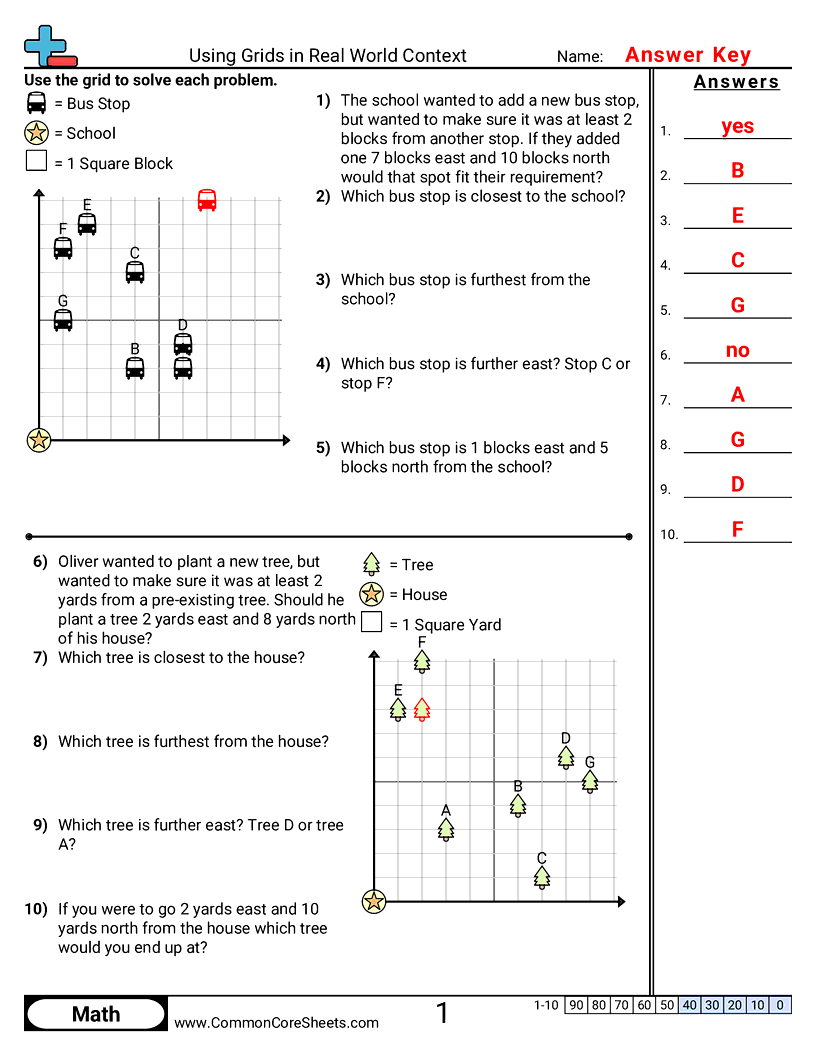
Read a grid or coordinate plane to find where a point is located. Use a grid like a simple map to describe positions and navigate from one spot to another.
6ns6c
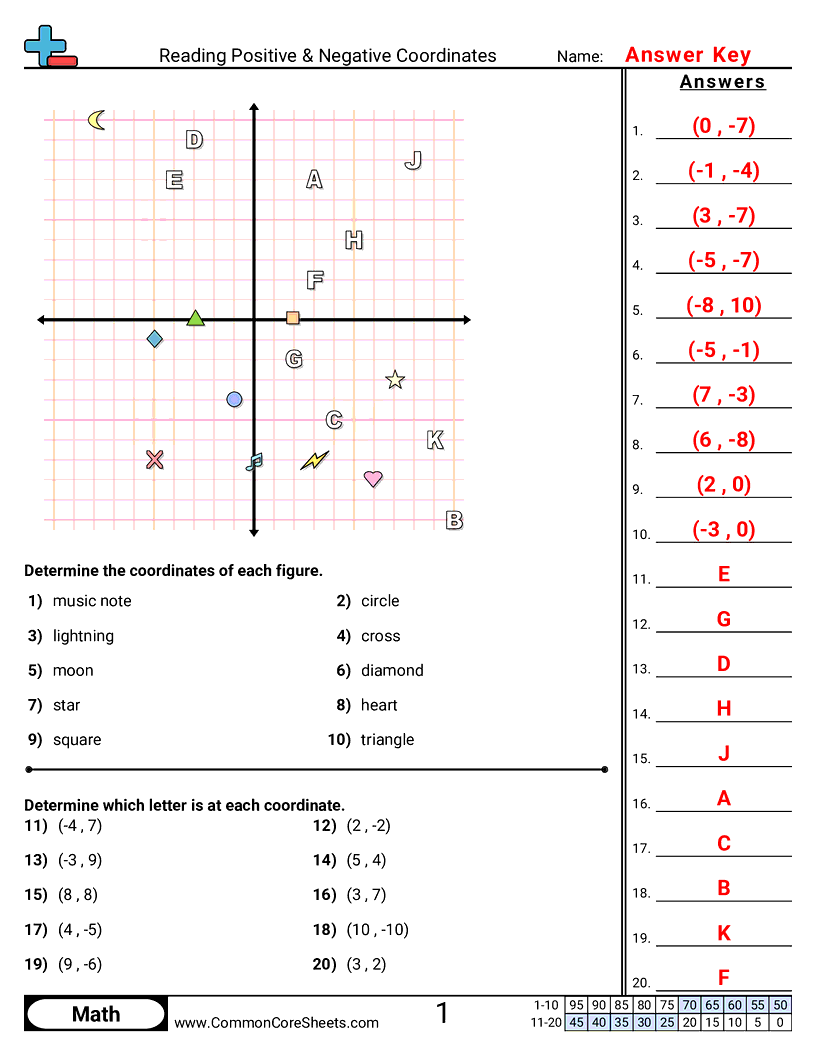
Read the x- and y-values of a point on a coordinate grid. Use the x-axis and y-axis to tell how far to move left/right and up/down from the origin. Recognize when coordinates are positive, negative, or zero based on where the point is. Identify which quadrant a point is in from the signs of its coordinates.
7rp2d
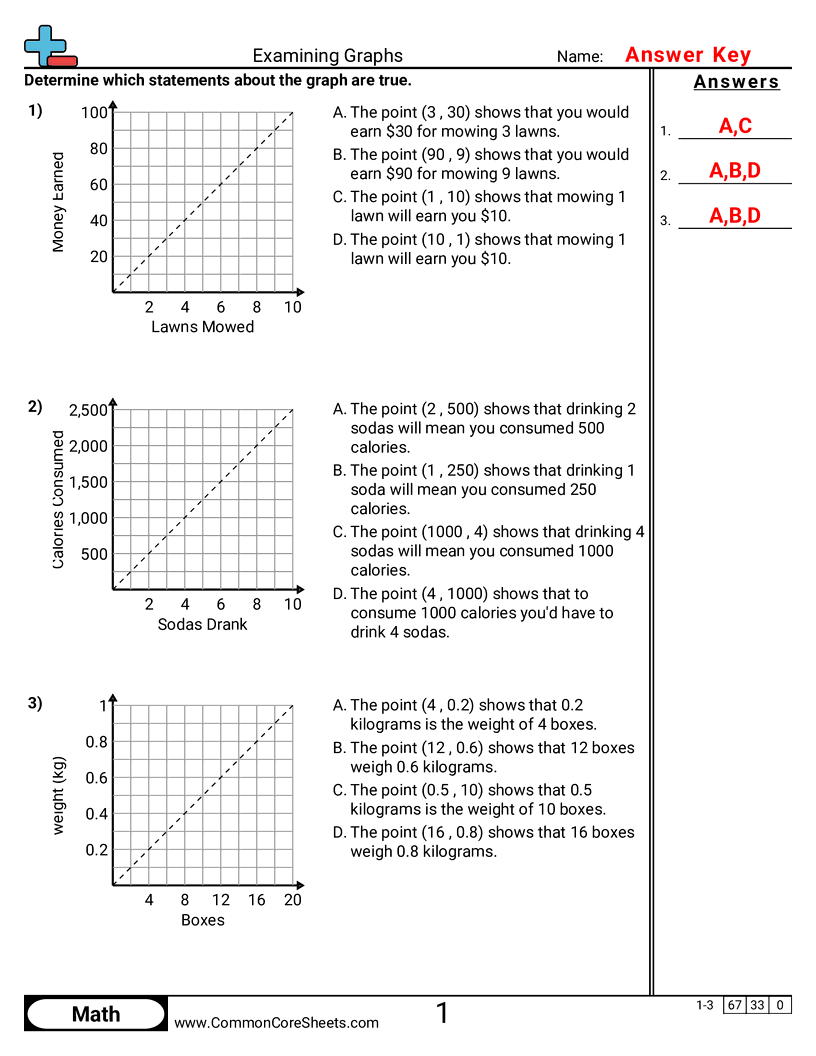
Practice reading values from a graph by using the axes and scale. Decide which statements about the data are true based on what the graph shows. Use information from a graph to answer questions without guessing.
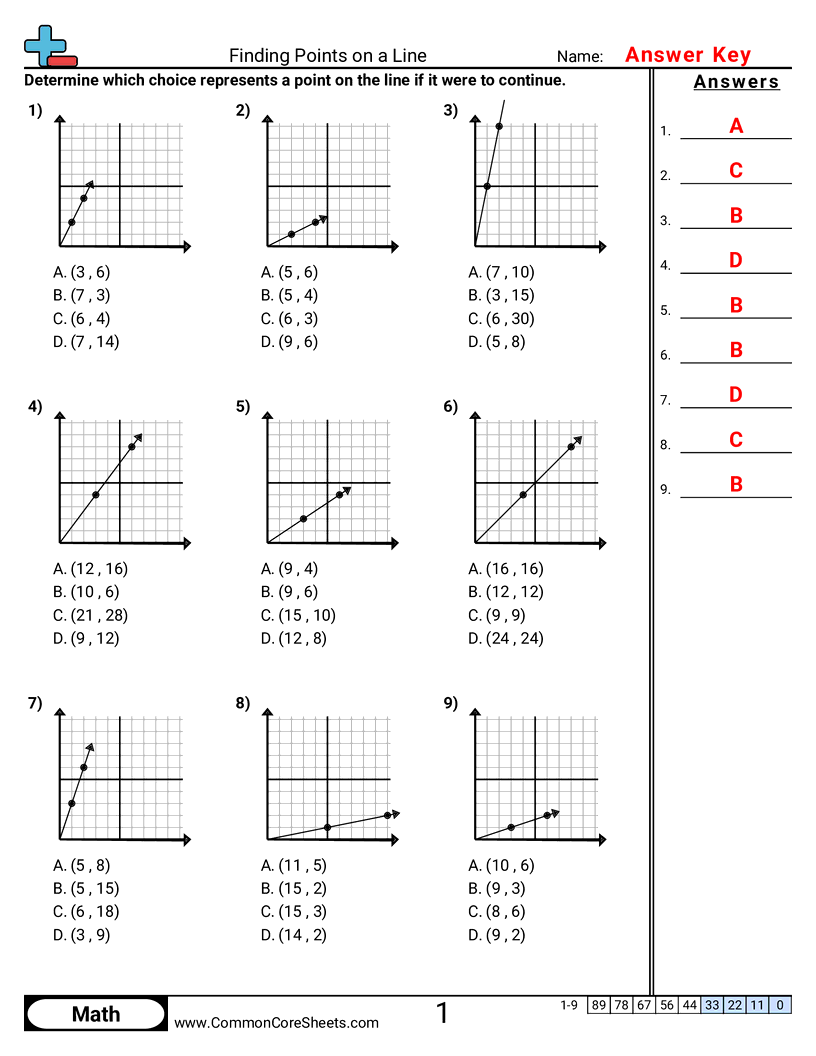
Use the pattern of a straight line to figure out the next point that comes next. Find how x and y change from one point to the next (the line’s rise and run).
About these worksheets
Students practice finding distances and midpoints on the coordinate plane. Worksheets cover finding distance between points with shared x- or y-coordinates, using the distance formula for any two points, calculating midpoints, determining whether lines are horizontal or vertical, and choosing the correct expression for distance. Aligned with sixth grade and above.
6ns8
Find the distance between two points on a coordinate grid when they line up straight across or straight up-and-down. Use subtraction and absolute value to get a positive distance between two x-values or two y-values. Decide whether to compare x-coordinates or y-coordinates based on whether the move is horizontal or vertical. Count grid units correctly to measure length on the coordinate plane.
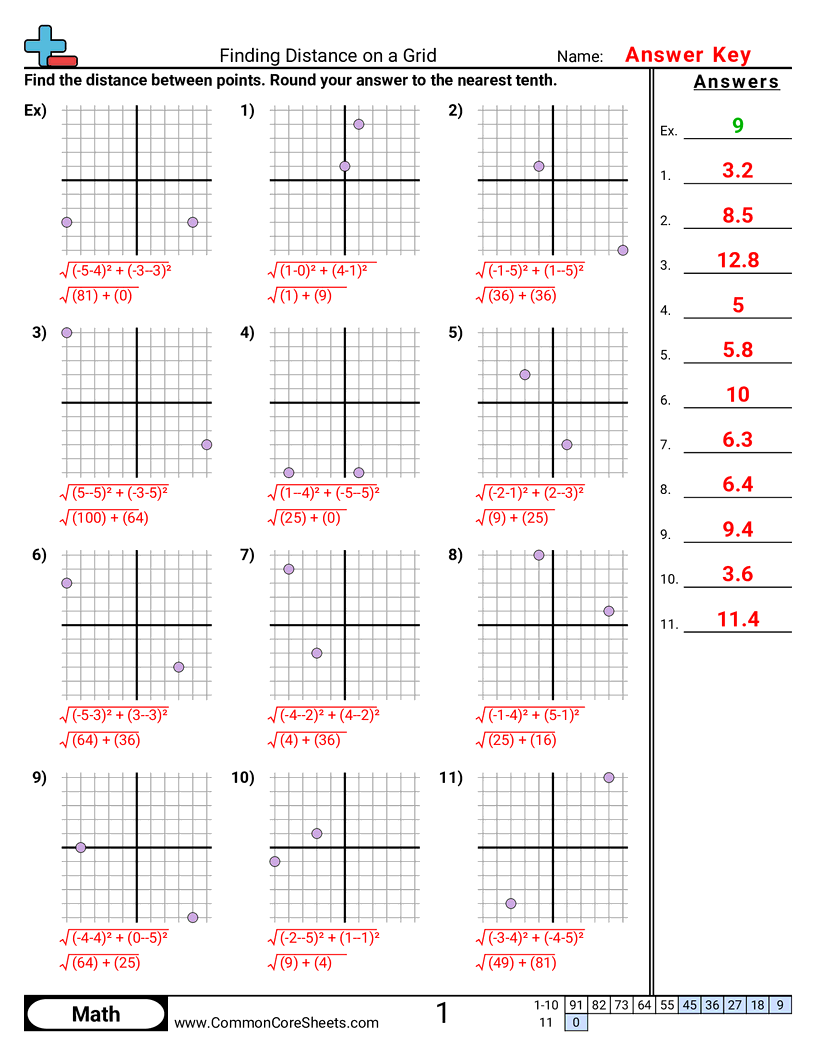
Practice using the distance formula to find the distance between two points on a coordinate grid Read coordinates from a graph and plug them into the formula √((x₂−x₁)² + (y₂−y₁)²) Round square root answers to the nearest tenth Work with points in all four quadrants, including negative coordinates
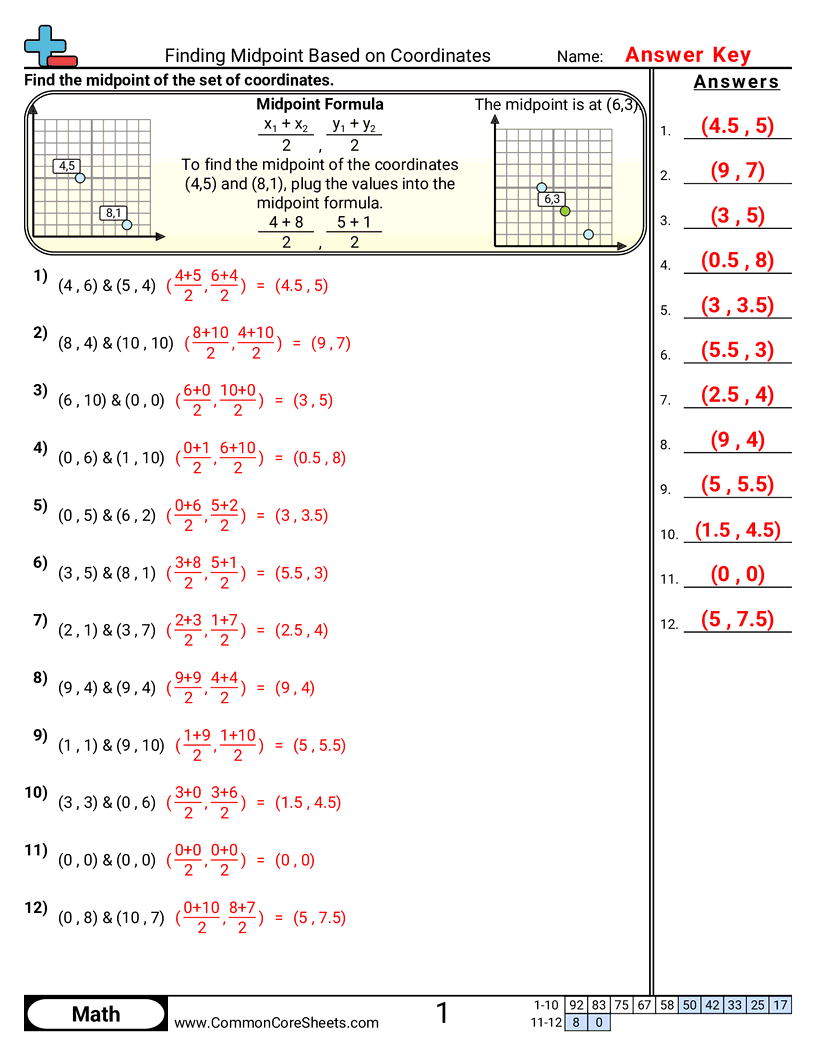
Find the point exactly halfway between two points on a coordinate grid. Use the midpoint formula by averaging the two x-values and the two y-values. Read and write ordered pairs (x, y) to describe points on a grid.
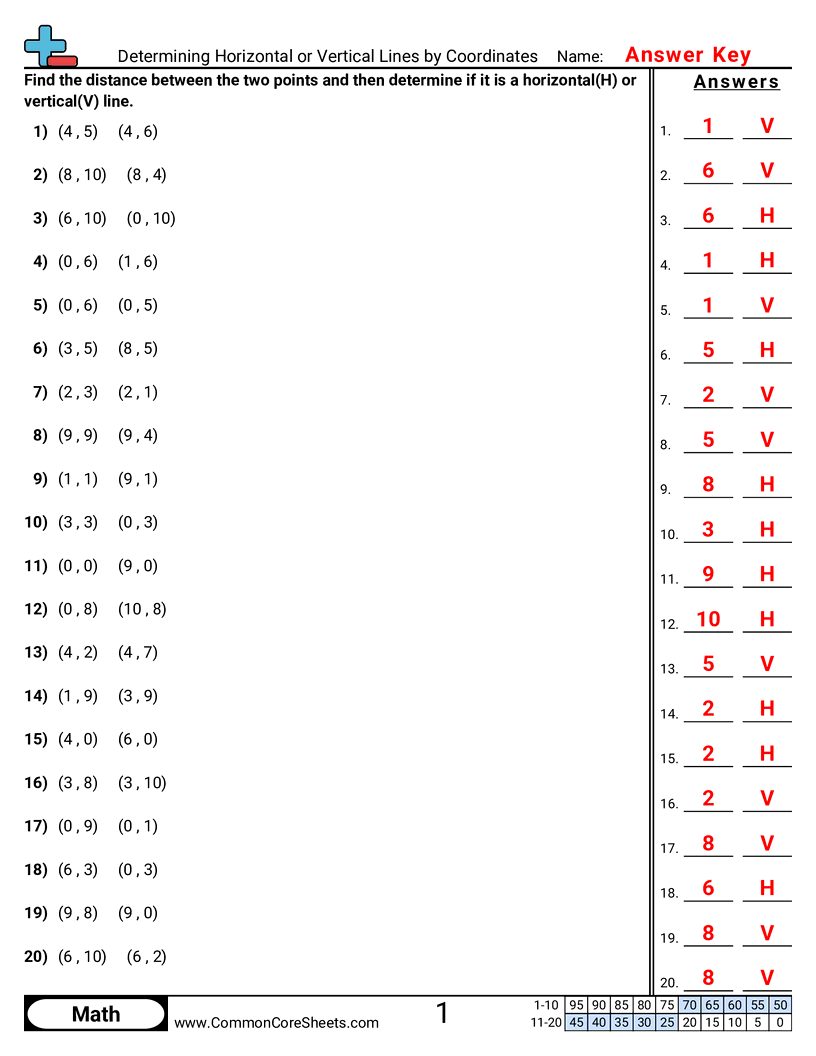
Compare the x- and y-coordinates of two points to decide if the line between them is horizontal or vertical.
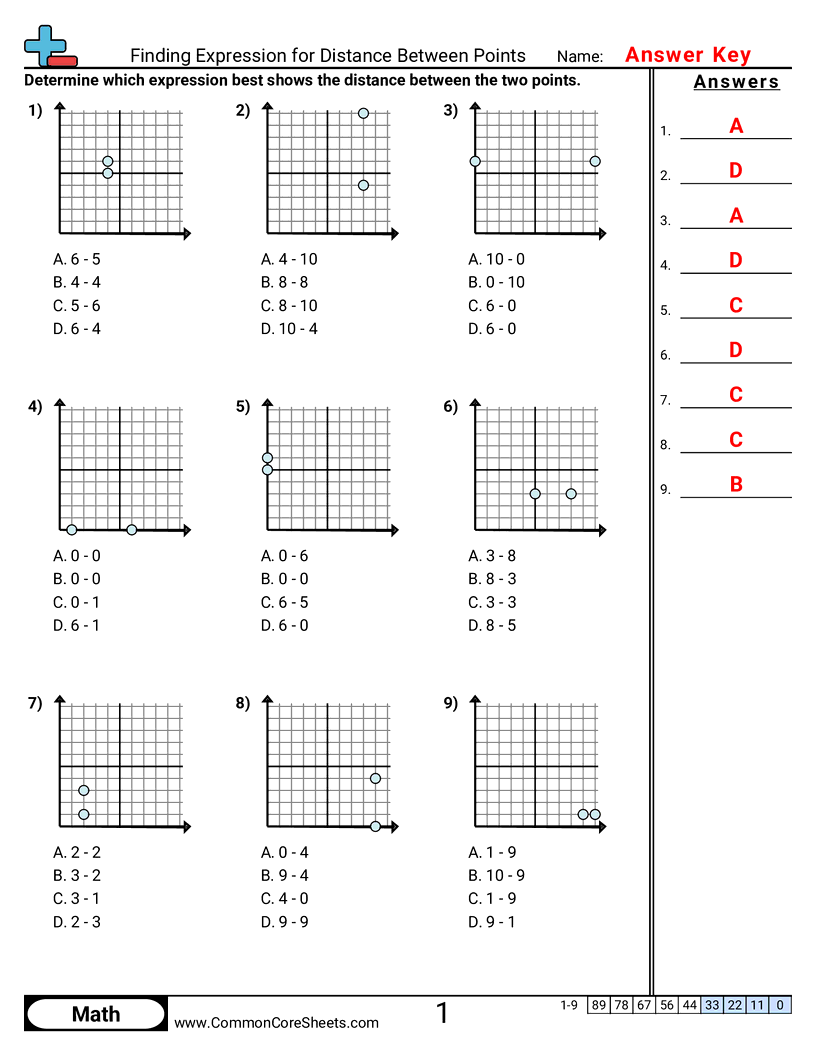
Practice finding the distance between two points on a grid by choosing the correct subtraction expression Read the coordinates of two points from a graph and subtract to find how far apart they are Understand that distance between points on the same line is found by subtracting the smaller coordinate from the larger one
Determining Quadrants
Link
About these worksheets
These worksheets help students determine which quadrant a point belongs to based on the signs of its coordinates. Activities include identifying quadrants from ordered pairs and finding coordinates and quadrants after moving from a starting point. Aligned with sixth grade standards.
6ns6b
Practice figuring out which quadrant a coordinate pair belongs in based on whether x and y are positive or negative Learn the quadrant rules: positive/positive is Quadrant 1, negative/positive is Quadrant 2, negative/negative is Quadrant 3, positive/negative is Quadrant 4 Sort multiple coordinate pairs into all four quadrants in a single problem
6ns6b
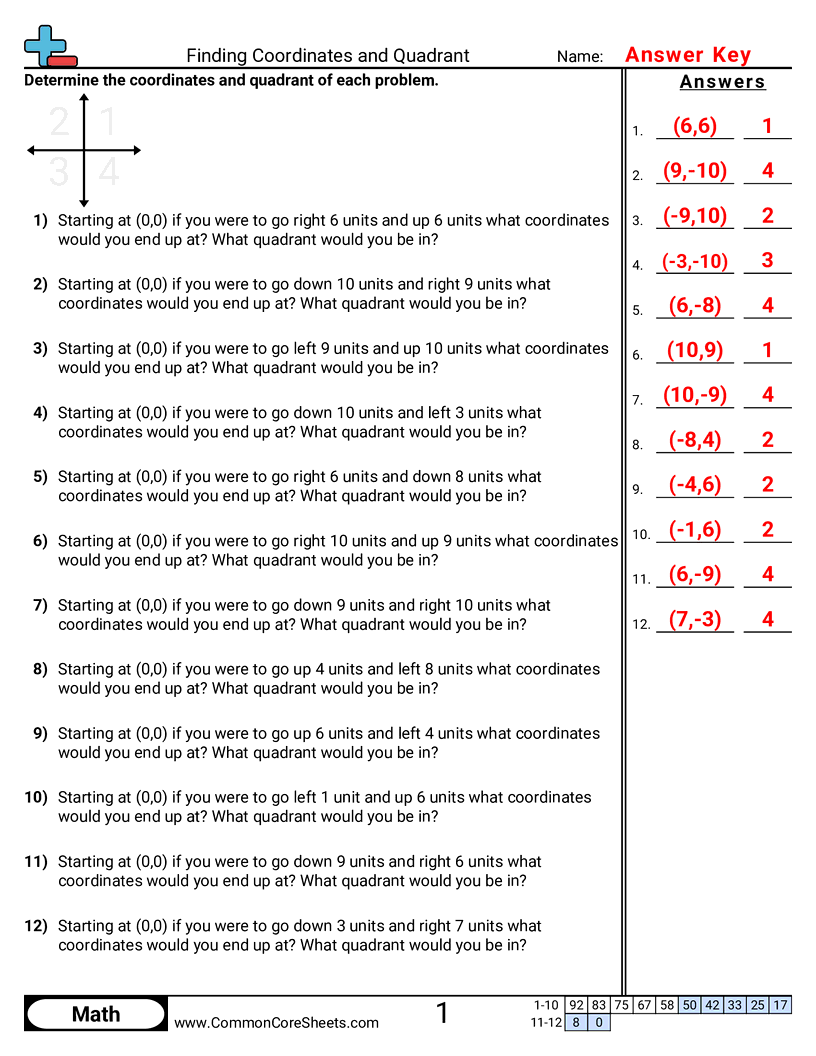
Start at a given point and move left/right and up/down to find a new point’s coordinates. Tell which quadrant a point is in, or if it lies on an axis or at the origin. Use positive and negative numbers to describe moves on the x- and y-axes.
Transforming On a Coordinate Plane
Link
About these worksheets
Students practice transforming shapes on the coordinate plane. Worksheets cover reflecting shapes across the x- and y-axes, rotating shapes by 90°, 180°, and 270°, translating shapes in any direction, and calculating slope using slope-intercept form. Aligned with eighth grade geometry standards.
8g3
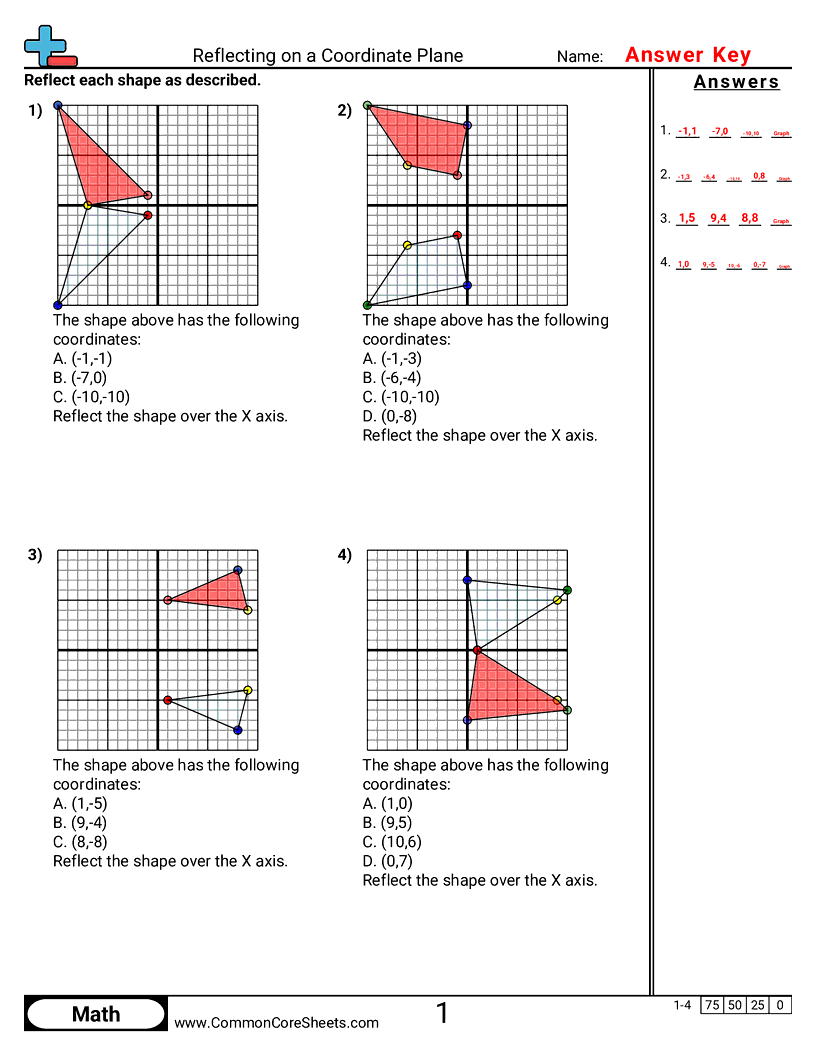
Reflect a shape across the x-axis or y-axis to draw its mirror image. Use the x- and y-coordinates of points to plot the reflected shape in the right place. Apply the reflection rules to change coordinates correctly, like flipping the sign of x or y. Check that the original and reflected shapes are the same size and the same distance from the axis.
8g3
Rotate a shape on a coordinate grid by 90°, 180°, or 270° in the direction given. Use the origin as the center of rotation and keep the shape’s size and orientation changes correct. Plot the new points after a rotation and connect them to redraw the rotated shape. Use rotation rules to predict how (x, y) coordinates change when turning a figure.
8g3
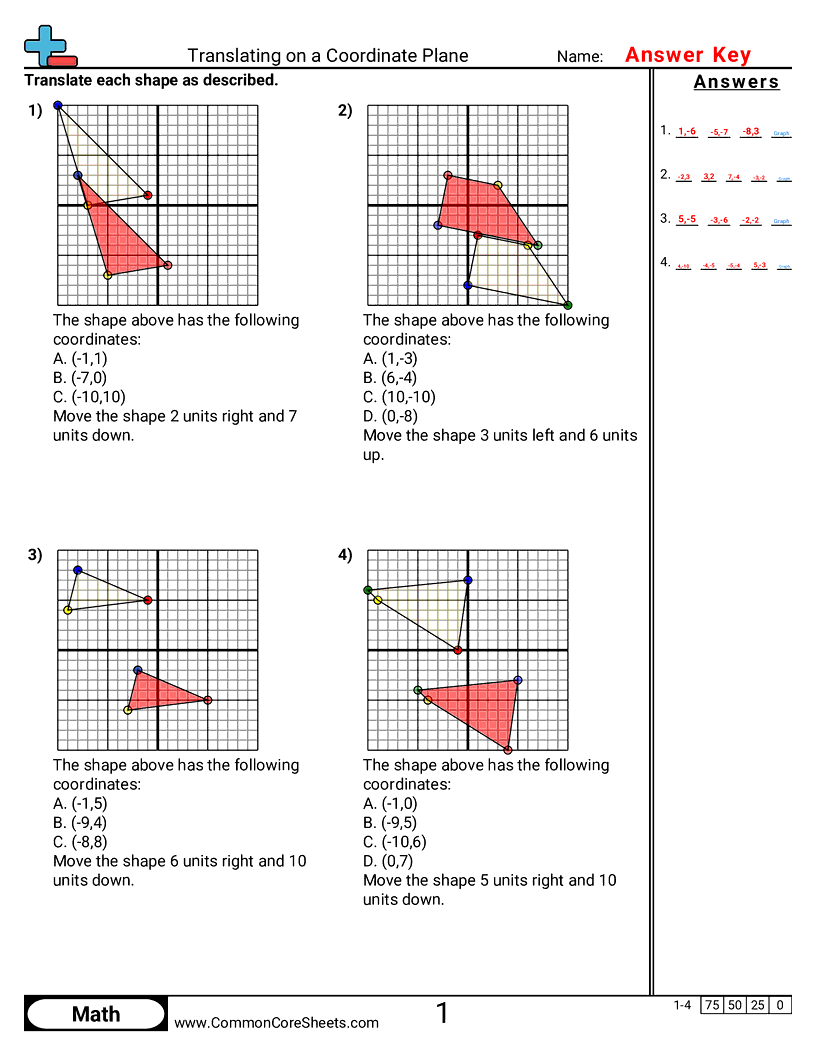
Practice sliding a shape left, right, up, or down on a coordinate grid without turning it. Use ordered pairs (x, y) to track how each vertex moves during a translation. Follow a translation rule or vector (like (x + 3, y - 2)) to move a figure the correct amount. Plot the translated points and connect them to draw the new image in the right place. Check that the translated shape stays the same size and orientation as the original.
8sp3
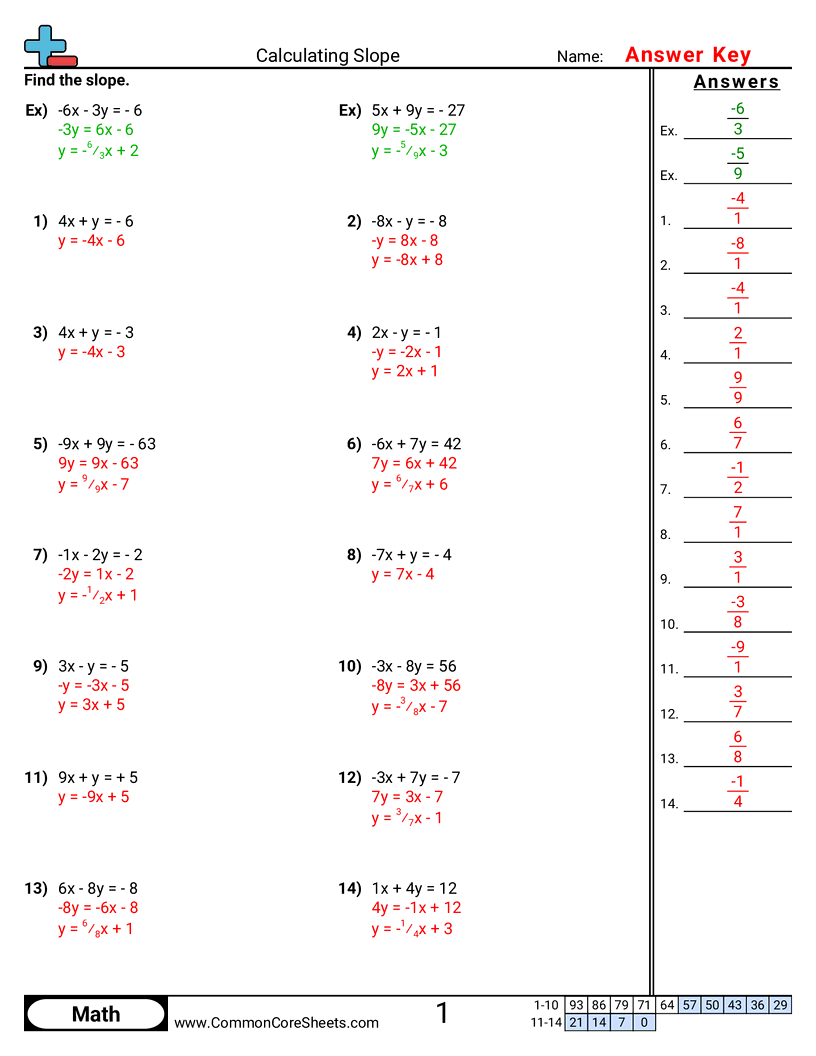
Practice rearranging a linear equation into y = mx + b form to identify the slope Isolate y by moving the x term to the other side and dividing by the coefficient of y Work with slopes that are whole numbers, negative numbers, and fractions
About these worksheets
These worksheets focus on identifying lines with the same slope using similar triangles. Students compare the rise-over-run ratios of triangles to determine which lines are parallel. Aligned with eighth grade expressions and equations standards.
8ee6
Practice finding slope as the ratio of a triangle's height to its base (rise over run) Compare ratios to identify which triangle has the same slope as the given one Simplify or scale ratios to determine if two triangles represent the same steepness
8f2
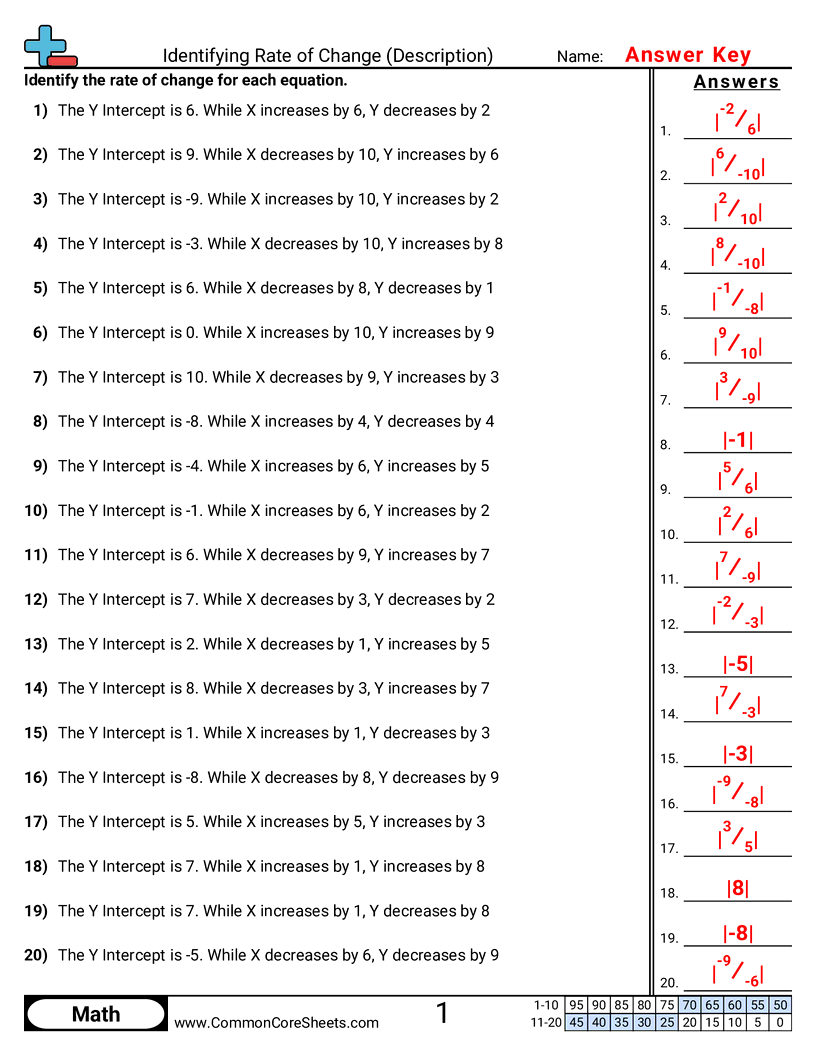
Practice finding the rate of change (slope) from a description of how x and y increase or decrease together Write the slope as a fraction using the change in y over the change in x Determine the correct sign (positive or negative) based on whether x and y are increasing or decreasing
8f2
Practice finding the rate of change by plugging x values into an equation and seeing how y changes each time Fill in a table of x and y values, then calculate the difference between consecutive y values to find the rate of change Work with equations written in different forms and simplify them to spot a constant rate of change
8f2
Read points from a graph and use them to find how much y changes when x changes. Find the rate of change by counting the rise and run between two points on a line. Tell whether a line shows a positive, negative, or zero rate of change.
8f2
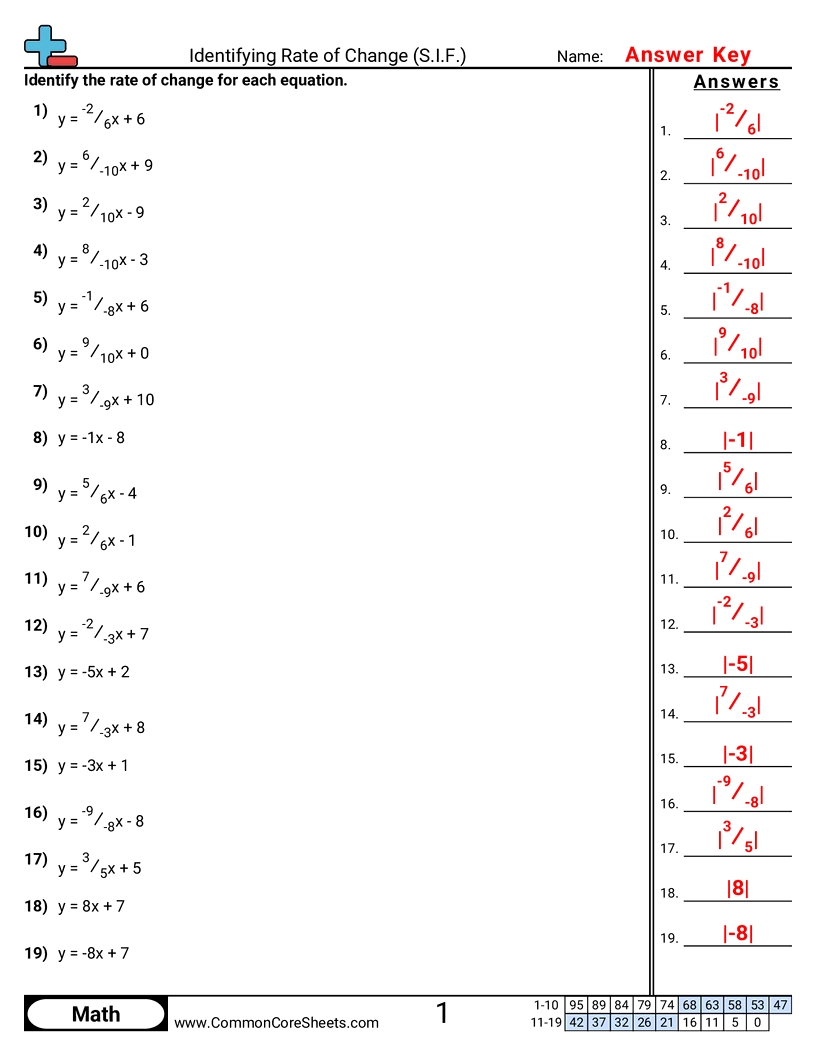
Find the rate of change (slope) from a linear equation written as y = mx + b. Tell whether the rate of change is positive, negative, zero, or not a whole number by looking at the slope. Identify the y-intercept in slope-intercept form and explain what it means as a starting value. Compare two equations by deciding which one changes faster based on their slopes.
8f2
Practice finding the rate of change from a table by calculating how much y changes for each unit change in x Use the formula (change in y) ÷ (change in x) between pairs of values in the table Work with tables that include negative numbers and values that aren't evenly spaced
8f1
Practice matching a function equation to the correct table of x and y values Plug x values into a given equation to check if the y values in each table are correct Work with different types of functions including addition, multiplication, and combinations of both
8f2
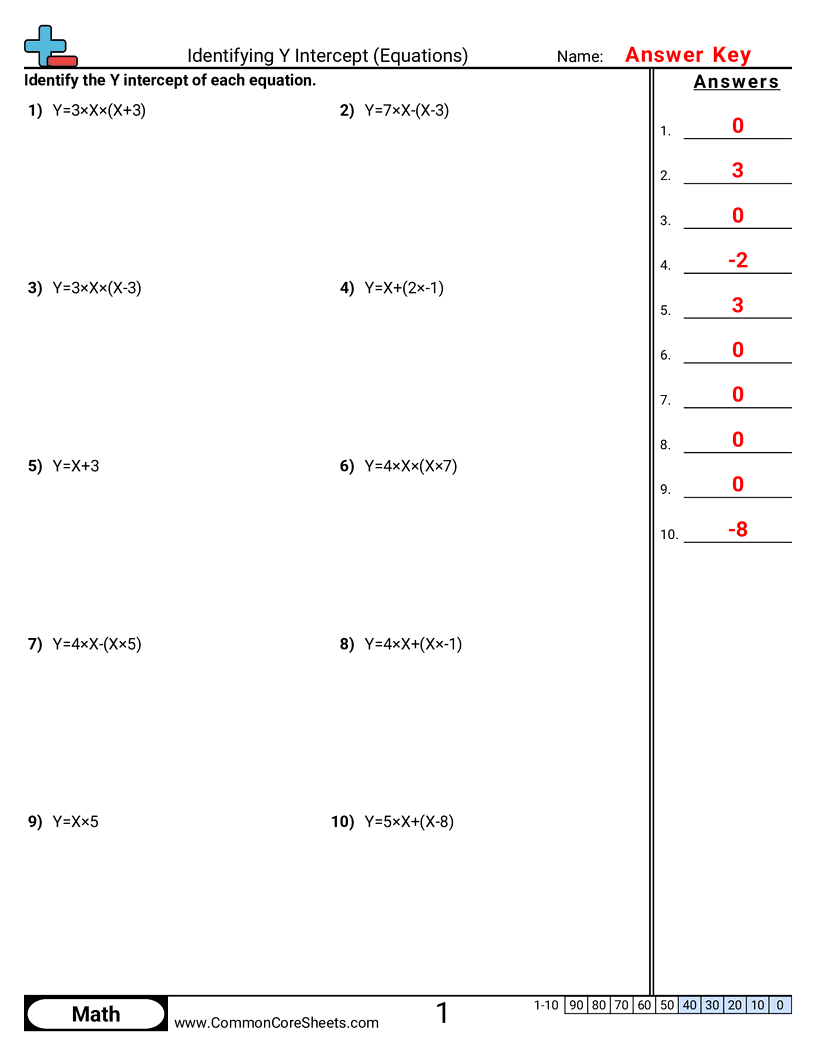
Find the y-intercept from an equation by spotting the constant term. Read the y-intercept directly from slope-intercept form (y = mx + b). Rewrite an equation into y = mx + b form so the y-intercept is easy to see.
8f2
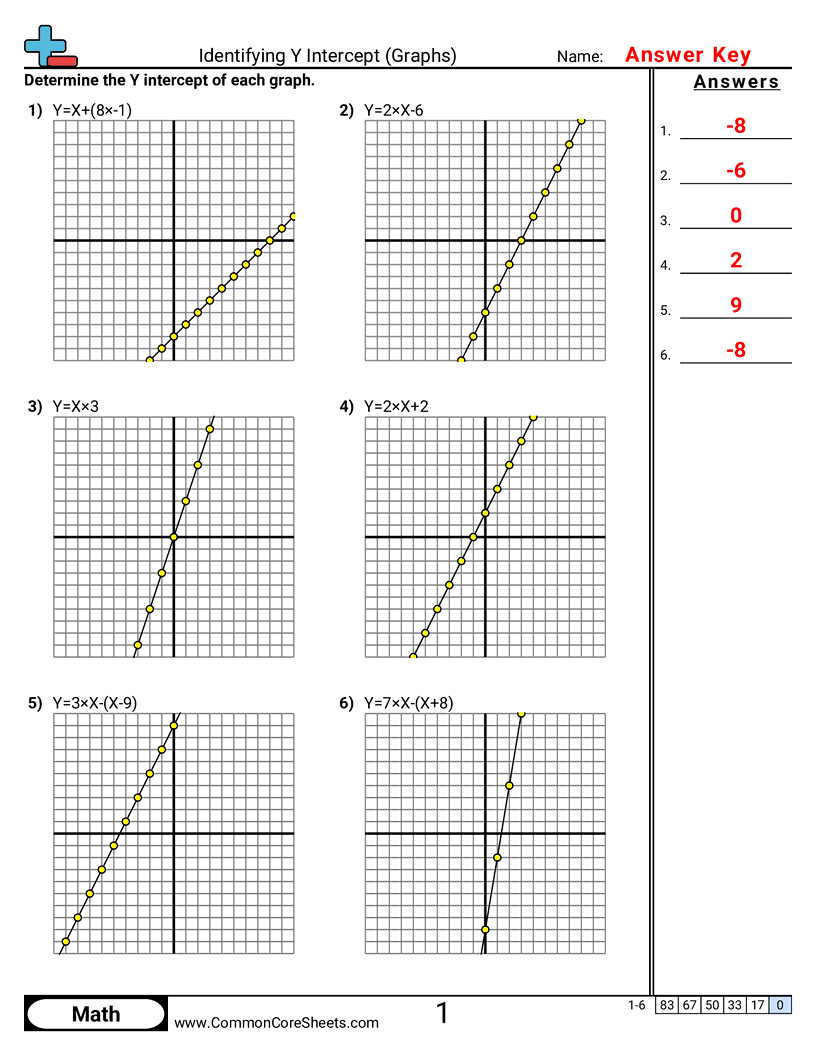
Find the y-intercept on a graph by locating where the line crosses the y-axis. Read the y-value at x = 0 and write it as an ordered pair (0, y). Use the graph’s scale and tick marks to get the correct y-intercept value, including negatives. Tell the difference between the y-intercept and other points where the line crosses the x-axis.
8f2
Practice finding the y-intercept from a table by determining the value of y when x equals 0 Use the given equation to calculate y at x = 0 when that row isn't directly in the table Work with different types of equations including simple, multi-step, and those involving multiplication and subtraction
8f2
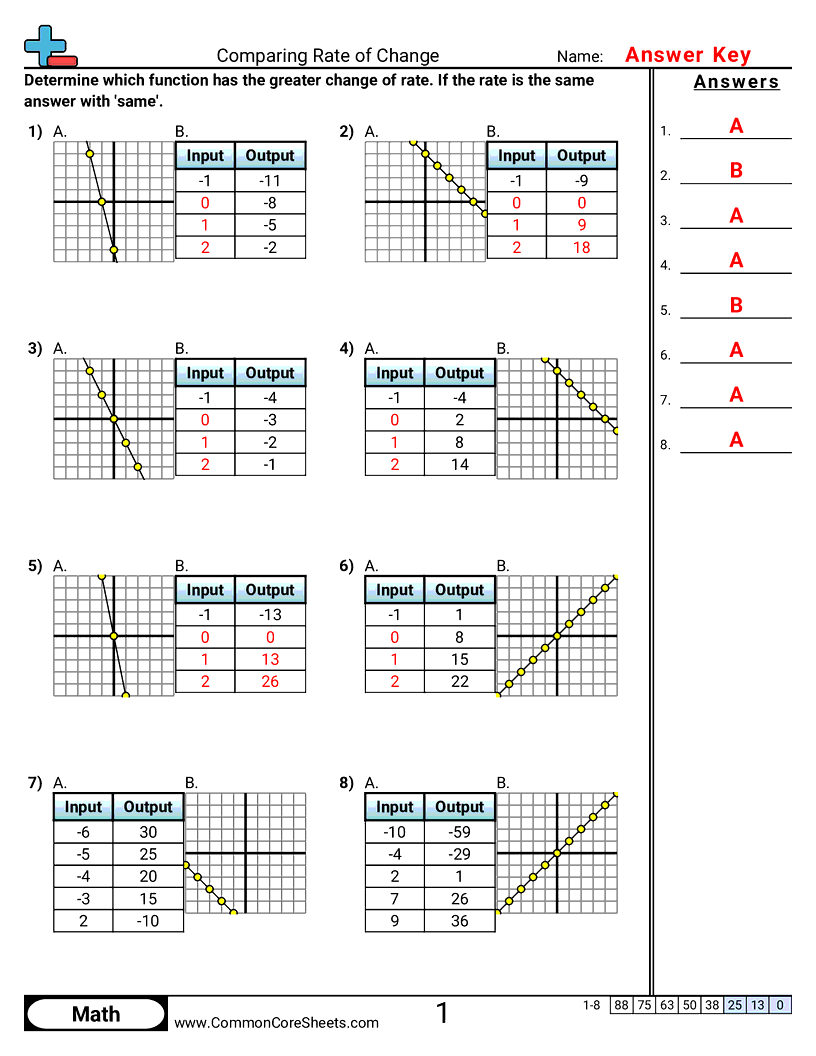
Compare the rate of change of a function shown as a graph versus one shown as a table Determine which function has the greater rate of change Find the slope from a graph by reading the rise and run between plotted points
8f2
Draw a straight line on a graph when you are given its rate of change (slope). Use rise and run to plot points and keep the line going in the correct direction. Tell whether a line has a positive or negative slope by how it moves left to right.
Playwire Advertisement