Introduction To Fractions Worksheets
This comprehensive section provides foundational fraction worksheets for grades 1-5, covering essential skills from basic fraction identification to advanced concepts. Students practice naming fractions, partitioning shapes into equal parts, comparing fraction sizes, finding reciprocals, and expressing fractions in multiple formats through 14 varied worksheet types.
×
Introduction to Fractions
About these worksheets
These worksheets introduce the concept of fractions from the ground up. Activities include naming fractions from words and pictures, writing fractions from visual models, identifying correct fraction representations, partitioning shapes into equal parts, determining whether fractions equal zero, one-half, or one whole, examining fraction values between whole numbers, comparing relative fraction sizes, finding reciprocals, and expressing fractions in words and numbers. Resources span first through fifth grade.
1g3
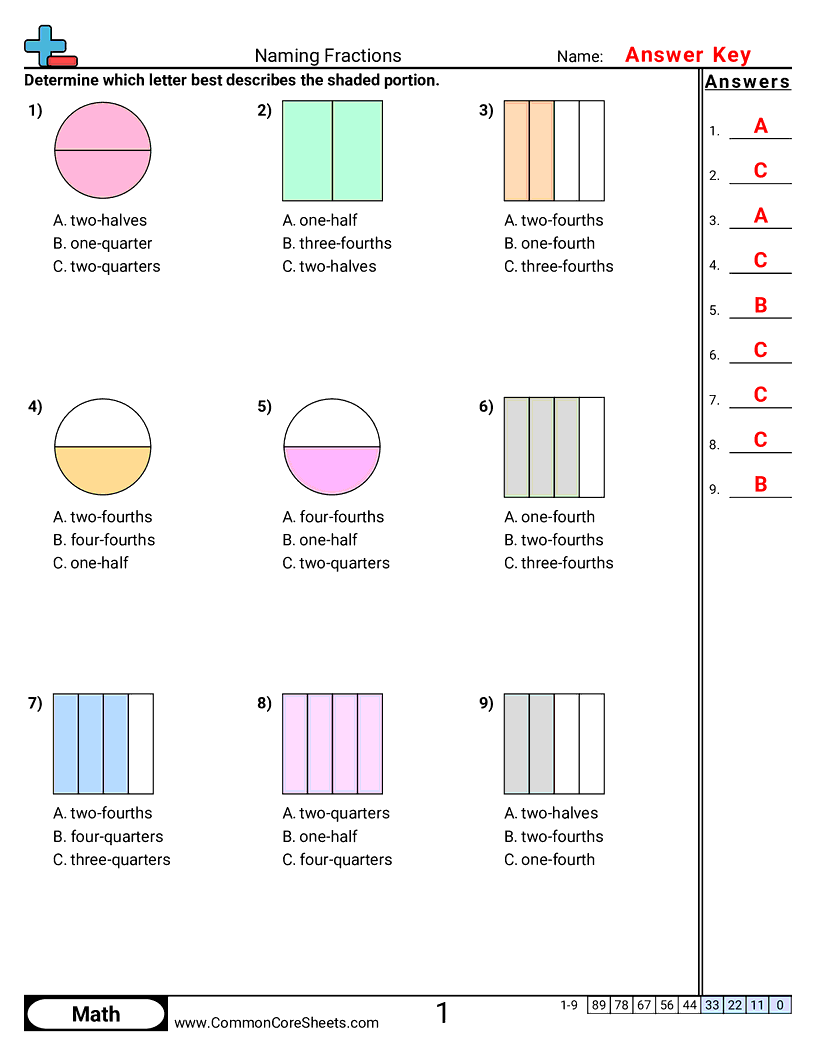
Match a written fraction name (like “three fourths”) to the correct fraction. Use the denominator to tell how many equal parts the whole is split into. Use the numerator to tell how many parts are being counted.
2g3
Read a fraction and say its name using the right word for the denominator (like halves, thirds, or fourths). Match a written fraction name to the correct fraction. Use the denominator to tell how many equal parts the whole is split into. Use the numerator to tell how many parts are being counted.
3nf1
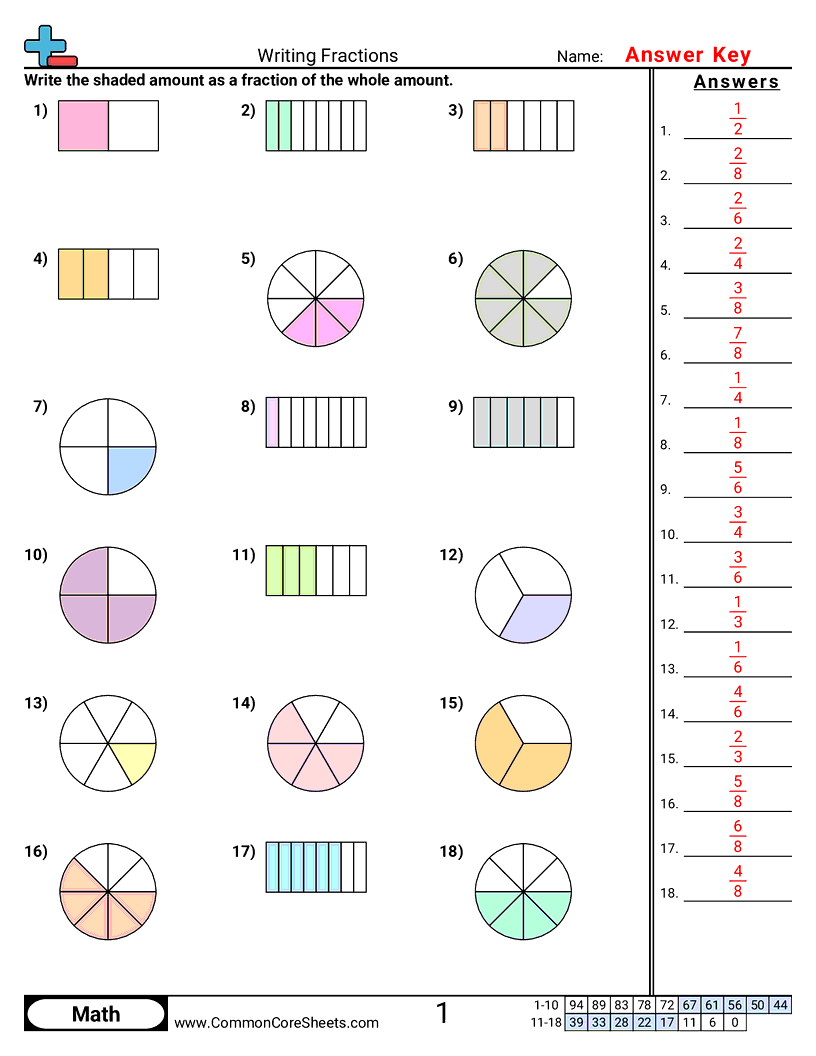
Look at a picture model and write the fraction it shows. Identify the numerator and denominator in a fraction. Match a shaded part of a whole to the correct fraction notation.
3nf1
Match a written fraction to a picture that shows the same amount shaded. Tell how many equal parts the whole is split into and how many parts are shaded. Notice when pictures show different-sized parts and choose only models with equal parts.
3g2
Split a shape into equal-size parts and explain that each part is the same area. Spot when parts are not equal and know that they do not make fair fractions.
3g2
Decide whether a shape has been split into equal-size parts. Tell the difference between equal partitions and uneven partitions in pictures. Connect a partitioned shape to the idea of a fraction as equal parts of one whole. Explain why a partition is not correct when the pieces are different sizes.
3nf3d
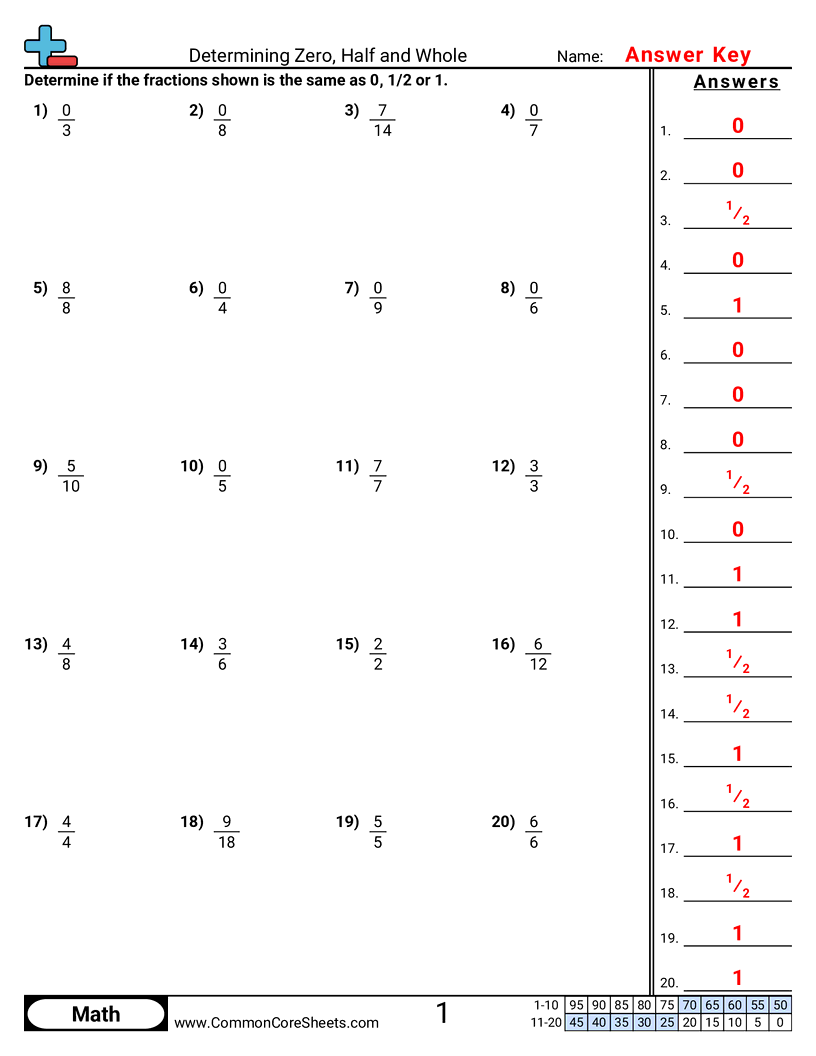
Decide whether a fraction is equal to 0, 1/2, or 1. Use the numerator and denominator to tell when a fraction means none, half, or a whole.
5nf3
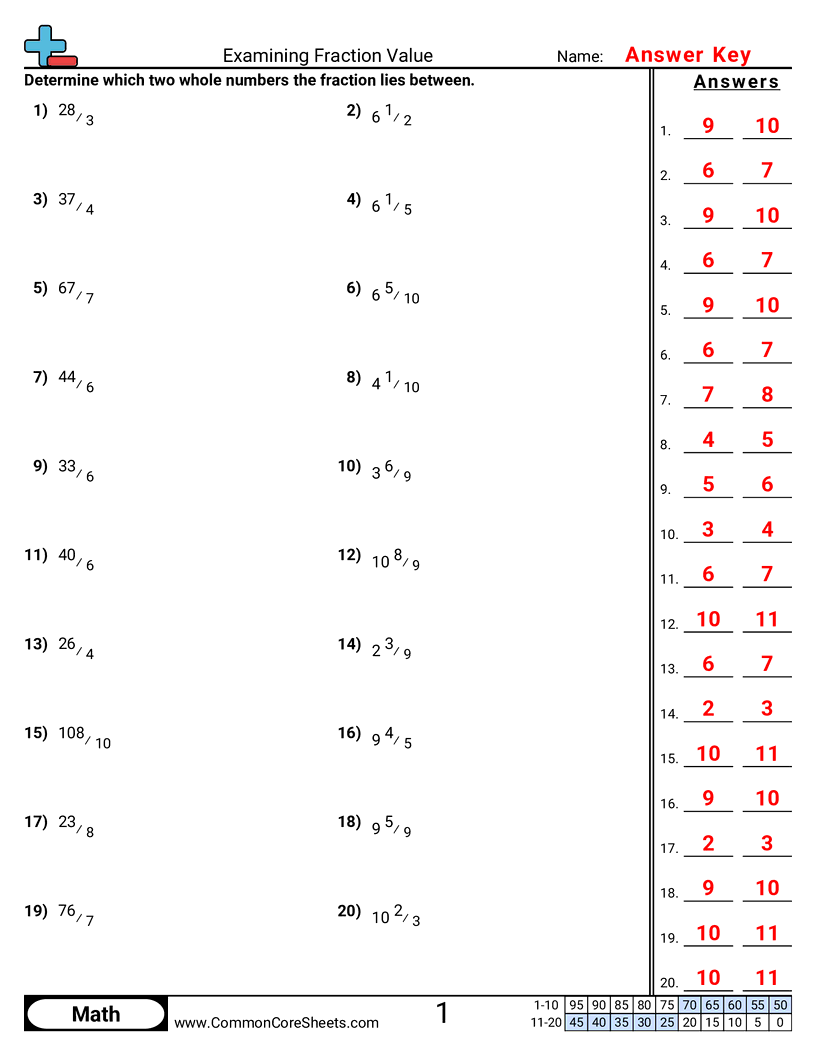
Decide which two whole numbers a fraction falls between. Convert an improper fraction to a mixed number fraction to identify the value with whole numbers.
4nf2
Understand that the size a fraction represents, depends on the items it is comparing.
3nf1
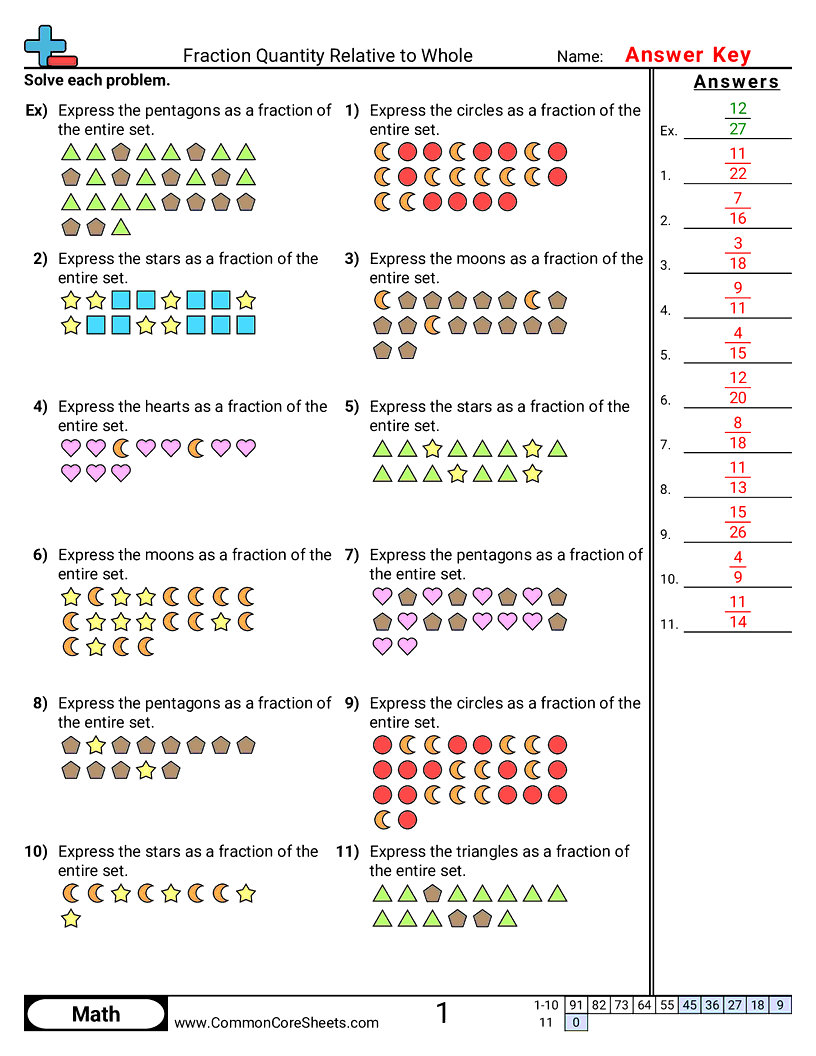
Explain a fraction as “part of a whole set,” using the numerator as the count shown and the denominator as the total.
Find the reciprocal of a fraction by swapping the numerator and denominator. Use reciprocals to make a multiplication equation equal 1. Recognize that a number and its reciprocal are multiplicative inverses.
4nf3c
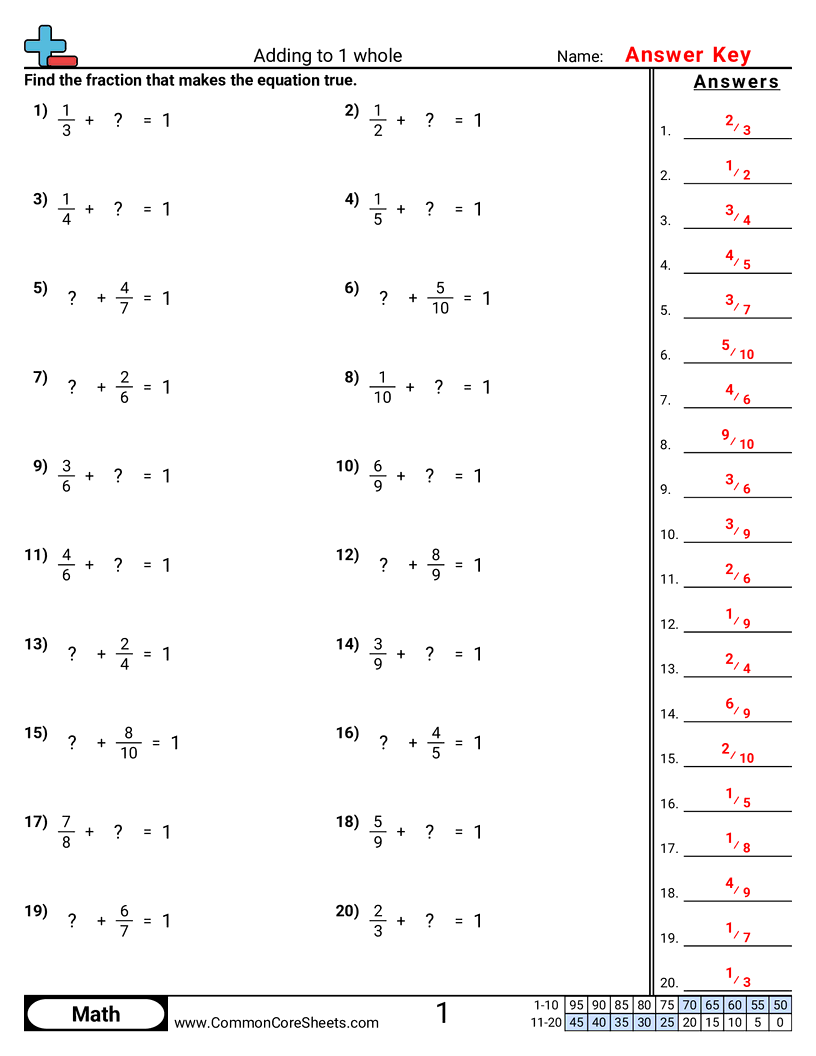
Find the missing fraction that completes a whole when one part is given. Add fractions with the same denominator to make a total of 1.
3nf1
Write the shaded part of a picture as a fraction using a numerator and denominator. Count equal parts in a shape to figure out the denominator. Count shaded parts to figure out the numerator. Match a visual fraction model to the correct numeric fraction notation.
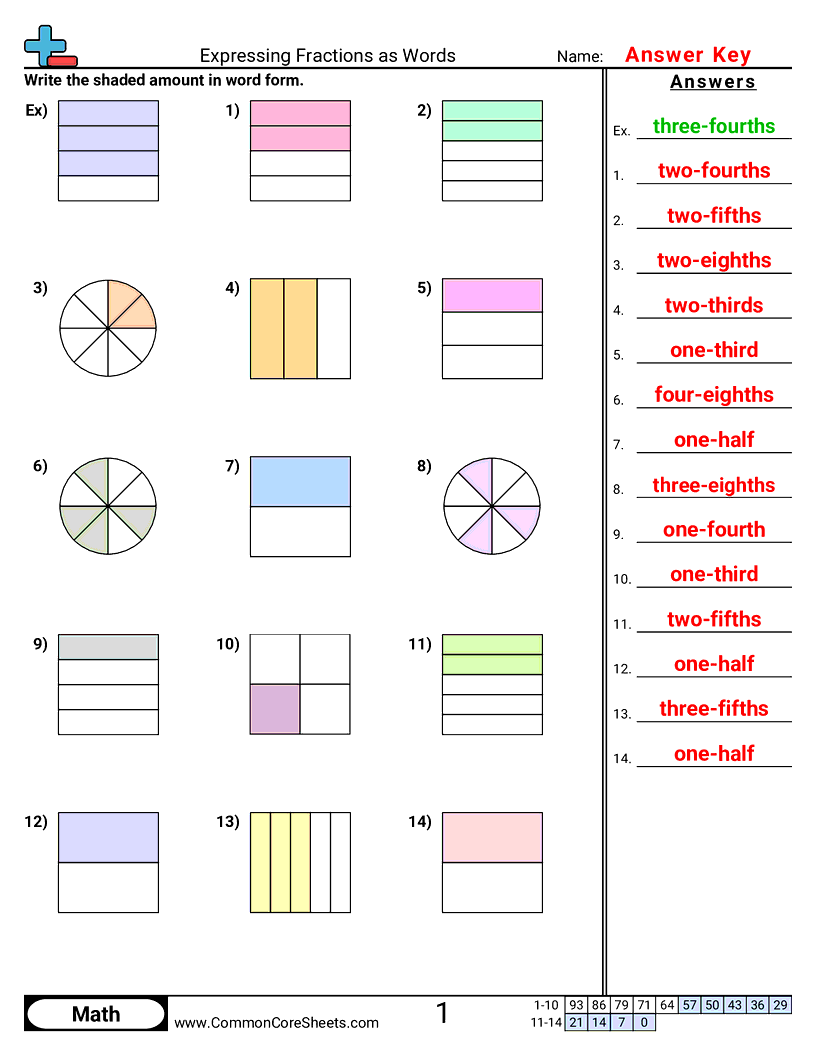
Read a fraction and say it using the correct words. Write a fraction in word form using the right spelling for the denominator (like thirds, fourths, fifths). Match the numerator to the correct counting word (one, two, three, etc.) when writing fractions. Use singular and plural fraction words correctly (like one half vs. two thirds).
Choose which fractions have a given number as the numerator Choose which fractions have a given number as the denominator Tell the difference between the numerator and the denominator of a fraction Notice that a question can have more than one correct answer
Read a fraction written with symbols. Write the numerator and denominator using correct fraction words. Use singular and plural fraction names correctly. Identify the numerator and denominator in a fraction.
Read a fraction written in words. Write the numerator and denominator in the correct positions. Use a fraction bar to write a fraction symbol. Connect fraction vocabulary to fraction symbols.
3nf1
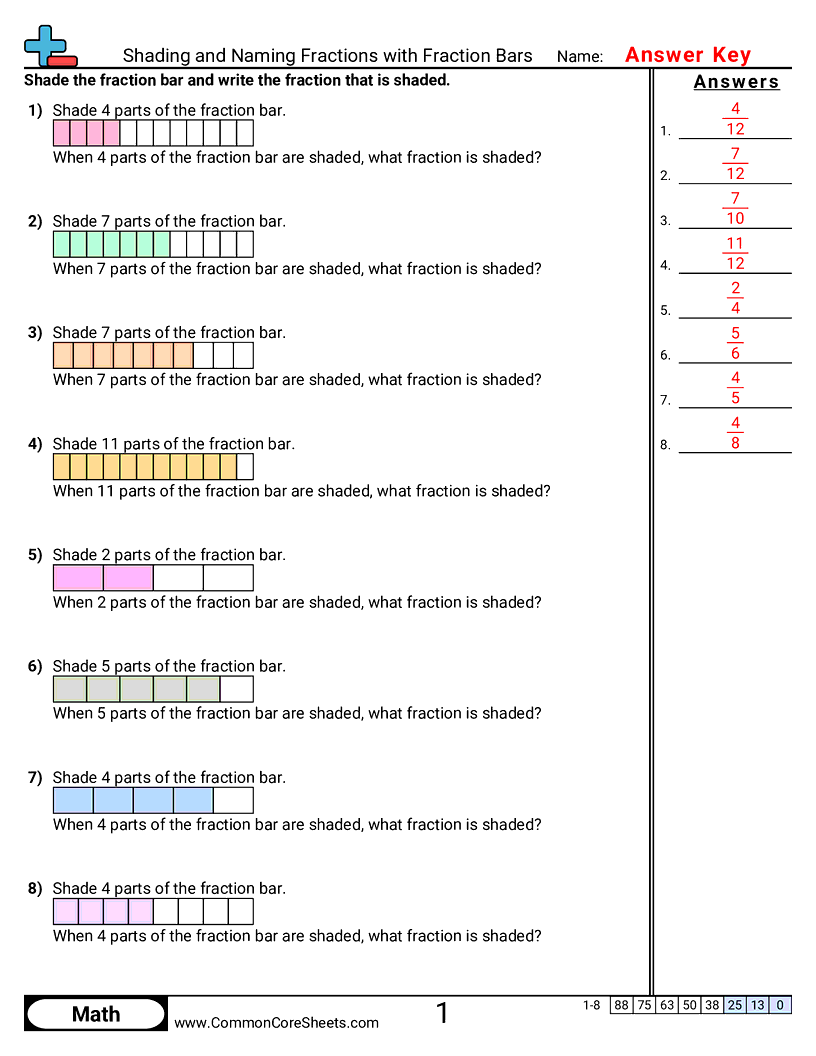
Shade a given number of equal parts on a fraction bar Count the equal parts in the whole to find the denominator Write the fraction that is shaded, such as 3/8 or 5/10 Understand that the numerator counts the shaded parts while the denominator counts every part
3nf1
Shade the correct number of parts on a bar to match a fraction Understand that the bottom number tells how many equal parts the whole is split into Understand that the top number tells how many parts to color Connect a written fraction to its picture
3nf1
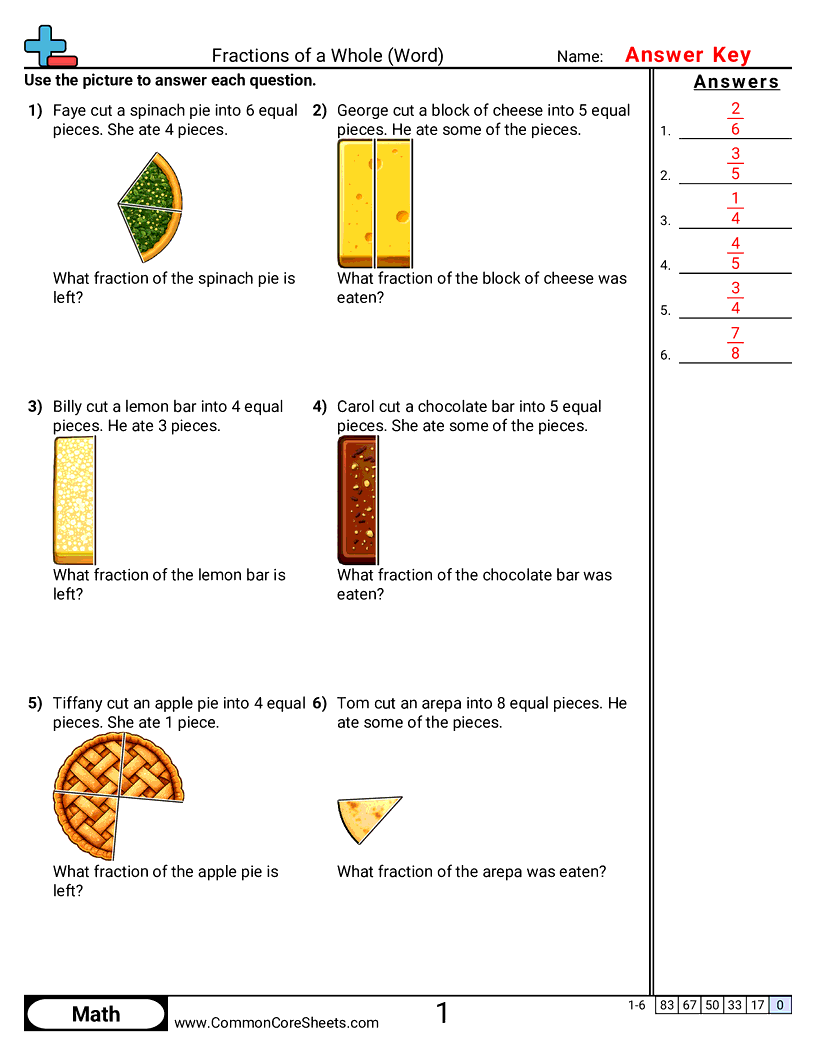
Name the fraction of a whole that is left after some equal pieces are removed Count the missing pieces in a picture to name the fraction that was eaten Use the total number of equal pieces as the denominator Recognize the same fraction idea in round wholes and in rectangular wholes
3nf1
Read a shaded diagram and figure out what fraction it shows Match a picture of a fraction to the correct fraction equation Understand that the top number counts shaded parts and the bottom number counts total parts Compare several fractions to find the one that fits the picture
3nf1
Practice adding fractions that share the same denominator Understand how parts combine to make a whole Read word problems and figure out which fractions to add Recognize when combined parts equal one whole
5nbt3a
Work out what each base ten block is worth once one of them is named the whole Write the value of a set of blocks as a fraction Use a denominator of tenths, hundredths or thousandths depending on the smallest block shown See how the same block changes value when a different block is the whole
4nf1
Find an equivalent fraction with a denominator of 100 Match a fraction to an area model Recognize that two fifths and forty hundredths are the same amount Tell the numerator of a fraction from the number of parts shaded
4nf1
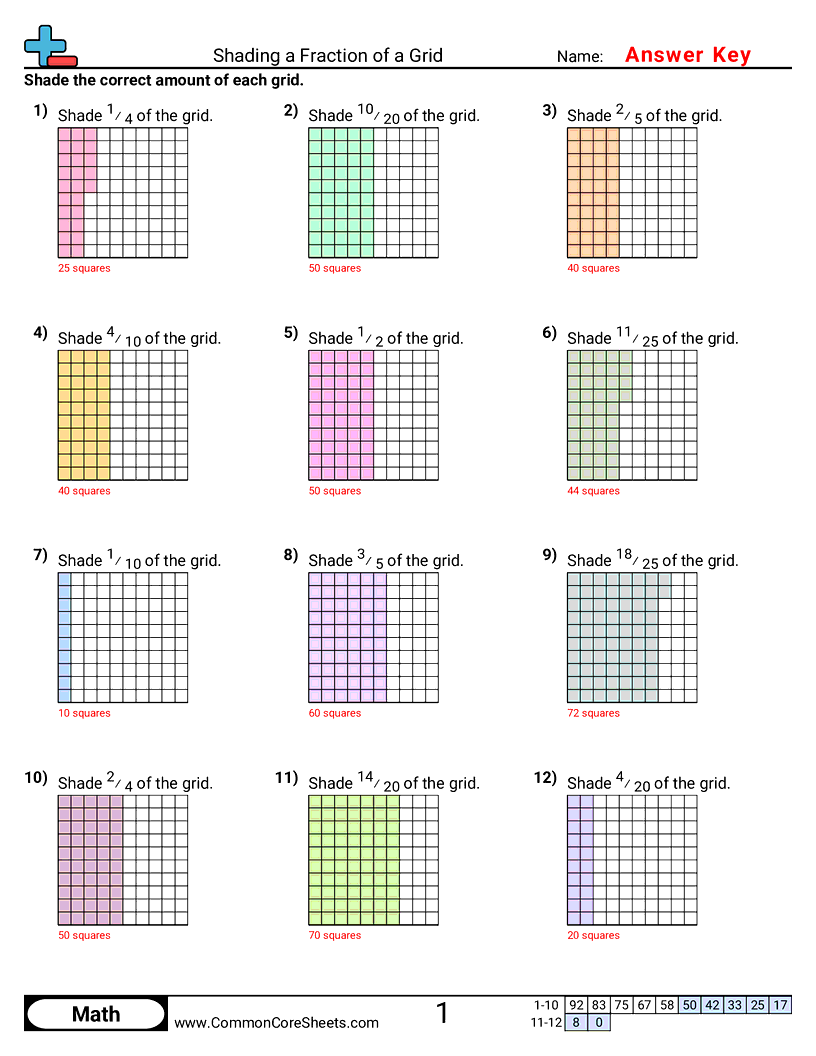
Find an equivalent fraction with a denominator of 100 Shade a given fraction of an area model Work out how many of a hundred squares a fraction is Understand that the same amount can be shaded in more than one arrangement
5nbt3a
Read a fraction from a point on a number line. Write the equivalent decimal for that point. Recognize a number line as a model for a fraction.
5nbt3a
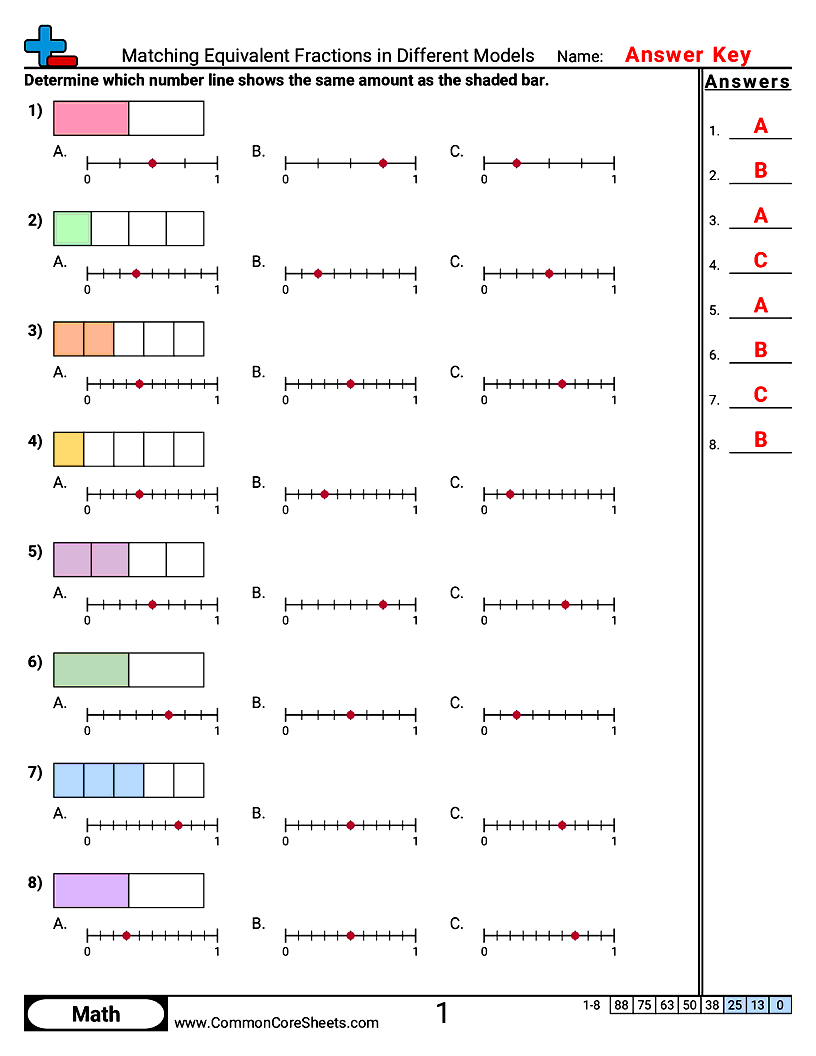
Recognize the same fraction in two different models. Match a bar model to a number line. Compare fractions with different denominators.
Playwire Advertisement