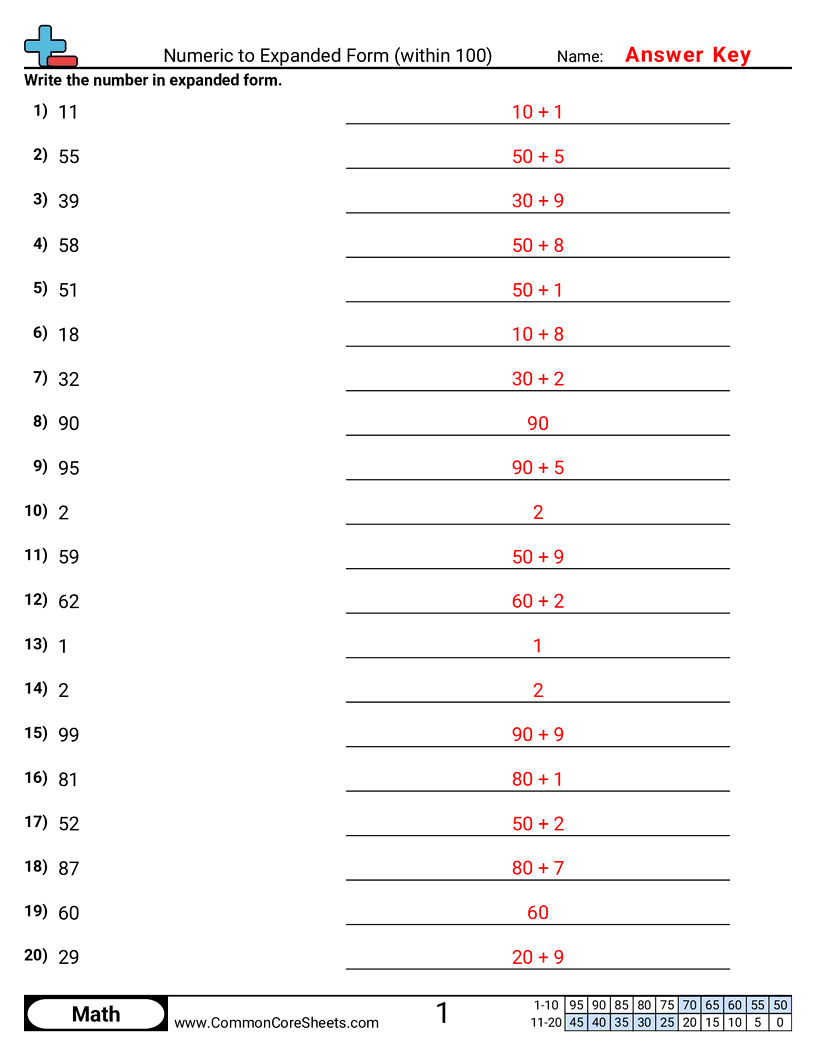
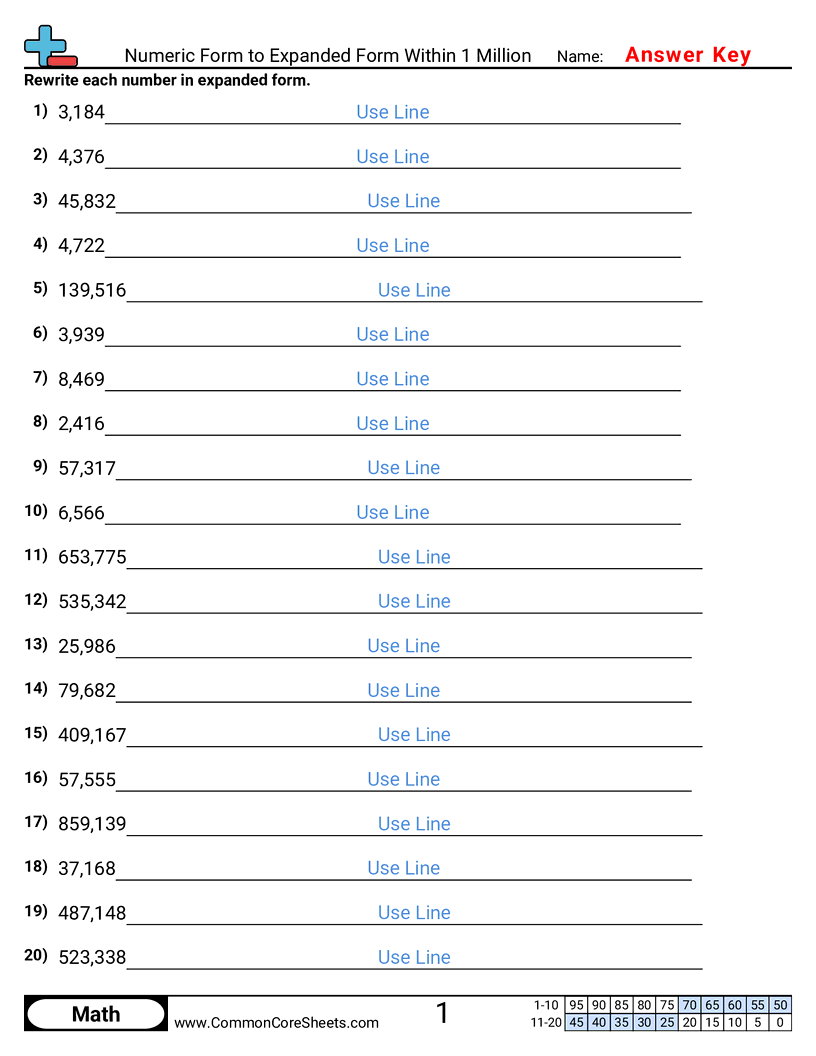
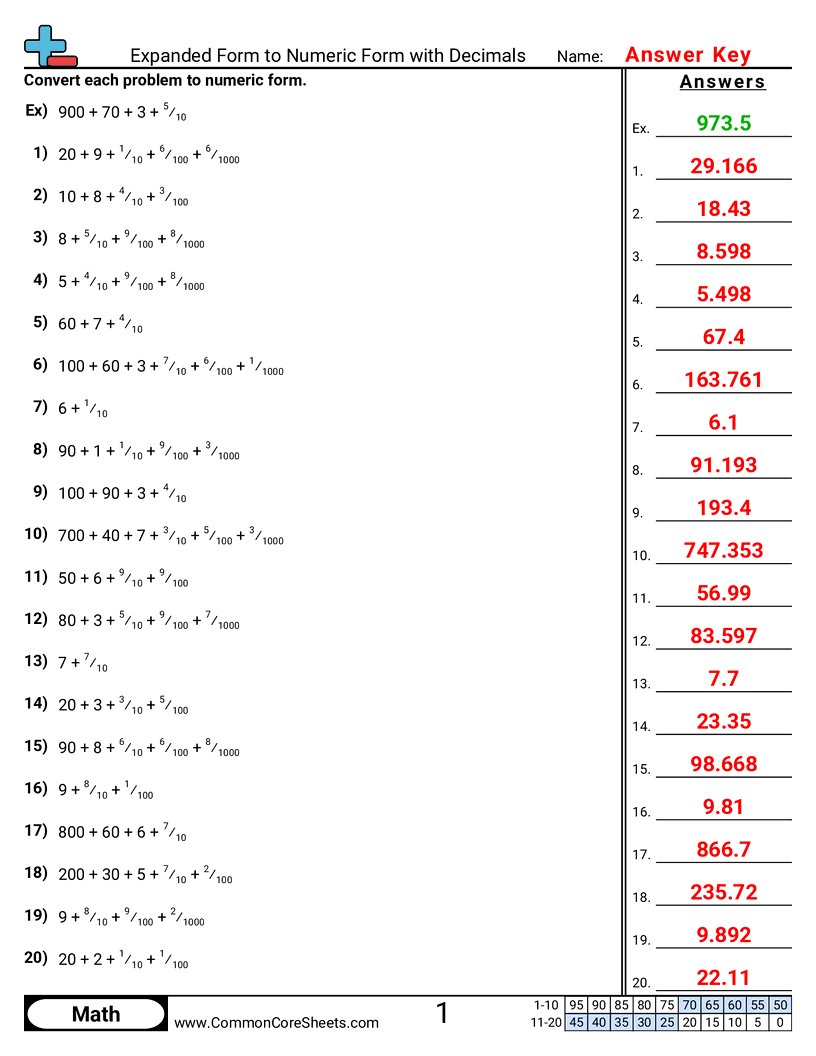
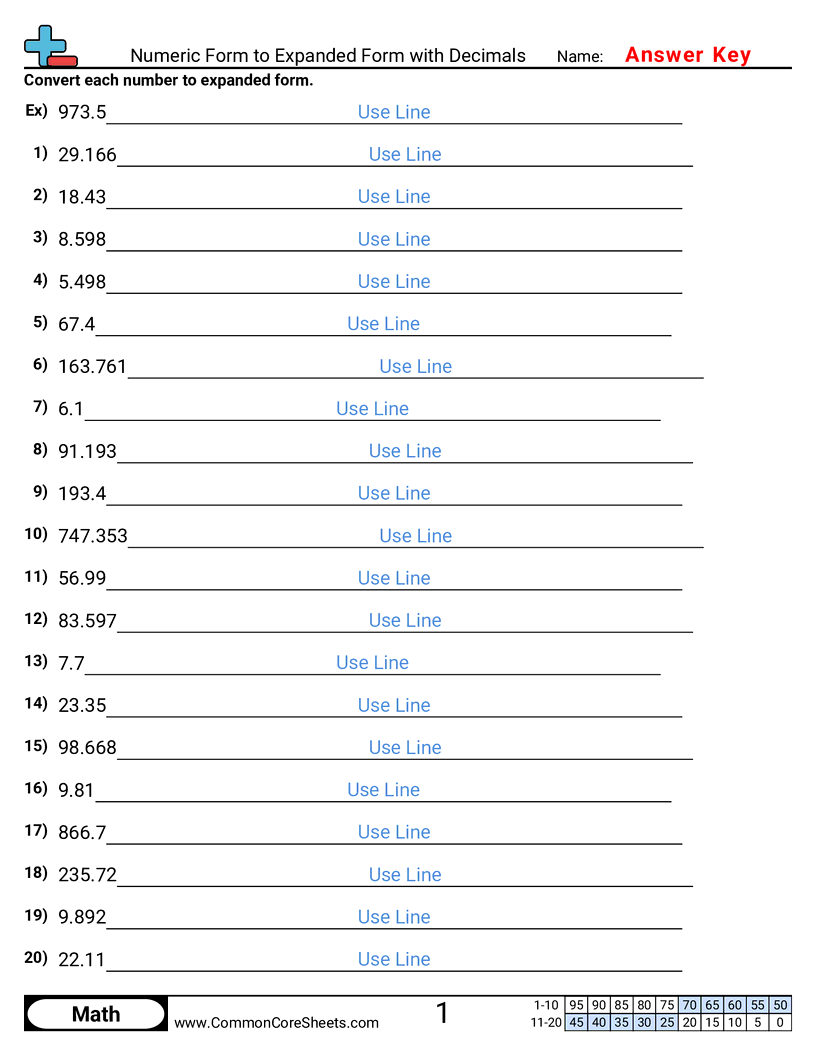
These horizontal converting forms worksheets provide practice with number conversions arranged in a left-to-right format. The horizontal layout helps students see the relationship between different number forms more clearly, making it easier to understand conversions between numeric, expanded, scientific notation, fractions, decimals, and percents.
Students practice converting numbers between expanded form and standard (numeric) form. Worksheets cover whole numbers within 1,000 up to one million, as well as decimals to thousandths. Activities include standard expanded form (like 400 + 30 + 2) and expanded notation (using multiplication by place value). These resources align with second through fifth grade place value standards.
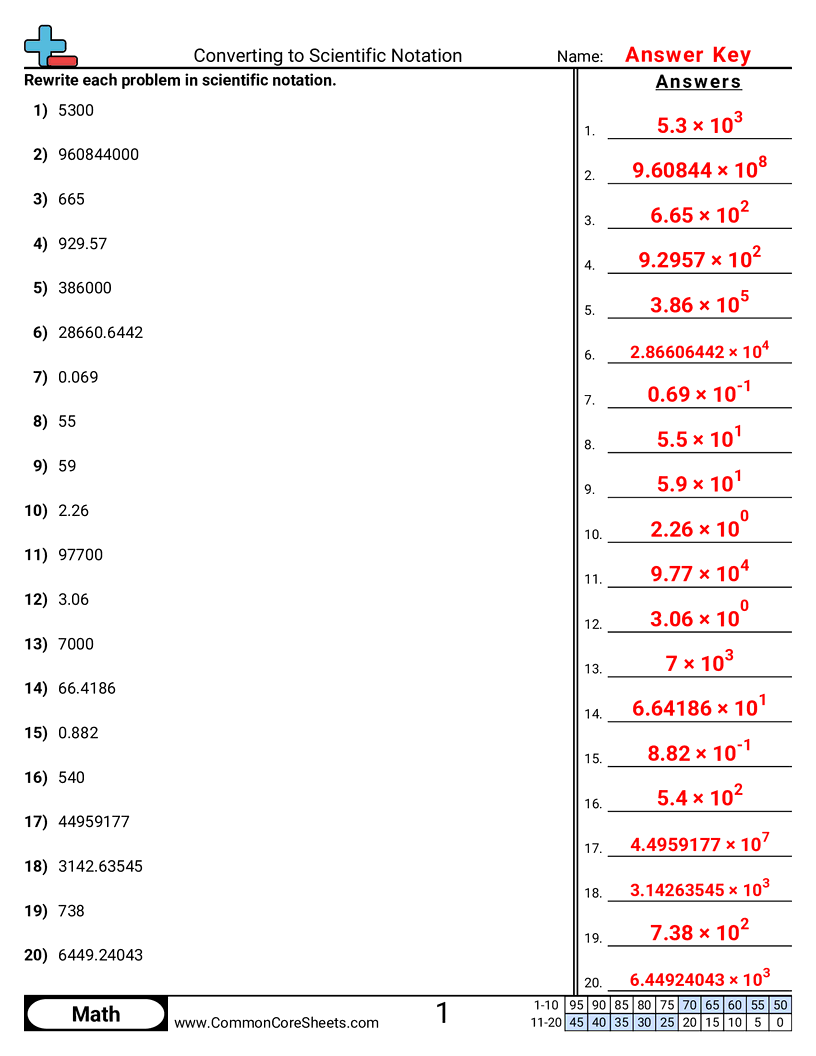
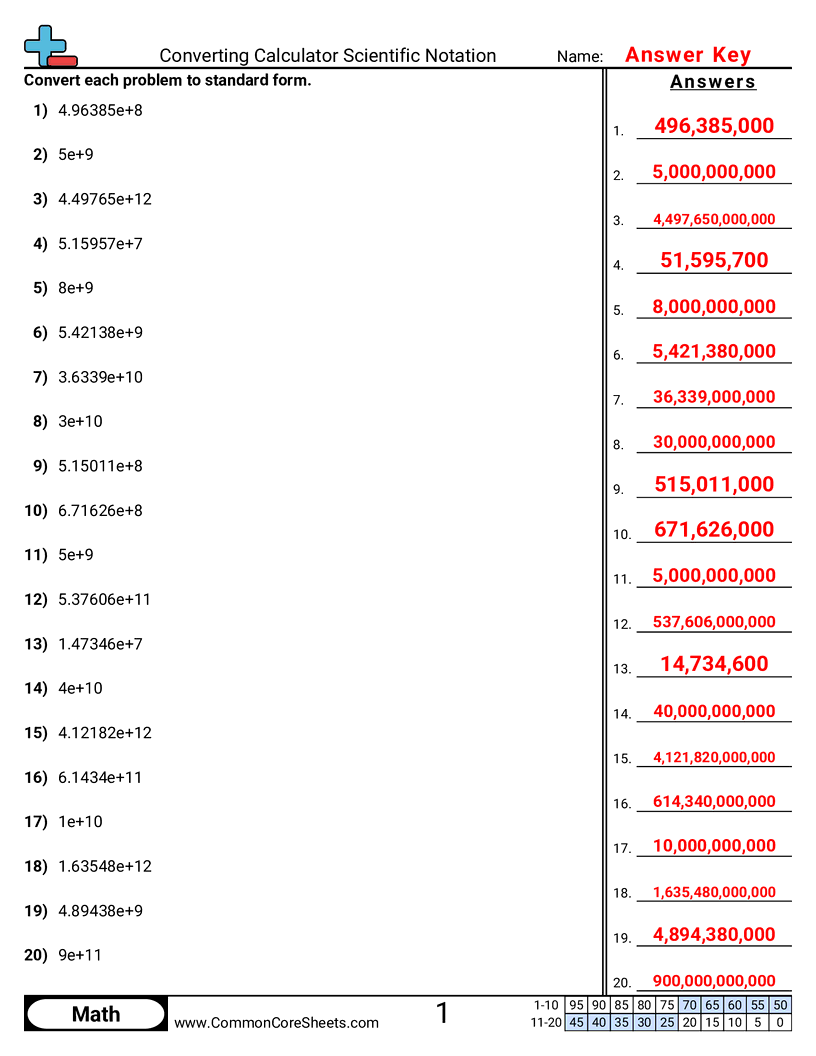
These worksheets help students master scientific notation — a critical skill for working with very large and very small numbers. Activities include converting between scientific notation and standard form in both directions, as well as reading calculator e-notation. Aligned with eighth grade expressions and equations standards.
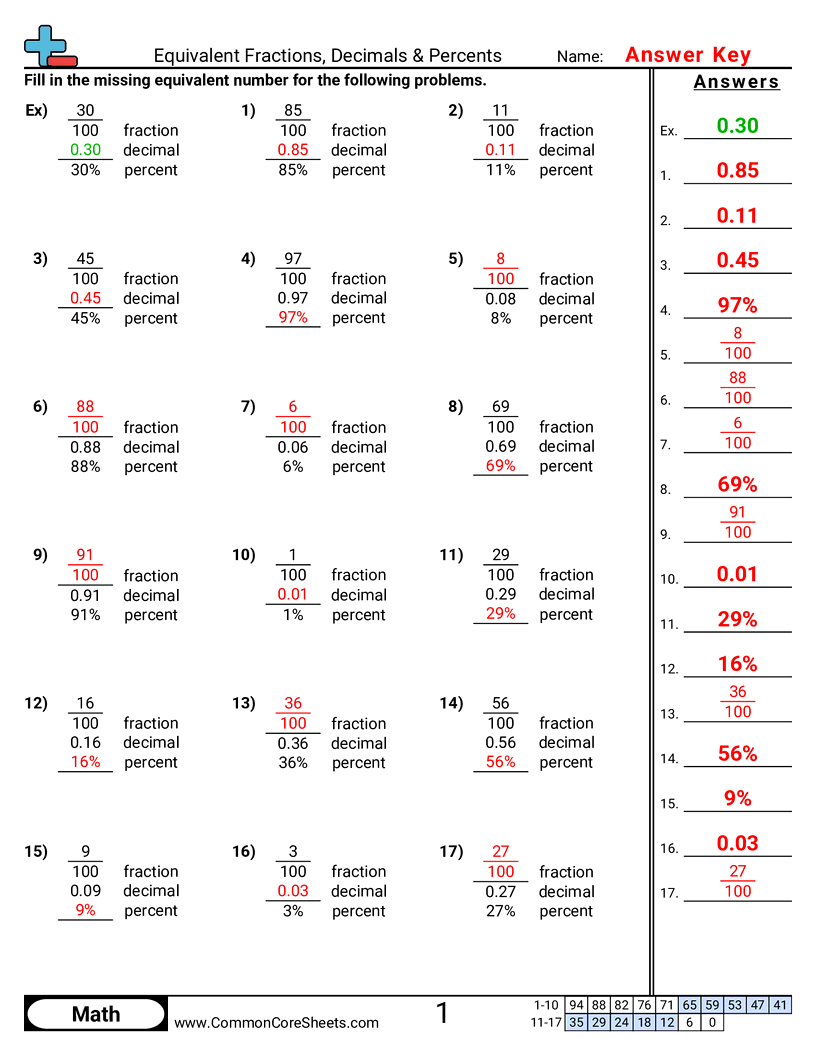
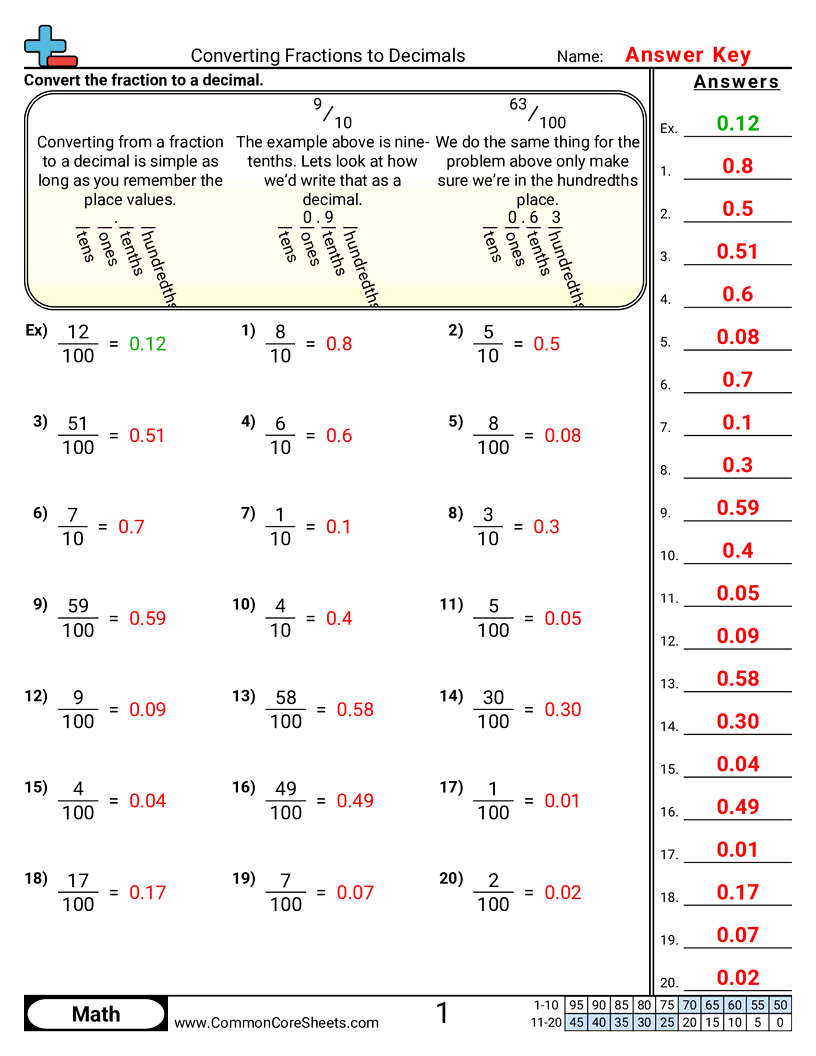
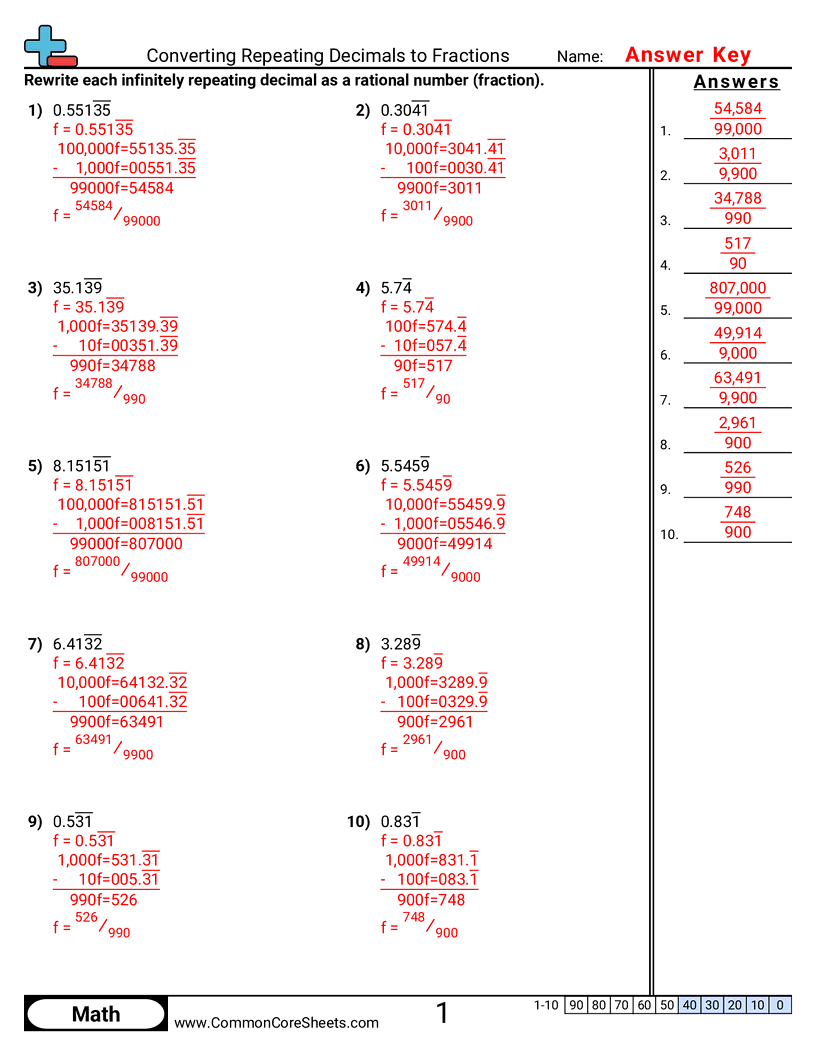
Students practice converting between fractions, decimals, and percents using a variety of methods. Worksheets include visual models showing shaded amounts, direct conversion between any two forms, and working with repeating decimals. These resources build fluency with equivalent representations of rational numbers, spanning fourth through eighth grade standards.
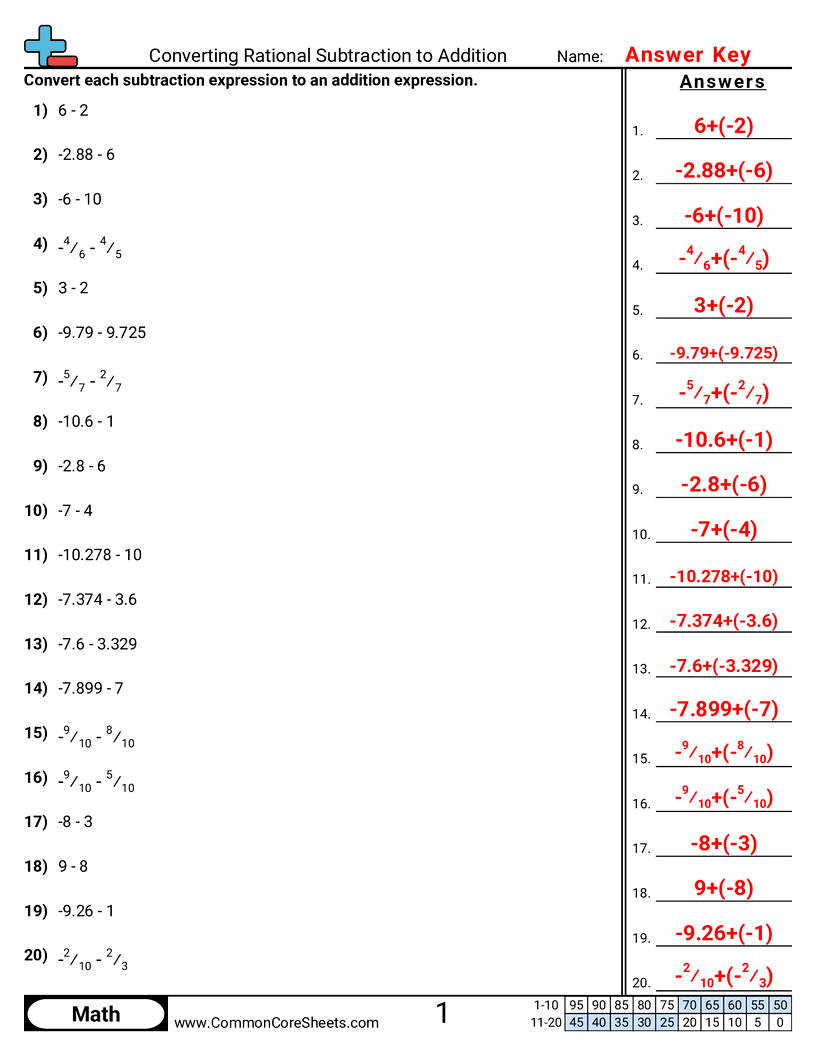
These worksheets teach students to rewrite subtraction problems as addition problems by adding the opposite. This foundational skill for working with rational numbers helps students understand that subtracting a value is the same as adding its negative, building fluency with integer operations. Aligned with seventh grade number system standards.