5nbt3a×Description:
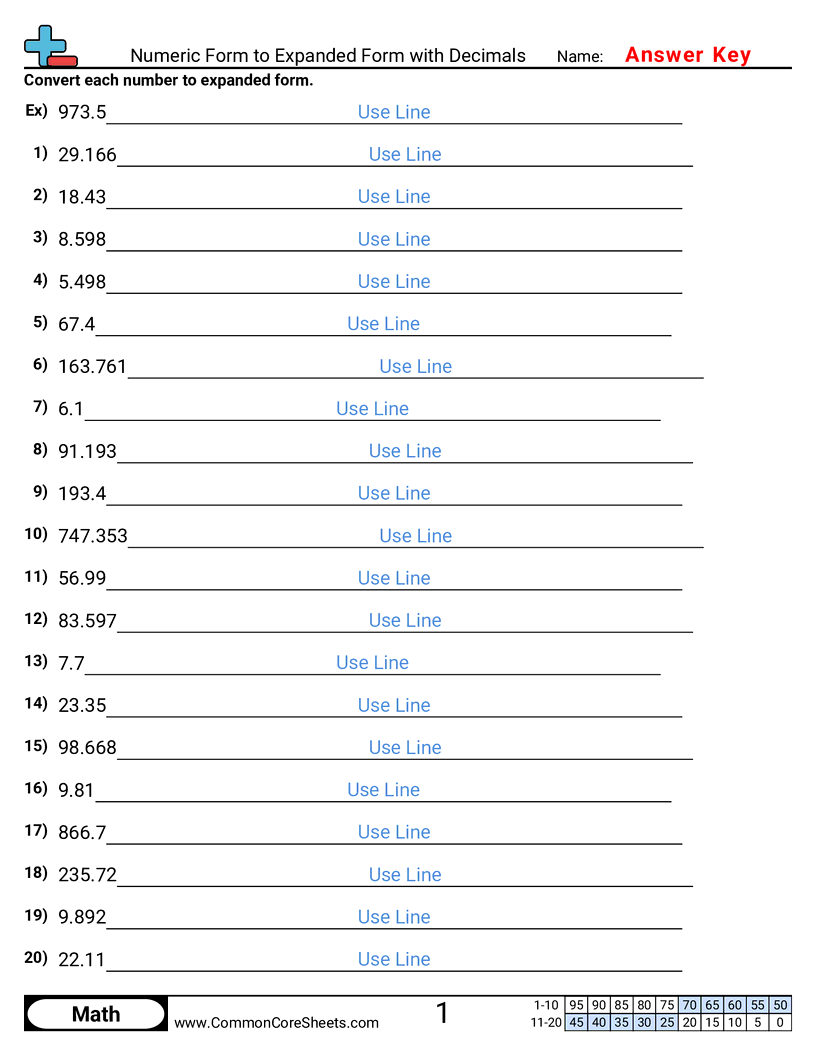
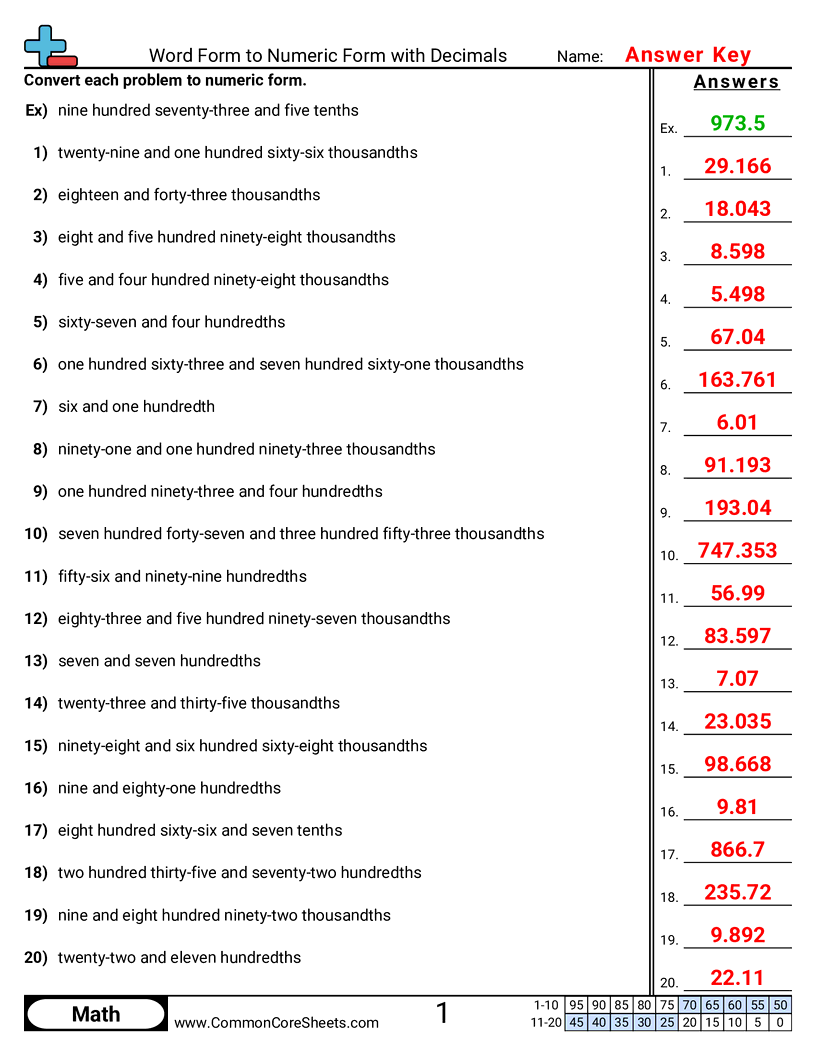
"This worksheet is designed to reinforce kids' concepts in Mathematics, particularly in converting numeric form to expanded form with decimals. Featuring 20 unique problems like converting 6.98 to '6 + (9 × ¹⁄₁₀) + (8 × ¹⁄₁₀₀)', it caters to different learning styles. It's versatile and can be customized to suit each learner’s needs, elegantly convertible into flash cards, and perfectly applicable for distance learning. This resource makes learning engaging, adaptable, and effective."
×Student Goals: Understanding of Numeric and Expanded FormsAfter completing the worksheet, students should have an enhanced comprehension of numeric and expanded forms, particularly with decimal numbers. They will readily convert numbers from numeric to expanded form, thus breaking down complex decimal numbers into simpler, understandable parts. This important skill will serve them well in multiple mathematical contexts in the future.Enhanced Mental Arithmetic SkillsThe exercises on the worksheet will also improve the students’ mental arithmetic skills. By converting numbers into expanded form, they will engage in numerous smaller calculations, helping them become quicker and more adept at mental math. This enhancement in mathematical processing will prove instrumental in real-world scenarios where quick mental calculations are often required.Improved Number SenseStudents will develop a stronger number sense as they will gain a better understanding of place value and decimal system. They will understand how different numbers contribute to the overall value of the number and how changes in these values affect the total number. Such understanding is critical for learning more advanced mathematical concepts.Practical Applications in Real LifeUpon completing the worksheet, students should be able to apply their understanding in realistic situations. This includes interpreting and using decimal numbers in various day-to-day scenarios, such as money, weight, length, etc. This exercise therefore not only enhances mathematical capabilities, but also provides practical benefits.Increase in Confidence and Reduction in FearFor many students, math can be an intimidating subject. However, a thorough understanding and frequent practice of concepts such as these can significantly reduce math anxiety. By mastering the transition from numeric to expanded form, students will feel more confident as they develop a solid foundation for more complex mathematical operations.Enhanced Problem-Solving AbilitiesFinally, working through the worksheet helps boost students' problem-solving skills. Tasks like these involve a step-by-step approach to reach an answer, giving kids practice in strategic planning and execution. This practice isn't only math-centric, but spills into other areas of study and life, improving students' overall analytical thinking ability.