Carpenter Ants Worksheet Download
Free reading worksheets on Carpenter Ants. Each worksheet has 20 problems with an answer key and are ideal for teachers and homeschooling. You can download the PDF, create a set of flash cards or set it up for online learning.


Sheet Information >
Available at 2nd grade, 3rd grade, 4th grade, 5th grade and 6th grade reading levels.
Read the passage
Carpenter ants are amazing little creatures that live all around us. These ants are usually black or dark brown and can grow up to 1 inch long. They make their homes by burrowing into wood, which is how they got their name.
These ants have a very interesting life cycle and diet. Carpenter ants eat a variety of things like insects, fruits, and the sweet honeydew produced by aphids. Their life cycle begins as an egg, then hatches into a larva, grows into a pupa, and finally becomes an adult ant.
Carpenter ants have a unique relationship with humans and other insects. They can be both helpful and harmful to humans, as they help control pest populations, but they can also cause damage to wooden structures. These ants are different from other species because of their size, appearance, and nesting habits.
Now you know a little more about carpenter ants and how they live, eat, and interact with the world around them. They may be small, but they sure are fascinating!
Let's learn about carpenter ants, amazing little insects that live all around us! Carpenter ants are large black or brown ants that can be found in many places, like forests, gardens, and even inside our homes. These ants like to eat a variety of things such as insects, plant juices, and sweet foods that they find in our kitchens. Carpenter ants have a special relationship with other insects called aphids, which they protect and 'milk' for a sweet liquid called honeydew.
Now, let's explore the life cycle of carpenter ants and how they are different from other ant species. Their life cycle starts when a queen ant lays her eggs, which then hatch into larvae, grow into pupae, and finally become adult ants. Unlike some other ants, carpenter ants don't eat wood, but they dig tunnels in it to create their nests, which can sometimes cause damage to our homes. Also, carpenter ants have a unique way of communicating with each other using sounds made by rubbing their bodies together, called stridulation.
Lastly, let's talk about carpenter ants' defenses and their relationship with humans. These ants have strong jaws that they use to defend themselves and their colony from predators like spiders and other insects. While carpenter ants are not usually harmful to humans, they can become a problem when they build their nests in our homes and weaken the wooden structures. But don't worry, if we keep our homes clean and well-maintained, we can prevent these ants from causing any trouble.
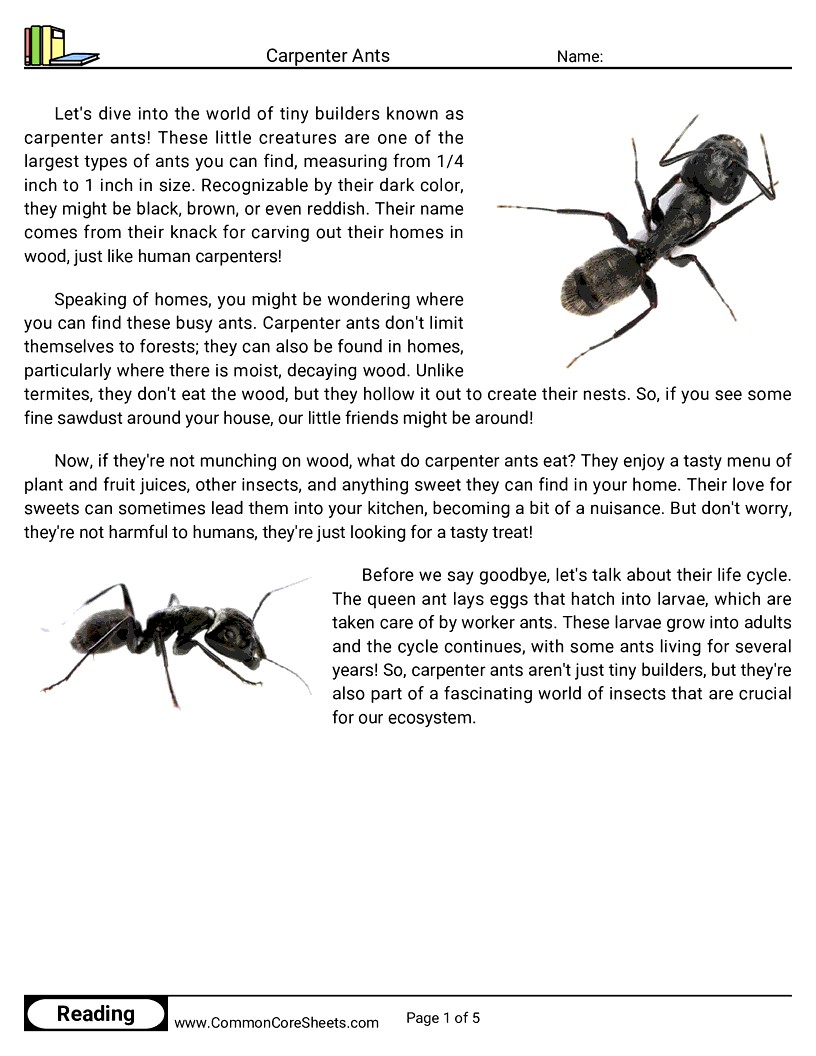
Let's dive into the world of tiny builders known as carpenter ants! These little creatures are one of the largest types of ants you can find, measuring from 1/4 inch to 1 inch in size. Recognizable by their dark color, they might be black, brown, or even reddish. Their name comes from their knack for carving out their homes in wood, just like human carpenters!
Speaking of homes, you might be wondering where you can find these busy ants. Carpenter ants don't limit themselves to forests; they can also be found in homes, particularly where there is moist, decaying wood. Unlike termites, they don't eat the wood, but they hollow it out to create their nests. So, if you see some fine sawdust around your house, our little friends might be around!
Now, if they're not munching on wood, what do carpenter ants eat? They enjoy a tasty menu of plant and fruit juices, other insects, and anything sweet they can find in your home. Their love for sweets can sometimes lead them into your kitchen, becoming a bit of a nuisance. But don't worry, they're not harmful to humans, they're just looking for a tasty treat!
Before we say goodbye, let's talk about their life cycle. The queen ant lays eggs that hatch into larvae, which are taken care of by worker ants. These larvae grow into adults and the cycle continues, with some ants living for several years! So, carpenter ants aren't just tiny builders, but they're also part of a fascinating world of insects that are crucial for our ecosystem.
Carpenter ants are fascinating creatures that play a vital role in nature. These ants, usually black or red in color, can vary in size from 3.4 to 13 millimeters long. They get their name because they build their nests by carving tunnels and galleries in wood. Although they don't eat the wood like termites, their nesting habits can cause damage to trees and wooden structures.
The diet of carpenter ants is really diverse and interesting. They feed on a variety of foods, including other insects, plant juices, and even human food if they find their way into your home. One of their favorite meals is the sweet, nutritious liquid called honeydew, which they collect from aphids and other small insects. Carpenter ants are considered omnivores as they consume both plants and other insects.
Carpenter ants have a complex and exciting life cycle that is similar to other ants. It begins with the mating flight, where winged male and female ants, called alates, fly out of their nests to mate. After mating, the male dies, and the female, now called the queen, finds a suitable location to start a new colony. She lays her eggs, which then hatch into larvae, grow into pupae, and finally become adult ants.
Humans and carpenter ants have a unique relationship. While they can be beneficial to the environment by controlling pests and aerating soil, they can also cause problems when they nest in the wooden structures of our homes. In these cases, it's essential to contact a pest control expert to remove the ants and prevent further damage. Carpenter ants also have relationships with other insects, like aphids, from which they collect honeydew.
Some fascinating facts and differences set carpenter ants apart from other species. Unlike termites, they don't eat wood but rather carve it out to create their nests. Carpenter ants can lift and carry objects up to 50 times their body weight, making them incredibly strong for their size. Lastly, these ants are highly adaptable and can be found in various habitats, from forests to suburban backyards.
Carpenter ants are fascinating insects that play an essential role in our ecosystem. These ants are known for their large size, with some measuring up to an inch long. They come in various colors such as black, red, or a combination of both. Carpenter ants get their name from their nesting behavior, which involves excavating wood to create tunnels and chambers for their colony. These ants do not eat the wood, but rather use it as a home, just like humans use bricks to build houses.
The life cycle of carpenter ants is an interesting process that involves four stages: egg, larva, pupa, and adult. Queen ants lay the eggs, which then hatch into larvae after about a week. The larvae are then fed by worker ants until they are ready to transform into pupae. Within a few weeks, the pupae transform into adult ants, ready to take on their roles within the colony. Carpenter ants have a unique caste system, which includes workers, soldiers, and the reproductive queen and male ants.
Carpenter ants have a diverse diet that includes both plant and animal materials. They primarily feed on the sweet honeydew produced by aphids and other insects, as well as fruits, seeds, and nectar from plants. These ants are also predators and will hunt other insects, such as termites, spiders, and even smaller ants. In human homes, they can be attracted to sweet foods, meat, and pet food. This is one reason why it is essential to keep your living space clean and free from food crumbs.
Carpenter ants have a complex relationship with both humans and other insects. While they can be helpful in controlling other pests, such as termites, they can also cause damage to wooden structures in our homes. Carpenter ants are also known to have a mutualistic relationship with aphids, providing them protection in exchange for their honeydew. These ants can even defend their territory against other ant species, which helps maintain the balance of insect populations in their environment. It is crucial to understand and respect these creatures for their positive contributions to the ecosystem.
Carpenter ants have several unique features and interesting facts that set them apart from other ant species. One such feature is their ability to communicate through chemical signals called pheromones, which they use to alert other ants to danger or guide them to food sources. Their large and powerful mandibles help them carve out their intricate nests in wood and defend their colonies against threats. Unlike termites, carpenter ants do not consume the wood they excavate, making it easier to identify their presence by the small piles of sawdust they leave behind. These fascinating creatures remind us of the incredible diversity and complexity of the insect world.
About this worksheet
Students read an informational passage about carpenter ants and answer questions about the main ideas and details.
This worksheet is designed to enhance children's reading comprehension skills through 20 problems about Carpenter Ants. It presents facts about their size, colour, habitat, dietary and nesting habits. Ideal for remote education, the worksheet’s customizable nature allows it to be converted into flashcards for efficient, fun learning.
Student objectives
- Read a nonfiction passage about carpenter ants and understand it
- Find specific facts and details in the text to answer questions
- Figure out the main idea of the passage
- Learn new words and how they are used in the reading
Everyday practice
- Read a nature article and explain what it was about to a friend
- Answer questions about a book or magazine you just read
- Look up facts about a bug you found outside
- Point out important details when talking about something you read