Sun, Moon And Stars Solar System Worksheets
Free solar system worksheets with answer key. No login or account needed. Students read about the inner and outer planets and compare what two texts tell, and learn how Earth's spin makes day and night and changes shadows through the day. A grading column and quick grade scale make grading a breeze. Great for teachers or for homeschool.
More about these worksheets ▾ Show less ▴
×
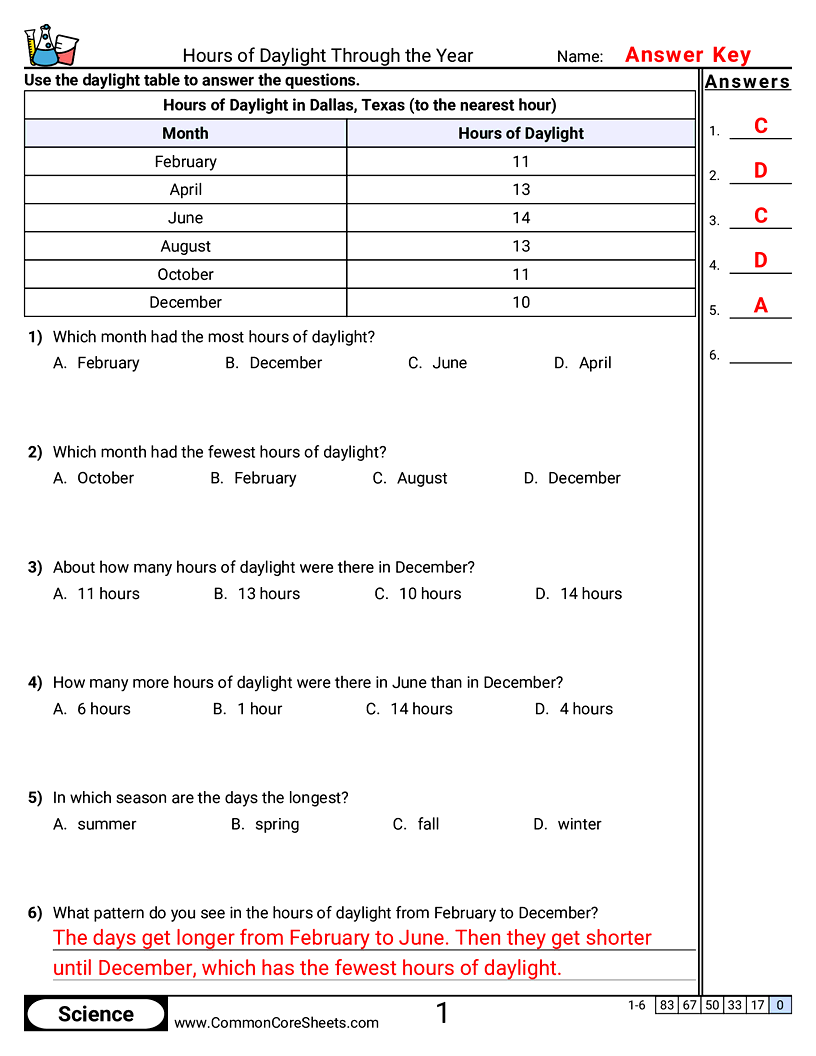
Read a table of hours of daylight Find the months with the most and the fewest hours of daylight Describe how the amount of daylight changes through the year
Explain that Earth's spin on its axis causes day and night Explain why shadows are long in the morning and evening and shortest around midday Explain why other stars can be seen at night but not during the day
Read a table of shadow lengths and directions Describe how a shadow changes from morning to evening Explain that the sun's position in the sky changes a shadow's length and direction
Read data on how bright a light looks from different distances Describe how brightness changes as distance grows Explain that the sun looks brighter than other stars because it is much closer
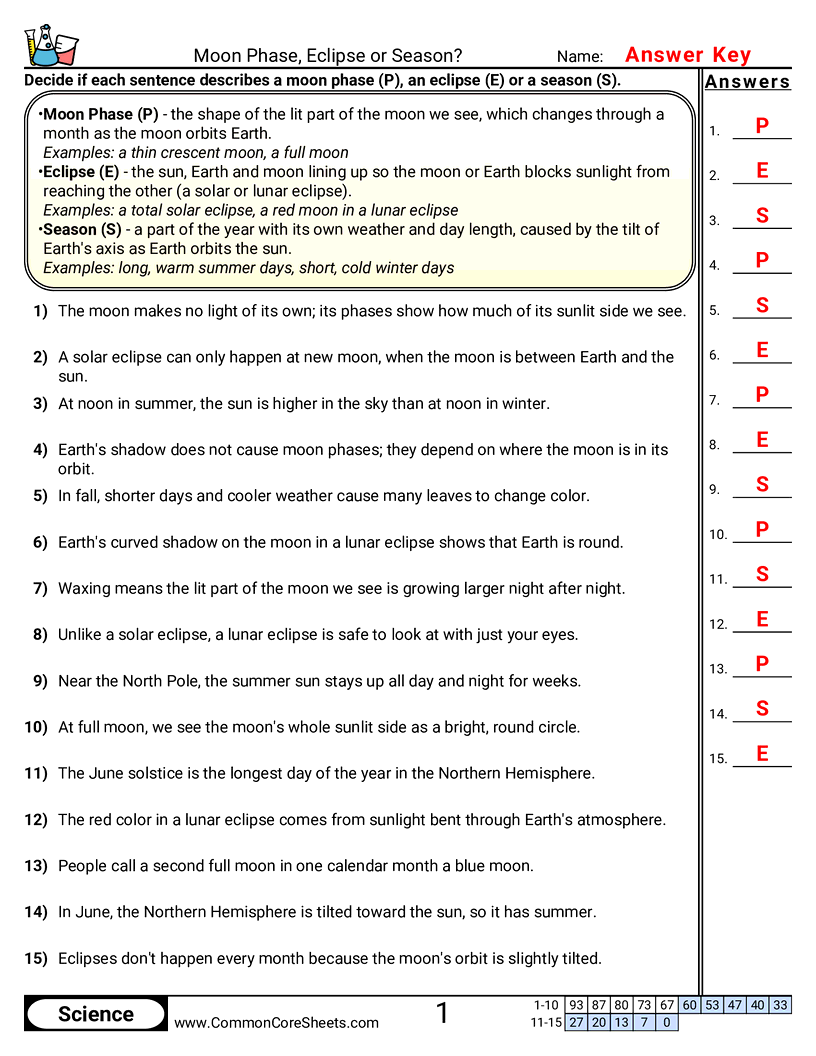
Explain that moon phases are the changing shape of the lit part of the moon we see as the moon orbits Earth Explain that an eclipse happens when the sun, Earth and moon line up so the moon or Earth blocks sunlight from reaching the other Explain that seasons are caused by the tilt of Earth's axis as Earth orbits the sun, not by Earth's distance from the sun Sort descriptions of patterns in the Earth-sun-moon system as moon phases, eclipses or seasons
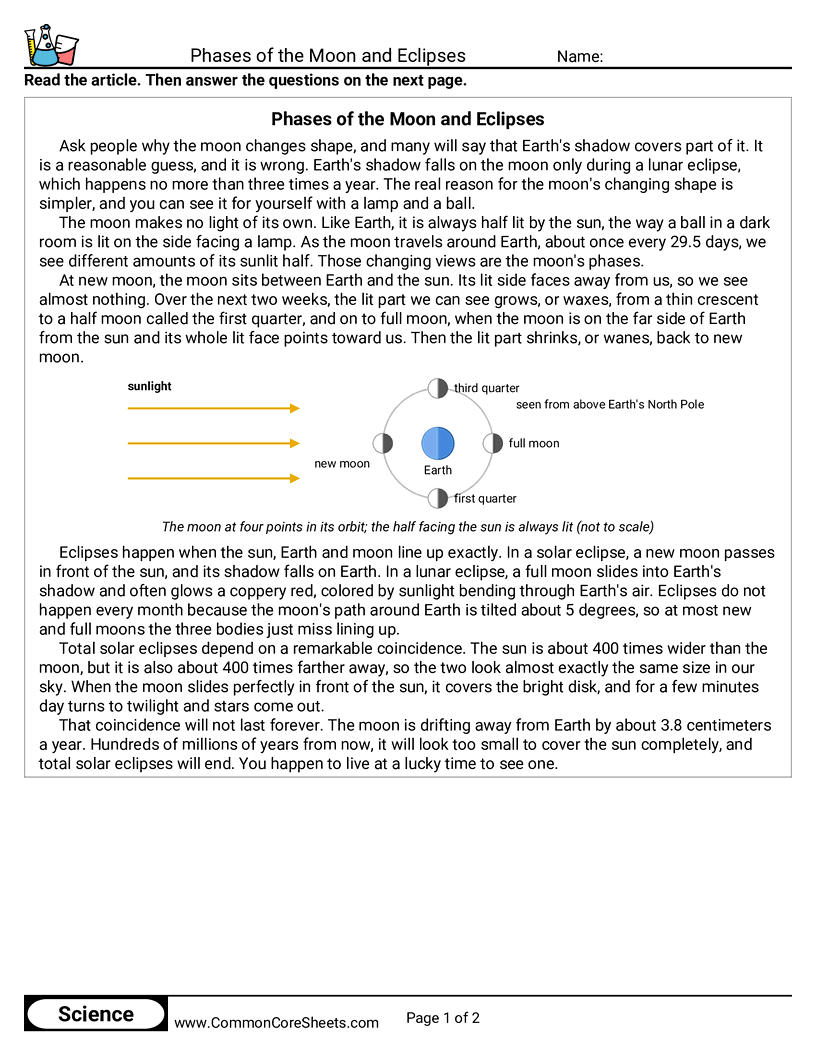
Determine the central idea of a science article Use a diagram of the moon's orbit together with the text Explain what causes the moon's phases and eclipses
Advertisement