Our multiple choice shapes worksheets provide structured practice for identifying, analyzing, and working with 2D and 3D shapes. The multiple choice format helps students develop critical thinking skills while learning about shape attributes, perspectives, and geometric relationships through guided answer options.
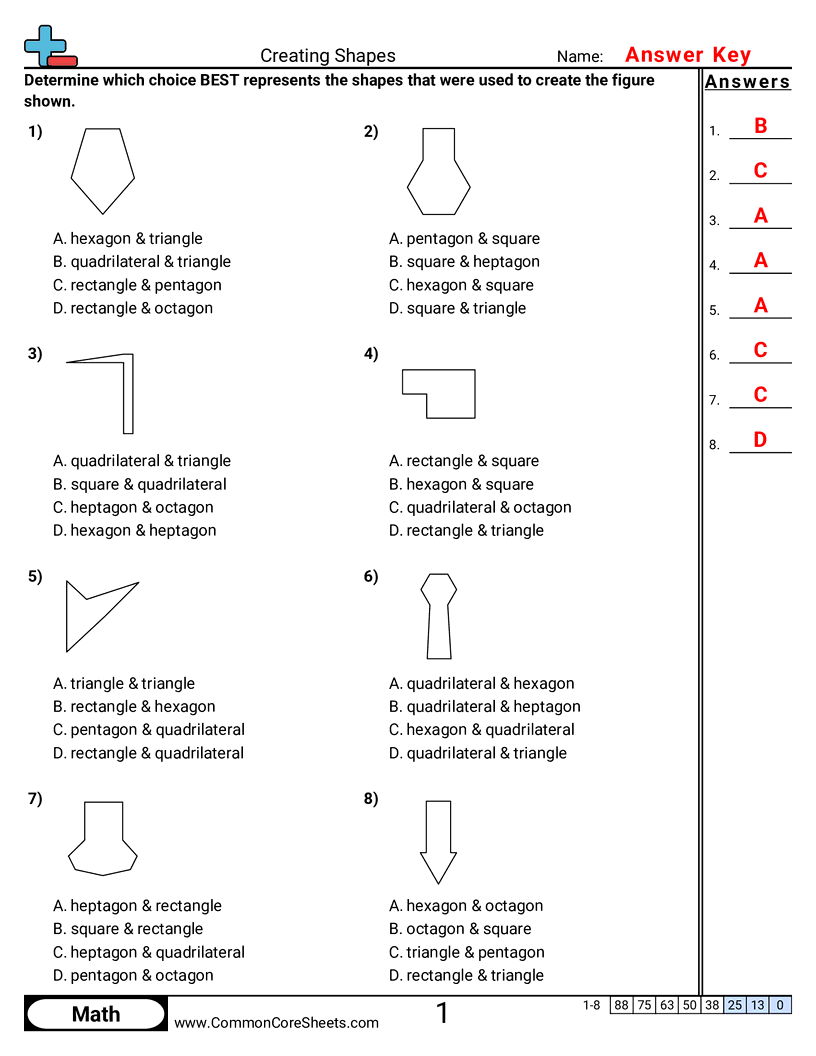
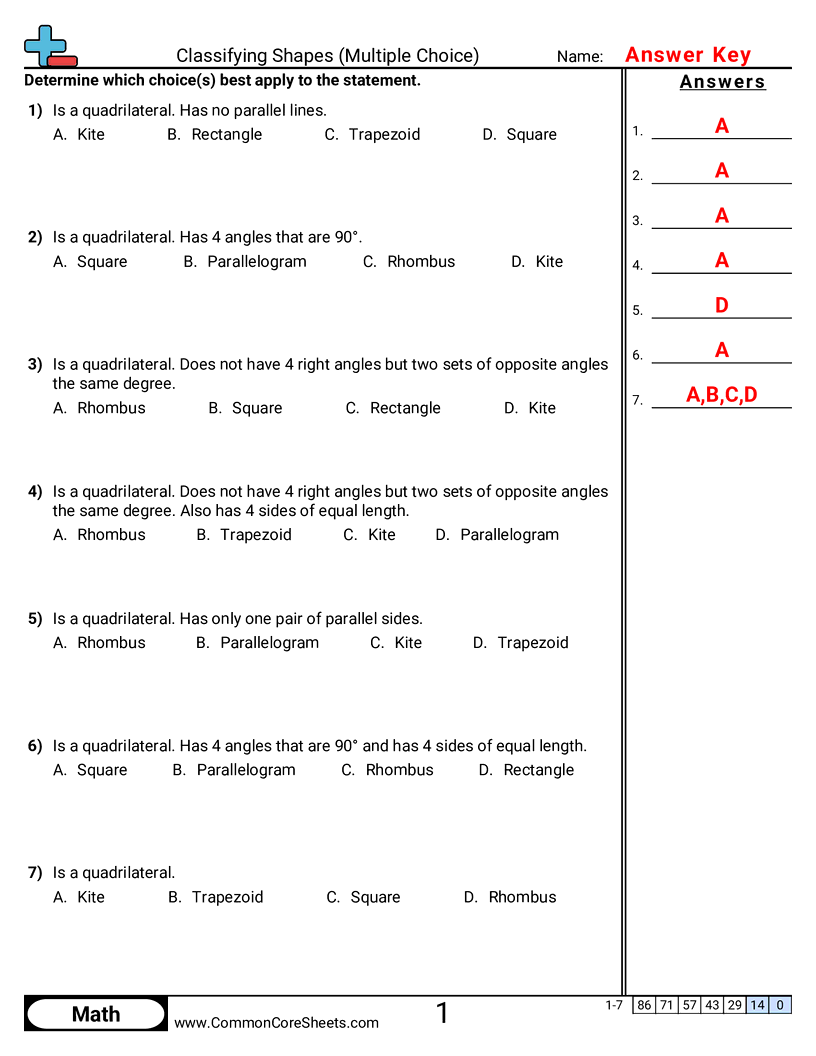
These worksheets cover shape identification across multiple levels. Students name basic 2D shapes by their sides and corners, identify quadrilaterals, recognize regular and irregular polygons from triangles through decagons, classify right triangles, identify solid 3D figures, determine which shapes combine to form a figure, and classify triangles by angles and side lengths. Resources span first through fourth grade and beyond.
Students explore the attributes and properties of both 2D and 3D shapes. Activities include counting faces, edges, and vertices of 3D shapes, determining whether given measurements can form a triangle, identifying cross-sections of sliced 3D shapes, drawing different perspectives of solids, classifying shapes by properties, evaluating true-or-false statements about shapes, and filling in attribute tables. Resources span fifth through seventh grade.
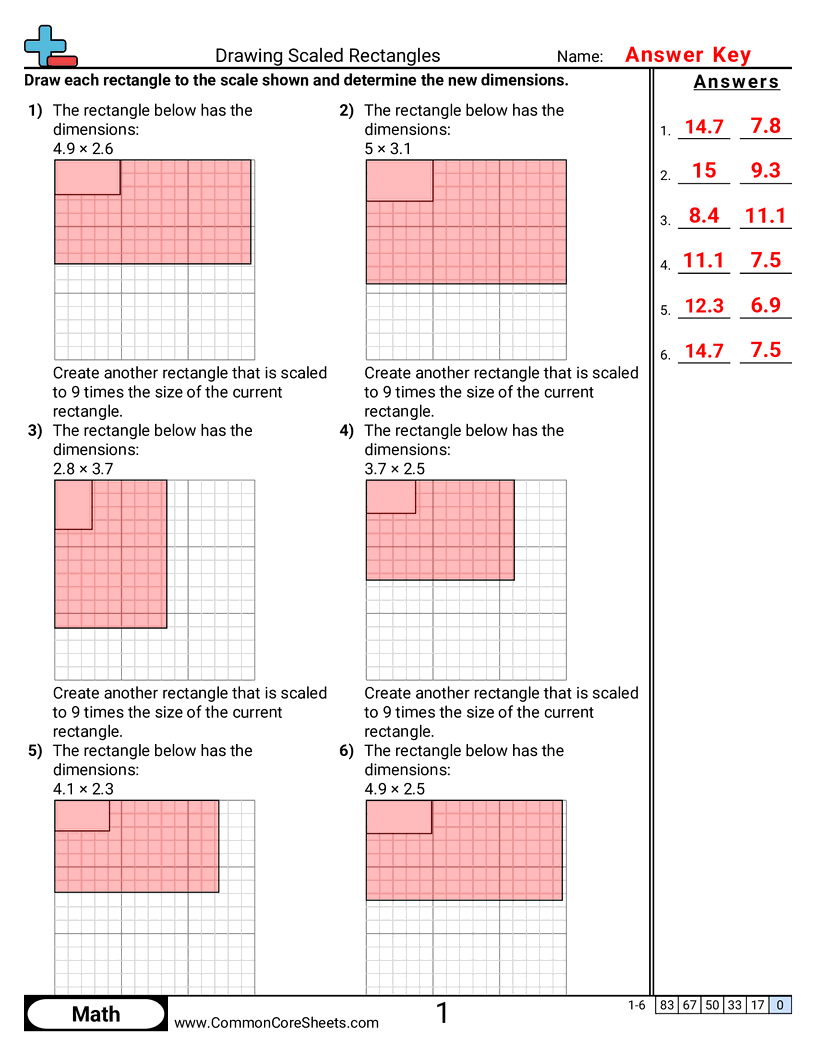
These worksheets introduce geometric transformations. Students practice drawing scaled rectangles using scale factors, identifying whether a shape has been translated (slid), rotated (turned), or reflected (flipped), and determining whether pairs of shapes are similar, congruent, or neither. Aligned with seventh grade geometry.