2nd Grade Converting Forms Worksheets
Free converting forms worksheets with answer key. No login or account needed. From converting fractions to decimals, numeric to word and everything in between, we've got you covered. A grading column and quick grade scale maker grading a breeze and a modified pages help with lower level learners or when just introducing a topic. Great for teachers or for homeschool.
Browse Sheets By Problem Type
×
About these worksheets
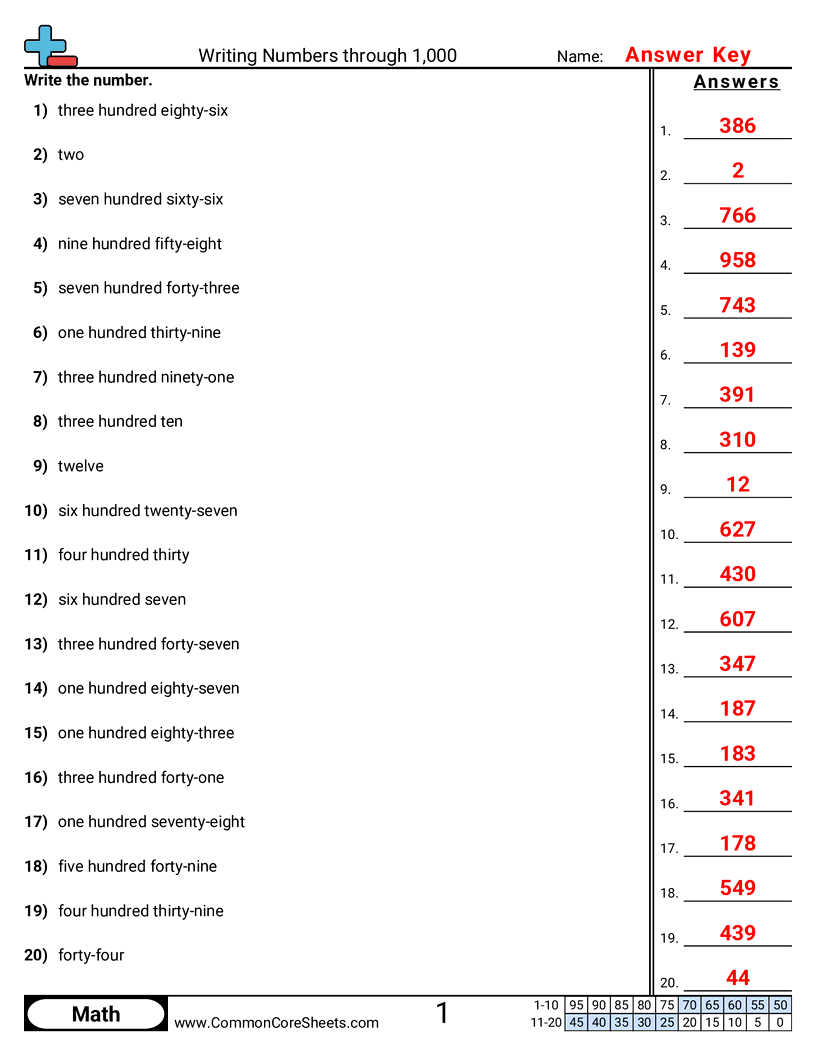
These worksheets build number sense by having students convert between word form and numeric form. Problem sets range from writing numbers through 120 for first graders up to reading and writing numbers through one million and decimals to thousandths for fourth and fifth graders. Activities also include writing numbers using tens and ones, converting between multiple forms, and writing simple equations from word form.
2nbt3

- Read numbers up to 1,000 and write them out in words.
- Use hundreds, tens, and ones to say a number correctly in word form.
- Spell number words correctly, including tricky ones like the teens and multiples of ten.
- Write word form for numbers that have a zero in the tens or ones place.
2nbt3

- Read a number written in words and write it as digits.
- Use place value to decide how many hundreds, tens, and ones the words describe.
- Handle tricky word parts like teen numbers and numbers with a zero in the tens or ones place.
About these worksheets
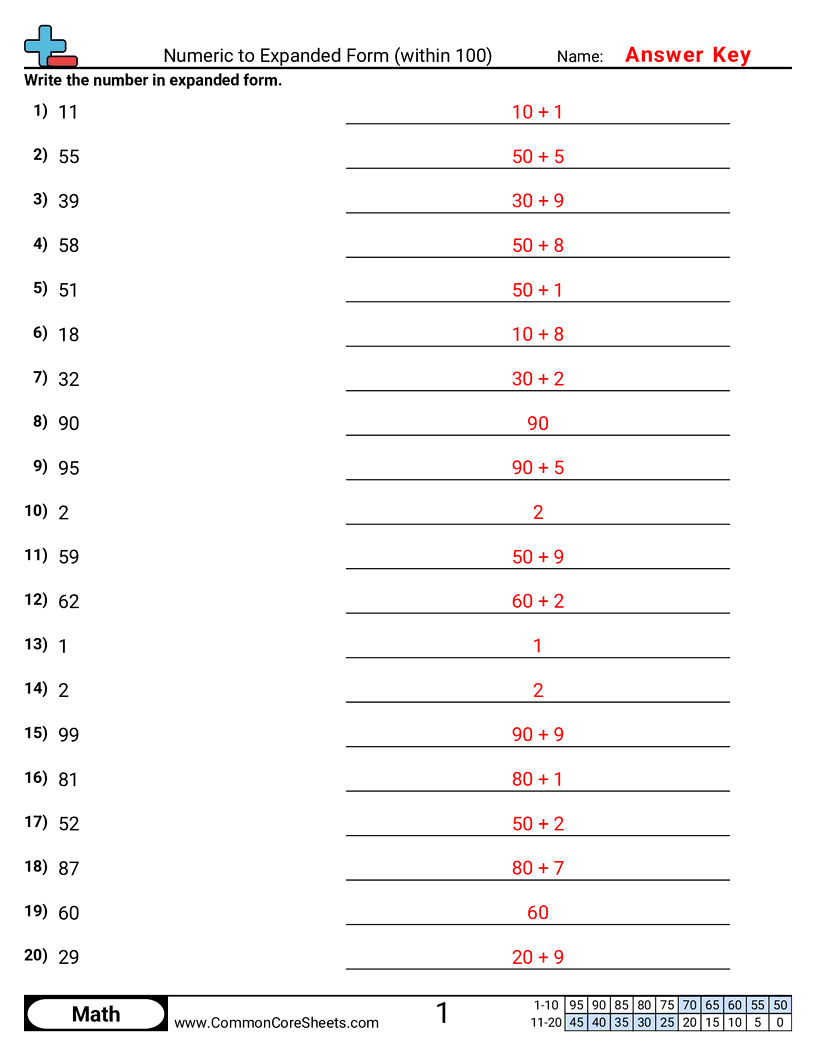
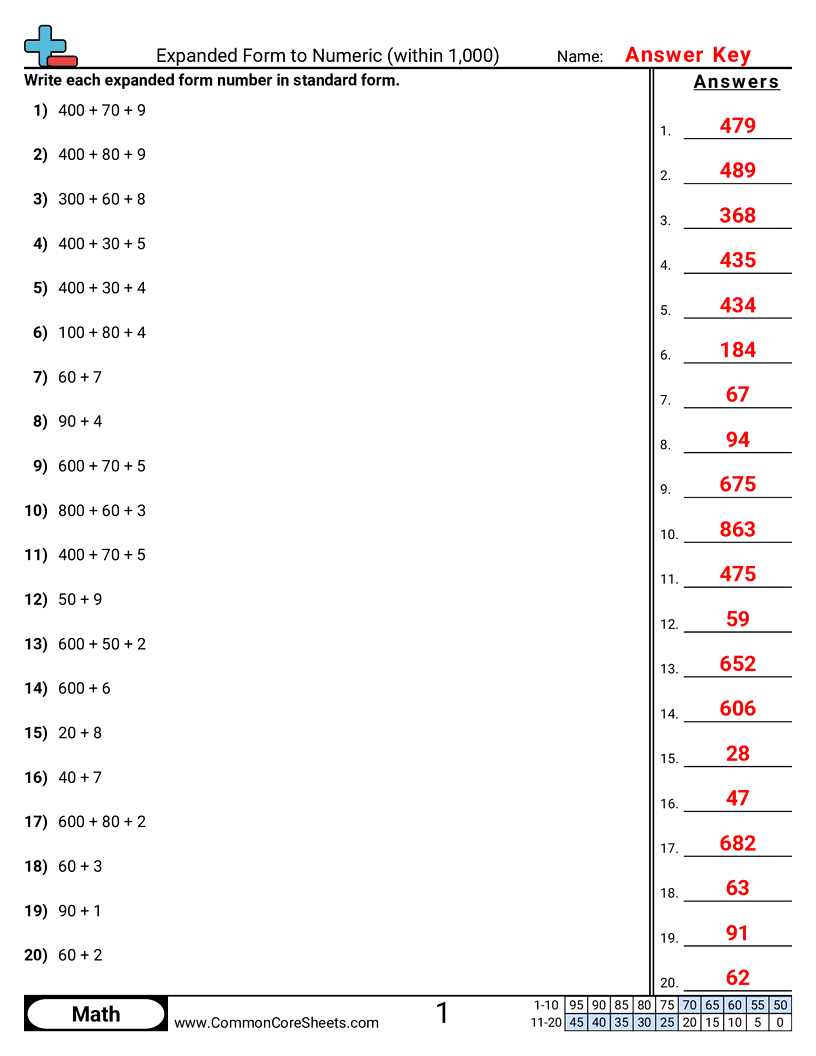
Students practice converting numbers between expanded form and standard (numeric) form. Worksheets cover whole numbers within 1,000 up to one million, as well as decimals to thousandths. Activities include standard expanded form (like 400 + 30 + 2) and expanded notation (using multiplication by place value). These resources align with second through fifth grade place value standards.
2nbt3

- Turn an expanded form like 300 + 40 + 6 into standard form.
- Use hundreds, tens, and ones to understand what each part of a number means.
- Add the parts in expanded form to build the whole number.
2nbt3

- Break a number up into hundreds, tens, and ones.
- Write a number in expanded form as a sum (like 472 = 400 + 70 + 2).
- Use place value to decide which digits become hundreds, tens, and ones in the expanded form.
- Handle numbers that have a 0 in one place by leaving that part out or writing it as + 0.