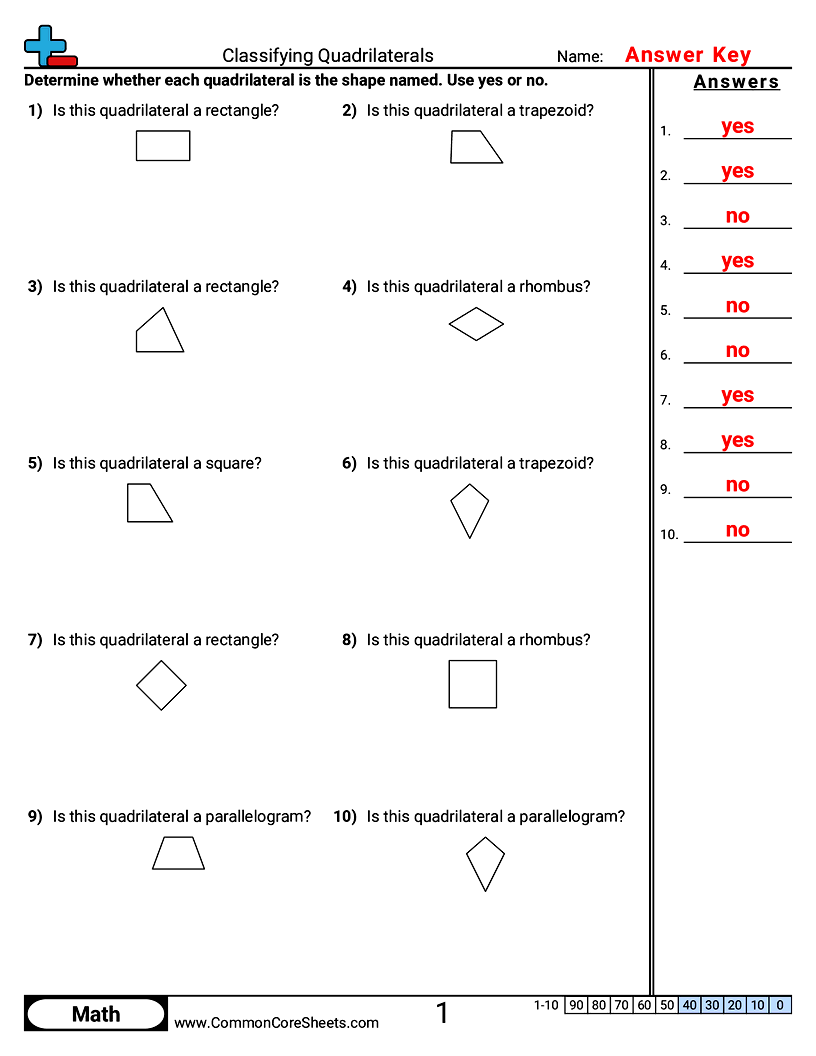
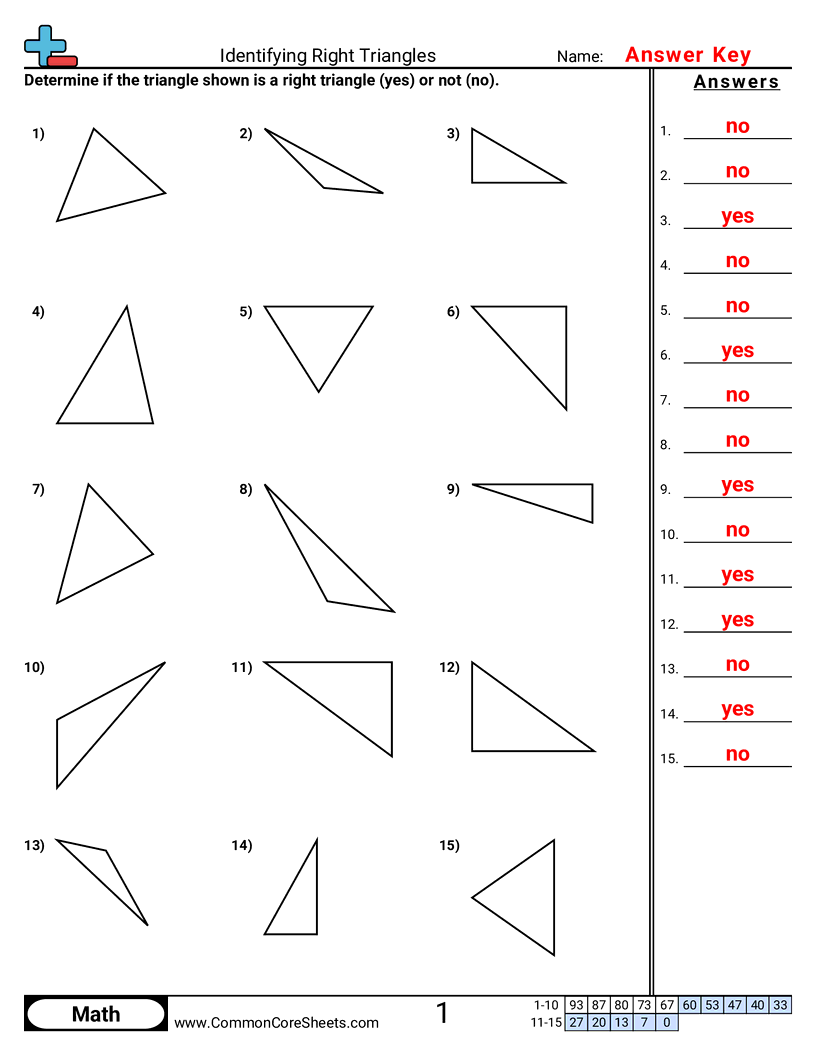
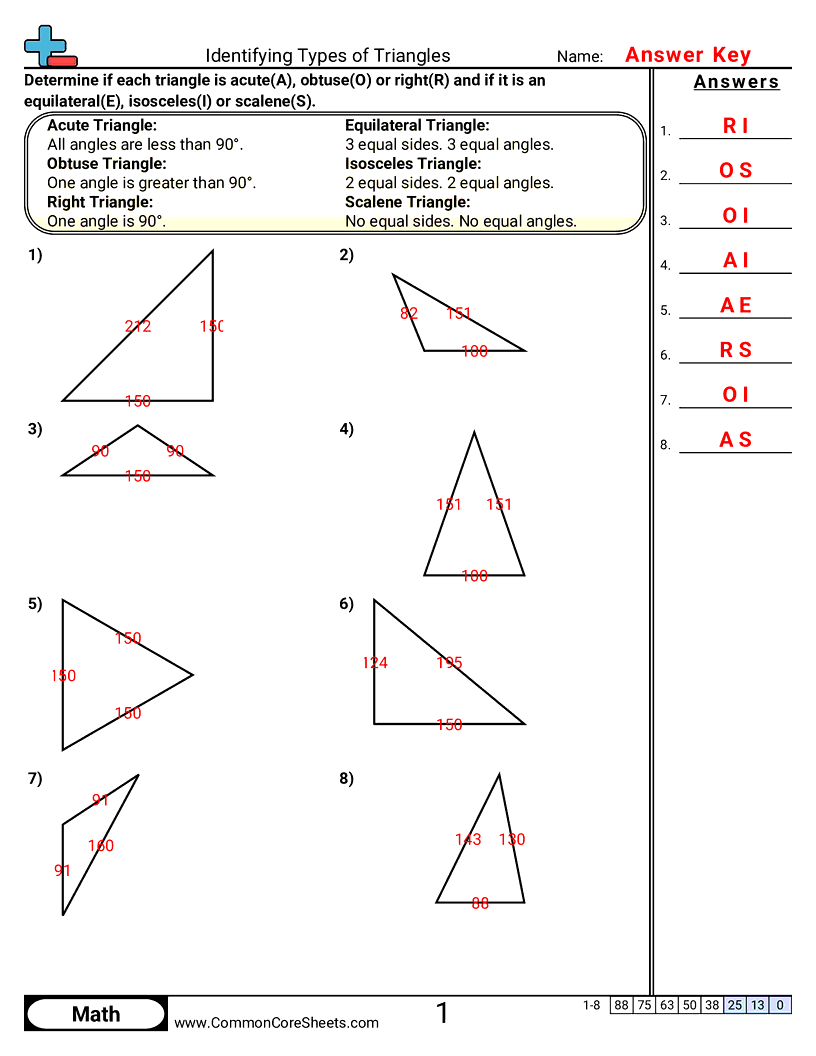
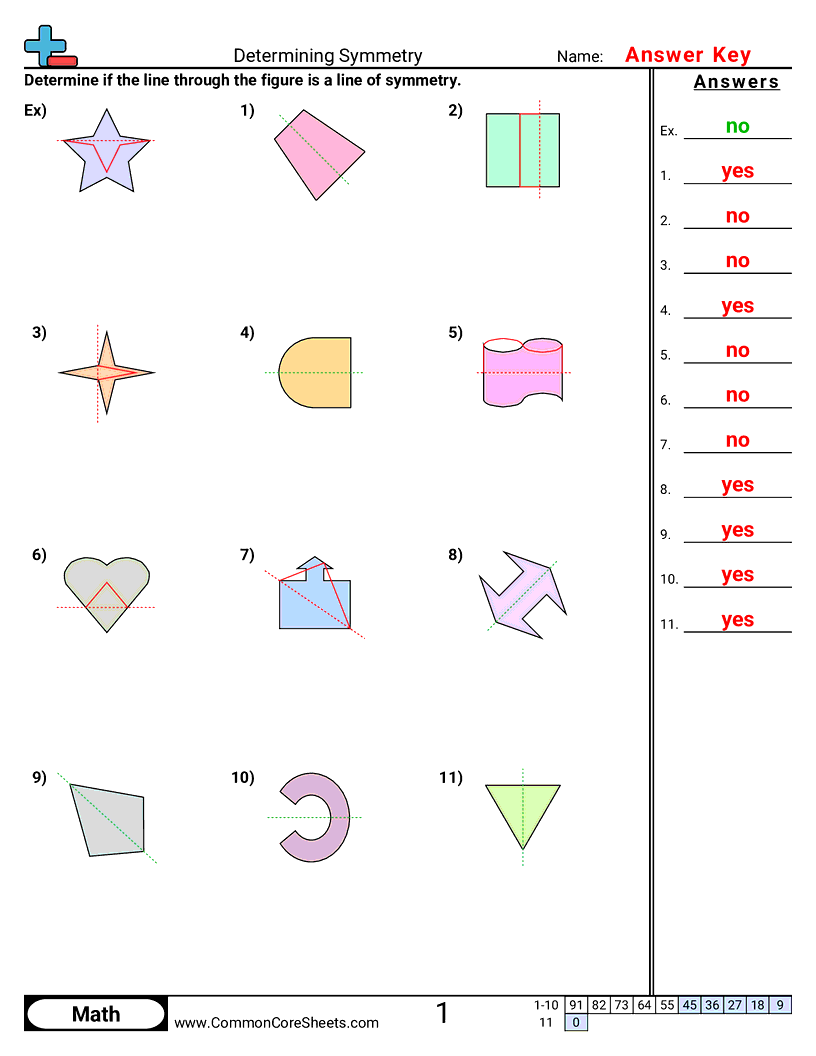
Our Visual Shapes Worksheets provide students with hands-on practice identifying and analyzing geometric shapes through visual exercises. These worksheets help students develop spatial reasoning skills by working with 2D and 3D shapes, transformations, and geometric properties using clear visual representations.
These worksheets cover shape identification across multiple levels. Students name basic 2D shapes by their sides and corners, identify quadrilaterals, recognize regular and irregular polygons from triangles through decagons, classify right triangles, identify solid 3D figures, determine which shapes combine to form a figure, and classify triangles by angles and side lengths. Resources span first through fourth grade and beyond.
Students determine whether a given line is a line of symmetry by checking if it divides a shape into two matching halves. These worksheets build spatial reasoning and the concept of reflective symmetry. Aligned with fourth grade geometry standards.