Horizontal Grid Worksheets
These horizontal grid worksheets help students practice slope and rate of change concepts using a landscape format. The horizontal layout provides extra space for showing work and graphing, making complex problems easier to solve and understand.
About these worksheets
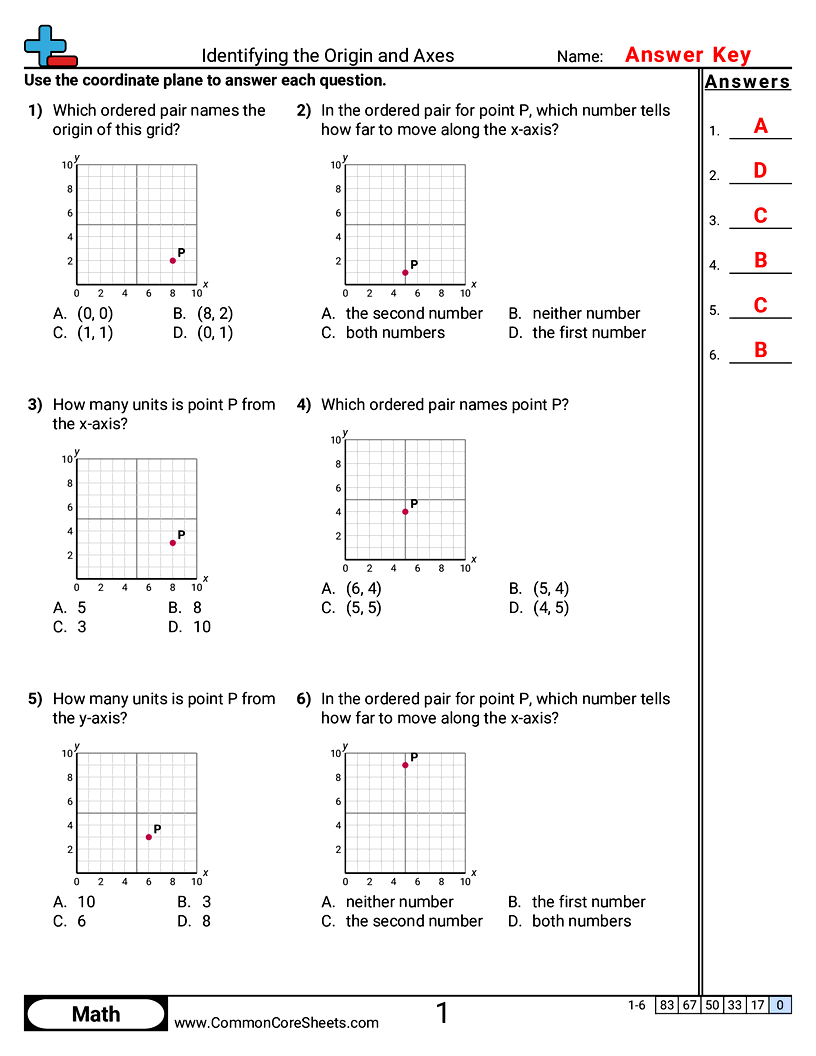
These worksheets build coordinate plane skills from the basics up. Students practice reading and plotting ordered pairs, creating rectangles from coordinates, graphing number patterns, reading coordinate planes with shapes, marking locations on grids, using coordinates in real-world contexts, working with positive and negative coordinates, interpreting graphs, and finding points on a line. Resources span fifth through seventh grade.
About these worksheets
Students practice transforming shapes on the coordinate plane. Worksheets cover reflecting shapes across the x- and y-axes, rotating shapes by 90°, 180°, and 270°, translating shapes in any direction, and calculating slope using slope-intercept form. Aligned with eighth grade geometry standards.
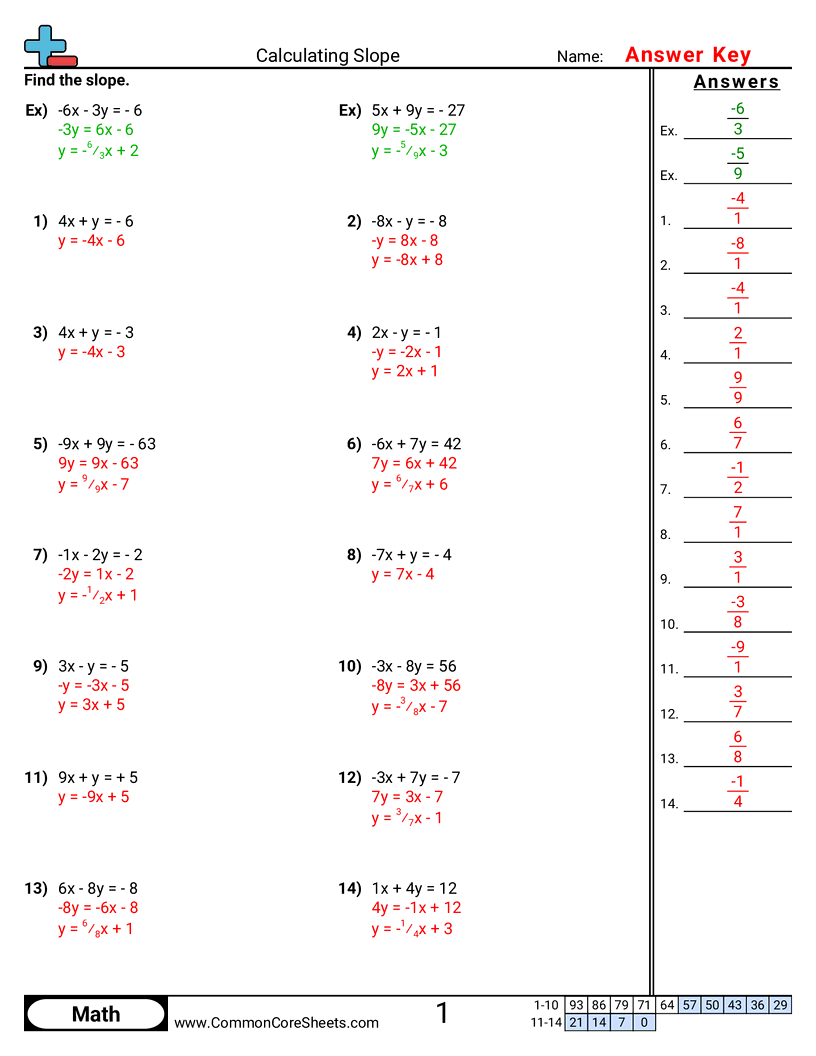
Finding Slope
- Practice rearranging a linear equation into y = mx + b form to identify the slope
- Isolate y by moving the x term to the other side and dividing by the coefficient of y
- Work with slopes that are whole numbers, negative numbers, and fractions
About these worksheets
These worksheets focus on identifying lines with the same slope using similar triangles. Students compare the rise-over-run ratios of triangles to determine which lines are parallel. Aligned with eighth grade expressions and equations standards.
Identifying Rate of Change (Equations)
- Practice finding the rate of change by plugging x values into an equation and seeing how y changes each time
- Fill in a table of x and y values, then calculate the difference between consecutive y values to find the rate of change
- Work with equations written in different forms and simplify them to spot a constant rate of change
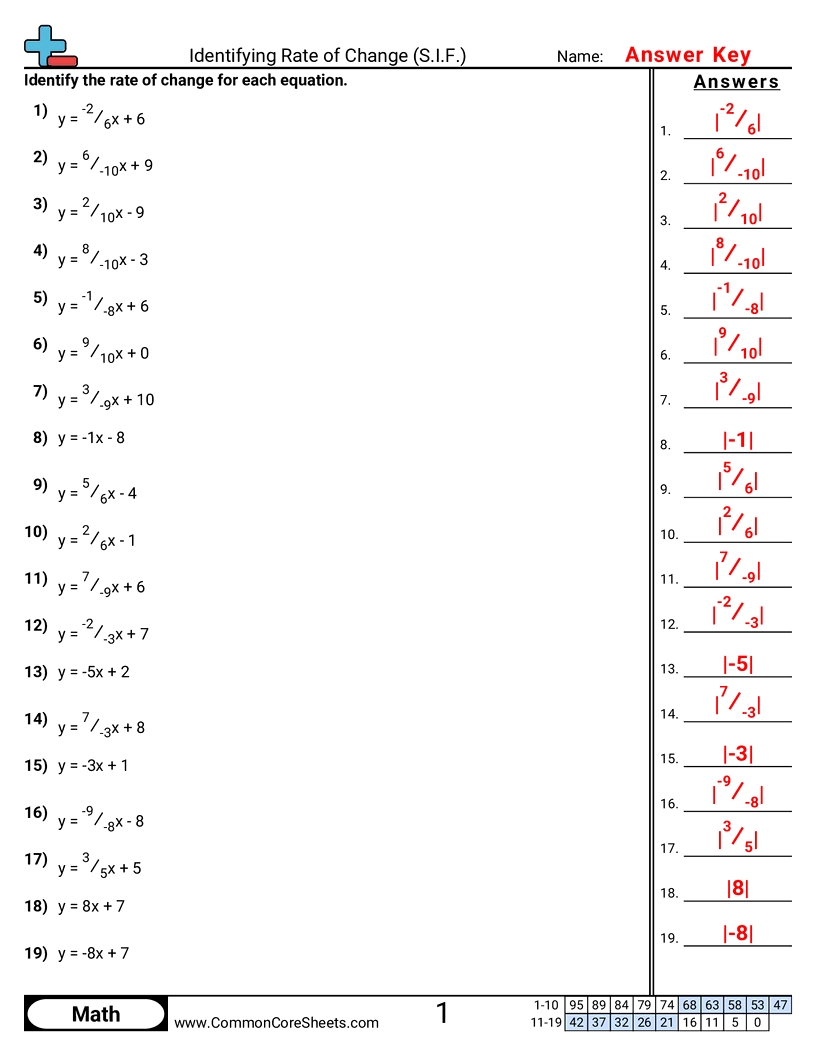
Identifying Rate of Change (S.I.F.)
- Find the rate of change (slope) from a linear equation written as y = mx + b.
- Tell whether the rate of change is positive, negative, zero, or not a whole number by looking at the slope.
- Identify the y-intercept in slope-intercept form and explain what it means as a starting value.
- Compare two equations by deciding which one changes faster based on their slopes.
Identifying Rate of Change (Tables)
- Practice finding the rate of change from a table by calculating how much y changes for each unit change in x
- Use the formula (change in y) ÷ (change in x) between pairs of values in the table
- Work with tables that include negative numbers and values that aren't evenly spaced
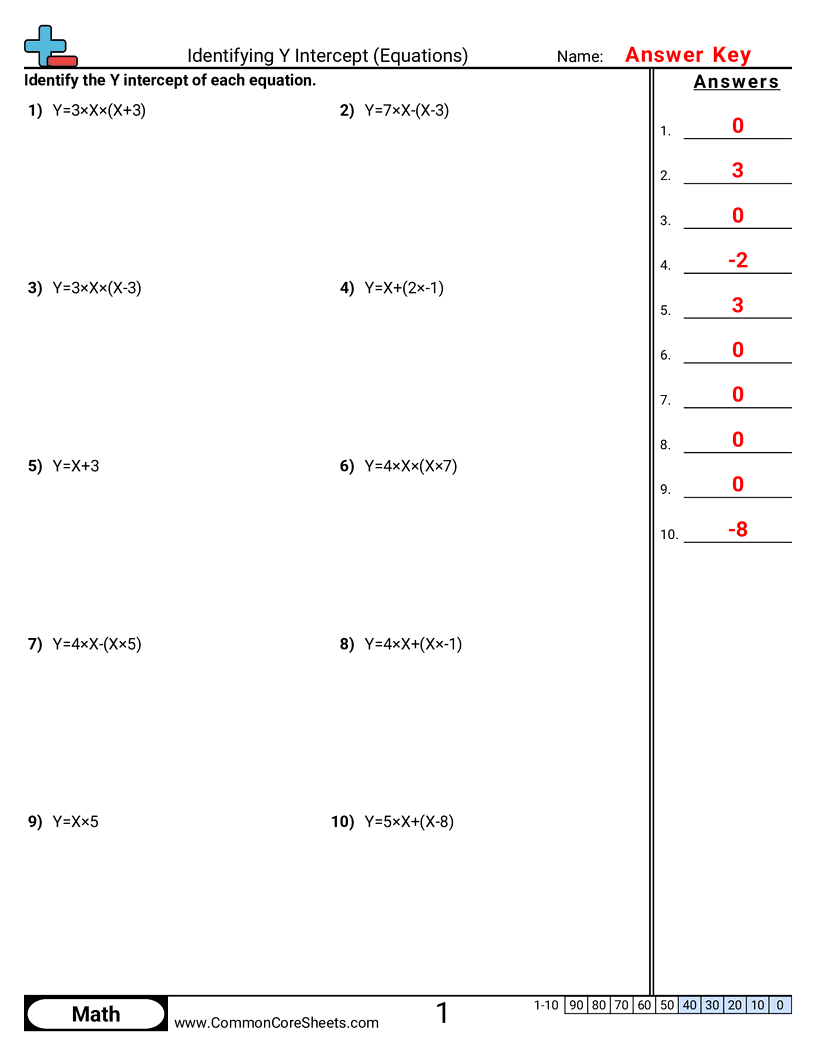
Identifying Y Intercept (Equations)
- Find the y-intercept from an equation by spotting the constant term.
- Read the y-intercept directly from slope-intercept form (y = mx + b).
- Rewrite an equation into y = mx + b form so the y-intercept is easy to see.