OAS 3.N.2.3 Worksheets
OAS 3.N.2.3 (Oklahoma, 3rd Grade): "Use strategies and algorithms based on knowledge of place value and equality to fluently add and subtract up to five-digit numbers (answer not to exceed 100,000)." The worksheets below practice this standard. Each one is a free printable PDF with an answer key, comes in multiple versions, and can also be assigned digitally - no login or account needed.
Numbers & Operations (N)
3.N.2 Solve real-world and mathematical problems using addition, subtraction, multiplication, and division.3.N.2.3 Use strategies and algorithms based on knowledge of place value and equality to fluently add and subtract up to five-digit numbers (answer not to exceed 100,000).
3.N.2.3
4nbt4
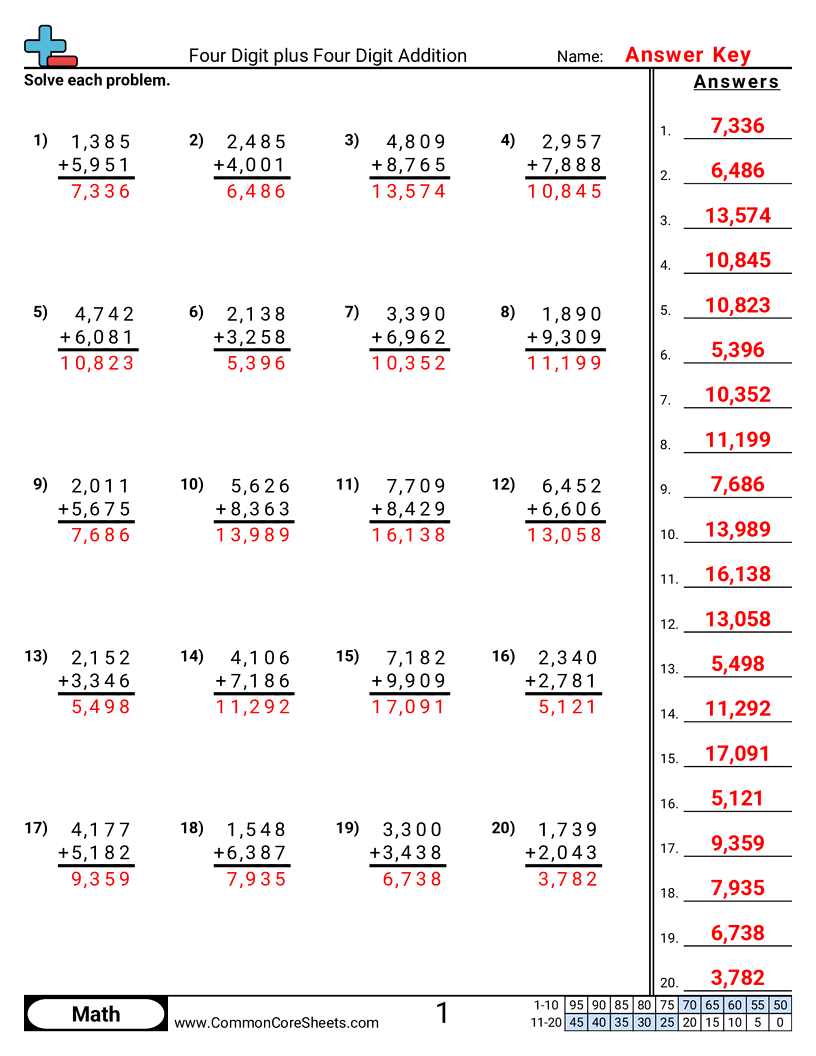
Add two four-digit numbers to find the total. Use carrying (regrouping) when a place value adds to 10 or more.
4nbt4
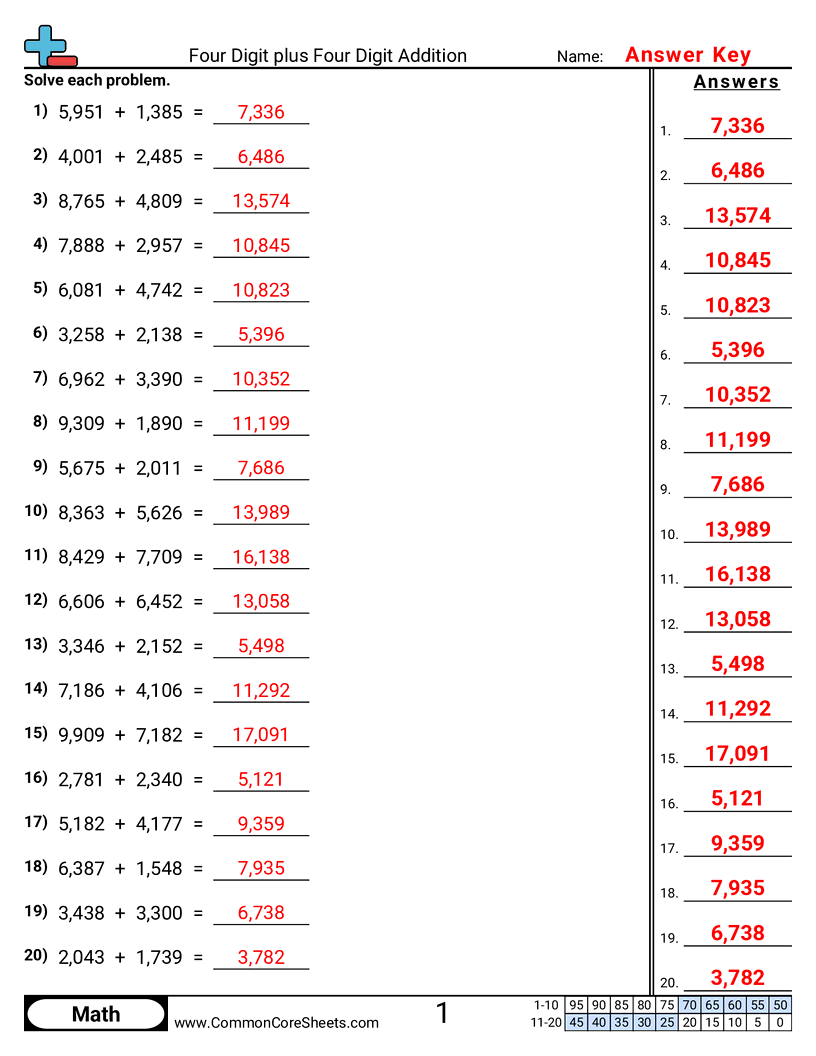
Add two 4-digit numbers written in a horizontal equation (e.g., 3,482 + 6,159). Regroup (carry) from ones to tens, tens to hundreds, and hundreds to thousands when adding 4-digit numbers. Use place value to add thousands, hundreds, tens, and ones accurately.
4nbt4
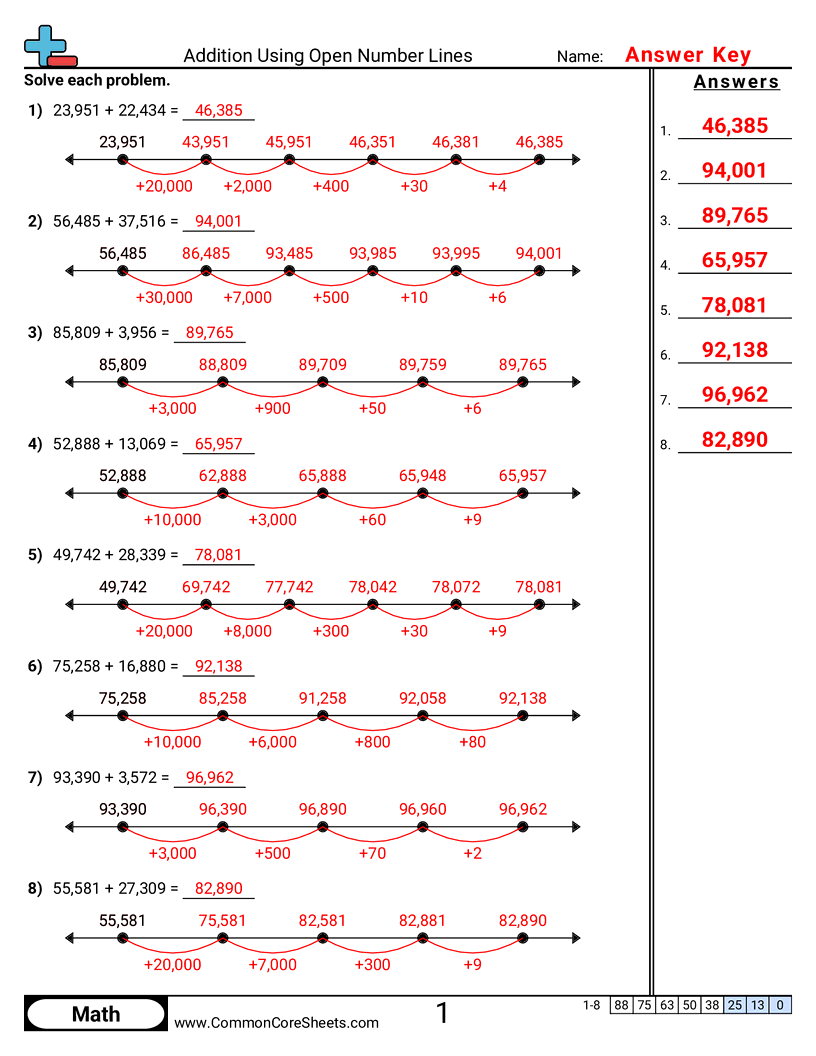
Practice adding two large numbers by breaking one number into place-value parts (thousands, hundreds, tens, ones) Use a number line to show each step of the addition as a separate jump Build up to the final sum by adding one place value at a time
4nbt4
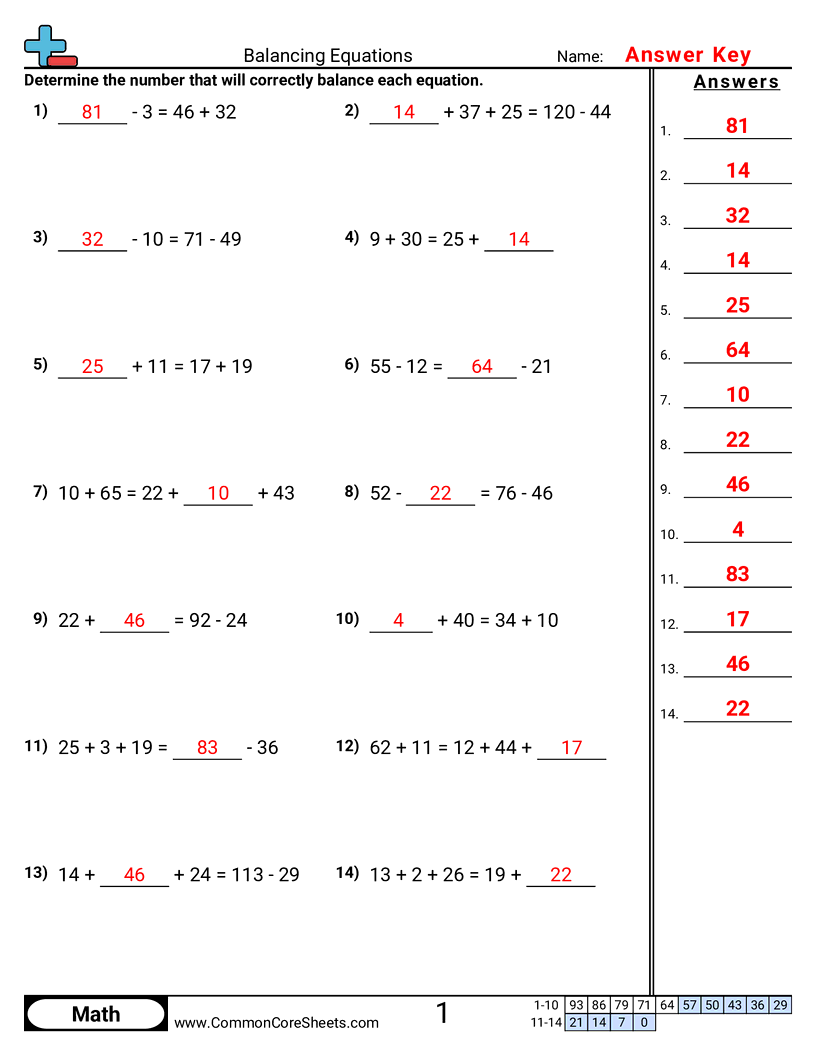
Solve for the missing number that makes an addition or subtraction equation true. Use the equals sign correctly by keeping both sides of an equation balanced. Add and subtract whole numbers to figure out an unknown value. Work through equations written in different mixed styles (like the blank on either side of the equals sign).
4nbt4
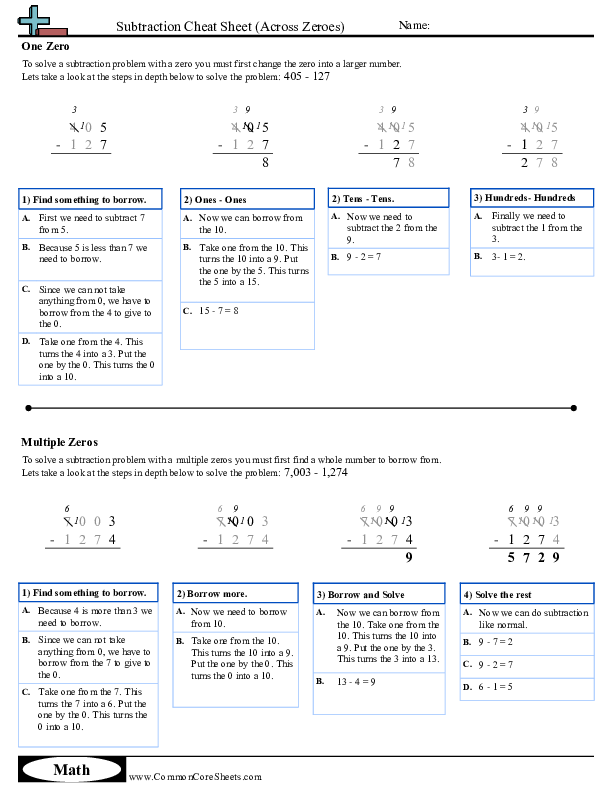
Learn how to subtract using the traditional column method when the top number has one or more zeros. Practice borrowing (regrouping) across zeros so each place has enough to subtract. Keep digits lined up by place value so ones, tens, hundreds, and thousands are subtracted correctly. Write each step neatly and clearly so it’s easy to follow how the borrowing changed the numbers.
4nbt4
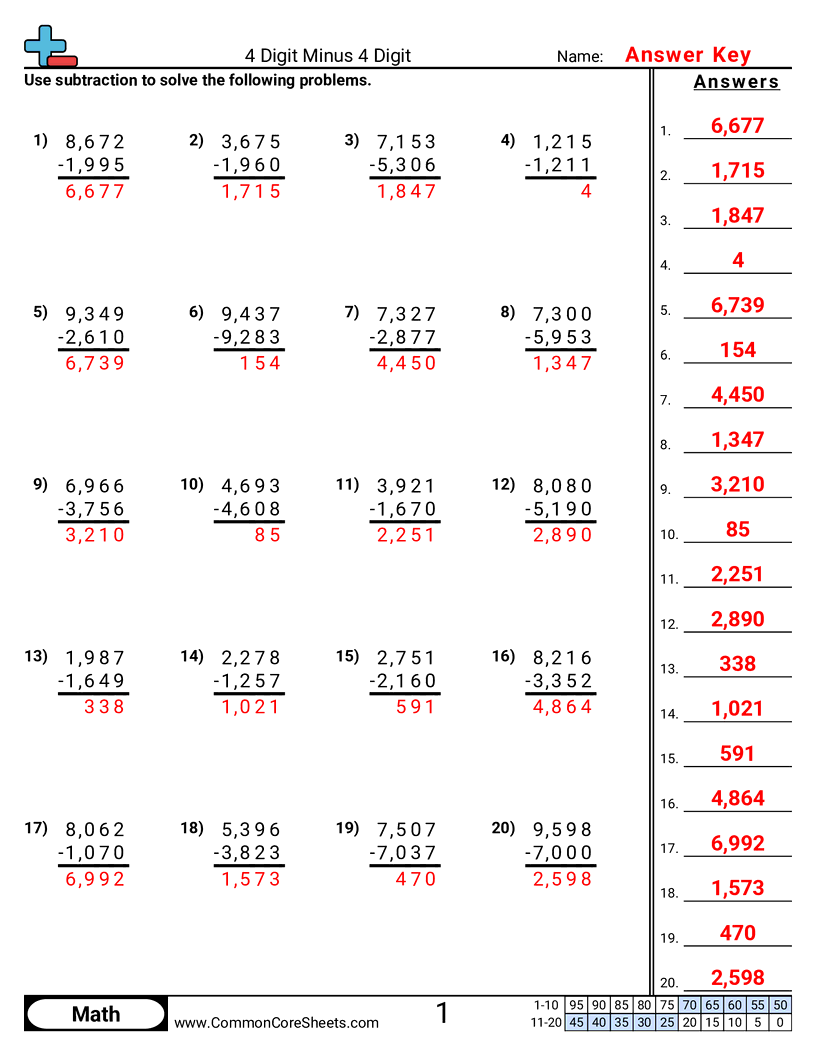
Subtract one 4-digit number from another accurately. Line up thousands, hundreds, tens, and ones so each digit is subtracted in the right place. Use borrowing (regrouping) when the top digit is smaller than the bottom digit in a place.
4nbt4
Subtract multi-digit numbers when you have to borrow across several zeros. Use regrouping to turn a zero in the top number into a number you can subtract from.
2nbt5 4nbt4
Subtract two numbers when each top digit is big enough so you don’t need to borrow. Line up ones and tens correctly before subtracting. Subtract in vertical form, working from the ones place to the tens place.
4nbt4
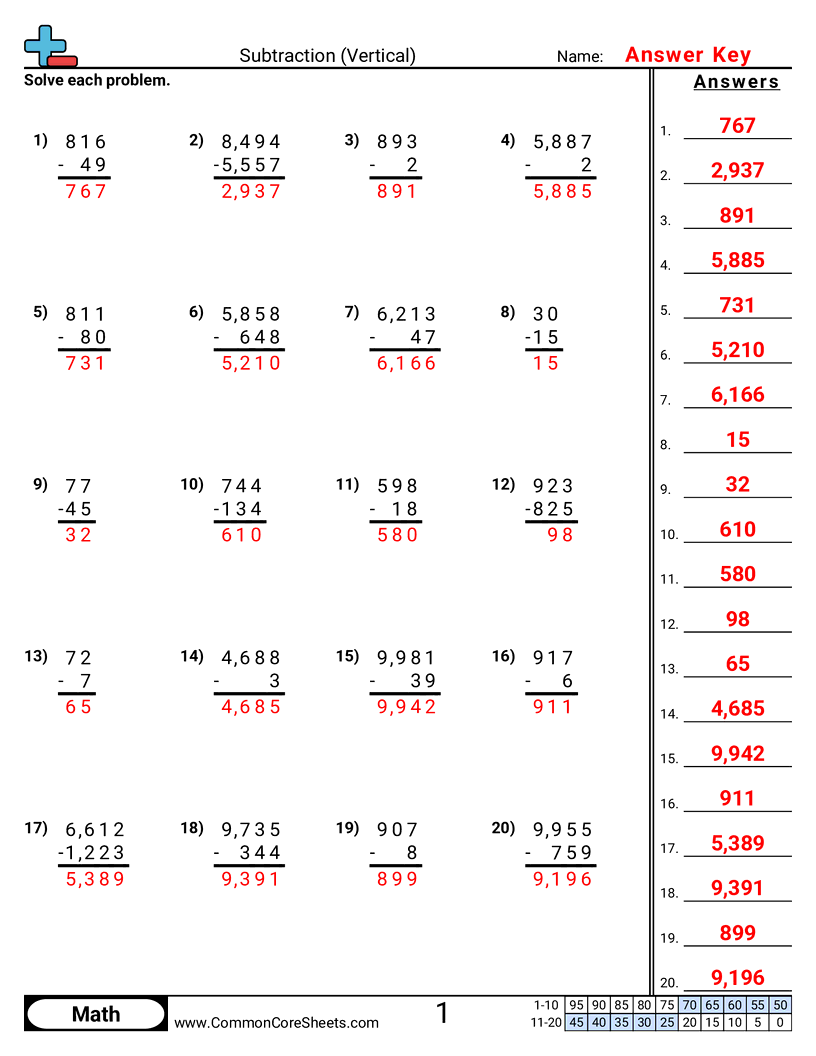
Subtract numbers written in columns by lining up ones, tens, and hundreds correctly. Use borrowing (regrouping) when the top digit is smaller than the bottom digit in a place value.
4nbt4
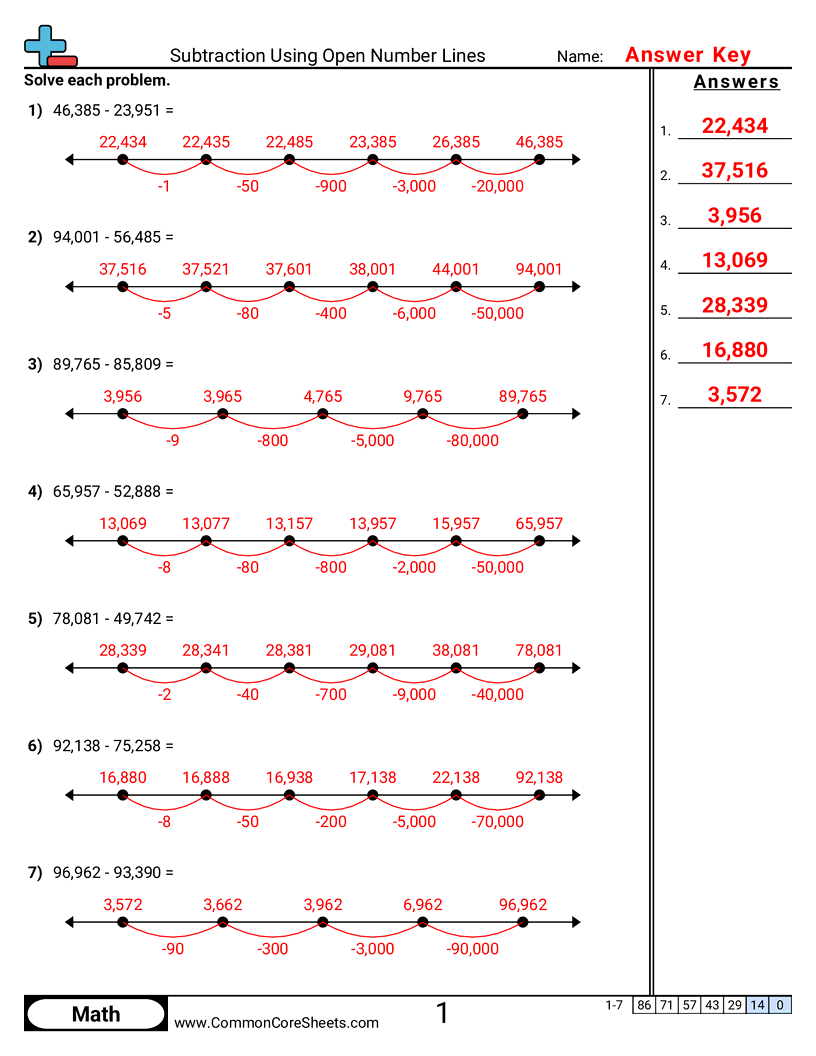
Use an open number line to subtract by making jumps back from the starting number. Break a subtraction problem into easier steps (like subtracting tens, then ones) and keep track of each jump. Explain your subtraction thinking by showing the jumps you made on the number line.
3nbt2 3oa8 4nbt4
Follow directions that require two steps in a row Carry the result of the first step into the second step Tell 'subtract 400 from it' apart from 'subtract it from 400' Add and subtract whole numbers up to 100,000
4nbt4
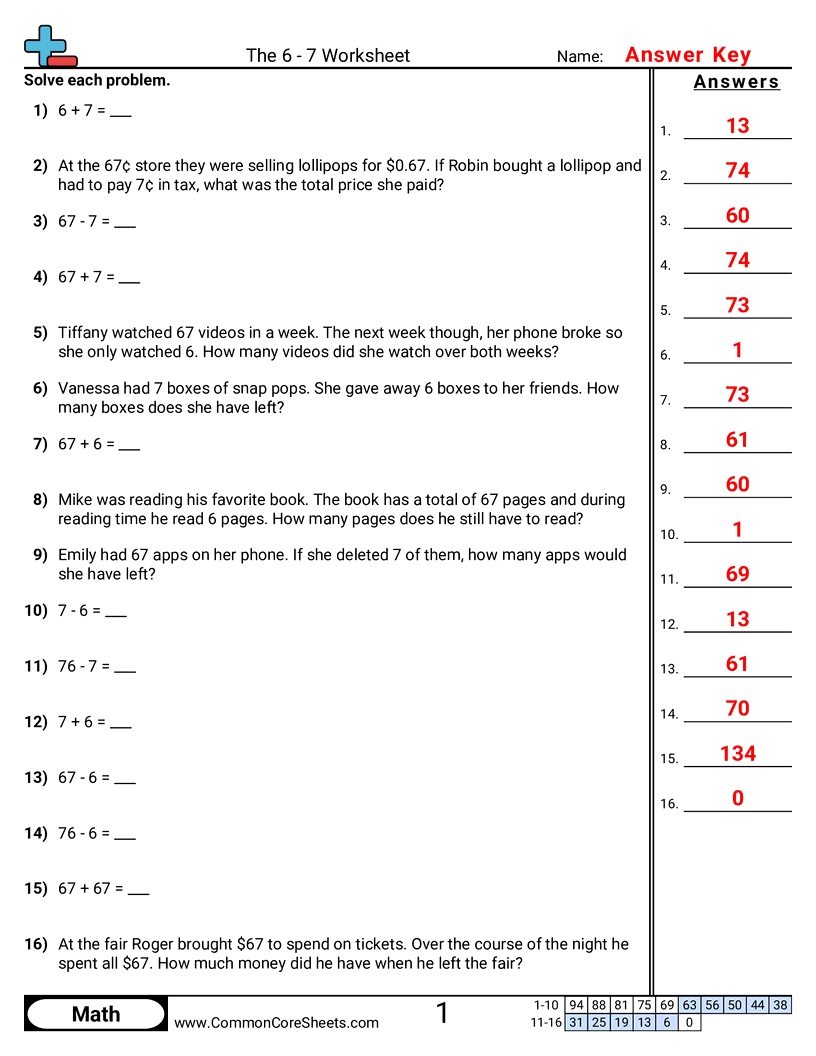
Practice adding, multiply, subtracting and dividing the digits 6 and 7.
Playwire Advertisement