8g3 Sort By Grade Worksheets
Geometry
3 Describe the effect of dilations, translations, rotations, and reflections on two-dimensional figures using coordinates.
8g3
8g3
Practice rotating points and shapes around the origin on a coordinate plane. Tell the difference between clockwise and counterclockwise rotations.
8g3
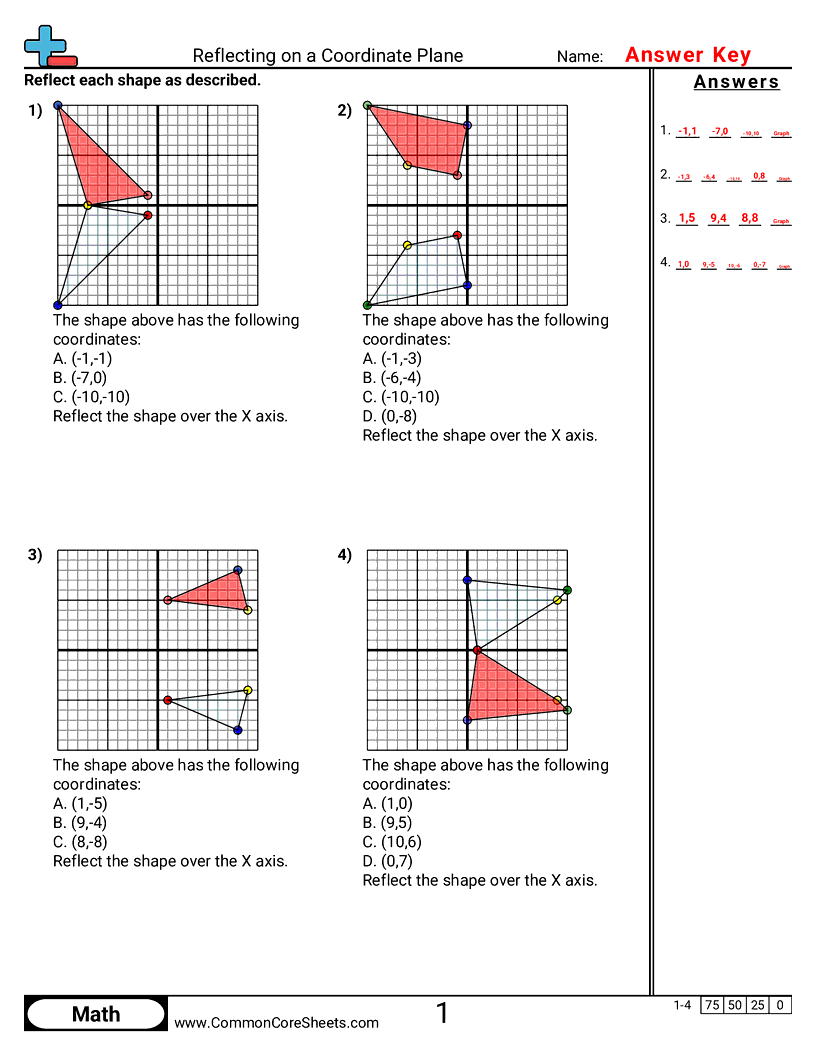
Reflect a shape across the x-axis or y-axis to draw its mirror image. Use the x- and y-coordinates of points to plot the reflected shape in the right place. Apply the reflection rules to change coordinates correctly, like flipping the sign of x or y. Check that the original and reflected shapes are the same size and the same distance from the axis.
8g3
Rotate a shape on a coordinate grid by 90°, 180°, or 270° in the direction given. Use the origin as the center of rotation and keep the shape’s size and orientation changes correct. Plot the new points after a rotation and connect them to redraw the rotated shape. Use rotation rules to predict how (x, y) coordinates change when turning a figure.
8g3
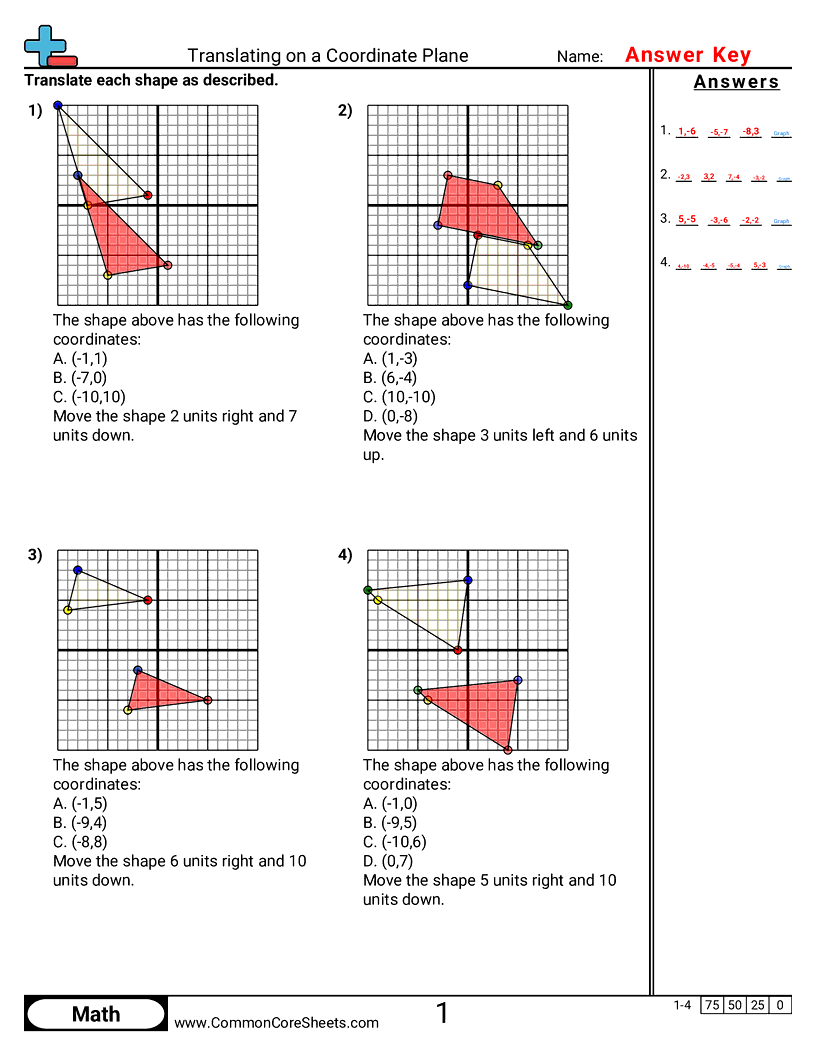
Practice sliding a shape left, right, up, or down on a coordinate grid without turning it. Use ordered pairs (x, y) to track how each vertex moves during a translation. Follow a translation rule or vector (like (x + 3, y - 2)) to move a figure the correct amount. Plot the translated points and connect them to draw the new image in the right place. Check that the translated shape stays the same size and orientation as the original.
8g3
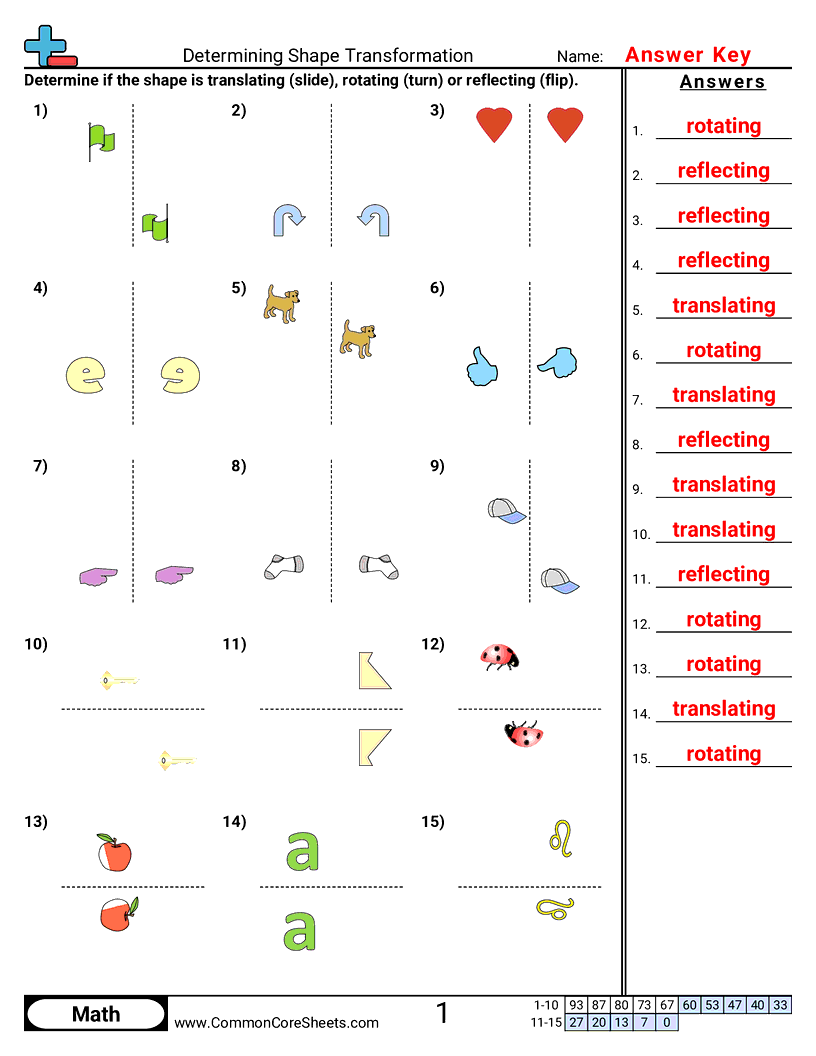
Tell whether a shape has been slid, turned, or flipped to a new position. Use clues like direction, angle, and mirror images to name the correct transformation. Notice what stays the same after a move, like the shape’s size and side lengths. Describe how a shape moved using simple words like left/right, up/down, turn, and flip.
Playwire Advertisement