Rounding Worksheets
Free rounding worksheets with answer key. No login or account needed. From rounding with number lines to rounding word problem, we've got you covered. A grading column and quick grade scale maker grading a breeze and a modified pages help with lower level learners or when just introducing a topic. Great for teachers or for homeschool.
Browse Sheets By Problem Type
×
Rounding Numerals With Help
Link
About these worksheets
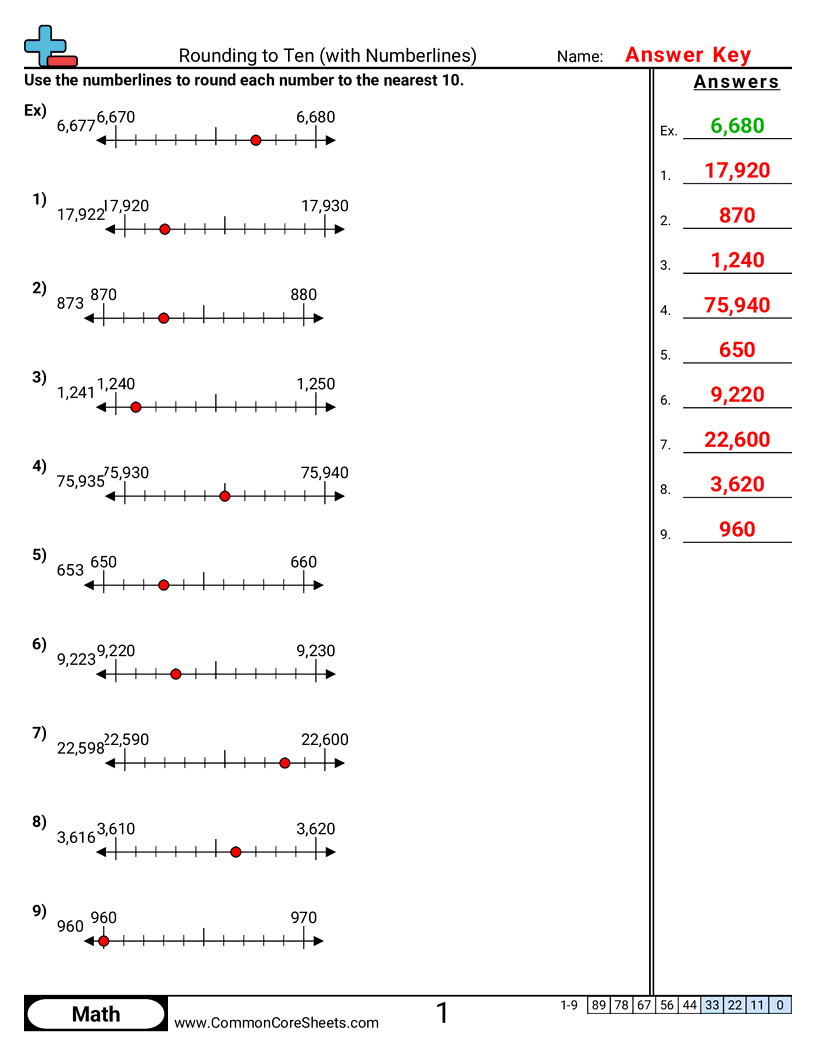
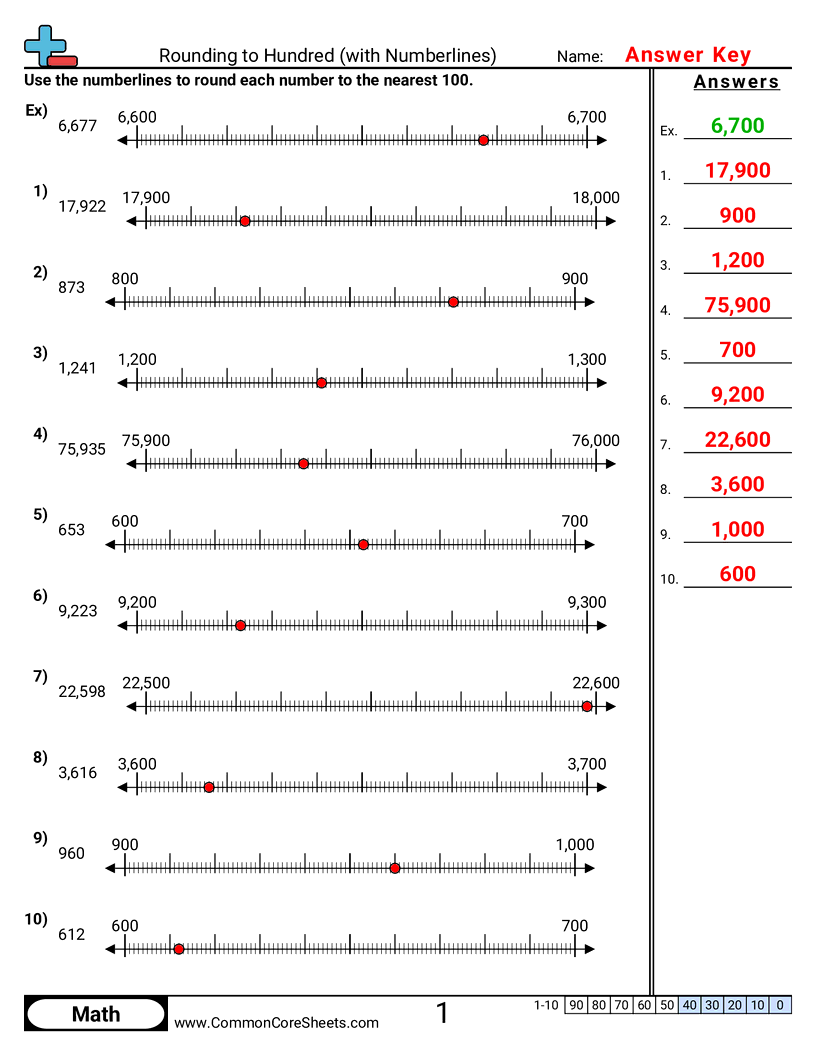
These worksheets use number lines as a visual support for learning to round. Students round numbers to the nearest ten and nearest hundred by seeing where a number falls between two benchmarks on a number line. This visual approach helps build understanding before students round without aids. Aligned with third grade standards.
3nbt1


- Round a whole number to the nearest ten.
- Use a number line to see which two tens a number falls between.
- Decide which ten is closer by comparing the distance on the number line.
- Handle halfway cases (numbers ending in 5) by rounding up to the next ten.
3nbt1
- Round a number to the nearest hundred by deciding which hundred it is closest to.
- Use a number line to see where a number falls between two hundreds.
- Find the midpoint between two hundreds and use it to choose which way to round.
About these worksheets
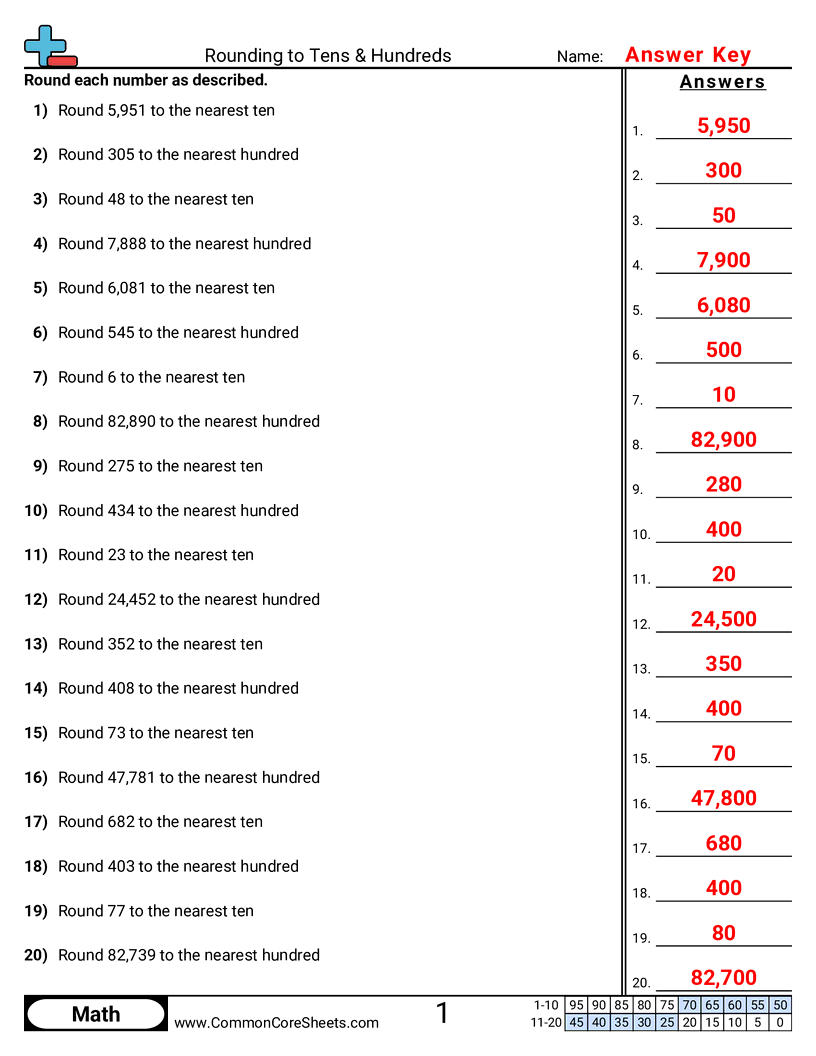
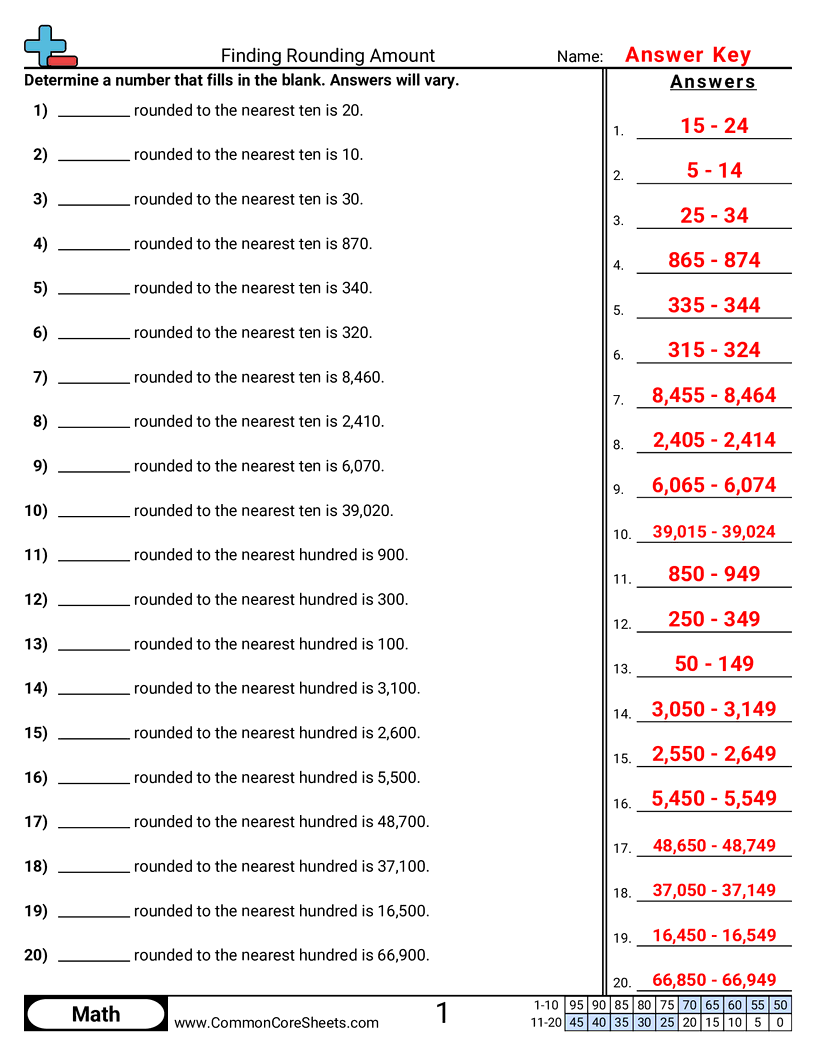
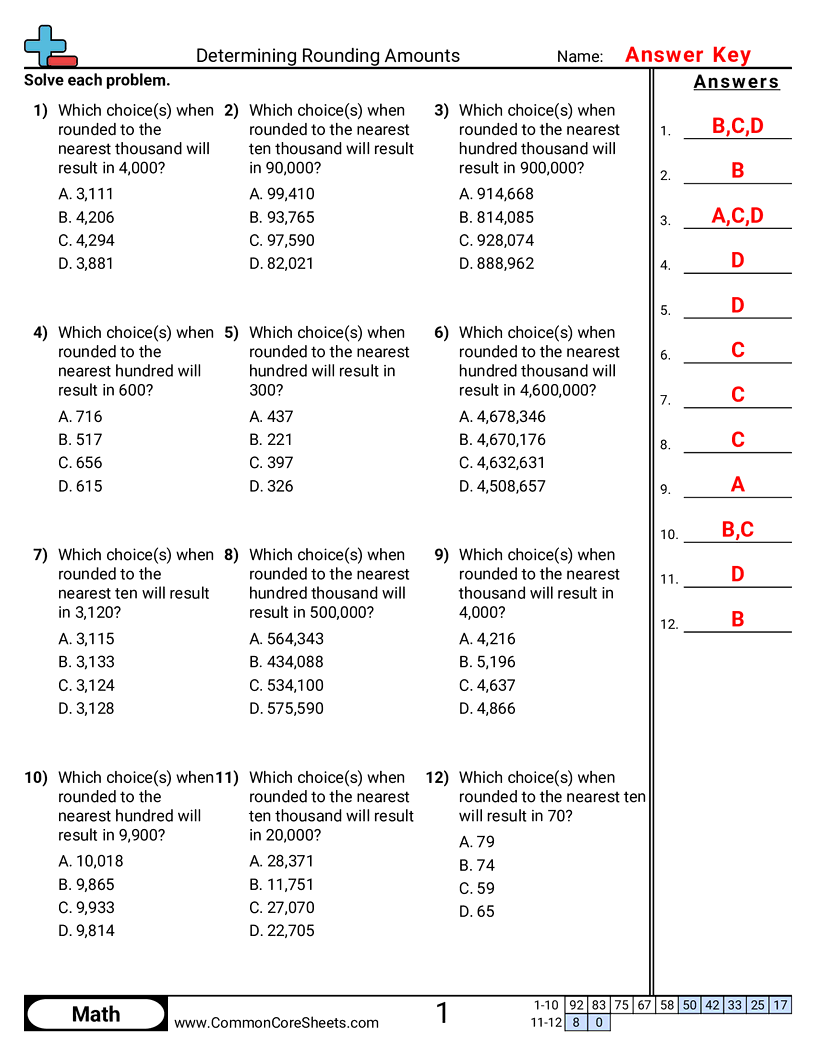
Students practice rounding whole numbers across a range of place values. Worksheets cover rounding to the nearest ten and hundred, finding numbers that round to a given value, rounding within one million, determining which numbers round to a target, and rounding with number lines. Aligned with third and fourth grade standards.
3nbt1
- Round whole numbers to the nearest ten or hundred.
- Use the ones and tens digits to decide whether to round up or down.
3nbt1
- Figure out which numbers could round to a given number at a certain place value.
- Use place value to decide the cutoff point where a number rounds up or rounds down.
- Find the smallest and largest numbers that would round to the same result.
4nbt3
- Round large numbers to the nearest place value (like hundreds, thousands, or millions).
- Use the digit to the right of the rounding place to decide whether to round up or down.
- Write the rounded number correctly by changing the digits after the rounding place to zeros.
- Decide which numbers round to a given target number.
- Use the digit to the right of a place to tell whether a number rounds up or down.
- Use a number line to see which two benchmark numbers a value falls between.
- Find the midpoint on a number line to decide which benchmark a number is closer to.
- Explain rounding choices by comparing distances on the number line.
About these worksheets
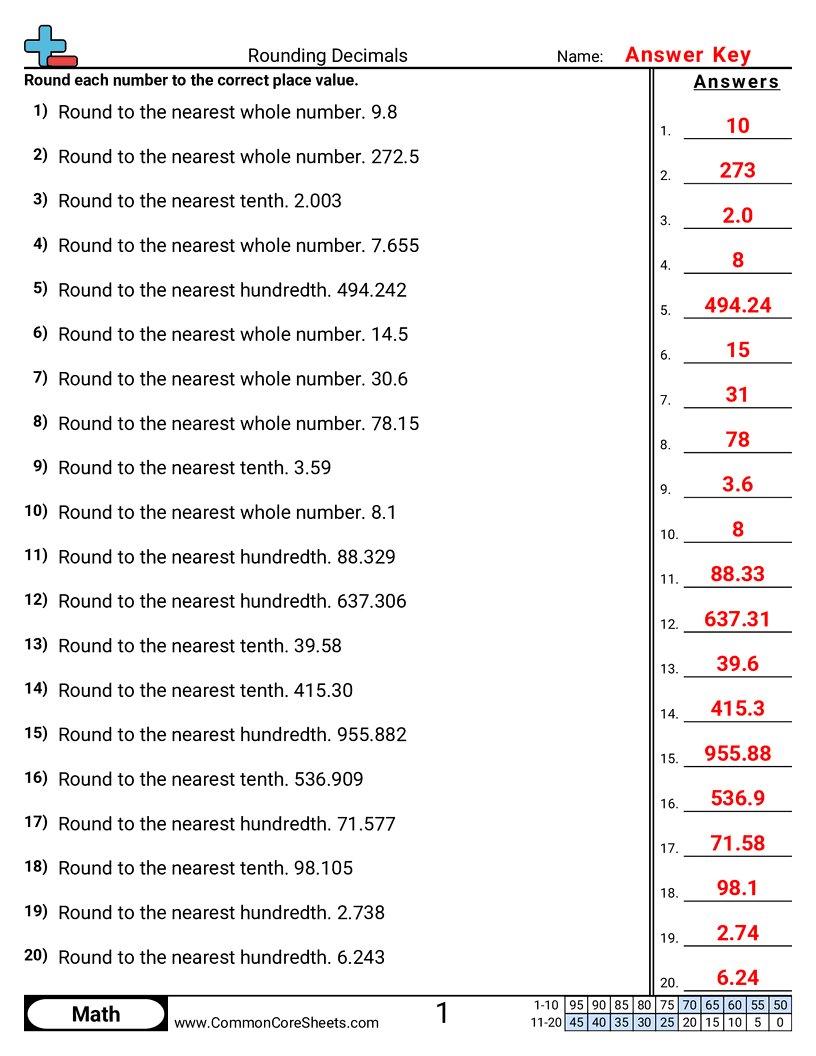
These worksheets provide practice rounding decimal numbers to the tenths place, hundredths place, or nearest whole number. Students apply place value reasoning to determine which direction to round, building estimation skills with decimals. Aligned with fifth grade standards.
5nbt4
- Round decimal numbers to a chosen place value (tenths, hundredths, or the nearest whole number).
- Use the digit to the right of the rounding place to decide whether to round up or keep the digit the same.
- Identify tenths and hundredths in a decimal by reading the place-value positions correctly.
- Write the rounded number clearly and keep the decimal point in the correct spot.
About these worksheets
Students practice estimating answers before computing. Worksheets cover estimating products by rounding factors and estimating sums by rounding to the nearest ten or hundred. These activities build mental math and number sense skills that help students check whether their exact answers are reasonable. Aligned with third grade standards.
3nbt1
- Practice rounding numbers to make multiplication problems easier to do in your head.
- Estimate a product by multiplying the rounded numbers.
- Use compatible numbers (easy-to-multiply numbers) to get a quick estimate.
- Choose the best estimate when there are several possible answers.
- Practice rounding numbers to the nearest ten or hundred.
- Decide which place value to round to based on what the problem asks.
- Add the rounded numbers to find an estimated total.
- Read word problems and pick out the numbers that need to be added.