Determining Probability Worksheets
These determining probability worksheets help students explore fundamental concepts of chance and likelihood through engaging scenarios. Students work with candy selections, spinner wheels, dice, and object arrays to calculate probabilities and identify most and least probable outcomes across 36 varied problems.


Determining Probability
About these worksheets
These worksheets introduce basic probability concepts through hands-on scenarios. Students determine the likelihood of selecting specific items from a set, identify most and least probable outcomes, and calculate probability using spinners, dice, and object arrays. Activities build an intuitive understanding of chance and likelihood.


One Atta Time

Flash Cards

Distance Learning

Create New Sheet

Select a Worksheet >
Version 1
Version 2
Version 3
Version 4
Version 5
Version 6
Version 7
Version 8
Version 9
Version 10
Grab 'em All
Basic Probability

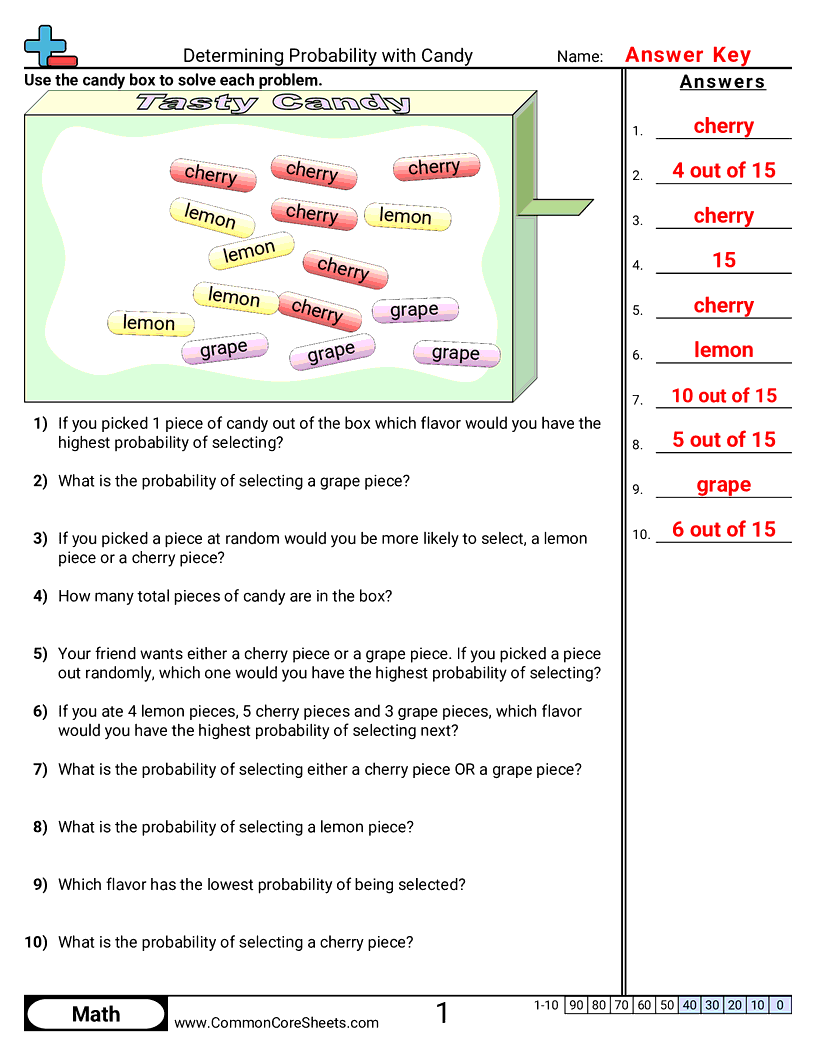
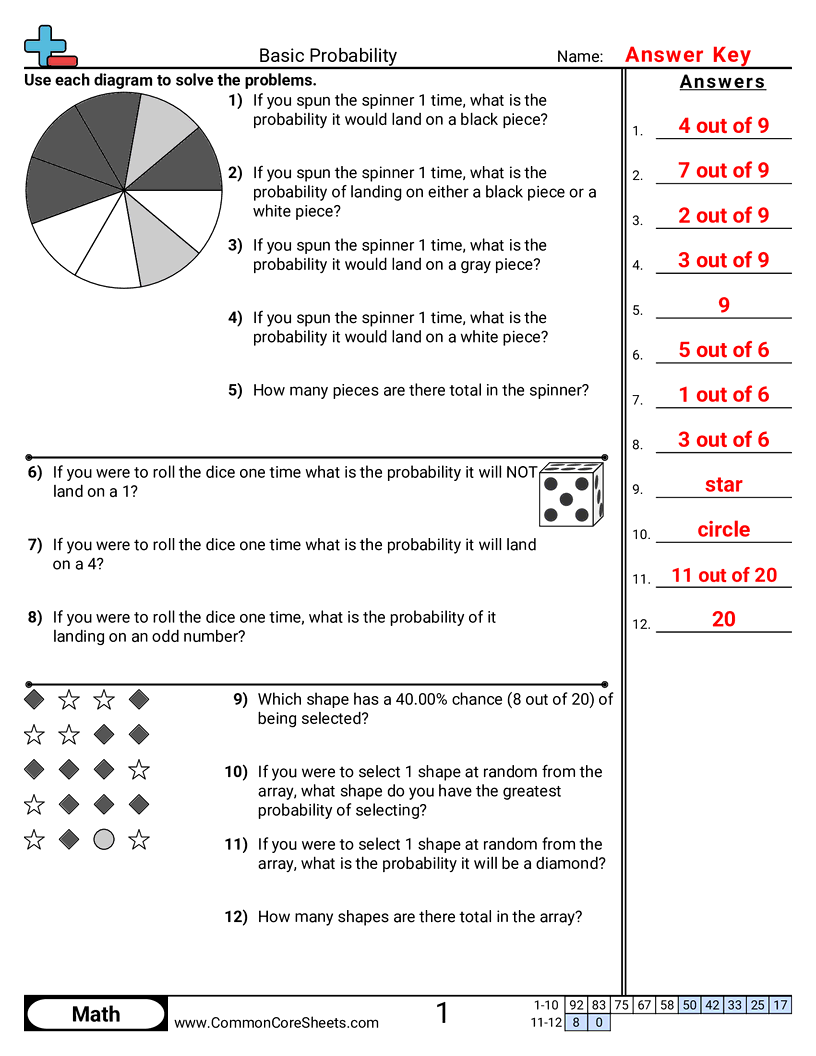
- Find the probability of an event by counting favorable outcomes out of all possible outcomes.
- Read a spinner or die and list the possible outcomes in the sample space.
- Compare which event is more likely, less likely, or equally likely based on the numbers of outcomes.
- Use pictures or arrays of objects to calculate the chance of picking a certain item at random.


One Atta Time
Flash Cards
Distance Learning
Create New Sheet
Select a Worksheet >
Version 1
Version 2
Version 3
Version 4
Version 5
Version 6
Version 7
Version 8
Version 9
Version 10
Grab 'em All
Determining Spinner Probability
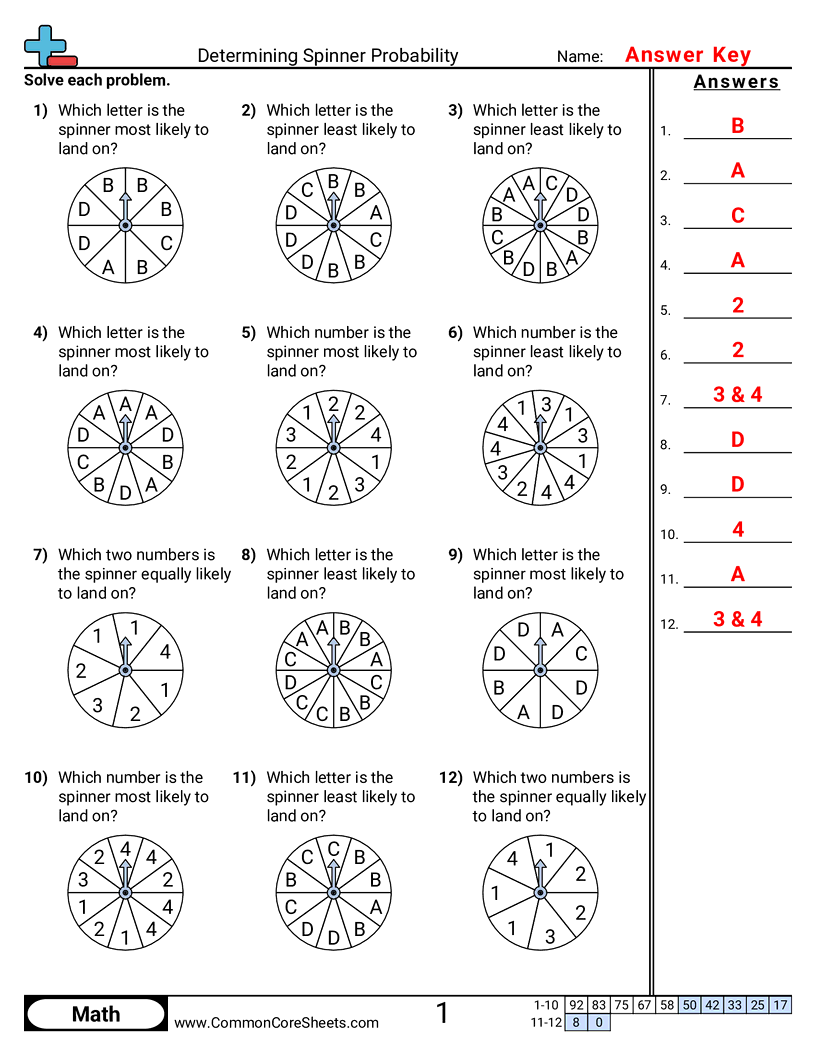
- Look at a spinner and decide which value is most likely to be landed on.
- Look at a spinner and decide which value is least likely to be landed on.
- Tell when two or more outcomes are equally likely by comparing the sizes or counts of sections.
- Match probability words like most likely, least likely, and equally likely to what the spinner shows.

One Atta Time
Flash Cards
Distance Learning
Create New Sheet
Select a Worksheet >
Version 1
Version 2
Version 3
Version 4
Version 5
Version 6
Version 7
Version 8
Version 9
Version 10
Grab 'em All
Describing Probability from Impossible to Certain (Word Problems)
- Describe the likelihood of an event using the words impossible, unlikely, equally likely, likely, and certain.
- Compare the number of favorable outcomes to the total outcomes to judge likelihood.
- Recognize events with probability 0 (impossible) and 1 (certain).
One Atta Time
Flash Cards
Distance Learning
Create New Sheet
Select a Worksheet >
Version 1
Version 2
Version 3
Version 4
Version 5
Version 6
Version 7
Version 8
Version 9
Version 10
Grab 'em All
Describing Likelihood from a Table
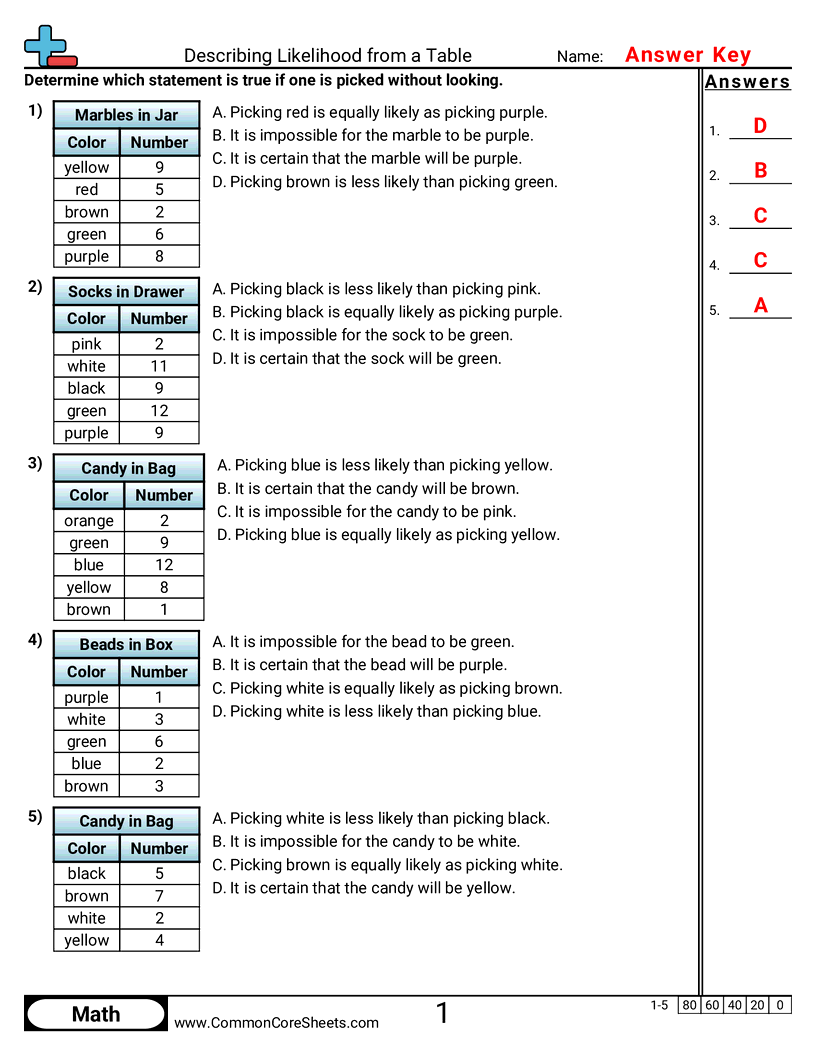
- Decide whether an outcome is certain, impossible, equally likely, more likely or less likely
- Recognize that a color not listed in the table is impossible to pick
- Compare two counts to judge which outcome is more likely
- Judge whether a likelihood statement is true rather than simply naming a chance
One Atta Time
Flash Cards
Distance Learning
Create New Sheet
Select a Worksheet >
Version 1
Version 2
Version 3
Version 4
Version 5
Version 6
Version 7
Version 8
Version 9
Version 10
Grab 'em All
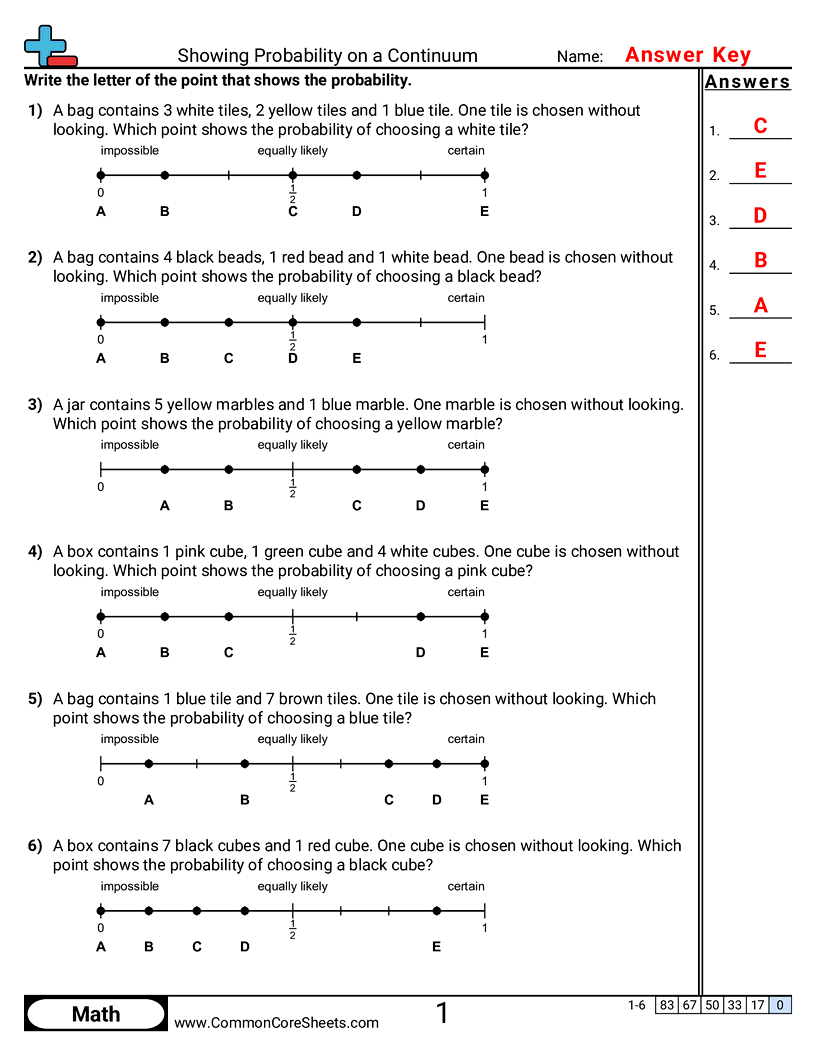
Showing Probability on a Continuum
- Write a probability as a fraction of the whole.
- Place a probability on a line from impossible to certain.
- Recognize that impossible is zero and certain is one.

One Atta Time
Flash Cards
Distance Learning
Create New Sheet
Select a Worksheet >
Version 1
Version 2
Version 3
Version 4
Version 5
Version 6
Version 7
Version 8
Version 9
Version 10
Grab 'em All
Describing the Probability of a Spin
- Read a probability from a picture of a spinner.
- Decide which sections satisfy a condition before counting them.
- Describe a probability using the five likelihood words.

One Atta Time
Flash Cards
Distance Learning
Create New Sheet
Select a Worksheet >
Version 1
Version 2
Version 3
Version 4
Version 5
Version 6
Version 7
Version 8
Version 9
Version 10
Grab 'em All
Matching an Experiment to a Probability Word
- Test several events against one likelihood word.
- Work out a probability from a coin, a number cube, a spinner or a bag.
- Tell certain from likely and impossible from unlikely.
One Atta Time
Flash Cards
Distance Learning
Create New Sheet
Select a Worksheet >
Version 1
Version 2
Version 3
Version 4
Version 5
Version 6
Version 7
Version 8
Version 9
Version 10
Grab 'em All
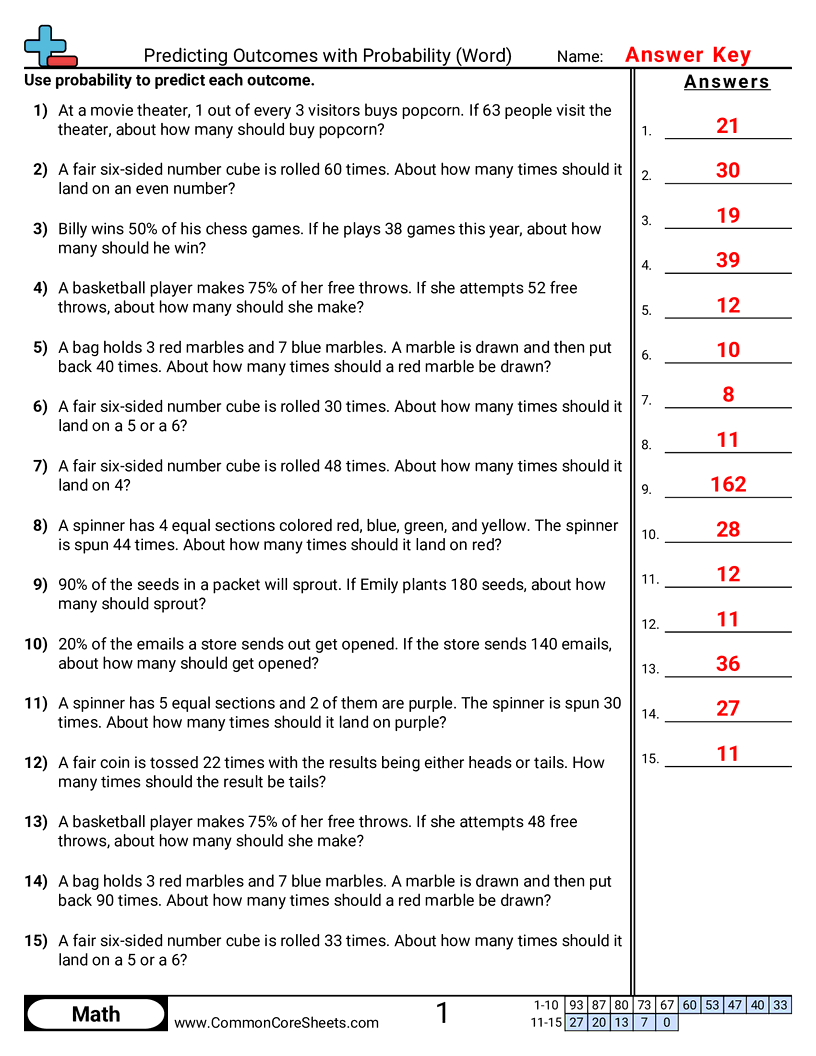
Predicting Outcomes from Theoretical Probability (Word Problems)
- Predict how many times an outcome should occur from its theoretical probability.
- Multiply the number of trials by the probability of the event.
- Work with probabilities given as fractions, ratios, and percents.
One Atta Time
Flash Cards
Distance Learning
Create New Sheet
Select a Worksheet >
Version 1
Version 2
Version 3
Version 4
Version 5
Version 6
Version 7
Version 8
Version 9
Version 10
Grab 'em All
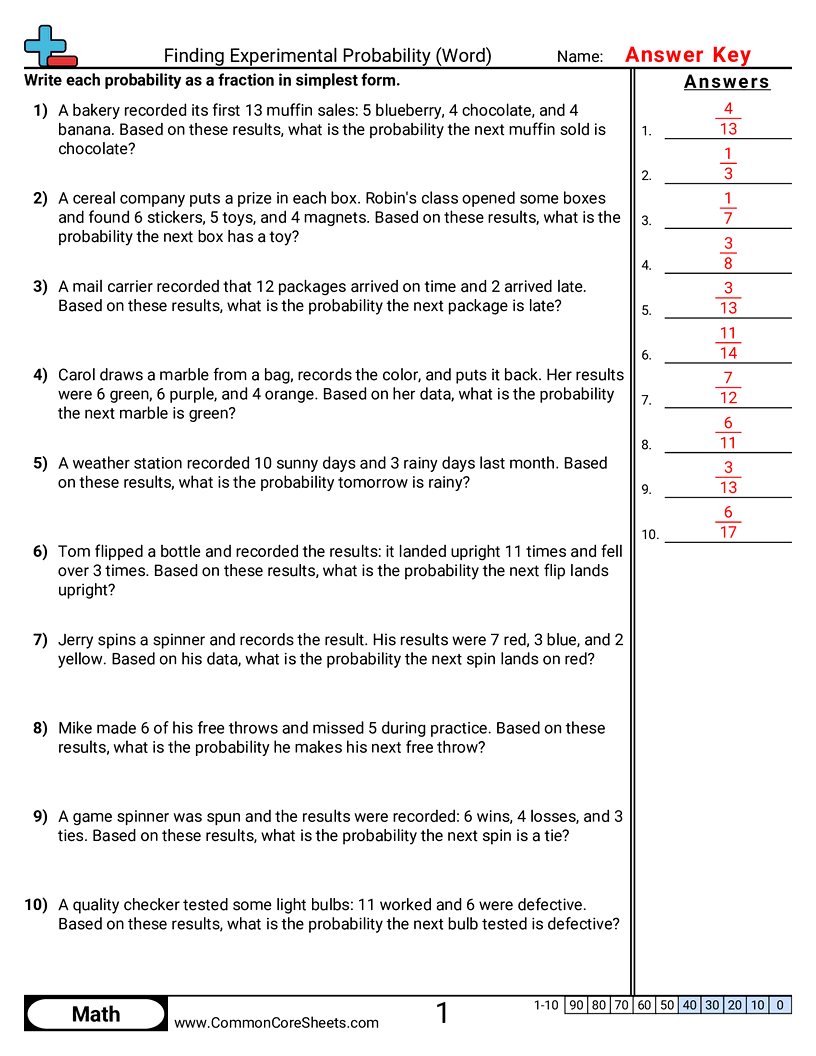
Finding Experimental Probability from Recorded Results (Word Problems)
- Calculate experimental probability from recorded results.
- Write probabilities as fractions in simplest form.
- Use experimental results to predict future outcomes when actual probabilities are unknown.

One Atta Time
Flash Cards
Distance Learning
Create New Sheet
Select a Worksheet >
Version 1
Version 2
Version 3
Version 4
Version 5
Version 6
Version 7
Version 8
Version 9
Version 10
Grab 'em All
Expected and Actual Results
- Work out an expected number of results from a known probability.
- Count results recorded as tally marks.
- Put the expected number and the actual number side by side.

One Atta Time
Flash Cards
Distance Learning
Create New Sheet
Select a Worksheet >
Version 1
Version 2
Version 3
Version 4
Version 5
Version 6
Version 7
Version 8
Version 9
Version 10
Grab 'em All
Comparing Results with the Known Probability
- Work out how many times an outcome should happen.
- Read how many times it actually happened.
- Say whether the results came out above or below the known probability.
One Atta Time
Flash Cards
Distance Learning
Create New Sheet
Select a Worksheet >
Version 1
Version 2
Version 3
Version 4
Version 5
Version 6
Version 7
Version 8
Version 9
Version 10
Grab 'em All
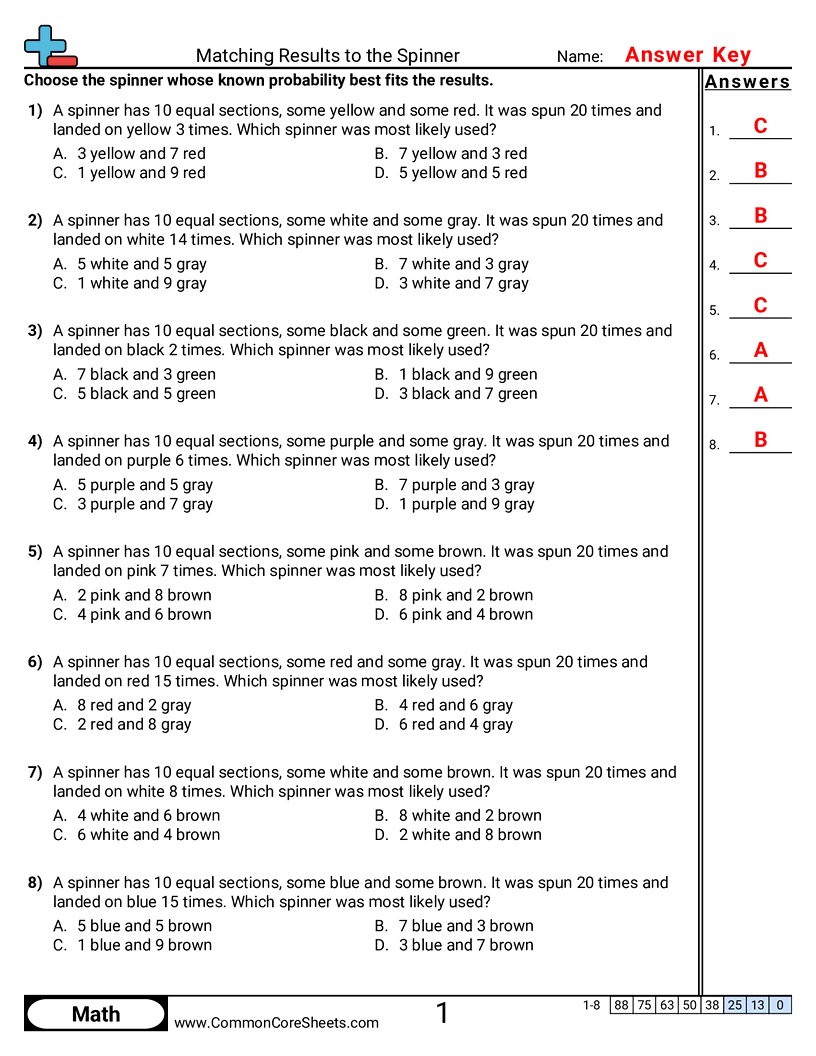
Matching Results to the Spinner
- Work out the expected results for several known probabilities.
- Compare a set of results with each one.
- Choose the probability the results fit best.