Describing Likelihood from a Table Worksheet Download
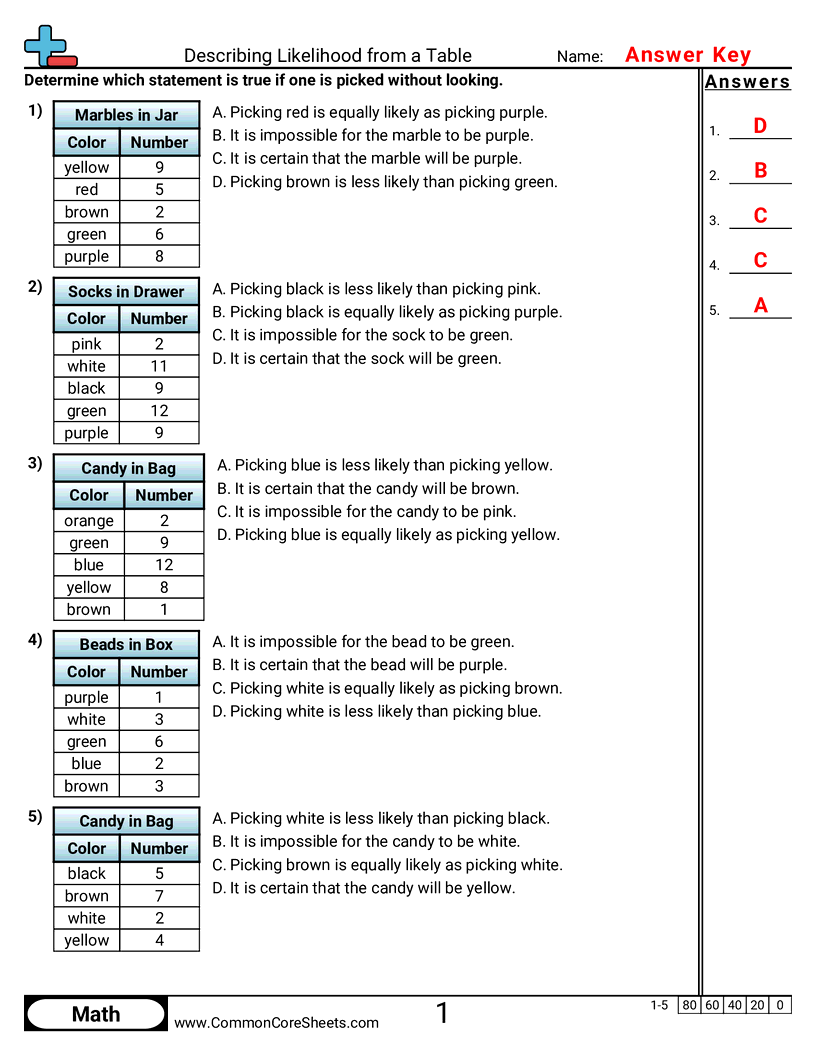
This worksheet gives students a table of colors and how many of each are in a bag, jar, drawer, box or tin, then four statements about picking one without looking. Exactly one statement is true. Every wrong statement is wrong for the reason its own word names: an impossible claim about a color that is actually in the table, an equally likely claim about two counts that differ, a certain claim when several colors are present, or a comparison stated backwards. Where other probability sheets ask students to work out a single chance, this one asks them to judge four claims about the same set of data, so comparing the colors is the work.


Sheet Information >
About this worksheet
Students read a table of colors and counts, then decide which of four statements about picking one at random is true.
Student objectives
- Decide whether an outcome is certain, impossible, equally likely, more likely or less likely
- Recognize that a color not listed in the table is impossible to pick
- Compare two counts to judge which outcome is more likely
- Judge whether a likelihood statement is true rather than simply naming a chance
Everyday practice
- Decide if it's likely to rain by looking at the past week's weather chart
- Work out which color candy you're most likely to grab from a bag by counting them
- Tell whether a spinner is more likely to land on one color than another
- Predict which prize is easiest to win at a game based on how many are left