Short Sentence Patterns & Function Machine Worksheets
These Short Sentence Patterns & Function Machine Worksheets help students practice identifying mathematical rules and patterns through concise, easy-to-read problems. The short sentence format makes complex pattern recognition accessible for learners who benefit from simplified language while building essential algebraic thinking skills.
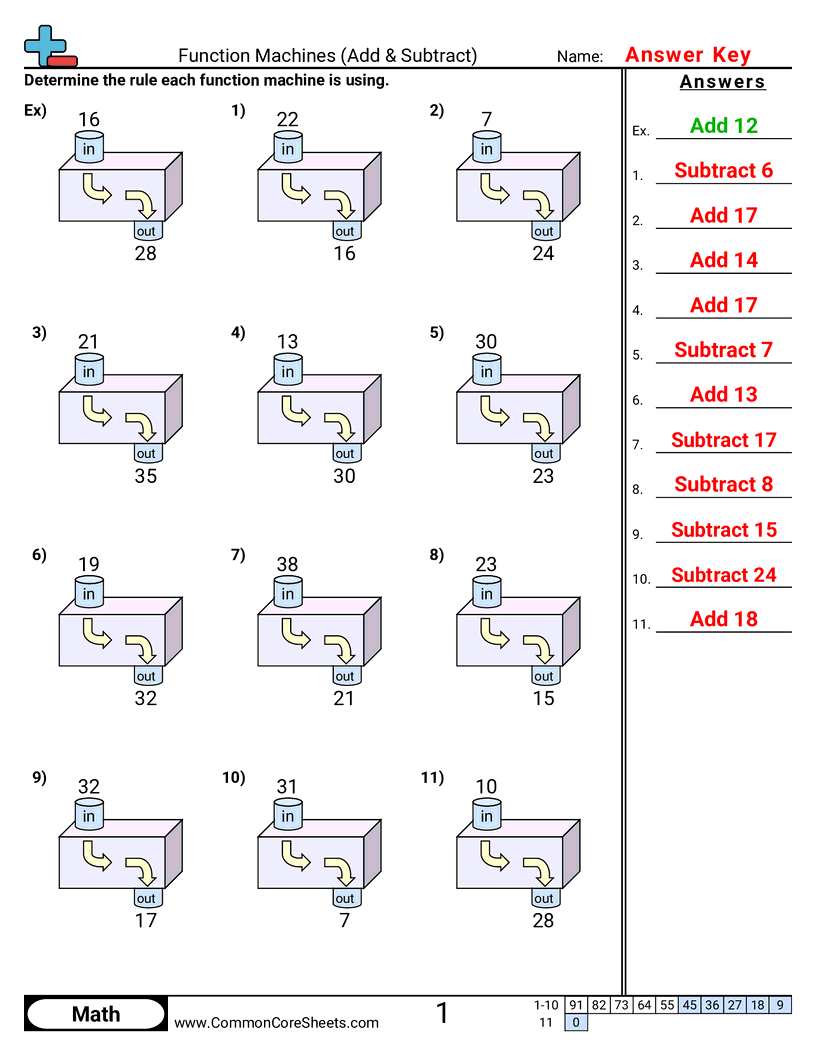
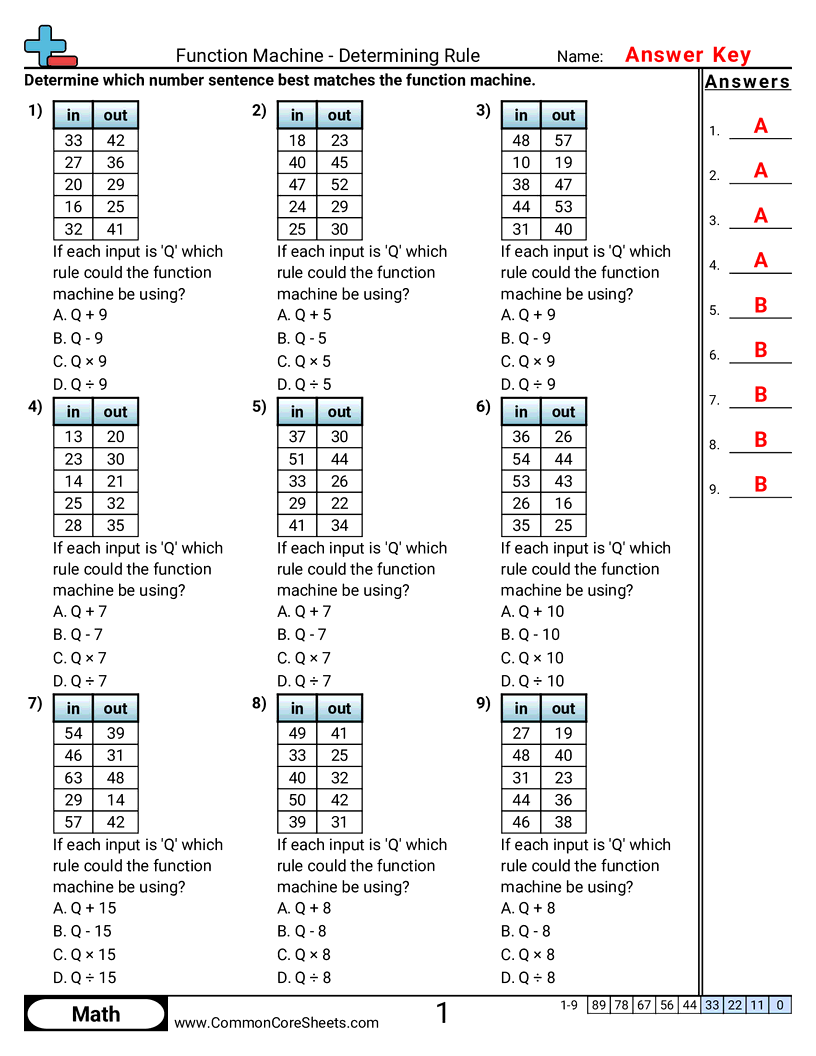
Function machine worksheets develop input-output reasoning skills. Students figure out the rule a function machine uses — whether addition, subtraction, multiplication, division, or a two-step operation — by analyzing input-output pairs, then apply the rule to find missing values. Resources span third through sixth grade.
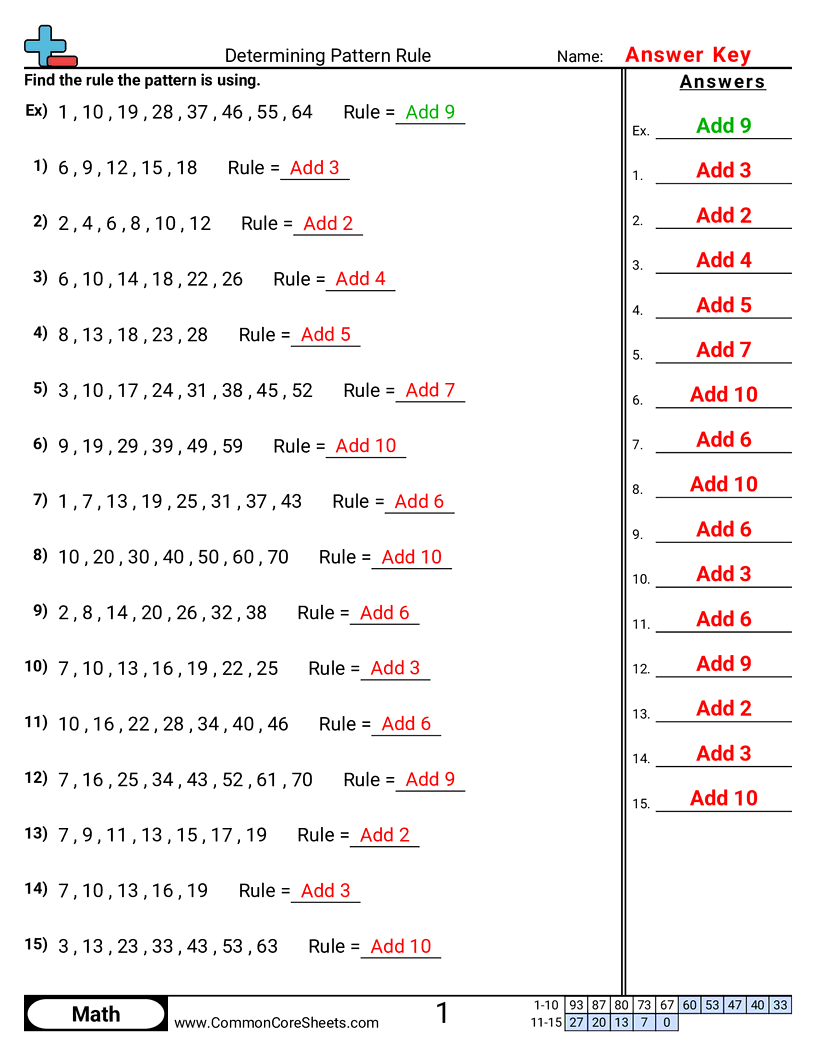
These worksheets help students identify and describe pattern rules. Activities include spotting attributes in number patterns, creating patterns from given rules, writing equations from function machine data, and determining whether patterns use addition, subtraction, multiplication, or division. Worksheets also include matching patterns and using tables to continue rules. Spanning fourth and fifth grade standards.
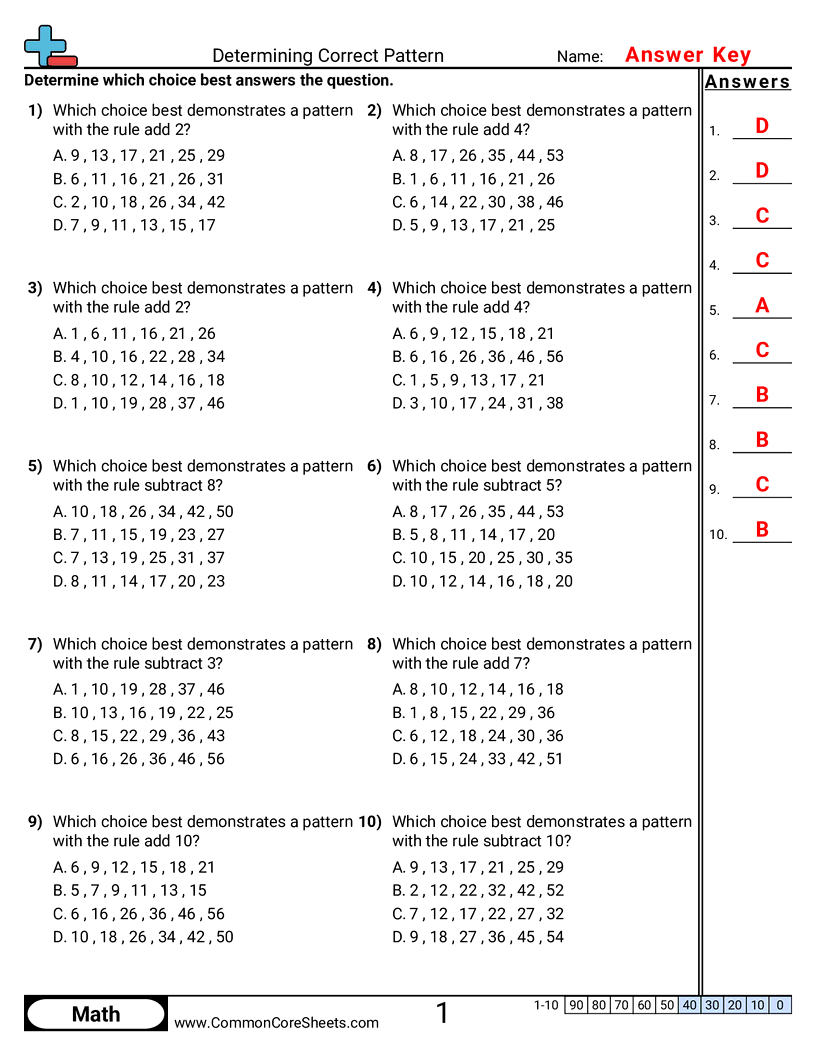
Students practice continuing number patterns by identifying the rule and predicting what comes next. Worksheets include patterns that increase or decrease by a constant amount, finding missing numbers in sequences, choosing the correct pattern from multiple options, and using a 100 chart to spot patterns. Aligned with fourth grade.
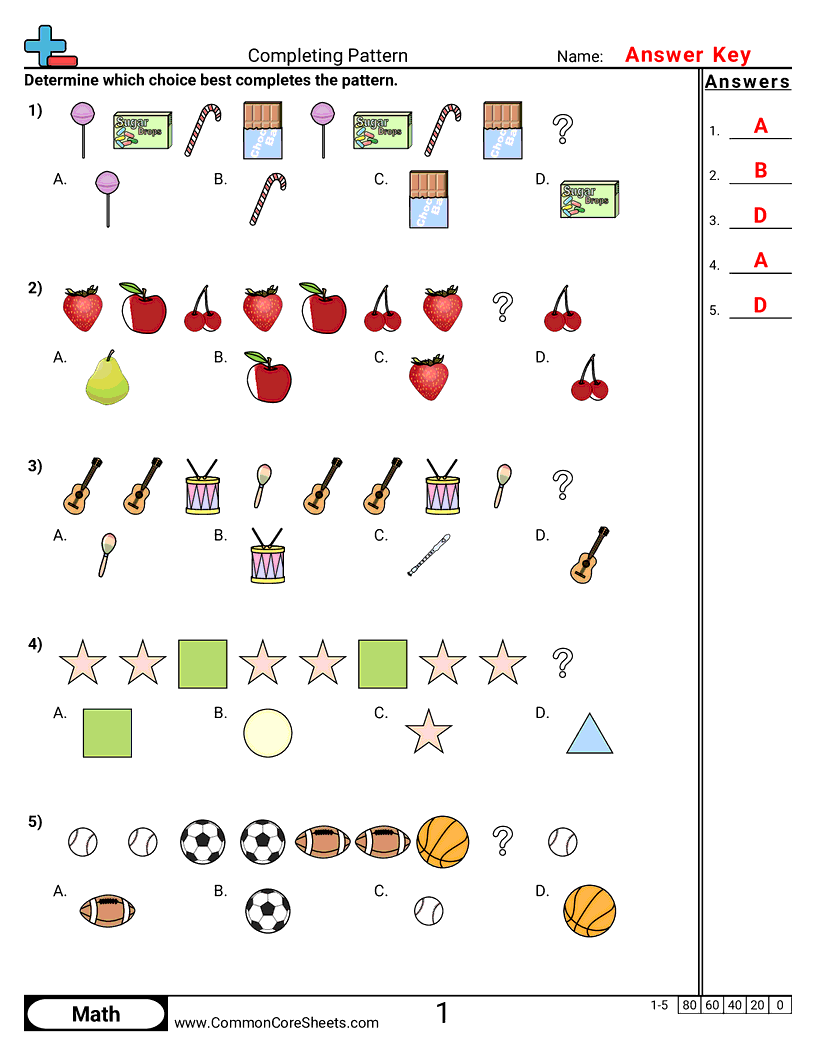
These worksheets ask students to identify the missing element in a visual repeating pattern. Students analyze shapes, colors, or pictures that follow a predictable sequence and determine which item completes the pattern. This builds logical reasoning and observation skills.