4th Grade Decimal Worksheets
Free decimal worksheets with answer key. No login or account needed. From from adding and subtracting decimals to converting decimals to fractions, we've got you covered. A grading column and quick grade scale maker grading a breeze and a modified pages help with lower level learners or when just introducing a topic. Great for teachers or for homeschool.
Browse Sheets By Problem Type
×
About these worksheets
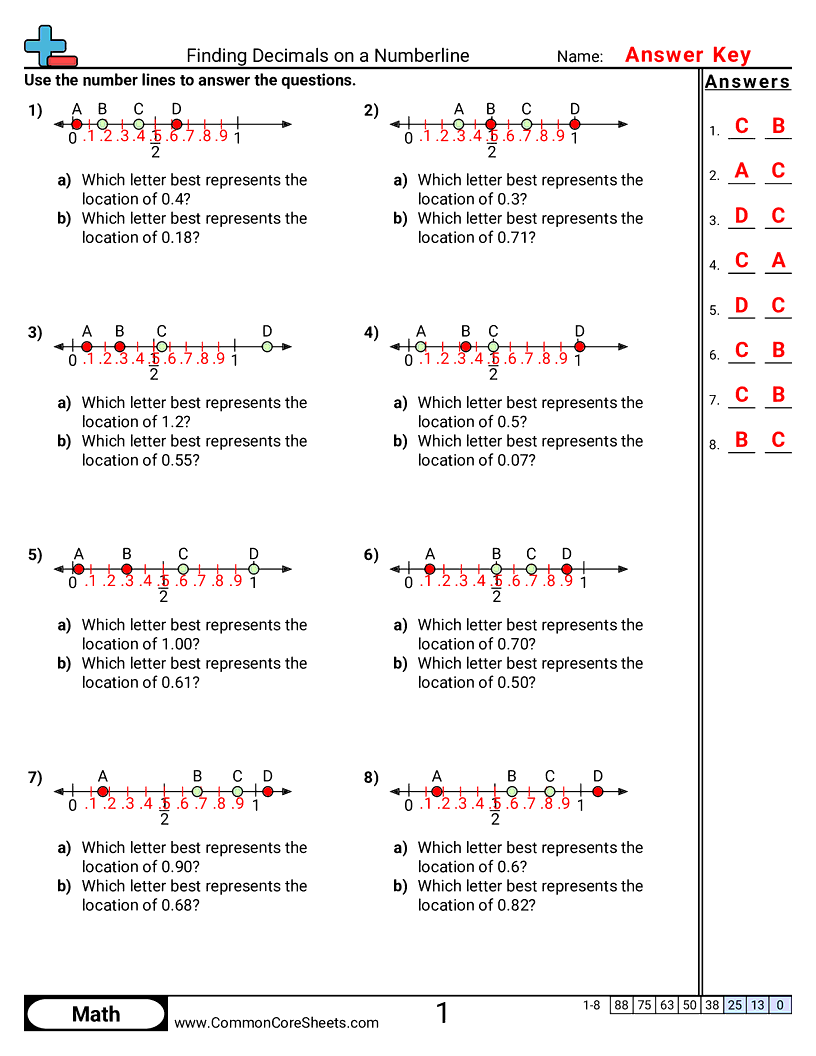
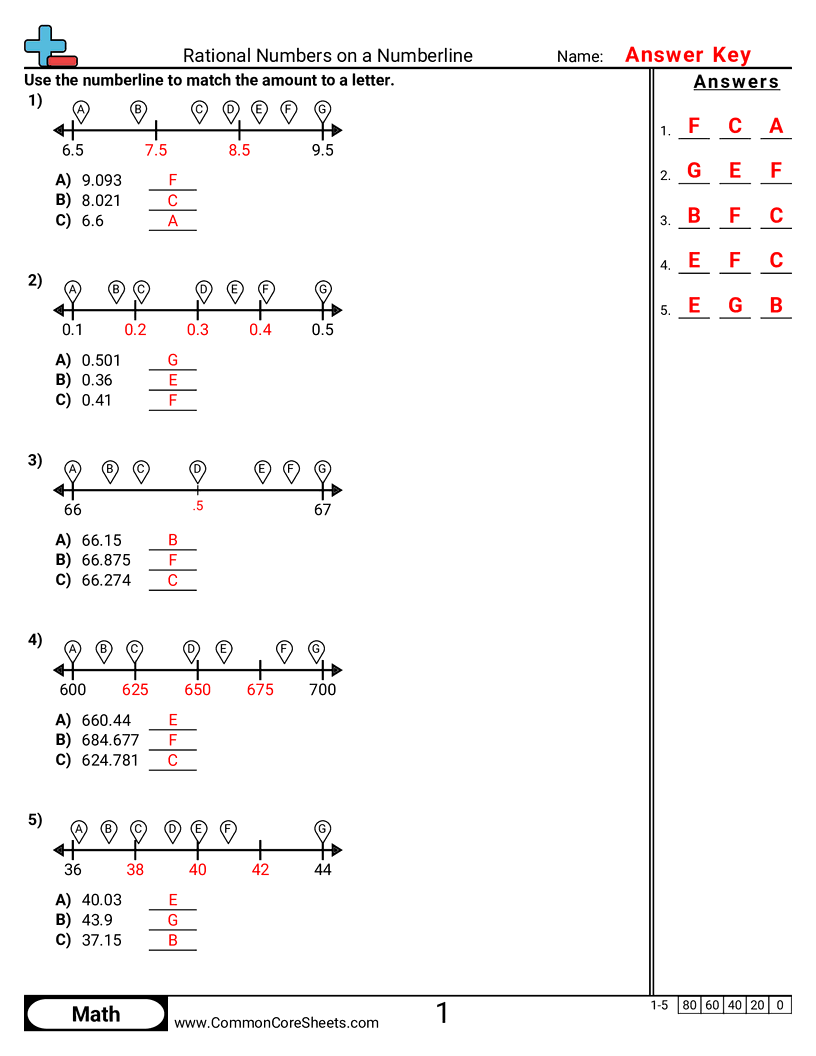
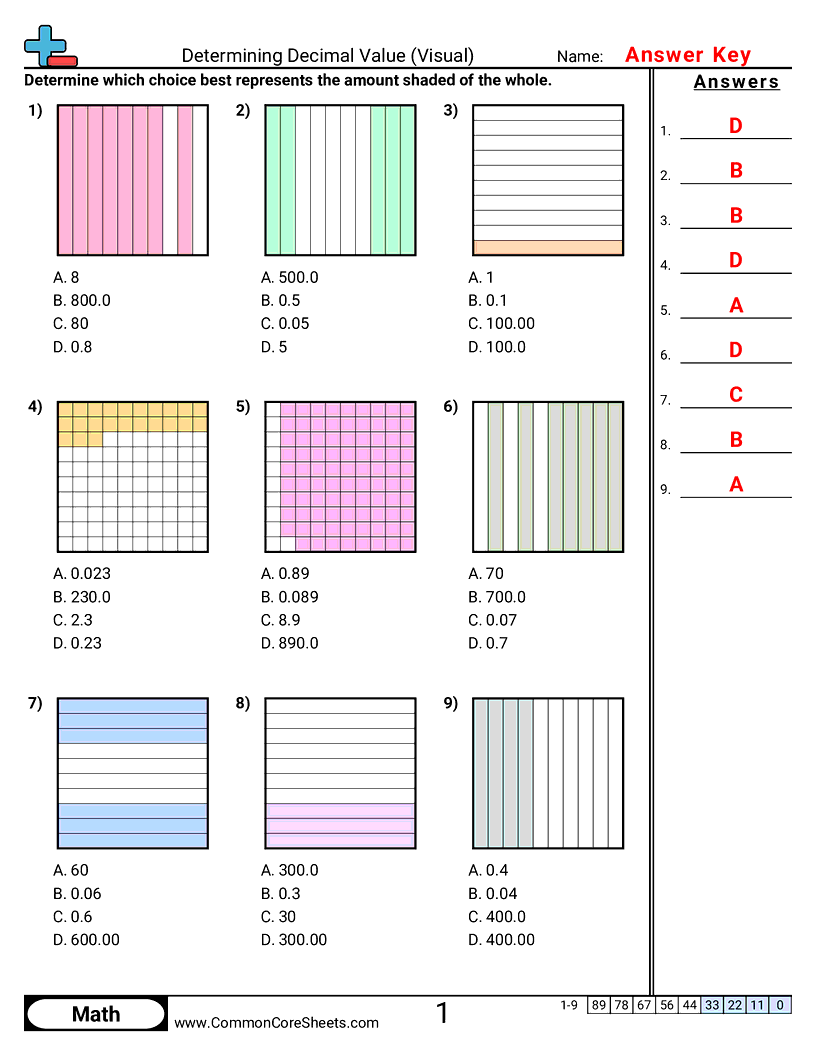
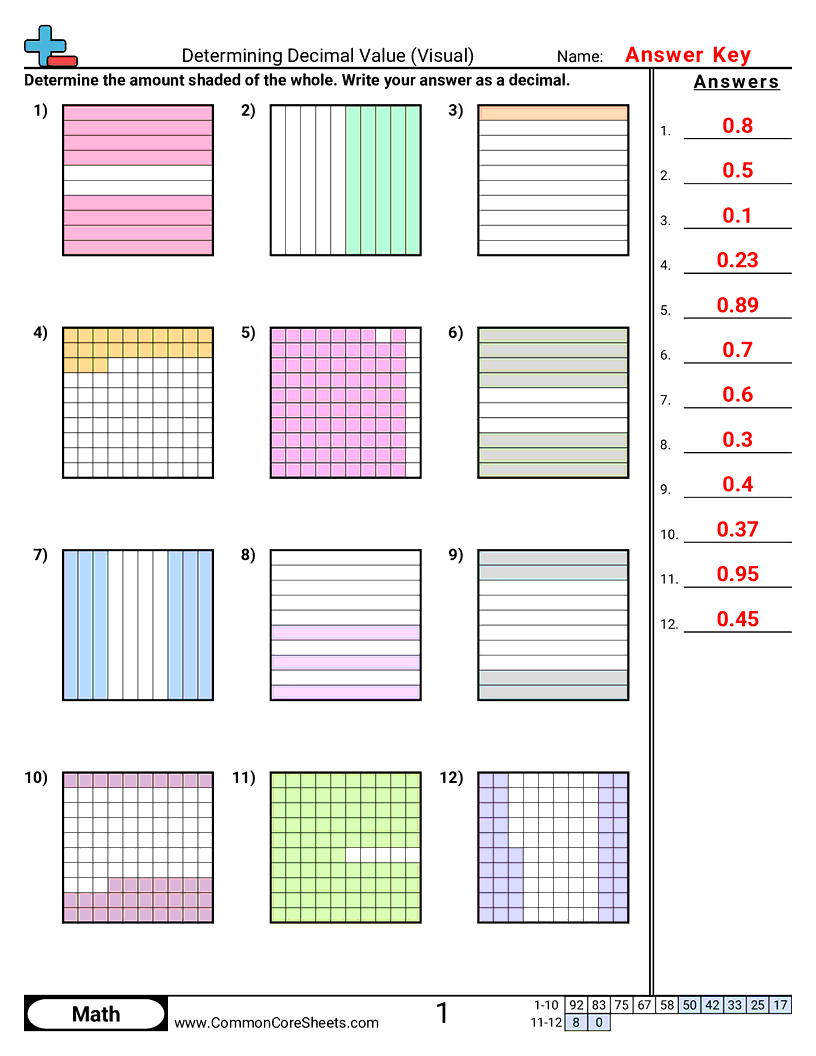
These worksheets develop students' understanding of where decimals fall on a number line. Activities include locating decimals between whole numbers, determining whether a decimal is less than, equal to, or greater than one-half, and using number lines to express decimal expansions. Suitable for fourth through eighth grade.
4nf6

- Use the whole numbers on a number line to figure out which interval a decimal belongs in.
- Count equal tick marks on a number line to place a decimal at the correct point.
4nf6

- Decide whether a decimal number is less than, equal to, or greater than one-half (0.5).
- Use place value to compare decimals by looking at tenths and hundredths.
- Recognize different ways to write one-half, like 0.5 and 0.50, and compare other decimals to it.
About these worksheets
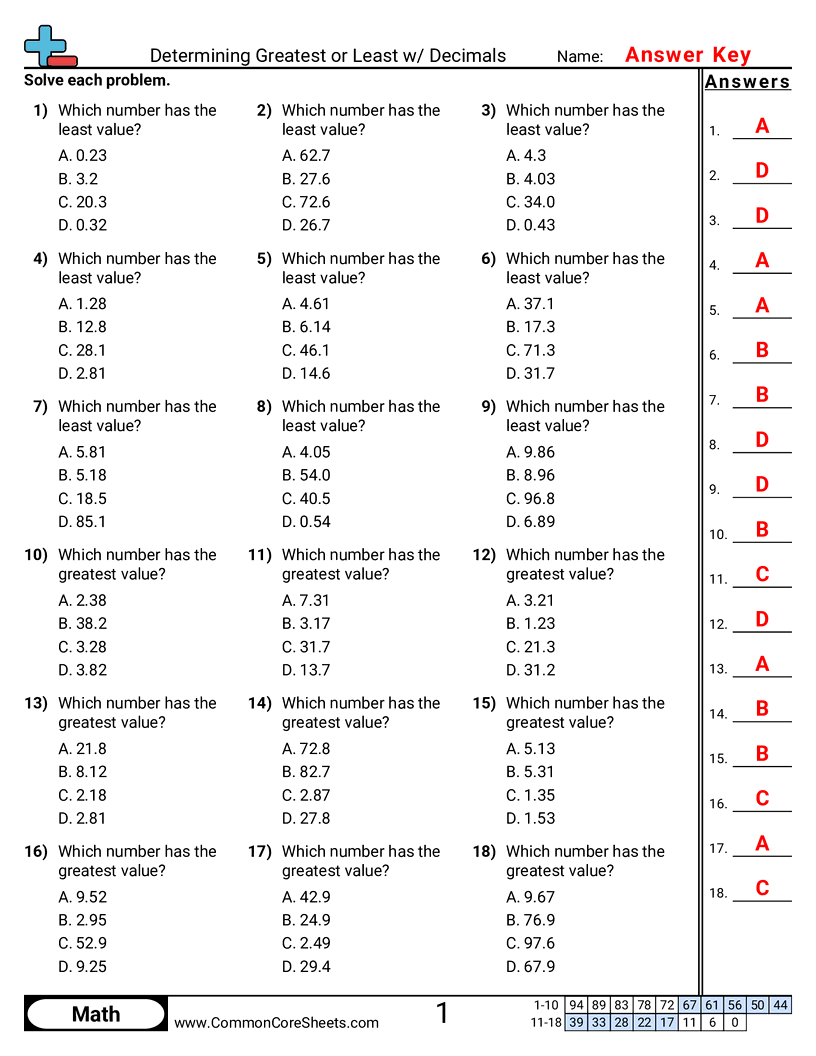
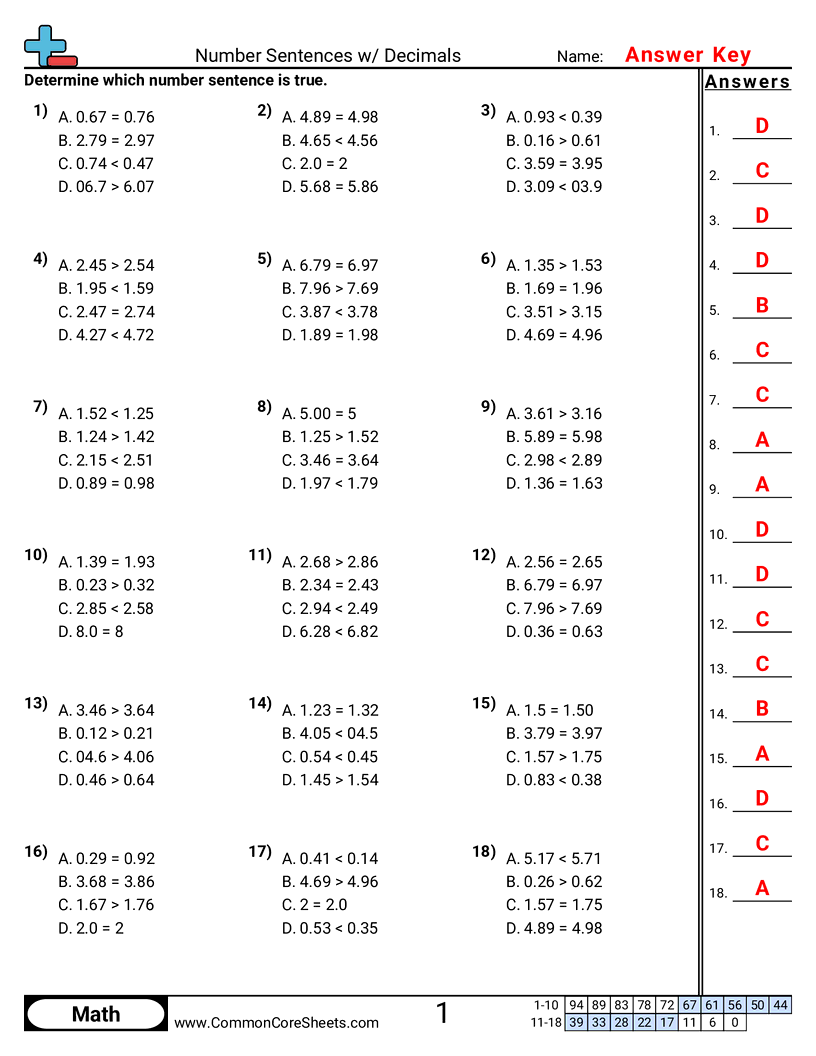
These worksheets help students compare decimal numbers using place value reasoning. Activities include determining which decimal is greatest or least, writing number sentences with inequality symbols, and comparing decimals to the hundredths and thousandths places. Aligned with fourth and fifth grade standards.
4nf7

- Compare two decimals and decide which one is greater or less.
- Use place value to compare decimals by looking at tenths, hundredths, and thousandths.
- Line up decimal points to make fair comparisons between numbers.
4nf7

- Compare two decimal numbers and decide which one is greater, less, or equal.
- Use place value (ones, tenths, hundredths) to explain why one decimal is bigger than another.
- Notice that decimals with different numbers of digits can still be compared by lining up the decimal points.
4nf7

- Compare two decimals to see which one is greater, less, or if they are equal.
- Use place value (ones, tenths, hundredths) to decide which decimal is bigger.
- Line up decimal points and add zeros when needed so two decimals are easy to compare.
- Choose the correct symbol (<, >, or =) to show the comparison.
About these worksheets
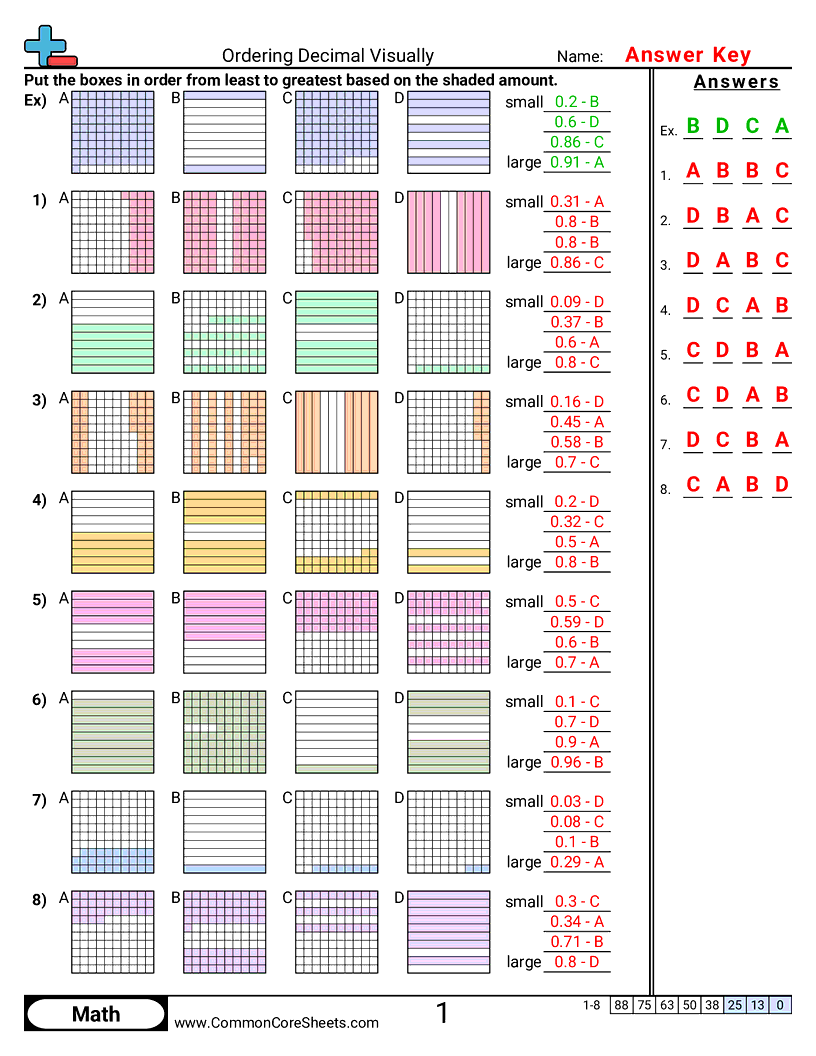
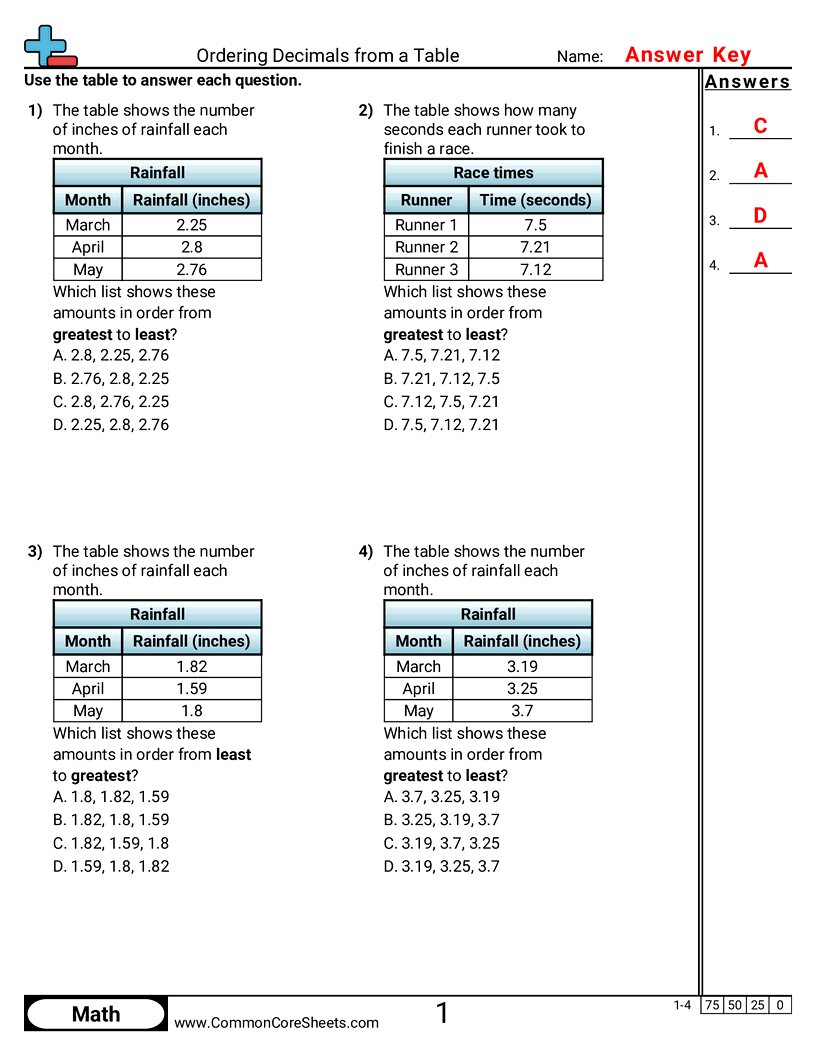
These worksheets build skills in ordering decimal numbers from least to greatest and greatest to least. Students compare decimals to the hundredths place using place value reasoning, work with visual models of tenths and hundredths, and practice arranging sets of decimals in correct order. Aligned with fourth and fifth grade standards.
4nf7

- Put decimal numbers in order from least to greatest or greatest to least.
- Compare two decimals and decide which one is larger or smaller.
- Use place value (ones, tenths, hundredths) to tell decimals apart.
- Line up decimal points to compare numbers correctly, including numbers with zeros.
4nf7

- Compare decimals to the hundredths place to decide which is greater or less.
- Put a set of decimals in order from least to greatest or greatest to least.
- Use place value (ones, tenths, hundredths) to explain why one decimal comes before another.
- Notice that trailing zeros don’t change a decimal’s value (like 2.5 and 2.50) when ordering numbers.