Utah Prairie Dog Worksheet Download
Free reading worksheets on Utah Prairie Dog. Each worksheet has 20 problems with an answer key and are ideal for teachers and homeschooling. You can download the PDF, create a set of flash cards or set it up for online learning.


Sheet Information >
Available at 2nd grade, 3rd grade, 4th grade, 5th grade and 6th grade reading levels.
Read the passage
Let's learn about the adorable Utah prairie dog! These cute critters are a type of rodent that live in the grasslands of Utah, in the United States. They are smaller than other prairie dogs, with a reddish-brown fur and white-tipped tails.
Utah prairie dogs have a fascinating life cycle and diet. They live in burrows and eat a variety of plants, insects, and seeds to stay strong and healthy. They have one litter of babies each year, called pups, and the whole family works together to raise them.
These little animals have interesting relationships with humans and other creatures. Utah prairie dogs are important for the environment, as their burrow digging helps mix the soil and allow plants to grow. However, they are sometimes seen as pests by humans, and their numbers are decreasing due to habitat loss.
In conclusion, Utah prairie dogs are unique and important animals that play a vital role in their ecosystem. Let's appreciate and protect these small creatures for future generations to enjoy!
Hey kids, let's talk about the cute and fascinating Utah prairie dog! These furry little creatures mostly eat plants, insects, and seeds to keep them happy and healthy. You can find them living in grasslands and meadows in, you guessed it, Utah! They are about 12 to 14 inches long, with a mix of brown, black, and white fur to help them blend in with their surroundings.
Now, let's learn about their life cycle and how they interact with humans and other animals. Utah prairie dogs are social animals, living in groups called colonies or towns, where they raise their babies, called pups. They have some natural predators, like coyotes and birds of prey, but they also have a special relationship with humans. In the past, some people considered them pests, but now we know they're important to the ecosystem and need protection.
What makes Utah prairie dogs different from other species? Well, there are five species of prairie dogs, and Utah prairie dogs are the smallest and rarest of them all. To protect themselves, they use a unique system of warning calls and sentinels to alert their family of any danger. Did you know that they can jump straight up in the air when they're excited? That's a fun fact about these amazing animals!
In this fun and friendly article, we covered the diet, habitat, and description of Utah prairie dogs, their life cycle, and their relationships with humans and other animals. We also talked about their unique defenses and interesting facts that set them apart from other species. So next time you think about prairie dogs, remember the amazing and rare Utah prairie dog!
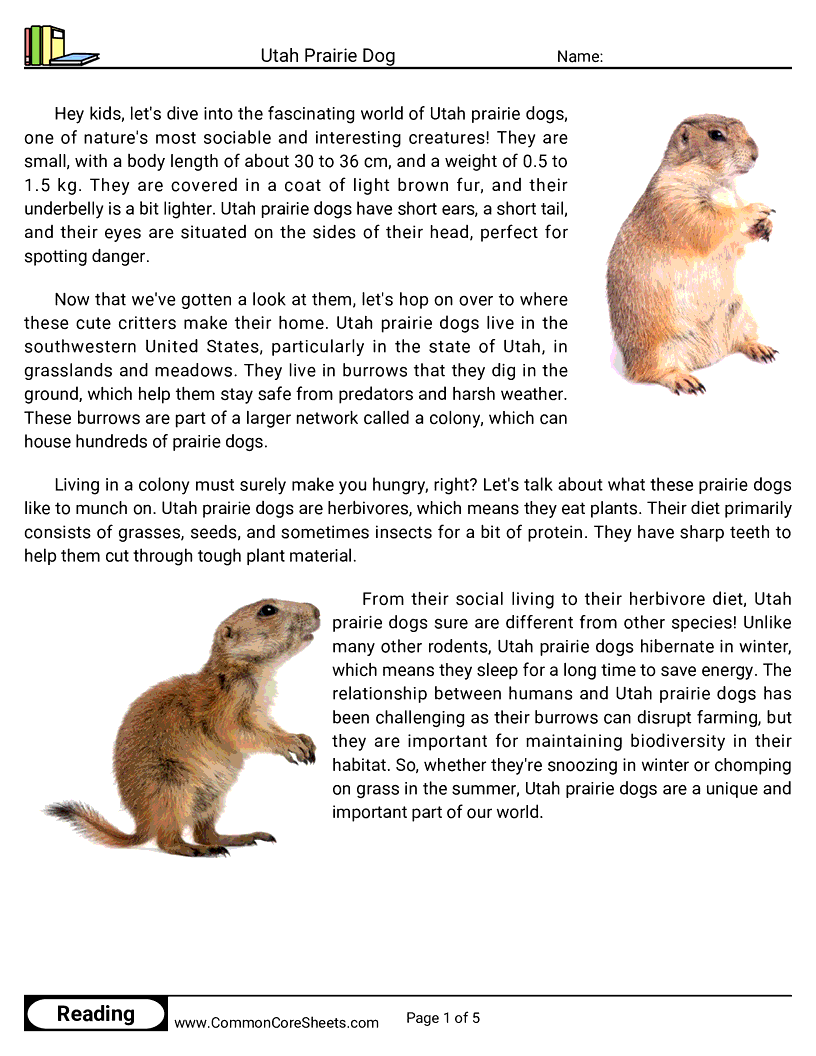
Hey kids, let's dive into the fascinating world of Utah prairie dogs, one of nature's most sociable and interesting creatures! They are small, with a body length of about 30 to 36 cm, and a weight of 0.5 to 1.5 kg. They are covered in a coat of light brown fur, and their underbelly is a bit lighter. Utah prairie dogs have short ears, a short tail, and their eyes are situated on the sides of their head, perfect for spotting danger.
Now that we've gotten a look at them, let's hop on over to where these cute critters make their home. Utah prairie dogs live in the southwestern United States, particularly in the state of Utah, in grasslands and meadows. They live in burrows that they dig in the ground, which help them stay safe from predators and harsh weather. These burrows are part of a larger network called a colony, which can house hundreds of prairie dogs.
Living in a colony must surely make you hungry, right? Let's talk about what these prairie dogs like to munch on. Utah prairie dogs are herbivores, which means they eat plants. Their diet primarily consists of grasses, seeds, and sometimes insects for a bit of protein. They have sharp teeth to help them cut through tough plant material.
From their social living to their herbivore diet, Utah prairie dogs sure are different from other species! Unlike many other rodents, Utah prairie dogs hibernate in winter, which means they sleep for a long time to save energy. The relationship between humans and Utah prairie dogs has been challenging as their burrows can disrupt farming, but they are important for maintaining biodiversity in their habitat. So, whether they're snoozing in winter or chomping on grass in the summer, Utah prairie dogs are a unique and important part of our world.
Let's learn about the Utah prairie dog, a unique and fascinating animal found in the United States. These prairie dogs are small mammals that belong to the squirrel family and are native to the southwestern part of Utah. Utah prairie dogs are smaller than other prairie dog species, with reddish-brown fur and a short, white-tipped tail. These little creatures are known for their social behavior, living together in groups called 'coteries'.
Now, let's talk about the habitat of these adorable animals. Utah prairie dogs live in grasslands, meadows, and other open areas with plenty of vegetation. They dig complex burrow systems, which provide them with shelter, protection, and a place to raise their young. These burrows also play a crucial role in maintaining the ecosystem by aerating the soil and increasing water absorption.
What do Utah prairie dogs like to eat? Their diet mainly consists of grasses, seeds, and leaves, but they also enjoy feasting on insects, especially during the summer months. This diverse diet helps them stay healthy and maintain their energy levels. Their eating habits also contribute to the overall health of their habitat by keeping the vegetation in check.
The life cycle of the Utah prairie dog is quite interesting. In late winter or early spring, female prairie dogs give birth to a litter of three to five pups. The pups stay in the burrow for six weeks, after which they start exploring the world above ground and learning how to find food. Utah prairie dogs have a lifespan of three to five years in the wild, but they can live longer in captivity.
Lastly, let's explore the relationship between Utah prairie dogs, humans, and other animals. These prairie dogs play a vital role in the ecosystem by providing food and shelter for other animals, such as birds of prey and snakes. However, due to habitat loss and human activities, the Utah prairie dog is now considered a threatened species. Conservation efforts are in place to protect their habitat and help the population recover.
In summary, Utah prairie dogs are fascinating creatures with unique characteristics and an important role in their ecosystem. By learning about them, we can better appreciate and protect these amazing animals.
Let's discover the fascinating world of the Utah prairie dog, a unique and important species of prairie dog found only in the United States. These adorable little creatures have a reddish-brown fur and can grow up to 12 to 16 inches long. Utah prairie dogs live in groups called clans, which are made up of several families that work together to build and maintain their burrows. These burrows provide shelter from predators and keep the prairie dogs safe from extreme weather conditions. In addition, they have a complex system of communication using different types of barks and squeaks to warn each other of potential danger.
Now that we know a bit about their appearance, let's learn about the diet of these fascinating animals. Utah prairie dogs are herbivores, which means they primarily eat plants, seeds, and grasses. Sometimes, they also munch on insects like grasshoppers to supplement their diet. They are very important for the ecosystem because they help disperse seeds, aerate soil, and provide food for other animals like foxes and hawks. Their diet also helps regulate the growth of vegetation in their habitat.
The life cycle of Utah prairie dogs is also quite interesting. They breed once a year, usually in late winter or early spring, and their gestation period lasts for about a month. A typical litter has around four pups, but it can vary from one to eight pups. The young pups will stay in the burrow for about six weeks before they venture outside, and they become independent after just a few months. Utah prairie dogs can live for up to eight years in the wild.
The relationship between Utah prairie dogs and humans has been a challenging one. Due to habitat loss caused by agriculture and urban development, their population has been declining rapidly. In 1973, they were listed as an endangered species, and efforts have been made to protect their habitat through conservation programs. However, some people see them as pests because they dig burrows in fields and can damage crops. Despite these challenges, it is important to remember that Utah prairie dogs play a crucial role in maintaining the balance of their ecosystem.
Finally, let's explore the relationships between Utah prairie dogs and other animals in their habitat. As mentioned earlier, they serve as a food source for predators like foxes, hawks, and badgers. They also share their burrows with other animals like burrowing owls and rattlesnakes that help protect them from predators. Compared to other prairie dog species, Utah prairie dogs are smaller and have a more limited range, which makes their conservation even more critical. One interesting fact about them is that they have black 'eyebrows,' which is a unique feature among prairie dogs.
In this article, we learned about the fascinating Utah prairie dog, their diet, life cycle, relationship with humans and other animals, as well as their unique characteristics. Remember to appreciate and protect these important creatures and their role in maintaining a balanced ecosystem.
About this worksheet
Students read an informational passage about the Utah prairie dog and answer comprehension questions about its habitat, behavior, and characteristics.
This worksheet is designed to educate children on the Utah Prairie Dog through a series of 20 reading comprehension problems. It covers topics such as their habitat, diet, hibernation behavior, and relations with humans. Students can use this customizable worksheet as flashcards or for distance learning. It delivers an interactive and engaging way to study and grasp concepts about this unique creature.
Student objectives
- Read a nonfiction passage about the Utah prairie dog
- Find specific facts and details in the text
- Answer questions using information from what you read
- Understand new vocabulary about animals and habitats
- Summarize the main points about the Utah prairie dog
Everyday practice
- Read a fact page at the zoo and remember key details about an animal
- Look up information about a pet or wild animal and share what you learned
- Read a nature magazine article and explain it to a friend
- Answer questions about an animal after reading its sign at a nature center