Striped Skunk Worksheet Download
Free reading worksheets on Striped Skunk. Each worksheet has 20 problems with an answer key and are ideal for teachers and homeschooling. You can download the PDF, create a set of flash cards or set it up for online learning.


Sheet Information >
Available at 2nd grade, 3rd grade, 4th grade, 5th grade and 6th grade reading levels.
Read the passage
Hey there, let's talk about the fascinating striped skunk! These little creatures have black fur with a white stripe that starts at their head and splits into two stripes down their back! Did you know that striped skunks live in North America and can be found in grasslands, forests, and even near our homes?
Now let's learn about what striped skunks eat and their life cycle. Skunks are omnivores, which means they eat both plants and animals, such as insects, small mammals, and fruits. Skunks usually live for about three years, and their life cycle includes being born as a baby (called a kit), growing up, and then having their own babies!
Finally, let's explore their relationship with humans, other animals, and their special defenses. While skunks are usually shy and try to avoid humans, they can sometimes be found digging in our yards for food. Their main defense against predators like coyotes and foxes is spraying a smelly liquid from special glands, which is different from other species that might try to escape or fight back.
Striped skunks are incredible creatures that share our world, and now you know just a bit more about them!
Meet the striped skunk, a fascinating little creature that you might have seen waddling around your neighborhood at night. These black and white mammals are known for their strong smell, but there's much more to them than just their odor. Striped skunks live in a variety of habitats such as forests, grasslands, and even in urban areas where they can find food and shelter. They are omnivores, which means they eat both plants and animals, such as insects, small mammals, and fruits.
Now let's take a closer look at the life cycle of a striped skunk. Mating season usually occurs between February and April, and after about two months, a mother skunk gives birth to a litter of baby skunks called kits. Kits stay with their mother for about a year, learning how to hunt, find food, and protect themselves. Striped skunks can live up to seven years in the wild, which is quite impressive for such small animals.
One interesting fact about striped skunks is their unique defense mechanism. When threatened, they can spray a strong-smelling liquid from their scent glands to ward off predators like foxes, coyotes, and even bears. Though they may look similar to other skunk species, striped skunks are usually recognized by the distinctive white stripe that runs from their head to their tail. While they may not be the most popular animal, striped skunks play an important role in our ecosystem by controlling insect populations and providing a food source for larger predators.
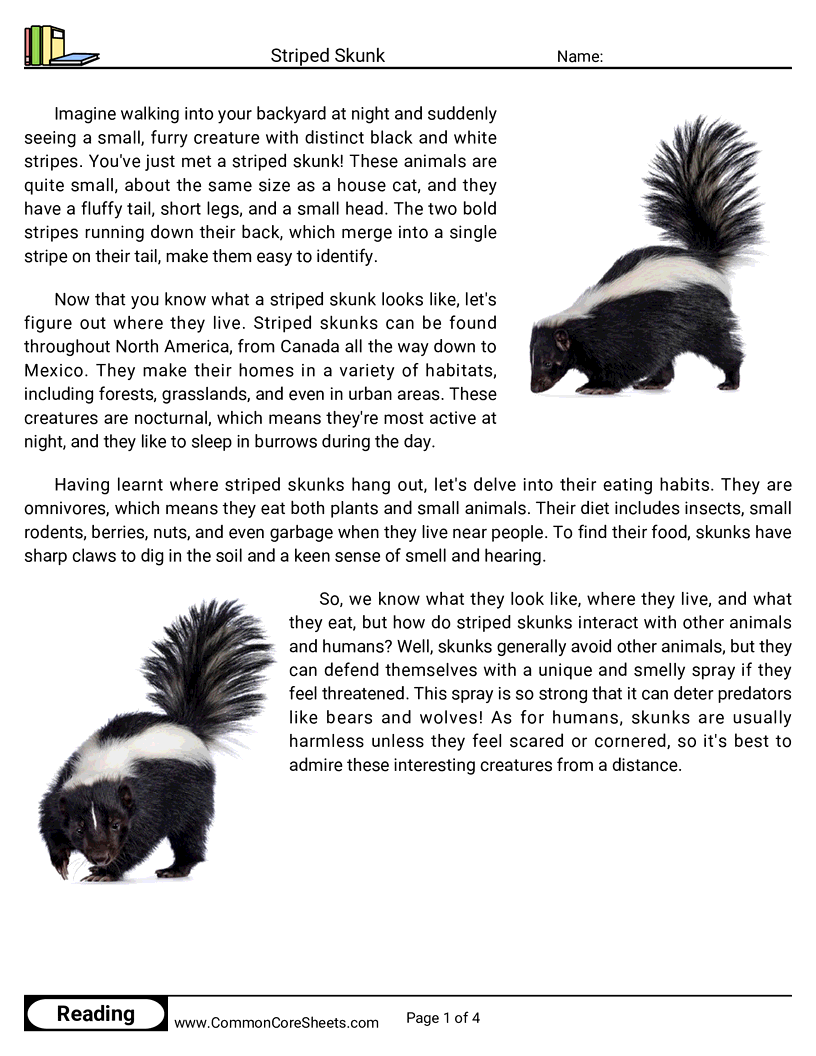
Imagine walking into your backyard at night and suddenly seeing a small, furry creature with distinct black and white stripes. You've just met a striped skunk! These animals are quite small, about the same size as a house cat, and they have a fluffy tail, short legs, and a small head. The two bold stripes running down their back, which merge into a single stripe on their tail, make them easy to identify.
Now that you know what a striped skunk looks like, let's figure out where they live. Striped skunks can be found throughout North America, from Canada all the way down to Mexico. They make their homes in a variety of habitats, including forests, grasslands, and even in urban areas. These creatures are nocturnal, which means they're most active at night, and they like to sleep in burrows during the day.
Having learnt where striped skunks hang out, let's delve into their eating habits. They are omnivores, which means they eat both plants and small animals. Their diet includes insects, small rodents, berries, nuts, and even garbage when they live near people. To find their food, skunks have sharp claws to dig in the soil and a keen sense of smell and hearing.
So, we know what they look like, where they live, and what they eat, but how do striped skunks interact with other animals and humans? Well, skunks generally avoid other animals, but they can defend themselves with a unique and smelly spray if they feel threatened. This spray is so strong that it can deter predators like bears and wolves! As for humans, skunks are usually harmless unless they feel scared or cornered, so it's best to admire these interesting creatures from a distance.
Let's dive into the world of striped skunks, fascinating creatures known for their distinctive smell! These black and white animals are easily recognizable due to their two white stripes running down their back. They are the size of a house cat, with a small head, short legs, and a bushy tail. Striped skunks can be found across North America, from Canada to Mexico.
Striped skunks have quite an interesting diet, as they are omnivores. Their meals consist of insects, small rodents, fruits, and vegetables. Not picky eaters, they'll also munch on eggs, frogs, and even garbage if it's available. This adaptability helps them survive in a variety of environments.
Now, let's explore the life cycle of a striped skunk. During the mating season in late winter, males will roam around looking for females to mate with. After a gestation period of around two months, females give birth to a litter of 2-10 babies called kits. These kits stay with their mother for about a year before they become independent and start their own families.
When it comes to relationships with humans and other animals, striped skunks are generally shy creatures. They prefer to avoid confrontations by hiding, but they are well-known for their powerful defense mechanism: spraying a strong-smelling liquid from glands near their tail. This spray can reach up to 10 feet and can temporarily blind or cause discomfort to predators such as dogs, foxes, and even humans. However, some animals, like owls, have no sense of smell and can still prey on skunks.
Lastly, let's discuss some fascinating facts and differences between striped skunks and other species. Striped skunks are part of the Mephitidae family, which includes 11 other skunk species. While all species have their signature striped pattern, there are variations in size, color, and habitat. An interesting fact is that skunks are one of the few mammals that can carry the rabies virus without showing any symptoms.
Meet the striped skunk, a fascinating and unique animal that is sure to capture your curiosity. These animals are known for their black fur with distinct white stripes running down their backs and tails. Striped skunks are about the size of a house cat, measuring around 20-30 inches in length and weighing between 6-10 pounds. They have small, triangular heads with beady black eyes and a pink, button-like nose. Although they may look cute and cuddly, it's best to admire them from a distance!
Now, let's dive into the life cycle of the striped skunk. In late winter or early spring, these animals begin their mating season, which lasts until April. After a 60-75 day gestation period, the female skunk will give birth to a litter of 4-7 baby skunks, also known as kits. The kits stay with their mother for about 3 months before venturing off on their own. Striped skunks can live up to 7 years in the wild, but their average lifespan is around 3 years.
You might be wondering what striped skunks like to eat, and the answer is quite diverse. They are omnivores, which means they eat both plants and animals. Their diet consists of insects, small mammals, fish, bird eggs, fruits, and nuts. Striped skunks have been known to dig up lawns in search of grubs and other insects. So, if you see little holes in your yard, it might be the work of a hungry skunk!
When it comes to relationships with humans and other animals, striped skunks have a mixed reputation. While they are generally shy and non-aggressive, they will use their powerful defense mechanism, a foul-smelling spray, when they feel threatened. This spray can travel up to 10 feet and temporarily blind both humans and other animals. Despite this, skunks can be beneficial to humans, as they help control pest populations around homes and gardens. However, skunks are known carriers of rabies, so it's essential to keep a safe distance and never approach them.
Finally, let's explore some interesting facts about striped skunks. Did you know that there are four different species of skunks found in North America? The striped skunk is the most common, but the spotted, hooded, and hognose skunks also inhabit the continent. Each species has its distinctive markings and behaviors, but they all share the same stinky defense mechanism. Now you know a little more about the amazing striped skunk and its unique place in the animal kingdom.
About this worksheet
Students read an informational passage about the striped skunk and answer comprehension questions about its habits, appearance, and behavior.
This worksheet is designed to enhance children's reading comprehension with engaging problems about Striped Skunks. Children can delve into different facts about this creature, including its unique characteristics, habitats, diet, and more. This 20-question worksheet offers flexibility for educators as it can be customized, converted to flashcards, or integrated into distance learning platforms to cater to various teaching styles and learning needs.
Student objectives
- Read a nonfiction passage about the striped skunk
- Find and recall facts from what you read
- Answer questions using details from the text
- Learn new vocabulary about animals and wildlife
- Understand how skunks look, eat, and defend themselves
Everyday practice
- Read a sign at a zoo or park and explain what an animal does
- Recognize a skunk and know why it sprays when scared
- Tell a friend interesting facts you learned about an animal
- Look up information about a pet or wild animal you saw outside