CCSS 4.NF.6 Worksheets
CCSS 4.NF.6 (Common Core, 4th Grade): "Use decimal notation for fractions with denominators 10 or 100. For example, rewrite 0.62 as 62/100; describe a length as 0.62 meters; locate 0.62 on a number line diagram." The worksheets below practice this standard. Each one is a free printable PDF with an answer key, comes in multiple versions, and can also be assigned digitally - no login or account needed.
More about these worksheets ▾ Show less ▴
Number and Operations—Fractions
6 Use decimal notation for fractions with denominators 10 or 100. For example, rewrite 0.62 as 62/100; describe a length as 0.62 meters; locate 0.62 on a number line diagram.
4nf6
4nf6
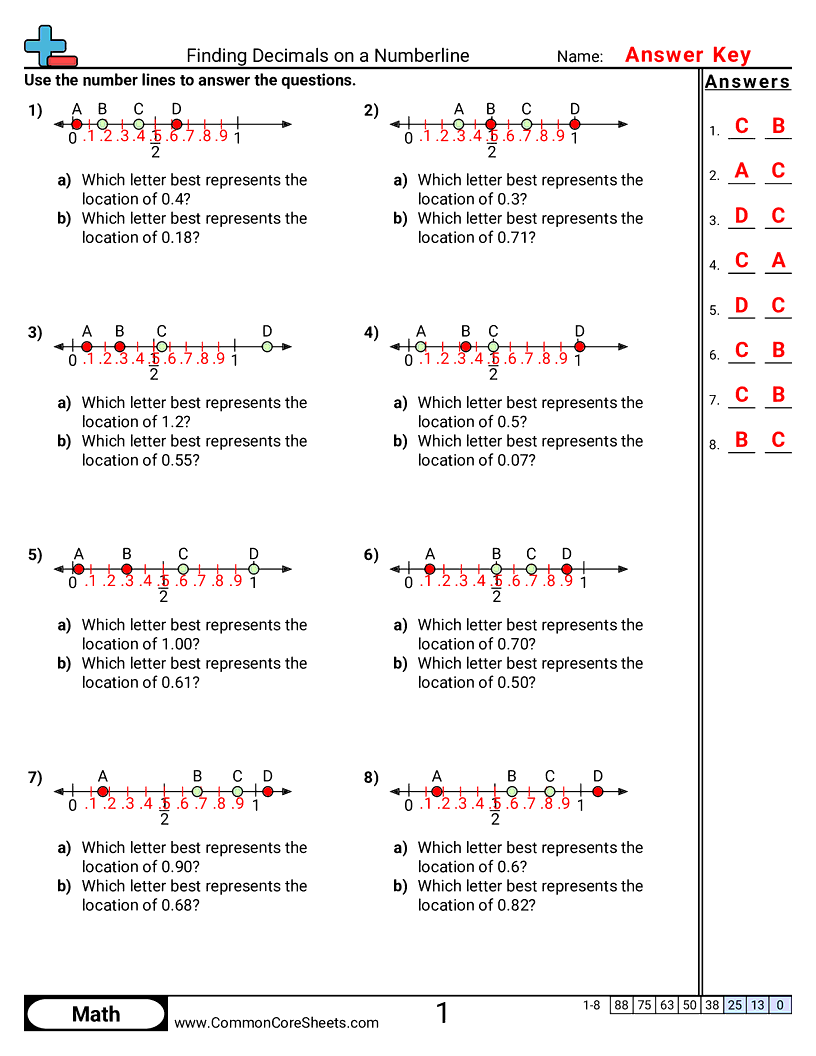
Use the whole numbers on a number line to figure out which interval a decimal belongs in. Count equal tick marks on a number line to place a decimal at the correct point.
4nf6
Decide whether a decimal number is less than, equal to, or greater than one-half (0.5). Use place value to compare decimals by looking at tenths and hundredths. Recognize different ways to write one-half, like 0.5 and 0.50, and compare other decimals to it.
4nf6
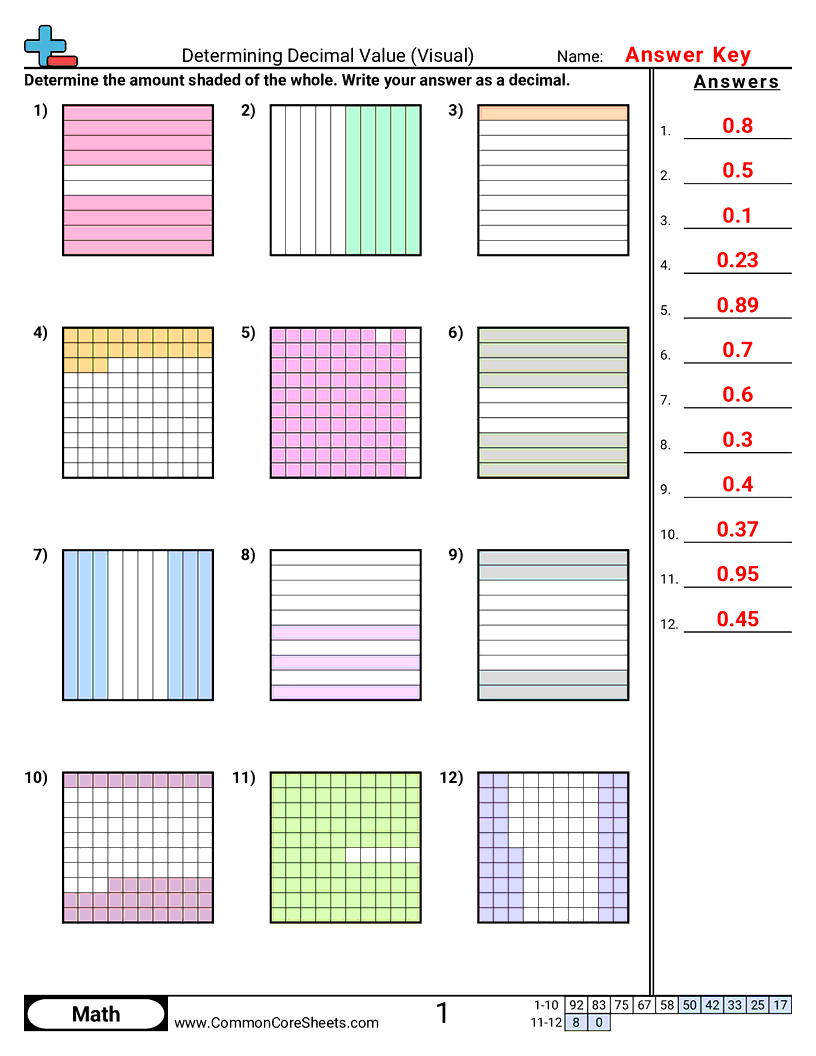
Read a shaded picture model and tell what decimal it represents. Connect tenths and hundredths to how much of a whole is shaded. Use place value to write the decimal correctly with the decimal point in the right spot.
4nf6
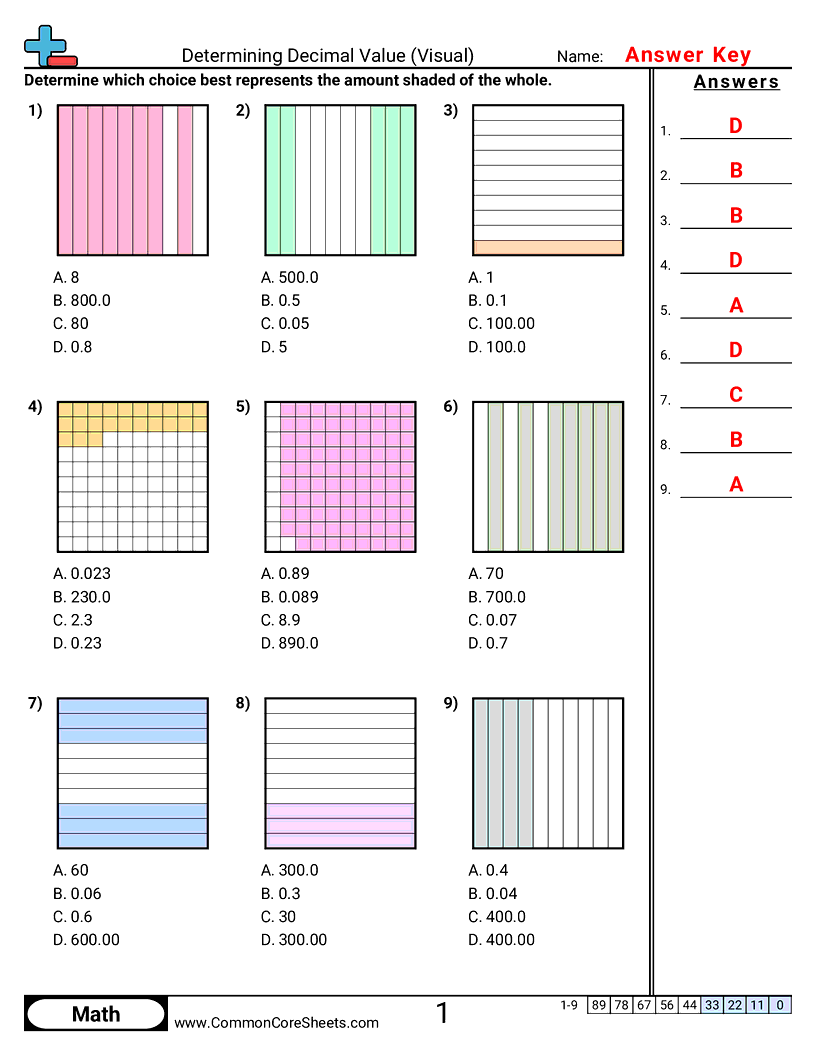
Read a shaded picture model and tell what decimal it represents. Connect tenths and hundredths to how much of a whole is shaded. Use place value to decide whether the decimal should have one or two digits after the decimal point. Choose the matching decimal from several answer choices by comparing the model to the numbers.
4nf6
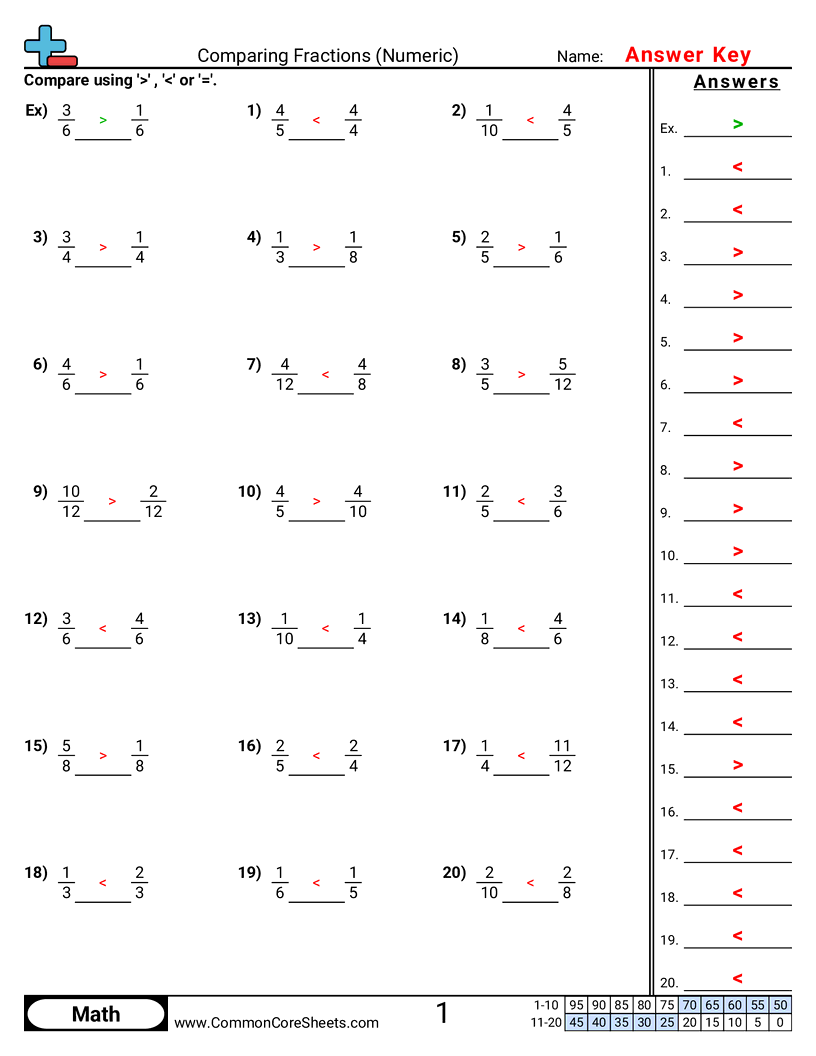
Decide which of two fractions is greater, less, or if they are equal. Compare fractions even when they have different denominators. Use equivalent fractions or common denominators to make comparisons easier.
4nf6
Compare a fraction and a decimal to decide which one is larger. Use a number line to see where each value falls between 0 and 1 (or between whole numbers). Use benchmark values like 0, 0.5, and 1 to judge which number is closer to the right side of the number line.
4nf6
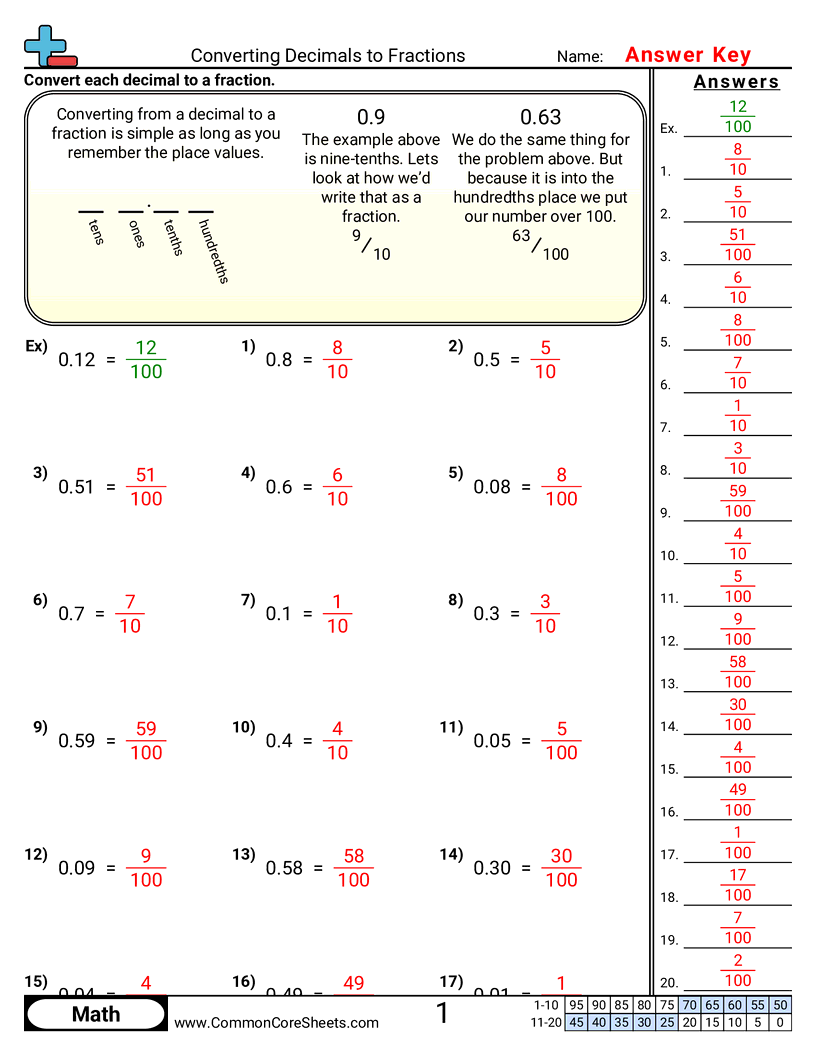
Turn a decimal into a fraction by using the place value to choose the denominator. Connect the decimal and fraction as two ways to show the same amount.
4nf6
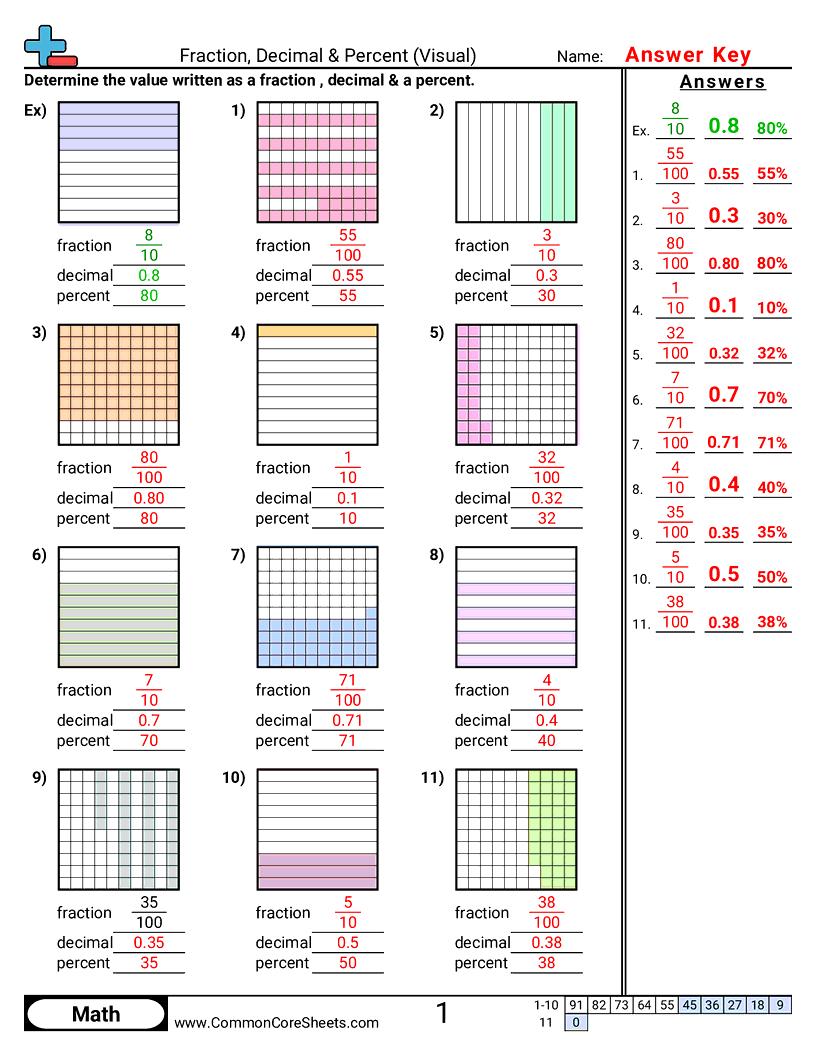
Read a shaded picture model and name the fraction that is shaded. Write the shaded amount as a decimal. Write the shaded amount as a percent. Convert between fraction, decimal, and percent to show the same amount in different ways.
4nf6
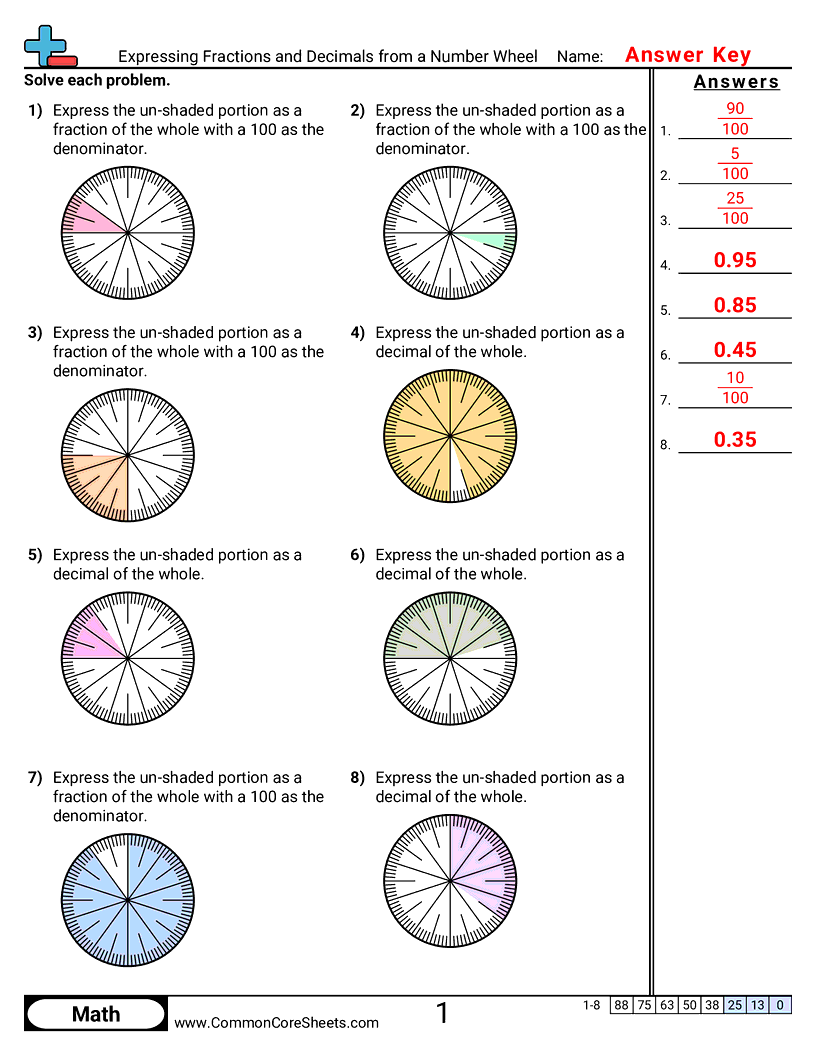
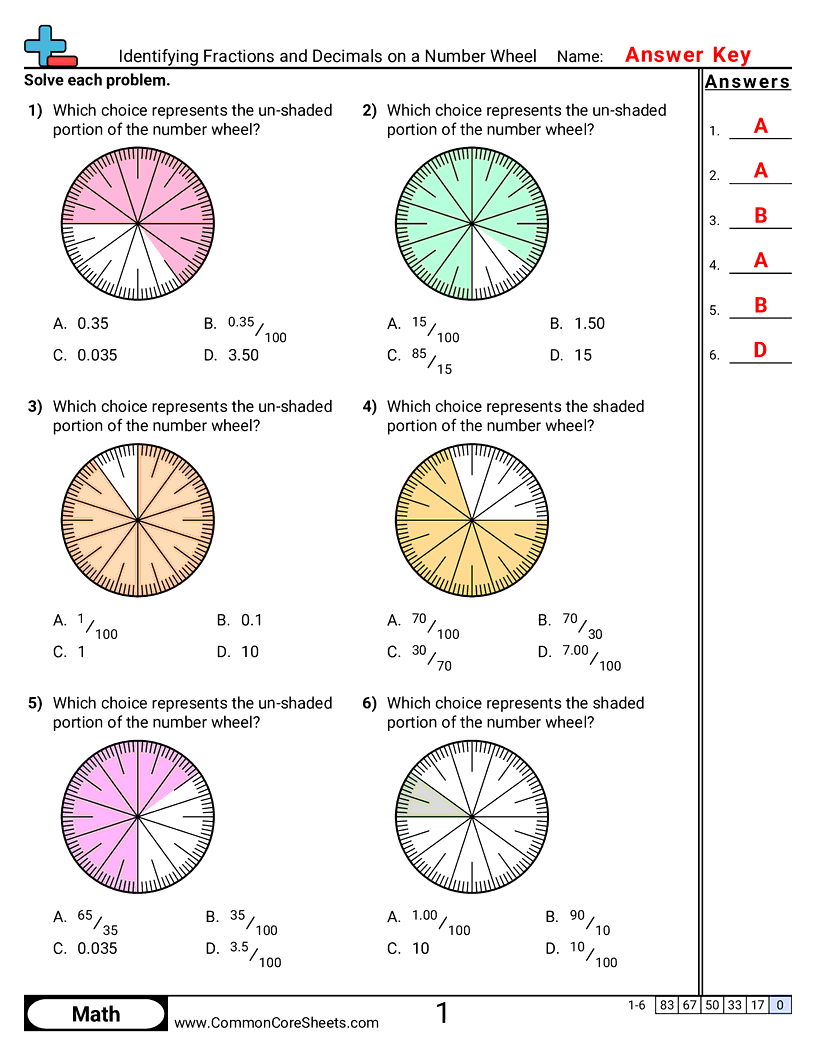
Read a number wheel and figure out what fraction of the whole is shaded. Read a number wheel and figure out what decimal amount of the whole is shaded.
4nf6
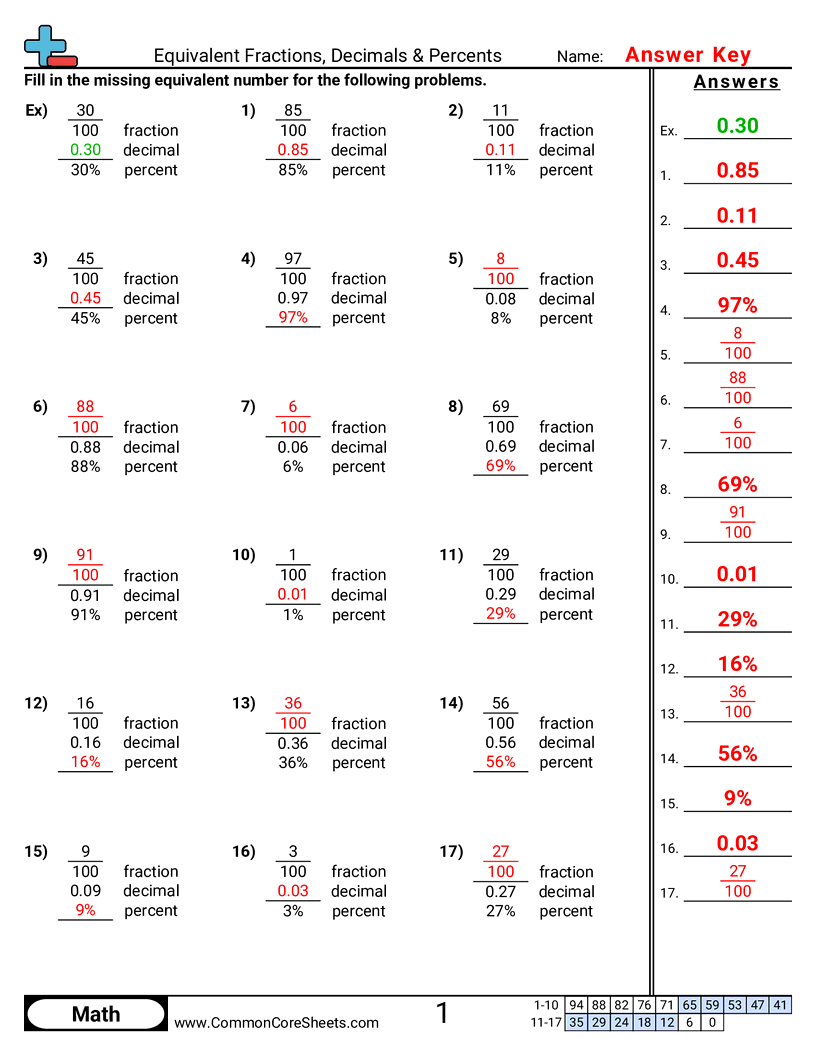
Convert between fractions, decimals, and percents that represent the same amount. Find a missing fraction, decimal, or percent by using equivalent values.
4nf6
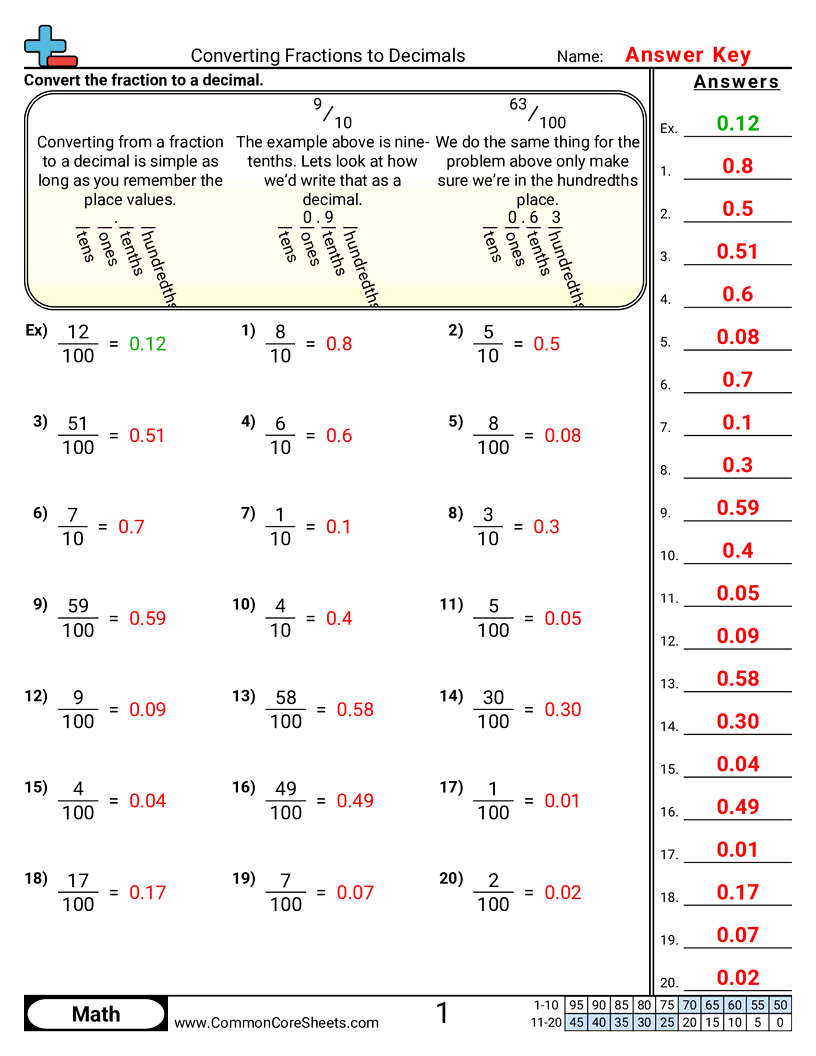
Turn a fraction into a decimal by dividing the numerator by the denominator. Write decimals correctly using tenths and hundredths place value.
4nf6
Read a shaded section on a number wheel and name it as a fraction of the whole. Read a shaded section on a number wheel and name it as a decimal value.
4nf6
Convert decimal numbers written in words into numeric form Read and understand place value for tenths and hundredths Write decimals correctly with the decimal point in the right spot Match spoken decimal amounts to their number form
4nf6
Read a number written out by its place values and rewrite it as one number Understand what the tenths and hundredths digits mean in a decimal Add up place values like ones, tenths, and hundredths to form a decimal Practice writing decimals correctly with the decimal point in the right spot
4nf6
Read a decimal written out as a sum of place values Write decimals in standard form down to the hundredths place Understand what the tenths and hundredths digits represent Combine whole number and decimal parts into a single number
4nf6
Break a decimal number into the value of each of its digits Show the worth of digits in the tenths and hundredths places Understand that each place is worth ten times less than the one to its left Practice writing decimals as a sum of place values
4nf6
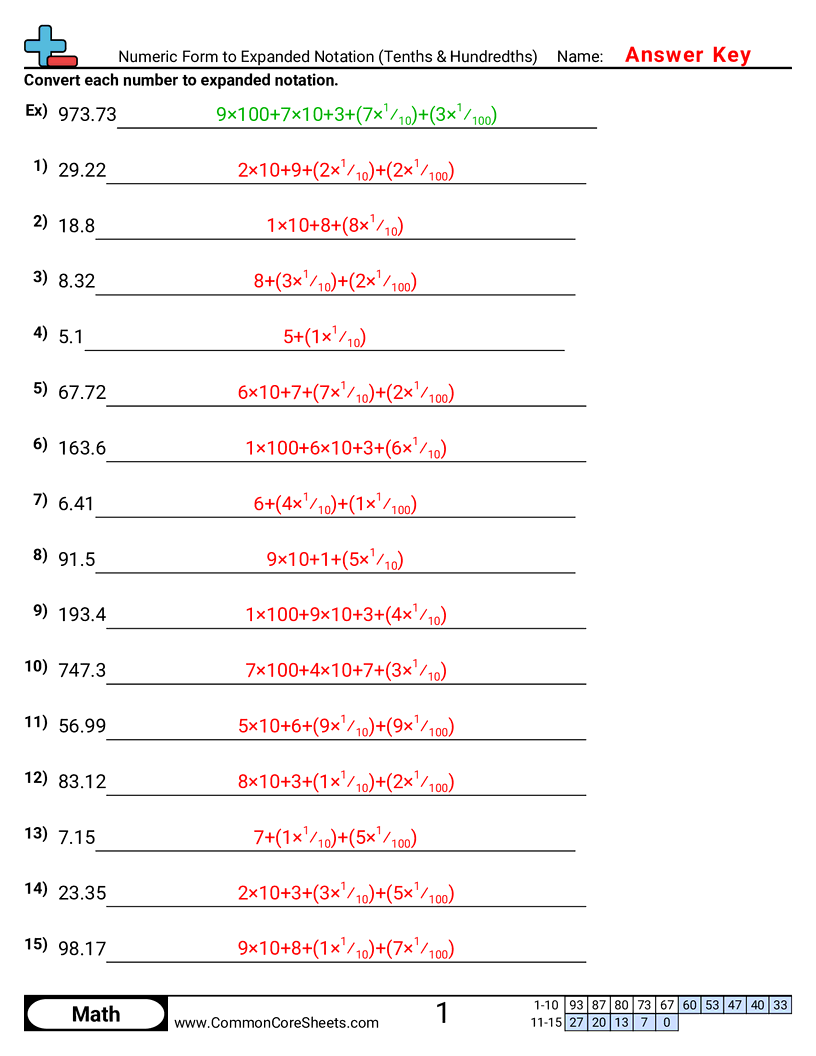
Break a decimal into the value of each digit Write out the tenths and hundredths parts of a number separately Understand what each place after the decimal point is worth Convert a standard decimal number into expanded form
4nf6
Read decimals to the tenths and hundredths place Write a decimal number using words instead of digits Understand the difference between tenths and hundredths when naming decimals Say decimal values correctly, like 'and forty-two hundredths'
4nf6
Read decimals written in words and write them as numbers Practice using the tenths place after the decimal point Practice using the hundredths place after the decimal point Understand the difference between numbers like 0.4 and 0.04
4nf6
Practice writing decimals using words instead of numbers Read decimals to the tenths and hundredths place Say and spell place value names like tenths and hundredths Connect written decimal numbers to their word names
Playwire Advertisement