Silverfish Worksheet Download
Free reading worksheets on Silverfish. Each worksheet has 20 problems with an answer key and are ideal for teachers and homeschooling. You can download the PDF, create a set of flash cards or set it up for online learning.


Sheet Information >
Available at 2nd grade, 3rd grade, 4th grade, 5th grade and 6th grade reading levels.
Read the passage
Hey there, did you know silverfish are fascinating little insects? They are small, silvery, and have a fish-like appearance with three long tail bristles. Silverfish are pretty speedy and can wiggle their way around your home, hiding in small cracks and crevices.
These tiny critters love to munch on all sorts of things. Their favorite snacks include paper, glue, and even some of your favorite cereals! They're not picky eaters and will eat other insects if they need to.
Silverfish have a pretty interesting life cycle and relationship with humans and other insects. Their life cycle starts as an egg, then they grow into a nymph, and finally into an adult. While they're not harmful to humans, they can be a bit annoying when they find their way into our homes and start munching on our belongings. But don't worry, they don't bite or sting, and they usually prefer to stay away from other insects, too! Now that you know a bit more about silverfish, maybe you'll appreciate these tiny, harmless creatures just a little bit more.
Hey there, have you ever heard of silverfish? They are small, silvery-grey insects that wiggle around like fish. These little critters have a unique appearance, with their carrot-shaped bodies and three long bristle-like tails. What's really interesting is that they have been around for more than 400 million years, which means they were here even before the dinosaurs!
Now, let's dive into the world of silverfish and learn about their life cycle, habitat, and diet. They love living in dark, damp places, like basements, attics, and even inside our walls. Silverfish go through a three-stage life cycle: egg, nymph, and adult, and they can live for up to eight years! As for their diet, they munch on all sorts of things, from paper and glue to clothing and even human food crumbs.
You might be wondering, are silverfish dangerous to humans or other insects? Well, the good news is that they don't bite or sting, and they are not harmful to humans or pets. However, they can be quite a nuisance, as they can damage our belongings and attract other insects, like spiders, who love to snack on them. So, while silverfish might not be our favorite house guests, they are fascinating little creatures that have survived for millions of years.
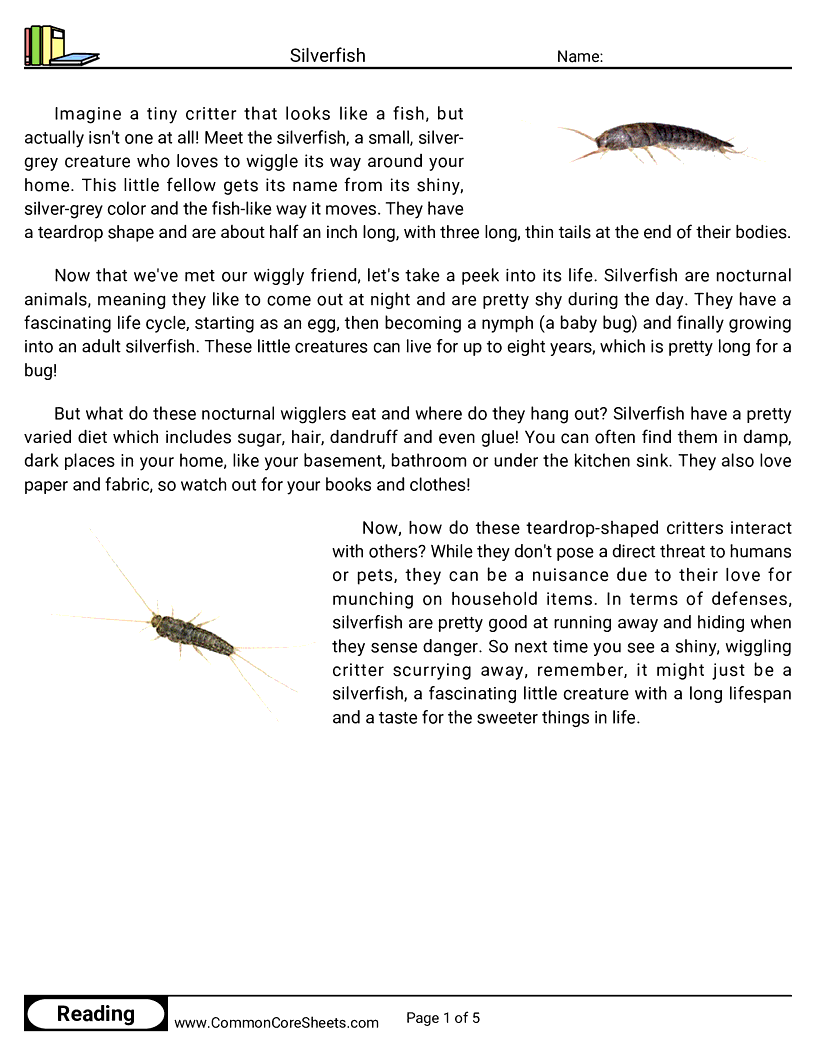
Imagine a tiny critter that looks like a fish, but actually isn't one at all! Meet the silverfish, a small, silver-grey creature who loves to wiggle its way around your home. This little fellow gets its name from its shiny, silver-grey color and the fish-like way it moves. They have a teardrop shape and are about half an inch long, with three long, thin tails at the end of their bodies.
Now that we've met our wiggly friend, let's take a peek into its life. Silverfish are nocturnal animals, meaning they like to come out at night and are pretty shy during the day. They have a fascinating life cycle, starting as an egg, then becoming a nymph (a baby bug) and finally growing into an adult silverfish. These little creatures can live for up to eight years, which is pretty long for a bug!
But what do these nocturnal wigglers eat and where do they hang out? Silverfish have a pretty varied diet which includes sugar, hair, dandruff and even glue! You can often find them in damp, dark places in your home, like your basement, bathroom or under the kitchen sink. They also love paper and fabric, so watch out for your books and clothes!
Now, how do these teardrop-shaped critters interact with others? While they don't pose a direct threat to humans or pets, they can be a nuisance due to their love for munching on household items. In terms of defenses, silverfish are pretty good at running away and hiding when they sense danger. So next time you see a shiny, wiggling critter scurrying away, remember, it might just be a silverfish, a fascinating little creature with a long lifespan and a taste for the sweeter things in life.
Silverfish are fascinating little insects that have been around for a very long time. These small, wingless creatures have a silvery-gray color and are shaped like a fish, which is where they get their name. They can be found in many parts of the world, including North America, Europe, Asia, and Australia. Let's dive in and learn more about these interesting little insects.
First, let's talk about where silverfish like to live and what they like to eat. They prefer dark, damp environments like basements, bathrooms, and kitchens, where they can find their favorite foods. Silverfish are not picky eaters and will munch on things like paper, glue, clothing, and even dead insects. Their ability to eat a wide variety of things helps them survive in many different habitats.
Now, let's take a closer look at the life cycle of a silverfish. They start as eggs, which are usually hidden in small cracks and crevices. Once they hatch, they go through several nymph stages before becoming adults, which can take anywhere from a few weeks to several months. The adult silverfish can live for quite a long time, sometimes up to three years!
While they may look a little creepy, silverfish are generally harmless to humans. They don't bite or sting, and they don't carry diseases. However, they can be a nuisance because they can damage books, wallpaper, and clothing. Some people might also be allergic to the tiny scales on their bodies, which can cause skin irritation.
Finally, let's compare silverfish to other insect species and explore some interesting facts. One unique aspect of the silverfish is their ability to survive without food for long periods, sometimes up to a year! Unlike most insects, silverfish continue to molt, or shed their exoskeleton, throughout their entire lives. These ancient creatures have been around since before the dinosaurs, making them one of the oldest living insect species on earth.
In conclusion, silverfish are fascinating creatures with a unique life cycle and characteristics that set them apart from other insects. Though they may be a nuisance in our homes, they are a reminder of the incredible diversity of life on our planet.
Have you ever heard of silverfish? These small, scaly insects are named for their silvery appearance and fish-like movements. Silverfish can be found all over the world and are known for their unique look. They are about half an inch to one inch long and have two long antennae on their heads. Additionally, they have three long bristle-like appendages on their rear ends, which help them move around.
Now, let's talk about where silverfish like to live. These insects prefer dark, damp places such as basements, attics, and bathrooms. They can often be found hiding in the nooks and crannies of your house. Silverfish can survive in a variety of climates, but they are most often found in warm, humid environments. They are nocturnal, which means they are most active at night.
You might be wondering what silverfish eat. These insects have a diverse diet, which includes items like paper, glue, and even clothing. They are especially fond of materials containing starches or carbohydrates, such as books and wallpaper. Not only do silverfish eat household items, but they also consume other insects and even their own molted exoskeletons. This makes them quite the resourceful creatures!
The life cycle of a silverfish is quite fascinating. Female silverfish lay eggs in small cracks and crevices, and these eggs hatch into nymphs after a few weeks. These nymphs look like smaller versions of adult silverfish and molt several times before reaching adulthood. The entire life cycle can take several months to a few years, depending on the conditions of their environment. Interestingly, silverfish can live for several years, which is a long time for an insect!
Lastly, let's discuss silverfish's relationship to humans and other insects. While silverfish are generally harmless to humans, they can be quite the nuisance when they invade our homes. They can cause damage to our belongings, like books and clothes, because of their eating habits. As for their relationship with other insects, silverfish are not known to be aggressive, but they may eat other insects if they come across them. Overall, silverfish are interesting creatures that are a part of the diverse world of insects.
About this worksheet
Students read a short informational passage about silverfish and answer comprehension questions about the details they learned.
This worksheet is designed to educate children about the characteristics and lifestyle of silverfish in an engaging and interactive way. It contains 20 different problem statements, teaching kids about the shape, behavior, threat, active time, lifespan, name origin and diet of silverfish. Ideal for reading comprehension, the worksheet can be customized to fit specific educational needs, converted into flashcards for a memorization tool, or used for distance learning. Perfect for instilling a love for learning about the animal kingdom.
Student objectives
- Read a nonfiction passage about silverfish and understand the main idea
- Find specific facts and details in what you read
- Answer questions using information from the text
- Learn new vocabulary related to insects and their habitats
Everyday practice
- Read a fact card at a zoo or museum and explain what you learned
- Look up information about a bug you found and tell someone about it
- Answer questions after reading an article about animals
- Share interesting facts from a nature book with your family