Northern Flying Squirrel Worksheet Download
Free reading worksheets on Northern Flying Squirrel. Each worksheet has 20 problems with an answer key and are ideal for teachers and homeschooling. You can download the PDF, create a set of flash cards or set it up for online learning.


Sheet Information >
Available at 2nd grade, 3rd grade, 4th grade, 5th grade and 6th grade reading levels.
Read the passage
Let's talk about the amazing Northern Flying Squirrel! These cute little creatures are nocturnal animals, which means they are active at night, and they can glide through the air using a special membrane called a patagium. They eat a variety of foods like nuts, seeds, fruits, insects, and even bird eggs.
Now let's explore where these furry friends live and their life cycle. Northern Flying Squirrels can be found in the forested areas of North America, living in tree cavities or building their own nests. Their life cycle starts when they are born as tiny, hairless babies called pups, and after about two months, they learn to fly and hunt on their own.
Finally, let's learn about their relationships and how they are different from other squirrels. Humans don't usually see Northern Flying Squirrels because they are shy and come out only at night, but they help humans by spreading seeds and pollinating plants. These squirrels are also a tasty snack for predators like owls, raccoons, and snakes, which makes them an important part of the food chain. Compared to other squirrel species, the Northern Flying Squirrel has larger eyes and a flatter tail to help them glide and navigate in the dark better. Isn't it fascinating how these little creatures have adapted to their environment and play a significant role in nature?
Let's learn about the fascinating northern flying squirrel! These cute little creatures are mostly active at night and live in the forests of North America. They have big, round eyes that help them see in the dark, and special skin flaps called 'patagium' that let them glide from tree to tree. Their fur is soft and brown, with a lighter belly, and they have a long, flat tail that helps them steer while gliding.
Now, let's explore what northern flying squirrels eat and their life cycle. These squirrels are omnivores, which means they eat both plants and animals, including nuts, seeds, fruits, insects, and even bird eggs. They have a unique way of finding food, using their sense of smell and whiskers to locate it in the dark. Northern flying squirrels have a life cycle that starts with mating, followed by the female giving birth to 2-6 babies, called 'pups', who then grow up, learn to glide, and eventually start families of their own.
Lastly, let's understand their relationship with humans, other animals, and their defenses. Northern flying squirrels are not considered dangerous to humans and are actually quite shy, preferring to avoid contact. In the wild, they have to watch out for predators like owls, raccoons, and martens, and they use their quick gliding skills to escape. One interesting fact is that northern flying squirrels are different from other squirrel species because they can glide, while most squirrels can only jump from tree to tree.
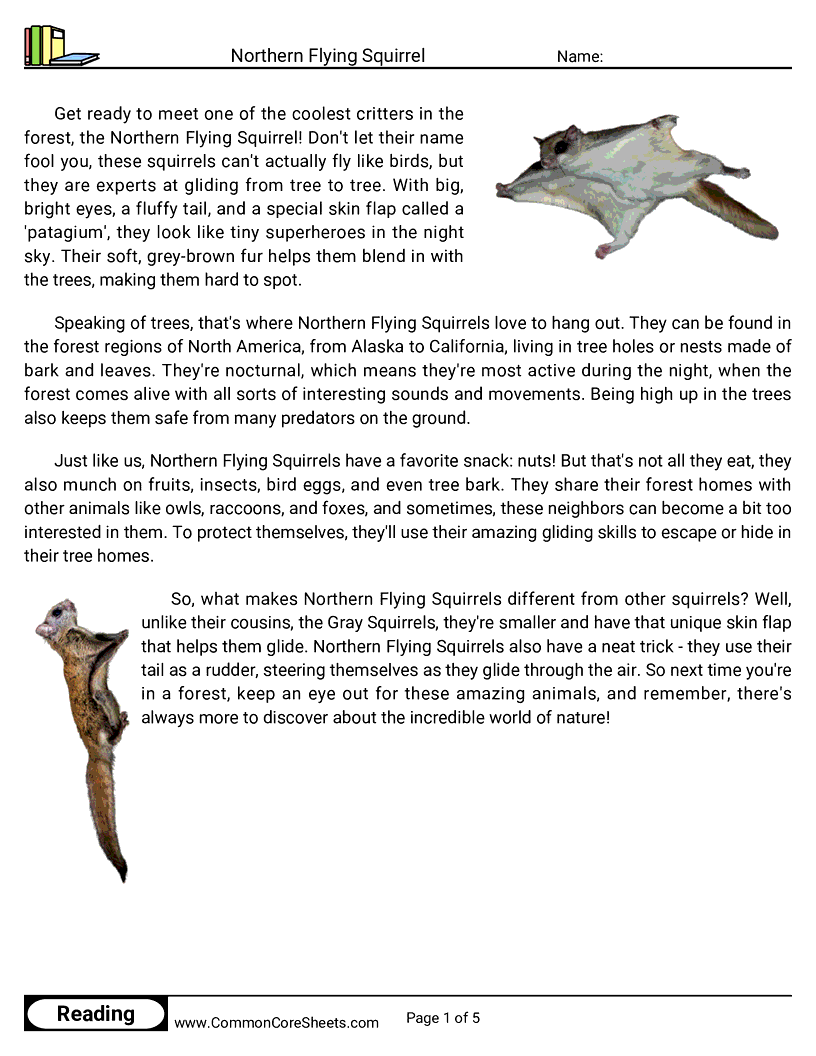
Get ready to meet one of the coolest critters in the forest, the Northern Flying Squirrel! Don't let their name fool you, these squirrels can't actually fly like birds, but they are experts at gliding from tree to tree. With big, bright eyes, a fluffy tail, and a special skin flap called a 'patagium', they look like tiny superheroes in the night sky. Their soft, grey-brown fur helps them blend in with the trees, making them hard to spot.
Speaking of trees, that's where Northern Flying Squirrels love to hang out. They can be found in the forest regions of North America, from Alaska to California, living in tree holes or nests made of bark and leaves. They're nocturnal, which means they're most active during the night, when the forest comes alive with all sorts of interesting sounds and movements. Being high up in the trees also keeps them safe from many predators on the ground.
Just like us, Northern Flying Squirrels have a favorite snack: nuts! But that's not all they eat, they also munch on fruits, insects, bird eggs, and even tree bark. They share their forest homes with other animals like owls, raccoons, and foxes, and sometimes, these neighbors can become a bit too interested in them. To protect themselves, they'll use their amazing gliding skills to escape or hide in their tree homes.
So, what makes Northern Flying Squirrels different from other squirrels? Well, unlike their cousins, the Gray Squirrels, they're smaller and have that unique skin flap that helps them glide. Northern Flying Squirrels also have a neat trick - they use their tail as a rudder, steering themselves as they glide through the air. So next time you're in a forest, keep an eye out for these amazing animals, and remember, there's always more to discover about the incredible world of nature!
Meet the northern flying squirrel, a small, furry creature that glides through the air with ease. These adorable animals have large eyes, soft fur, and a special membrane called a patagium that allows them to glide between trees. They can be found in North America, particularly in the forests of the United States and Canada. Their unique ability to soar from tree to tree makes them stand out among other squirrel species.
What do these fascinating creatures eat, you ask? Northern flying squirrels mainly munch on nuts, seeds, fruits, and insects. They also enjoy fungi, which is important for the health of the forests they live in. These squirrels play a key role in spreading fungi spores, helping the growth of new plants and trees.
The life cycle of the northern flying squirrel is quite interesting. Mating season occurs in the spring, and females typically give birth to two or three babies, called kits. The kits are born hairless and helpless, but after just a few months, they grow up and become strong enough to glide on their own. Northern flying squirrels can live up to six years in the wild.
Northern flying squirrels have interesting relationships with both humans and other animals. Some people might see them as pests, but they generally do not cause harm to humans. In the forest, they have various predators, including owls, hawks, and raccoons. Their ability to glide helps them escape from these predators and maintain a healthy balance in their ecosystem.
There are some cool facts and differences between northern flying squirrels and other squirrel species. For example, flying squirrels are nocturnal, which means they are most active at night. This is unlike most squirrels, which are active during the day. Another interesting fact is that northern flying squirrels can glide up to 150 feet in just one jump!
Let's explore the fascinating world of the northern flying squirrel, a small nocturnal mammal that can glide through the air! These squirrels have a thin membrane called a patagium, which stretches from their wrists to their ankles and helps them steer while gliding. They are approximately 10-12 inches long, including their bushy tails, and weigh only 2-4 ounces. The northern flying squirrel is covered in soft, dense fur that ranges in color from gray to reddish-brown, and they have large, dark eyes for better nighttime vision. These amazing creatures are not only interesting to look at, but they also play an important role in the ecosystem.
The northern flying squirrel can be found in the dense forests of North America, from Alaska to the eastern United States. These squirrels prefer to live in mature coniferous or mixed coniferous and deciduous forests, where they build their nests in tree cavities or on branches. Northern flying squirrels are most active during the night, and they can glide from tree to tree in search of food and shelter. Their incredible gliding ability helps them escape from predators and travel more efficiently through their forest home. In the winter, they may even share nests with other flying squirrels to stay warm.
A northern flying squirrel's diet consists of a wide variety of foods, making them omnivores. They enjoy eating seeds, nuts, fruits, and even insects and bird eggs. One of their favorite foods is truffles, a type of fungi that grows underground. By eating and dispersing these fungi, flying squirrels help maintain a healthy balance in the forest ecosystem. The squirrels are also preyed upon by predators such as owls, martens, and bobcats, making them an important part of the food chain.
The life cycle of the northern flying squirrel begins when they are born in a small litter, usually consisting of 2-4 young. These baby squirrels, called kits, are born hairless and helpless, relying on their mother for care and protection. After about 40 days, the kits begin to venture out of the nest and learn how to glide and find food. Northern flying squirrels can live up to 6 years in the wild, although many do not survive that long due to predation and other challenges. Their ability to reproduce and raise new generations is essential for maintaining a healthy population in their forest habitats.
Northern flying squirrels have a unique relationship with both humans and other animals. While they do not pose any direct threat to humans and are generally shy, they may sometimes raid bird feeders or enter attics in search of a nesting site. In terms of other animals, northern flying squirrels have a symbiotic relationship with the truffles they eat, helping the fungi to spread their spores. Compared to other squirrel species, flying squirrels have a unique adaptation that allows them to glide, setting them apart from their tree-climbing relatives. The northern flying squirrel is a fascinating and important member of the forest ecosystem, and learning about their incredible abilities and behaviors can inspire a greater appreciation for the natural world.
About this worksheet
Students read a nonfiction passage about the northern flying squirrel and answer comprehension questions about its habits and traits.
This worksheet is designed to enhance children's reading skills while teaching them about Northern Flying Squirrels. With 20 interactive questions surrounding the squirrel's habitat, diet, behavior, and unique characteristics, this fun-filled educational resource is versatile. It can be customized, converted to flashcards, or seamlessly integrated into distance learning curricula, providing a flexible and engaging learning experience.
Student objectives
- Read a nonfiction passage and understand the main ideas
- Find specific facts about the northern flying squirrel in the text
- Learn how flying squirrels glide, eat, and live
- Answer questions using details from what you read
Everyday practice
- Read a sign at a zoo or nature center about an animal and explain what it says
- Look up facts about an animal you saw outside
- Share something interesting you learned about wildlife with a friend
- Pick out key facts from an article to tell someone about it