Nile Crocodile Worksheet Download
Free reading worksheets on Nile Crocodile. Each worksheet has 20 problems with an answer key and are ideal for teachers and homeschooling. You can download the PDF, create a set of flash cards or set it up for online learning.


Sheet Information >
Available at 2nd grade, 3rd grade, 4th grade, 5th grade and 6th grade reading levels.
Read the passage
Hey kids, let's learn all about the Nile crocodile! These scaly creatures are found in Africa, and they love to live in rivers, lakes, and wetlands. Did you know that these amazing reptiles can grow up to 20 feet long and weigh up to 1,650 pounds?
Now, let's talk about their diet and how they interact with other animals. Nile crocodiles are carnivores, meaning they eat other animals like fish, birds, and even large mammals like zebras! They have a special relationship with some birds, like the Egyptian plover, which helps keep their teeth clean by picking out leftover food.
Lastly, let's discuss their life cycle and some interesting facts about Nile crocodiles. Nile crocodiles lay eggs, and the mother crocodile guards them until they hatch into cute baby crocodiles called hatchlings. An interesting fact is that Nile crocodiles are more aggressive than other crocodile species, so it's important to admire them from a safe distance!
In this format, each paragraph is separated into individual sentences, making it easy to access and utilize the content in a PHP-based application.
Meet the Nile crocodile, one of the largest and most interesting reptiles on Earth! These incredible creatures live in the rivers, lakes, and swamps of Africa, where they can grow up to 20 feet long and weigh over 1,500 pounds. Nile crocodiles have a unique appearance with their thick, scaly skin and long, powerful jaw full of sharp teeth. These big reptiles are known for their amazing swimming skills, and they can even hold their breath underwater for up to two hours!
Now, let's dive into their life cycle and relationships with other animals. Nile crocodiles start their life as tiny eggs, which are carefully guarded by their mother until they hatch. Once they are born, the young crocodiles eat insects and small fish, but as they grow, they start to hunt for bigger prey like birds, turtles, and even other crocodiles. These powerful predators play an important role in their ecosystem, as they help control the populations of other animals and keep their habitat healthy.
Lastly, let's explore the Nile crocodile's relationship with humans and how they compare to other crocodile species. Although Nile crocodiles can be dangerous to humans, they usually avoid contact and only attack if they feel threatened or hungry. Compared to other crocodile species, Nile crocodiles have a more aggressive nature and are considered one of the deadliest. But despite their fearsome reputation, these fascinating creatures are an important part of their environment and deserve our respect and protection.
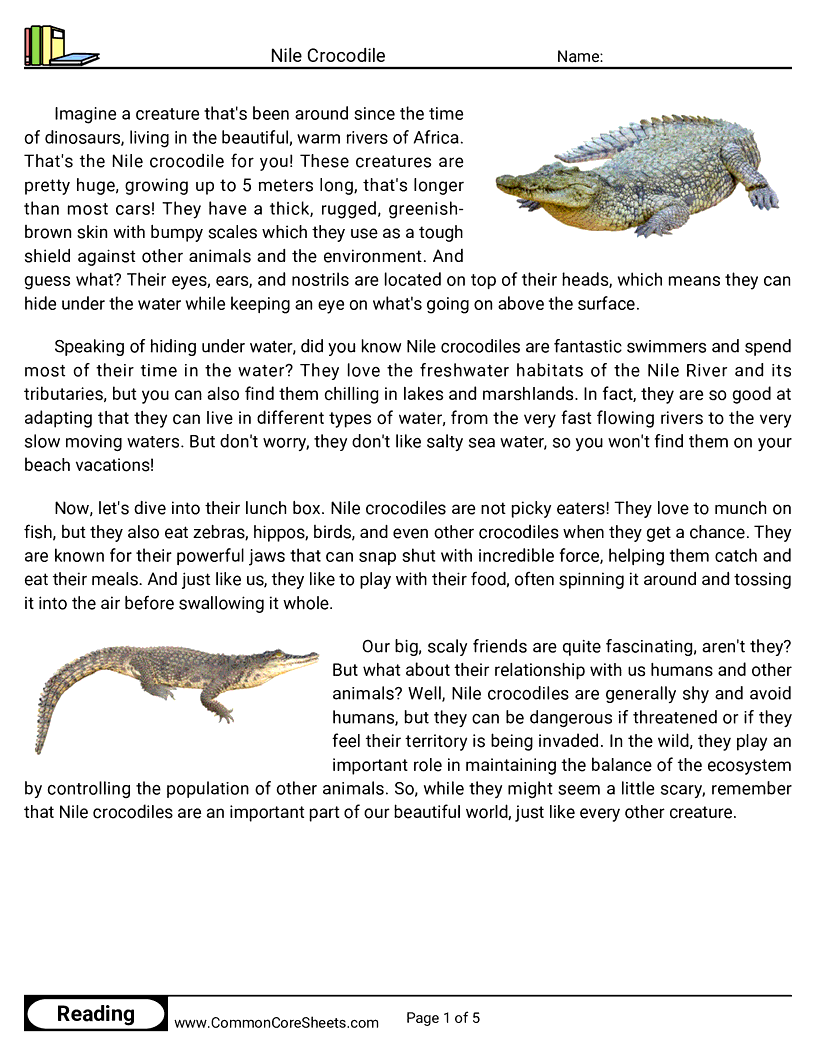
Imagine a creature that's been around since the time of dinosaurs, living in the beautiful, warm rivers of Africa. That's the Nile crocodile for you! These creatures are pretty huge, growing up to 5 meters long, that's longer than most cars! They have a thick, rugged, greenish-brown skin with bumpy scales which they use as a tough shield against other animals and the environment. And guess what? Their eyes, ears, and nostrils are located on top of their heads, which means they can hide under the water while keeping an eye on what's going on above the surface.
Speaking of hiding under water, did you know Nile crocodiles are fantastic swimmers and spend most of their time in the water? They love the freshwater habitats of the Nile River and its tributaries, but you can also find them chilling in lakes and marshlands. In fact, they are so good at adapting that they can live in different types of water, from the very fast flowing rivers to the very slow moving waters. But don't worry, they don't like salty sea water, so you won't find them on your beach vacations!
Now, let's dive into their lunch box. Nile crocodiles are not picky eaters! They love to munch on fish, but they also eat zebras, hippos, birds, and even other crocodiles when they get a chance. They are known for their powerful jaws that can snap shut with incredible force, helping them catch and eat their meals. And just like us, they like to play with their food, often spinning it around and tossing it into the air before swallowing it whole.
Our big, scaly friends are quite fascinating, aren't they? But what about their relationship with us humans and other animals? Well, Nile crocodiles are generally shy and avoid humans, but they can be dangerous if threatened or if they feel their territory is being invaded. In the wild, they play an important role in maintaining the balance of the ecosystem by controlling the population of other animals. So, while they might seem a little scary, remember that Nile crocodiles are an important part of our beautiful world, just like every other creature.
Meet the Nile crocodile, one of the largest and most fascinating reptiles in the world! These incredible creatures can grow up to 20 feet long and weigh over 1,500 pounds. They have a thick, tough skin covered in scales, which helps protect them from predators and the harsh African sun. The Nile crocodile's powerful jaws and sharp teeth make it a formidable hunter in its natural habitat.
Nile crocodiles call the rivers, swamps, and lakes of Africa home. They can be found in 26 African countries, from Egypt in the north to South Africa in the south. These crocs are excellent swimmers and can hold their breath for up to an hour underwater! In addition, they're known to travel long distances on land, especially during Africa's rainy season.
When it comes to food, Nile crocodiles aren't picky eaters. Their diet mainly consists of fish, but they're also known to eat birds, reptiles, and even mammals like antelopes and zebras. They use their powerful jaws to clamp down on their prey and swallow it whole or tear it into pieces. Sometimes, Nile crocodiles will work together to take down larger animals, like hippos and buffalo.
Nile crocodiles have a unique life cycle that begins with the laying of eggs. Female crocodiles dig nests near the water and lay between 25-80 eggs, which they fiercely protect for about 90 days until they hatch. Once the baby crocodiles hatch, the mother carries them in her mouth to the water, where they'll learn to swim and hunt. Nile crocodiles can live for up to 45 years in the wild, which is much longer than most other reptiles!
Lastly, let's talk about the Nile crocodile's relationship with humans and other animals. Due to their size and power, Nile crocodiles can be dangerous to both humans and animals, but these attacks are rare and typically a result of crocodiles defending their territory or nests. Humans have hunted Nile crocodiles for their meat and skin, which is used to make leather goods like belts and bags. In the animal kingdom, Nile crocodiles play a vital role in maintaining balance in their ecosystem by keeping populations of their prey in check.
With their incredible size, strength, and fascinating life cycle, Nile crocodiles are truly amazing creatures. Despite their fearsome reputation, they play a crucial role in the ecosystems they inhabit, making them an important part of the African landscape.
Let's dive into the fascinating world of the Nile crocodile, a remarkable reptile that calls Africa its home. These incredible creatures can grow up to 20 feet long and weigh over 1,650 pounds, making them one of the largest crocodile species in the world. Nile crocodiles have a dark bronze color with black spots on their back and a yellowish belly with dark stripes. Their snout is V-shaped, which helps them catch their prey with ease. With their strong and powerful tails, they can swim at speeds of up to 22 miles per hour!
Now let's explore the Nile crocodile's natural habitat and where they can be found. These crocodiles are native to Africa, inhabiting freshwater lakes, rivers, and marshes. They can also be found in some parts of Madagascar and the Sinai Peninsula. Nile crocodiles prefer to live in areas with plenty of vegetation and access to sunlight for basking. These habitats provide an ideal environment for them to hunt, mate, and raise their young.
What do Nile crocodiles like to eat, you ask? These carnivorous creatures have a varied diet, feeding on fish, birds, and mammals that come near the water's edge. Nile crocodiles are ambush predators, meaning they wait patiently for their prey to come close before launching a swift and powerful attack. Their strong jaws and sharp teeth allow them to easily crush bones and tear through flesh. Nile crocodiles have even been known to hunt larger animals such as buffalo, giraffes, and even other crocodiles!
Let's take a closer look at the Nile crocodile's life cycle. Female Nile crocodiles lay their eggs, usually around 25-80, in a nest made of sand or vegetation near the water's edge. After about 90 days, the baby crocodiles hatch, and their mother helps them to the water where they will begin to learn how to hunt and survive. Nile crocodiles grow quickly and can live up to 45 years in the wild. In their journey to adulthood, they face many challenges, including competition for food and threats from predators like larger crocodiles or birds of prey.
Lastly, let's discuss the Nile crocodile's relationship with humans and other animals. While Nile crocodiles are naturally shy and will avoid humans, they have been known to attack when they feel threatened or if their territory is invaded. Because of this, some people view them as dangerous and may hunt them for their skin or meat. However, Nile crocodiles also play a vital role in their ecosystem, controlling fish populations and providing food for other predators. As we learn more about these majestic creatures, we can better understand how to coexist and protect them for future generations.
About this worksheet
Students read a nonfiction passage about the Nile crocodile and answer comprehension questions about its habitat, diet, and behavior.
This worksheet is designed to enhance children's knowledge about the Nile Crocodile. It features 20 interactive reading problems that touch on their physical features, habitat, diet, and role in the ecosystem. The content can be readily customized to flash cards and is perfectly compatible with distance learning programs. It's a great tool to make learning about this fascinating reptile both fun and convenient.
Student objectives
- Read a nonfiction passage and understand the main ideas
- Find specific facts about the Nile crocodile in the text
- Answer questions using details from what you read
- Learn new vocabulary about animals and their habitats
Everyday practice
- Read facts about animals at a zoo or aquarium exhibit
- Look up information about an animal for a school report
- Understand a nature documentary about crocodiles
- Explain interesting animal facts to a friend or family member