Metric Measurement Worksheets
Our metric measurement worksheets help 4th grade students master the metric system through hands-on practice. Students work with centimeter and millimeter rulers, estimate distances, convert between metric units, and solve addition and subtraction problems using metric lengths.
More about these worksheets ▾ Show less ▴
×
About these worksheets
These worksheets cover metric length measurement skills. Students practice reading centimeter and millimeter rulers, estimating metric distances, choosing appropriate metric units, converting between millimeters, centimeters, meters, and kilometers, and adding and subtracting metric lengths. Aligned with fourth and fifth grade standards.
4md1
Practice reading a centimeter ruler to find the length of a bar, including half-centimeter measurements Subtract the starting point from the ending point when the bar doesn't begin at zero Measure to the nearest half centimeter using the smaller tick marks on the ruler
4md1
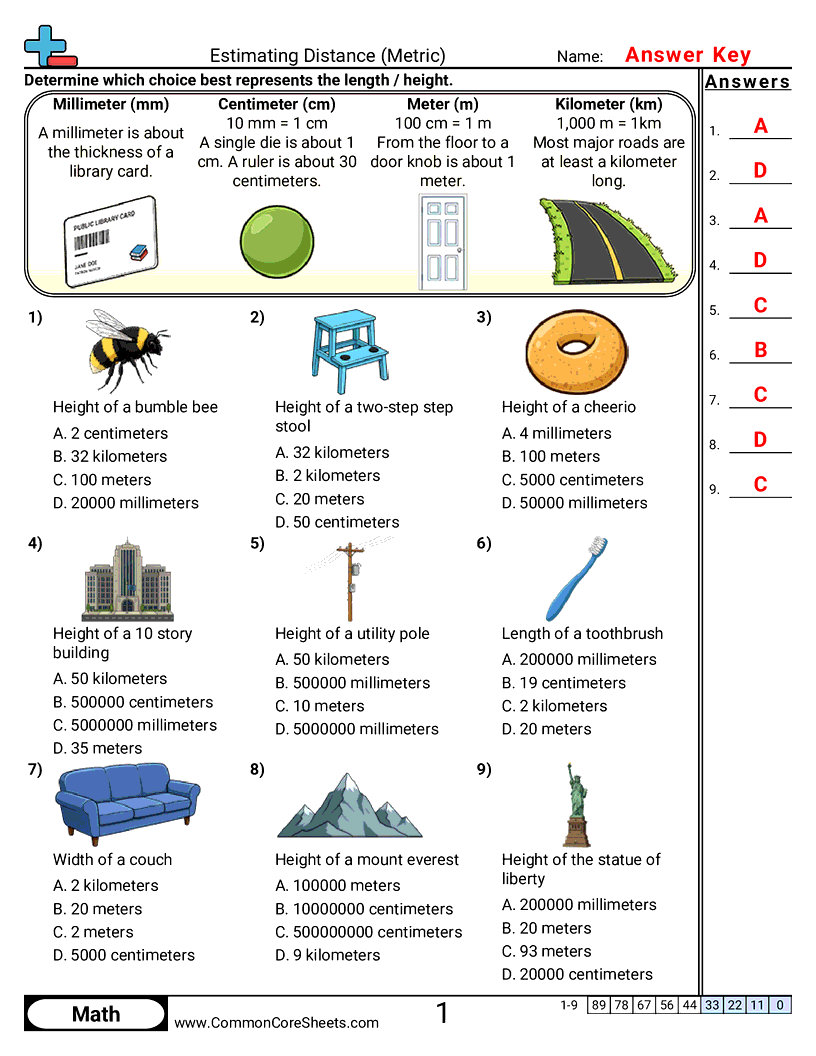
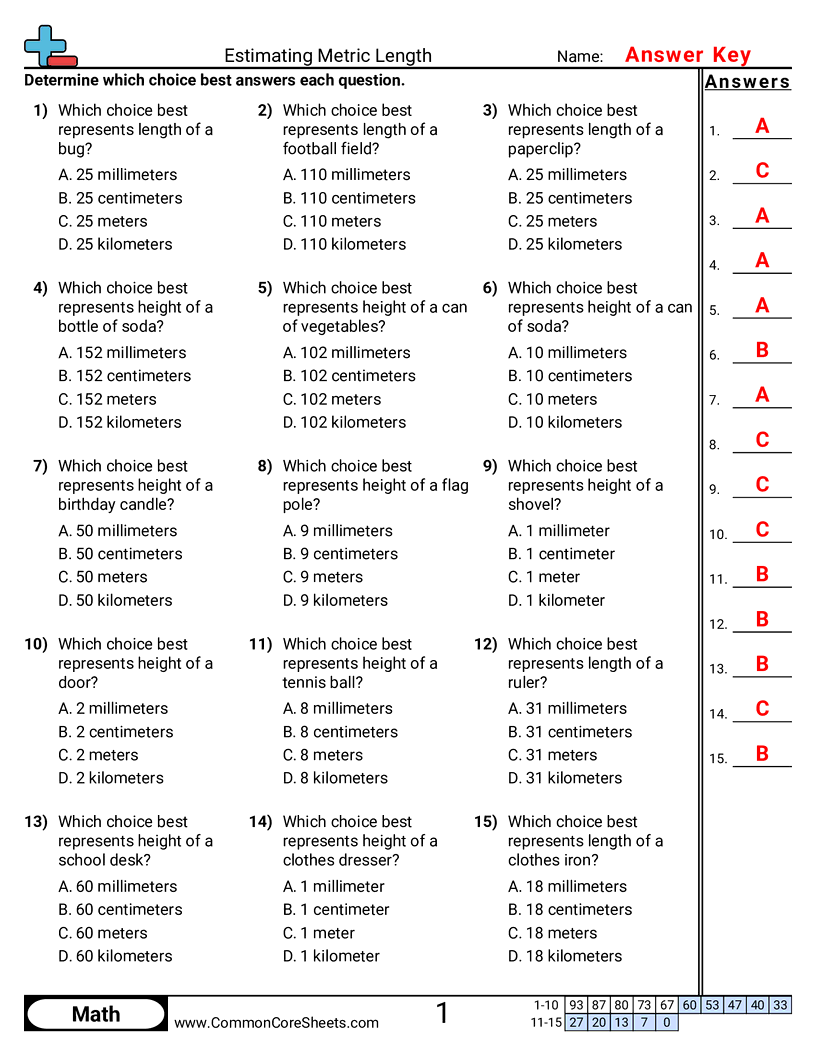
Practice making a reasonable guess about how long something is using metric units. Learn to choose the best unit for a length (millimeters, centimeters, meters, or kilometers). Compare a few possible lengths and pick the one that makes the most sense for the object shown. Use what you know about common objects to judge about how long something is without measuring.
4md1
Choose the best metric unit to describe how long something is. Tell when millimeters, centimeters, meters, or kilometers make the most sense for an item. Compare a few unit choices and pick the one that matches a reasonable real-world size. Read a short description of an object and decide which metric measurement fits.
5md1
Convert between millimeters, centimeters, meters, and kilometers. Use the metric scale to decide whether to multiply or divide when converting units.
4md2
Practice adding and subtracting decimal measurements in centimeters Convert between millimeters and centimeters (10 mm = 1 cm) before adding or subtracting mixed units Give the answer in the correct unit based on what the problem asks for (cm or mm)
4md1
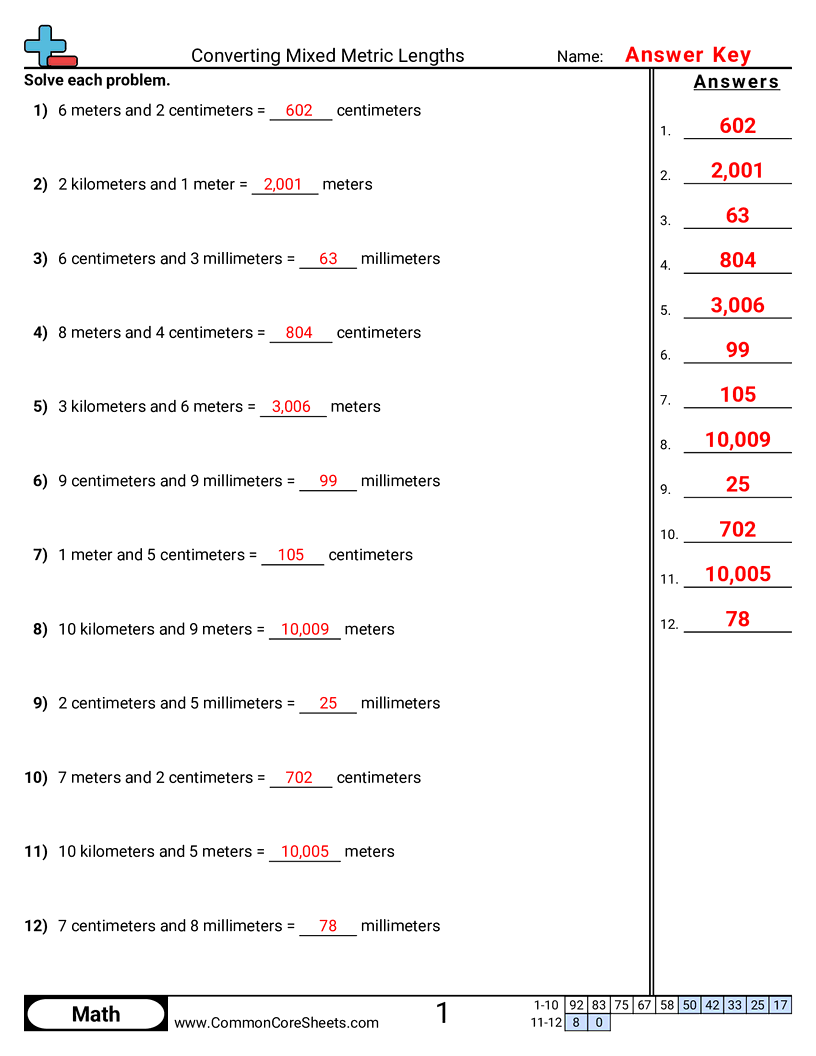
Convert a mixed metric length (like meters and centimeters) into just the smaller unit. Use the metric relationships (10, 100, 1,000) to move between kilometers, meters, centimeters, and millimeters. Combine the converted parts correctly to write one total measurement in a single unit.
4md1
Choose the metric unit that best fits what is being measured. Tell length, mass and liquid volume apart from the situation alone. Use the largest unit that still gives a number of at least 1.
Playwire Advertisement