Gila Woodpecker Worksheet Download
Free reading worksheets on Gila Woodpecker. Each worksheet has 20 problems with an answer key and are ideal for teachers and homeschooling. You can download the PDF, create a set of flash cards or set it up for online learning.
Select a Different Activity
>
Sheet Information >
Available at 2nd grade, 3rd grade, 4th grade, 5th grade and 6th grade reading levels.
Read the passage
Welcome to the wonderful world of Gila Woodpeckers! These lively birds are medium-sized with a shiny black and white body, and a hint of yellow on their belly. Unlike other woodpeckers, they have a brownish cap and a long beak to drill holes into cactus plants.
Now let's talk about where they live and what they eat. Gila Woodpeckers make their homes in the hot deserts of the southwestern United States and Mexico, often making nests in cactus plants! They love to snack on insects, but don't mind fruit and nectar from cactus plants.
Gila Woodpeckers have a unique life cycle and relationship with humans and other animals. Their nesting holes often provide homes for other desert creatures once the woodpeckers move out and they don't mind sharing their space with humans as they are often found in urban areas too! One cool fact about Gila Woodpeckers is they have a special membrane that closes to protect their eyes from wood fragments when they are drilling holes into cacti.
"Hey kids, let's dive into the world of gila woodpeckers!" These amazing creatures are a type of bird that live in the dry, desert areas of southwestern United States and western Mexico. They are very distinctive with their black and white striped wings, brownish body, and a really cool red or black cap on their heads. Gila woodpeckers love to chomp on insects, fruits, and sometimes even the nectar from cactus flowers.
"Now, let's talk about the life of a gila woodpecker." They have a fascinating life cycle where the mother lays about 2-5 eggs in a nest, which is usually inside a hole in a cactus! The baby woodpeckers, known as chicks, are born blind and without feathers, but they grow up quickly and leave the nest after a month. These woodpeckers aren't too different from humans as they love to stay with their families in the same area for a long time.
"Let's explore gila woodpeckers' relationship with other animals and their defenses." They have a special relationship with the saguaro cactus, they make homes in them and in return, their abandoned holes become homes for other desert creatures. When it comes to defense, their sharp beaks are their main weapon, but they also use their loud 'waka waka' sounds to scare away potential threats. Gila woodpeckers are unique and show us just how amazing and diverse our world of birds can be."
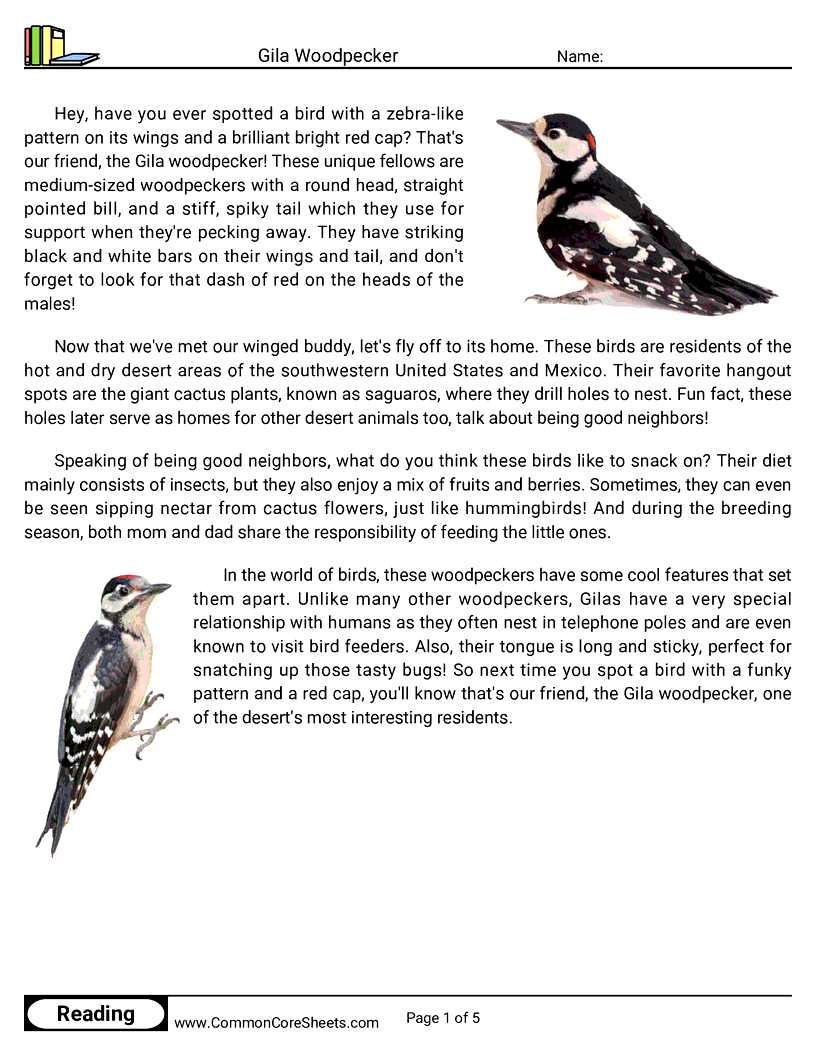
Hey, have you ever spotted a bird with a zebra-like pattern on its wings and a brilliant bright red cap? That's our friend, the Gila woodpecker! These unique fellows are medium-sized woodpeckers with a round head, straight pointed bill, and a stiff, spiky tail which they use for support when they're pecking away. They have striking black and white bars on their wings and tail, and don't forget to look for that dash of red on the heads of the males!
Now that we've met our winged buddy, let's fly off to its home. These birds are residents of the hot and dry desert areas of the southwestern United States and Mexico. Their favorite hangout spots are the giant cactus plants, known as saguaros, where they drill holes to nest. Fun fact, these holes later serve as homes for other desert animals too, talk about being good neighbors!
Speaking of being good neighbors, what do you think these birds like to snack on? Their diet mainly consists of insects, but they also enjoy a mix of fruits and berries. Sometimes, they can even be seen sipping nectar from cactus flowers, just like hummingbirds! And during the breeding season, both mom and dad share the responsibility of feeding the little ones.
In the world of birds, these woodpeckers have some cool features that set them apart. Unlike many other woodpeckers, Gilas have a very special relationship with humans as they often nest in telephone poles and are even known to visit bird feeders. Also, their tongue is long and sticky, perfect for snatching up those tasty bugs! So next time you spot a bird with a funky pattern and a red cap, you'll know that's our friend, the Gila woodpecker, one of the desert's most interesting residents.
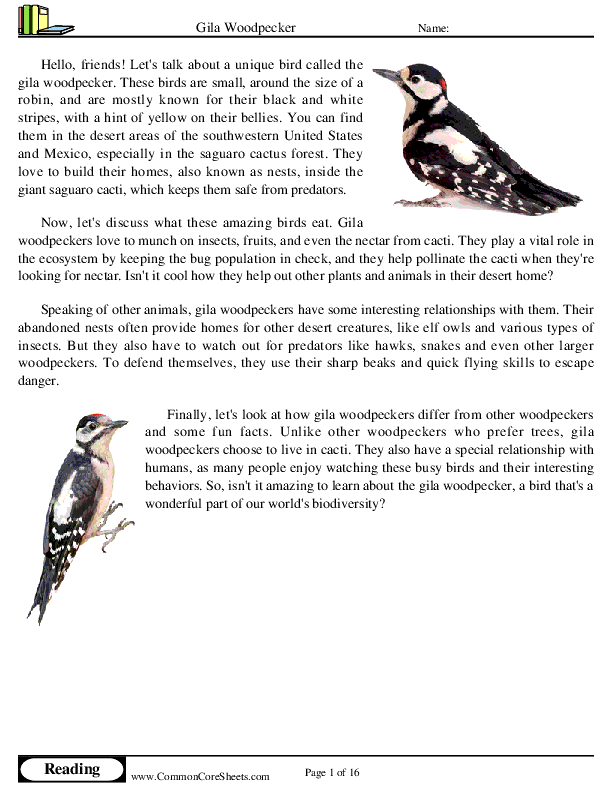
Have you ever seen a Gila Woodpecker? These birds are mostly gray with some black and white spots, and a splash of red or yellow on their heads. They're not very big, about the size of a robin, and they have a strong beak that they use to peck into the bark of trees. Because of their vibrant colors and unique behavior, Gila Woodpeckers are a real treat to spot!
Gila Woodpeckers are found in the deserts of the southwestern United States and Mexico. They love to make their homes in cactus plants, where they make a hole and build a cozy nest inside. This not only protects them from predators but also keeps them cool in the hot desert. So, if you're ever in the desert and see a cactus with a hole in it, you might just have found a Gila Woodpecker's home!
Gila Woodpeckers have a quite varied diet. They love to eat insects, especially ones they find under tree bark, but they also eat fruits and berries. Sometimes, they even drink nectar from flowers, just like hummingbirds! Their strong beak helps them to find food in places other birds can't reach.
Gila Woodpeckers live quite a fascinating life. The female lays her eggs in the cozy cactus nest, and both parents help to take care of the eggs and the young ones once they hatch. As far as relationships with humans and other animals go, they are generally friendly, but can be protective of their nests. They've also been known to share their nests with other types of birds or animals!
There are a few things that make Gila Woodpeckers unique. Unlike some other species of woodpeckers, Gila Woodpeckers aren't afraid to live near humans and can often be spotted in backyards or parks. They also have a special tongue that's long and sticky, perfect for catching insects! So, now that you know a little more about the fascinating Gila Woodpecker, hopefully you'll be lucky enough to spot one in the wild someday.
Let's take a journey into the world of Gila Woodpeckers, unique birds with a lot of character. These birds are medium-sized and are known for their striking black and white wing patterns and brownish face. They are particularly recognized by their loud, rolling call that echoes throughout their habitat. Gila Woodpeckers, unlike many other species, have a distinctive behavior - they love to peck into cacti! They do this to create nests, which is quite a smart way to protect themselves from predators.
Speaking of habitat, Gila Woodpeckers are native to the deserts of southwestern United States and western Mexico. They have a strong affinity for the saguaro cactus, which provides both food and shelter for them. Their diet primarily consists of insects, but they're known to also enjoy fruits, berries and occasionally, nectar. The saguaro cactus is not just a home or a source of food, but also a source of water, which is essential in the dry desert. Their unique relationship with the saguaro cactus makes them an integral part of the desert ecosystem.
Now let's delve into the life cycle of these fascinating birds. Gila Woodpeckers mate for life and both parents share the duty of raising their young. Their eggs, usually 3 to 5 in number, are incubated for about 14 days before they hatch. Once hatched, the young birds stay in the nest for about a month before they are ready to leave. The parents continue to feed and care for them until they're able to fend for themselves.
Gila Woodpeckers have a unique relationship with humans and other animals. To humans, they are known to be both beneficial and problematic. They control insect populations, but they can also damage property by drilling holes in buildings and utility poles. With other animals, they have a symbiotic relationship where their abandoned nests provide homes for other desert creatures. They however, need to be on guard against predators like snakes or larger birds, which can invade their nests.
Finally, let's explore what sets Gila Woodpeckers apart from other species. Unlike other woodpeckers who might peck at trees, Gila Woodpeckers choose cacti for their home. Their beaks are specially adapted to withstand the impact of pecking on the hard cactus surface. Another interesting fact is their ability to tolerate the venom of scorpions and centipedes, which can form part of their diet. With their unique attributes and survival techniques, Gila Woodpeckers truly are the treasures of the desert.
About this worksheet
Students read a short informational passage about the Gila woodpecker and answer comprehension questions about its habitat, diet, and behavior.
This worksheet is designed to engage children in learning about the Gila Woodpecker. It covers diverse areas such as its characteristics, habitat, diet, and nesting habits with 20 interactive reading problems. Versatile in its use, this bespoke educational resource can be customized, converted into flashcards, or incorporated into distance learning for an enhanced understanding of the subject matter.
Student objectives
- Read a nonfiction passage about the Gila woodpecker
- Find and remember facts from what you read
- Answer questions using details from the text
- Learn new vocabulary about birds and desert animals
Everyday practice
- Reading a fact sheet at a nature center or zoo about an animal
- Looking up information about a bird you spotted outside
- Reading an article and telling a friend the main facts you learned
- Answering questions about something you just read in a book