Dung Beetles Worksheet Download
Free reading worksheets on Dung Beetles. Each worksheet has 20 problems with an answer key and are ideal for teachers and homeschooling. You can download the PDF, create a set of flash cards or set it up for online learning.


Sheet Information >
Available at 2nd grade, 3rd grade, 4th grade, 5th grade and 6th grade reading levels.
Read the passage
Meet the amazing dung beetles, nature's tiny recyclers. These little insects are found all over the world, living in forests, grasslands, and even your own backyard. Dung beetles are easy to recognize with their shiny, colorful bodies and strong legs, perfect for rolling their favorite food – poop!
Let's learn about the fascinating life cycle of dung beetles. First, the adult beetles lay their eggs in a ball of dung, which the baby beetles, called larvae, will eat when they hatch. After growing and changing inside their cozy dung ball, they become adult beetles and start the cycle all over again.
Dung beetles have a special role in our world and are helpful to humans and other insects. By breaking down and burying animal poop, they recycle nutrients back into the soil, making it healthier for plants to grow. They also help control pests, like flies, by competing for the same food source. In conclusion, dung beetles are small but mighty creatures that play a vital role in keeping our environment clean and healthy. So the next time you see one of these shiny little insects, remember to appreciate all the hard work they do!
Dung beetles are fascinating insects that have a very unique diet. These small creatures are known for eating animal poop, which may sound gross, but it's actually very helpful for the environment. By breaking down and recycling waste, they help to fertilize the soil and keep our planet clean. Dung beetles can be found in many different habitats all around the world, including grasslands, forests, and even deserts.
The life cycle of a dung beetle is quite interesting. They start as eggs that are laid in a ball of dung, which serves as both a safe place to grow and a food source. Once hatched, the larvae eat the dung until they grow big enough to turn into pupae, and then eventually into adult beetles. Dung beetles may look similar to other beetles, but they can often be recognized by their strong legs and unique head shapes.
Dung beetles have a special relationship with both humans and other insects. For humans, they help to keep our environment clean by breaking down animal waste and reducing harmful pests like flies. In the insect world, dung beetles use their strong legs and shells to defend themselves from predators. One interesting fact about dung beetles is that some species are known to use the stars to navigate, making them one of the few insects with this incredible ability.
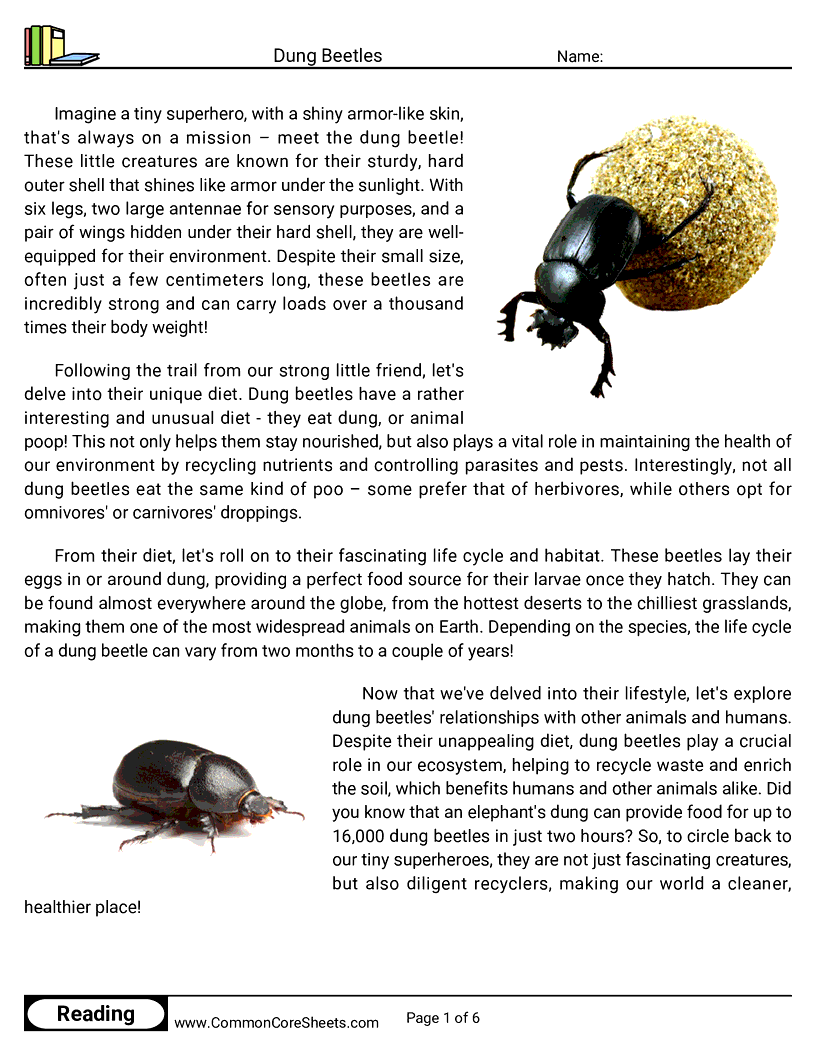
Imagine a tiny superhero, with a shiny armor-like skin, that's always on a mission – meet the dung beetle! These little creatures are known for their sturdy, hard outer shell that shines like armor under the sunlight. With six legs, two large antennae for sensory purposes, and a pair of wings hidden under their hard shell, they are well-equipped for their environment. Despite their small size, often just a few centimeters long, these beetles are incredibly strong and can carry loads over a thousand times their body weight!
Following the trail from our strong little friend, let's delve into their unique diet. Dung beetles have a rather interesting and unusual diet - they eat dung, or animal poop! This not only helps them stay nourished, but also plays a vital role in maintaining the health of our environment by recycling nutrients and controlling parasites and pests. Interestingly, not all dung beetles eat the same kind of poo – some prefer that of herbivores, while others opt for omnivores' or carnivores' droppings.
From their diet, let's roll on to their fascinating life cycle and habitat. These beetles lay their eggs in or around dung, providing a perfect food source for their larvae once they hatch. They can be found almost everywhere around the globe, from the hottest deserts to the chilliest grasslands, making them one of the most widespread animals on Earth. Depending on the species, the life cycle of a dung beetle can vary from two months to a couple of years!
Now that we've delved into their lifestyle, let's explore dung beetles' relationships with other animals and humans. Despite their unappealing diet, dung beetles play a crucial role in our ecosystem, helping to recycle waste and enrich the soil, which benefits humans and other animals alike. Did you know that an elephant's dung can provide food for up to 16,000 dung beetles in just two hours? So, to circle back to our tiny superheroes, they are not just fascinating creatures, but also diligent recyclers, making our world a cleaner, healthier place!
Dung beetles are fascinating little insects that play a big role in our world. These tiny creatures can be found on every continent except for Antarctica. Some species of dung beetles are brightly colored, while others are a more subtle brown or black. In this article, we will explore what these insects eat, where they live, and some other interesting facts about their lives.
These hardworking insects have a diet that might surprise you. As their name suggests, dung beetles eat the dung, or poop, of other animals. By doing so, they help to recycle nutrients and clean up the environment. In fact, without dung beetles, we would have a much more difficult time dealing with waste from animals like cows and elephants.
The life cycle of a dung beetle is pretty interesting. It starts with the female beetle laying her eggs inside a ball of dung. When the larvae hatch, they eat the dung around them and eventually transform into adult beetles. Once they are fully grown, they are ready to start the process all over again.
Dung beetles have a unique relationship with other insects and humans. They help control the population of flies by removing their breeding grounds, which are often found in animal waste. This benefits humans by reducing the number of disease-carrying flies. Additionally, by breaking down dung, they help other insects like ants and termites find food more easily.
Lastly, let's look at some interesting facts about dung beetles. There are over 7,000 species of dung beetles, each with their own unique traits. Some dung beetles can roll dung balls up to 50 times their own body weight. These amazing insects can even use the stars to navigate while rolling their dung balls.
In conclusion, dung beetles are not only interesting but also play a vital role in maintaining a clean and healthy environment for both humans and animals.
Dung beetles are fascinating little insects that play a big role in our environment. These small creatures are part of the Scarabaeidae family and can be found all around the world. They can be found in various sizes and colors, but they all share the same diet: animal poop! In fact, dung beetles are the reason why we don't see piles of animal waste everywhere in nature. They help break down and recycle the nutrients found in dung, keeping our ecosystems clean and healthy.
Dung beetles have a unique life cycle that revolves around, well, dung! Adult beetles lay their eggs in dung balls, which they roll with their back legs to a suitable location. Once the eggs hatch, the larvae feed on the dung and eventually turn into pupae. After a few weeks, the pupae transform into adult beetles and emerge from the dung ball, ready to start the process all over again. This cycle ensures that the beetle population remains constant in their habitat.
Humans and dung beetles share a mutually beneficial relationship. These little insects help clean up animal waste, which in turn reduces the number of flies and other pests that can spread diseases. Dung beetles also help fertilize the soil by breaking down the waste and making nutrients available for plants. This makes them an important part of agriculture and helps maintain the balance in natural ecosystems. In some cultures, dung beetles are even considered symbols of good luck and rebirth!
Dung beetles have a few interesting ways of defending themselves from predators. Their tough exoskeleton, or outer shell, protects them from most attacks. They can also use their strong legs to dig burrows and hide from potential threats. In addition, some species of dung beetles can release a foul-smelling substance to deter predators from approaching them. Despite their small size, dung beetles are well-equipped to survive in their environment.
There are many different species of dung beetles, each with their own unique traits. Some species are known as rollers, which create and roll large dung balls to lay their eggs in. Others are tunnelers, digging holes beneath the dung to create a safe place for their eggs. Lastly, there are dwellers, which simply lay their eggs within the dung itself. With over 5,000 species of dung beetles worldwide, they are a diverse and fascinating group of insects that play a crucial role in maintaining our planet's health.
About this worksheet
Students read a passage about dung beetles and answer questions to show they understood the key details and main ideas.
This worksheet is designed to enhance children's reading comprehension skills with 20 engaging problems about the fascinating world of dung beetles. It illuminates their diet, lifecycle, environmental role, and geographical distribution in a quiz format. Customizable for individual learner’s needs, this interactive resource can also be converted into flash cards or employed for distance learning, making it a multifaceted tool for educating young minds about nature's intriguing recycling specialists.
Student objectives
- Read a nonfiction passage about dung beetles and understand it
- Answer questions using details from the text
- Find the main idea of what you read
- Learn new facts about how dung beetles live and behave
- Figure out the meaning of new words from the passage
Everyday practice
- Read a sign at the zoo about an insect and understand the facts
- Answer a parent's questions about a nature show you just watched
- Explain to a friend what you learned from a science article
- Pick out the important details when reading about animals in a book