Dragon Flies Worksheet Download
Free reading worksheets on Dragon Flies. Each worksheet has 20 problems with an answer key and are ideal for teachers and homeschooling. You can download the PDF, create a set of flash cards or set it up for online learning.


Sheet Information >
Available at 2nd grade, 3rd grade, 4th grade, 5th grade and 6th grade reading levels.
Read the passage
Dragonflies are fascinating creatures that have been around for millions of years. These colorful insects can be found near ponds, lakes, and rivers all over the world. They come in many different colors, like blue, red, and green, and have large, beautiful wings that help them fly really fast.
In their short lifetime, dragonflies go through a process called metamorphosis, which means they change their shape and appearance. They start as small eggs laid in water, then hatch into tiny creatures called nymphs, which live underwater for a while. After growing and shedding their skin several times, nymphs crawl out of the water, and their adult wings emerge, transforming them into the dragonflies we see flying around.
Dragonflies are important helpers in nature, as they eat lots of pesky insects like mosquitoes and flies. They are not harmful to humans, and in fact, many people enjoy watching and even photographing these amazing insects. So next time you see a dragonfly, take a moment to appreciate their beauty and the important role they play in our ecosystem.
Dragonflies are fascinating creatures with bright colors and amazing flying skills. They have large eyes that help them spot their prey from a distance, and they can eat up to hundreds of mosquitoes and other small insects every day. Dragonflies can be found near water sources like rivers, lakes, and ponds because that's where they lay their eggs and spend most of their life. Their life cycle consists of three stages: egg, larva (called a nymph), and adult.
Dragonflies have a unique relationship with humans and other insects. Many people appreciate them because they help control the mosquito population, which can be a nuisance and even spread diseases. However, because they are predators, they also eat other insects like butterflies and bees, which can sometimes be a problem for humans who rely on these insects for pollination. Dragonflies are not harmful to humans, and some cultures even consider them to be good luck.
These incredible insects have some really interesting features and facts. Did you know that dragonflies can fly up to 30 miles per hour? And, they can fly forwards, backwards, and even hover in one spot like a helicopter! There are over 5,000 different species of dragonflies, each with their own unique colors and patterns. Next time you see a dragonfly, take a moment to appreciate their beauty and the important role they play in our ecosystem.
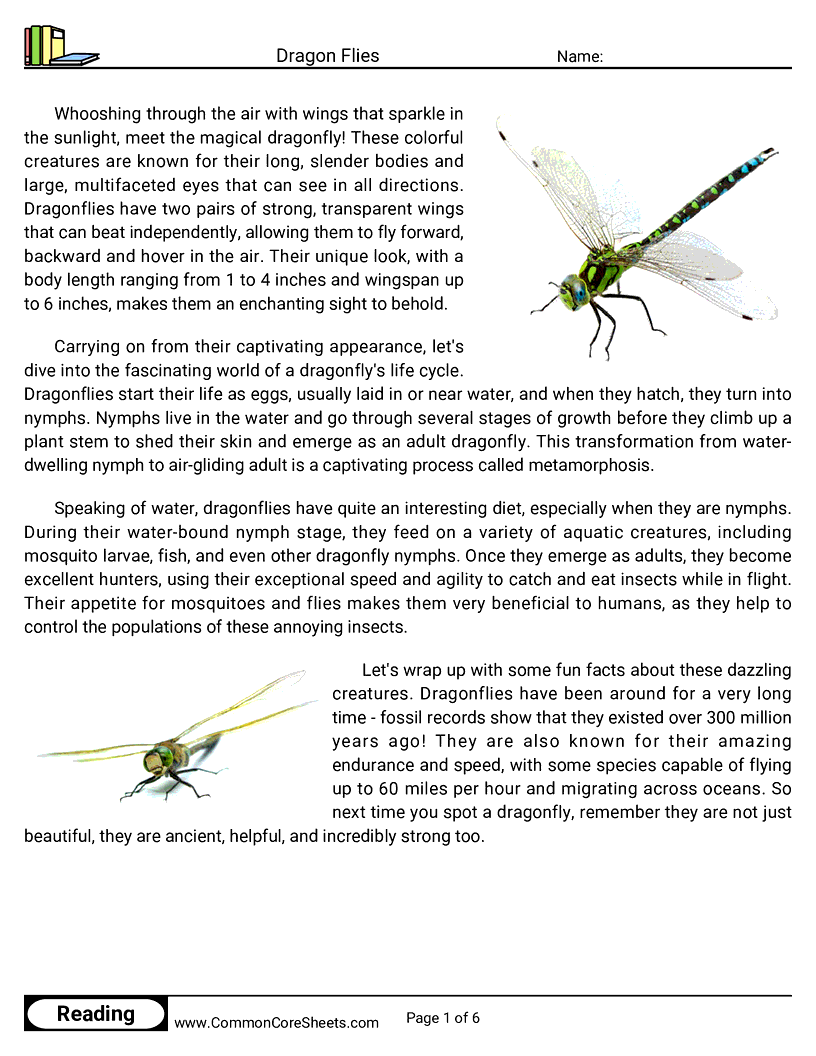
Whooshing through the air with wings that sparkle in the sunlight, meet the magical dragonfly! These colorful creatures are known for their long, slender bodies and large, multifaceted eyes that can see in all directions. Dragonflies have two pairs of strong, transparent wings that can beat independently, allowing them to fly forward, backward and hover in the air. Their unique look, with a body length ranging from 1 to 4 inches and wingspan up to 6 inches, makes them an enchanting sight to behold.
Carrying on from their captivating appearance, let's dive into the fascinating world of a dragonfly's life cycle. Dragonflies start their life as eggs, usually laid in or near water, and when they hatch, they turn into nymphs. Nymphs live in the water and go through several stages of growth before they climb up a plant stem to shed their skin and emerge as an adult dragonfly. This transformation from water-dwelling nymph to air-gliding adult is a captivating process called metamorphosis.
Speaking of water, dragonflies have quite an interesting diet, especially when they are nymphs. During their water-bound nymph stage, they feed on a variety of aquatic creatures, including mosquito larvae, fish, and even other dragonfly nymphs. Once they emerge as adults, they become excellent hunters, using their exceptional speed and agility to catch and eat insects while in flight. Their appetite for mosquitoes and flies makes them very beneficial to humans, as they help to control the populations of these annoying insects.
Let's wrap up with some fun facts about these dazzling creatures. Dragonflies have been around for a very long time - fossil records show that they existed over 300 million years ago! They are also known for their amazing endurance and speed, with some species capable of flying up to 60 miles per hour and migrating across oceans. So next time you spot a dragonfly, remember they are not just beautiful, they are ancient, helpful, and incredibly strong too.
Dragonflies are fascinating insects that have been around for millions of years. They come in a variety of colors and can be found all over the world. These amazing creatures have large, compound eyes and two pairs of strong, transparent wings. In this article, we will explore the life of dragonflies and learn some interesting facts about them.
First, let's take a look at the life cycle of a dragonfly. They begin their lives as eggs, which are laid in or near water sources like ponds and streams. After hatching, they enter the larval stage called nymphs, spending most of their time underwater. Eventually, the nymphs undergo a process called metamorphosis and emerge as adult dragonflies.
Dragonflies are skilled predators and primarily eat other insects. Their diet mainly consists of mosquitoes, flies, and other small insects. They have the ability to catch their prey in mid-air, making them very effective hunters. In fact, they can even eat insects larger than themselves!
When it comes to their relationship with other insects and humans, dragonflies are quite beneficial. By eating mosquitoes and other pests, they help control insect populations and reduce the spread of diseases. Additionally, they are a source of food for birds, frogs, and fish. Humans often enjoy watching these beautiful insects as they fly around, adding beauty to our natural surroundings.
Finally, let's explore some interesting facts and differences between dragonfly species. There are over 5,000 known species of dragonflies, each with their own unique features and behaviors. One interesting fact is that dragonflies can fly at speeds of up to 30 miles per hour. In conclusion, dragonflies are incredible creatures that play an important role in our ecosystem and provide endless fascination for those who observe them.
Dragonflies are fascinating creatures that have been around for millions of years. They come in various sizes and colors, from small and delicate to large and vibrant. These amazing insects can be found near water, as their young, called nymphs, require it to survive. Did you know that dragonflies are one of the fastest insects, capable of reaching speeds up to 35 miles per hour? So, let's dive in and learn more about these incredible insects!
A dragonfly's diet mainly consists of other insects. They are excellent hunters, using their speed and agility to catch their prey in mid-air. Some common insects that dragonflies eat include mosquitoes, flies, and even other dragonflies. Their incredible hunting skills help to control the population of mosquitoes and other pests. This is one of the many reasons why dragonflies are considered beneficial to have around.
The life cycle of a dragonfly is truly remarkable. It begins as an egg, which is laid in or near water by the female dragonfly. Once the egg hatches, it becomes a nymph, living underwater and feeding on small aquatic animals. After several molts, the nymph climbs out of the water and transforms into an adult dragonfly. Adult dragonflies only live for a few weeks, but during that time, they play an important role in the ecosystem.
Dragonflies have a unique relationship with humans and other insects. As mentioned earlier, they help control the population of mosquitoes and other pests. This is beneficial to humans, as mosquitoes can spread diseases like malaria and dengue fever. While they may seem a bit scary to some people due to their size and appearance, dragonflies are actually harmless to humans. In fact, many cultures around the world view dragonflies as symbols of good luck and prosperity.
Finally, let's explore some interesting facts and differences between dragonflies and other species. There are over 5,000 species of dragonflies and their close relatives, damselflies. One major difference between the two is that dragonflies rest with their wings open, while damselflies rest with their wings closed. Dragonflies also have larger, more powerful bodies, which enable them to be faster fliers. Now that you know more about these magnificent insects, you can appreciate their beauty and importance in the world around us.
About this worksheet
Students read a short passage about dragonflies and answer comprehension questions about the key details and facts.
This worksheet is designed to enhance children's reading and comprehension skills through fun and interesting facts about dragonflies. It covers a range of concepts, from their diet and speed to ancient history. Tailored to suit individual learning needs, this worksheet can be customized, transformed into flash cards, or utilized for distance learning, thereby providing a flexible and engrossing learning resource.
Student objectives
- Read a nonfiction passage and understand the main idea
- Find specific facts and details in what you read
- Answer questions using information from the text
- Learn new facts about dragonflies and how they live
Everyday practice
- Read a fact card at a zoo or nature center and remember what it says
- Answer questions after reading a page in a nature book
- Explain to a friend what you learned about an insect you read about
- Pick out important details when reading an article about animals